
Week of July 14, 2014

Screen Shot 2014-07-18 at 8.21.14 AM

Summiting Everest: Money is a deadly thing.  

An examination of the world of Everest sherpas on. Everest had its most tragic day this year (16 sherpas died in a avalanche of massive proportion, even for Everest), which threatened to shut down the industry for the season. The entire culture up there at high base camp, with expeditions costing as much as $100K, and the sherpas earning relatively little, has created a precarious situation for such a high risk adventure. – PAL

Source: “Climbers Leave Everest Amid Regrets and Tensions Among Sherpas”, Bhadra Sharma & Ellen Barry, The New York Times (4/24/14)

Supplemental – A trailer for an excellent documentary I saw earlier this year about the growing tension: http://vimeo.com/78597417


Back to Back to Back to…Gone?

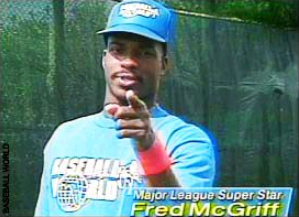
If you’re a sports fan, you’re familiar with Tom Emanski and his instructional baseball videos. “Back to back to back AAU National Champions!” The throw from center into the trashcan at home plate. And, of course, Fred McGriff, in a goofy hat, lending his endorsement. I must have seen those commercials a thousand times. The images, and the name, are burned in my memory. But I knew nothing about Tom Emanski, the man. Where’d he come from? How did he get into the business? How DID he get a big league slugger like Fred McGriff to make a fool of himself in a commercial (I was a bit surprised on that one)? And more importantly – where is he now? Fox Sports kicked off its Grantland competitor, “Just a Bit Outside”, this week with a bang – including this fascinating read. -TOB

Source: “Pitchman: How Tom Emanski Changed the Sport of Baseball – and Then Disappeared”, Erik Malinowski, Just a Bit Outside (07/17/14)

Note: There are some of you who might not know about Tom Emanski, but there is a large chunk of us (20-32 years-old), that have these instructional video commercials burned into our being. Yet another example of how nerds rule the world. Bonus: I never noticed that the iconic throw from the outfield into the garbage can bounces THREE times, and once on the mound..couldn’t they have used a kid with a better arm for this? – PAL


Home.

As we all know, LeBron announced his return to Cleveland last Friday in a well-written piece for Sports Illustrated. Since then, far too many words have been written about his decision. I read a lot of them, so you didn’t have to. This was my favorite. -TOB

Source: “The Long Game”, Seerat Sohi, Sports on Earth (07/14/14)

Note: 1) This notion that an athlete owes anything to a place is absurd. LeBron didn’t owe Cleveland/Ohio anything when he left, and he didn’t owe them anything when he considered the eventual return. Let’s say this mega-hyped high schooler is a bust – would the Cleveland Cavaliers owe him a second contract because LeBron is from Ohio? 2) I’ll buy a beer for any 1-2-3 Sports! follower who can make a legit argument that any athlete in the past 25 years had more power than LeBron James has now with the Cavaliers (yes, including Jordan). David Griffin, the GM of the Cavs (hired on May 14) may as well have “Assistant to the Traveling Secretary” on his business cards. – PAL


Deion Sanders’ charter “schools” were a mess from the beginning.

You ever heard of Emmanuel Mudiay? Probably not, but he’s listed as one of  the best (if not the best) high school basketball prospects from the 2014 class. He’s not going to Kentucky. He’s not going to Duke. He’s not going to UNC. He’s going to Europe, and he’s going because his high school was a joke (through little fault of his own). Deion Sanders’ Prime Prep schools were a disorganized mess intended on bringing in the best athletes from the Dallas/Ft. Worth area. The only problem – aside from some shady financial records – is that the school failed to comply with Texas Education Codes. In other words, the athletes the school recruited are unlikely to be eligible for college athletics. And that’s why Emmanuel Mudiay is going to Europe to play ball. Great work with the kids, Deion. – PAL

Source: “Deion Sanders’s Disaster Of A School Is Being Shut Down”, Barry Petchesky, Deadspin (7/16/14)


Chuck Taylor: International Man of Mystery

Like the aforementioned Tom Emanski story, this is another story about a guy with a familiar name, but not a very familiar story. This story (available in text and audio) is about Chuck Taylor, whose signature shoe, the Converse All-Star, has remained fashionable over many generations. -TOB

Source: “Meet Chuck Taylor: The Man Behind the All-Star”, Doug Tribou, Only a Game (07/12/14, originally aired/posted 11/02/13)

Note: Favorite factoid from this story: Nike acquired Converse in 2003 and sold 2 million pairs of the Chuck Taylor All-Stars. The 2011 figure: 70 million. Nike knows how to market shoes. – PAL


123 Q&A

Q: “It looks like there’s some sort of movement for the San Francisco Giants to retire Will Clark’s number. Believe me, I love Will Clark more than any player ever, but for some reason it’s not a no-brainer for me. He was really good with some strokes of greatness, but should teams retire players’ numbers just because we really liked them?” – Thrilled by Will, aka R. Rowe, San Francisco

A (TOB): Excellent question, Thrilled. Will Clark was an instant fan favorite in San Francisco. On the first at-bat of his career, he a hit a home run off in-his-prime Nolan Ryan. Before I dig deeper into his career, let me say this – my impression of Will is that he’s not a Hall-of-Famer, and Baseball Reference’s Hall of Fame Predictor backs that up – but he was actually better than I thought. I thought that Will Clark’s career started out with a bang, and petered out a bit after he left San Francisco. A look at the numbers, though, shows something a little different.

Clark was a career .303 hitter over 15 seasons. The bulk of those were with the Giants and Rangers. In eight seasons with the Giants, he hit .299/.373/.499. In five seasons with the Ranger, he hit .308/.395/.485. Not a significant difference (and his slugging took a little dip) – but it does show some bias on my part. Once he left the Giants, he was more or less out of my consciousness, but actually got a smidge better, and he was actually an incredibly consistent hitter throughout his career. Unfortunately for Will, the middle of his career coincided with the earnest beginning of the Steroid Era – and while Will’s numbers were still very good, they didn’t look as good in an era of bloated offense. To illustrate that – Will made five All-Star teams and finished in the top five of MVP voting four times (including a second place finish) in his eight seasons in San Francisco. After leaving San Francisco, though, he made one All-Star team and never again finished in the MVP top ten, despite having basically the same numbers he had in San Francisco.

Does his remarkable consistency, over a long period of time, give him some boost? Probably. But while that might make him closer to a Hall-of-Famer than I thought, we can’t really look at his time after leaving San Francisco to determine whether the Giants should retire his number.

As noted above, his resume with the Giants is even better than I thought – the four top five MVP finishes is pretty fantastic. The relatively short tenure is troublesome. However, there is some precedent. The Giants retired Monte Irvin’s number (he played just seven of his eight major league seasons with the Giants, all in New York), Orlando Cepeda’s number (he played just nine of his sixteen career seasons with the Giants), and Gaylord Perry’s number (he played just ten of his career twenty-two career seasons with the Giants). Of course, all three of those guys are Hall-of-Famers (despite just eight major league seasons, Irvin played many outstanding years in the Negro Leagues before breaking into the majors).

When I first read your question, my gut reaction was that Will’s number should not be retired. After checking out his numbers, though, and comparing his short tenure with the Giants to other Giants players who have had their numbers retired, I am leaning toward yes.

But there’s one last aspect to this – from all accounts, Will Clark was a dick. And I think that counts, especially in a close case. A few weeks ago, we linked to a first hand account, from a former batboy for the San Diego Padres, about how great Tony Gwynn was. Buried in that story was an anecdote about Will Clark – one day, one of the batboys was wearing an earring, and Will Clark walked by during batting practice and sneered, “Nice earring, f-ggot.” Yikes. If this were a one-off story, it’d be easy to ignore. But it’s not the first time I’ve heard that Will Clark was a less than stellar guy. I interned right after college at KNBR – and an old-timer there told me that Will Clark was racist, and that his racism caused major issues between Will and Barry Bonds in their lone season together on the Giants, which is one of the reasons why the Giants let Will walk.

How does his reportedly less than stellar character play into whether or not the Giants should retire his number? I think it should quite a bit – and in an otherwise very close call, his character issues tip the scales against retiring his number, in my opinion. But if I had to guess, I’d say the Giants will eventually do it. After all, they’ve already welcomed Will back as a team “Ambassador” – essentially he gets paid to hang around the ballpark and greet fans. I’m guessing the retired number is next.

PAL: First of all, what is this – Dear Abby? “Excellent question, Thrilled?” And this dude referred to himself as “Thrilled by Will”…What has happened to this post? Retiring a number doesn’t have to be about numbers and a HOF career. This is why I love this question. Tommy is much better and analyzing the numbers of players than I am, and he’s almost won more than a few debates based off of the numbers. But a retired number is about the relationship between a player and place. It’s gut instinct informed by a casserole of factors. You have an immediate reaction when I ask whether or not Clark’s number should be retired, and in that reaction lies your answer. This is one of those instance where your first instinct is right.

As a Minnesota guy, I know Kent Hrbek is not a Hall of Fame player (less than 300 HRs, career average in the .280’s), but there’s no doubt in my mind #14 is rightfully retired. Untangling all the factors as to why or why not leads you further and further away from the answer: because he was one of our guys. Baseball can be so objective these days…isn’t it nice for something just to remain a feeling?


Video of the Week


Like what you’ve read? Let us know by following this blog (on the right side, up near the top), or: Email: 123sportslist@gmail.com

Twitter: @123sportsnews


“Cheeseburger, cheeseburger, cheeseburger…and one large fry.”

– Tim Fisher (inspired by SNL)

Week of June 9, 2014

cakdauqhmgswm3umyezd


Argentina needs Messi, but do they want him?

Lionel Messi left his home in Argentina when he was 13 for pretty understandable reasons – one of the best clubs in Europe wanted him (FC Barcelona), and they would provide the medical treatments he needed (he had a growth-hormone deficiency). Yet, even as Messi is widely considered one of the best players ever, Argentineans have a surprisingly complicated relationship with their star. They don’t completely see him as one of their own. “We’ve always liked how Messi plays,” the driver, Dario Torrisi, told me, “but we don’t know who he is.” This story does a great job exploring what “home” means in the context of the world’s most popular game. -PAL

Source: “The Burden of Being Messi”; by Jeff Himmelman; The New York Times (6/5/14)

TOB: I visited Argentina about a month before the 2010 World Cup, as Messi was tearing up the Champions League. I can say that Argentina was pretty bonkers for him. The media narrative right now seems to be that Messi is not loved in Argentina (though the latest issue of ESPN the Magazine argues that, while this is true for those old enough to have lived through the 1986 World Cup, the younger generation loves Messi and finds Maradona rather abhorrent). He’s a quiet guy – he’s not bombastic. He has struggled, comparatively speaking, on the national team. He’s not Maradona. This is all true. But he’s amazing to watch, and some of his national team struggles can be pinned on a coach who had no idea how to use him (and had no business being coach *coughMaradonacough*). I think this is his time – and I think Argentina should go deep into this World Cup, with Messi leading the way.  


The Times, They Are a-Changin’

I can’t watch college football anymore without feeling a twinge of guilt, though I still do. In fact, I’m a season ticket holder.  But a tidal wave of change is preparing to hit American college sports. We might not know yet when exactly it will arrive and what it will leave in its wake, but it is coming. The debate on whether to pay college football players seems to be approaching a cultural tipping point (with Title IX implications of paying players threatening to leave college sports completely unrecognizable). The myth of amateurism has never rung so hollow. Making matters even worse is the fact that universities nationwide are facing budget reductions, as state legislatures have been cutting back on higher education funding for years (California, my home state, chief among them). And while public university budgets are being slashed, with those costs being passed on to students, universities across the country continue to subsidize their athletics programs with millions of dollars per year. So it was with some pride that I read this article, about how my alma mater, the University of California, Berkeley, has attempted to eliminate its athletic subsidy. In a few years, Cal has reduced its athletic subsidy from $12.1 million in 2010, to $3.2 million in 2013. The job is not done, but Cal has set a model that other schools should look toward. TOB

Source: “Cal Finds Little Company in Push to Cut Subsidies”; by Steve Berkowitz, Christopher Schaars, and Jodi Upton, USA Today (06/05/2014)

PAL: About a week ago I texted Tommy to give him crap. I’d heard the football field at Memorial Stadium (Cal’s football stadium) referred to as “Kabam Field” on the local sports radio station. Cal had struck a deal with a mobile game maker. “How lame,” I thought, as I grabbed for my phone. In fact, it’s not lame at all. Aside from the fact no one will ever, ever, ever refer to the field as “Kabam Field” in any normal conversation, Cal stands to earn $18 million over 15 years. Among other things, that money will be used to help finance the stadium renovations and student-athlete center (you can find the breakdown here). Lame? No. More like common sense.


A Million Dollars a Year on Fantasy Sports? What the Hell?

You ever win a fantasy league? I have. A few times. The gratification is short-lived, but I still feel pride in each of those wins, and aggravation for the losses. Months of work and hours pouring over stats often come down to something as stupid as 3 blocked shots in 5 minutes by a point guard who had 3 blocked shots the entire season before that, costing you the title (this actually happened to me). But what if the season didn’t take months, but occurred in the course of one night? And what if you bet money on that “season”? And what if you played thousands of “seasons” per night? You’ve just entered the world of Cory Albertson, a business school student at Notre Dame, who has turned fantasy sports into a science – and expects to make $1 million dollars this year on fantasy sports. Yes, one million. On fantasy sports. -TOB

Source: “A Fantasy Sports Wizard’s Winning Formula”; by Brad Reagan, Wall Street Journal (06/04/14)

PAL: When something  conceived as a game then becomes a business, there will be gap when it’s ripe for the taking. Fantasy sports hedge fund? I have some buddies who will no doubt contribute to this dude’s next vacation estate. Also, did you notice TOB mentioned he’s won a fantasy league a few times?


This is the perfect story if you don’t love (or “get”) hockey.

I grew up playing the sport in Minnesota. It’s a great game. Fun to play, fun to watch in person, and it features incredible athletes. Aside from a little San Jose Sharks fever once every couple of years, there aren’t a ton of hockey fans out here in California, even when two of the best teams play out here (it pains me to write that). Here’s a cool story breaking down a seemingly tiny, momentary element of the game – the faceoff. Like a jump ball in basketball, it determines possession; however, unlike in basketball, faceoffs happen dozens of times in a game where scoring is much harder to come by. What makes a player a great faceoff guy? Quick hands, researching the tendencies of the refs, and of course the willingness to headbutt your opponent. -PAL

Source: “Controlling the Faceoff is Critical to the Game of Hockey”; by David Wharton, Los Angeles Times (6/11/14)


No Respect At All.

As I write this, the Heat just lost by 21 points on their home floor in Game 4, and the Spurs have taken a 3-1 lead in the NBA Finals. That the Spurs are winning should not be much of a surprise to anyone who has been watching the NBA closely this year. The Heat are talented but old, and the Spurs are incredible, and have mostly torn through these playoffs. What continues to amaze me, though, is that LeBron James does not get the respect he deserves. “He’s not Jordan.” Yeah, and? No one is. “He abandoned Cleveland on national TV.” A mistake, to be sure. But why has LeBron not been forgiven? The guy has won two NBA titles and and made 5 NBA Finals. He’s the greatest player of his generation, and the ultimate team player. He works hard on defense, unlike many star players, and he shares the ball like Magic Johnson. Every bit of respect seems to be given grudgingly, and every time he does fail, people seem to relish it. Why? -TOB

Source: “LeBron James Has Earned More Respect Than He’s Given”; by Vincent Goodwill, The Detroit News (06/08/14)

PAL: I typically deplore when people play this card, but here I go: Magic and Michael didn’t play in the era of Twitter and 24-hour sports channels. Every sports story (and every news story for that matter) is reported on 10 percent of the time, then analyzed, editorialized, and debated the other 90 percent of the time. Stories are then made out of the opinions expressed about the original news story. This is why I can’t watch ESPN anymore (they aren’t the only guilty party, but definitely the most insufferable). LeBron was/is the most popular athlete when this media pivot took place. It’s not fair, but it makes sense.


Video of the Week Baseball players are the best.    

Like what you’ve read? Let us know by following this blog (on the right side, up near the top), or: Email: 123sportslist@gmail.com

Twitter: @123sportsnews

“I saved Latin. What did you ever do?” – Max Fischer

Week of May 4, 2014

You'll get this if you read these articles, and you'll laugh.

You’ll get this if you read these articles, and you’ll laugh.

PAL: Where the hell did the “Shooter’s Sleeve” come from?

You’ve all seen it, and we’ve probably joked about sporting the sleeve at a pickup game, but here’s a quick history on how the elbow sleeve was born in the NBA. The “inventor” is now the LAX trainer for Villanova (obviously), and earliest versions were sewn by an old lady.

Source: Jay Caspian Kang, The New Yorker (5/6/14)

TOB note: Read this today and loved it. And when you say “joked” – you mean actually took a long sleeve UnderArmour shirt, cut the sleeve off, and wore it during an Adult Rec League basketball game, right? Because I did NOT do that.


TOB: Not That There’s Anything Wrong With That, But Uh…

If you’ve known me for a while, you know I have a theory about how hetero/homosexuality is not as black and white in other cultures as it is in the U.S. Specifically, in Arab and Latin American Cultures. This theory is based purely on anecdotal evidence (an Iranian roommate in college and some observed horseplay between Bobby Abreu and some fellow Latinos during the 2005 Home Run Derby). This article is old, but I stumbled upon it this week. It is an excerpt from a book written by a former minor league pitcher in the Angels organization (Odd Man Out). At one point the author was on a team with current major leaguers Erick Aybar and Alberto Callaspo. This is, apparently, a true story. I present it without further comment.

Source: Eric Stephen, SB Nation Los Angeles (07/22/2010)

PAL note: Only ketchup? Where’s the love for mustard?


PAL: What would Usain Bolt’s 40 time be at the NFL Combine?

Here’s an NFL Draft story that’s actually interesting. He’s the fastest dude ever, and his “splits” (if you can call them that in the 100-meter) put him at a sub 4.0 40-yard dash. That’s insane. However, the “Sultan of Dash” – the dude who’s been the official starter for the 40 at the Combine – has some interesting thoughts on why he thinks Bolt might not be that fast.

Source: Dan Hanzus, NFL.com (8/7/12)


TOB: When to Hold ‘Em, and When to Fold ‘Em

Everyone knows The San Jose Sharks choke every year. The core of the team is soft. They aren’t winners. It’s time to blow it up and begin anew. Or is it? Deadspin’s Ryan Lambert takes the stance that the Sharks have had some bad luck in playoff matchups, points out that the Sharks are one of the winningest teams over the last decade or so, and that the small sample size of the playoffs is more or less a crapshoot. Should the Sharks just roll the dice for another year? Included is a companion piece on Sharks star Joe Thornton and his label as “not a winner”.

Source: Ryan Lambert, Deadspin (05/02/14); Companion piece: Sean McIndoe, Grantland (05/05/14)

PAL note: Isn’t the fact that they are one of the winningest teams over the last decade, yet haven’t even made the finals, all the more reason to mix up the recipe? How would the opinion change if we were talking about the team a fan is most passionate about – say the Giants or the Niners?


Video of The Week: Brandon Crawford ground ball pimp game is stronger than most home run pimp jobs. Have a great weekend, folks.

TOB note: My favorite is the 1:12 mark. The behind the back bounce pass!

If you enjoyed this, please let us know. If you’d like off the list, too bad.


“But here’s my advice to the rest of you: Take dead aim on the rich boys. Get them in the crosshairs and take them down. Just remember, they can buy anything, but they can’t buy backbone. Don’t let them forget it. Thank you.”


– Herman Blume