1-2-3 reader Alex Denny sent us this utterly fantastic story. If you read a good story, please send it our way at 123sportslist@gmail.com or on Twitter – @123sportsdigest.
Shirley Wang described her dad with the following:
He wore striped, red polo shirts tucked into khaki shorts and got really excited about two-for-one deals. He was a commuter. He worked as a cat litter scientist in Muscatine, Iowa. In short, he was everyone’s suburban dad.
Lin Wang and Charles Barkley met in a hotel bar, and a friendship grew from there. On the surface, the most impressive detail about this story is that Charles Barkley became friends with a fan he met in a bar in Sacramento, and who earned a living as a cat litter scientist, but that’s just on the surface. In Lin Wang’s telling of this story – her favorite dinner party story (obviously) – she plays two roles: she serves as a stand-in for the reader with a healthy dose of skepticism about the true nature of the friendship, and she is the daughter who learns how proud her dad was of her from Charles Barkley.
When Barkley’s mom died in 2015, Lin Wang flew to Leeds, Alabama and just showed up. This past June, Barkley returned the favor and showed up at Lin’s funeral in the outskirts of Iowa City.
Wang’s story is a fresh example of true friendship. Lin Wang and Barkley connected over similar upbringings, they were immensely proud of their children, and they both liked to have a good time. As Shirley Wang puts it:
It was not just a relationship with a celebrity — it shed light on the possibilities of this world. A world where someone like him could just say something cool, something charming, and befriend someone like Charles Barkley.
This is a late entry into one of my favorite stories from 2018, and it was featured on the 12/14/18 episode of the Only A Game podcast. More than worth your time. – PAL
Last year, Kyler Murray was Baker Mayfield’s backup at Oklahoma. Fast forward 12 months – he had a great baseball season and was drafted 9th overall by the A’s, receiving a $4.66M signing bonus. The A’s let him play one more year of football, and he won the starting job at Oklahoma. Then he went out and won the friggin Heisman, and is preparing to lead his team against Alabama in the college football playoff. So, it’s been a good year.
But things are about to get more complicated. Murray has a big decision. Murray had previously said he’d play baseball – hence the high draft pick and big signing bonus from the A’s. But no one expected his football season to go this well. So what should Murray do?
The general consensus is that he should play baseball. It’s better for his health, and that can’t be understated. There’s also a chance for a 20+ year career, and once you hit free agency in baseball, the money has the chance to be much better (not to mention guaranteed). But therein lies the rub.
Before Murray gets to baseball free agency, he’s in for a long and unglamorous road. As Michael Baumann puts it:
If he chooses baseball, he’ll start his professional career, if he’s lucky, with Oakland’s Low-A team in Beloit, Wisconsin. (I’ve been to Beloit, by the way. It’s more depressing than playing for the Browns.) There, Murray will play in front of crowds of hundreds, taking long bus trips in the Midwest League, until he gets promoted to High-A and does the same thing in Stockton, California, then he’ll do the same thing in Double-A in Midland, Texas. If Murray starts in Low-A and advances one minor league level per year, it’ll take him until 2022 to even get to an interesting minor league city (Triple-A Las Vegas). If Murray goes into the NFL draft, 2022 would be the last year of his rookie contract.
Then, if Murray makes the big leagues, Oakland will have the ability to pay him the major league minimum for three years, and he’ll be under team control for at least six seasons, probably seven. It’s true that baseball is far more lucrative than football for players who reach free agency. But while Samardzija did, the average big leaguer doesn’t. That goes double for draft picks, even high draft picks straight out of college. The median career bWAR for the no. 9 overall draft pick is 0.0.
Thus, Baumann argues, Murray should take the guaranteed eight-figure deal in the NFL. It makes some sense. He’s got $4.66M in the bank, but that’s going to need to last him a while. But he’s going to need that to last, because he’ll be paid less than minimum wage for the next few years in the minors, and then league minimum for a while after that. And then, as Baumann points out, there’s huge bust potential. About 50% of players drafted 9th never produce in the big leagues. Meaning they’re not getting that big free agency money.
The major flaw in Baumann’s argument is that it assumes Murray will get an eight-figure guaranteed deal in the NFL. I don’t think that’s a sure thing. He’s only 5’10, which is a perfectly normal height, but short for an NFL quarterback. He’d also need to be in the top dozen or so picks of the first round to get those eight figures guaranteed, and if he slips to even the first pick of the second round, his signing bonus will be smaller than the one he got with the A’s.
It’s hard to gauge Murray’s NFL projection right now. His baseball status undoubtedly deflates his value; still, USA Today has a 3-round mock draft and Murray is not in it. If he gets a first round grade, I would agree with Baumann’s assessment. But otherwise, baseball seems like the safer (figuratively and literally) bet. -TOB
When I think of booster clubs, I think money, private jets, and generally seedy behavior around major college sports programs. So I was happy to come across this story of Kentucky’s Committee of 101. The club is a group of old-timers that, more than anything, volunteer their time. Since the 1960s, the group, now more than 300, volunteer at basketball and football games and organize team banquets. Back in the 60s, they were a bit more involved with the recruiting until the NCAA nixed that. Adolph Rupp’s assistant at the time, Joe Hall, saw the potential advantage the 101 could give to Kentucky:
What Hall wanted most was help with recruiting. He was not shy about enlisting the Blue Coats, whether it be to feed the families of visiting players in a postgame hospitality room, call prized prospects and make a pitch, bombard their mailboxes with letter-writing campaigns or show up in force at a high school game, decked out in those not-so-subtle blue blazers — all in an effort to make it clear just how much Kentucky fans love their basketball program. Sometimes, Hall would even get a club member to drive him across the state to see a recruit so the busy coach could catch a few winks in the passenger seat.
“Joe worked extremely close with us. He’d assign it, ‘Hey, call this guy,’ ” says 81-year-old Rex Payne, a former IBM employee who did not get in on the original telegram but joined the club the next year. Like Trosper, he’s still working games at Rupp Arena more than a half-century later. His and the 101’s role is a lot different these days. “We would go to a high school game and wear all our stuff and sit in a big group so a player would look up in the stands and see all that blue and go, Wow. We went up to see Kent Benson, which didn’t turn out too well, but Joe did convince him to come down to visit Kentucky and we made a big poster for him. I’d gotten a program from his high school game and he was on the cover, so the (club) president said, ‘Take that and see if you can blow it up.’ We went to a printer here and blew it up a little bit bigger than life-size, so when he got off the plane, we were holding that up and he did quite a double-take.”
Look, it’s likely that cheating back in those days was just a little more Rockwellian than it is now, but the idea of regular fans getting involved with a team to such an extent comes off as interesting and fun, almost as fun as the story about how they got the name Committee of 101.
The club started when some UK fans over at IBM thought it would be fun to send a telegram to Rupp’s 1966 team, wishing good luck before a game. As the season went on, more and more guys wanted to add their names to the telegram, until they finally tallied an even 100 names on the telegram.
“But then one of our buddies came hollering, ‘Wait! I want on there! I want on there!’ ” the now-85-year-old Weir tells The Athletic. “That’s the whole reason we became the 101, because one more guy showed up at the last minute. Lyle wrote something like, ‘From the 101 to No. 1’ and it listed all of us. Coach Rupp must’ve really liked that, because he mentioned us on his television program the next Sunday. He says, ‘My gosh, there must’ve been a thousand names on that thing!’ It’s really what got us started, because when Coach Rupp said that on TV, we thought, We ought to make a club out of this.”
Fun read about what endears a program to its fans. These traditions, almost as much as the success of the team, keep people connected to their college teams. – PAL
Why You Should Temper Your Excitement If Your Team Trades a Star For a Few Top Prospects
Every year, especially at the trade deadline, an out of contention team deals an expensive, star player for a few top prospects. It makes sense – if your team is going nowhere anytime soon, there’s no reason to pay a lot of money to a star player when you can can get young, cheap talent in return and give yourself a brighter future. Fans are sad to see their guy go while at the same time getting excited for a couple top prospects and what they could mean for the future.
The Ringer just kinda blew that apart. They cataloged every prospect ranked in the Top-50 by Baseball America from 1990 through 2011 and analyze that player’s total WAR (wins above replacement) over the player’s first six years in the majors (after which they become free agents). The results are a bit surprising.
In all, there were 697 players in the list. Many of them were busts: over half of them accumulated less than 6 WAR over their first six seasons. Even narrowing it down, more than one third of top-10 ranked players, failed to reach the 6 WAR threshold over their first six seasons.
But things get even worse if the player was traded: of the 697 players, 103 were traded as prospects. On average, the non-traded prospects accrued 27% more WAR than the traded prospects. 28% of the traded prospects accumulated zero or negative WAR over their first six seasons. Another 29% accumulated between zero and 6 WAR over their first six seasons. Less than three percent of the traded prospects produced 24 WAR over their first six seasons, which amounts to an All Star level player. The non-traded prospects reached that threshold more than three times as often.
Perhaps, you’re thinking, the discrepancy is because the most highly ranked prospects are not traded as often as those closer to 50th. Nope. The average ranking of the traded prospects was 27.8, and the non-traded prospects was 25.
So why the gap? The Ringer’s explanation makes sense: there’s an information gap. An organization, that has raised a prospect since they were a teenager knows much more about its players – work ethic, mental makeup, lifestyle habits – than other teams can possibly know. If a team is willing to deal a top prospect, perhaps they value that player less than outsiders do. If the Red Sox thought Yoan Moncada was a power hitting, All-Star second baseman, they might not have included him in the deal for Chris Sale. As it is, Moncada has not yet developed into a star with the White Sox. Other factors hurt the traded prospects, too. Sometimes a player who has come up in a certain system and has done well is unable to adjust to a new environment with unfamiliar coaches, philosophies, and teammates.
So what should teams do? One suggestion is that while in decades past prospects were dealt too easily, the pendulum has swung the other way and they are now overvalued:
In decades past, teams might have undervalued youth and made excessive win-now trades that discarded future considerations. But, “you can even make the argument now that it’s gone so far in the other direction,” Paternostro says, “that it’s a bit of an untapped market inefficiency: trading your best prospect, as silly as that is to say. Just because it’s the only way you can get a return of that level.”
In other words: a bird in the hand is worth two in the bush. Deal your prospects, who might pan out, in order to get quality major league talent that you know will help your team win.
I do have one complaint about this analysis, though. Limiting the analysis to the first six years of the prospect’s career is odd, or perhaps expecting an average of 4 WAR per year (4 WAR is an All Star) over those 6 years is too much. Here’s a screenshot of the top 25 traded prospects by their 6 year WAR:
Aside from the top 3, none made the 24 WAR threshold, but many of them were fantastic players later. I will acknowledge, though, that of the players on that list that I think should be included as very good players, very few of them made a huge mark on the team they were traded to as prospects. For example, Adrian Gonzalez didn’t make his mark with Florida, but with San Diego; Carlos Gonzalez didn’t impact Oakland; etc. Still, it’s worth noting. -TOB
PAL: Good week for The Ringer with two great reads. Organizations don’t trade prospects they love, especially when they are years away from free agency. That much should be obvious, but it’s not, in part because we need to justify that our team got the better end of the deal. I think most fans have gone through a period when their team is in the “prospects cycle”. After a certain amount of years you get tired of being sold on the next great prospect acquired in a trade of yet another solid big leaguer before he hits free agency.
A Lesson For a New NBA Head Coach
When Fred Hoiberg was fired as the head coach for the Chicago Bulls last week, Jim Boylen was named the interim head coach. Things have not gone well! On Saturday, they lost at home to the Celtics by 56 points, a franchise record, and an NBA record for a home loss. Boylen tried to schedule a practice for the next morning, after the team had played games in back to back days Friday and Saturday. This did not go over well, and he nearly had a mutiny.
Now, as the TNT crew said this week, if you lose by 56 points, you should want to practice the next day. But Boylen tried to justify the Sunday practice by noting that he had yanked all five starters twice during the game, including three minutes into the third quarter, after which no starter re-entered the game. Players were not happy about that, either. Starter Zach LaVine noted, “It sucks to know you can help, sitting there watching the score go up and up.” Boylen’s response is classic:
Boylen downplayed his substitution pattern after the game by saying he simply felt it was best for the team. He reminded the media that he worked as an assistant for two seasons under San Antonio coach Gregg Popovich, who has “subbed five guys a ton of times and nobody says a word to him about it.”
That may be true, Jim. But let this be a lesson to you and every other neophyte coach: he’s Gregg Popovich, and you’re not. -TOB
December marks the 25th anniversary of FOX obtaining NFL rights, and the article below is an oral history of how that happened. I don’t knowingly care about what networks are airing what games, but this story reveals so much about the time, the role sports played on the three major networks (a promotional vehicle for other programs), and a new breed of sports franchise owners were starkly different than the old guard.
At the core of this story are two sides looking at the same thing and seeing something the opposite: CBS, NBC, and ABC saw an annual renewal of rights with old owner friends, while Rupert Murdoch and Fox saw NFL – specifically NFC football, with teams in large markets like New York, Chicago, Philly, and San Francisco – as a way to build a television network for decades to come. While many thought Murdoch overbid for the football rights, he saw the as a cheaper alternative to buying one of the old networks outright.
Added to the mix was a tough economy at the time, which led to each of the three networks being run by bottom line CEOs who spent their time watching the stock prices ebb and flow. At one point CBS as actually trying to convince the NFL to take a paycut! Murdoch was not as short sighted.
The finance people and the salespeople at the network got together and said, “OK, how much can we pay for these rights?” They did an analysis of what kind of advertising they could sell and came up with the maximum break-even number. Then Mr. Murdoch came bounding into the room and said, “What do we have to bid?” We told him. He said, “That’s not enough. The NFL doesn’t really want their games on our network. They’re just using us to bid up CBS. I’ve got to bid CBS away from the table.”
When he does a deal, Rupert’s thinking about, “What’s this going to look like 10 years out, 20 years out? Will this help me build a network?” The other guys are trying to manage financials for the next quarterly financial report.
Fox bought 4 years of NFC rights, plus one Super Bowl, for $395MM per year, which was $100MM more than CBS was willing to offer. Five years later, under new management, CBS bid $500MM for the weaker AFC package.
It’s a long read, but perhaps the best oral history I’ve read. The Ringer’s Bryan Curtis does an excellent job weaving all of the voices into this story. – PAL
TOB: This was great. The thing it was missing that I was wondering about – how much did they have to invest in infrastructure? How did they know what they needed? Did they just hire all the technicians from CBS, too? I care way less about how they hired Matt Millen than how they figured out how to make it work.
You ever get into an internet rabbit hole? I found myself in one this week, and I found out something pretty interesting. I was reading this Ringer article on Markelle Fultz, who was diagnosed this week with thoracic outlet syndrome (TOC). TOC is a situation where the the gap between the collarbone and the first rib begins to shrink, usually due to repetitive motion (like pitching a baseball), thus pinching nerves and blood vessels specifically nerves and major blood vessels that pass through that gap. This happens to pitchers fairly often, recently to Matt Harvey. It’s pretty rare to happen in basketball, and Fultz hopes this explains his odd shooting mechanics over the last fifteen months.
That’s all pretty interesting, but here’s where I found my rabbit hole. The Ringer article mentioned an Astros pitcher named J.R. Richard. Richard had TOC and it caused him to suffer a stroke in 1980. He nearly died and never pitched again, and was even homeless for a while. He was only 30 when his career ended. Now, I’d like to think I’m a pretty big baseball fan, and I have a good memory when it comes to sports trivia, but I had never heard of J.R. Richard. So I looked him up.
The man was coming off back to back seasons of 300+ strikeouts (in which he finished 3rd and 4th in the Cy Young voting), and before his stroke in 1980, he was on pace to do so again. He also had an ERA+ of 174 and a FIP of 1.94, both of which are extremely excellent. As I gazed in wonder at these numbers I thought, “Wait, wasn’t Nolan Ryan on the Astros by 1980, as well?”
Oh, yes. He was. It was his first year with the team, and within a couple years they’d add Mike Scott. What a rotation that would have been.
So then I started wondering how baseball history might have changed if Richard doesn’t get TOC/have a stroke. In 1980, after he went down, they won 93 games and the NL West, but lost the deciding game of the best-of-five NLCS to the Phillies, 8-7 in extra innings. Nolan pitched Games 2 and 5. What if Richard had been there to pitch Game 4, which the Astros lost 5-3? The difference in that entire series was 1 run – the Phillies outscored the Astros 20-19. The Phillies went on to win that World Series easily, 4-2, over the Royals. Stick with me here, it’s about to get weird.
Then, in 1981, the Astros narrowly lost out on another shot. From Wikpedia:
Due to the players’ strike, which ran from June 12 to August 8, the 1981 season was split into two halves, with the first-place teams from each half in each division (or a wild card team if the same club won both halves) meeting in a best-of-five divisional playoff series. The four survivors would then move on to the two best-of-five League Championship Series. The expanded playoffs led to Game 1 of the World Series being pushed back to October 20, the latest starting date for a Fall Classic up to that time. In the National League, the Dodgers led the National League West prior to the strike. The Houston Astros, however, won the second-half division title. The Dodgers then defeated the Astros, three games to two, in the National League Division Series before beating the Montreal Expos, three games to two, in the National League Championship Series.
The Yankees, who led the American League East in the season’s first half, took on the Milwaukee Brewers, winners of the second half division title, in the American League Division Series. New York was victorious three games to two, then went on to sweep the Oakland Athletics in the American League Championship Series. The split-season decision was not a popular one, both among teams and their fans. The arrangement resulted in teams with the best overall record in either their division or league that year, in particular the Cincinnati Reds (the majors’ best team with 66 wins, 42 losses), being left out of the postseason along with the St. Louis Cardinals which lead the NL East with an overall record of 59-43 and a winning percentage of 0.578. Though the teams with the best record in the American League East and West did win their divisions, the Yankees finished 3rd overall in the AL East while the Kansas City Royals finished 4th overall with a losing 50-53 record
WHAT. How did I not know about this? And here’s the kicker: I suffered the same fate!
When I was in majors in Little League, for some reason our league did this exact set up each season. There was a first half winner and a second half winner and they met in a one-game league championship. I was on the Giants. My 11-year old season we had a really good team. We started the season hot, but lost a game we shouldn’t have and then lost to (I believe) the Cubs on the last day of the first half, and I believe we finished 7-2. The Cubs won the first half in a tiebreaker, as they were also 7-2. Then, in the second half, we lost to (I believe) the Rangers, finishing at 8-1, but the Rangers went undefeated in the second half at 9-0. So we were out of the playoffs even though we had the best (or maybe tied for the best?) record.
Yes, I still remember these ridiculous details 25-years later, and yes I am still bitter about it. Heck, we were outraged! I always wondered who the heck came up with that damn format, and now I know: It was MLB! I blame you, Bowie Kuhn!
PAL: That’s just damn fun stuff, TOB. The rabbit hole is real. A part of me likes the season being broken up into halves like that. More teams with games that matter a bit more throughout the season.
TOB: Sure, but – the first half winners gets to take the second half easy and rest up for the playoffs. Apparently the adopted format for the 1981 season was not popular among teams and fans.
Good Traditions: Stealing Mascots
Last week I shared a story from former goalie Curtis ‘Cujo’ Joseph that felt like it was from the pages of a John Irving novel. This week, with the Army-Navy football game set for Saturday, I have mascot-stealing vignettes that could be from a Pat Conroy book.
There are college traditions that should stay in the past, but I hope the military academies over-the-top attempts to steal one another’s live mascots goes on forever. Dave Phillips runs through the history of the tradition, highlighting some of the more creative, bold, and downright insane attempts and successes.
Military historian Tom Carhart sums it up best, with a little latin in there for good measure.
“Motivated young men and women on the cusp of adulthood want a challenge. Stealing the mascot is the summum bonum. If you can capture that, there are no boundaries in life.”
Quick refresher of the mascots:
Air Force Academy: Falcon
West Point: Mule
Naval Academy: Goat
Here’s my favorite heist story from the article, featuring Carhart on the mission of 1965:
Dressed in black with faces darkened by burned cork, he and five other Army cadets made it through two fences topped with barbed wire. Then, with the goat in sight, they froze as a Ford station wagon pulled up near the Marines guarding its pen. Two college-age women got out of the car.
“We had planned it all with our girlfriends,” Mr. Carhart said. “They told the Marines a story about how they were lost, and they’d been stood up on a blind date. I think one of them cried. We sneaked in to the goat pen, only 25 feet behind them all, but the guards never turned around. They were looking at the girls.”
TOB: But as the article notes, you better do your research before stealing a live animal:
Just last month, Aurora, a glacier-white gyrfalcon and mascot of the Air Force Academy, was abducted in the middle of the night, and nearly met a tragic end. The Army cadets who stole Aurora seem not to have known that the regal falcon is almost never caged. Even on commercial airline flights, she travels perched on a handler’s glove in the coach cabin. When the kidnappers stuffed her into a dog crate, Aurora panicked, and beat her wings frantically until they were bloody.
Lookout, Matt; Data’s Coming for the NHL
As anyone who watched the baseball playoffs this past year can attest, baseball is, now more than ever, a data-driven sport. Hell, they made a movie about baseball statistics, starring Brad Pitt. Technology and new data have already changed the game. New data is changing the way we monitor all sorts of athletic endeavors, but different sports create different challenges in gathering advantageous information about players, systems, and strategies. Whereas baseball is largely series isolated events separated by breaks in the game, basketball, soccer, and hockey are in continuous motion.
Tyler Dellow’s article is a good read because he explains how hockey, although well behind baseball in terms of data collection, is on the precipice of a new era in data, how that data will change the way teams play, the valuation of a player’s worth, and ultimately team success. The hockey version of Moneyball, or, Dellow’s would prefer the 2013-2014 Pittsburgh Pirates, hasn’t happened yet.
Here are a couple sections of his article that stuck out:
Historically, hockey leagues have tracked goals and assists. While that’s useful information, it’s not unlike runs and RBI in baseball: an attempt to hand out credit after the fact rather than tracking the building blocks of goals. Shot attempt data and expected goals models are helpful but there’s a huge issue with a lack of information about how the puck moved and where the non-shooting players were when the puck was shot. That’s the information that’s analogous to on-base percentage and slugging percentage in baseball.
And this:
Away from the ice, one of the real challenges of hockey is allocating credit or blame between players. This is particularly true when dealing with players who play with superstars – every partner Nicklas Lidstrom ever had posted great numbers – or players who are playing on particularly good or bad teams. The ability to better isolate what players are contributing away from their linemates will result in much better evaluations of players who are in unusual circumstances. This has the potential to be transformative, both in terms of player evaluation but particularly in terms of how players get paid.
This story is on The Athletic, so you have to have the service to read. I enjoyed it, but I also think you get the picture here. My main point is this: my brother, Matt, is a big hockey fan who bemoaned the state of baseball after watching the playoffs this year and the Twins firing of Paul Molitor, which was in part due to him not completely buying into data-driven approach to the game. I understand is displeasure, but make no mistake, Matt – the data wave is coming for hockey next. – PAL
TOB: I am curious why the NHL has elected to go with radio chips instead
What’s the Matter With Kids These Days?
What is going on in college basketball? Why, back in my day Duke was the school for annoying, obnoxious dorks who fit the personality of their coach, Mike Krzyzewski – players like Christian Laettner, Steve Wojciechowski, JJ Reddick, Cherokee Parks, Jay Williams. Austin Rivers. Grayson Allen. The Plumlees. Ugh, even thinking of those guys is annoying. Duke was made for guys like that, and guys like that were made for Duke. It was a nice system – seasons pass and times change, but you could always count on a reliable sports-hate for Duke.
So what the heck is going on lately? This week, the #2 high school player in the country, Vernon Carey, committed to Duke. He seems cool and very good. The team is currently led by three freshman projected to go first, second, and fourth in next June’s NBA Draft – Zion Williamson, RJ Barrett, and Cam Reddish. They are awesome. This comes off the heels of recent Duke players like Jayson Tatum, Justise Winslow, Brandon Ingram, Harry Giles, and Marvin Bagley.
Those guys are all cool and good and they had no business playing for Duke. They should have gone to Kansas, or Michigan, or Kentucky, or UCLA. When did the system break down? Has my generation failed to explain to the next one just how much Duke sucks? Apparently so.
As Vernon Carey said this week, the reason he chose Duke was Coach K. When did this flip? I pondered this for a bit, and I now blame Jerry Colangelo, who selected Coach K to coach Team USA since 2005. Coach K won three Olympic gold medals, led by guys like LeBron, Carmelo, Chris Paul, and Kevin Durant. Suddenly, playing for Coach K is cool and that is terrible.Thanks a lot, Jerry. -TOB
PAL: I still remember standing in my parents basement watching Laettner hit that shot over Kentucky. My future brother-in-law and his college buddies were in town for a U2 concert at the Metrodome (how early 90s is that setup?), and we all hate watched that team. To hate Duke was an unspoken agreement. Interesting point on the impact of USA basketball, which leads me to a theory.
Alphas and guys who think they are really cool don’t want other really cool guys around them. They don’t like being challenged. Let’s say Cool Guy 1 is the best surfer in his little group of friends, then one day a new cool guy (Cool Guy 2) paddles out with them, and CG2 is a better surfer than CG1. CG1 hates that. CG1 doesn’t want CG2 around when he and his buddies surf; rather, CG1 wants the old surfer who’s been on this break for 30 years passing on locals-only advice and gnarly stories from decades of sessions and sets.
Cool Guys want to be around successful, cool people, but that success and coolness cannot be seen as more of the moment, equal or greater than their own. They aren’t looking for a co-pilot. They want the wise old, sneaky funny guy in the barbershop with real stories. They want a bass player, not a lead guitarist. Someone that is exceptional, but more than fine with being beside the spotlight. Coach K is crazy successful, but he’s not cool relative to LeBron, Kyrie, Carmelo, etc…or cool relative to anyone. He’s tough – people bring up he played for Bobby Knight at West Point seemingly every damn broadcast. He’s old school. Does it the “right way”. Of course LeBron and crew love him. And if they love him, so too will the five-star recruits.
Worth a mention:
Per USA Today – Gayle Benson, owner of the New Orleans Saints and Pelicans, wrote a check for $93K to pay off all of the layaway at a WalMart in New Orleans. It was first reported as an anonymous customer, but the Saints confirmed the anonymous donor was Benson. A real Danson move if you ask me…
SI’s Jack Dickey On the passing of President George H.W. Bush, his life as a sportsman, and the parallels between sports and politics: “The early obituaries were divided as to whether Bush had carried those values with him into Congress, the CIA, the Vice Presidency, the White House and his post-Presidency, or whether, out of political expediency, he had checked them at the door. Historians and the American public will have months and years to ponder, among other questions, whether his grace in defeat in 1992 at all mitigated the ruthlessness he displayed in victory in 1988. For all we celebrate about the character-building powers of sports, their cruelest lesson—winning matters most—can stick, too.”
If you’re an American sports fan, and you think you have a bitter rival, you are very, very wrong. Hell, if you’re a Real Madrid fan, and you think your rivalry with Barcelona is intense, go kick rocks. You have not seen a bitter rivalry like Boca Juniors and River Plate. And don’t just take my word for it. From wikipedia:
In April 2004, the English newspaper The Observer put the Superclásico at the top of their list of “50 sporting things you must do before you die”, saying that “Derby day in Buenos Aires makes the Old Firm game look like a primary school kick-about”, in 2016 the British football magazine FourFourTwo considered it the “biggest derby in the world”, The Daily Telegraph ranked this match as the “biggest club rivalry in world football” in 2016, and the Daily Mirror placed it number 1 in The top 50 football derbies in the world, above El Clásico between FC Barcelona and Real Madrid C.F., in 2017.
You may be excused for not knowing either team if you do not follow South American soccer. But River/Boca is the most vicious rivalry on the planet, and for my money it’s not close. River and Boca are cross-town rivals, in Buenos Aires, Argentina. It’s a classic rivalry. Boca, traditionally, is the working class club. Their stadium, La Bombonera (such a cool name), is located in the Buenos Aires docklands, known as “La Boca” (the Mouth). River’s El Monumental, is located in the relatively affluent area of Nuñez. The teams have strikingly different colors, blue and yellow for Boca, and black, white, and red for River. The teams have featured some of the greatest Argentinians players ever, including Maradona, Carlos Tevez, and Martin Palermo for Boca, and Javier Mascherarno, Radamel Falcao, and Gonzalo Higuain for River.
Most importantly for any rivalry, the fans absolutely hate each other, and they do not mess around. When the teams play, it’s known as the Superclasico. Usually, there are two per year. But this year, both Boca and River made the Copa Libertadores final. Libertadores is the South American version of the European Champions League. The best clubs from each country play a tournament, and this year it came down to River and Boca. The two teams played to a 2-2 draw at La Bombonera a couple weeks back, and were set to play the finale last Saturday at Monumental. The game never happened.
As the Boca bus made its way toward the stadium, it was attacked by a huge mob of River fans. And if you think I’m exaggerating, watch this:
More footage of River Plate fans throwing rocks and pepper spray at the Boca bus. pic.twitter.com/eRy7ByCfAv
Yes, they smashed the windows out of the moving bus with rocks. Things got worse, and the police used pepper spray/tear gas in an attempt to disperse the crowd. It didn’t work well, though, because with the smashed out windows, the players also got tear gassed.
When the players finally arrived at the stadium, they were in no shape to play. Many were having difficulty breathing. The Boca captain even had a gash over his eye from the broken glass. But CONMEBOL, the South American soccer federation, insisted the game go on. FIFA’s president was in town for the match. Fox had paid a ton to broadcast the game. The show must go on! CONMEBOL eventually granted Boca a series of one hour delays, before threatening to hold the team out of all competitions for five years if they did not play, which is absolutely insane. Boca called their bluff, and CONMEBOL relented, suspending the game until the next day, and then indefinitely. Presently, the plan is to hold the game outside of Argentina to ensure the players’ safety.
I have a little experience with this. I went to a Boca game at La Bombanera, back in 2009. I was with my brother, Pat, and my buddy, Ryan. We had no idea what we were getting into. We took a cab down to the stadium hoping to scalp some tickets. In hindsight, this was an absolutely insane idea. Luckily, we found no one selling tickets. I don’t think it’s a thing there. But we did find a tour group of Americans being led by a local. It seemed legit, and he said he could get us in, with seats in an enclosed area away from the rest of the fans. We didn’t have enough cash, so he walked us to an ATM at halftime, and I wasn’t feeling nervous until I saw how terrified he was of us all getting mugged as we took out the cash.
The game was fun, and the crowds were nuts. But after the game, we were descending a grand stair case to the exit, and I remarked that it was crazy, but I never felt unsafe. Just as I said it, the crowds in front of us who had already gotten outside began to retreat inside. I looked up and saw police in riot gear, just feet from us, as they retreated from an onslaught of asphalt. Yes, the fans were ripping up the street and throwing it at the cops. We saw cops get hit, blood gushing from their heads. They dropped steel doors while the police outside fought off the crowds. It was legitimately scary. Finally they opened the doors, and our guide had the group sprint across the street to a waiting van. We asked him if rioting was normal. He said yes. We asked if it was a bad riot. He said, nah – it’s a medium riot.
And here’s the kicker: We were not even at El Superclasico! This was not River/Boca. This was Boca against a team called Rosario, from central Argentina. It was a regular-ass game! So, while I don’t recommend you go watch a Superclasico in person, I do suggest you think of it the next time you hear an announcer call Alabama and Auburn “bitter” rivals. -TOB
Ever read a John Irving novel? Curtis Joseph had a twenty year career as an NHL goalie with three all-star appearances, an olympic gold medal, and he’s married to a former Playboy model, but by far the most remarkable detail about his life is that he grew up in a home for the mentally ill.
In an excerpt from his biography (written with Kirstie McClellan Day), Joseph described the circumstances that led he, his mother, and “my mom’s husband” taking over a home, as well as the patients that are just as much a part of his childhood as family.
There was Wellington the pedofile, Tony with his “13 imperfections”, Little George, and Joseph’s favorite – Big George. There was Little Albert, Big Albert (a former wrestler), the architect who would write measurements on the walls and Dave, the burnt out drummer. Some had lobotomies, others had terrible accidents, and all of them were a part of Joseph’s home life at Martin Acres.
Even the circumstances that led Joseph coming to live at Martin Acres seem like something out of a novel. His mother, a pill popper of sorts, worked at the home handing out the meds to the patience. When the original owners grew too old to run the place, she offered up her husband’s house to the owners in exchange for the business of running the home. Both sides agreed.
I had no idea we were moving. I found out one day after school. There was no conversation about it, just “Get in the station wagon.” We pulled up past a sign that said martin acres and onto the driveway that ran in front of the house. Harold told me to hop out and unload my stuff. That wasn’t hard because I had only a few shirts, a couple of pairs of underwear and three pairs of socks, two sweatshirts, one pair of blue jeans, a pair of cords and my hockey cards. My whole world in one suitcase.
I followed Harold through the front door, then through another door, up the stairs to the right, above the garage. There were four bedrooms up there. He pointed to the first room on the right. “This is yours,” he said. The other doors were all opened a crack and I could feel several pairs of eyes watching.
I found out later that my room was with the men who were on the calm side. The other side was a little more dangerous.
Like I said, Joseph’s upbringing is the stuff of a John Irving novel. – PAL
This is a really good article – short and to a very good point. Ohio State’s head football coach, Urban Meyer, had a “difficult” year in that it was revealed that he had swept years of domestic violence by one of his assistant coaches under the rug, lied when confronted, and then tried to cover it all up once the lies came out. They were “difficulties” almost entirely of his own doing, and which helped reveal to the general public that Urban Meyer is a win-at-all-costs sh-tbag. But, win he does, and so the show has gone on.
That doesn’t mean that his team winning games absolves him of his sins. But, in the waning minutes of Ohio State’s big win over Michigan last weekend, Fox’s Gus Johnson carried the water for Meyer, discussing how Meyer “overcame” a “troubling” season.
This is the full clip of Gus Johnson praising Meyer for “overcoming” the suspension, health issues and more. pic.twitter.com/XhLUnkovA1
That is so tone deaf and misses the point entirely. As Deadspin’s Gabe Fernandez put it:
There’s always an argument to be made that people turn to sports to escape the bleak realities of the world, and just let their mind sit on autopilot, so it’s best to keep these issues out of whatever is happening on the field. Fine, but then media members can’t get swept up in the emotion of what’s happening to the point where such a definitive character flaw can be exorcised just because one team scored more points than the other.
PAL: I don’t have much to add to it, other than to echo how dumb this is and how good of a point Fernandez makes. You can’t have it both ways.
The Best College Hoops Coach Doesn’t Even Coach in the NCAA
If you asked me to name the best college hoops coaches over the last twenty years, I’d consider names like Coach K, Boeheim, Mike Montgomery, Calipari, Bill Self, Roy Williams. Jay Wright. Lots of names to consider! All have had good success.
But if you then told me there was a coach who, over the last two decades, had compiled a winning percentage of .922, and beaten teams like Wisconsin in 2014, Baylor in 2015, Wichita State in 2016, and Cincinnati, and Ole Miss this year, I would have absolutely no idea who you were talking about. In fact, I’d think you misspoke. But that’s the record for Dave Smart, coach of the Carleton University Ravens. Carleton is located outside Ottawa, Canada. The Ravens, under Coach Smart, have won thirteen of the last sixteen national titles in U Sports (the Canadian NCAA equivalent). You might think it’s simply because the competition is weaker, but that Wisconsin team they beat went on to the NCAA championship game.
On top of that, Carleton’s defenses have become so revered that some of the best coaches in the NCAA have come to Coach Smart to study what he does. Those coaches include John Beilein (Michigan), Mick Cronin (Cincinnati), Bill Coen (Northeastern), and Paul Weir (New Mexico). Even Jay Wright, winner of two of the last three national titles did so. Wright was effusive in his praise of Smart:
“Their defensive system is the most unique I’ve seen,” says Wright. “I’ve tried to steal it, just based on watching film, but I couldn’t do it, so I asked Dave to come and explain it in depth to our staff.” What began as a schematic melding of forcing ballhandlers to both the middle and baseline of the court transformed into a free-flowing amorphous-like defense that seeks—and largely succeeds—to deny open looks. Rather than a constant stream of information, the Ravens use one-word commands to instruct the man on the ball, a basketball shorthand that enables defenders to anticipate rather than react. “When we played them, we couldn’t score,” says Wright. “Those four players are all communicating what an opponent is going to do next. It’s very complex.”
The Carleton reputation has gotten so good, that Coach K and the Dookies even ducked him during their high profile tour of Canada this preseason. Here’s what Smart had to say:
This past August, there was some thought Carleton might even play Duke, a national title favorite that was set to embark on its first ever exhibition slate in Canada. Though the Blue Devils are stocked with potential one-and-dones like R.J. Barrett and Zion Williamson, Duke appeared to skirt the game—the ACC squad ultimately declined to come to Ottawa and instead scheduled Ryerson, the University of Toronto, and McGill, squads Carleton routinely beats, a move which caused Smart to claim that the Ravens’ success has unnerved his counterparts south of the border. “We really wanted to play them,” Smart said at the time. “I’ve been told coaches are dodging us.”
So why hasn’t Smart gotten a high profile NCAA job? He says he’s happy where he is, and he is aware of the Canadian basketball legacy he’s building. Plus, Smart does get one distinct advantage over NCAA coaches. There is no practice time restriction as there is here.
There are no restrictions for when teams are allowed to practice, and at Carleton, that means scrimmaging and working out in two-hour stints that begin the week after the national tournament and continue year-round, adding a new dimension to what typically constitutes skill development. “That was a shock when I first arrived,” says Tutu. “I wasn’t used to that type of training.” … According to former guard Kaza Keane, now with the Raptors’ D-League affiliate, that sort of attention to detail is why he transferred to Carleton for his final season of eligibility. Smart heavily recruited him out of high school, an offer Keane spurned at first, playing at Illinois State and then Cleveland State before returning to his native Canada. “I was blown away by how hard the guys were working when I went on my first visit,” he says. “I had to take an ice bath afterwards.”
That’s a big advantage that should not be overlooked. Still, Carleton is doing this mostly with D1 flameouts, and Smart’s accomplishments should be celebrated. -TOB
PAL: The most telling detail is that big time D-I coaches are flocking up to Ottawa to learn from him. I’m not that impressed with the winning percentage of a college basketball coach in Canada – sorry – but clearly he has something working if all these coaches are making the trip north. Another huge difference between coaching college in Canada is there’s no threat of big time players leaving early. So Smart has what appears to be a brilliant defensive scheme and players that are around for five years to master it. I can understand why a team with that kind of experience would give a D-I team full of 19 year-old hot shots some issues.
Seriously, Where Are The Women Coaches In Men’s Sports?
Consider this statistic:
Of the roughly 2,600 coaches employed by the NBA, NFL, NHL, MLS, and MLB (this includes minor league affiliates), the number of women coaching isn’t a Congress-like 20 percent. It’s not even one percent. Of that 2,600, the total number of female coaches is six.
If the best truth about sports is that results are blind to those who achieves them – regardless of color, creed, gender, sexuality, wealth, poverty, politics – then how the hell are there only six female coaches across five professional leagues? Why are teams choosing to limit the potential pool from which they fish for the next innovator, genius, or schematic genius?
Tim Struby’s article tracks the journey of football coaching hopeful Phoebe Schecter and uses her story to set up and strike down the rationale as to why there aren’t more women coaching men, and he gets the obvious out of the way from the jump:
These stats prompt some to raise the question: Can women coach men? Well the answer is simple. Yes. Of course. If a woman is capable of serving on the Supreme Court, then a woman sure as hell is capable of coaching the Daytona Tortugas, the Cincinnati Reds’ A-ball team. So the real question here isn’t about ability, it’s about access. Why, in the 21st century, aren’t more women coaching men?
As you can imagine, there are a lot of excuses. There’s the playing experience excuse – how can someone coach me who’s never played the game at the same level as me? – but that logic would mean Bill Belichick, who played D-III football, isn’t qualified to coach in the NFL. Additionally, women play hockey, soccer, basketball at a high enough level to understand the nuances, technique, and philosophies of the respective games. I do see a lack of infrastructure in football, and – for better or worse – softball is the defacto women’s alternative to baseball (I never understood why women don’t just play baseball).
There is the sanctity of locker room excuse – the conversations that put the players at ease might offend a woman coach – but I’m not sure anyone should be defending employees desire to have conversations in the workplace that would offend other employees. Call me crazy, but the defending locker room talk these days sounds, well, gross.
Really, it comes down to opportunity and lazy habits. Management shouldn’t see hiring a woman as a PR move but as a competitive advantage, an untapped talent pool. People that have a problem with it are not prioritizing winning enough. Keep in mind that stat up at the top of this write-up isn’t specific to head coaches; rather, we’re talking about women on the paid coaching staff of professional teams in those sports.
For fun, I also looked up other coaches with limited playing experience. In addition to Belichick:
Brad Stevens (Celtics) – D-III
Ken Hitchcock (Edmonton Oilers, 3rd winningest NHL coach of all-time) – nothing beyond youth hockey
Tom Kelly (49 MLB games)
My hunch is we will see a wave of women being hired as coaches across most of the major professional leagues over the next five to ten years. It will be way overdue, and they will succeed, and folks will wonder why the hell it took us so long. Of the sports mentioned above, I see MLB and NFL being the slowest to adapt.- PAL
TOB: Granted, a the vast majority of this is sexism. But some of it, I think, is also logistical. You cited a few of the many examples of professional coaches who did not play professionally, of course. But Belichick, for example, did play college football and was the son of a football coach. His dad coached Army in Annapolis, Maryland. Bill’s first job out of college? He was hired just down the road as an assistant by the Baltimore Colts. Nepotism was certainly at play. But if Bill hadn’t at least played, I don’t think he gets that job even with his dad being a coach.
I was interested in your Ken Hitchcock example. Here’s the wikipedia entry about his coaching start: “While growing up playing hockey in western Canada, Hitchcock found he could motivate players. This led him into coaching, first at various levels in the Edmonton area, and later a ten-year stint at the helm of the midget AAA Sherwood Park Chain Gang.” So, he coached youth hockey for more than a decade before he got even into coaching the WHL. He didn’t get an assistant coaching job in the NHL until he was 39-years old.
Tom Kelly is similar – he didn’t play a ton in the bigs, but he was around the game and that’s how most coaches get their start – their playing career ends and they start at the lowest levels. Women face a tough hurdle there – they don’t play football or baseball. Watching it just isn’t the same. I’ve watched football my whole life, even played a few years, and I am wholly unqualified to coach.
The article’s analogy to a woman serving on the Supreme Court is a poor one. Like men, women are qualified to serve on the Supreme Court only after decades of work in the law and (usually) on the bench. But you can’t watch Law & Order your whole life and expect to have the ability to be a Supreme Court justice.
Similarly, you just can’t learn football watching on TV or playing in your backyard.
I do believe that if a female coach followed Ken Hitchcock’s example and started coaching at the lowest levels and won consistently for a few years, they’d move up the ranks. Soccer and basketball would be a great sports for that to happen, as women play them at the highest levels, which is what usually gets your foot in the door. But, football? I don’t see how you can coach that game without having played for decades.
The only exception is the child of a coach. The article mentions Todd Haley, who didn’t play even college football. But he grew up around the game because his dad was a coach. I can also think of current SMU coach Sonny Dykes. He played baseball in college, not football. But his dad was the legendary offensive innovator Spike Dykes. But these are the exceptions, not the rule.
However, that’s how I could see a female football coach happen: the daughter of a coach. She’s going to have to love the game from an early age and learn how to watch film and think the game.
I don’t see Schechter, featured in the article, gaining that experience by 2021, as the author suggests.
A Quick Note on the Baker Mayfield/Hue Jackson Beef
I like Baker Mayfield. I do not like Hue Jackson. And like Barry Petchesky, I’m pro-sports beef. But Mayfield’s comments after the Browns/Bengals game this week are crazy. He criticized Jackson for going to the Bengals a few weeks back after being fired by the Browns midseason:
Left Cleveland, goes down to Cincinnati, I don’t know. It’s just somebody that was in our locker room, asking for us to play for him and then goes to a different team we play twice a year.
Making this even more rich is that Mayfield transferred from Texas Tech to conference foe Oklahoma after his freshman year. When this hypocrisy was pointed out to Baker on Twitter, he replied by saying it’s different because Tech was not going to give a scholarship to Mayfield, who had been a walk-on. Ay Baker, that’s literally the same thing! The man was fired. All “loyalties” are off at that point. Move on, bro.
I hope you dominated your family’s Thanksgiving football game. PAL is in Paris this week, so it’s an all you can TOB buffet.
The Rise of Flag Football
Amidst growing awareness of the dangers of playing football, participation in flag football is on the rise. It is America’s fastest growing sport – approximately 1.5 million kids aged 6-12 years old play the game, which is 100,000 more than the number of kids the same age that play tackle football. That’s kind of astounding.
One perhaps unlikely flag football champion is Saints’ QB Drew Brees. Brees himself did not play tackle football until high school, and his three sons all play flag football, as well. Plenty of other former college and NFL players and coaches do not let their kids play tackle football. Dave Wannstedt, former NFL player and head coach, told his daughter he did not recommend her son play tackle, so he plays flag, too.
Concerned that the sport of football would die if parents don’t let their kids play at all, Brees threw money into a flag football league, which has quickly expanded to eleven cities.
“Every parent looks at football now and has reservations,” said Brees, now in his 18th N.F.L. season. “I know I do. If parents feel like the only option is tackle, then there’s a danger that a whole generation of kids may never be introduced to the game.”
The NFL, too, is pumping money into youth flag football leagues, pledging an annual grant to the Boys and Girls Club, and even airing a flag football tournament on its NFL Network last summer.
But is it enough to save football? Is 14-years old old enough that the brain can withstand the repeated collisions? I have my doubts, as do other parents. As former NFL player Jim Schwantz put it, “I found that there was a group of parents, they don’t even want to introduce their kids to flag, period, because they’ll enjoy the game and then ask to play tackle.” -TOB
Steph Curry’s Injury Once Again Proving He’s the League MVP
Huzzah, huzzah, huzzah. I am a Steph Curry stan, there’s no mystery there. I celebrate that fact. Steph is great and awesome. The greatest shooter of all-time, and it’s not close. A fantastic ballhandler and playmaker. Not a good defender, but he tries, damnit. When the Warriors signed Durant more than two years ago, people wondered how the two players with very different games would co-exist.
It has been about what you’d expect – their volume shooting is down a tick, but they’ve both become a bit more efficient when they do shoot. Curry is basically the same as he ever was, but taking 2-3 fewer shots per game, but still making them at incredibly high, if slightly lower, rates – equaling about a 5-point per game drop. Durant saw his shooting volume go down (3 fewer shots per game in Year 1, but ticked back up to just 1 fewer shot in Year 2), and saw his shooting get more efficient. But that doesn’t really tell the story, and a look at the team’s record in their respective absences tells a lot more. As Patrick Redford points out:
In the two-plus seasons since Durant linked up with the Warriors, the team is 21-20 when Durant has played and Curry has not. When Durant sits and Curry doesn’t, the team is 25-9. This season, Golden State is +118 in Curry’s 399 minutes, and -8 in the 470 minutes he’s sat out. In the six games he’s missed, the Warriors make five fewer threes per game and dish out six fewer assists per game. Klay Thompson is 15-for-55 from three without Curry, and Durant is 3-for-21 from the same distance over the same period.
The numbers bear out what the eye test plainly shows: the Warriors just don’t pass as much or as effectively without Curry, thus taking worse shots and making them less often. Durant is a supremely gifted scorer, but he too often reverts to late-OKC-era isolation ball when he’s given the reins to the offense. It’s not that Durant is unfit to lead the Warriors or that he’s any less talented than Curry; rather, Curry’s penetration, court vision, and gravity open up the court for his teammates more effectively than any other player in basketball. Not only can he pop it from the half-court logo when he wants, he breaks the fabric of the game with his drives and tees up all manner of open shots for his teammates.
Note: Since Redford wrote the above, the Warriors lost another game, to KD’s former team the Thunder, by 28 points. That brings the team to an extremely mediocre 21-21 with Durant and without Curry.
Look, LeBron is one of the two greatest (if not the greatest) player of all-time. I’d take him every time to win a single game or in a game of one-on-one. But Durant isn’t even close to that level, and Curry’s injury is laying bare the truth: Curry changes the game more than any player in the league, possibly in my lifetime.
He is great not just because he’s the greatest shooter of all-time. He’s not Kyle Korver, standing on the three-point line waiting until his defender sags off of him so he can catch and shoot. And he’s not JJ Reddick, running around screens and taking hand-offs so he can get open and hoist an uncontested shot. Curry does it all, from 30-feet and in, and he does it off screens, off the catch-and-shoot, and most impressively, off the dribble while defended. But what sets Curry apart even more is his ability to also create shots for teammates. He creates space for everyone with his shooting range, and then uses his ball handling skills to draw defenders and find his teammates for easy baskets. Durant does practically none of that. As I said last week, his game is so boring I almost fall asleep when I see him working for a turnaround 15-footer.
Steve Kerr has said that Durant is better than Steph. But he’s a good coach and we know he’s lying, as a good coach should. Curry is supremely confident in his own skin, in his own skills. Durant is not confident in either, and needs to have his ego stroked. But that’s ok. We know the truth. Curry is the league’s most valuable player. Durant isn’t close.
Kevin Durant is doing his best to make what I said about him last week seem prophetic. During the Warriors’ loss last weekend to the Mavericks (seriously), Durant walked up to a fan in the front row and said, “Watch the f-cking game and shut the f-ck up.”
When did KD become Ron Artest? But even Artest was more likable than this dude. In the article featured above about Steph Curry, Deadspin’s Patrick Redford put it best: Durant’s ego is “spiderweb-fragile.” When my 4-year old acts up, we give him a timeout. I wonder if the Warriors yet realize they gave the wrong player the suspension last week. -TOB
Why You Should Hope Your Team Does Not Sign Bryce Harper
26-year old, former wonderkind, and 2015 NL MVP Bryce Harper is a free agent. A handful of teams have planned for this winter for the last five years – hoping to have a chance to sign the guy who, at age 22, had a ten WAR season, while hitting 42 dingers and a slash line of .330/.460/.649 for an OPS of 1.109, and an OPS+ of 198, meaning he was 98% better than league average. My goodness. But quietly, Harper has sandwiched that 2015 season with some rather pedestrian WAR totals: 3.7, 1.1, 10.0, 1.5, 4.7, 1.3.
While he never again approached that 198 OPS+, he’s still been a good hitter, putting up 114, 156, and 133 since then. So, why are the WAR totals so bad? Because they take into account defense:
Harper’s minus-26 defensive runs saved—the Sports Info Solutions stat that forms the basis of Baseball-Reference’s flavor of WAR—ties him with Hoskins (and 2011 Logan Morrison) for the 12th-worst total of all time. Other defensive stats have Harper costing the Nationals fewer runs, but he doesn’t fare much better in their ordinal rankings. Harper also brought up the rear among outfielders in UZR and Total Zone and ranked second-worst behind Blackmon in Baseball Prospectus’s FRAA. Statcast-based metrics were only marginally more kind: SIS’s Statcast DRS, which takes positioning into account, had Harper fourth worst among outfielders, behind Hoskins, Blackmon, and Adam Jones. And MLB Advanced Media’s Statcast-based outs above average (OOA)—which considers range but not throwing—ranked Harper sixth worst among 174 players with at least 50 outfield opportunities. Sabermetric writers have warned readers about the vagaries of single-season defensive stats for as long as they’ve existed. But when every stat points to a fielder as one of the worst—including stats based on different data sources, some of which (Statcast) are more sensitive and, in theory, more dependable in small samples—there’s probably some signal in the often-noisy numbers.
I implore you to click through to this article and look at some of the should-be-easy catches, and there are many, that the writer uses to illustrate the fact Harper is a terrible defender. Here are a couple:
That route was so bad it was one I could have taken.
Watching these plays, I am struck by two things: one, there are a couple of those that look like a beer league player who has no idea how to judge a fly ball; and two, the guy who was smashing his face into walls trying to make every catch, as a 19-year old rookie, seems less eager to do so now.
Which does make me wonder: was Harper protecting his body in order to ensure a massive payday well over $300M (Reports are that Harper already turned down a 10 yr/$300M offer from his current team, the Nats)? When his agent, Scott Boras, negotiates that money, and teams show the low WAR totals and plays like those, will Boras have the guts to make that argument? And will teams buy it? Or, catch-22, in protecting himself, did he potentially cost himself a lot of money?
At least publicly, Boras is not going that route, and is instead arguing that Harper was not fully healthy from a 2017 knee injury. As Lindbergh points out, though, that argument is undermined that Harper was as fast on the base paths in 2018 as he ever was. And the numbers suggest Harper was in fact taking it easy:
In 764 opportunities in right field from 2016 to 2017, Harper dove 11 times and slid 17 times, per SIS. In 506 combined opportunities in right and center in 2018, Harper dove one time and slid four times. Among the 21 outfielders with at least 460 opportunities, Harper and Nick Castellanos were the only outfielders not to dive more than once. The other 19 averaged one dive per 60 opportunities
Still. It seems clear, under the new leadership of Farhan Zaidi, that the Giants will not be making a run at Harper. The team needs so much more right now than a left-handed power hitter. I know that, but there had been a part of me who had sorta hoped he’d come here. But after reading this, I’m happy he won’t. -TOB
The World Series sure seems like a distant memory at this point, doesn’t it? While the Red Sox put the Dodgers out of their misery in just five games, the series felt closer than that. The most memorable ‘moment’ was the 18-inning Game Three. It was perfect kind of insanity for a Friday night, especially for those of us on the west coast. I knew next to nothing about Nathan Eovaldi when entered the game in the 12th inning. When it was over, he threw 97 pitches in relief and got the L when Dodger Max Muncy hit an opposite field home run in the bottom of the 18th. Michael Baumann described the game with the following:
This was the kind of game … actually, there’s no kind of game like this. Game 3 was a seven-hour, 20-minute haunted house, totally unique both in its length—by both time and innings this was the longest World Series game by far—and in its strangeness. This was a game in which Muncy could miss a shot at 15th-inning immortality and come back around for another pass through the lineup.
The pitcher who served up both of Muncy’s fly balls—the 15th-inning foul ball and the 18th-inning walk-off homer—was a 28-year-old named Nathan Eovaldi. If baseball’s empirical revolution of the 21st century hadn’t already debunked wins and losses as a measure of pitcher performance, Eovaldi would have. His relief stint of six-plus innings was a superhero’s origin story, and he ended up taking the loss.
With the Red Sox up two games to zero in the best-of-seven series, the Dodgers more or less needed to win game three to have any real chance at winning its first world series in thirty years. Both teams knew it, and as the game went longer and longer, you could understand the impact this game could have on the future of the series, especially on the teams’ respective pitching staffs. The Dodgers had to make every move, but the Red Sox had the two-game buffer. Among other things, Eovaldi’s performance kept the Red Sox bullpen somewhat intact for game four, which was the next day.
And so we watched this Eovaldi guy go out there on the Dodger’s mound, throwing high 90s inning after inning, with a desperate Dodgers lineup continually trying to end the game with one swing of the bat. As his appearance went from good to great to never-been-done, the casual viewer hears about his two Tommy John surgeries and his journey from high draft pick to journeyman. As Baumann points out, to watch Eovaldi pitch in that game was to watch the literary traits of baseball play out in real time.
Baseball is a contest of attrition, of not only prowess and cunning, but also mental endurance and willpower. When combined with baseball’s unequaled literary tradition, there’s hardly a more romantic figure in sports than the solitary pitcher, holding back the tide with one arm again and again and again, just trying to buy another inning for his teammates.
The most literary aspect of all, Eovaldi lost the game while becoming a Boston sports legend. That game, and Nathan Eovaldi’s performance is why I love baseball. Eovaldi, Steve Pearce, Max Muncy – the World Series was largely decided by role players (or players that were thought to be role players).
Baumann’s story captures the essence of that game and weaves Eovaldi’s professional journey to his greatest moment. A great read about what makes baseball unique. – PAL
TOB: I watched the whole damn thing. It was just before 1:00 a.m. pacific time when it ended. It ruined me for the entire weekend! And the Dodgers won! What a miserable night. My wife asked me why I didn’t just go to bed and watch in the morning. Are you kidding, woman? The second I turned off that TV something incredible would have happened. Sports lose their magic when you know the outcome is decided, or worse, I’d have been woken at 1 a.m. to the ESPN notification of a Dodger win. Ugh.
The only highlight was our group text chain during the game with Rowe, that Rowe never once responded to. There must have been several hundred unread texts when he woke up. Phil’s last text to me was at 11:38pm: “Eovaldi – impressive.” My last three texts were close to and long after midnight: “(I did not account for how bad Kinsler is)”; “Are you still awake? How is Nunez up again?” “F–k”.
What a game.
Willie McCovey Represented the Best of Baseball
Hall of Famer Willie McCovey died this week. The Giants announced it late afternoon on Halloween. I saw the news on Twitter, and it hit me like a punch to the gut. One of the best things about sports is the ability to see a living legend, point to them and say, “That’s one of the best there ever was.” It reminds you that we’re all aging, we’re all mortal, but we can all leave a legacy. McCovey certainly left his.
I read a lot about McCovey since his death was announced. McCovey’s legacy is one of kindness, humility, and the ability to look at the bright side of everything. Grant Brisbee’s story on McCovey discusses at length how McCovey wasn’t really beloved by Giants fans for a large portion of his career. The Giants most beloved player during the 60s wasn’t Mays or McCovey, but Orlando Cepeda, who while a very good player, was not one of the Willies.
After starting his career with a bang as a 21-year old rookie, McCovey had some up and down years until his mid-20s, when he really took off, becoming one of the most feared hitters in baseball. He won the MVP in 1969, hitting .320 with 45 dingers, but the Giants sent him to San Diego in 1973, because he had gotten too expensive. Remarkably, he returned to the team in 1977 at age 39, and played four more years with the Giants. At the home opener in 1977, the Giants crowd gave him a standing ovation lasting several minutes. McCovey cried, and later said, “I knew then what it felt like to be a Giant. I knew then that there is still some loyalty around.” I find it a little sad that Giants fans had been so hard on McCovey early in his career, but remarkably uplifting that he forgave them for it, and allowed them to welcome him back with open arms.
In retirement, McCovey became a mainstay in San Francisco. As he said during his Hall of Fame speech in 1986, “I’ve been adopted by the thousands of great Giants fans everywhere, and by the city of San Francisco where I’ve always been welcome. Like the Golden Gate Bridge and the cable cars, I’ve been made to feel like a landmark, too.”
And for good reason. He provided incalculable help to the Junior Giants Fund, including their annual glove drive for underprivileged area youth. When the Giants moved into AT&T Park, they named the cove beyond right field McCovey cove, and there’s a statue out there as well. And, in 1980, the Giants began giving out the annual Willie Mac Award, to the year’s most inspirational Giant. As Andrew Baggarly said, it will be strange next year when a player is presented with the award by someone other than Stretch himself.
I saw McCovey many times at the ballpark. It was always special. The most memorable was after a Giants playoff game – I think it was my first, in 2010. I was walking down the street, celebrating the win, and I looked over and saw a familiar face in the passenger seat of the car next to me. It was Willie McCovey. I yelled, “That’s Willie McCovey!” He looked at me, smiled, and waved. That’s all I needed.
The last time I saw him was this past August, when the Giants retired Barry Bonds’ jersey. Willie Mac was there. I took my son to the game with me, and when he asked me who that was, I was able to point to him and say, “That’s Willie McCovey, one of the best there ever was.” Rest in peace, Stretch. -TOB
PAL: Well said, TOB. I will only second that point that I got a thrill every time the Willies were at the ballpark, and so often it was the both of them side-by-side. I am relatively new to the Giants, but it’s clear that the the team’s history, which is baseball history, is not lost on the fans or this ownership. It’s something Twins fans can only pretend we have. Kent Hrbek is a Twins great, but he’s not all-time great. That’s why losing Puckett at such a young age was such a big deal in Minnesota. He, Harmon Killebrew, and Rod Carew are the closest we’ve had to an all-time greats who played the vast majority of their careers with the Twins. That ain’t McCovey, Mays, and Bonds.
Also, I knew he was very good, but I didn’t fully understand how dominant McCovey was in his prime. This is what Sparky Anderson had to say about McCovey in the early 70s: “If you pitch to him, he’ll ruin baseball. He’d hit 80 home runs. There’s no comparison between McCovey and anybody else in the league.”
Willie McCovey, in a wheelchair, would be taken down the elevator behind the plate at AT&T Park. As a security guard walked ahead to clear a path, McCovey would be taken to his car.
“Willie!” some fans would yell.
Others touched him on the shoulder or patted him on the back.
At first, I felt sorry for Mac and the spectacle, which he did not have the physical capacity to avoid, until I started hearing parents tell their children, “That’s Willie McCovey. Remember this,” or words to that effect. Some of the moms and dads were not old enough to have seen McCovey play.
Then it hit me. That old cliche about being a “man of the people” truly fit. McCovey, who died Wednesday at 80, did not seem to mind the ritual. He had to know how happy he was making these folks.
Read the rest, it’s very good.
I Really Should Have Chosen to be a Pro Athlete
Quick background: Before last year’s NBA All Star Game, Fergie performed the National Anthem and it was AWFUL. The Warriors’ Draymond Green went a little viral for chuckling mid-performance:
The Warriors, a team who has won 3 of the last 4 NBA titles and look like they may waltz to 4 out of 5, are a supremely confident bunch and were not about to take this lying down:
My goddddddddddd. This is savage. I laughed and laughed. I watched this a half dozen times and I keep seeing something funny. I know that the BEST part of being an NBA player is getting paid multi millions to play basketball, but man do I wish my job paid me millions and also let me mess around with my friends like this every day. -TOB
The Impossible Fight: Goalie Tactics On Penalty Kicks
Penalty kicks in soccer are not all that different to watching a predator scene on Planet Earth: you pretty much know how it ends, and you feel bad for watching it, but you can’t look away. On rare occasions, the prey gets away, and it’s the most thrilling moment of your day. I feel the same way when a goalie actually makes the save on a penalty kick.
This article does a great job dispelling the simplistic explanation that goalies have a rock-paper-scissors situation on their hands (guessing left, right, or center). A more nuanced approach will still lead to failure 80% of the time, but it’s better than nothing.
Explaining technical nuance to a general audience isn’t an assignment like a human interest piece that allows a writer to wow readers with their language and imagery, but the task is more fundamental: get someone who sees less in a sports moment to see and understand more.
Take this example from Josh Tucker’s piece:
The laws of the game currently read, “The defending goalkeeper must remain on the goal line, facing the kicker, between the goalposts until the ball has been kicked.” Before 1997, though, they included the phrase, “without moving his feet.” While referees have notoriously given leeway to keepers leaving the line and bounding forward too early—beyond the head start it also helps them cut down the shot angle slightly—this change allowed movement laterally and opened up more completely legal options.
Importantly, this gives a keeper a better chance to react. Instead of having to have their feet rooted in place until impact, they can now bounce into a hop (see Allison against Tesillo, above) or start shuffling their momentum in one direction as early as they dare. They could always distract a kicker by waving their arms or bouncing in place but being able to actively reposition or feint back and forth during the kicker’s run-up can give them more to think about.
In two paragraphs he outlines how the rules have changed, what the keep can do before the ball is kicked, and how they might play the psychological chess match. That’s just solid work from Tucker.
LeBron James is great; this is undeniable. But is playing WITH LeBron great? I’d say yes – unlike great players of the past (Kobe), LeBron is a pass-first superstar who is always looking to get his teammates easy shots. So, playing with LeBron is great. But is playing with LeBron easy?
The Ringer had a cool article this week. They asked three of LeBron’s old teammates (Brendan Haywood, Richard Jefferson, and Carlos Boozer) what LeBron’s new teammates in L.A. can do to maximize the opportunity in front of them. My main takeaway is that his new teammates need to understand that the situation has changed and they need be ready to change with it. As Richard Jefferson said:
If your team is struggling in pick-and-roll defense and you’re [Kentavious] Caldwell-Pope, OK, well, if I just fuckin’ focus on just pick-and-roll defense, like that’s one thing that I really want to help us get better at, and your team can go from 17th in pick-and-roll defense to top 10 in pick-and-roll defense, that means that you’re going to get more time on the court. More time on the court means more shot opportunities. More shot opportunities means more scoring. More scoring means more money.
Also, don’t get an offensive rebound with just seconds remaining in a tie game of Game 1 of the NBA Finals, when LeBron is having one of the greatest games of his career, and run away from the hoop.
PAL: I was about to pull the same quote as the above. It sounds like playing with LeBron forces guys to be a good teammate, because they are definitely not the best player on the team, and even they can’t deny that. It’s a bit of a hit to the ego, which isn’t a bad thing for a young player and their future. Jefferson, Boozer, and Haywood were great in this. That’s a lot basketball played with LeBron in those three fellas.
TOB: You know was not good at it? Dion Waiters. As Haywood said:
“[When LeBron returned to Cleveland,] Dion Waiters was used to having the ball in his hands. And I remember telling Dion, like, ‘Listen, LeBron’s here. It’s gonna be a little bit different for you this year. Last year, you and Kyrie [Irving] got to have the ball a lot. This year, it’s LeBron, it’s Kyrie, it’s Kevin Love. You’re gonna have to figure out different ways to be effective without the ball.’ And he didn’t. He didn’t really wanna hear that. That’s part of why he was traded very early in the season, because he didn’t fit.
Waiters is such a clown.
Video of the Week
Tweets of the Week
This game has now taken longer than the game time of the entire 1939 #WorldSeries.
That year, the Yankees swept the Reds in four games that took a combined 7:05.
My 4yo is eating breakfast, asking Alexa various sports scores, and alternately chanting "Dodgers lose! Dodgers lose!" and "Go Cal Bears!" – I should be nominated for father of the year, @TheLaborCoach
This is one of the weirdest and funniest things I’ve ever read. In the 1990s, and still today but especially then, college football coaches had some terrible style. I mean, look at Bobby Bowden here:
The chunky white shoes. The heavily pleated and baggy khakis. The nearly mono-chromatic jacket/pants combo. That is seriously offensive to my eyes.
But, somehow, and until this article unbeknownst to me, the 1990s college football coach’s fashion is now IN. Like, IN-IN. Like, seriously High Fashion in, as illustrated to hilarious length by Jezebel’s Stassa Edwards. Edwards does a masterful job showing photos of college football coaches from the 90s, like Bowden, Steve Spurrier, and Lou Holtz, and recreating their outfits with the latest from top designers, costing thousands of dollars. For example, this pic of Spurrier?
Edwards recreated it for nearly $2,500, including these horrendously ugly sneakers for $895:
There are a few more examples. The story is creative, funny, and kinda mind-blowing. Fashion is friggin’ weird. -TOB
Look, y’all know me. You know I’m biased. I’ve told the story on this very blog at least a couple times about how I said Aaron Rodgers would win a Heisman the very first time I saw him throw a pass (he didn’t, but multi-time NFL MVP is even better). But I’m sorry, I just can’t help it, and you’re going to have to sit through another gushing story. It’s not my fault. He’s the best quarterback to ever play the game, and that’s just how it goes.
I got home from a day out with the kids Sunday night just in time to see a Bears linebacker land on Rodgers’ leg early in the game. Rodgers was carted off and I dreaded a second straight season in which I couldn’t share his highlights and strut about my prophetic quarterback scouting skills and laugh in the face of any idiot trying to tell me Brady is better because of the rings.
So, I turned the game off. I let the kids watch CoCo or something. They went to bed, and I flipped back just in time to see Rodgers put the capper on a comeback, all the way from a 20-3 fourth quarter deficit to a win. The man limped back out, probably drugged out of his mind, and did stuff like this:
LOOK AT THAT THROW. ON ONE LEG. You can make fun of me all you want, but it’s throws like that which keep be coming back to football despite its problems.
The Ringer’s Robert Mays, himself a Chicago Bears fan, waxed poetic on how insanely good Rodgers is, and in particular on that throw:
The third quarter came and went without much fanfare, but dread began to creep in for Bears fans at the 13:59 mark in the fourth when Rodgers fired a missile directly into the hands of wide receiver Geronimo Allison for a 39-yard score. The strike—which brought the Packers within 10 points—was vintage stuff, a throw that no other quarterback past or present could have made. Standing on the left hash mark near midfield, Rodgers dropped the ball into a window the size of a shoebox, between the outstretched hand of cornerback Kyle Fuller and the back-right corner of the end zone. The play design was nothing special, the separation minimal, and yet none of it mattered.
…
The Bears’ party may have been spoiled, but it was spoiled by one of the best to ever do it, as Rodgers channeled the height of his power when a franchise and a fan base needed it most. Chicago’s day may come, but for now, the king in the North remains.
Hell yeah. And to be clear, Rodgers really was hurt and might not play this weekend against the Vikings. Speaking of the Vikes, Xavier Rhodes, one of the best corners in the game, published a Player Tribune article this week, and said:
You ever seen that movie Wanted? The one where they shoot a gun and the bullet curves? Well, there was this play against the Packers — it was early in my rookie season, the first time I played against Aaron Rodgers. Jordy Nelson was in the back of the end zone. I wasn’t on him, though. Josh Robinson was. I was underneath. When Rodgers threw it to Jordy, it went right over my head. But right when Rodgers let it go, I knew Jordy wasn’t gonna catch it. The trajectory of the ball was off to the right. Then, as the pass went over my head, I turned around just in time to watch — and, man, I promise you, the ball bent back to the left, barely missed Josh’s helmet, and dropped right into Jordy’s hands.
I was immediately like, It’s over. If THIS is what the NFL is like, I’m never getting any picks! A lot of guys had told me that Aaron Rodgers was a different breed, but now I’d had a front-row seat for it. This guy was out there throwing curveballs. It was great coverage. There was nothing Josh could do. Nothing nobody could do. When we got back to the sideline, it was like those Thanksgiving Day games against Stafford. Our coaches weren’t even mad. They saw the replay on the jumbotron, and our DB coach just shrugged his shoulders and was like, “I don’t know what to tell you.”
And if all that wasn’t enough, we get this late in the week:
Tom Brady once told an NFL coach, if Aaron Rodgers had Patriots' offensive scheme & institutional knowledge on opposing defenses, "He'd throw for 7,000 yards every year. He's so much more talented than me."
I AGREE, TOM. BY GOD, I AGREE. To ape a line or two: Aaron Rodgers is the best there is, the best there ever was, and the best there ever will be. Forever and ever amen. -TOB
PAL: Can a person get a restraining order on someone else’s behalf?
Sisters of the Poor Fat with Cash
I saw the headline and I knew I’d be sharing this story. Early in the college football season, we see a lot of lopsided scores. The big-timers from the power five conferences schedule ass-kickins with smaller schools from conferences we’ve never heard. Every once in a decade, we get a stunner like like Appalachian State beating Michigan, but most every time it’s an ass-kicking.
The smaller schools do it for the money, and the money is better than ever.
It seems like a no-brainer for a school like San Jose State. The players love the opportunity to play in front of 100,000 fans in Austin and potentially catch someone’s attention. The fans love traveling to iconic college football stadiums, and the revenue goes a long way in helping keep the 21 other teams at the school up and running.
The cost of flying a team, coaches, staff, school officials and equipment across the country and paying for hotels and meals can eat up as much as $100,000 from the payout. But even after taking that into consideration, there’s plenty left over.
San Jose State has a $26.5 million annual athletics budget, with which it fields 22 varsity teams, 13 of them for women. A school needs to have 16 overall teams to stay in Division I of the NCAA. Nearly 6 percent of this year’s budget — $1.525 million — will come from the school’s two big revenue games (Oregon $1 million; Washington State $525,000).
The Chronicle’s Tom FitzGerald writes a no-nonsense article clearly explaining something I’ve always wondered about. I can’t ask for anything more from a sports story. – PAL
TOB: I’m a bigger college football fan than Phil, so this article was not news to me, but I do want to point out this amazing coachspeak by SJSU’s head coach, when:
“I think you get beat up playing football,” he said. “We got beat up just as much playing Cal Poly last year as we did playing Texas or Utah. Football’s a physical game. Sometimes there’s a certain amount of good fortune in staying healthy.
RIP Jeff Lowe
I didn’t know of Jeff Lowe before reading this story, but his passing really got to me after reading about him. There is something so thrilling and primal to great climbers. To watch them climb is to witness someone truly alive. For a man who climbed routes thought impossible to die from a degenerative disease feels unnecessarily cruel. I mean, how cool is this guy:
There is something incredibly powerful in the simplicity of climbing. Get to the top. I envy people like Jeff Lowe. In a time when I feel I’m acquiring more, I see these people who care about one thing, and shed the rest. From afar, it’s romantic and inspiring. – PAL
“I got a Doctorate in route running… you got an Associates Degree playa… from a Community College” – Steve Smith to Michael Irvin https://t.co/KFBRyku3lF
It was the 30 year anniversary of their first “Just Do It” ad. I, for one, applauded. Nike, as it turns out, has been paying Kaepernick the last two years as the NFL has either colluded to keep him out, or collectively and cowardly refused to hire him for fear of the “distraction”. Nike will also be kicking off a larger ad campaign around Kaepernick, including a Kaepernick line of apparel. Later in the week, they even released a video ad:
They are doing it, and doing it big.
A lot of words were written about this story, but I thought the best came from The Ringer’s Michael Baumann. His story succinctly summarized the events leading up to this, and then provided a quick explanation of Nike’s motivations; they are a billion dollar corporation after all. But Baumann closes with this explanation of why, though, Nike’s business decision is still important:
Nike betting on Kaepernick is encouraging for those of us who find his message not only inoffensive but worthy. A major corporation has put a financial stake in the idea that the people who either oppose Kaepernick’s message or choose to misunderstand it are a small minority whose arguments can be ignored. Amoral though it may be, Nike apparently believes that people who believe in racial equality are more numerous, and more passionate, than those who oppose it. It’s comforting to know that someone does.
PAL: Wieden + Kennedy, Nike’s creative agency, knows exactly what it’s doing. They show the extraordinary sports stories in all shapes and colors – they’ve been doing it for decades – from sports icons like LeBron to “regular” folk living inspired lives. I know I’m inspired by the athletes captured in this ad. Yep, they are good at making a commercial that makes me want to get off my ass and go for a run. But don’t confuse Nike as anything other that a business first.
Nike might now be a social justice warrior in the pejorative online shorthand but is practically antithetical to the concept in any other context. Nike is a for-profit company, worth tens of billions of dollars. You can’t build a multi-billion-dollar company from scratch in 54 years if social justice is anything approaching a primary concern. Companies like Nike are by nature aggressively amoral.
So people can burn their Nike stuff and rip the company to shreds in the name of patriotism, but know that a multi-billion dollar business with a market research division the likes of which is hard to imagine, has made a bet that most of us understand why Kaepernick went to a knee. He isn’t as bad for business as the people who speak out against him are. Those folks shouldn’t take it personally; it’s just business.
Minor League Angel Investor
Michael Schwimer, 32, didn’t have much of a career as a big league baseball player, but his company, Big League Advance, could make a tremendous impact on the lives of many minor leaguers living on less than minimum wage.
As Jack Dickey summarizes in his SI column, Schwimer’s company, Big League Advance, proposing a solution to a problem for many minor league players:
[T]he company offers baseball players lump-sum payments now in exchange for an agreed-upon share of any future MLB salary. Players pick the percentage of their MLB paychecks to sign away—the model spits out only a nonnegotiable price per percentage point. To date the company has signed 123 players with an average payment in the neighborhood of $350,000, and it plans to sign hundreds more.
A little bit of math brings you to the conclusion that Schwimer and his team of analysts are looking for a minority of players that actually make to a big league contract in order to generate the majority of the revenue needed to turn a profit. The business model also offers a compelling financial option to the minor leaguers who continue to be classified as season apprentices, which means many of them make less than $1,000 per month.
…Similar models have long existed in golf and boxing and other non-team sports. Wealthy benefactors stake a young pro as he works his way up; in exchange, once he advances, the athlete kicks a predetermined share of his winnings back to his investors. If there are no winnings, the investor is out of luck. Baseball wouldn’t at first seem to need such a model: Boxers and golfers are independent contractors, responsible for all their own travel and training expenses, while baseball players are employees, who travel on team buses and receive instruction from the team’s coaches at the team’s own facility.
But that’s where the sorry state of minor-league pay comes into play. Players without large signing bonuses to spend simply aren’t able to afford healthy food and offseason training; with BLA’s cash they can.
If BLA is in the futures game, then it needs to be able to see value before everyone else, and in the era of sabermetrics, that’s not as easy as understanding that wins for a pitcher or batting average for a hitter aren’t the most telling of stats. Not only does the model have to see value sooner, it likely has to value different data points. All of this is used to set a non-negotiable price per percentage point of future earnings.
Turns out that model, if it produces results, is valuable to more than just setting a value between BLA and a minor leaguer. In fact, there’s easier money, with nowhere near the upfront cost, in selling the data directly to the teams.
The company is two years old and it’s already raised $150MM and some real sports data big-timers have joined the team. I am no financial wiz, so I am naturally intrigued by this concept. I wouldn’t be surprised if this becomes the next big thing in baseball, and I wouldn’t be shocked if this turns out to be some white collar crime. Either way, it’s an intriguing idea. – PAL
TOB: I think this sort of thing has been going on a while – as I recall, some company did or does this with student loans. I find it rather parasitic, but I do see how it helps minor league players in the short-term. Maybe if MLB paid them a livable wage they wouldn’t have to give away future earnings.
Football as Told By a Non-Fan
God, this killed me. A writer who doesn’t watch football but has seen some games at various places in her life explained the rules of football as she understands them. A sample:
The teams flip a coin to determine who gets to go first. The team that goes first holds the ball and throws it to each other. The quarterback does the throwing. Usually the point of the first throw, and every first throw after a team gets the ball during the game, is to trick the other team into thinking that they are going to throw it somewhere else. After that, the other players throw the ball around while trying to get closer to the finish line or end zone. When a player loses control of the ball because he’s tackled or drops it and someone on the other team picks it up, the game reverses direction. It goes on like this for a long time.
She gets some right, some wrong. But her ending nails it:
At the stadium, the chicken fingers are great. At home, it’s all about the dips.
TOB: You’re REALLY going to enjoy what we’re doing this weekend, that everyone will read about next week.
Yeah, Sure, Shorten Men’s Tennis Grand Slam Matches to Three Sets
Tennis is a sport that I somehow spend 10x more time reading (or writing) about than actually watching the sport. Basically if Federer is in a Grand Slam Final, I drag myself out of bed to watch because I think it’s cool that he’s still winning at his age. But other than that, my tennis exposure is limited to Sportscenter highlights and articles that I read. Which is why, while reading this article, I found out something rather fundamental to the sport: previously I thought all men’s matches were best-of-five sets and all women’s matches are best-of-three sets. But as it turns out most men’s matches are also best-of-three sets, and only the Grand Slam events are best-of-five. Well, I’ll be damned.
As I don’t watch tennis, generally, this doesn’t affect me in the slightest, but I have to say this makes sense: why change the rules for the Grand Slams? Why have any sporting event take six hours, as many men’s best-of-five set matches take? Andy Murray may have put it best:
“As a player, I really like best-of-five; it’s been good to me,” he said. “I feel like it rewards the training and everything you put into that. But then, when I sat and watched the match — that Nadal-del Potro match in the commentary booth — it was an amazing match, it was a brilliant match, but it was really, really long to sit there as a spectator for the first time.” The match, which lasted 4 hours 48 minutes — long, but well shorter than either of the subsequent men’s semifinals — disrupted Murray’s day. “That evening I had a meeting planned, and I missed my dinner,” he said. “People that are sitting there during the week watching that all, I don’t think you can plan to do that. A lot of people are going to be getting up and leaving the matches and not actually watching the whole thing. The people while in the stadium loved it, but I don’t think it — as well, what happened in the semifinals — is good for tennis.”
So, sure. Makes sense. Cut it to three. Many agree, but as you can imagine, many don’t. The article delves into the competing arguments. -TOB
PAL: That’s so odd that the majors have different rules than the rest of the tournaments. I don’t care how many sets they play, but I found this rationale for 3 sets confusing:
In today’s professional tennis, racquets are more technologically advanced than ever before, players hit harder than ever before, conditioning is better than ever before, and as a result, the rallies last way longer than ever before.
I don’t understand how better racquets and hitting the ball harder work in concert with better conditioning to make rallies last longer. Wouldn’t hitting the ball harder with a better racquet make rallies shorter, which is countered by better conditioned players?
TOB: Yeah, I think it’d make sense if they left out the “players hit harder” part, and left it at the racquet technology, which makes shots more accurate. Either way, it seems the results are the same: the matches have gotten way longer.
OHTANI WATCH
It’s been a while, let’s see what our hero Sho has been up to…
OH NOOOOO! On Wednesday morning the Angels announced Shohei needs Tommy John surgery. This is terrible news for baseball fans everywhere, as we’ll not see Ohtani smashin’ dingers and throwin smoke until, likely, the 2020 season.
Sorry, I’m getting word of some new developments. I see. Ok. Well, despite needing TJ surgery on his pitching elbow, Ohtani went ahead and DH’d that night. He hit a dinger.
Ah, yes, I’m being told he hit another.
Mmhm, ok. Yes, I’m being told he went 4-for-4 with those 2 dingers and a walk. With an elbow that is barely connected. He’s not human! I sure hope we see him back sooner than 2020. He finishes his pitching season an ERA of 3.31 and he struck out 11 batters per 9 innings. Thus far, he’s hit 18 dingers in just 249 ABs, and an OPS of .946. He’s real good. -TOB
Why Is Tennis So Concerned About Women’s Wardrobes?
The U.S. Open started this week, and the early round matches were overshadowed by two stories of men trying to control women’s bodies, and the clothes they wear on those bodies while they play tennis.
First, before the tournament began, the head of the French Federation, in charge of the French Open, which took place, uh, back in May and June, announced that the cat suit that Serena wore during the French Open this year would be banned in the future. Let’s set aside why the hell this announcement was made now (seriously, I can’t figure out why), and consider why it was made at all. Here’s a picture of Serena at this year’s French Open in the cat suit.
It’s tight, sure, but she’s covered from neck to ankle. Compare this to most women’s players, who play in tank tops and skirts or tight shorts. So, what’s the big deal? Why the ban on the cat suit? This reeks of a racist double standard, if you ask me. Serena previously said the outfit is functional, as she’s been dealing with blood clots and the tight outfit promotes circulation. She also said it makes her “feel like a warring.” To her credit, though, she shined this idiot on, saying that she’d never wear the same outfit twice, anyways. I also liked the response of her sponsor, Nike:
If all that wasn’t enough, during the early rounds of the U.S. Open, French player Alize Cornet (damn, what a cool name), was penalized for “changing her clothes” on the court. Here’s the video:
Cornet had previously been wearing a dress, but because it was so damn hot that they’ve instituted special heat breaks during the tournament, she changed (off court) during a break into this shirt/skirt combo. When she got on the court, she realized the shirt was on backwards and *gasp* quickly flipped it around, revealing *gasp* a sports bra! The match umpire penalized her pursuant to a rule prohibiting “players” from changing clothes on the court.
First, if I were her lawyer, I’d be jumping up and down about this because while she did briefly remove her shirt, she did not change her clothes. Same clothes, bro. Where’s the change?
Second, and please sit down because this is going to shock you, but this rule about changing clothes on the court does not apply to the men, who often change shirts on the court without issue. No, I know. It’s crazy. Come on. Didn’t we get over this nearly twenty years ago when Brandi Chastain won the World Cup and tore off her jersey to reveal her sports bra? Are we really going to roll back all this progress?
PAL: First and foremost, no one gets to tell Serena Williams anything. You could make the case that she’s a top-5 athlete of all-time.
Yeah, I watched the HBO docuseries Being Serena, and you should, too. While it’s a bit of a puff piece, it also shows what an absolute badass, smart, thoughtful, super athlete she is. The French Federation needs Serena a hell of a lot more than she needs the French Open. What’s more, the argument made no sense. She’s had a history of life-threatening blood clots. The outfits promote circulation. Full stop.
As for the Cornet story: the umpire sucked that day. I don’t want to go as far as to call him a coward, but he really sucked that day. I wouldn’t be surprised if he’s the guy that memorized the rule book and stopped thinking for himself before he could buy a beer. He saw Cornet doing something completely normal – shit, I put my shirt on backwards – and his first thought was (in a computer voice) “Is this an infraction? I am told yes. Must punish pursuant to the rule book.”
I will give the US Open credit for setting the record straight, and doing so in plain English:
TOB: Kudos to the US Open. Thanks for pointing that out. Also, a question for you, bud, that came up after a fantasy football draft this week: Is Serena the greatest athlete of our generation (we went with anyone born beginning January 1, 1980)? I said LeBron edges her out. Like Serena, he’s arguably the greatest to ever play his sport, but I give him the nod because being great in a team sport is tougher than a solo sport, in my opinion. I am splitting hairs here, but Serena only has to worry about Serena. LeBron has to win with guys who do things like forget the score of the game in the closing seconds. Another possibility: Pujols, who made the cut by 16 days.
PAL: The team wrinkle is a good point, TOB, but giving birth seems like a pretty big hurdle for an athlete. Other athletes that come to mind:
Simone Biles – she might be the strongest candidate of the bunch. Seems to be considered the greatest ever in her sport.
Shaun White – Revolutionized one sport (snowboarding), became one of the best in another sport (skateboarding) – icon of the alternative sport generation.
Usain Bolt – I know he was just running, but he expanded the spectrum of human capability. To watch him run at his peak was otherworldly.
Michael Phelps – without a doubt the best swimmer ever. However, this is ostensibly an individual sport with an inordinate amount of medals up for grabs.
Too soon, but Mike Trout career is on an unprecedented trajectory. Needs to win something.
Messi & Cristiano Rinaldo…but neither of them have won a world cup.
Harbaugh’s Gotta Win Now
On February 3, 2013 Jim Harbaugh was coaching against his brother in the Super Bowl. On December 30, 2014, Harbaugh was introduced as the head football coach at Michigan. That does not happen. Young NFL coaches who bring a team to the Super Bowl don’t find themselves back in college within 2 years.
I can say I’d never seen up close anything like Harbaugh’s rise from Stanford to the Niners, and then to Michigan. This was a guy who could turn around a football program very quickly and compete with the very best. And he seemed to do it by willing it to be so. The more he won, the more his oddities shown through, which was charming and fun because he was winning.
Jim Harbaugh has some 🔥🔥🔥 milk takes. "We won't drink any of that candy-ass skim milk or 1%. Won't have any of that" https://t.co/o63TxLuHuP
I find the Harbaugh sideshow compelling, but The Ringer’s Roger Sherman writes the hell out of this story in explaining why Harbaugh and his antics just might be at a crossroads this season. Why is that? Because 8-5, Michigan’s record last year, makes Harbaugh’s hot milk takes and recruiting antics a little less charming. Because a Harbaugh team has zero wins against Ohio State and is 1-2 against Michigan State. A Michigan Man he might be, but the Wolverine honeymoon is officially over.
One of the major differences between his previous stops and Michigan comes down to the quarterback position:
At each of these stops, Harbaugh’s strength was coaching quarterbacks. In San Diego he coached Josh Johnson, who was named a finalist for the 2007 Walter Payton Award—the FCS equivalent of the Heisman Trophy—and became the first Toreros quarterback to reach the NFL. At Stanford, Harbaugh coached Andrew Luck, who was the runner-up for the actual Heisman in 2010 and 2011, got drafted no. 1 overall in 2012, and now appears in stock brokerage ads in between injuries. Harbaugh coached Colin Kaepernick with the 49ers, and Kap emerged as one of the most dynamic playmakers in recent memory. Now, he donates a lot of money to charity while being called the antichrist by about 40 percent of the country.
You’ll notice none of those QB success stories come from Michigan. In his three years there, Harbaugh hasn’t yet found one that’s been good. The opportunity appears to be presenting itself this year:
Now Michigan has Shea Patterson, a transfer from Ole Miss and the top quarterback recruit in the class of 2015. Patterson, ostensibly, is the block of raw quarterbacking talent Harbaugh has been waiting to sculpt.
The major difference between Michigan and every other job Harbaugh’s had is this: it’s not a stepping stone. Returning to Michigan was the “coming home” move. While he surely could go back to the NFL, he’s entering his fourth season at Michigan, which equals his longest tenure at University of San Diego, Stanford, and the 49ers. He was able to turn it around quickly at each of those stops. Maybe it’s just taking Harbaugh a little bit longer at Michigan, but he’s getting paid too much money (north of $7MM per year) for much more patience.
Sherman puts it this way: “This is the year for Harbaugh to prove there’s a method to his madness. Because if not, he’s just a weirdo getting paid extravagantly to produce mediocrity for a program used to excellence.”
TOB: I have more than a couple thoughts on this. First, Harbaugh’s turnaround at Stanford was absolutely miraculous. That team was so bad, it’s hard to believe now. They got destroyed by everyone. Hell, they lost to FCS teams. Before Harbaugh, they hadn’t been to a bowl game in 8 years, under Ty Willingham. In the previous 5 years, they went 16-40.
But what people don’t remember is that the turnaround did not happen overnight. In his first 3 seasons, Harbaugh went 4-8, 5-7, and 8-5, before exploding in 2010 at 10-1, capped off by a win in the Orange Bowl. It took Harbaugh a few years to recruit the guys he wanted – big, tough, smart. He recruited so many tight ends, it became a joke. But he converted those kids, cleanly or not, into defensive lineman and offensive lineman. And suddenly he had a fast and athletic but strong team. They manhandled their opponents. The turnaround in San Francisco was more immediate, but looking back the Niners had a similar squad.
It must be noted that while Michigan was not as bad before Harbaugh as Stanford was before Harbaugh, the previous two Michigan coaches, Rich Rodriguez and Brady Hoke, combined to go 46-42. Harbaugh stepped in and went 10-3, 10-3, 8-5.
Yes, he’s struggled to develop a quarterback at Michigan. But I disagree with Sherman’s assertion that his previous turnarounds were all because Harbaugh developed a QB. At Stanford, his first two seasons he did not have any notable QB. In fact, Stanford fans were mad that Harbaugh let Luck redshirt his freshman year instead of getting him in there. As I said above, Harbaugh’s Stanford teams (and his 49er teams) were built on very good offensive and defensive lines. That takes time to develop in college – you have to change the culture and recruit.
Besides, on quarterback issue, as Sherman notes, Harbaugh will have Shea Patterson this year. Shea is the real deal. I mean, yes, Cal got a pick six against him last year to seal a Golden Bear win, but the dude can drop dimes.
Point is: I’m not in the business of doubting Jim Harbaugh. He’s proved too many people wrong too many times. Also, give me 28 wins over 3 years PLEASE.
Barry Bonds + Beetle = End of Ash Baseball Bats
When I think of a wooden baseball bat, I see a Louisville Slugger. I wouldn’t know it before reading this article, but I actually see an ash bat. For much of the 20th Century, ash bats were the standard in the hands of big leaguers, but the same cannot be said for the 21st Century. We are now in the days of maple bats. Vince Guerrieri’s story is a exploration of why maple has become the wood of choice of over 70 percent MLB players.
Reason number one: Barry Bonds.
Bonds hit his first 400 or so home runs using Louisville Slugger ash bats, but he had switched to maple by the time he hit the two big milestone homers of his career: No. 73 in 2001 and no. 756 six years later. When Albert Pujols knocked in 130 runs for a National League rookie record in 2001, he did so with a maple bat, as did Miguel Cabrera in 2012 when he became baseball’s first Triple Crown winner in 45 years.
Bonds was turned on to maple bats by way of Joe Carter. Carter, who had spent the prime of his career with the Toronto Blue Jays, was given a maple bat after a local carpenter, Sam Holman, had been tinkering with different types of wood. Earlier, he’d had a conversation with a lifer baseball scout who was complaining about how easily ash bats were breaking.
Carter loved the feel, the sound, i.e., the intangibles of the bat. He brought his passion for maple to San Francisco (and to Bonds) when he was traded near the end of his career
So Bonds is jacked up and hitting a homerun every 6.52 at bats (still an absolutely staggering stat, regardless of what he was on) with a maple bat. That same year (2001) Albert Pujols was setting records with a maple bat as well. His 130 RBI in his rookie season remains an NL record. If I’m a player in 2001, I wouldn’t need to see any data. I’d just say, “Give me whatever bat Pujols and Bonds are using.”
One year later, scientists discover another problem for ash bats:
In 2002, scientists discovered the emerald ash borer, an insect native to northeastern Asia, in southeastern Michigan. The beetle eats the tree’s leaves, but the females lay their eggs inside the tree—and the larvae tunnel through the tree, feeding off it and ultimately killing it within one to three years. By 2016, the emerald ash borer could be found in 25 different states—including New York and Pennsylvania, home to most of the ash trees used for baseball bats—killing an estimated 50 million ash trees in the United States. Maple bats, all other things being equal, are more expensive than ash, but the emerald ash borer is making ash scarcer, to a point where, Rathwell said, ash might become as expensive as maple.
As interesting as the beetle subplot is, it doesn’t have any impact on MLB player’s preference. If they want an ash bat, then there’s still plenty of ash to provide baseball bats for what I’m guessing +/- 1,000 players to hit in a major league baseball game over the course of a season*.
The real question is whether or not maple outperforms ash, and the answer is no.
The rise of maple bats has come as baseball has seen an increase in strikeouts and home runs, but again, relation does not imply causation. Jim Sherwood of the Baseball Research Center at the University of Massachusetts-Lowell, said the conclusion of a 2005 study was that the ball goes just as far off maple as it does off ash. Lloyd V. Smith, an engineering professor at Washington State University, went even further, telling the Washington Post, “If Barry Bonds had not been swinging maple when he broke that record, I don’t think anybody would even be talking about maple right now.”
I encourage you to click-through to the article to find some really great anecdotes about the history of the baseball bat. It’s legitimately fascinating. -PAL
* Napkin math that gets me to around 1,000 players to hit in a MLB game – Multiple the following by 30 (number of MLB teams):
25-man roster for much of the season MINUS AL pitchers
Mid-season call-ups PLUS additional 15 players on the expanded rosters
A good chunk of 40-man roster is made up of pitchers
This year, 19-year old rookie Nationals’ outfielder Juan Soto exploded onto the scene, doing things at 19 that no one has ever done.
Before the season, his average ranking was 42nd across Baseball Prospectus, Baseball America, FanGraphs, and ESPN – the four major rankings services. He was called up on May 20, and immediately started destroying major league pitching, with an OPS of .998. No one saw this coming, except for former Nats’ GM and current contributor to The Athletic, Jim Bowden, had Soto as his 7th best prospect before this season.
So, how does a player that good slip, relatively speaking, under the radar? Two simple answers: lack of minor league at bats. Soto suffered a couple of injuries the last two years, and as a result had only gotten 147 at bats above rookie ball. And in those at bats, he only hit three dingers. Still, he must have been passing the eye test – how else to explain a prospect even being ranked Top 50 with so few at bats? So, I’m giving the scouting services a break on this one. Even if his low ranking did cause me to pass on him in early May in my prospect keeper league. Grr. Anyways, click the link. Lots of interesting stuff on how scouting works. -TOB
Upon his retirement, I’d just like to take a moment to say thank you to Manu Ginobili, one of the best, most entertaining, and most innovative players of his generation. Manu popularized (if not invented) the so-called Eurostep (though he’s not European).
He played with a joy that was infectious, which made him impossible to hate, even when he was crushing your team in the biggest moments of the game. Spurs fan Shea Serrano writes lovingly about Manu, and what he meant to that team and that city. It’s a good read, and a solid tribute to a guy who deserves it:
He is, in all ways and in every way, beloved in San Antonio: an untouchable, unimpeachable, unassailable cultural figure. Nobody who has ever worn a Spurs jersey has ever been more beloved than Manu Ginobili. (Tim Duncan and Tony Parker were also both supremely beloved, but Tim, a savant so gifted that he always existed above the fray, was a basketball god we worshipped from afar, and Tony, the little brother of the trio, always seemed just out of reach.) Even in Manu’s extra-worst moment, and even after having been deemed the reason his team lost the most coveted thing in professional basketball, the idea of trading him was simply too outlandish, too dumb, too inconceivable to tolerate for even one second. That’s Manu in San Antonio. That’s San Antonio with Manu.
There’s also a great anecdote that says so much about what it means to be a fan, which brings both so much good and so much bad, after Manu played horribly in the 2013 NBA Finals, which the Spurs lost to the Heat in 7 games:
But so everyone was fussing about Manu and saying this and saying that and pointing out how bad he looked and yelling about how much he hurt the team (“DANNY GREEN WAS PLAYING LIKE AN MVP AND MANU COULDN’T MAKE A LAYUP?!”) and blah blah blah. And it was all very bad and very negative. And so finally, after what felt like six hours of talking but was probably somewhere nearer to 10 minutes, one of the younger cousins asked, “Do you think the Spurs can get anything good for him when they try to trade him this summer?” And the first uncle, the very vocal leader of the Anti-Manu Coalition that had formed in the backyard, looked at him. He looked as dead at him as anyone has ever looked dead at someone. And he said — and I will never forget this — he said: “You can’t fucking trade Manu Ginobili. He’s Manu Ginobili!” Then he took a big breath. Then he yelled, “HE’S MANU GINOBILI!”
I’m not a Spurs fan, but my favorite Manu moment is this one, against the Sacramento Kings, on Halloween night in 2009.
Yes, a bat interrupted the game, and as crew members struggled to catch it, Manu sized it up and then just swatted it out of midair. He swatted a BAT out of the sky! On Halloween night, of course. Then he picked up the bat, like it was NBD, and handed it off to someone to get rid of. What a boss. We’ll miss you, Manu! -TOB
Giants outfielder Mac Williamson started the year on fire. He crushed AAA pitching so severely, that he forced the Giants to call him up to the bigs. And for four glorious games, he continued his hot streak in the majors. But in the fifth inning of a game against the Nationals on April 24th, while tracking down a pop fly in left field, Mac stumbled on the bullpen mound and crashed into the wall.
It was scary, but Mac seemed ok. In fact, he stayed in the lineup and in the bottom half of the inning he crushed a dinger, his 3rd in 5 games for the Giants. But soon after, he was pulled from the game, and was later diagnosed with a concussion. Mac, the team, and the fans, hoped he’d miss a short time and then return to lockdown the left field spot, giving the Giants their first home run hitting threat there since Bonds retired over a decade ago.
Things did not go as hoped. As told on her blog by Mac’s girlfriend, Kaitlyn Watts, Mac has suffered from post-concussion symptoms for over four months, unable to concentrate, needing extreme amounts of sleep in order to function, among other things. It’s sad and scary.
But what’s crazy to me, reading this, is to not only read how badly this affected him, but how long it has done so and compare it to how concussions keep football players only a week or two, at most. Similarly, the Yankees Clint Frazier has missed basically the entire season because of a concussion. Brandon Belt has missed large parts of two seasons to concussions. And football players get knocked out cold and come back the next week? Football is in trouble.
As for Mac, Kaitlyn reports that he is finally doing better, after recently shutting down baseball activities for the year. Hopefully Mac returns next year, and picks up where he left off – crushing dingers. -TOB
PAL: What’s crazy to me is that someone other than the Cleveland Cavs owner still chooses to type Comic Sans.
Williamson’s story is no-doubt scary. And I agree – the length of time during which he’s simply not himself reinforces something we all need to understand – that not all concussions are the same and they affect people differently.
Having said that, reading Watts is like reading a homecoming queen’s diary.
TOB: COLD. BLOODED.
Newsflash: A Player Being Disoriented is Not Funny
Miami Dolphins’ linebacker Kiko Alonso made a tackle in a game last week that caused him to be so disoriented he ran to the wrong sideline. It looked to me like he was so disoriented that even as coaches from the other team were telling him he was on the wrong sideline, he seemed to be completely bewildered by what they were saying for a few seconds.
his was not funny. This was scary. Why, then, are the idiot announcers chuckling along at this? Is it the 1980s? Don’t we know better by now? Geeze. I hope Alonso was given tests for a concussion before he re-entered the game. -TOB
PAL: I think you need see the video that includes the hit for folks to get an idea that, yep, he definitely smacked his head on that play.
It seems like an otherwise light moment in a pre-season game, but these are the clips are kids will watch in fifteen years when we know even more about concussions. They’ll look at us incredulously, and ask, “People thought it was funny?”
VIDEO OF THE WEEK
South Tahoe High School’s “It’s Never Over Till It’s Over.” God, it’s even better than I remember from when I was a kid. Incredible shot.
PAL Song of the Week – R.E.M. – “Strange Currencies”
Like what you’ve read? Let us know by following this blog (on the right side, up near the top), or:
Of all stories about PEDs and baseball, I don’t think I’ve ever come across an article that put forth the explanation Jonathan Tjarks asks us to consider: in some cases PED usage is used to justify of a massive contract and not a tactic to sign a massive contract. With Seattle’s Robinson Canó, the $240MM man, returning this week from an 80-game PED suspension (tested positive for a diuretic used to mask PED) Tjarks walks us through a interesting argument:
The conventional cynical wisdom is that players use PEDs to boost their stats and secure massive contracts, but what if we sometimes have it backward? In an interview for ESPN with Peter Gammons in 2009, Alex Rodriguez said he first began taking steroids in 2001 after signing a 10-year, $252 million deal with the Rangers. A-Rod put a huge spotlight on himself by signing that deal, which was worth more than what Rangers owner Tom Hicks paid for the franchise. His performance had to be almost superhuman; otherwise, it would be judged a failure.
Baseball’s free agency rules (once players get to the majors, their salaries are controlled for six seasons). No open market until after that sixth year with the big league club. Considering a lot of players spend two, three, or even four years in the minors, we’re talking about team control for eight, nine, or even ten years! This rule makes it very rare for players to hit the open market while still in their prime (which is somewhere between 26 and 28).
Unless a player is a prodigy like A-Rod, who reached the majors at 18, he won’t hit the market until he’s past his prime. Under the current system, Aaron Judge won’t be a free agent until he’s 31. Jacob deGrom won’t be a free agent until he’s 32.
In other words, the Yankees paid Canó 58MM for nine hall-of-fame seasons (a complete bargain), and the Mariners will pay $240MM for not that (a rip-off). These 10-year contracts never work out because the players are simply too old when they are eligible to sign such a deal.
Tjarks went back a generation for another comparison:
Just look at two of the greatest players from the previous generation: Barry Bonds and Ken Griffey Jr. Bonds spent his first seven seasons with the Pirates before signing with the Giants at the age of 28. Griffey spent his first 11 seasons with the Mariners before signing with the Reds at the age of 30. Both were sure-fire Hall of Famers before they signed with their second teams. Both were paid $95 million between the ages of 30 and 38. The difference is that Griffey produced 13.3 WAR over that stretch, while Bonds produced 77.8 WAR.
PED use is why Bonds is not in the Hall of Fame and Griffey is. But would San Francisco fans be willing to trade the second half of his career for Griffey’s? Bonds won back-to-back-to-back-to-back MVP awards and turned the Giants into an elite franchise. The Reds never even made the playoffs with Griffey.
Of course, there is another possible explanation. Players take PEDs for all the reasons: to get into the bigs, to stay in the bigs; to sign a contract for hundreds of thousands of dollars, and to sign a contract for hundreds of millions of dollars. I choose D – all of the above. – PAL
I think this argument is b.s.! I won’t dispute that Robinson Canó, who has a massive contract guaranteeing him huge amounts of money until he’s 41 was not taking PEDs to play for his next contract. It was not “about” making money. HOWEVER! I do not buy that athletes like Canó, A-Rod and (ALLEGEDLY!) Bonds took PEDs out of some selfless need to live up to the expectations created by their massive contracts. It’s ego, bruh. Plain and simple. When Bonds (ALLEGEDLY!) took PEDs, it was (ALLEGEDLY!) in response to the fame garnered by juiceheads McGwire and Sosa during the 1998 home run chase. Bonds, suddenly, wasn’t the biggest name in baseball and he couldn’t take it.
Sidebar: I’d also like to take this opportunity to say that I am surprised everyone so blindly accepts that Griffey was clean, when there is some evidence to suggest he was not. First, he got a lot bigger right after 1998, just like Bonds. Natural aging? Maybe. But no one gives the benefit of that doubt to Bonds. Second, right after he goes to the Reds in 2000, his body starts breaking down. He was only 30, and he suffered repeated and severe soft tissue injuries: pulled and torn hamstrings especially plagued him. As you may know, anabolic steroid use can lead to muscle tears. I’m not saying, I’m just saying.
So, yeah. I don’t care if Canó took PEDs. But I’m also not going to allow Tjarks to let him off the hook for his actions to say it was out of some altruistic need to live up to his paycheck.
PAL: To be clear, I am not suggesting Tjarks is right; I’m just saying he makes a compelling point on Canó’s behalf. The delayed free agency leads to players being at or past their prime when they sign their big contracts, which can lead to the PED use. I have’t heard that one before.
The Birth of College Football
As TOB mentioned to me, it’s frustrating how many great articles and stories are on The Athletic, which doesn’t allow readers any free views in order to sample the goods. I’ll do my best to share big chunks of this story, because it’s a doozy.
Did you know the popularization of college football ban be traced back to WWI, and that it was military bases and academies that brought the game to the masses? I didn’t.
As top college athletes enlisted in the war efforts and universities struggled to find enough bodies to field teams, more players who otherwise wouldn’t have had the opportunity to play at the college level were given a chance to participate. The sport became less of an elitist pastime and more of an everyman’s game.
College football became seen as more “American” as military training camps put together teams to face off against themselves and universities. And when the flu ultimately passed and congregating was again allowed around the country, the communal feel of a football game proved valuable.
Back in 1916, the game was used as a way to keep soldiers healthy…and by healthy I mean STD-free:
The view of football being valuable to World War I military training can be traced to a breakout of venereal disease.
In 1916, national guardsmen who were stationed at Fort Sam Houston, Texas — patrolling territory near the U.S.-Mexico border — suffered from an outbreak of sexually transmitted disease at their camp.
“These young Guardsmen, with nothing to occupy their free time, swarmed into the nearby camp towns to look for fun, but found venereal disease and cheap alcohol instead,” James Mennell wrote in The Service Football Program of World War I: Its Impact on the Popularity of the Game.
With the U.S. creeping closer to involvement in World War I in 1916, the need for healthy, young, STD-free American males became greater. So on the recommendation of War Department Secretary Newton D. Baker, the Commission on Training Camp Activities (CTCA) was created.
With U.S. involvement in WWI seeming more likely by the day, the war efforts became widespread. Many former college athletes were enlisting, and more and more college men were joining the ROTC. However, there was a general concern that the 2-year and 4-year ROTC programs weren’t churning out prepare soldiers fast enough. This lead to the Student Army Training Corps, a university-driven military training curriculum. At that point, nearly every male student was a part of the SATC; they were eligible for the draft if they weren’t a member. The SATC allowed them to continue their education without a draft hanging over their heads.
And just like that, you have 400 colleges across the country training soldiers with the military leadership – right up to President Wilson – seeing football as a key component of the soldiers’ training.
And right as the game, made popular on bases and college campuses alike, was gaining national attention, the flu hit. It’s hard to fathom the scale of it all, but this stat rattled me:
More children under 9 died in the United States in 1918 than during the next 25 years combined. In the span of those 12 months, the average U.S. life expectancy dropped almost 12 years.
The result was very few games played in September and October of that year. People missed the game, and in November charity games were set up to raise funds for the United War Work Fund. People came out by the thousands, eager to cheer. The ceasefire and Armistice was signed on November 11, 1918, and the second wave of the flu was dissipating.
For a nation that had suffered deaths abroad and at home, November football came as a respite. For the American military, it proved to be one of the most useful tools in helping to win the war. And for the future of the sport, the 1918 season proved to be one in which the game was taken up as American and democratized for many.
When you think about the origin of college football, which pre-dates professional football, the modern-day alignment with the military makes a bit more sense. In fact, I’m shocked that I’ve never heard the story of how football spread across the country by way of a war effort. I’m shocked I haven’t read the words of Penn’s Sol Metzger on a bumper-sticker somewhere:
Now our American game of football teaches us nothing if it does not build up our spirit. College spirit, bred of football, is close kin to patriotism. And this spirit of the American forces is nothing more than college spirit of a high and nobler order.
TOB: Interesting article. Phil did a good job tying it together, but I had to call attention to this section, where a doctor laments all the deaths due to the 1918 influenza pandemic:
“One can stand it to see one, two or twenty men die, but to see these poor devils dropping like flies sort of gets on your nerves. We have been averaging about 100 deaths per day, and still keeping it up. There is no doubt in my mind that there is a new mixed infection here, but what I don’t know.”
I can’t stop laughing at his nonchalance. Sure, who doesn’t mind seeing twenty people die. But yeah, 100 per day? That sure does get on my nerves, too.


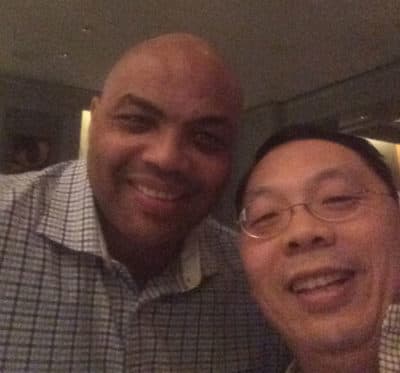
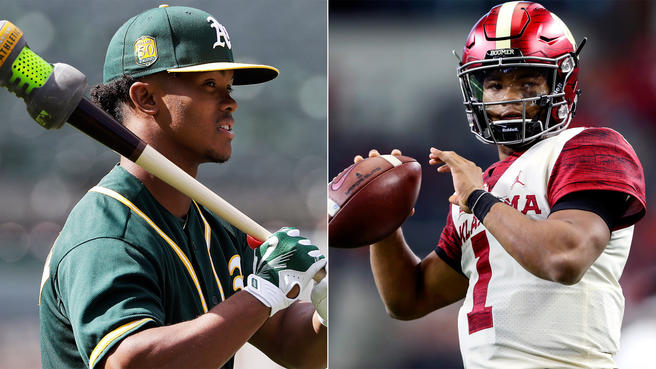

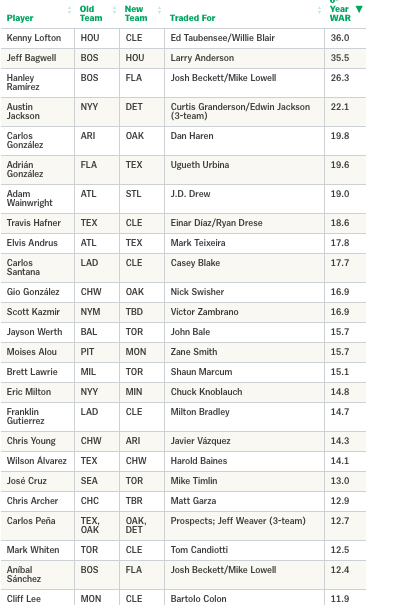
/cdn.vox-cdn.com/uploads/chorus_image/image/62674655/fox_nfl_getty_ringer.0.jpg)
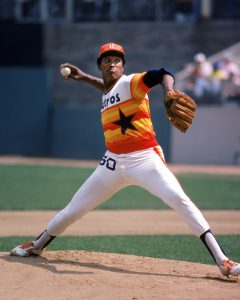
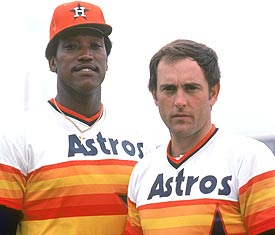
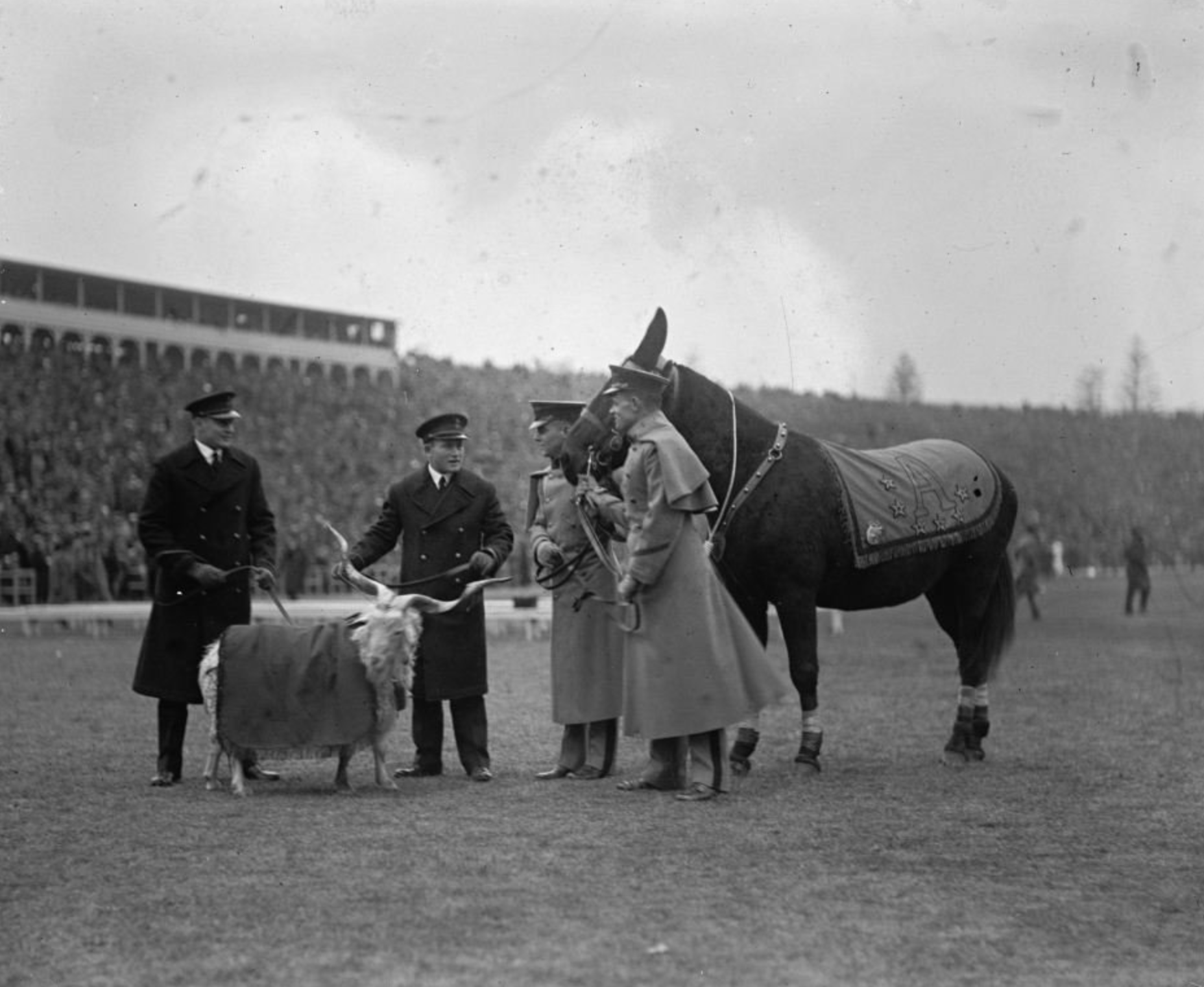
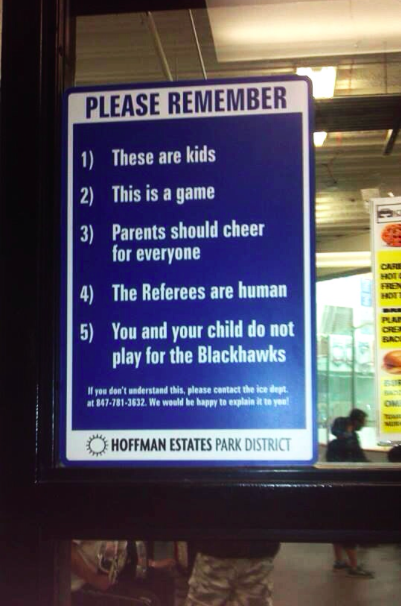
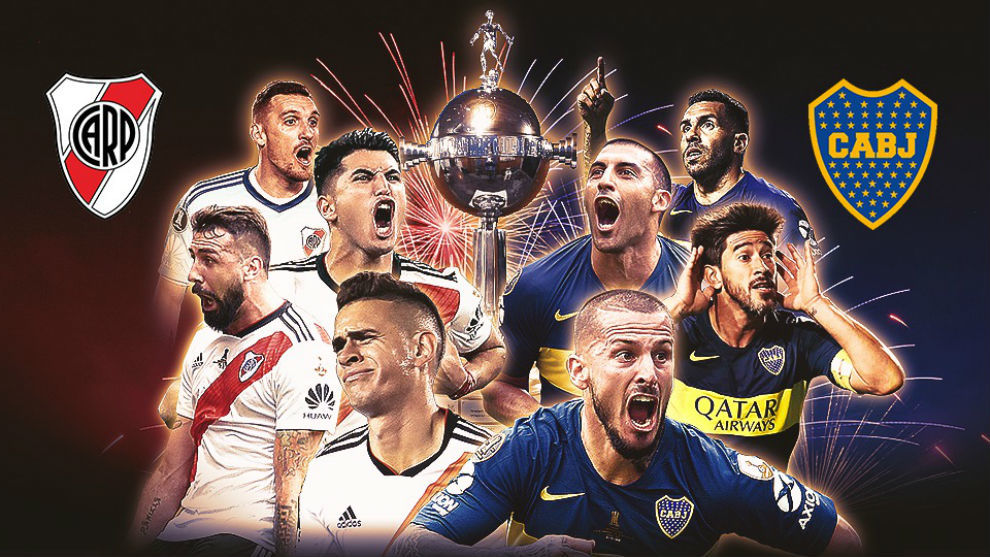
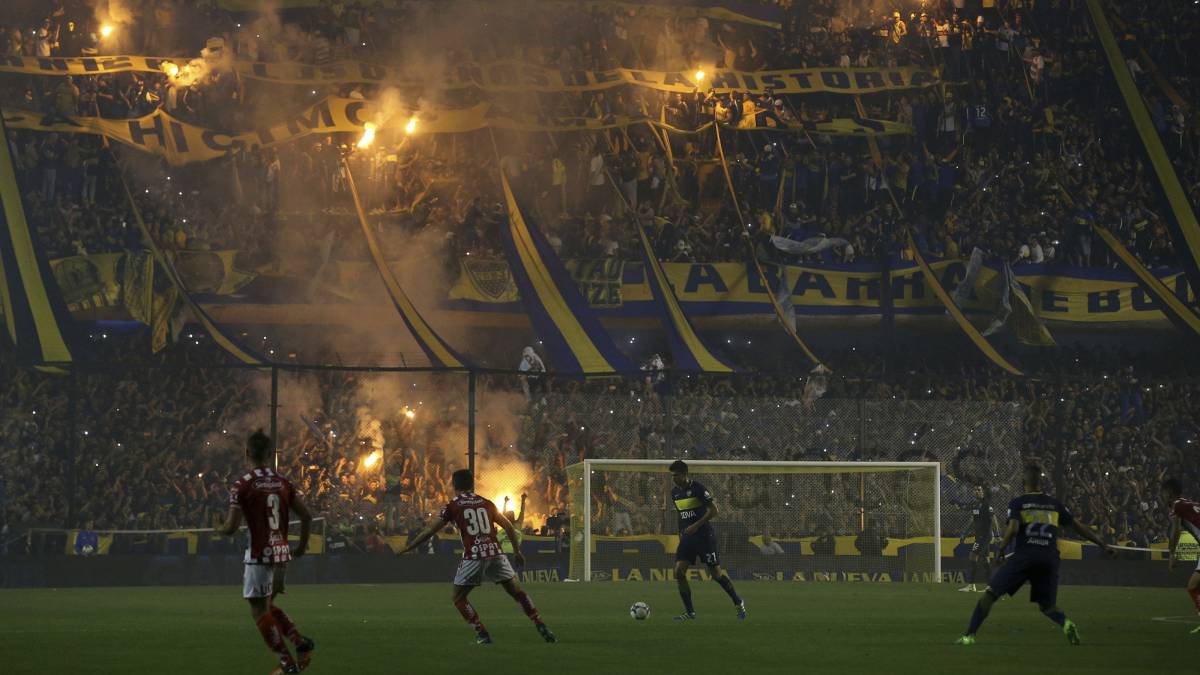
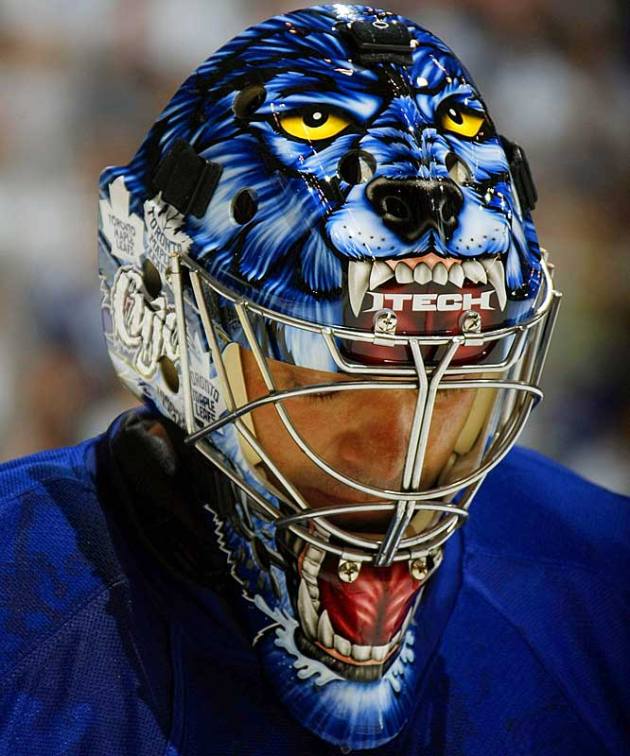
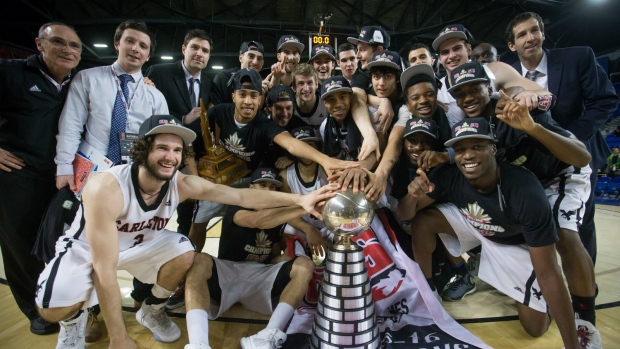
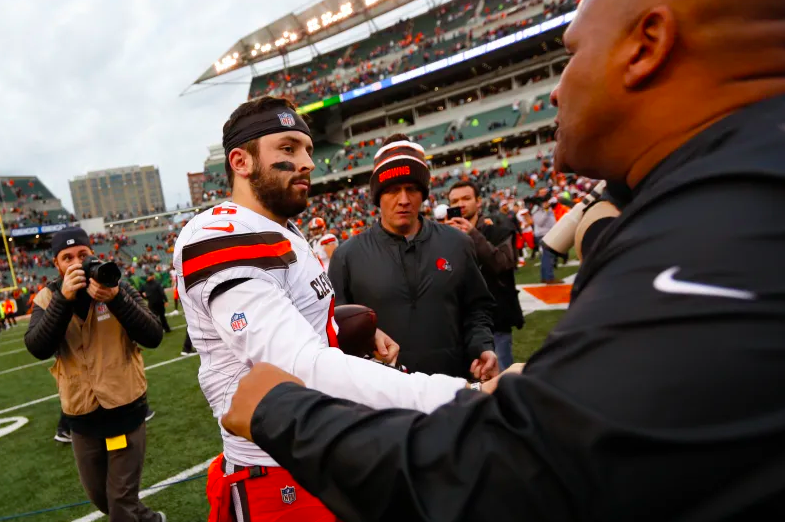
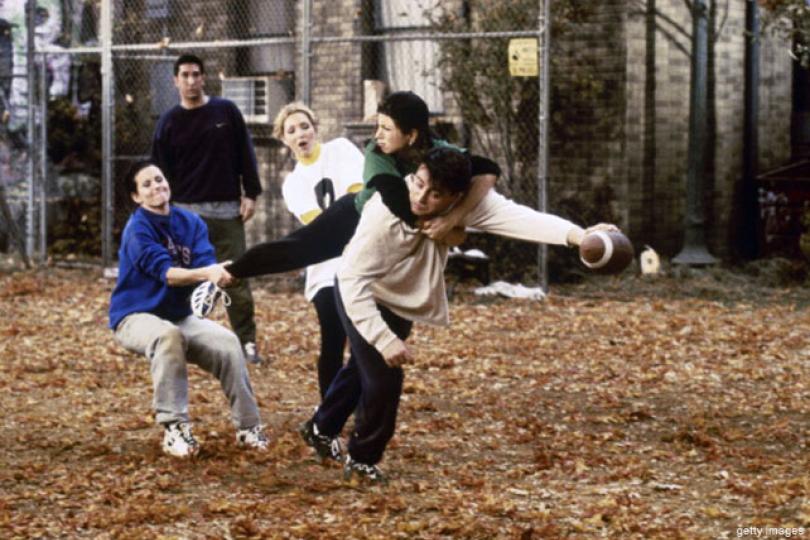

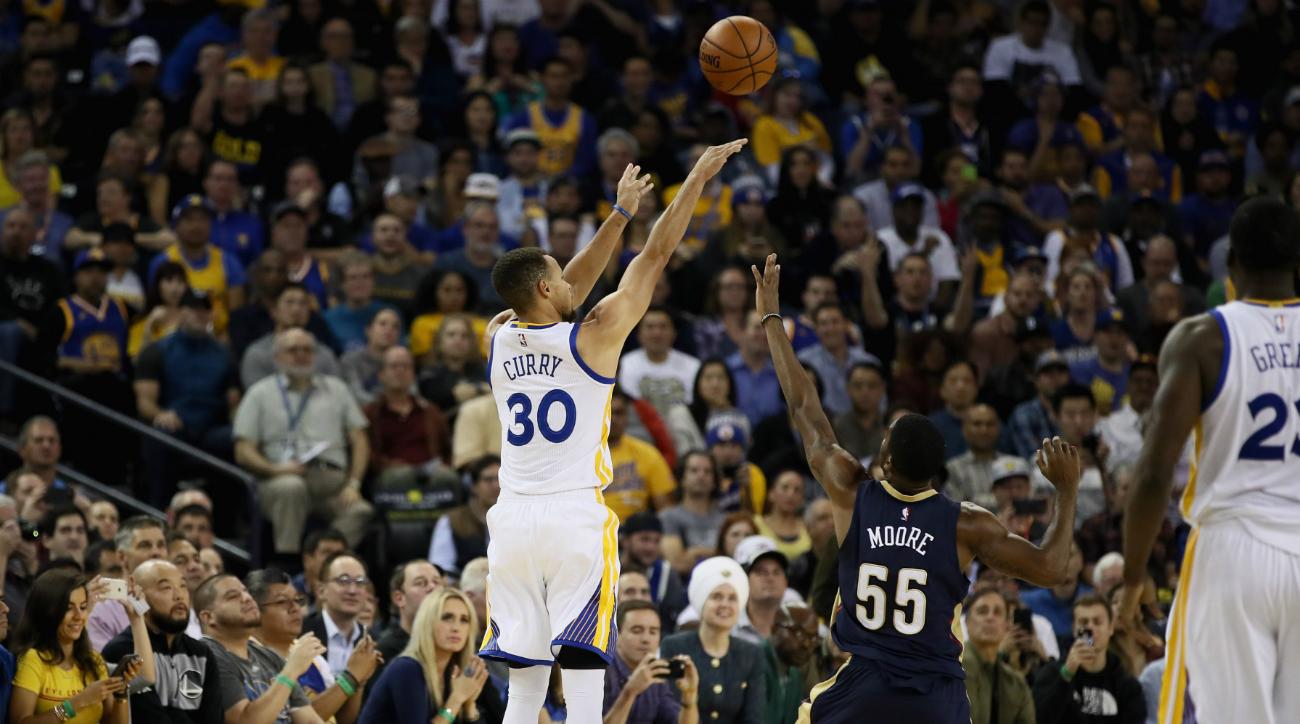
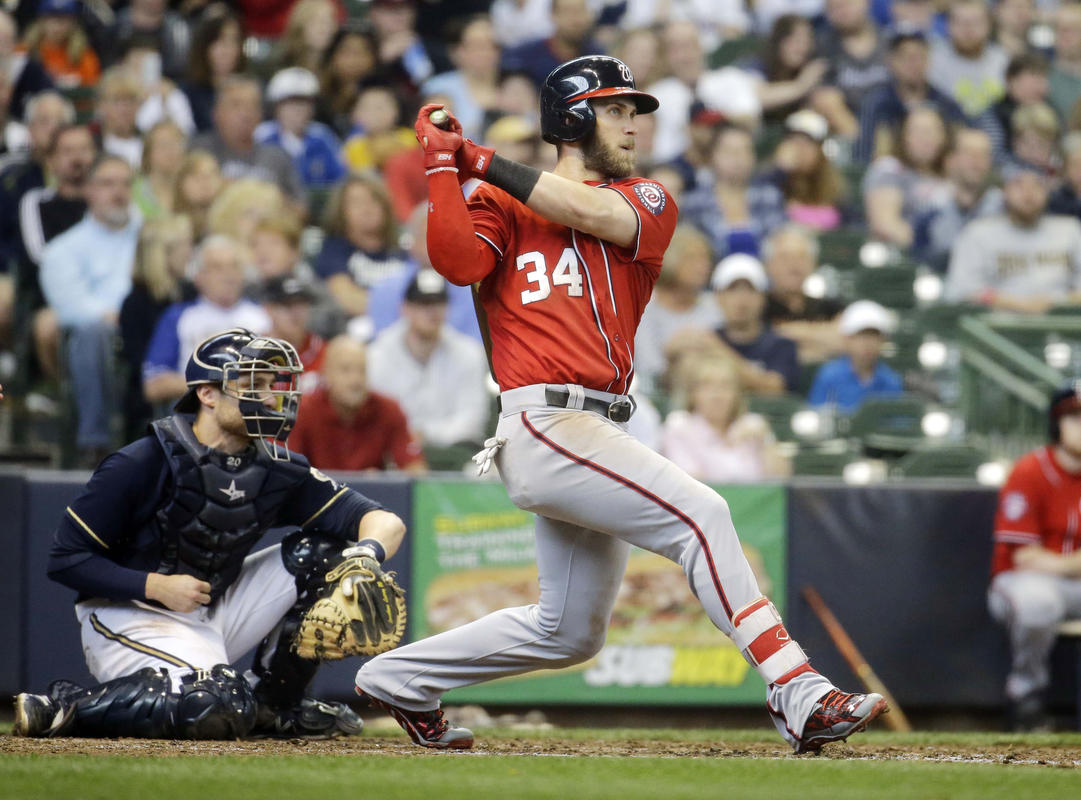
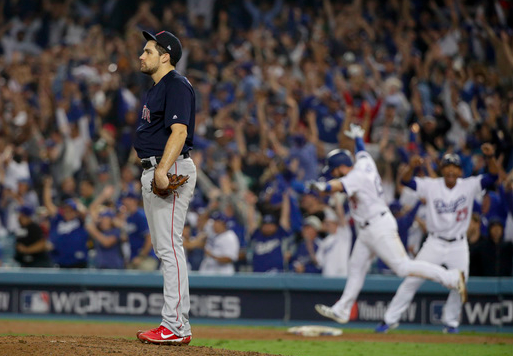
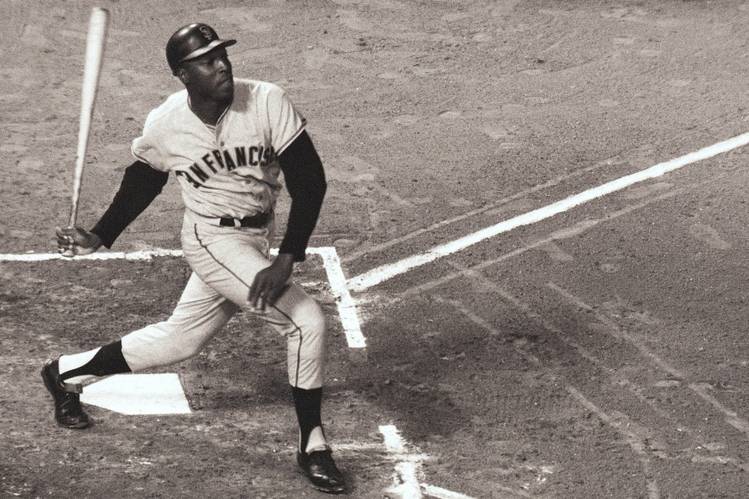
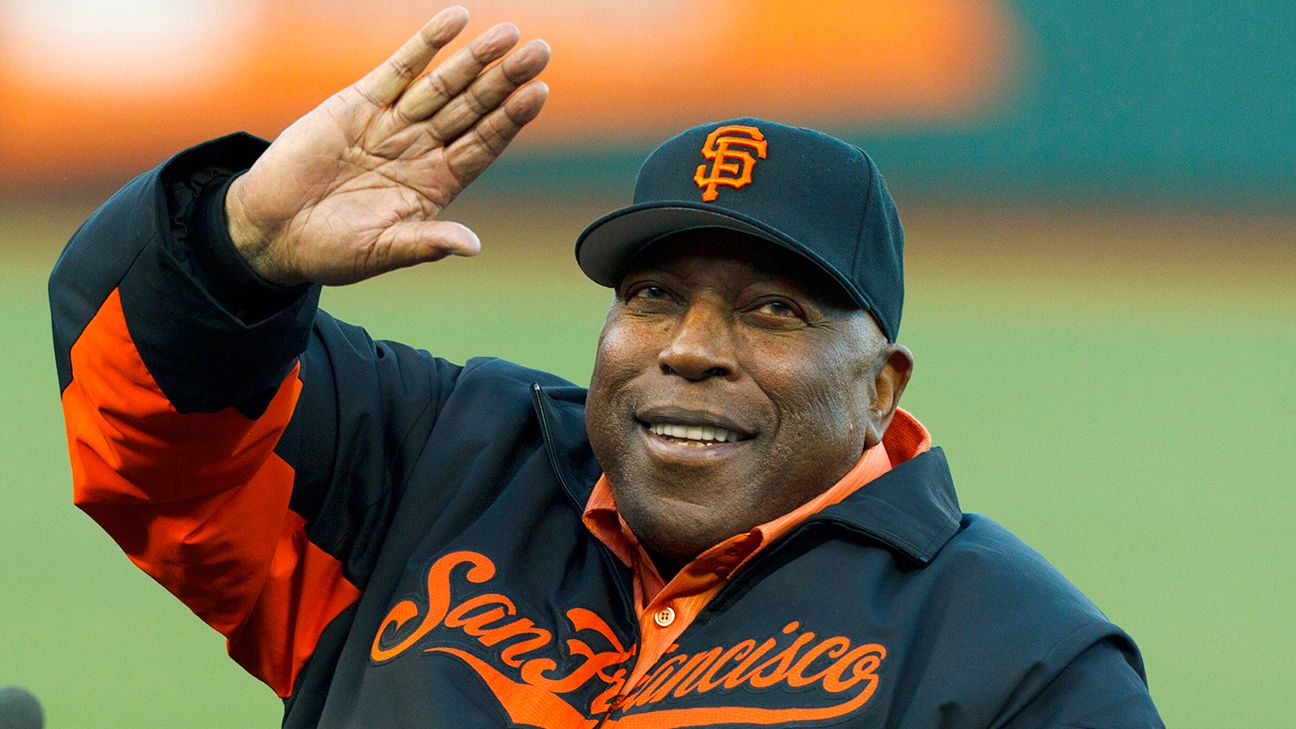
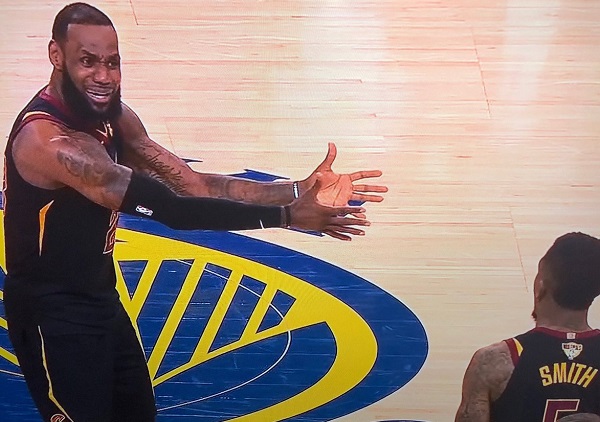

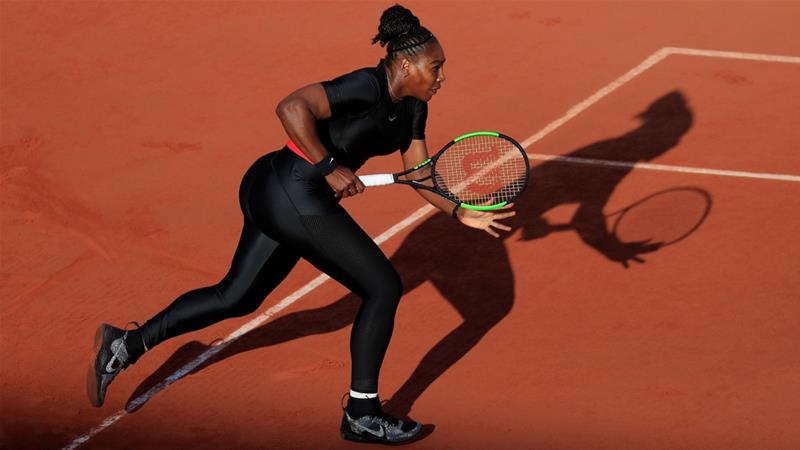
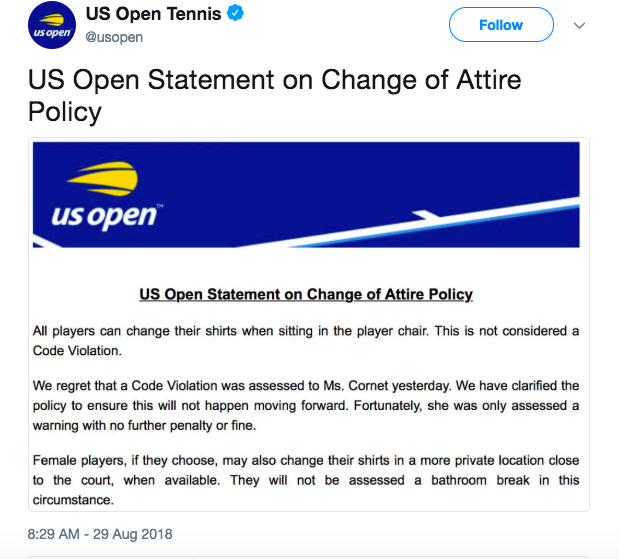
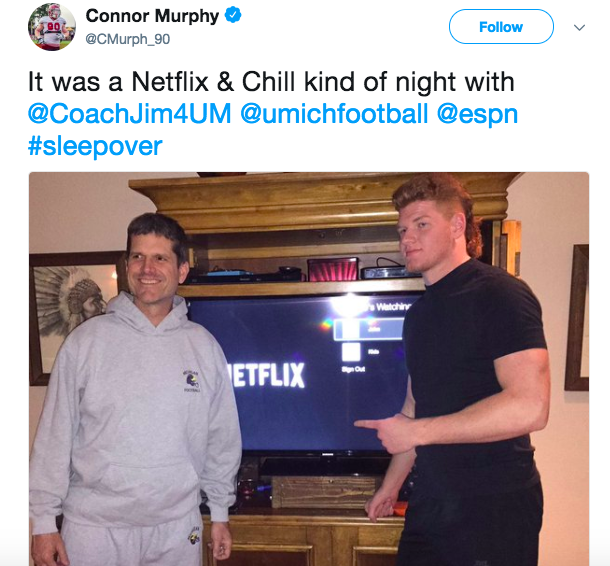


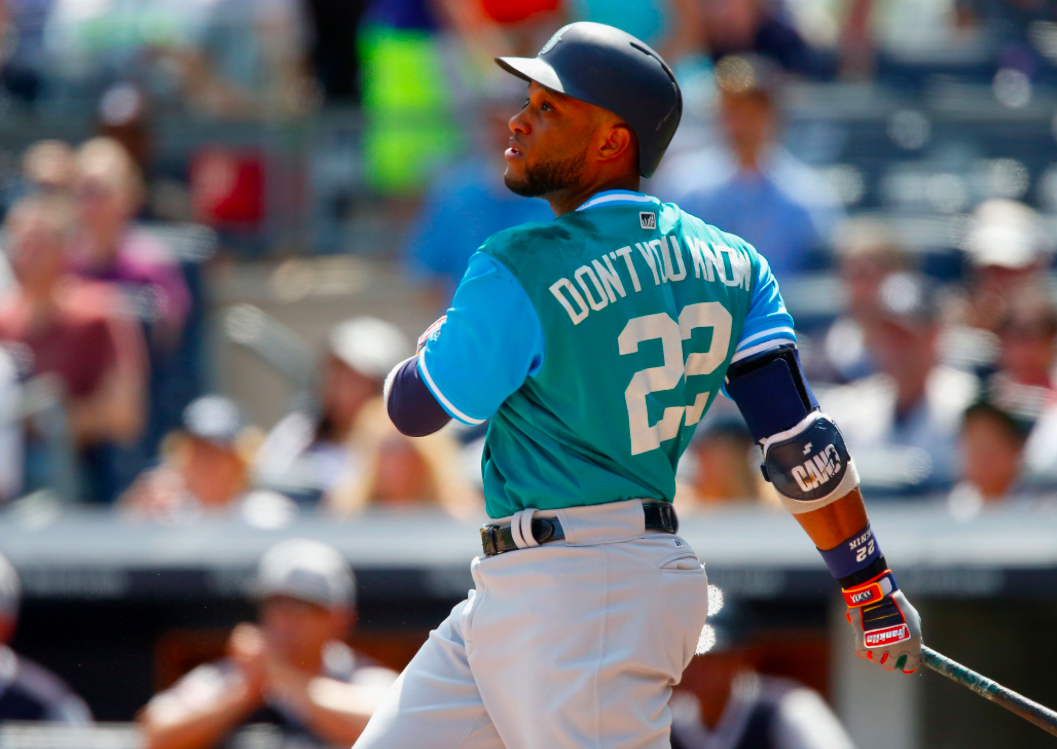
 1-2-3 SPORTS!