Week of July 14, 2014

Screen Shot 2014-07-18 at 8.21.14 AM

Summiting Everest: Money is a deadly thing.  

An examination of the world of Everest sherpas on. Everest had its most tragic day this year (16 sherpas died in a avalanche of massive proportion, even for Everest), which threatened to shut down the industry for the season. The entire culture up there at high base camp, with expeditions costing as much as $100K, and the sherpas earning relatively little, has created a precarious situation for such a high risk adventure. – PAL

Source: “Climbers Leave Everest Amid Regrets and Tensions Among Sherpas”, Bhadra Sharma & Ellen Barry, The New York Times (4/24/14)

Supplemental – A trailer for an excellent documentary I saw earlier this year about the growing tension: http://vimeo.com/78597417


Back to Back to Back to…Gone?

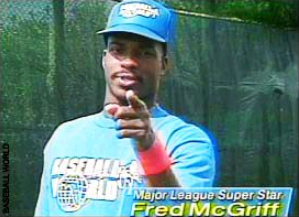
If you’re a sports fan, you’re familiar with Tom Emanski and his instructional baseball videos. “Back to back to back AAU National Champions!” The throw from center into the trashcan at home plate. And, of course, Fred McGriff, in a goofy hat, lending his endorsement. I must have seen those commercials a thousand times. The images, and the name, are burned in my memory. But I knew nothing about Tom Emanski, the man. Where’d he come from? How did he get into the business? How DID he get a big league slugger like Fred McGriff to make a fool of himself in a commercial (I was a bit surprised on that one)? And more importantly – where is he now? Fox Sports kicked off its Grantland competitor, “Just a Bit Outside”, this week with a bang – including this fascinating read. -TOB

Source: “Pitchman: How Tom Emanski Changed the Sport of Baseball – and Then Disappeared”, Erik Malinowski, Just a Bit Outside (07/17/14)

Note: There are some of you who might not know about Tom Emanski, but there is a large chunk of us (20-32 years-old), that have these instructional video commercials burned into our being. Yet another example of how nerds rule the world. Bonus: I never noticed that the iconic throw from the outfield into the garbage can bounces THREE times, and once on the mound..couldn’t they have used a kid with a better arm for this? – PAL


Home.

As we all know, LeBron announced his return to Cleveland last Friday in a well-written piece for Sports Illustrated. Since then, far too many words have been written about his decision. I read a lot of them, so you didn’t have to. This was my favorite. -TOB

Source: “The Long Game”, Seerat Sohi, Sports on Earth (07/14/14)

Note: 1) This notion that an athlete owes anything to a place is absurd. LeBron didn’t owe Cleveland/Ohio anything when he left, and he didn’t owe them anything when he considered the eventual return. Let’s say this mega-hyped high schooler is a bust – would the Cleveland Cavaliers owe him a second contract because LeBron is from Ohio? 2) I’ll buy a beer for any 1-2-3 Sports! follower who can make a legit argument that any athlete in the past 25 years had more power than LeBron James has now with the Cavaliers (yes, including Jordan). David Griffin, the GM of the Cavs (hired on May 14) may as well have “Assistant to the Traveling Secretary” on his business cards. – PAL


Deion Sanders’ charter “schools” were a mess from the beginning.

You ever heard of Emmanuel Mudiay? Probably not, but he’s listed as one of  the best (if not the best) high school basketball prospects from the 2014 class. He’s not going to Kentucky. He’s not going to Duke. He’s not going to UNC. He’s going to Europe, and he’s going because his high school was a joke (through little fault of his own). Deion Sanders’ Prime Prep schools were a disorganized mess intended on bringing in the best athletes from the Dallas/Ft. Worth area. The only problem – aside from some shady financial records – is that the school failed to comply with Texas Education Codes. In other words, the athletes the school recruited are unlikely to be eligible for college athletics. And that’s why Emmanuel Mudiay is going to Europe to play ball. Great work with the kids, Deion. – PAL

Source: “Deion Sanders’s Disaster Of A School Is Being Shut Down”, Barry Petchesky, Deadspin (7/16/14)


Chuck Taylor: International Man of Mystery

Like the aforementioned Tom Emanski story, this is another story about a guy with a familiar name, but not a very familiar story. This story (available in text and audio) is about Chuck Taylor, whose signature shoe, the Converse All-Star, has remained fashionable over many generations. -TOB

Source: “Meet Chuck Taylor: The Man Behind the All-Star”, Doug Tribou, Only a Game (07/12/14, originally aired/posted 11/02/13)

Note: Favorite factoid from this story: Nike acquired Converse in 2003 and sold 2 million pairs of the Chuck Taylor All-Stars. The 2011 figure: 70 million. Nike knows how to market shoes. – PAL


123 Q&A

Q: “It looks like there’s some sort of movement for the San Francisco Giants to retire Will Clark’s number. Believe me, I love Will Clark more than any player ever, but for some reason it’s not a no-brainer for me. He was really good with some strokes of greatness, but should teams retire players’ numbers just because we really liked them?” – Thrilled by Will, aka R. Rowe, San Francisco

A (TOB): Excellent question, Thrilled. Will Clark was an instant fan favorite in San Francisco. On the first at-bat of his career, he a hit a home run off in-his-prime Nolan Ryan. Before I dig deeper into his career, let me say this – my impression of Will is that he’s not a Hall-of-Famer, and Baseball Reference’s Hall of Fame Predictor backs that up – but he was actually better than I thought. I thought that Will Clark’s career started out with a bang, and petered out a bit after he left San Francisco. A look at the numbers, though, shows something a little different.

Clark was a career .303 hitter over 15 seasons. The bulk of those were with the Giants and Rangers. In eight seasons with the Giants, he hit .299/.373/.499. In five seasons with the Ranger, he hit .308/.395/.485. Not a significant difference (and his slugging took a little dip) – but it does show some bias on my part. Once he left the Giants, he was more or less out of my consciousness, but actually got a smidge better, and he was actually an incredibly consistent hitter throughout his career. Unfortunately for Will, the middle of his career coincided with the earnest beginning of the Steroid Era – and while Will’s numbers were still very good, they didn’t look as good in an era of bloated offense. To illustrate that – Will made five All-Star teams and finished in the top five of MVP voting four times (including a second place finish) in his eight seasons in San Francisco. After leaving San Francisco, though, he made one All-Star team and never again finished in the MVP top ten, despite having basically the same numbers he had in San Francisco.

Does his remarkable consistency, over a long period of time, give him some boost? Probably. But while that might make him closer to a Hall-of-Famer than I thought, we can’t really look at his time after leaving San Francisco to determine whether the Giants should retire his number.

As noted above, his resume with the Giants is even better than I thought – the four top five MVP finishes is pretty fantastic. The relatively short tenure is troublesome. However, there is some precedent. The Giants retired Monte Irvin’s number (he played just seven of his eight major league seasons with the Giants, all in New York), Orlando Cepeda’s number (he played just nine of his sixteen career seasons with the Giants), and Gaylord Perry’s number (he played just ten of his career twenty-two career seasons with the Giants). Of course, all three of those guys are Hall-of-Famers (despite just eight major league seasons, Irvin played many outstanding years in the Negro Leagues before breaking into the majors).

When I first read your question, my gut reaction was that Will’s number should not be retired. After checking out his numbers, though, and comparing his short tenure with the Giants to other Giants players who have had their numbers retired, I am leaning toward yes.

But there’s one last aspect to this – from all accounts, Will Clark was a dick. And I think that counts, especially in a close case. A few weeks ago, we linked to a first hand account, from a former batboy for the San Diego Padres, about how great Tony Gwynn was. Buried in that story was an anecdote about Will Clark – one day, one of the batboys was wearing an earring, and Will Clark walked by during batting practice and sneered, “Nice earring, f-ggot.” Yikes. If this were a one-off story, it’d be easy to ignore. But it’s not the first time I’ve heard that Will Clark was a less than stellar guy. I interned right after college at KNBR – and an old-timer there told me that Will Clark was racist, and that his racism caused major issues between Will and Barry Bonds in their lone season together on the Giants, which is one of the reasons why the Giants let Will walk.

How does his reportedly less than stellar character play into whether or not the Giants should retire his number? I think it should quite a bit – and in an otherwise very close call, his character issues tip the scales against retiring his number, in my opinion. But if I had to guess, I’d say the Giants will eventually do it. After all, they’ve already welcomed Will back as a team “Ambassador” – essentially he gets paid to hang around the ballpark and greet fans. I’m guessing the retired number is next.

PAL: First of all, what is this – Dear Abby? “Excellent question, Thrilled?” And this dude referred to himself as “Thrilled by Will”…What has happened to this post? Retiring a number doesn’t have to be about numbers and a HOF career. This is why I love this question. Tommy is much better and analyzing the numbers of players than I am, and he’s almost won more than a few debates based off of the numbers. But a retired number is about the relationship between a player and place. It’s gut instinct informed by a casserole of factors. You have an immediate reaction when I ask whether or not Clark’s number should be retired, and in that reaction lies your answer. This is one of those instance where your first instinct is right.

As a Minnesota guy, I know Kent Hrbek is not a Hall of Fame player (less than 300 HRs, career average in the .280’s), but there’s no doubt in my mind #14 is rightfully retired. Untangling all the factors as to why or why not leads you further and further away from the answer: because he was one of our guys. Baseball can be so objective these days…isn’t it nice for something just to remain a feeling?


Video of the Week


Like what you’ve read? Let us know by following this blog (on the right side, up near the top), or: Email: 123sportslist@gmail.com

Twitter: @123sportsnews


“Cheeseburger, cheeseburger, cheeseburger…and one large fry.”

– Tim Fisher (inspired by SNL)
Week of July 7, 2014


By popular demand, we’ve got a new feature this week – The 123 Q&A. Keep reading, and submit your questions to 123sportslist@gmail.com or on twitter @123sportsnews


The Boys of Section 220

Sometimes, when life gets stressful, I think back to one of the happiest times in my life – the summer during college. I moved back home, as did all my friends. We had zero worries. We played rec-league basketball on Sunday nights, followed by pizza and beer at the local pizza joint (wuddup Steve’s Pizza!). We had weekly poker games, even though none of us were any good. And whenever anyone felt like it, usually thought up late the night before – we drove into Sacramento to see the Rivercats – AAA baseball. We’d sit in the cheap lawn seats in the outfield. We’d drink beer and heckle the opposing team. It was awesome. This experience is hardly unique, and this story is about a group of friends, during the summer after high school, who had season tickets to their local semi-pro baseball team. They went every day. And loved every moment of it.  As the author writes, “This is a story about friendship. This is a story about growing up, and being on the cusp of growing old. This is a story about last chances. This is a story about baseball.” -TOB

Source“Closing Time”, by Ryan Winfield, Deadspin (06/23/14)


The Most Honest Sports Story Ever Written

Toward the end of his brilliant career, Floyd Patterson (the original “Pretty Boy Floyd”) began to lose – badly – like all boxers eventually do (except, apparently, Bernard Hopkins). The two-time Heavyweight Champion of the World was knocked out by Sonny Liston in the first round in consecutive fights in 1962 and 1963, at the age of just 28. The following year, Esquire published this excellent article – a look into the mind of an athlete coming to grips with the end of his career. This story is different than many of this nature, however, because Floyd reveals truths about himself not often seen in sports – especially the ultimate macho sport of boxing –  including this excerpt on why he continued to fight. -TOB

“First of all, I love boxing. Boxing has been good to me. And I might just as well ask you the question: ‘Why do you write?’ Or, ‘Do you retire from writing every time you write a bad story?’ And as to whether I should have become a fighter in the first place, well . . . when you’re hungry, you’re not choosy, and so I chose the thing that was closest to me. That was boxing. One day I just wandered into a gymnasium and boxed a boy. And I beat him. Then I boxed another boy. I beat him, too. Then I kept boxing. And winning. And I said, ‘Here, finally, is something I can do!’ And what were the requirements? Sacrifice. That’s all. To anybody who comes from the Bedford-Stuyvesant section of Brooklyn, sacrifice comes easy. And so I kept fighting, and one day I became heavyweight champion, and I got to know people like you. And you wonder how I can sacrifice, how I can deprive myself so much? You just don’t realize where I’ve come from. You don’t understand where I was when it began for me.”

Source: “The Loser”, by Gay Talese, originally published in the March 1964 issue of Esquire, re-printed by Deadspin with the Author’s permission (07/18/13)


How 14 Football Players Helped Integrate the Mormon Church

In 1969, 14 football players at the University of Wyoming (“The Black 14”) tried to take a stand against the Mormon church’s refusal to allow African-Americans to be priests. On the eve of their game against BYU, they went to talk to their coach about a possible organized statement against the racist policy. Instead of a discussion, they were immediately kicked off the team. The story garnered much national interest – and pretty much destroyed what had been a surprisingly successful Wyoming football program for good. But more importantly, what those 14 young men went through helped usher real change – by 1979, the Mormon church changed their policy and opened their priesthood to African-Americans. -TOB

Source: “The Black 14: Race, Politics, Religion, and Wyoming Football”, by Phil White, Wyohistory.org (09/17/13)


A Blueprint for a U.S. World Cup Title in 2030

The U.S. made the round of 16 in this year’s World Cup. No small feat. But it is the third time in four World Cups that we’ve made it that far, without advancing farther – and it doesn’t seem like we are any closer to doing so. Although young talents like DeAndre Yedlin and Julian Green provided hope for 2018, what the U.S. would really need to do to become a true world soccer power, is start from the ground up. I first read this article at the start of the 2010 World Cup, but it’s worth revisiting. It details how Dutch soccer club Ajax long ago created what has become the blueprint for youth soccer development worldwide. It is a fascinating read – looking at where the U.S. falls short (mainly, too much focus on games and winning, not nearly enough focus on developing skills), and what we might need to do if we ever expect to seriously contend for a World Cup title. -TOB

Source: “How a Soccer Star is Made”, by Michael Sokolove, New York Times Magazine (06/02/10)


123 Q&A

Q: Ryan R., San Francisco: “The Oakland A’s wear white cleats whether their jerseys are home OR away; thoughts?”

 A (TOB): Presently, the A’s are the only team in baseball that wears white cleats both home and away. Before I offer my thoughts, I figured I should answer: Why? So I did a little research. Charlie Finley owned the A’s from 1960 to 1980. In that time, he had a lot of interesting ideas on how to improve baseball. Some were good (night games!); some were awful (monochromatic gold uniforms – the A’s were the Oregon Ducks 40 years before the Ducks were the Ducks); some were ridiculous (he wanted to change baseballs from white to orange); and some were controversial but terrible if you have half a brain (the Designated Hitter). But another idea he had was to change his team’s shoes to white – his reasoning was apparently based on PR – Joe Namath had begun wearing white cleats for New York Jets and gaining a lot of attention for it. Finley hoped to follow suit. Apparently it worked. A lot of people made fun of the white cleats at the time (as they do now), but ultimately many teams copied the look. Eventually the 70’s ended and white cleats went the way of leisure suits – except for the A’s. They have stubbornly stuck with it. In a way, I kind of admire that. It looks terrible, but they don’t care. The A’s do the A’s. -TOB
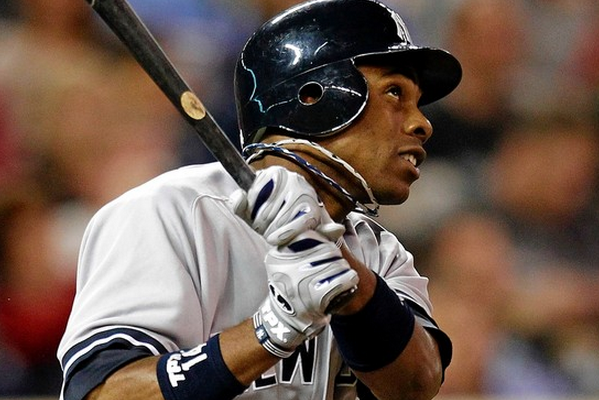
Counterpoint (PAL): White cleats are disgusting. 15-20 year-olds think they are cool. Cake-eater youth teams wear white cleats. It’s a fact. They are awful. Just awful. White cleats are so bad that they are worse than the following:
Screen Shot 2014-07-11 at 9.02.36 AM

The rope necklace

Screen Shot 2014-07-11 at 9.05.38 AM

The protective hat

Screen Shot 2014-07-11 at 9.07.27 AM

The blinker (back pocket out)

Screen Shot 2014-07-11 at 9.12.17 AM

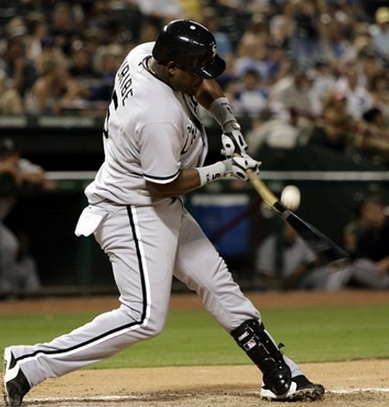
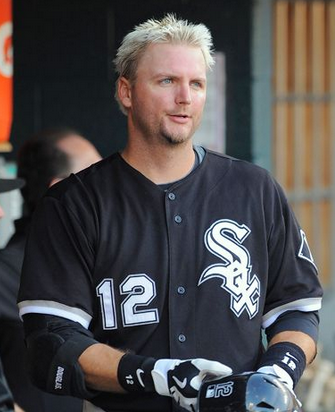
A.J. Pierzynski

-PAL
TOB: NOTHING is worse than AJ Pierzynski.

Video of the Week:

Mrs. Fields of Mrs. Fields Cookies started out as an A’s ballgirl…and she was (Is? Is.) hot. What the hell?

Like what you’ve read? Let us know by following this blog (on the right side, up near the top), or: Email: 123sportslist@gmail.com

Twitter: @123sportsnews


“You’re killing me, Smalls.”

– Hamilton “Ham” Porter

Week of June 30, 2014

Tommy likes sports. Phil likes sports. Here are our favorite stories from the week of June 30, 2014. Apologies for the belated and abbreviated edition – Phil is visiting family in the backwoods of Minnesota, and Tommy is adjusting to life with a new baby – his first child was born June 26. A boy! So many sports to be played. Hope you had a happy 4th, America!

ntpsom7vygfi1ndol7vl

Fat Kobe, just because.


R.I.P. Louis Zamperini

On Thursday, Louis Zamperini passed away. He lived one hell of a life – including competing in the Olympics, meeting Adolf Hitler, becoming a World War II fighter pilot, being shot down and surviving weeks floating and avoiding shark attacks in the Pacific Ocean, and then years of torture and mistreatment as a prisoner of war. If you haven’t read Unbroken, his biography by Laura Hillenbrand, we both highly recommend it. You will read it quickly. -TOB and PAL

Source: “Unbroken: A World War II Story of Survival, Resilience, and Redemption”, Laura Hillenbrand


In Celebration of the Hot Dog

When we go to baseball games now, there are tons of options. At AT&T Park, there are Caribbean bowls, sushi, fresh barbecued meats, and fancy grilled sausages. Lost amid the options? The classic hot dog. In fact, Phil is the only guy I know who gets a hot dog every time we go to a baseball game. This 4th of July, after you are watching the disgusting but mesmerizing spectacle that is the Nathan’s Hot Dog Eating Contest, consider bringing hot dogs to your 4th of July barbecue. People will thank you! -TOB

Source: “In Defense of the Hot Dog”, Howard Megdal, Sports on Earth (07/03/14)


There is Some Joy in Mudville

The United States finally bowed out of the World Cup on Tuesday, losing in the Round of 16 after surviving the Group of Death. They were overmatched for most of the game versus Belgium, but they nearly pulled off the upset. It was not to be, but they played valiantly, and leave us hopeful for an even better run in 2018. -TOB

Source: “The U.S. Had to Lose, But they Didn’t Have to Lose Valiantly”, Greg Howard, Deadspin (07/02/14)


The Iron Horse’s Last Stand

An interesting look at Lou Gehrig’s farewell speech, made 75 years ago this 4th of July, and the creation of the movie that made it a legend. Included is a story about how the speech, about a young man accepting his fate and appreciating all that life gave him, comforted U.S. soldiers during World War II. -TOB

Source:“Word to Remember”, Richard Sandomir, Sports on Earth (06/30/14)


Strangers in the Night

An amusing story from this week of two baseball players, Jason Grilli and Ernesto Frieri, traded for each other and headed for their new teams, running into each other in the airport bathroom while awaiting their respective connecting flights. -TOB

Source: “It’s a Small World”, Tom Singer, MLB.com (07/02/14)


Video of the Week:

I like soccer and love the World Cup, but this was too good.


Like what you’ve read? Let us know by following this blog (on the right side, up near the top), or: Email: 123sportslist@gmail.com

Twitter: @123sportsnews


“I brought you into this world, and I can take you out.”

– Dads Everywhere

Week of June 22, 2014


No. No.

I like baseball. Do you like baseball? I like dingers. Do you like dingers? Of course. Who doesn’t like dingers? But I also like games with NO dingers, whenthose games also have no hits by one team. No-hitters are great, but they’re especially great when your team gets one (and embarassing when your team is the no-hittee). Around the 6th or 7th inning, not-so-subtle text messages are sent around. You know immediately what the hint is getting at, but you still check the live box score and say, “Whoa.” On Wednesday, Tim Lincecum threw a no-hitter. It was his second, you know. The best thing about a no-hitter is all the things. But here are the top fifty.

Source: “50 Awesome Things About Tim Lincecum’s (Second) No-Hitter”, Grant Brisbee, McCovey Chronicles (06/25/2014)


I Hope His Shoulder Was Al Dente…

If you tune into soccer every four years to watch the World Cup, you may not have been aware of Luis Suarez before this week. But now? Now you know him. Late in Uruguay’s match against Italy, needing a win to advance, Suarez bit an opponent. Suarez then tried to pretend like the player had struck Suarez in the face, and went down, attempting to draw a penalty kick. Uruguay would score shortly thereafter, advancing to the Round of 16, and sending Italy home in the process. This was below bush league. This was worse than classless. This is just Luis Suarez, a player with a history of biting opponents (seriously, this is the THIRD time he’s done this) and other transgressions, to go along with other worldly talent. -TOB
Source: “The Many Crimes of Luis Suarez”, Billy Haisley, Deadspin (06/24/2014)


“What is a Million Dollars Compared to the Love of Eight Million People?”

This is the rhetorical question once posed by Teofilo Stevens, a now deceased Cuban boxer, who none other than George Foreman declared the greatest heavyweight of their generation. Stevens turned down millions of dollars to fight Muhammad Ali, in order to live a life of poverty in Cuba – a life he believed in. In contrast, athletes like Yasiel Puig risk their lives for millions of dollars in the U.S. – and are treated like indentured servants for the rest of their lives. A short excerpt, that should convince you to read the entire 7,000+ words:

“Stevenson was in an impossible situation. He not only rejected America’s millions, but he also had to pretend there was no consequence. Stevenson had to be just as defiant in his choice as Puig was pretending he’d reached salvation entering American life with no lingering pain. Zero tolerance for dissent on this point cuts both ways. The emotional truth remains hidden.”

After you read that, watch the 15-minute documentary, “Ali vs. Stevenson, The Greatest Fight That Never Was” at the end. -TOB
Source: “Heroes For Sale: Teofilo Stevenson, Yasiel Puig, and the Agony of the Cuban Athlete”, Brin-Jonathan Butler, SB Nation (06/10/2014)


Pay Him. Pay Zat Man Heez Money.

LeBron James just announced that he would opt out of the final two years of his contract with the Heat and become a free agent. This is exciting news to me. I sure wish he comes to the Kings or the Warriors. In a free market, I think the Kings owners could afford to throw a ton of money at him, and convince LeBron to be a conquering hero. But, the NBA is not a free market. The league has implemented many restrictions to limit how much teams can spend on player salaries (e.g., max individual salaries, luxury tax). This has all somehow created a world where guys like Rudy Gay make nearly as much as LeBron James, which is nothing short of stupid. But if you lifted the cap on individual salaries and paid players based on production, how much would individual players be worth? As it turns out, LeBron is worth approximately $45 million. Per year. And Tim Hardaway Jr. should have PAID the Knicks over $12 million dollars for his performance last season. Ouch. That’s the kind of sports world I’d like to live in. -TOB
Source: “How Much is LeBron James Really Worth?”, Kyle Wagner, Deadspin (06/24/14)


Video of the Week: 

Like what you’ve read? Let us know by following this blog (on the right side, up near the top), or: Email: 123sportslist@gmail.com

Twitter: @123sportsnews


“I don’t know why they call this stuff hamburger helper. It does just fine by itself…”

– Cousin Eddie

Week of June 9, 2014

cakdauqhmgswm3umyezd


Argentina needs Messi, but do they want him?

Lionel Messi left his home in Argentina when he was 13 for pretty understandable reasons – one of the best clubs in Europe wanted him (FC Barcelona), and they would provide the medical treatments he needed (he had a growth-hormone deficiency). Yet, even as Messi is widely considered one of the best players ever, Argentineans have a surprisingly complicated relationship with their star. They don’t completely see him as one of their own. “We’ve always liked how Messi plays,” the driver, Dario Torrisi, told me, “but we don’t know who he is.” This story does a great job exploring what “home” means in the context of the world’s most popular game. -PAL

Source: “The Burden of Being Messi”; by Jeff Himmelman; The New York Times (6/5/14)

TOB: I visited Argentina about a month before the 2010 World Cup, as Messi was tearing up the Champions League. I can say that Argentina was pretty bonkers for him. The media narrative right now seems to be that Messi is not loved in Argentina (though the latest issue of ESPN the Magazine argues that, while this is true for those old enough to have lived through the 1986 World Cup, the younger generation loves Messi and finds Maradona rather abhorrent). He’s a quiet guy – he’s not bombastic. He has struggled, comparatively speaking, on the national team. He’s not Maradona. This is all true. But he’s amazing to watch, and some of his national team struggles can be pinned on a coach who had no idea how to use him (and had no business being coach *coughMaradonacough*). I think this is his time – and I think Argentina should go deep into this World Cup, with Messi leading the way.  


The Times, They Are a-Changin’

I can’t watch college football anymore without feeling a twinge of guilt, though I still do. In fact, I’m a season ticket holder.  But a tidal wave of change is preparing to hit American college sports. We might not know yet when exactly it will arrive and what it will leave in its wake, but it is coming. The debate on whether to pay college football players seems to be approaching a cultural tipping point (with Title IX implications of paying players threatening to leave college sports completely unrecognizable). The myth of amateurism has never rung so hollow. Making matters even worse is the fact that universities nationwide are facing budget reductions, as state legislatures have been cutting back on higher education funding for years (California, my home state, chief among them). And while public university budgets are being slashed, with those costs being passed on to students, universities across the country continue to subsidize their athletics programs with millions of dollars per year. So it was with some pride that I read this article, about how my alma mater, the University of California, Berkeley, has attempted to eliminate its athletic subsidy. In a few years, Cal has reduced its athletic subsidy from $12.1 million in 2010, to $3.2 million in 2013. The job is not done, but Cal has set a model that other schools should look toward. TOB

Source: “Cal Finds Little Company in Push to Cut Subsidies”; by Steve Berkowitz, Christopher Schaars, and Jodi Upton, USA Today (06/05/2014)

PAL: About a week ago I texted Tommy to give him crap. I’d heard the football field at Memorial Stadium (Cal’s football stadium) referred to as “Kabam Field” on the local sports radio station. Cal had struck a deal with a mobile game maker. “How lame,” I thought, as I grabbed for my phone. In fact, it’s not lame at all. Aside from the fact no one will ever, ever, ever refer to the field as “Kabam Field” in any normal conversation, Cal stands to earn $18 million over 15 years. Among other things, that money will be used to help finance the stadium renovations and student-athlete center (you can find the breakdown here). Lame? No. More like common sense.


A Million Dollars a Year on Fantasy Sports? What the Hell?

You ever win a fantasy league? I have. A few times. The gratification is short-lived, but I still feel pride in each of those wins, and aggravation for the losses. Months of work and hours pouring over stats often come down to something as stupid as 3 blocked shots in 5 minutes by a point guard who had 3 blocked shots the entire season before that, costing you the title (this actually happened to me). But what if the season didn’t take months, but occurred in the course of one night? And what if you bet money on that “season”? And what if you played thousands of “seasons” per night? You’ve just entered the world of Cory Albertson, a business school student at Notre Dame, who has turned fantasy sports into a science – and expects to make $1 million dollars this year on fantasy sports. Yes, one million. On fantasy sports. -TOB

Source: “A Fantasy Sports Wizard’s Winning Formula”; by Brad Reagan, Wall Street Journal (06/04/14)

PAL: When something  conceived as a game then becomes a business, there will be gap when it’s ripe for the taking. Fantasy sports hedge fund? I have some buddies who will no doubt contribute to this dude’s next vacation estate. Also, did you notice TOB mentioned he’s won a fantasy league a few times?


This is the perfect story if you don’t love (or “get”) hockey.

I grew up playing the sport in Minnesota. It’s a great game. Fun to play, fun to watch in person, and it features incredible athletes. Aside from a little San Jose Sharks fever once every couple of years, there aren’t a ton of hockey fans out here in California, even when two of the best teams play out here (it pains me to write that). Here’s a cool story breaking down a seemingly tiny, momentary element of the game – the faceoff. Like a jump ball in basketball, it determines possession; however, unlike in basketball, faceoffs happen dozens of times in a game where scoring is much harder to come by. What makes a player a great faceoff guy? Quick hands, researching the tendencies of the refs, and of course the willingness to headbutt your opponent. -PAL

Source: “Controlling the Faceoff is Critical to the Game of Hockey”; by David Wharton, Los Angeles Times (6/11/14)


No Respect At All.

As I write this, the Heat just lost by 21 points on their home floor in Game 4, and the Spurs have taken a 3-1 lead in the NBA Finals. That the Spurs are winning should not be much of a surprise to anyone who has been watching the NBA closely this year. The Heat are talented but old, and the Spurs are incredible, and have mostly torn through these playoffs. What continues to amaze me, though, is that LeBron James does not get the respect he deserves. “He’s not Jordan.” Yeah, and? No one is. “He abandoned Cleveland on national TV.” A mistake, to be sure. But why has LeBron not been forgiven? The guy has won two NBA titles and and made 5 NBA Finals. He’s the greatest player of his generation, and the ultimate team player. He works hard on defense, unlike many star players, and he shares the ball like Magic Johnson. Every bit of respect seems to be given grudgingly, and every time he does fail, people seem to relish it. Why? -TOB

Source: “LeBron James Has Earned More Respect Than He’s Given”; by Vincent Goodwill, The Detroit News (06/08/14)

PAL: I typically deplore when people play this card, but here I go: Magic and Michael didn’t play in the era of Twitter and 24-hour sports channels. Every sports story (and every news story for that matter) is reported on 10 percent of the time, then analyzed, editorialized, and debated the other 90 percent of the time. Stories are then made out of the opinions expressed about the original news story. This is why I can’t watch ESPN anymore (they aren’t the only guilty party, but definitely the most insufferable). LeBron was/is the most popular athlete when this media pivot took place. It’s not fair, but it makes sense.


Video of the Week Baseball players are the best.    

Like what you’ve read? Let us know by following this blog (on the right side, up near the top), or: Email: 123sportslist@gmail.com

Twitter: @123sportsnews

“I saved Latin. What did you ever do?” – Max Fischer

Week of June 2, 2014

Exploding-head


If This Happened in 2014, Skip Bayless’ Head Would Actually Explode (See Above).

Deadspin has been running informative and not insanely long previews of each of the 32 teams competing in the World Cup, which begins next week. Within this preview of Spain’s chances to repeat as World Cup Champions, there is an absolutely insane story that no modern sports fan will believe: in the 1950’s, Barcelona and Real Madrid were both attempting to sign a highly sought after Argentinian soccer player, Alfredo Di Stefano. Some controversy existed over which South American club team owned Di Stefano’s rights. Barcelona arranged a transfer with one of those clubs (Argentiniean club River Plate), but they also needed consent from Colombian club Millonarios – Millonarios refused, and in turn agreed to transfer him to Real Madrid. After much squabbling, a “compromise” was reached – Di Stefano would play the next four years alternating each year between Barcelona and Real Madrid. What the hell?  I can’t even imagine this situation happening today. I have read suggestions that LeBron should sign one year contracts with the team he thinks he can help win the most, and that would be highly entertaining and crazy, but still not as crazy  as this. -TOB

PAL Note: Well, at least Fascism gave us this gem of a story. Di Stefano was probably the only guy in all for Spain universally tolerated.  

Story Link: “How Spain Can Ride Tiki-Take to International Immortality”, Greg Howard, Deadspin (06/03/14); More detailed reading of the story on Wikipedia


Portrait of the Wrestler as an Old Man

Fueled by the violent death of his sister, Dan Gable became the greatest wrestler (non-WWE division) of all-time, including an incredible run to win the Olympic Gold medal in 1972. Without missing a beat, he later became the most successful wrestling coach of all-time, at the University of Iowa. He retired almost 20 years ago, but wrestling still consumes him. Now, at the age of 65, he has struggled to find purpose in life – but may have found it in keeping wrestling alive. Published last fall before the International Olympic Committee reversed a decision to remove wrestling from the Olympics, a profile of a still fierce competitor, dealing with aging, buried pain, and the family and sport, intertwined as they are, that he loves. -TOB

PAL Note: Wrestlers are obsessive nuts, but to lump Dan Gable in with…anyone would be a mistake. I both envy and pity him. Greatness comes at a cost, not the least of which is the inability to live a well-adjusted life. This quote pretty much nailed Dan Gable for me: “Gable’s life is governed by justification and guilt, as if he’s forever paying off some unseen debt.” This is a fascinating read, sports lover or not.

Story Link: “The Losses of Dan Gable”, Wright Thompson, ESPN the Magazine (08/21/13)


It’s a decent bet the fix is in for the World Cup.

I’m guilty of it. I’ll moan, “this game’s fixed” at the bar, usually about an NBA game, but I don’t really believe it. Here’s a story pretty clearly laying out a widespread fixing scheme in professional soccer (including documented attempts to fix 2010 World Cup matches in South Africa). It’s happening in the most popular sport in the world, it doesn’t seem that hard to do, and it seems really hard to detect when it’s happening in such a global game. – PAL

TOB: Unlike the news the scandal this week about Qatar having bribed its way to hosting the 2022 World Cup, which I do not care about, this iis terrifying to me as a sports fan. Reading this article reminds you how easy it is to fix a sporting event. The money being given to the refs isn’t even that high. This is every major sports’ worst nightmare. In hindsight, it’s rather amazing the NBA escaped the Donaghy scandal as unscathed as it did. Yikes.

Story Link: “Fixed Soccer Matches Cast Shadow Over World Cup”, By Declan Hill and Jeré Longman, New York Times (06/01/14)


Baseball players love to say “Respect the game,” and make up rules like 12 year-olds in a tree house.

I subscribe to baseball’s most basic unwritten rules. For instance Barry Bonds should have been drilled about 300 times the way he stood at home plate after hitting a home run (sorry Giants fans, but deep down you agree with me). However, I don’t think all of the rules outlined in this fun read pass the porn test (I can’t define it, but I know it when I see it). Here’s my proposed rule: any position player with a career average under .250, and any pitcher with a career ERA over 4.00 can’t make or comment on unwritten rules. In that case, a couple dudes’ quotes in this article need to be redacted (I’m looking at you, Jonny Gomes).

TOB: I know there are a lot of stupid baseball players, but somehow Kurkjian found a lot of them. The quote that most sticks out, from Diamondbacks pitcher Brandon McCarthy: “In hockey, guys don’t take their skates off and slash an opponent’s throat with the blade. In football, you never see a guy take off his helmet and just bludgeon an opponent. We’ve been playing baseball since the 1800s. We just have more unwritten rules.” Someone might want to tell Brandon McCarthy that those are WRITTEN rules. A hockey player would get into a lot of trouble, both within his sport and with the law, if he took off his skate and slashed an opponent’s throat with the blade. Further counterpoint can be found here, from former major league pitcher Dirk Hayhurst.

Story Link: “The Unwritten Canon, Revealed”, Tim Kurkjian, ESPN.com (05/31/14)


$10 million now or maybe $60 million later? Baseball teams are getting smarter about contracts.

MLB teams getting into the insurance business. They are offering extensions to younger and younger players. Pay more than they have to now to save (potentially) a lot on the back end of the contract and avoid arbitration. The prospects get a lot of money now, but not as much as they could potentially earn. Most young studs (agents hate this trend) don’t bite; however a few have taken the money. Houston’s Jon Singleton is the latest to take the money and run. -PAL

TOB: The most fascinating thing about this story is all the backlash Singleton has gotten from other major leaguers, who are afraid of the impact on the rest of the player salaries. Although I’ve never been a part of a union, I understand their general utility. In this case, though, I want to smack these guys. Jon Singleton just guaranteed himself $10 million by the time he is 26 (the deal could be worth up to $35 million with team options). If he’s a star, this is a very team friendly deal, but the history of baseball is littered with “Can’t Miss” prospects who missed. Singleton has just set himself up for life, and now he can go out and play baseball. When the deal is over, he’ll be 29 and able to sign one megadeal. If he’s bad, he just made the best decision of his life. Seems like a win-win to me.

PAL: This story is a nice companion piece to a story we featured a couple weeks ago. Grantland’s Ben Lindbergh laid out how teams make decisions about promoting hot prospects.

Story Link:The Astros Just Changed the Game for Big Prospects in Small Markets“, Barry Petchesky, Deadspin (06/02/14)


Video of the Week

It’s from the last World Cup, but this commercial is still the greatest, and should get you pumped for next week.

Like what you’ve read? Let us know by following this blog (on the right side, up near the top), or:

Email: 123sportslist@gmail.com

Twitter: @123sportsnews

“So I say that I gotta be free, so I say that I gotta be me.” -Revenge of the Nerds


Week of May 18, 2014

The Western Conference Finals.


What Exactly Does a Pitching Coach Do? More Than You Might Think.

I’m a huge baseball fan. But sometimes I wonder, what exactly does a good pitching coach do? What does it mean to be a good pitching coach? Why do some seem to have such good reputations in the media? Doesn’t the staff’s success have more to do with talent, and the organizations ability to discover it? 123 favorite Jonah Keri explores why the Cardinals staff has been so good for so long, no matter the names: the foundation laid by former pitching coach Dave Duncan is the reason why. -TOB

Story Link: “The Duncan Way”, Jonah Keri, Grantland (05/21/14)


“I’ve been waiting 20 years for someone to knock him on his ass.”

Refs might not decide the outcome of a game, but they sure as hell influence it. Part 5/5 of a series examining NBA officiating and its lack of public accountability includes the story of Tim Donaghy–the ref busted for betting on games back in 2007–knocking out Joey Crawford (the bald ref that everyone hates, especially the Spurs). -PAL

Story Link: “Punching out Joey Crawford, and the issues on NBA officiating”, John Canzano, The Oregonian (05/16/14)


When’s the right time to call up a stud baseball prospect? Follow the money.

I’ll admit it; I’ve never completely understood the facts of team control over their baseball draft picks. This article lays it out nicely and explains the possible routes a team can take to promote (or delay) a stud minor leaguer to the bigs. Are teams putting playoff births at risk in the interest of staving off arbitration for one more year? How many divisions or wildcards have been won by a game? -PAL

Story Link: “The Polanco Problem…” Ben Lindburgh, Grantland (05/19/14)


Ever Wish You Had Grown Up Playing Sports With a Future Star? This Guy Actually Did.

Growing up, everyone probably had one or two people they played sports with, or against, that you were sure would be a future star. Usually, it never happens. This is a fun story about how a guy, about to graduate from Georgetown Law School played on a team with Kevin Durant and Michael Beasley. Yes, Beasley was always kind of weird. -TOB

Story Link: “The Lawyer Who Blocked Kevin Durant”, Dave McKenna, Grantland (05/16/14)


Sleeping With the Enemy

When my team is knocked out, I rarely root for a division/conference rival to do well. Did I want Stanford to win the Rose Bowl after my Cal Bears went 1-11 last year? Hell no. Did I cheer when they lost that game to Michigan State? Hell yes. Screw them. But that’s not the case for many Canadian hockey fans, a country that hasn’t seen the Stanley Cup return home to Canada in 21 years. They wrap themselves in the flag and root for their otherwise bitter enemies. -TOB

Story Link:  “Canada First: Why I Root for Teams I Hate”, Eva Holland, Grantland (05/22/14)


Video of the Week:


Like what you’ve read? Let us know by following this blog (on the right side, up near the top), or:

Email: 123sportslist@gmail.com

Twitter: @123sportsnews

“And just remember, fans, in the airport of life, sports is just the baggage.”

-A.C. Slater