Week of May 15, 2020

Pretty much sums it up. Photo by Carlos Gonzalez, Star Tribune


Rule of Thumb: Never Side With Billionaires Over Millionaires

The MLB PR machine is hard at work this week, trying and seemingly succeeding, in one fell swoop, to turn many fans against the players in a brewing dispute: what does a return to baseball look like? More specifically, how do the finances work.

Some things to keep in mind: MLB does not have revenue sharing. In the NBA and NFL, player salaries (collectively) are tied to revenues through the salary cap (and floor). The cap and floor are set each year based on the previous year’s revenue. MLB does not do that. The players make what they make. Owners can spend as little or as much as they want. And if teams make a gigantic profit, they keep it for themselves. And they have – MLB teams have made profits of almost $6 billion dollars the last three years. 

But this year, the owners want things to change. When the season was shut down, the players immediately agreed to prorate their salaries according to the number of games played. Which was an insane give away by the players, if you ask me. The vast majority of baseball revenue comes from TV, and so far there is no reduction in the TV contracts, despite missed games. Plus, these are contracts – the players could have stood their ground and demanded to be paid. But they instead showed their good will by agreeing to significantly reduce their pay.

But that wasn’t enough for the owners. Now they are asking the players to tie salaries for this season to revenue, as they are concerned about the financial hit if games are played without fans (no tickets, no concessions). This would further reduce player salaries for the year, as revenues should be down. 

But remember, the last three years the owners have made almost $6B. So what would revenues be down this year without fans? Fangraphs’ Marc Edwards did some quick math and he came up with this:

Rob Manfred has indicated 40% of revenues are home stadium-related, in line with Forbes’ figure of around $4 billion. As to how that $4 billion figure might be made up, we already have the players discounting their salaries. If, for example, 100 games are played, players are giving up more than $1.6 billion in salaries. As mentioned above, players made amateur spending concessions that come close to $400 million this year. Expenses will likely go down if games are played in empty ballparks or at neutral sites (one estimate was by as much as 40%), and if teams can save even 25% of their expenses, that might mean another $1 billion dollars. Factoring in 2019 team profits of $1.5 billion per Forbes, and the league as a whole might end up turning a profit if they can keep all of their television revenue.

In other words, most teams will either break even, or perhaps lose a little bit. But that is not good enough for the owners, and as I said at the outset, they are trying to blame the players. Do not fall for their bullshit. As Edwards eloquently puts it:

The owners are trying to make the return of baseball about money. They want the reward without the risk because that’s what they’ve grown accustomed to after years of incredible revenue and increasing profits. The players negotiated a deal with the understanding that if it wasn’t safe to play, they wouldn’t have to. For MLB to try to use the fact that it is currently unsafe for fans to attend games as a reason for players to subsidize their potential losses reflects poorly on the owners and the Commissioner. After negotiating a CBA that turned out to be a huge win for the owners, the players knew they would have to wait five years for another crack at the bargaining table. The owners waited five weeks before crying poor.

For the most part, the players want to play. The fans want to watch. The owners are getting in the way with a shortsighted attempt to squeeze a little more money out of the players, a stance that could potentially damage the long-term health of our sport and their business.

Remember this when MLB’s PR kicks into overdrive. -TOB

Source: After Years of Profits, MLB Owners Ask Players to Subsidize Potential Losses,” Marc Edwards, Fangraphs (05/11/2020)

PAL: Good, pull, TOB. Revealing look at the PR game vs. what’s actually taking place, i.e., the math. I’d posit the owners’ PR move relies on fans having more immediate concerns about the health and employment of their loved ones – they won’t spend two seconds wondering how MLB baseball players are at risk of losing money. Set baseball aside, that’s not how the workforce should be treated. Also, as Edwards points out: 

It seems possible that proposing revenue sharing with the players is a way to keep more teams profitable and avoid uncomfortable inter-owner conflicts about how to split up revenue in a tough 2020 season. But it’s not the players’ job to help owners avoid discomfort among themselves. 

It makes me wonder in what other industries is ownership asking for the workforce to carry more than its fair share of the burden.

TOB: Yep, I didn’t even touch on the health issue. Here’s a video of the Rays’ Blake Snell discussing the health issues and how he feels he should get full pay.

Now, I don’t agree with everything the Snell says in the video (though I love how he says it), but I think he makes a lot of good points. And keep in mind, Snell has never made more than ~$500k in a season, despite winning the 2018 AL Cy Young, and was set for his first big pay day this year, at $11M, so he’s not yet even a millionaire. Besides, he’s been on my fantasy keeper league team since he was a minor league prospect and I’ll be damned if I don’t stand by My Guys. He’s a Ron Popeil, dammit!


A Most Impressive Slashline: .202/.289/.266 with 114 strikeouts in 497 plate appearances

Michael Baumann is one of our favorite baseball writers, and I enjoyed his examination of Michael Jordan, the baseball player. While the general story is that he wasn’t very good – that’s what his stat line tells us – for him to hit .200 is actually a pretty incredible feat. 

First, Jordan hadn’t played a baseball game in 15 years…since high school. And because he was one of the five most famous people on the planet, fans and press wanted to see him play minor league baseball. The fields in the lower ranks – rookie and A-ball – didn’t have the fan capacity or press areas for the Jordan circus, so they decided to plop him in perhaps the hardest level of minor league ball: Double-A.

Per Baumann:  

Double-A is minor league baseball’s weed-out course. Most pitchers in the low minors have either a good fastball or a good breaking ball, but not both, and those who do have good raw stuff are still figuring out how to throw strikes. If a hitter with a pretty swing and good hand-eye coordination is going to struggle with off-speed pitches, Double-A is usually where we find that out. 

Even for players with lots of baseball experience, seeing a big-league-quality curveball for the first time is a lot like seeing an alien. And Jordan was no exception. 

I told my brother about this story, told him Jordan’s stat line, and he asked what I think I could’ve hit in double-A (let’s assume right after college). I think plenty of guys could square up a few fastballs a week, but once they saw me flail at a slider, that would be the end of me. I’d be lucky to hit .200. 

The second factor working against Jordan was his body. Being 6’6” as a position player in baseball is not advantageous. Very few long guys – basketball bodies, with long arms and legs – have fared well in baseball, especially as hitters. Football players playing baseball. Of course there are some examples (Bo, Deon, Frank Thomas played football at Auburn, too). But basketball, especially taller dudes…that doesn’t really happen. 

We’ve probably seen the last NFL/MLB crossover star, but it’s still positively commonplace to see exceptional athletes play both baseball and football. Murray is the most obvious example, though the top pick in the 2019 MLB draft, Adley Rutschman, moonlighted on the football team at Oregon State. The year after Auburn lost Bo Jackson to the NFL, Frank Thomas got to campus and played football as well as baseball. At one point, the Colorado Rockies had both Peyton and Eli Manning’s college backups on their roster—and there are hundreds of other examples. 

But the physical demands of baseball and basketball are so different that it’s extremely difficult to play both at a high level. Basketball players, to paraphrase Jay Bilas, tend to have length. Long arms and legs take up space on defense and make it easier to shoot over opponents or reach the basket on dunks. When it comes to baseball, though, long limbs are really beneficial only for pitchers, who turn that extra distance between the shoulder and the hand into increased angular momentum—in other words, fastball velocity. That’s why the overwhelming majority of baseball-basketball crossovers are pitchers. Mark Hendrickson played in both the NBA and MLB, and Jordan’s Chicago Bulls teammate Scott Burrell was once a first-round pick of the Seattle Mariners. Milwaukee Bucks wing Pat Connaughton was a highly regarded pitcher at Notre Dame and a solid prospect in the Orioles system before he chose to play basketball full time. Hall of Fame pitchers Robin Roberts, Sandy Koufax, Bob Gibson, and Ferguson Jenkins all played high-level college or pro basketball, while basketball Hall of Famer Dave DeBusschere played for the White Sox in parts of two seasons.

Looking at Jordan’s swing, the very first thing that jumps out is how uncoordinated his weight transfer is. He looks hesitant, committing only partially to the swing and halting his forward momentum to the point where he sometimes knocks his knees together. He looks like a pitcher, or a baby deer. 

It’s all on display in that video clip above. For someone that redefines what it looked like to play basketball, he’s an awkward deer playing baseball. And yet, being super tall and having not played baseball in a decade and a half, Jordan hit .200 in Double-A. Incredible. -PAL

Source: Actually, Michael Jordan’s .202 Batting Average Is More Impressive Than It Seems”, Michael Baumann, The RInger (05/12/20)

TOB: I’ve always thought his .202 average was good, and as a kid I didn’t even realize that AA often has stiffer competition than AAA (the very best prospects get most of their seasoning in AA, and then get a quick trip to AAA, if they go at all). But I really appreciate how this documentary has caused people to revisit this topic. Because it’s not just good. For all the reasons Baumann and Phil discuss, it was incredible. A person should simply not be able to do that. Consider this example from Baumann:

Current Cardinals QB Kyler Murray was one of the most coveted high school infielders in the nation in 2015. But after skipping the 2016 season, he went 6-for-49 with no extra-base hits and 20 strikeouts at the University of Oklahoma in 2017.

Murray, who again had been a top prospect coming out of high school (something Jordan was not), had one year off (not 15), was playing in college (which is much weaker competition than AA), and he’s maybe 5’10 (but Tinder he’s 6-foot; note: joke stolen from Lil Dicky) (not 6’6 like MJ). 

What makes his year in baseball most impressive is what he did in the Arizona Fall League after the season. The AFL is essentially an all-star season for young prospects. Each team sends 3-4 of its best young prospects to help form a handful of teams. Jordan went, and he hit .252. 

However, I find Francona’s statement that Jordan would have made the majors with another 1,000-1,500 at bats simply astonishing. Even I, a Jordan apologist to the core, never would have guessed that. Of course, I defer to Tito.

One last thing: the decision to start him in AA because of the media and fan capacity is outrageous, and suggests to me the White Sox did not take him seriously at the start of the year. 

PAL: For real, how much more do you trust and love Francona based solely on him having an awesome nickname? 


Good Work, Bauer
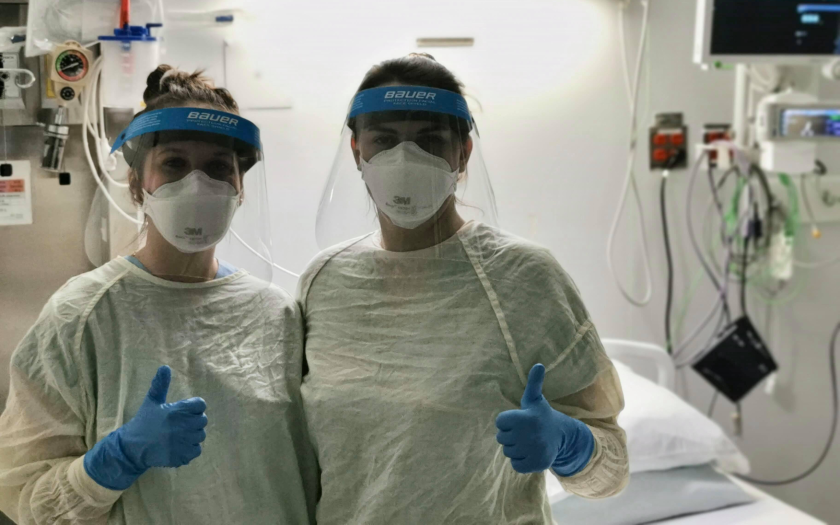
Hockey players recognize the name Bauer. One of the biggest major hockey equipment brands is doing its part during the pandemic. Instead of the cage mask, many youth hockey players choose a clear shield (a lot of professionals go with the half shield). As the pandemic spread across North America, the company shifted production to making protective masks for health care workers due to the shortage of Personal Protective Equipment (P.P.E). The goal was to make 2.25 million masks at cost for workers in Canada and the U.S. The company saw it as a way to contribute in the short-term. 

Per Helene Elliott: 

March became April, which bled into early May, and the need for protective equipment remains. But what began as a determined, short-term response to an urgent problem has become an example of the best aspects of human ingenuity and adaptability, one of the few positive souvenirs that can be taken from this prolonged and anxious time.

The company, having recognized they won’t be able to meet the demand, posted its designs for any other company to use and thereby avoiding the trial-and-error stage of manufacturing. 

Not a ton to this story, but it made me feel good, and I wanted to share all of you. – PAL 

Source: Bauer’s line shift from hockey equipment to medical face shields is inspiring”, Helene Elliott, L.A. Times (05/14/20) 


Video of the Week:

Stephen A.’s reaction says it all: this take was too fake and obviously an attempt to get attention, even for him.


Tweet(s) of the Week:

https://twitter.com/larrydavidsson/status/1260680547925405698


Song of the Week: Lee Fields & The Expressions – “Don’t Leave Me This Way”


Like what you’ve read? Let us know by following this blog (on the right side, up near the top), or:

Email: 123sportslist@gmail.com
Twitter: @123sportsdigest

Facebook

Instagram: @123__sports


Tell him I will give him general specifics tomorrow, okay?

-Michael Scott

Week of May 1, 2020

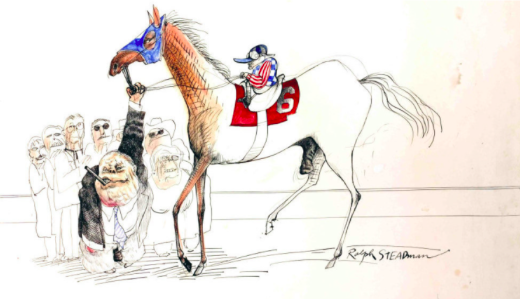
50th Anniversary of Hunter S. Thompson’s Kentucky Derby story and the birth of Gonzo 

To a fat whack of our generation, Hunter S. Thompson is the guy Johnny Depp portrays in a movie. Thompson was a very real guy, and – in a way – he invented the style of journalism that is the grandfather of blogs everywhere. Don’t let the drugs, then guns, and the celebrities fool you; Thompson is a literary giant when it comes to journalism. By accident or otherwise, and his story about the Kentucky Derby was the beginning of ‘gonzo’ as we’ve come to know it.  

If you were looking for a story on the actual race, well this ain’t it, boys and girls. Thos ain’t about the results; this is a story about everything surrounding the race, which is to say everything that actually matters at a sporting event. 

Per Bill Shea: 

A sample: “… the clubhouse bars on Derby Day are a very special kind of scene. Along with the politicians, society belles and local captains of commerce, every half-mad dingbat who ever had any pretensions to anything at all within five hundred miles of Louisville will show up there to get strutting drunk and slap a lot of backs and generally make himself obvious.”

Later, Thompson on how the style came to be: 

“It was one of those horrible deadline scrambles and I ran out of time. I was desperate. Ralph Steadman had done the illustrations, the cover was printed and there was this horrible hole in the magazine. I was convinced I was finished, I’d blown my mind, couldn’t work. So finally I just started jerking pages out of my notebook and numbering them and sending them to the printer. I was sure it was the last article I was ever going to do for anybody,” Thompson said. “Then when it came out, there were massive numbers of letters, phone calls, congratulations, people calling it a ‘great breakthrough in journalism.’ And I thought, ‘Holy shit, if I can write like this and get away with it, why should I keep trying to write like the New York Times?’ It was like falling down an elevator shaft and landing in a pool full of mermaids.”

And that’s what the profile became: An indictment of sports celebrity endorsement culture, blending whatever insight Thompson could glean from this young French cipher with his own observations. The reader gets a feel for Thompson’s frustrations in trying to interview, report and write a traditional narrative feature profile.

As it pertains to Thompson, the man. I mean, how in the actual hell did he become the voice of a counterculture, pretenders and otherwise: 

Other than a few classes, the auto-didactic Thompson didn’t attend college. A short stint in jail at the end of high school led to a brief Air Force enlistment, where he ended up as sports editor of a base newspaper in Florida. He taught himself newspaper journalism’s basics from library books.

“When he was stuck in the Air Force and miserable that they weren’t going to make him a pilot, he gravitated to the newspaper job. This would be as close as he could be to being a civilian and still be in the military,” McKeen said. “He learned the jargon from a book.”

Thompson also moonlighted as a civilian sports columnist and a pro wrestling promoter while writing for the Air Force (which included an expose on current or future NFL stars such as Bart Starr getting preferential treatment while on military service teams).

After that, he held a series of jobs at small newspapers, ending up in Puerto Rico to write about bowling alleys at one point, where he started a novel that wouldn’t be published for almost 40 years. Thompson spent about a year in South America writing about local politics and culture for the since-defunct National Observer, a gig that earned him praise within the industry and a wider audience.

And, if you really want a treat, then go ahead and read Thompson’s original Derby story here. – PAL 

Source: “An Inside Look at How Sports Shaped Hunter S. Thompson’s ‘Gonzo’ Journalism”, Bill Shea, The Athletic (04/29/20)

TOB: I read Thompson’s original Kentucky Derby when Grantland (RIP!) published it in full back in 2013. I can’t wait to read it again.


What It’s Like: Caddieing a PGA Tour Event

I could do that! There aren’t many roles in professional sports that us regulars watch and can honestly think, I could do that, but caddieing a professional golf tournament seems like it would be near the top of the list. And what an odd role. Part navigator, part assistant. A one-man entourage. Guitar tech of the sports world. Such a strange way to make a life. 

I could do that. Maybe. Daniel Rapaport did it, and his story is a great Saturday AM read and a fun break from the 24/7 pandemic news cycle. Rapaport met PGA Tour player Matthew Fitzgerald in 2013. They were both freshmen at Northwestern. Rapaport was hoping he’d claim a spot on the golf team as a walk-on. Fitzgerald, U.S. Amatuer champ, left school after one semester to prepare for The Masters. Since then, Rapaport earned his stripes as a sportswriter while Fitzgerald slowly made his way up the various tours until earning his PGA card in 2018. They grew closer, especially when Fitzgerald would crash at Rapaport’s parent’s place in L.A. when he was in the area for tournaments. 

Rapaport had floated the idea of caddieing long ago, and – after a couple near misses – he got his chance at the legendary Pebble Beach Pro Am. That’s when this story starts to get really interesting. The amount of data that each player and caddie have to process in each shot is pretty incredible. Let’s just say the scorecard clipped to your cart and the books these dudes get aren’t very similar. The practice rounds (which sound like absolute heaven on a golf course) weren’t just for ‘Fitzy’ – Rapaport needed some reps, too. 

My first order of business was figuring out how we’d calculate yardages. There’s a surprising amount of math involved. It’s not difficult math, but there’s a lot of it, and it needs to be done quickly and correctly. The process starts with the tee shot. The tour yardage book gives you a number to every sprinkler head, as well as how many yards uphill or downhill it is. But the yardage is given from the back of whatever tee the person who made the book thinks will be used, so you have to pace off how far the markers are from the back of the box. If they’re using another tee box, that’s another layer.

The more crucial calculations come with the approach shot. The book will list every sprinkler head out there, and the sprinkler heads show a number to the middle of the green. But pros aren’t concerned with this yardage. So you find the nearest sprinkler—say, in this case, it reads 140—and check the book. The book tells you that from the 140 sprinkler, it’s 124 yards to the front, and it will also list the slope. Say it’s six yards uphill—it’s playing 130 to the front edge. You then consult the daily pin sheet, which tells you how many paces on the green the flag is. Say it’s 14 paces on. Now we’re at 144 to the flag. But we’re not trying to land it at the flag. Say we want the ball to pitch four paces short. Now we’re back to 140. On to the wind. Say it’s a bit into the fan. Matt thinks it’s playing five yards more. Now we’re at our number: 145. Last calculation: a start line and a finish line. Then, finally, it’s go time. All that in less than 30 seconds.

I thought I had the hang of it all until we reached the ninth hole, an uphill par 4 that turns slightly right. Matt hit his drive in the middle of the fairway—it’s hard to overstate just how straight Fitzy hits it—and asks me, and me alone, to get the yardage. A test! I ran through the numbers quickly and confidently. I communicated to him that it was playing 158 with a hair of wind in the face, a perfect 8-iron. After he struck the approach, it was clear the ball needed to sit—quickly. Get. Down. Now.It didn’t, and it pitched on the back edge of the green, a solid 15 yards past the pin. He then gave me The Look. Every caddie knows The Look. It’s when your player stares at you piercingly, and you both know that you have just screwed up massively, and someone better just say something already. I looked back down at the pin sheet, and sure as hell, I was looking at the eighth hole, not the ninth.

Love the payoff there. The other big take-away Rapaport left with (aside from eating italian every night because, well, the boss likes italian food), was the mental exhaustion. These caddies aren’t hitting the shots, but they are living and dying on every shot. While their cut isn’t nearly as big as the players, they are winning and losing a lot of money with every shot to which they inform. 

Players always talk about how “mentally tired” they are after a tournament, but I never understood what they meant. I do now. This was the most emotionally invested I’ve been in anything since high school sports. I was nervous as hell on the first tee every morning. I lived and died with every birdie putt. I cringed as he prepared to play a tricky flop shot, and my eyes got huge as I saw an approach fly directly at the flag. I buzzed as we started making birdies, and cursed as we started making bogeys. I was the happiest guy in the world after our Saturday back-nine flourish and virtually inconsolable (just ask my girlfriend) after a bitterly disappointing Sunday.

The story is a bit fat in the front, but a fun read that leaves you with a bit more appreciation for the guy walking next to The Guy. – PAL

Source: I Caddied for a Top-25 Player in the World at a PGA Tour Event. Here’s What It Was Like”, Daniel Rapaport, Yahoo (04/27/20)

TOB: I’m sure Rapaport knows a lot more about golf than I do, but all this told me is that caddying (shouldn’t it be caddying and not caddieing?) is the easiest, most luuuuuux gig there is. It takes very little actual skill – nothing you can’t pick up in 15 minutes. And the reward? The top 50 golfers last year averaged $4.6M in winnings. Rapaport says caddies take 8% (though 10% if it’s a major) – which equates to the average full-time caddy making $368,000 and change. There are 40 weeks a year with a PGA event. I doubt most players play them all. So a caddy makes all that money for 30 or so weeks’ work. Nice gig!

Also, I could not stop laughing at how much he used “we” – “We played the first eight of the final round in even par, which had us creeping up the board on a brutally windy day..when you’re six over for the day through 12 holes, the mind wanders to what could have been done differently: We could have hit 9-iron on 9 instead of wedge, I could have said something different on 10 tee, we could have started that tee shot on 12 more right.” LOLLLLLLLL.


Jordan : Athlete :: King Arthur : Political Leader

Loved this Brian Phillips’ piece on The Last Dance. Thought I’d share it, since I’m pretty sure most of us are watching. Let’s be honest – the Rodman ep was meh, but the stories about the Pistons were so good. 

I love this story because I’d never heard the connection we have to our childhood heroes explained in this way, and as soon as I read it, I thought, Damn; that’s exactly it r

As kids, Phillips’ sister would say that she controlled MJ on the court. Emily wasn’t even a basketball fan, but nonetheless she would tell Brian, “Michael Jordan and I just have a…kind of connection.” It became a bit of a family joke, with their father praising Emily after Jordan made yet another spectacular play (sidenote: my god, the highlights of a young Jordan. I know we’ve seen them before, but his speed, power, grace remain awe-inspiring.)

Phillips explores the truth in their telekinetic joke: 

My sister’s joke about moving MJ around with her mind was only a somewhat exaggerated version of how hordes of basketball fans (and non-basketball fans, and probably fruit flies, though they couldn’t buy Nikes) watched his games in the ’90s. It’s only a somewhat exaggerated version of how we watch great athletes in general—not literally guiding their movements, that is, but somehow participating, hitching an imaginary ride in their bodies. We feel a kind of sympathetic echo of their actions, as if, on some shadow-cellular level, they’re our actions, too.

That lands. I was with Puckett when he tracked Ron Gant’s deep fly in Game 6 of the 1991 World Series. I jumped when he jumped, and it all mixes together to the point in which it’s difficult to separate my experience from his. The echo on a cellular level…ain’t that the truth. (And – yep – I know you Giants fans are so beyond over hearing about Puckett, Game 6. Too bad.) 

Phillips goes on to also explain the power of Jordan is the simplicity of his narrative, which is the template of the modern sports narrative (after being ‘cut’ from his high school team, he exceeds every expectation, hits ‘every’ clutch shot, and becomes a billionaire). What’s more, he represents the closest to the ideal that we’ve witnessed.

Like any competitive pursuit, sports have always trafficked in the ideal. Here’s the perfect body; sculpt it. Here’s the perfect victory; write a poem about it in Greek. For the most part, though, the ideal remains an abstract concept. People chase perfection but don’t reach it, as a rule. In America in the 1980s and ’90s, though, we decided that we were going to get to see the ideal—the real thing, the source itself, in the flesh. You could write a thesis, probably, on the historical factors that went into constructing that determination. The point is, Michael Jordan gave it to us. He came so close to actually embodying the ideal athlete—he really did hit the buzzer-beaters, he really did seem to move in a different and more beautiful way than other players, he really did seem to hang for an impossible extra beat in the air—that we were able to believe the ideal athlete existed. He was here. He was ours. He was the perfect fusion of capitalism and destiny. He was a living person, but the way we experienced him, he was a basketball player in approximately the same way as King Arthur was a political leader.

That’s some big thinking. An idea that will stick with you for a weekend. And so, as is the case with many examples of great writing, this story is a long path towards a question: is The Last Dance a refresher of the ideal or an unearthing of the humanity in Mike Jordan? – PAL 

Source: Michael Jordan the Story Versus Michael Jordan the Man”, Brian Phillips, The Ringer (04/27/20)


How One Trade Got Done

From the public standpoint, there are generally two types of blockbuster trade. The first is the long-rumored, makes so much sense trade that gets discussed for weeks or months before it finally gets done. The second is the one that shows up as breaking news, out of nowhere, on the ESPN ticker.

But either version, a trade usually doesn’t come together quickly. There is a lot of negotiation back and forth. I’ve always wondered how it happens, though I’m sure it’s always different. So I really enjoyed this story on the 2013 trade that sent James Shields from the Rays to the Royals for a package of prospects, including the then #1 rated prospect, Wil Myers. Executives from both sides go on the record, 7 years later, and it’s a really interesting read. They discuss how they valued the different players involved, the emotional investment for each, knowing when is the time to push your chips in the middle, and even the exact moment the trigger was pulled. 

Inside Moore’s suite was a dry-erase board covered in ink. Moore had written the names of Kansas City’s top prospects. He made his case to his assistants. He crossed off Myers’ name. He crossed off Odorizzi. He crossed off Montgomery and Leonard. Moore pointed to the unsullied names on the board.

“Do we still have a good system?” he asked. Heads nodded. “If we’re going to compete,” Moore said, “we have to make this deal. I don’t know about you guys. But I’m tired of losing.”

Friedman and Moore reconnected. “The tenor of the conversation changed dramatically,” Friedman said. They were speaking the same language.

The two teams left Nashville without a deal done. Moore still needed to convince his owners to take on the contracts for Shields and Davis. He wanted to escape the bubble of the Winter Meetings and reflect. He wanted to gather himself before taking the plunge.

A couple days later, Moore went to a Christmas party with Picollo and scouting director Lonnie Goldberg. During a lull in conversation, Moore made up his mind. He pulled out his phone.

“Guys, I’m just going to go do this,” he said. “I’m going to call Andrew right now.”

It’s also interesting to read, 7 years later, because I don’t think this deal gets done now. Myers was the #1 rated prospect. Now, he’s a goddamn Giants-killer, but overall he was disappointing for the Rays, and has been just ok for the Padres. But he was The Next Big Thing, and he was traded for a 31-year old pitcher, with a lot of innings on his arm, with exactly one All Star Appearance and one season in which he received Cy Young votes, and only two years of team control. He was basically Joe Blanton. Prospects are simply valued much higher now, and there is no way a guy like Shields is enough to get not only the #1 prospect, but a few other highly rated guys, too. Still, a very fun read. -TOB

Source: ‘It Was Time to Win’: Inside the Royals’ Trade for James Shields and Wade Davis,” Andy McCullough, The Athletic (04/22/2020)


Video of the Week: 


Tweet of the Week


Song of the Week: Pink Floyd – ‘Wish You Were Here’


Like what you’ve read? Let us know by following this blog (on the right side, up near the top), or:

Email: 123sportslist@gmail.com

Twitter: @123sportsdigest

Facebook

Instagram: @123__sports


Stanley’s dedication is no doubt one of the hallmarks of the foundation of the business we’re hoping to build our basis on.

-Michael Scott

Week of April 17, 2020

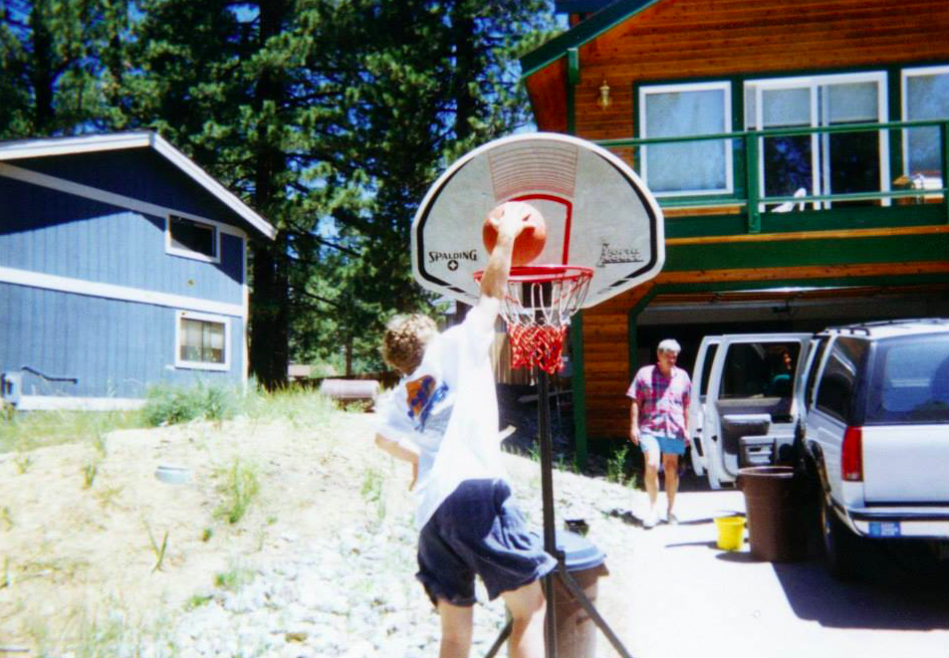
Happy Birthday, TOB. Now stop dunking and help your dad wash the suburban.


No. 1, Willie Mays

It’s a name that really sings, doesn’t it? Willie Mays. Say it out loud, but say it quickly. Willie Mays. For 70 years, that name has echoed on streets and playgrounds, ball fields and school yards. Willie Mays. Imagine little kids across the country in 1951, when Willie debuted with the New York Giants, hearing that name dance out of their radio. Willie Mays. Imagine it rolling off their dad’s tongue in 1954, as he read aloud the story of The Catch from the morning sports page. Willie Mays. 

That name continues to dazzle, though it’s been almost 50 years since Willie Mays last played in the major leagues. When my sons and I play baseball, they argue over who gets to “be” Willie Mays. And if you think I’m exaggerating, this was Tuesday:

He’s just three (and it’s fitting because I tried to name him Willie Mays, though my wife would not give in). He has never seen Willie Mays play, of course. He can tell you he was on the Giants. I think he could tell you his jersey number, but that’s about it. There’s something about that name that sparks the imagination, though.

Last Friday, shortly after we posted our weekly digest, Posnanski published the next in line in his Top 100 series: No. 2, Babe Ruth. I think I gasped. I had long assumed Ruth would be #1. I predicted Joe would have Willie Mays #3. But #1? I read through the Ruth story, and it was fine, but I waited all weekend to read his story on Mays, and it did not disappoint. Here’s how it begins:

Think for a moment about the first vivid baseball memory you have.

Perhaps you have a hollow plastic bat in your hands and a Wiffle Ball floats toward you. How old are you? 3? 5? Older? All you want to do is hit the ball. Where does that hunger come from? Who taught you that? Nobody. It is an instinct. You stand rigidly with your legs spread apart and the bat resting on your shoulder — maybe your parents set you up that way like an action figure. The ball dangles in midair like a disco ball. You swing the bat the way you imagine it should be swung, and you connect, perfect contact.

The ball takes off like a leaf caught in the wind, and you begin to run and stumble toward invisible bases that hide in the grass. You run a tight circle around the pitcher — is it your dad? Your mom? Your grandpa? Your best friend? — until you make it all the way around.

And when you get back where you started, you tumble over in the best version of a slide that you can muster. Who taught you how to slide? No one. You just knew.

That memory is Willie Mays.

Or maybe it is this: You and a friend throw a rubber ball (a tennis ball?) against the stairs that climb up to your front door. The sun is so big and warm that it seems to color the cloudless sky yellow. If you throw a ball against those stairs just right — so that the ball hits the upper corner flush — it will take off like a toy rocket. And that’s what your friend does. The ball erupts off the stair and goes soaring toward the street, and you turn your back and sprint after it. You can’t catch it, but you run just the same because … well, just because. And then to your surprise, you find that you start gaining on the ball. You can see it coming down, and you can see that if you reach out, stretch out, thrust out your arm as far as it can possibly go …

And maybe you catch it. How did you catch it? You don’t know but you feel electricity buzzing throughout your body and you shout out to your friend, “DID YOU SEE THAT?” And your friend jumps up and down excitedly — or, wait, maybe you are the friend — and the two of you spend the rest of the afternoon reliving the catch.

That memory is Willie Mays.

Maybe your memory is of buying a new pack of baseball cards. This might be in the days when baseball cards come with a rectangle of rock-hard chewing gum that tastes like cardboard and rubs your tongue raw like sandpapers … or maybe this is years later, when there was no gum, when instead there would be specialty cards inside, maybe an autographed card or one that has a little piece of fabric worn by a major leaguer.

Either way, you pull off the plastic wrapper slowly because you want to savor it all, make the experience last for as long you can. And you slide down the top card just a little so that it reveals only a tiny portion of what card is next. Hmm. Look here. The next player is on your favorite team. Could it be? You don’t dare to hope yet. You slide the card down a little more. Yes, it might be. A little more. Yes! The next card is your favorite player, you already know that this next card is now the most valuable thing you own, and you might sleep with it under your pillow or you might put it in one of those baseball card cases for protection. Whatever you do, your life is just a little bit different and better than it was before.

That memory is Willie Mays.

Perhaps you are at a ballpark. Everything looks so green. You’d seen games on television. You’ve looked at boxscores and imagined. But you never believed it could be so green.

The smells overwhelm you — what is that? Beer? Hot dogs? Funnel cakes? Sweat? Yes. All of it. Baseball smells like an amusement park and a backyard barbecue and an afternoon at a movie theater and recess at the playground all at once. Then you hear the sounds, cheers and chatter, boos and a vendor selling peanuts, claps and stomps and groans and hopeful screams that either rise into happy symphonies or trail off into disheartened sighs, all while an organist plays “Hava Nagila” and a Mexican Hat Dance and a cavalry charge and that nameless song that plays a duet with your rapid heartbeat.

Here we go (YOUR TEAM), here we go (CLAP CLAP).

Maybe you even keep score. You’d have to be a certain age for that to ring true, probably. To keep score, you mark (with your blunt pencil that barely leaves a mark) a 6-3 for a grounder to short or a 9 for a fly ball to right field or you trace that pencil all around the bases and draw a diamond for a home run.

And then a ball is hit deep and the center fielder chases after it, but there is no chance the ball can be caught, the geometry teacher in your head tells you so. Then you see the ball and the man converge, and at the last possible instant the center fielder takes flight and pulls it in, and all at once, all together, people lose their bleeping minds.

“Put a star next to that one,” someone tells you, and you do, you put a little star next to the “8.”

That memory, most of all, is Willie Mays.

Chills. Seriously, I’ve read that four times now, and it gives me chills every time. Posnanski absolutely nails it: Willie Mays deserves to be #1 because he was great, yes, but more than that he was and is everything great about baseball: he loved to play. Loved it. In all the clips I’ve ever seen, the joy he played with oozed from his pores. Look at the video of The Catch.

It’s INCREDIBLE on every level – the read, the speed, the athleticism, the determination, and the sheer difficulty – the impossible angle (straight back, which is just so hard to do), and then of course the way the ball sails right over his head and lands softly in his glove. Then there’s the awareness to immediately get the ball back into the infield, which saved the game, as the runner tagging from second had to stop at third (remember this is deep center at the Polo Grounds, so around 460 feet). But the thing that always tickles me about that catch is the panache – the way his hat flies off, the way he whirls around as he throws like he’s tossing a discus. He’s having an absolute ball, and it’s impossible not to love.

It doesn’t hurt, as a Giants fan, that he’s “ours.” Last season, we were driving on the freeway on the way to the ballpark when I came upon a license plate I had seen once before: 1SAYHEY. I said: “Oh my god. I think we’re about to drive past Willie Mays.” I sped up a little, then slowed down next to him. And sure enough, there he was, the Say Hey Kid, in the passenger seat. I waved. I don’t remember if he noticed. But I said to the kids, “Do you see that guy? That is Willie! Mays! FROM THE STATUE!” He was headed to the game, too. 

It’s those days you show up to the ballpark and Willie shows up, too, that are really special. You feel like a little kid. And you get to point and say to your kids, “That, right there, is Willie Mays, the best baseball player there ever was.” No other fanbase gets that.

Willie turns 89 next month. And every time I see him I think, “Is this the last time?” But instead of getting sad, it makes me appreciate the experience more, and I cheer louder. Because I know he appreciates it. I hope someone read him Posnanski’s story – I know he’d appreciate that, too, because it’s great.

Posnanski sums up Willie Mays, and why he continues to resonate with so many, including two young boys in San Francisco, all these years later:

But even to the end, he sparked joy. What do you love most about baseball? Mays did that. To watch him play, to read the stories about how he played, to look at his glorious statistics, to hear what people say about him is to be reminded why we love this odd and ancient game in the first place.

Yes, Willie Mays has always made kids feel like grown-ups and grown-ups feel like kids.

In the end, isn’t that the whole point of baseball?

Consuming sports was different when Willie played. Not every game was on television. There was no national highlight show giving you the best plays of the night, every night. There are relatively few clips of Willie Mays actually playing baseball available even today. But my three-year old consumes sports the same way kids in the 1950s did: in brief clips that are fuzzy in their brains, in stories their parents tell them, and in the joy of saying a name like Willie Mays. -TOB

Source: The Baseball 100: No. 1, Willie Mays,” Joe Posnanski, The Athletic (04/08/2020)

PAL: I am ashamed that I didn’t know Willie Mays played minor league ball in Minneapolis! 

In a collection of stories that read like folk tales of athleticism, youthful exuberance, and “divine moments”, the parallels and juxtaposition between Mays and Mantle, and their respective fathers, really sticks out. 

And this is a great point on May’s iconic, over-the-shoulder catch: 

Nobody knows for sure where the throw went: The enduring film only shows him making the throw. But we know that it made Larry Doby stop at third. Doby would not score. The Giants would win the game in extra innings and then sweep the series.

But maybe my favorite line from the entire story comes from Giants manager Leo Durocher: “If he could cook I’d marry him.”

The entire series is one hell of a collection from Posnanski. Damn, man.


Shawn Kemp: Kentucky Wildcat (That’s Right)

How about this for teaser from Kyle Tucker: 

“Does Christian Laettner get off that stunning buzzer-beater in overtime to deny Kentucky its triumphant return to the Final Four if Kemp is on the court?”

Say what now?

A little while back we did favorite athletes by decade. Since then, Bill Simmons has started reviewing previous drafts and re-drafting, which has been jogging my basketball memories. Everyone’s looking to the past for their sports fix, and in the process, I’m realizing how many athletes I overlooked in our little exercise. Basketball-wise: I had an affinity for Steve Blake from that Maryland team. I like Andre Miller and that Utah team a lot. Give me some Andrew DeClerq while we’re at it. There may have been a short Reggie Miller period as well. 

So all of these NBA names are spinning around in my brain, especially as I listen to Simmon review these old drafts, when I see this Shawn Kemp story about his time at Kentucky being stopped before it began. 

People over 35 know that Shawn Kemp was a very big deal for a few years. The dunks were ferocious. The Sonics were cool, and they made a Finals against Jordan. 

But I had no idea about his journey to the Sonics. No idea that he was from Indiana, that he passed on Bobby Knight and the Hoosiers, and went to Kentucky. I had no idea he never played a game for the Wildcats, and I had no idea why. In my mind, Shawn Kemp’s existence began in those slick Sonic jerseys doing this: 

I thoroughly enjoyed learning about his arrival at Kentucky and how stupidly it ended for pawning some stolen jewelry. And just like that, he was gone before playing a simple game for Kentucky. 

Two details stick out to me from the story. 

The jewelry was Sean Sutton’s. His dad, Eddie, was the coach. Sean filed a police report about the stolen jewelry, which led the local authorities to alert local pawn shops. Kemp was found selling the jewelry to one of those pawn shops for $700. 

Over thirty years later, Sean Sutton had this to say (for the first time, at least to the press): 

“I’ve never talked about this,” Sean Sutton told The Athletic recently. “In the past, I just said, ‘That’s not something I care to revisit.’ But I think everybody probably deserves to know the real truth. I want Kentucky fans to realize that Shawn Kemp was a good guy. It got so out of control, became such a big story, and it’s really, really unfortunate how it all played out. He was gone before any of us really understood what was happening. If I could go back 32 years, I’d probably do things differently.

“Because in my mind, and I would know as well as anybody, he didn’t take that stuff.”

Sean, dude, couldn’t you have maybe found the guts to say that before now? While – yes – the jewelry was stolen, and Kemp was selling it, that doesn’t necessarily mean he stole it (as Sutton now insists he thinks whoever took the jewelry lied to Kemp about where it came from and likely gave it to Kemp to pawn for some cash.) Someone could have just given the jewelry to Kemp and told him to pawn it in order to make some easy cash, no questions. For a super-duper star athlete in a big program, that seems completely understandable to me.

Also, if Sutton just doesn’t file the report, this all can take place without people knowing. Kemp stays and joins a stacked Kentucky roster, and maybe a few years later Kemp (completely normal for superstars to stay 3-4 years in college at that time) is playing with Mashburn against Duke, and the 6’11” Kemp (I had no idea he was that tall) swats Laettner. I know, I know; it’s not a fill in the blank, but isn’t it fun to imagine? 

The other detail from this story that really stuck out was how much of a manchild Kemp was. So he gets to Lexington in the summer and is playing pickup games with current and former Kentucky players. We’re talking NBA guys and top college players. Kemp, a teenager, is dunking on all of them – including Kenny ‘Sky’ Walker. 

“Shawn dunked right over Kenny and looked right at him and said, ‘Take that shit!’ Or maybe something worse,” Sutton says. “Everybody was stunned. What did he just say to Kenny? I don’t think Shawn was doing it to be disrespectful. He just got caught up in a competitive moment. That’s just how he was wired, trying to destroy people.”

Lest anyone think Walker was offended, it was quite the opposite. Kemp was headhunting every player in the gym that day, including former UK stars Sam Bowie and Melvin Turpin, the No. 2 and 6 overall picks in 1984, and the alums loved it.

“He was a man-child,” Walker says. “Most guys playing a bunch of established NBA players would be trying to feel their way around, might be a little timid, but he was trying to dunk everything on everybody. I usually had the advantage over everybody, but here I am going against a guy two inches taller than I am, stronger than I am, just as aggressive as I am, and maybe a little meaner than I am. Until LeBron James came along, I couldn’t remember a guy right out of high school so physically put together and with so much spring.”

Perhaps many of you knew the Kemp Kentucky stuff, but I had no idea, which made this a solid read from Kyle Tucker. – PAL 

Source:‘It Got So Out of Control’: Shawn Kemp’s Kentucky Career Ended Before it Began, Kyle Tucker, The Athletic (4/16/2020)

TOB: Interesting stuff. This week I stumbled on another good Kemp tidbit: In 1994, while Jordan was playing baseball, the Sonics almost traded Kemp to the Bulls for Scottie Pippen. The deal fell through when the story leaked and the Sonics’ owner grew concerned about fans being upset over losing the beloved Kemp. But the most fascinating part is that the Sonics’ coach, George Karl, called up Jordan (they are both Carolina guys), and Karl claims Jordan said: “Do it,” he said. “Scottie can make your other players better. Kemp can’t.”

Huh. Given Jordan’s comment: does he even come back in 1996 if Pippen is gone? That’s a crazy what-if.


Joey Votto Tries to Slow the Coming of the End

Joey Votto is an interesting guy, especially as baseball players go. I really enjoyed this article on the Reds’ star, as he tries to fight Father Time. Here’s the open:

Last April, on a gorgeously sunny, relatively cool afternoon at Dodger Stadium, in Los Angeles, the Cincinnati Reds’ Joey Votto popped out to first base. Ahead in the count, he’d lunged at the ball, sending it high into foul territory, before it landed in the mitt of the first baseman. Infield flies are the lamest thing a batter can do apart from striking out, but the crowd went wild—or rather, the baseball commentators and Twitter masses did. (“This has to be a sign of the zombie apocalypse.” “The world is ending.”) Because, over the course of his 13-year Major League career, in 6,827 trips to the plate, Votto had never popped out to first. Think of a veteran opera singer who never hit a wrong note onstage, or an actor who never flubbed a line. Equally astounding, Votto had flied out to the infield—right, left, or center—only seven times since 2010, while any other Major Leaguer with the same number of trips to the plate would have done so 137 times.

That’s an incredible stat, and the story just gets better from there.

Source:The Brainiest Hitter: Can Joey Votto Outsmart Age?” Sridhar Paddu, The Atlantic (May 2020)

PAL: Loved this article. Definitely keeping an eye out for future stories from Sridhar Paddu. I knew nothing about Joey Votto, and so this was a real treat. I’ve read a few sports profiles, and his candor stands out. Fascinating approach to his game. The idea that, in his prime, he felt his skills slipping ever so slightly, and the idea that – before 30 – he chose to accept that and rebuild his swing…two years after winning the National League M.V.P.

My favorite part of the entire piece comes near the end, before the season was cancelled and Votto was about to lock in to his very regimented baseball schedule and mode:

The day before we met in person, Votto decided to have a coffee at Starbucks, his last one, he figured at the time, for months. Then, while at Whole Foods in the afternoon, he went even further. He stopped at the bar set amid overpriced produce and organic beauty supplies to have a beer. A single beer at a grocery store to revel in the task in front of him: the comeback season. “Let’s celebrate,” he recalled thinking. “Let’s get ready for a great year. Let’s go to Whole Foods and get a beer at 3 o’clock!”

Many of us have walked by that Whole Foods bar and thought about a quick beer. I love that he did it, and I love that he was celebrating getting ready for a great year.

Great find, TOB.


Video(s) of the Week


Tweet of the Week


Song of the Week: Tom Waits – “Old Shoes (And Picture Postcards)”


Like what you’ve read? Let us know by following this blog (on the right side, up near the top), or:

Email: 123sportslist@gmail.com
Twitter: @123sportsdigest

Facebook

Instagram: @123__sports


And this is more a ying-yang thing. The ‘Michael’ all cursive, the ‘Scott’ all caps. Left brain, right brain. Or, duality of man.

-Michael Scott

Lockdown Dailies #13: Strangest Field You Ever Played On, MN Town Ball Edition

Strangest Baseball Field You Ever Played On – MN Town Ball Edition:

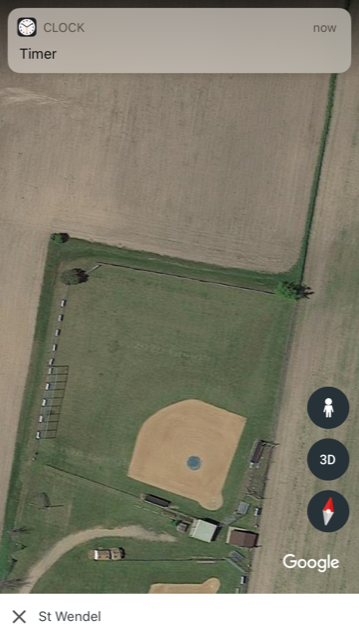
On Monday, we shared some thoughts on the strangest baseball fields around – both in the history of the game (Polo Grounds) and fields we played on. We got a lot of great comments on that post, but Ryan Nett – LHP, college roomie, and future Stearns County H.O.F. – sent a number of gems from the Minnesota town ball scene. We had to share more broadly.

Nett: A few come to mind from my townball years. St. Wendel was 240 down the left field line, but had a 45 ft chicken wire fence almost to CF.

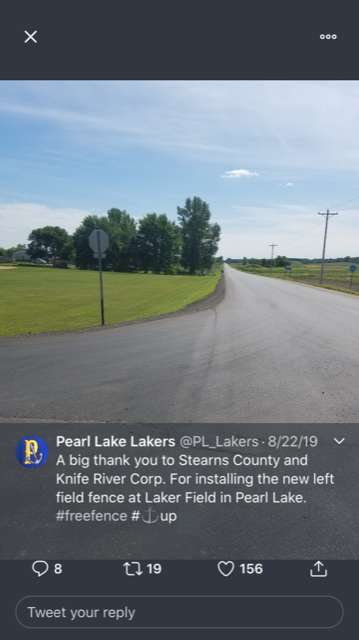
Pearl Lake has a field with a 4 way stop in in CF. No fences, the road is the fence. About 270 down the lines, about 400 to center. Ball rolls on the road, double, clearly hits on the road or over, it’s a homer.

There was a legend of a field in Bowlus where a road to get to about 4 houses went from behind 3rd to rf power alley. Houses front porch faced the field and were in play. 3rd pole on a house down the rf line was the foul pole, old lady who lived there let them paint it yellow.

TOB: I watched the PBS Townball series about Minnesota Townball over the weekend, streaming on Amazon Prime. I recall the field in Farming was featured, but I don’t recall them discussing the dropoff. Hilarious and dangerous.

Netter: yes, both Pearl Lake and Farming were featured. Farming has since put in about 500k into their field, lights, sprinklers, redid the whole playing surface. Went from the outhouse to the penthouse in terms of fields.
Pearl Lake is stuck due to regulations with structures close to the road like a fence.

Last field that I played at and Phil saw, Farming. From home to Rf line was about 315, but from about 1st base to the line was a 6ft drop off. I bet I saw 30 1st baseman fall over chasing a ball just blooped over their heads that normally would have been caught standing. Then to left field you hit up hill. From 3rd to left it rose about 3 ft. From Lf foul pole to Rf foul pile was a 10 ft drop, we had the field surveyed.

TOB: I just looked up Pearl Lake’s field:

Look at that…wouldn’t it make a ton of sense to turn that field around? Place home plate near the 4-way stop?

Regardless, Springer Park (Cold Springs) field looks freakin fantastic in this shot (PAL note: Nett wanted it known that he’s hit two bombs at Springer Park):

I would NOT complain about playing there!


Original Post:

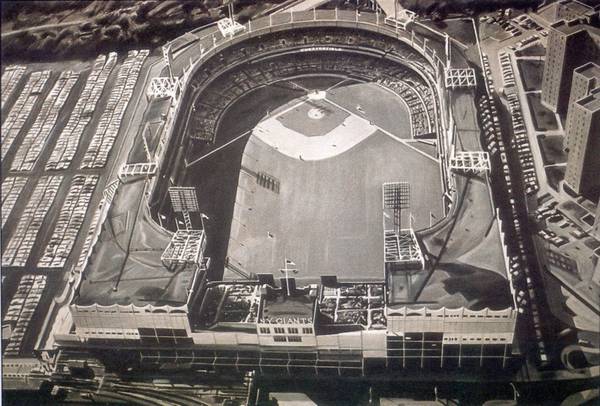
One of the beautiful things about baseball is that every field is different. Perhaps most famously is the Polo Grounds. 

Dimensions: Left Field: 279 ft, Left-Center: 450 ft, Center Field: 483 ft, Right-Center: 449 ft, Right Field: 258 ft.

LOL. I’ve seen those dimensions before but it is always so funny. The shortest home run in today’s game is 310 down the right field line at Fenway, which is FIFTY TWO FEET longer than the right field pole was at the Polo Grounds.

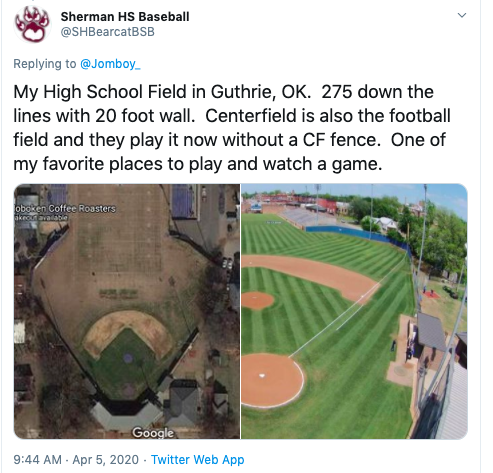
I bring this up because last week, 1-2-3 favorite Jomboy (real name: James O’BRIEN) asked Twitter followers for the funniest/dumbest local baseball fields. This one was my absolute favorite:

Center field is just opens up, with no fence, into a football field. Amazing. Like all great, quirky ball parks, they made the best with the space they had and created something so ridiculous, you can’t help but love it.

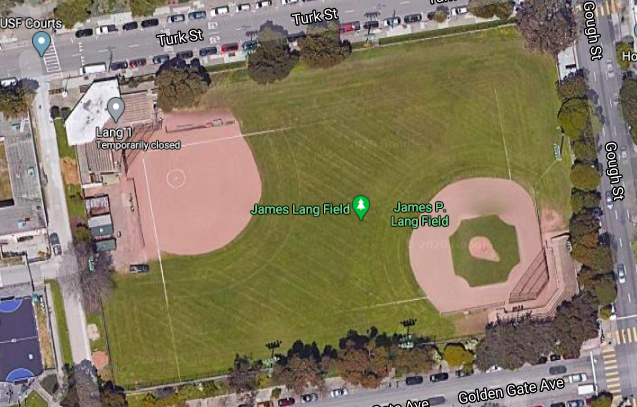
Looking at the Polo Grounds reminded me that Phil and I used to play softball at a field in SF (James P. LANG Field!) that has two softball fields at opposite corners of what is ostensibly a soccer or football field. 

It’s difficult to tell there how lopsided this field is, but I utilized Google Maps’ measuring tool and the dimensions are 385 to left, and 200 (yes, 200) to right. Given those dimensions, most teams stuck their worst defender in right, and shaded everyone toward center and left, because a ball getting by the outfielders in center and left would roll and roll, but a ball to right would hit that relatively short fence. 

Confession: I have never in my life hit a true home run. So, for two seasons, I eyed that short porch in right and decided to make a run at it, wanting to experience a home run trot. One night, I hit the ball so hard, I thought for sure it was gone off the bat. I watched that beauty fly and felt pure joy.

One thing you can’t tell from the overhead shot is that the right field wall is very tall. Here’s the best pic I could find. 

As you can kind of see in the top left of the photo, as you approach the fence, the grass heads steeply uphill. I’d say 6-7 feet (you can see in the photo the grass line is taller than a person standing out there). Then the fence is probably 12 feet high from there, so we are talking almost 20 feet.

As you probably guessed, I hit the ball high, I hit the ball deep…but I did not hit the ball high enough. The ball hit the goddamn very top of the wall. It was maybe a couple feet short of clearing it. I was crushed. And because I had been pimpin’ it, I had to scramble to eek out a double. Embarrassing.

What’s worse is this: (correct me if I’m wrong here, Phil), Phil had not yet hit a dinger at that field either, despite being a lefty (something I had given him some ribbing about). Well, Phil was the next hitter up. And as I stood at second base, I got an absolutely spectacular view as Phil crushed a home run over that same wall I had barely failed to clear. Phil was cackling at me during his entire slow trot around the bases. Insult to injury. 

I never did get that dinger. I might need to get back into that league. I’ve got Dad-strength now, ya know. -TOB

PAL: That is correct, TOB. I had yet to hit a home run, despite the fact that we played ALL of our games on those two fields, and both favored the lefties big time. This is because I kinda suck at hitting softballs.

I’ve played on a lot of odd fields in my day, and – I agree with JOMBOY – it makes for a far more interesting game. That overhead shot of the Polo Grounds is crazy point of view. I also don’t think Pesky Pole down the right field line is anywhere near 310 feet from home. My brother-in-law, lifelong Red Sox fan and Mass. resident, can back me up on this: right field might not be even 300 feet. However, it juts almost straight back from there, so only a very small portion of right field is a short porch at Fenway.

For the life of me, I can’t remember the name of the field, but I seem to remember playing a legion baseball game (16-18) where a ball over the right field fence was just a ground rule double because the fence was so short. Cretin’s field in St. Paul is perfectly manicured, but the left field fence is maybe 265, a fact few people seemed to remember when looking at season stats (OH MY GOD, so-and-so from Cretin has 12 home runs!)

The worst playing field I can remember was my freshman year in college. It was about 6 degrees out and we were trying like hell to get a conference game in before or after another snow storm in March. Somewhere in Sioux City, IA. I swear we played a college game on a Babe Ruth field that, in the most perfect conditions looked like the location of a meth deal from Breaking Bad. On the day we played there, it was unthawed with the snow shoveled off of it. It smelled like sulfur (because that entire town does). It was like playing on concrete in a howling wind. Miserable.

So, that’s my story of the strangest field I ever played on. How about you?


Video of the Day

We haven’t really been doing videos of the day on our dailies, but I loved this and wanted to share: Mike Yastrzemski mic’d up.


More Dailies: 

  1. Your favorite baseball cleats
  2. Greatest game you ever played in
  3. Glove Rules
  4. Coaching Unis
  5. Best Fields/Courts/Venues you’ve every played on
  6. Favorite players (by decade)
  7. Best players you played with or against
  8. Predicting Joe Posnanski’s Top 7  baseball players of all-time.
  9. Least Favorite Players By Decade
  10. Ultimate Sports Experience
  11. Remove these songs from the sports canon

Email: 123sportslist@gmail.com

Lockdown Dailies #11: Remove these songs from the sports canon

These songs, oftentimes played at sporting events, need to be removed from stadium/arena playlists when we go back to games.

  1. ‘Sweet Caroline’ – Neil Diamond. So over it. Every over-served person in America loves singing this song. Only became a Red Sox tradition in late 90s, and then this push for it to become ‘tradition’ across several teams is so lame. Also, there are so many better Diamond songs! ‘America’, “Forever In Blue Jeans’, ‘Kentucky Woman’ to name a few.
  2. ‘Centerfield’ – John Fogerty. Every pre-game mixtape, at every field, at every baseball game from Little League through college. That upbeat, bouncy melody is chiseled into my brain. I. Can’t. Stand. This. Song. No mas. 
  3. ‘All Star’ – Smash Mouth. I would think many of these songs on this list don’t actually need an explanation, and this would be one of them.
  4. ‘Let’s Get It Started’ – Black Eyed Peas. 
  5. ‘When The Lights Go Down’ – Journey.  SF’s answer to Sweet Caroline…and just as manufactured and forced. 
  6. ‘Cotton Eye Joe’. When did annoying = fun? 
  7. ‘Glory Days’ – Springsteen. He’s been given a pass on this. No one calls a fastball a speedball (as many have pointed out). Super catchy guitar riff, and a good concept for a song, but that line unforgivable. It’s actually a real flex on his part. You’re telling me NONE of his friends had the seeds to say, “Hey, Bruce. We need to talk. Dude, you can’t say speedball. You sound like an idiot.” Also, ‘fastball’ has the same amount of syllables and works within the rhythm of the lyric exactly the same as speedball.
  8. ‘Y.M.C.A.’ – Village People. I don’t want to do the wave, and I don’t want to do the YMCA. Next.
  9. ‘I Gotta A Feeling’ – B.E.P. The only group in this list twice…just sayin.
  10. ‘The Greatest’ – Kenny Rogers. A one-listen song. Once you hear the punch line, it’s done. No disrespect to the recently departed.

PAL

How about you? What songs got to go? What songs am I absolutely wrong about? 

More Dailies: 

  1. Your favorite baseball cleats
  2. Greatest game you ever played in
  3. Glove Rules
  4. Coaching Unis
  5. Best Fields/Courts/Venues you’ve every played on
  6. Favorite players (by decade)
  7. Best players you played with or against
  8. Predicting Joe Posnanski’s Top 7  baseball players of all-time.
  9. Least Favorite Players By Decade
  10. Ultimate Sports Experience

Email: 123sportslist@gmail.com

Lockdown Dailies #10: Ultimate Sports Experience

For the sake of entertainment, let’s assume the world was like it was a couple months ago and all sporting events were as they were before the pandemic.

The scenario: by some stroke of luck, good fortune, or mistake you fall into a large sum of money. Enough money so that all the real important things – the house, college for the kids, buying something real nice for your parents – are taken care of, but not enough money where you’re buying a professional sports franchise or building a family compound for you and all your siblings’ families in Monterey or something. Whatever that sum of money is, there’s enough for you to live out your ultimate sports experience. I’d call it bucket list, but this seems even a bit more out of reach than bucket list stuff. As an example, my sports bucket list includes maintaining a youth baseball field at some point in my life.

I think about my ultimate sports experience every time I drive west on the Bay Bridge, where Oracle (the SF Giants Stadium…so hard to keep up with stadium names these days) is just down and to the left. I can see most of the field from that vantage point, and every single time I drive by, and have the same thought: wouldn’t it be cool to rent out the stadium for a night and have 10 buddies out there hitting, taking grounders, turning double-plays, shagging fly balls? A cooler of beer on both baselines. A bucket of seeds. Hundreds of new pearls (rubbed up, of course). Good music* playing over the loudspeakers. 

That is my ultimate sports experience. And since we’re dreaming, I think this would have to take place at Fenway. Yes, Fenway over Wrigley, because the Monster is right there for righties, and it would be super fun to try to play balls off the wall. Plus, for us lefies, Pesky pole is less than 300-feet away. 

Maybe the night starts in the evening when the sun is still out, but we have the park for six hours, that way you get both the day and night feel. 

That’s my ultimate sport experience. What about you, TOB?

*New topic: songs that need to be removed from the ballpark canon. A teaser: “Centerfield” by John Fogerty needs to go away forever.

TOB: I like the Fenway idea. But I want Centerfield playing ON LOOP all night. That song is beyond reproach. How dare you.

How about you? What’s your ultimate sports experience? Floor seats at the NBA Finals? A college football road trip to all the rivalry games? Playing a round with Tiger Woods and Jack Nicklaus? Think big. 

More Dailies: 

  1. Your favorite baseball cleats
  2. Greatest game you ever played in
  3. Glove Rules
  4. Coaching Unis
  5. Best Fields/Courts/Venues you’ve every played on
  6. Favorite players (by decade)
  7. Best players you played with or against
  8. Predicting Joe Posnanski’s Top 7  baseball players of all-time.
  9. Least Favorite Players By Decade

Email: 123sportslist@gmail.com

Week of April 3, 2020

Sigh.


Make Amatriciana Again 

Wright Thompson is my favorite sports writer going, and it’s not close. I know this because I can’t wait to tell everyone whenever I read something from him. After reading this story, I told co-workers, siblings, friends, my mom. Natalie probably overheard me summarize the story 5 times this, our third week of shelter in place. 

He writes about the ritual of sport so well, and how both the best and worst of sport is strengthened through ritual. His story about the Cubs winning the world series had nothing to do with what happened in the game; it’s a feature on some fans going through their usual rituals in an incredibly unusual time. It’s Ted Williams ritualistic obsession with hitting and fishing, and how it terribly impacted his ability as a father (and how his mother’s rituals in San Diego made him feel ignored). The Ole Miss rituals (football and otherwise) and their role in race riots in the 60s. 

With that theme in mind – ritual – it’s no wonder he wrote a story on ESPN about food and sports in Italy. 

Before I go any further, I insist you read this story. Please, just click through to it now, because it will articulate that heavy weight hovering in that gap left now that we aren’t sharing space with one another in our cities and neighborhoods, and it will give you a recipe to feel really good for a few hours. 

Thompson’s story was published on 3/28. I mention that, because the world now seems to change drastically in days for a great deal more people than was the case a month ago. On 3/28, many people were starting to understand and see images of the nightmare playing out in Italy. Many years ago, Thompson lived in Florence, and as he learned of what was happening, he thought of his time there, what he loved about Florence: the Fiorentina soccer team and a restaurant in Rome called Matricianella.

“In Italy, as in many parts of the United States, sports and food are perhaps the two most important ways to celebrate your home.”

And later, Thompson writes:  “As an employee of ESPN, I am acutely aware of the lack of sports right now, which is especially worrisome to me mostly because sports provide one of the few acres of common ground in a country where we too often give in to what divides us.”

Sports and restaurants: they bring us together to be joyous. To celebrate. This country sure felt divided before the pandemic. And while I absolutely feel connected to our neighbors as we hunker down here, fear has sparked this recent sense of community. 

Thompson, missing sports and the ritual of eating a great meal at one of his three favorite restaurants in the world, looked up and made a traditional Roman dish with a bottle of nice red wine, a bottle “that normally would be saved for a special occasion–although I’d argue that imagining the world before the virus and being hopeful about the return of that world is as special an occasion as there is right now.”

And while the restaurant in Rome is closed until…God knows when, and while Gianni–Thompson’s waiter of choice–is home alone in Rome with a silence to it like “the silence before a snowfall,” we can still celebrate. Maybe we have to a little bit. 

At the end of an article for sports website, Wright Thompson shares the amatricianna recipe from Matricianella and encouraged folks to put on an old favorite game. 

I think I’ll make Amatriciana again. Instead of using the internet recipe, I got the genuine article from the owners of Matricianella in Rome. It’s printed below, so you can make it too. Maybe I’ll find some classic old Serie A game to watch once the pasta is done. I’m thinking Fiorentina-Inter, 1997, Batistuta versus Ronaldo. Maybe if you read this, and make the recipe, and find your own game to watch, this shared ritual will briefly connect us. 

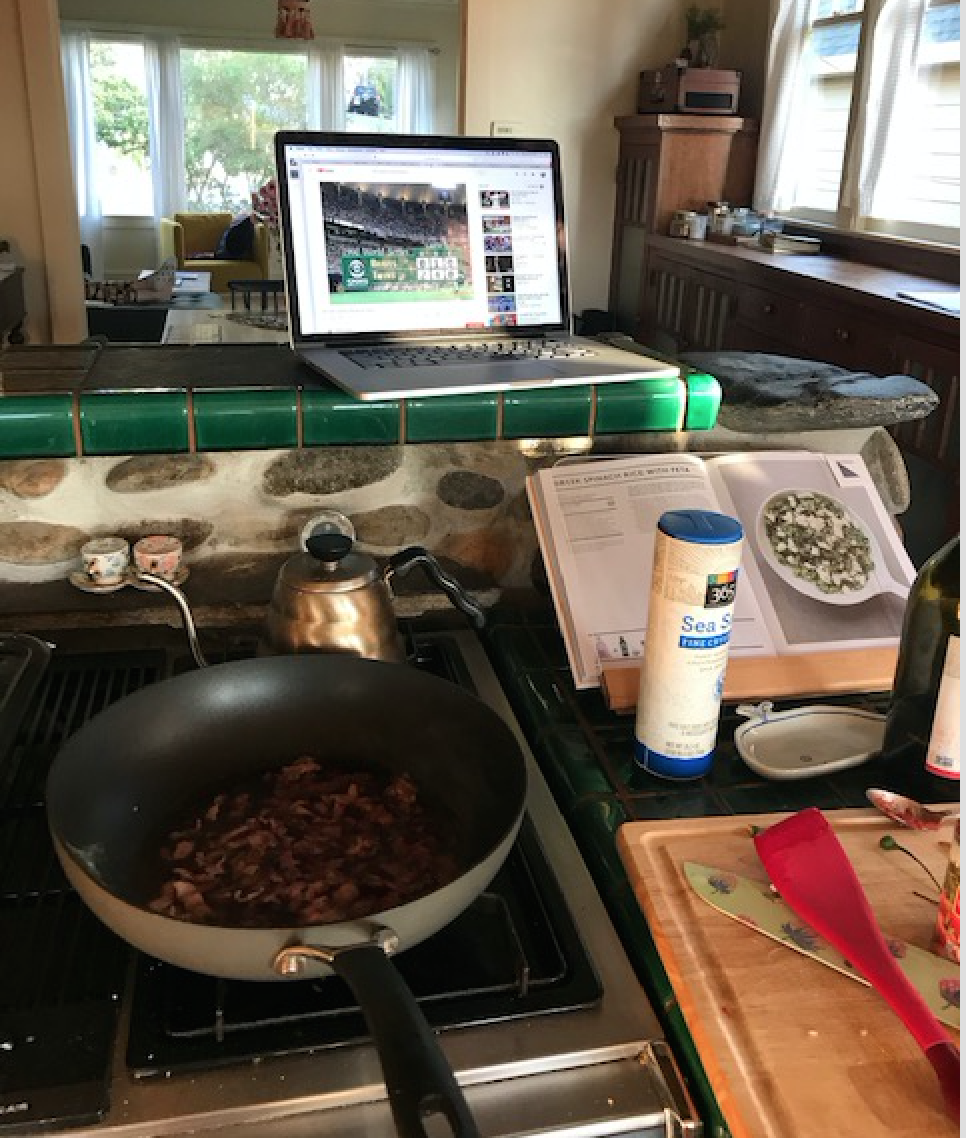
I did my best. I had to substitute uncured bacon in for the pork jowl. I paired it with what turned to be a delicious pinot noir, and I watched Game 6 of the 1991 World Series. 

It was the most enjoyable night I’ve had since this covid-19 nightmare started. I urge you to do this same. You will feel connected, and you will feel more like yourself than you have in weeks. 

Wright Thompson is the man. – PAL

Source: A Letter From the Coronavirus Quarantine: Missing Serie A, Pasta and Friendship”, Wright Thompson, ESPN (03/28/20)


Today Should Have Been Giants Opening Day, and That Sucks. But…

Leave it to Kruk to make you smile, anyways. -TOB


This Week’s Best from Posnanski’s Top 100:

No. 5, Oscar Charleston:

Oscar Charleston former Negro league star with bat.

This seems impossible, because I had heard plenty about every other Negro League legend that Posnanski had listed here: Satchell Paige, Josh Gibson, Cool Papa Bell, and others. But before this week I had never, to my memory, heard the name Oscar Charleston. And Charleston is ranked No. 5 by Posnanski. He even says:

I want you to feel the fury of this ranking, feel it down deep. I want you to think, “Look, I’m sure he was terrific, but there’s no possible way that Oscar Charleston, who played in a struggling league 100 years ago, could possibly be the fifth greatest player of all time.”

Or I want you to think, “Fifth greatest? That’s ridiculous. He should be No. 1!”

Or I want you to think, “This is pure romanticism. We have almost no stats on Charleston. We have only a handful of quotes about him. You can’t rank someone this high on the list based on a few crusty legends and myths.”

Or I want you to think, “It’s such an infuriating tragedy that we as an entire nation never got to see the greatest player in the history of baseball.”

Or I want you to think, “How is it that I’ve never even heard of this guy?”

Or I want you to think some of those thoughts together, or even all of them at the same time. This ranking, unlike the rest, is a statement and, even more, it’s a challenge. Oscar Charleston is the fifth greatest player in baseball history? It is meant to make you think about what you think.

So, I was very interested in reading this one. And boy, does Posnanski knock the intro out of the park, about a recent visit to the Negro Leagues Baseball Museum with Buck O’Neil and Willie Mays:

There isn’t much in the little room. There are a few charts showing Negro Leagues migration, a couple of photos and a statue of Buck O’Neil. The highlight is that it overlooks the Field of Legends, a baseball diamond in the middle of the museum. Beyond the chicken wire, which separates the room and the field, there are 10 bronze statues standing at their baseball positions. The names of the players are familiar to some and, even now, mysterious to others.

Let me say something else about the chicken wire, which represents the segregation black fans endured at stadiums across the country. If you unfocus your eyes a bit and look through the chicken wire just so, with your imagination taking the lead, the statues seem to come to life.

Anyway, that’s what I thought the day Buck O’Neil and Negro Leagues president Bob Kendrick and I stayed back there with Willie Mays.

“I knew these guys,” Mays said as we all looked through the chicken wire and imagined the players as they once were. “Like that guy at third base, Ray Dandridge. I played with him in Minneapolis. He helped me become the ballplayer I became.”

Everybody else in our group had gone ahead into the museum. We had stayed behind because of Willie Mays’ eyes. Those eyes, which had once been able to differentiate between a fastball and slider simply because of the way the baseball’s laces moved, had grown terribly sensitive to light. Glaucoma. Even in that dark room, Mays wore sunglasses.

He also wore a thick San Francisco Giants coat, even though it was stuffy. He seemed to be sweating and shivering at once. He was in pain. He seemed exhausted … or perhaps more precisely, evaporated. Buck tried to get him to tell some stories, but Mays was not in the mood for stories. He just looked out on the field quietly.

“Willie,” Buck said in an effort to break through, “I saw the catch on television the other day.”

“You saw that?” Mays said. He smiled a little.

“Only one other guy I ever saw could have made that catch,” Buck said.

Seven days after Mays made that catch, the only other man — the statue standing in center field on the Field of Legends — died in a Philadelphia hospital. He was not quite 58 years old and he was almost entirely unknown. His obituary did not appear in the local newspapers.

“Oscar Charleston,” Mays said as he looked out on the field.

“He was you before you,” O’Neil said.

If that doesn’t make you want to read about Charleston, nothing I say will.

No. 6, Ted Williams:

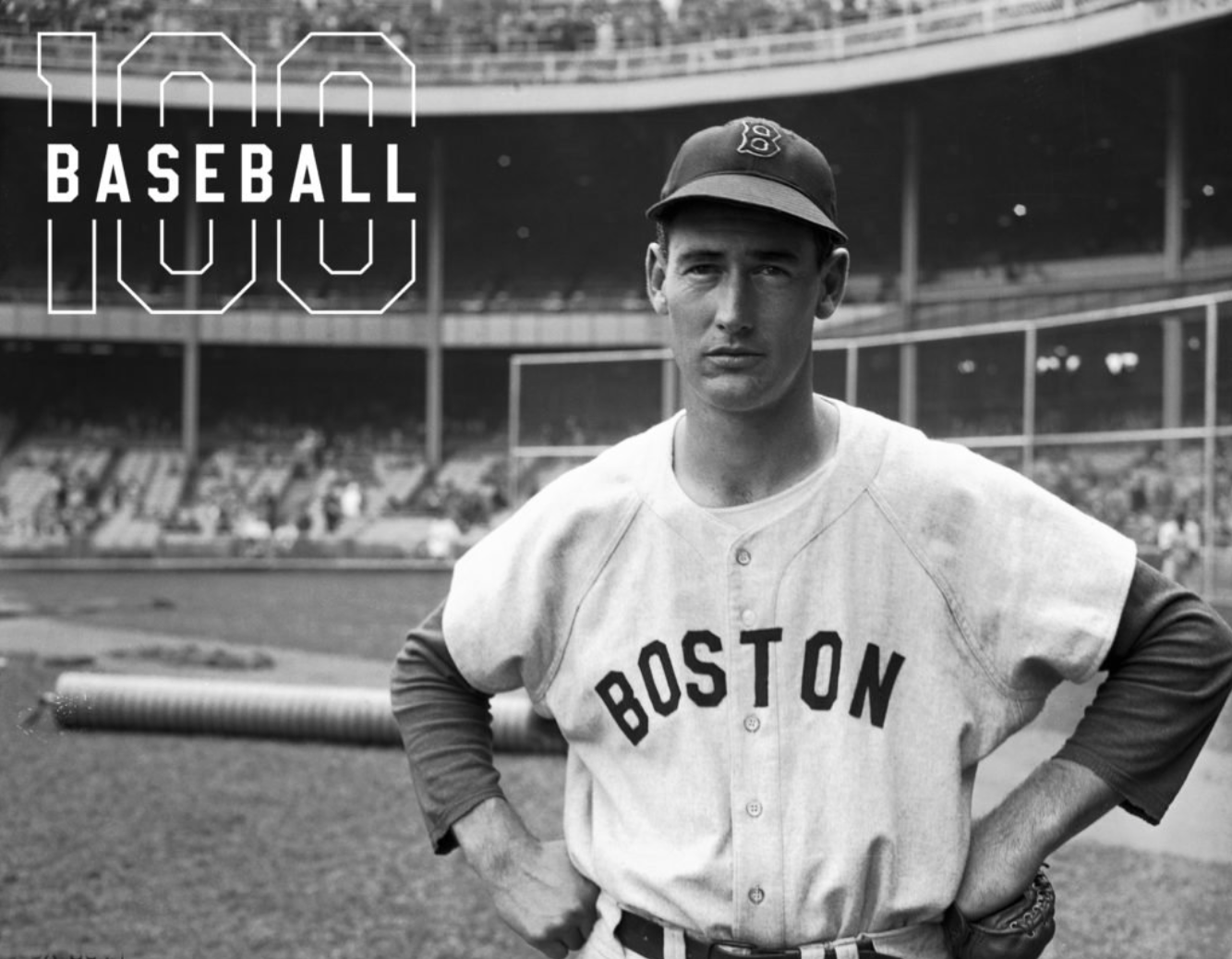
Williams was famously given the option to sit that last day and let his batting average round up to .400. As you undoubtedly know, he didn’t take that option, something that has been celebrated throughout the years.

That part has been over-celebrated, to be honest. Of course he played. He wasn’t hitting .400. He was hitting .3995. Sure, it’s easy to say that rounds up now but nobody saw it that way then. After he went 1-for-4 the day before, headlines like “Ted Williams Drops Below .400 Level” and “Ted Williams Down To .399” and “Williams Slumps Below Magic Mark” appeared all over the country.

Now, he definitely could have sat down after cracking a single off Dick Fowler in the second inning, which pushed the average up to .4008, or .401 on the back of a baseball card. He was given the option to skip out at that point, but he felt great, and he knew that even if he failed to get a hit his next time up, he’d still be hitting .400. Well, the next time up he homered off Fowler to make the average a solid .402, and then he singled again, this time off Porter Vaughan.

And then he singled again off Vaughan, 4-for-4, and his average was .405. At that point, he knew that he could go zero for his next five and still be above the .400 line. So he stayed, even played the second game, and ended up 6-for-8 on the day with that magical .406 average — the last time anyone hit .400.

He famously didn’t win the MVP that year, despite hitting .400 and leading the league in homers, runs, slugging, on-base percentage and walks. That was the season DiMaggio hit in 56 straight games and the writers gave the award to DiMag. The writers always thought Joe was the better all-around player and leader.

DiMaggio during the streak: .408/.463/.717, 1.180 OPS.

Williams all of 1941: .406/.553/.735, 1.288 OPS.

In 1999, Ted Williams rode to home plate in a golf cart for the All-Star Game at Fenway Park. He had suffered two strokes and a broken hip in the previous months, but still he stood. The greatest living players — from Henry Aaron to Willie Mays, Bob Feller to Stan Musial, Ken Griffey to Cal Ripken and all the All-Stars of the day — surrounded him and hugged him. He tipped his cap, and the crowd cheered as loudly as they ever had, and as the papers said, there wasn’t a dry eye in the house.


“Hey McGwire,” Williams shouted out to Mark McGwire, the most prodigious slugger in the world then. “You ever smell the wood when you foul one off real hard? You ever notice how it smells like burning wood?”


“I’ve smelled it,” McGwire said. Maybe he had or maybe he was just saying so, but Ted Williams smiled and nodded and said it was the best bleeping smell in the whole world.

-TOB

Source: No. 5, Oscar Charleston,” “No. 6, Ted Williams,” Joe Posnanski, The Athletic (04/01/2020);

PAL:  I had bumped Williams all the way up to number 3 when predicting Posnanski’s top 7. The Kid came in at 6. As I mentioned above, I read Wright Thompson’s essay on Williams a few months back. That story focuses on the batshit crazy last few years of Williams’ life with his adult children, as well as how he was, well, not a great husband or father. In Thompson’s words, summarizing to Claudia Williams, “[M]ost people didn’t understand that the two famous acts of his life–ballplayer and fisherman–occurred only because he was hiding from the third and final act of his life: fatherhood…He hid in the hyperfocus required by baseball and fishing.”

One lesson I slowly learn as I grow older is that greatness in one aspect of life is very rare and is commonly to the detriment of every other aspect of life, including happiness. The rarest of all is someone who is both good and great. 

Williams was great at seemingly three things: hitting a baseball, flying a fighter jet, and fishing. We’ll leave the flying and fishing aside for this. 

Posnanski quotes, of all people, Teller of Penn and Teller, in describing Williams hitting: “Sometimes magic is just spending more time on something than anyone might reasonably expect.” 

The M.V.P. stuff TOB mentions above is astounding. Man, he sure must’ve hated the writers, eh? His season stats are better than DiMaggio’s during the streak, and Joe wins it. Then Williams wins two – TWO – triple crowns and doesn’t win the M.V.P. 

TOB: One last thing. In the Charleston essay, Posnanski comes clean about his rankings, and it’s very funny to me:

We are now close to the end of the Baseball 100, and all along I have made certain to almost never mention the rankings. There’s is a specific reason for this: the rankings are just a device. Someone once asked Orson Welles if Mr. Thompson, the man who goes in search of Rosebud in “Citizen Kane,” learned anything or grew at all throughout the movie. “He’s not a person,” Welles raged. “He’s a piece of machinery to lead you through.”

That’s what the rankings are … they are here to give this project shape and to spark a few feelings. Yes, they’re in the basic order of a formula I used, one based on five things in no particular order:

  1. Wins Above Replacement
  2. Peak Wins Above Replacement
  3. How multi-dimensional they were as players
  4. The era when they played
  5. Bonus value — This might include postseason performances, leadership, sportsmanship, impact on the game as a whole, if they lost prime years to the war and numerous other possibilities.

But I have no illusions about the formula. It is as flawed as anything so, whenever possible, I attached the player and a number that fits. So, for instance, Mariano Rivera is 91 for Psalm 91, the Psalm of Protection. Gary Carter is 86 for his role on the 1986 Mets. Joe DiMaggio is 56 for the hitting streak. Grover Cleveland Alexander is 26 because that was his magical year, 1926.

Bob GibsonTom SeaverJimmie FoxxGreg MadduxMike TroutJackie RobinsonFrank Robinson and Mike Schmidt, among others, were all given a ranking based on their uniform numbers. I would say at least two-thirds of the numbers have some sort of connection to the ballplayer.

I even skipped No. 19 because of the ’19 Black Sox, the biggest single-year scandal in baseball history.

That’s not to say that I couldn’t defend the individual rankings. I’m sure I could. But to do so would be to say negative things about various players’ talent, which goes against the very essence of this project. And anyway, fighting over the questions — Ted Williams over Ty CobbSteve Carlton over Sandy KoufaxCarl Yastrzemski over Ken Griffey? — is a big part of the fun.

I noticed the DiMaggio 56 thing. I knew that couldn’t be a coincidence. But none of the rest – not even that there wasn’t a 19.


Video of the Week:

https://twitter.com/Starting9/status/1245907486961471488


Tweets of the Week:


Song of the Week: John Prine – “Flashback Blues”

Hang in there, John!


Like what you’ve read? Let us know by following this blog (on the right side, up near the top), or:

Email: 123sportslist@gmail.com
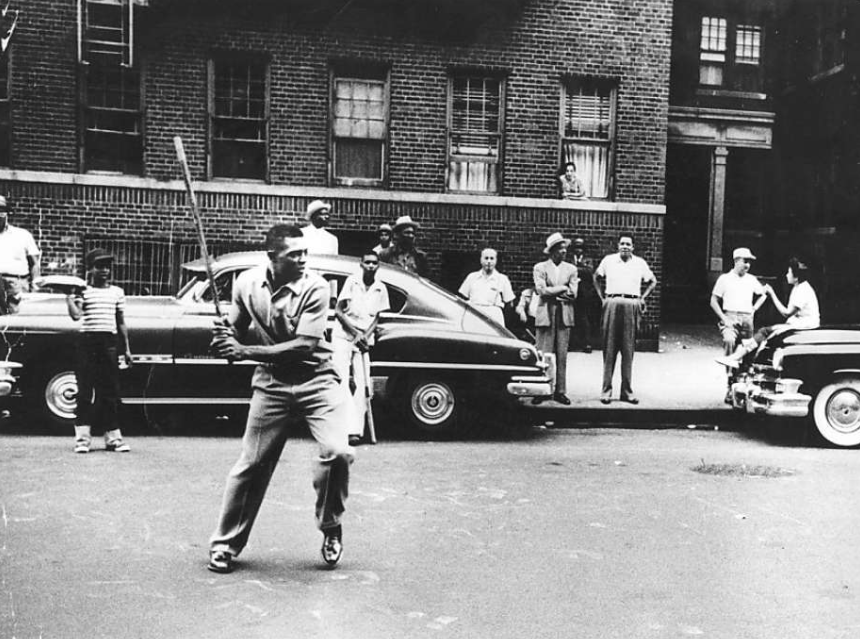
Twitter: @123sportsdigest

Facebook

Instagram: @123__sports


A 30-year mortgage and Michael’s age essentially means that he’s buying a coffin. If I were buying my coffin, I would get one with thicker walls so you couldn’t hear other dead people.

-Dwight Schrute

Lockdown Dailies #9: Least Favorite Players By Decade

Topic 9, Inspired by Ryan Rowe: Least Favorite Players By Decade

Age 10 (1992)

MLB:

TOB: Either Jose Canseco or Sid Bream. I was SO mad about Bream beating out Bonds’ throw to win the 1992 NLCS. But even at 10, I knew Canseco was a big dumb idiot. 

PAL: Mark Lemke, 2B Atlanta Braves. This little double-flap, switch-hitting dude drove me nuts in the 1991 World Series. He suuuuuucked as a hitter throughout his career, then decides to go 10-24 in the World Series. Also, Terry Pendleton. Wanna-be Puckett. Never root for a MLB player who wears the double ear-flap helmet. I don’t care that you’re a switch-hitter. You’re in the bigs. Get two helmets, you turd. 

TOB: HAAAAA. I almost said Lemke, too. Funny. I was at the Giants/Braves 2010 NLDS Game 1. We were in line for food and a guy in a Braves hat walked by. He looked like a real doofus, and very much like Mark Lemke. I was feeling myself and told him he looked like Lemke. His retort: “So I look like a professional baseball player? Thanks.” Damn. He got me!

Mark Lemke: yet another example of the double ear-flap theory. 

NBA

TOB: Wow, hm. Probably Karl Malone. I just never, ever liked that guy. Oh! Or John Starks!

PAL: Dan Majerle. Maybe he didn’t have that bronze tan yet, but I didn’t get his thing…which, in retrospect, was to shoot the three ball a lot. Also, I think Will Ferrell could pass for Dan Majerle.  

NFL:

TOB: Emmit Smith. So overrated. He ran straight through holes the size of a major freeway. Barry Sanders was criminally underappreciated at the time, especially when compared to Emmit. 

PAL: Emmit is a good call. Don Beebe. Speaking for shorty guys everywhere, let me just say we’re sensitive to the Rudys out there among us. Don Beebe chasing down Leon Lett in a blowout Super Bowl qualified as a bit of a Rudy play. According to Beebe, after they got their asses kicked, the owner of the Bills came into the locker room, addressed Beebe as “son” (older people: don’t do this to adult men, please), and said the following: “You showed what the Buffalo Bills are all about today. I’m extremely proud of you. I just want to say thanks.” 

And now I understand why the Bills never won squat.

Karl, Karl, Karl – easy on the frills, buddy. 

Age 20 (2002)

MLB: 

TOB: Derek Jeter. So overrated. No range, singles power, and the media feted him like some sort of baseball god. No play in baseball history is more overrated than his interception of a throw home on the first base line and flip to the catcher to get Jeremy Giambi, except maybe the catch he made when he fell into the bleachers after taking six steps after the catch. 

PAL: I’m living at the Moontower in Sioux Falls with 5 other baseball players. Plastic bottles of chew spit litter the common areas, and the bay window may or may not have been busted out due to a ping pong paddle. We’ve got a loveseat on top of a table we “borrowed” from the dorms to create stadium seating, and I have to watch Adam Kennedy from the Angels hit three motherf*&%ing homeruns in game 5 to eliminate my Twins. Just noticing that my least favorite player is another 2B.

Honorable mention: A.J. Pierzynski…and he was a player on the Twins at that point, which says a lot. 

NBA:

TOB: Kobe, no question. HATED him.

PAL: Peja Stojakovic. We had a fellow catcher on the team from Sacramento (how the hell did he find his way to South Dakota?). He was the first flatbill I knew, and he loved the Kings, and he’d say “PAAAAAAAAAAAAja” every time Stojakovic touched the ball. It was so annoying to watch games with this guy. Not Stojakovic’s fault, but I couldn’t separate the player from the fan. 

TOB: Hah. Peja was almost my most loved in 2002. 

PAL: You would.

NFL:

TOB: Probably Peyton Manning. I was never a fan, and hated how much love he got.

PAL: Jeff Garcia. His entire aura drove me nuts.

Age 30 (2012)

MLB: 

TOB: Respected, sure, but god damn did I hate Clayton Kershaw, who was in the midst of three Cy Youngs in four seasons. However, I hated Matt Holliday more, for his dirty slide to take out our lord and savior Marco Scutaro in the 2012 NLCS. 

PAL: At this point, he’s a White Sox, so this is easy: A.J. Pierzynski

NBA:

TOB: Still Kobe.

PAL: I want to say Dwight Howard. The SuperMan thing he simply saw Shaq do and tried to take it. 

NFL:

TOB: Still Peyton.

PAL: Richard Sherman

Of course Jeff Garcia wore his hat like that.

Pushing 40 (2020): 

PAL: again with this 40 b.s….

MLB:

TOB: Gotta be Cody Bellinger. I’m sick of his goddamn smirk. 

PAL: Gerrit Cole. That post-world series interview was so lame…unless he was protesting the Astros cheating scandal and wanted to distance himself from them as soon as possible…eh? eh?

NBA:

TOB: This is a tough one. The league is pretty likable right now. Luka is a dark horse, because I’m so bitter the Kings didn’t draft him, so I wish him ill. But I really don’t hate anyone at this point.

PAL: Kyrie. His act drives me nuts. 

NFL:

TOB: I wish Brady would go away, but I don’t hate him. No one, really.

PAL: Russell Wilson. Can’t stand me some fake-ass Russell. 

TOB: Yeah, I screwed that one up. Russell.


How about you? Which players did you hate at different points in your life?

More Dailies: 

  1. Your favorite baseball cleats
  2. Greatest game you ever played in
  3. Glove Rules
  4. Coaching Unis
  5. Best Fields/Courts/Venues you’ve every played on
  6. Favorite players (by decade)
  7. Best players you played with or against
  8. Predicting Joe Posnanski’s Top 7  baseball players of all-time.

Email: 123sportslist@gmail.com

Lockdown Dailies #7: Best Players

Pros v. Joes.

Best youth athlete you ever competed against/with (not how they turned out, but at the time)

TOB: 

Basketball: As an adult, I have played against too many guys who played major college basketball to choose one. But as a kid, I’ll never forget the first player who made me realize I did not have a future in basketball: John Gianonni. South Tahoe High basketball was a big thing when I was a kid. The program won a ton, including state championships at the highest level, and had plenty of players who went on to play major college basketball. It’s was the thing in town; the varsity guys were local celebrities.

The school held a youth basketball camp every year, staffed by current and former STHS players and coaches. Kids from all over the state came to learn Coach Orlich’s motion offense. I went every year, and I was pretty good back then. 

The camp schedule was drills in the morning, lunch, and then games in the afternoon. In 5th or 6th grade, I was put on a team with this guy John. He was from out of town. The staffers all knew me, and usually they loved me, but damn. I knew right away – John was so much better than me, and if I knew it the staffers did, too. They started calling him MJ. I wasn’t mad or sad. I was just impressed, really. He was so good. 

After we left Tahoe after my sophomore year, I heard he moved there to be part of the program, and then I didn’t hear much. But I looked him up this week. John got a scholarship to Portland State, and later transferred to Chico State, where he played with, by my count, three other guys I grew up playing with in Tahoe. 

His career seems to have fizzled in college. He ended up only 5’10, the same height I am now. But I think he was about that height in 6th grade. I think if he had continued to grow, he would have been very good.

Football: Timmy Sprinkles. Incredible athlete. Good at everything he did. Smart and nice, too. He was my quarterback, and he got a scholarship to play safety in football and also baseball at Washington State. It didn’t work out for him there, and he ended up playing QB at a small school in California, before retiring due to concussions. As a freshman in high school, though, he was big, and fast, and strong, and had a cannon arm. The highlight of film sessions each week was watching Timmy truck some 120-lb DB who tried to come up and stop him on a scramble. BOOM! 

Baseball: This is easy. Greg Bruso. I have no idea if this is true, but everyone said he threw 70+ as a 12-year old. My rough math puts that at about the equivalent of a 100 mph fastball at an MLB distance. I faced him once as an 11-year old. It was not fun, I assure you. Bruso was good and got better; he was eventually drafted by the Giants, spent a couple years in their system, reaching AA, and was traded to the Brewers for Eric Young in 2003. He suffered a shoulder injury and retired just a couple years later. 

PAL: First of all, Timmy Sprinkles is one hell of a QB name. That could be the name of a protagonist in a Matt Christopher sports book. 

Baseball: Readers of 1-2-3 know by now that I played against Joe Mauer from 6th grade catholic school league through high school. Hard to argue against a potential Hall of Fame baseball player as the best player I ever played against.

As great as Mauer was, it didn’t jump out at you. He was super athletic, but it was understated in a weird way. He had a kinda dorky demeanor about him. He was this big kid who ran kinda funny. He threw hard but it didn’t look like he was really trying to throw hard. He hit everything, but there were other players that seemed to hit the ball harder. Obviously I didn’t know what I was looking at. 

One moment has always stuck with me. We were playing Mauer’s team in Legion (16-18 years old), and we had Sean Pickert come in for relief. Pickert was probably the best player I played with growing up, and while he rarely pitched (elbow issues as a young kid), he was throwing on the other side of 90 MPH when he did. 

Mauer was 6”6’ by then, but the lefty stood – and I am not exaggerating here – 3″ from the inside corner of the plate. It made no sense to try to pitch him on the outside corner, as he could easily reach it. The only option was to punish the inside corner with the hard stuff. Pickert threw one an inch off the plate inside, so basically directly under Mauer’s hands. Mauer essentially picked the ball out of my glove – that’s how late he waited to swing – and hit a 90+ fastball on the inside corner onto the golf course fairway behind the left fielder. He inside-outed a ball about 400 feet to the opposite field with a beat up TPX bat. 

As far as college goes, I’m going to need some help from the fellas. In terms of guys I played with, Andy Salmela was pretty damn good.

Hockey: I got to play with Marty Sertich, the eventual Hobey Baker winner, for several years. Wasn’t big, wasn’t fast, didn’t have the hardest shot – but he had the best hands I’ve ever seen, and shifty as all get out. He stickhandled unlike any player. Teams could not get the puck off of his stick, and could not check him. He was so much better than any player on the team, and he legit got a bigger kick out of setting up someone else’s goal than he did scoring himself…which he could do pretty much whenever he wanted.  

How about you? Who was the best you ever shared the field/rink/court with/ 

More Dailies: 

  1. Your favorite baseball cleats
  2. Greatest game you ever played in
  3. Glove Rules
  4. Coaching Unis
  5. Best Fields/Courts/Venues you’ve every played on
  6. Favorite players (by decade)

Email: 123sportslist@gmail.com

Week of March 27, 2020

Happy birthday to my brother, Sean, who has been there for me since Day 1, and turns FORTY today. I love you, big bro! -TOB


This Week’s Best from Posnanski’s Top 100

No. 11, Mickey Mantle:

A journey into how terrible Mickey Mantle’s father is:

Mickey was his father’s life’s work. His mother, Lovell, would say that when Mickey was 12 hours old, Mutt showed him a baseball for the first time and felt just a little bit heartbroken when Mickey turned toward milk instead. Mickey said he was taught baseball player positions before the alphabet and his nightly lullaby was the radio broadcast of St. Louis Cardinals games.

At this point, I’m laughing because I know it’s a little crazy…but also, I can absolutely relate to all of it. 

His mother, Lovell, was distant and detached. Neither of Mickey’s parents said, “I love you,” throughout his childhood.

I’m now socially distancing myself from Mickey’s parents. I know it was a different time, but god damn. That’s awful.

The love, as it was, came through daily baseball workouts. Mickey would come home from school, and Mutt would come home from the mines, a cigarette dangling from his mouth, exhausted from his day, and the sessions would begin. They were long and intense and inescapable no matter the weather.

“Dad, I’m hungry,” Mickey would say when dinner time hit.

“Your belly can wait,” Mutt would growl, and that’s when he might throw one at his son’s head to get the point across.

“When his Dad would pitch to him for hours,” Merlyn wrote, “out of a hundred pitches, Mick would be in terror of missing one and looking bad and having his father frown or criticize.”

Mickey Mantle wet his bed until he was 16 years old.

Christ. My oldest loves playing sports (My youngest is getting there, too). All sports. He’s voracious. But he’s the one begging me to play after I get home from work. And once we play, he’s the one begging me to keep playing. But the second he is done, I’m done. 

When you read this story, you will feel so bad about the obvious pain Mantle had to deal with his entire life because he had terrible, un-loving parents. -TOB

PAL: Posnanski deserves a sports writing award for these essays. What a feat, for real. Aside from the novelty of the countdown, I love the anecdotes within so many of these stories. Mantle’s is the best yet. Publish this book already!

This particular passage caught me: 

He won the Triple Crown in 1956. He was even better in ’57. He played 18 years in the big leagues, and his Yankees went to the World Series in 12 of them. He hit 536 home runs and won three MVPs and along the way, he inspired the hopes of countless kids. Singer/songwriter Paul Simon was one of those kids, and when he wrote “Mrs. Robinson,” he really was thinking, “Where have you gone, Mickey Mantle.” But “Joe DiMaggio” had the right amount of syllables.

This serves as an important reminder that greatness is not always measured in sum. Longevity is just one measure of greatness, and – outside of a couple examples – it might be the least inspiring. Bill Simmons will tell you Karl Malone was a very good player, but he’s not great, even though his numbers will tell you he’s a top-10 NBA player. Simmons is right, and anyone who watched the NBA in the 90s would tell you the same. 

Bob Costas described Mantle as, “[T]hat baseball hero. And for reasons that no statistics, no dry recitation of the facts, can possibly capture, he was the most compelling baseball hero of our lifetime.” 

By any account, prime Mantle was the Mike Trout of his time (rather, Mike Trout is the Mantle of his time), and Mantle went to the World Series 12 times, winning seven rings! Can you imagine Trout on the Yankees and winning 7 times. Oh, and by the way, Mantle was a switch-hitter and holds the following World Series records: 

  • Home runs
  • RBI
  • Extra-base hits
  • Runs
  • Walks
  • Total bases 

And then there was life for Mantle. This paragraph from Posanski got me. It’s just such an incredibly sad notion: 

Mantle himself couldn’t understand it. I saw Mantle a few times late in life — at events, at baseball card shows — and his body was destroyed by injuries and alcohol and all those late nights, and people would approach him with tears in their eyes as they tried to find the words to explain the role he had played in their lives. And, more often than not, he would turn away from them, as if he couldn’t tolerate their affection or, more likely, as if he felt entirely unworthy of their love.

For Mickey Mantle, living was the hard part.

But on the field, in his prime? Good grief, he must’ve been a sight to see.  

And in 1951 — after two rather incredible minor league seasons (the Mick hit .383 in Joplin, Mo. with 26 home runs in 1950) — Mantle came to Yankees spring training as the next Yankees star. The team was so sure about it that they gave him uniform No. 6, to put him next in line.

Uniform No. 3: Babe Ruth.

Uniform No. 4: Lou Gehrig.

Uniform No. 5: Joe DiMaggio.

Uniform No. 6: Mickey Mantle.

And then he struggles, and then there’s the scene between father and son after Mantle gets sent down to the minors… Read this essay.

Finally, show me a switch-hitter, and I’ll likely show you an asshole dad.

TOB: One thing, though (and this is the second time I’ve had to correct Posnanski for telling an apocryphal story as truth – the last being his retelling of a previously disproven story about Roberto Clemente). Posnanski’s bit about Paul Simon using DiMaggio instead of Mantle is very likely not true. When I read it, it seemed suspicious. So I did a little digging. It was easy, though; there’s a whole Wikipedia section about it in an article on the song. Posnanski gets his story from this:

References in the last verse to Joe DiMaggio are perhaps the most discussed. Simon, a fan of Mickey Mantle, was asked during an intermission on The Dick Cavett Show why Mantle was not mentioned in the song instead of DiMaggio. Simon replied, “It’s about syllables, Dick. It’s about how many beats there are.”

But from all other evidence, it seems Simon was joking when he said that to Dick Cavett:

Simon happened to meet DiMaggio at a New York City restaurant in the 1970s, and the two immediately discussed the song. DiMaggio said “What I don’t understand, is why you ask where I’ve gone. I just did a Mr. Coffee commercial, I’m a spokesman for the Bowery Savings Bank and I haven’t gone anywhere!” Simon replied “that I didn’t mean the lines literally, that I thought of him as an American hero and that genuine heroes were in short supply. He accepted the explanation and thanked me. We shook hands and said good night”. In a New York Times op-ed in March 1999, shortly after DiMaggio’s death, Simon discussed this meeting and explained that the line was meant as a sincere tribute to DiMaggio’s unpretentious and modest heroic stature, in a time when popular culture magnifies and distorts how we perceive our heroes. He further reflected: “In these days of Presidential transgressions and apologies and prime-time interviews about private sexual matters, we grieve for Joe DiMaggio and mourn the loss of his grace and dignity, his fierce sense of privacy, his fidelity to the memory of his wife and the power of his silence”. Simon subsequently performed “Mrs. Robinson” at Yankee Stadium in DiMaggio’s honor shortly after his death in 1999.

Simon’s words about DiMaggio seem sincere and ring true. The story about Mantle seems like a joke.

No. 10, Satchel Paige:

Paige was one of the greatest pitchers, and characters, in baseball history. I’ve long read stories about him, but it’s nice to have them all in one place.

Paige was a natural showman. You had to come to the ballpark and see what he might do next. Sometimes, he would catch fly balls behind his back. On occasion, when he was feeling puckish, he would tell his outfielders to sit down because he was just going to strike out this sucker anyway. Sometimes he would purposely load the bases and then strike out the next three batters, just to give the fans a thrill.

He usually guaranteed to strike out the first six or first nine or first 12 batters he faced. The first time he made the guarantee, it was in Birmingham. He said he would strike out the first six, and there was much shouting and abuse from the Birmingham Barons’ bench. But after he struck out the first five — while the crowd lost their minds — the Barons players stood up in unison and waved their white towels in surrender.

Ol’ Satch took pity on them and let the sixth guy pop out.

Hall of Fame pitcher Robin Roberts faced Paige in an exhibition and, in Roberts’ memory, he got a hit. Years later, when Roberts was inducted into the Hall of Fame (as a pitcher; he actually couldn’t hit much), he saw Paige and reminded him of the hit.

Paige shook his head. “Roberts,” he said, “at home, I have a book with the names of all the great hitters who got a hit off me.”

He paused.

“You ain’t in it,” Paige said.

In 1965 — at age 58 (at least; the papers called him 60 years old) — Satchel Paige pitched one last time in the Major Leagues.  You know, Paige had a pretty successful big-league career even if he didn’t get there until he was 41 (at least). He posted a career 124 ERA+. He was 10 wins above replacement.

To give you an idea of how good that is, he ranks eighth all-time in WAR after age 41, ahead of many other celebrated old pitchers including Jamie Moyer, Warren Spahn, Gaylord Perry and Grover Cleveland Alexander. How good must the young Satchel Paige have been?

His last game was a publicity stunt. Paige knew it. “I’m a gimmick,” he said. The Kansas City A’s owner Charlie Finley was looking for a big gate at the end of another dismal season, and most people saw through it — there were fewer than 10,000 people at the ballpark in Kansas City that day. A rocking chair was set up for Paige and there was a woman dressed as a nurse who stood by him as he rocked.

Paige didn’t mind. He was, after all, a great showman. And he felt like he had a surprise left for people. “I got my fastball and my famous hesitation pitch,” he said. “I can go three innings for sure. I got as good a chance as any of those young boys out there.”

He did just that. He pitched three scoreless innings, allowing one hit, a double off the center-field wall. Here’s a good bar bet: Who got the one hit in Satchel Paige’s last big-league game? It was Carl Yastrzemski, who celebrated after the game by hugging Paige tight.

“I don’t know how old he is,” Yaz said. “But that man can still pitch.”

Yep. One hit in 3 innings at age 58 against the fuckin Red Sox with 25-year old Yaz and 20-year old Tony Conligiaro.

“How do you do it?” he was asked many times about that control, and he always shrugged. Of all the extraordinary things he did in his life, working up through poverty and racism and becoming a legend, throwing strikes seemed like the easiest part of all.

“Home plate don’t move,” he said.

Haaaaaaaaaaahahahaha. Fantastic.

PAL:

“I want,” Paige said not long before his death, “to be the onliest man in the United States that nobody knows nothin’ about.”

Goddamn, that’s a great tombstone. 

“Even if you’re only seven, eight or nine, it eats at you when you know you got nothing and can’t get a dollar,” he said. “The blood gets angry. You want to go somewhere, but you’re just walking. You don’t want to but you got to walk.

Heavy stuff right there. And how about this nugget: 

You could argue that the greatest pitcher in baseball history, Satchel Paige, and the greatest hitter in baseball history, Babe Ruth, both began their baseball journeys in reform school.

Paige and Ruth were naturals. Paige’s rock-throwing skills transferred perfectly to the pitcher’s mound. He threw hard. He threw with purpose. And — we will come back to this again and again — he had impeccable control.

“A musician is born with music,” Paige said. “A pitcher is born a pitcher.”

I really love all the Page quotes, especially:

“How old would you be if you didn’t know how old you were.”


A Timely History Lesson from the Iditarod

I found this gem of a story about the Iditarod on Medium this week. As most of you know, the Iditarod is a month-long dog-sledding race in Alaska. This year, the race took place as the world realized coronavirus was spreading unchecked across continents and oceans. Within 48-hours of the NBA’s Rudy Gobert testing positive, it seemed all sports were put on hold until further notice. The dominos – the NBA, NCAA winter sports, NCAA spring sports, NHL, all high school sports, Soccer, etc., all fell. All except the Iditarod. 

Per Jolene Latimer:

While nearly every major sporting event and professional sports league worldwide did postpone or cancel their events, the Iditarod organizers decided to persist, launching a herculean, constantly changing strategy to keep the race operative.

In reading this story, I learned the ‘origin’ of the race, which is surreal considering our current circumstances. While the competition didn’t begin until 1973, the real race began long before that: 

It has been nearly 100 years now since the famed “Great Race of Mercy” occurred, a feat so epic it has since been canonized in history books and feature films.

You probably know the story but in case you need a refresher, here it goes: Faced with a diphtheria outbreak that threatened to wipe Nome off the map, a sled dog relay that included 20 mushers and 150 dogs transported a lifesaving antitoxin across the Alaskan wilderness to save the town’s inhabitants.

Early Iditarod organizers spent much time during the race’s formative years honoring these original Serum Run mushers. The solidarity they represent permeates the Iditarod’s culture even now.

“We are almost full circle,” Urbach said. “It’s interesting where we are almost 100 years later.”

Don’t that just leave you stunned? I am. Please do yourself a favor and read Latimer’s full story. – PAL 

Source: After Sports Were Cancelled, Only the Iditarod Remained”, Jolene Latimer, Medium (03/21/20)


The Hidden…Potato (?)…Trick

Look, it’s been a long week and it’s late and I don’t want to write a ton. But also, this story tells itself. So I’m simply going to give you the hightlights of the time a minor league pitcher tried to circumvent the rules by using a potato in a modification of the ol’ hidden ball trick.

The idea found Bresnahan in a bar. He was putting down beers with teammate/roommate Rob Swain at a place called Joey’s when they saw a story on TV about pitchers tampering with baseballs. 

Years earlier, Bresnahan had read about a player who somehow deployed a potato during a game, so he mentioned his idea to Swain. 

Then he did his homework. 

He scoured the rulebook to make sure it was not explicitly illegal. He had one of his teammates call a major-league umpire and throw out his hypothetical idea; the umpire said at worst he might get ejected.

Back at his apartment, he peeled the skin and chopped off the ends with a knife. He whittled and smoothed and shaped, and when he was finished he attempted to draw stitches with a red pen (it didn’t work). 

With a runner on third and two outs, Bresnahan asked home plate umpire Scott Potter for time. The netting in his catcher’s mitt was broken, he said, and Potter told him to get a new one.

Bresnahan emerged from the dugout with a fresh mitt and squatted behind home. No one noticed that he’d pulled an object out of the new glove, which he now held in his right hand. He called for a slider, low and away, snagged the pitch — a ball — with his glove and immediately came out firing. 

All along, the plan was for him to sail the throw over the head of third baseman Swain, his roommate and coconspirator. 

But…

“I made a great throw,” Bresnahan told some reporter from the Philadelphia Inquirer named Jayson Stark. “He did a hell of a job missing it.”

At that point, the third-base coach for the Reading Phillies, Jim Lefebvre, yelled to the runner on third, Rick Lundblade, to “Go, go, go!” Lundblade took off for home.

Bresnahan threw his mask, to look pissed. At the same time, his teammate, Miguel Roman, picked up the ball in left field. Roman was not in on the plan. He stopped “dead in his tracks.”

And then, right before Lundblade got to home plate, Bresnahan stuck out his glove and said, “You’re out, Rick.”

The stadium was silent. There were 4,000 people there, and no one knew what they’d just watched.  

“Brez,” said Scott Potter, the umpire, “What in the hell did you do?”

Lefebvre, the third base coach, ran to the outfield, then ran toward home.

“Hey Scottie,” he yelled, “it’s a fucking potato!”

Potter was furious.

“You can’t bring another ball on the field!” he told Bresnahan.

“It’s not a ball,” Bresnahan said, “It’s a potato.”

Potter wasn’t having it. The run scored. Bresnahan’s manager, Orlando Gomez, pulled Bresnahan and fined him $50 for “an unthinkable act for a professional.”

“It’s a fuckin potato…it’s not a ball, it’s a fuckin potato.” That killed me. I’m dead. Put it on my tombstone. -TOB

Source: “This Spud’s For You: The ‘Unthinkable Act’ Behind a Minor-League Legend,” Jayson Jenks, The Athletic (03/20/2020)


Video of the Week:

https://twitter.com/SFGiants/status/1241138727138652161?s=20

https://twitter.com/karenyhan/status/1243180807029694465?s=20


Tweets of the Week:

We got a lot this week, folks!

https://twitter.com/CTWritePretty/status/1243000600691986434

And, in keeping with the Mantle-theme, but the opposite:


Song of the Week: Guy Clark – “Rita Ballou”


Like what you’ve read? Let us know by following this blog (on the right side, up near the top), or:

Email: 123sportslist@gmail.com
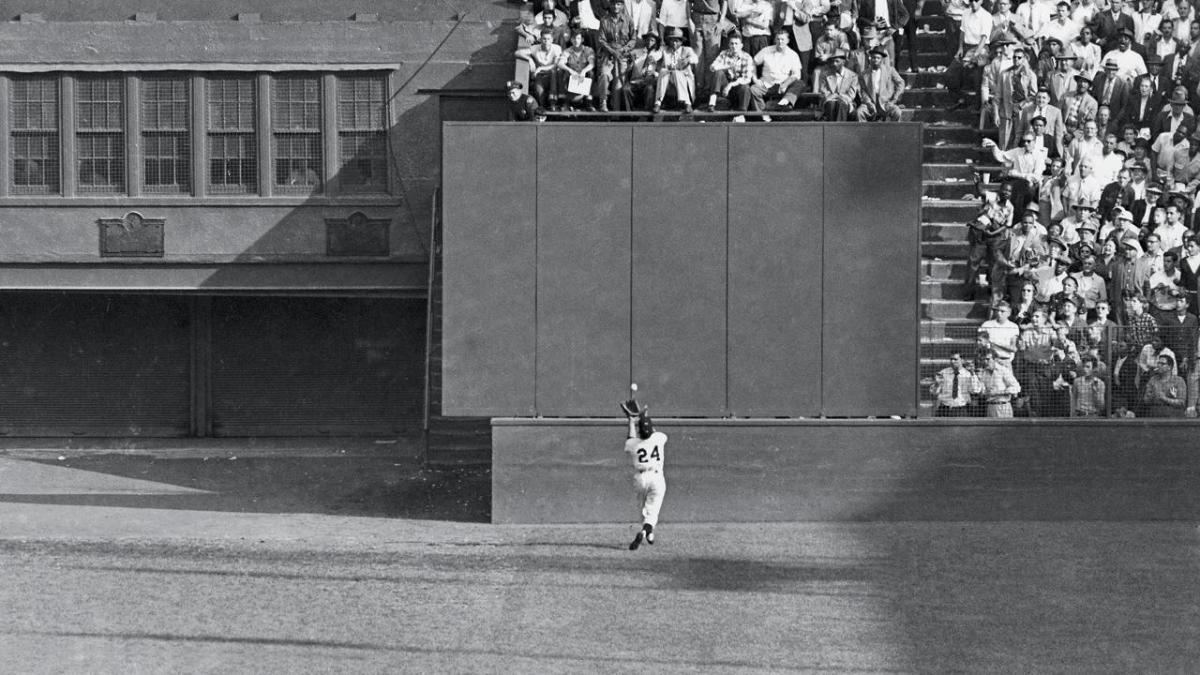
Twitter: @123sportsdigest

Facebook

Instagram: @123__sports


But then I saved him by glueing his shell back together. 

-Kevin Malone