Week of October 25, 2019


Karma Once Again at Work as the Astros Fall Behind 0-2 in World Series

In 2017, the Houston Astros were the feel good story of the baseball season. Just a few years removed from an absolute tank job, they stormed through the postseason and beat the Dodgers in an epic seven game World Series.

Two years later, they might be one of the most disliked teams in my lifetime. Not the players, mind you. As far as those things go, they are a very likable team: Altuve – awesome. Bregman – beast. Correa – talented as hell. Springer – incredible. Cole and Verlander – studs.

But a team is more than the players on their roster, and the Houston Astros front office over the last 16 months have proven to be incredibly tone deaf and insensitive.

It all started last summer. The Blue Jays’ All-Star closer, Roberto Osuna, was arrested and charged with domestic violence. The charges were later dropped because the victim returned to Mexico and refused to go back to Canada to testify. MLB apparently saw enough evidence to suspend him, though, and he was banned for 75 games.

A few weeks later, the Astros traded for Osuna in exchange for a modest package of players. People were rightly upset. A player being charged and suspended for domestic violence is not a market inefficiency to exploit. What’s worse, the Astros took advantage of a loophole in the suspension rules that allowed Osuna to participate in the 2018 playoffs, despite the fact he had not finished serving his 75-game suspension. It was gross and indefensible. They didn’t need to put him on the postseason roster, even if they were allowed to. But they decided having Osuna, and winning, was worth the PR hit of having a player technically suspended for domestic violence on the roster. Fittingly, Osuna gave up 5 runs in 3.2 innings in the ALCS, a 12.27 ERA, as the Astros lost to the Red Sox in 5 innings. Karma.

Now, a year later, the Astros were hoping people would forget about Osuna’s history, and how the team acquired him. People did not. Osuna is routinely booed when he enters games on the road, and people on Twitter celebrate his failures, including when he almost cost the Astros their eventual ALCS clinching Game 6 win by giving up 2 runs in the top of the 9th (the Astros would go on to win in the bottom of the 9th).

The story would have ended there, but the Astros front office continued to show its true colors. The controversy began Sunday, the day after they clinched the AL pennant, when Sports Illustrated reporter Stephanie Apstein reported that an hour after the game:

[A]ssistant general manager Brandon Taubman turned to a group of three female reporters, including one wearing a purple domestic-violence awareness bracelet, and yelled, half a dozen times, “Thank God we got Osuna! I’m so f—— glad we got Osuna!”

The outburst was offensive and frightening enough that another Houston staffer apologized. The Astros declined to comment. They also declined to make Taubman available for an interview.

As Apstein pointed out, the outburst was odd because as I mentioned Osuna almost blew the game. Additionally, there have been reports that one of the female reporters Taubman yelled at routinely criticizes the team for its acquisition of Osuna, and often tweets a domestic violence hotline number whenever Osuna enters the game. In that context, Taubman’s motive is clear – an attempt both to intimidate and to gloat on the team’s heavily criticized move.

Within an hour of Apstein’s report, the Astros released a statement. Did they announce Taubman’s firing? No. Did they apologize? No. Here’s the statement, in full:

“The story posted by Sports Illustrated is misleading and completely irresponsible. An Astros player was being asked questions about a difficult outing. Our executive was supporting the player during a difficult time. His comments had everything to do about the game situation that just occurred and nothing else – they were also not directed toward any specific reporters. We are extremely disappointed in Sports Illustrated’s attempt to fabricate a story where one does not exist.”

Hoo, boy. If you release a statement like that, you better be right. Unfortunately for the Astros, they were not right. Immediately, multiple reporters who were present tweeted confirmation of Apstein’s story. A Houston Chronicle sportswriter, Hunter Atkins, said: “The Astros called [Stephanie Apsteine’s] report misleading. It is not. I was there. Saw it. And I should’ve said something sooner.” Others present made similar statements. Again – if you’re going to go all Trump and call a reporter a liar, you better be right. The Astros were not. 

This story picked up steam as the World Series began on Tuesday, distracting from what promised to be a great series. The Astros released two more statements before Game 1 on Tuesday. The first was from Taubman, and it was incredibly insufficient. It apologized for “foul language” but Taubman stood by his story that he was “showing exuberance” for a player and only apologized if his actions offended anyone. in effect Taubman stood by the denial that his outburst was related to negative coverage of Osuna. It threw in a “I’m a loving and committed father and husband” as if that has anything to do with it.

The second statement was from team owner Jim Crane who also did not apologize and touted his team’s raising of money for domestic violence prevention, as if throwing money at something makes all other actions excusable.

So, would karma get the Astros? Oh yeah, baby. They lost a tight Game 1, as Gerrit Cole, the latest Not Bumgarner, got knocked around. They then got smoked late in Game 2, wasting a good start from Justin Verlander, a former Not Bumgarner, falling 12-3. The Nationals head home with a commanding 2-0 lead. Karma. Do bad things, deserve bad things back.

It should be noted that on Thursday the Astros announced they had fired Taubman. But it was too little, too late. To make matters worse, Astros GM Jeff Luhnow appeared at a press conference Thursday. The following occurred:

Terrible. Get swept, Houston! -TOB

PAL: A bit of free advice to businesses of all types: don’t protect the dickheads. They ain’t worth it.


Relevant NFL Experience: High School Coach

Turns out, coaching high school football might be the best preparation for today’s NFL Coach. That’s Kevin Clark’s thesis from his piece on The this week.

The Bears’ head coach Matt Nagy and Eagles heach coach Doug Pederson are considered master schemers in today’s NFL. Not so long ago, both of them were high school head coaches. Add to them Jon Kitna (Dallas QB Coach) and Jess Simpson (D-Line coach, Falcons), and you have four NFL coaches who were coaching in high school within the last 12 years. 

Let’s set aside the obvious point: Kitna and Pederson are former NFL players. So they aren’t the same as a guy like Simpson (22 very successful high school seasons in Georgia). That said, what’s most interesting about this story is how some mandatory skills for a good high school coach – flexibility and teaching – are becoming incredibly valuable skills in the NFL. 

From a creativity standpoint,” Simpson says, “high school coaches start with: If you aren’t willing to do it all, you probably won’t be very good.” High school coaches, Simpson means, must have a command of every possible scheme: wide-open spread offense, pure option football, the jet motion, or the run-pass option. The talent disparity can be so great, and personnel turns over so quickly from year to year that high school coaches need to be able to change everything about their team based on their talent—or lack thereof.

And from later in the story: 

The emphasis on adaptability is important for a few reasons. Trends now appear seemingly out of nowhere (more on that in a second). Players are much less experienced than they were in years past, both because the league has gotten younger, and there is dramatically less practice time since the 2011 collective bargaining agreement. These factors create favorable conditions for flexible schemes that can be run very simply and require an emphasis on instruction and teaching. High school coaches can do that.

Less practice, younger players, and a thing called YouTube makes every wild idea and offense variation accessible to every coach at every level. Good ideas can truly come from anywhere – high school, college, or the pros. The increased value on teaching also makes sense, which highlights another really interesting point: high school coaches are teachers. Kitna taught math while coaching, and said it helped him as a coach. 

The better teacher you are, the better coach you’re going to be. You’ve got to be able to communicate. It’s one thing to have knowledge. It’s another thing to convey knowledge. That’s what I learned from high school.

This story presented a fresh idea about coaching in the NFL that made me think about the game and strategy differently. Excellent read. – PAL 

Source: “The Trailblazing Coaches Who Went From Friday Night Lights to the NFL”, Kevin Clark, The Ringer (10/23/2019)

TOB: Really good read. Here’s my favorite point:

There are about 20 times more high school athletic programs in the state of Florida than there are teams in the NFL, so it stands to reason, due to sheer probability, that there are many high school coaches who might be better equipped than those currently coaching in the NFL. Essentially, the NFL has been closed off from the lower levels of football. There’s no law that says NFL coaches must have the smartest schemes—far from it—and opening the sport up to minds from lower levels can help foster innovation in the professional ranks.

Especially when you are talking coordinators whose main job is to strategize (as opposed to position coaches you need helping with technique), limiting your pool of coaches to former NFL players is crazy. There are thousands of football coaches across the country, and any smart coach would expand his search to include them, in order to find the best.


Umpires Favor American-Born Players; Bring on RoboUmps!

If you’re a regular reader of this blog, you know that I am ready for RoboUmps. In Wednesday night’s Game 2, I saw the game affected by some bad calls at the plate. The ump, who was being picked up on a mic all game, was not picking up pitches at the bottom of the strike zone. Pitchers for both teams were painting the lower edge, and the ump was missing them. The game turned into a 12-3 laugher late, but it was 2-2 after 6, and every pitch was important. Why are we still doing this, I thought?

And then after the game I saw this tweet.


If true, this is bad. Umpires are, likely subconsciously, biased against players not born in the U.S. and adjusting the strike zone accordingly, with an effect about half that as exists for home teams vs. away teams. I found this article, from way back in 2013, suggesting that the home team advantage is 2.5% but that it increases in high leverage situations (late and close games). So, figure it’s about a 1.5% bias in favor of American-born players and against foreign-born players. That’s not huge, but it’s too much, and I’d love to see the data by umpire; I am guessing there are a few bad apples. But again I thought: why are we still doing this?

Please, give me RoboUmps. -TOB

PAL: What’s the goal here? I’m assuming TOB’s is to achieve 100% accuracy in the calling balls and strikes and to remove any type of bias (subconscious or otherwise) from the calling of balls and strikes. Does this then extend to all calls related to the game? 

The human umpire adds a dimension to a hobby that makes it more compelling in my view. However, we still ought to seek improvement, and to do so we should examine all variables in this equation. Chris Long mentions the variable of country of birth of the batter, of the pitcher (no impact on calls), and I think you call out an important component – examining umpire variables to see any patterns or trends in the guys actually calling the balls and strikes.  

TOB: The issue is the perception of bias is there, and that’s a problem. Your comment that this is a “hobby” is wrong. It’s not a hobby. It’s a multi-billion dollar per year business and they should ensure they get things right. The entire business rests on the perception that the game is fair – that’s why they take player gambling so seriously. If fans lose faith in the integrity of the game, they stop paying to watch.

So, yes – I want to get things 100% correct, if possible. And if we can’t, I want to improve where we can. The umpire will still be there, making the calls. He’ll just have a signal of what to call on balls and strikes alone. Frankly, I don’t get the resistance. Doing something one way because that’s the way we’ve always done it is not a good enough reason. The game was invented nearly 200 years ago and the roots are deeper than that. It was invented before airplanes. And automobiles. Phones, even. The world has changed a lot. If they had the technology back then, they’d have used it. We do now, and we should. 

PAL: Don’t know what to tell you, other than baseball is a hobby of mine. I don’t know how one can argue the contrary. And the multi-billion dollar per year business is dependent upon its entertainment value to me and millions of other people who like to watch baseball as a hobby.  To watch a game with umpires relaying automated calls would sterilize the experience. Room for interpretation is great for entertainment and lore. Mistakes make for better stories. Sure, sometimes those stories might make for painful memories, but the stories are no doubt more compelling and better long-term for the game. 

TOB: I can’t say you’re wrong – but I can say I suspect it would not take you and others long to get used to it. We use instant replay in all major sports now, and that’s much more of a disruption to the game than this would be. For the most part, people like instant replay – they want to get the calls right, and they accept that disruption, and the removal of human error. I think the same would quickly happen with balls and strikes.

PAL: To borrow a phrase from Dan Patrick, it’s not called instant replay any more – just replay. Most people like instant replay? For real? Seems like a complete c.f. in football, and they still don’t get it right. I can’t stand it in baseball.

TOB: Take away instant replay and see what fans think. People would freak out.


Once, Twice, Three Times a Moron

Seriously, what bizarro world are we living in? The World Series (you may have heard that baseball is a hobby of mine) is in full swing and I’m posting two – two – NFL articles. This one simply had to be shared.

The Patriots embarrassed the Jets on Monday night, 330-0. I mean, 33-0. There was one moment in the snoozefest that rewarded the five people still in the stands and the 9 people still watching on TV. 

The Pats lined up to punt from the Jets 33 yard-line on a fourth & two with 10 minutes to go in the fourth quarter. In order to give his punter a bit more space to work with, Belichick took a delay of game, which also ran down the game clock down. Jets psychopath coach Adam Gase, not knowing when to just curl up in a ball, cover the head, and take the beating, declined the delay of game penalty. 

The play clock – and the game clock – started again. Again the Pats let the clock run down, and with two seconds left on the play clock, they intentionally jumped for a false start penalty. Gase declines again. Play clock resets. Game clock counts down. In all, the Pats killed about 70 seconds, helped preserve a shutout, and reminded everyone that Belichik has inspected every particle of football dust. – PAL 

Source: Bill Belichick Delights In Tormenting The Hapless Jets”, Chris Thompson, Deadspin (10/22/19)


One of the Funniest Things I’ve Read in a While

I can’t stop reading this, and I can’t stop laughing.
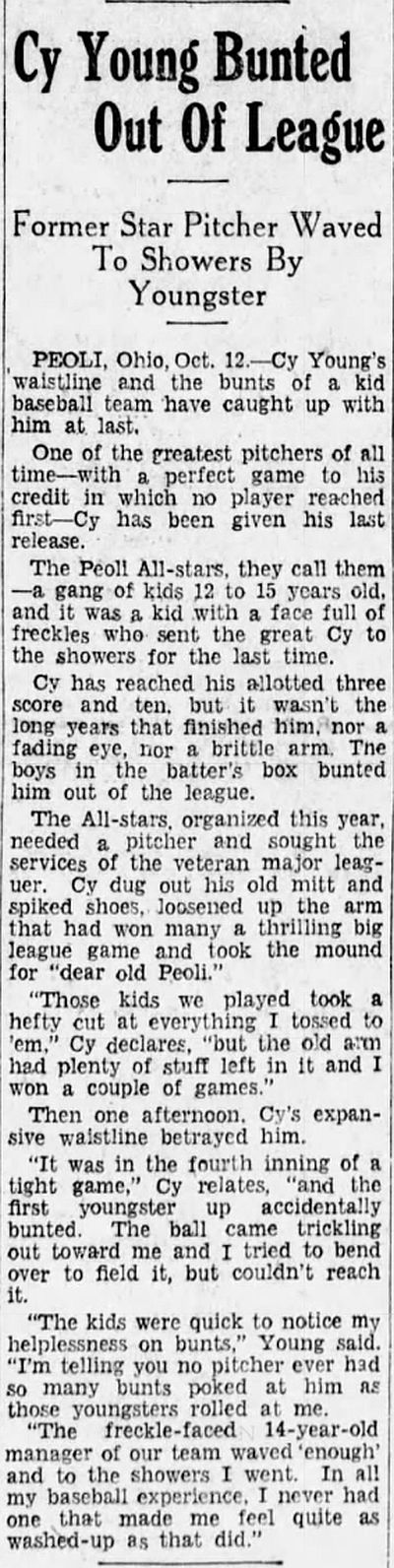
Yes, that is Cy Young, one of the greatest pitchers of all time, attempting a bit of a comeback, at age 67, playing with and against a bunch of teenagers. And that is Cy Young getting run off the mound because they realized the old man could no longer bend over to field a bunt. So those god damn kids bunted right at him, over and over, until Cy Friggin Young had to be yanked from the game. Perfection. *muah* -TOB

PAL: Is this real?  You missed the best part: Cy Young was sent to the showers by “[t]he freckle-faced 14-year-old manager”. Hilarious.


Video of the Week

Three videos from the Wide World of Sports:


Tweets of the Week

https://twitter.com/aaronfalk/status/1186016379029164032?s=20


Song of the Week: J.S. Ondara – “Lebanon”, C/O Jamie Morganstern


Like what you’ve read? Let us know by following this blog (on the right side, up near the top), or:

Email: 123sportslist@gmail.com
Twitter: @123sportsdigest

Facebook

Instagram: @123__sports


Mr. Scott, who is this other woman, Ryan, who you refer to as “just as hot as Jan, but in a different way”?

-Diane Kelly, Esq.

Week of October 18, 2019


How the 1989 Earthquake Made the Bay Area Safer

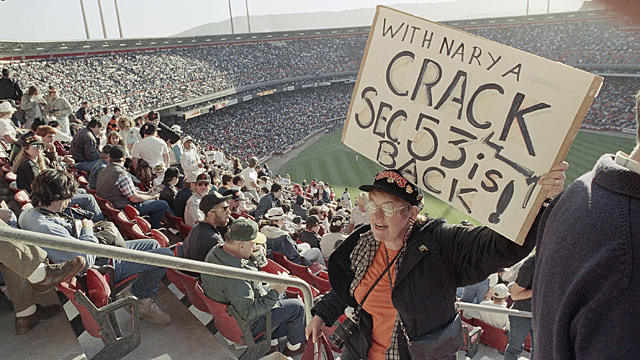
30 years ago this week, at 5:04pm, the Lome Prieta earthquake struck, just minutes before the start of the Game 3 of the World Series at Candlestick Park. 

In the stadium that day were an unusually large number of structural engineers: one of them had a buddy with a ticket hookup, and so a bunch of the engineers at Degenkolb Engineers were there, including in the upper deck as it shook and swayed hundreds of feet off the ground, as told by Evan Reis, one of those engineers:

“In my career, there have been a lot of earthquakes in the larger Bay Area, and that was certainly the most intense,” Reis said. “Being cantilevered out in the upper deck of the stadium — it amplified everything. If I had been on the ground, that would’ve been one thing. But we were leaning out and bouncing up and down. That was unique.”

The next day, the engineers at Degenkolb’s office were buzzing. What if the earthquake had lasted another 30 seconds? A minute? What if it had originated closer to the ballpark?

“Those upper decks could’ve easily collapsed,” Reis said. “If it had been a repeat of the 1906 earthquake, things would’ve been a whole lot different.”

Experiencing the earthquake, and seeing first hand the destruction it wrought, confirmed for the young engineer that he had chosen the right profession:

“I had only been working for one year when that happened,” Reis said. “It really showed me, ‘OK, what I’m going to be doing for the rest of my career is going to make an impact. I’m going to design buildings that don’t do this. Buildings that are going to be safe.’”

In 2016, Reis founded the U.S. Resiliency Council — a non-profit dedicated to establishing and implementing rating systems that evaluate a building’s performance through an earthquake, and how it can be improved. The USRC has since developed rating systems to evaluate building resistance against other natural disasters as well.

And Reis says that it all starts with Loma Prieta.

“You spend all this time studying earthquakes in school, but they’re fairly rare,” Reis said. “Engineers can go their entire careers designing for earthquakes and never actually ever experience one.

“To see what they can do, and have physically been in a stadium that could’ve collapsed because of an earthquake, cemented this idea that I can really make a difference doing what I’m doing. And that has not ever left.”

Jim Malley, another engineer in attendance on October 17, 1989, was asked years later to peer review another stadium being built – the Giants’ soon-to-be built Pacific Bell Park – now Oracle Park. Just a few years after it opened, a 5.3 earthquake struck during a game. The stadium was engineered so well the players didn’t even realize there had been an earthquake. 

What a cool story. And for a great oral history of that crazy World Series, check out this old oral history from Grantland, published back in 2013. -TOB

Source: Meet the 1989 Earthquake World Series Attendees Who are Making San Francisco Safer, 30 Years Later”, Alex Coffey, The Athletic (10/17/2019)


Imagine Being So Dumb You Criticize an Athlete for Missing a Game to Be With His Wife and Newborn Child

Yes, it’s the year 2019, and we are still living amongst cavemen who criticize dads who choose to be with their partner and newborn child instead instead of going to work. Sigh.

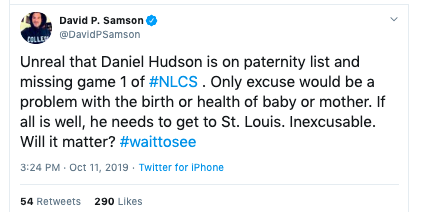
This time it was Nationals’ pitcher Daniel Hudson who faced criticism from some vile corners of society. Hudson’s wife went into labor, and so Hudson left the team and missed Game 1 to be with his wife and baby. One prominent critic was this dumbass:

Unfortunately, that dumbass is former Miami Marlins President David Samson. Somehow, 344 people saw that tweet and said to themselves, “Yes, I agree, and would like to publicly state my support.”

Luckily, though, most voices drowned out Hudson’s critics. My favorite was his teammate, Sean Dolittle:

Amen. -TOB


The Unlikeliest of NHL Scouts: Former Dodger GM Ned Colletti


“Ned Colletti might be the only person in professional sports history to have traded for Manny Ramirez and scouted the Columbus Blue Jackets‘ power play.” 

That’s one hell of an opening line from Greg Wyshynski.

Ned Colletti made a career as a baseball front office guy for over 30 years, the last of those years were as the General Manager of a little underachieving baseball team in LA (you’re absolutely right; I need to be more specific: the Dodgers). Colletti is now a hockey scout for the San Jose Sharks. 

You read that right.

How does a baseball lifer simply switch sports in what he calls his “back nine” of life? It’s not all that surprising when you consider Colletti’s full journey. He grew up a rink rat in Chicago, became a sportswriter covering the Flyers, and then – when two newspapers folded in Philly – he turned to media relations for the Cubs. From there, you can fill in the blanks to GM of the Dodgers, but you also see that Colletti was a hockey guy before he was a basell guy.  

When in LA, Colletti met the coaches and front office for the Kings and Ducks. Aside from being neighbors, Colletti and the hockey guys were able to connect in a way that was impossible within their respective sports. 

As Colletti puts it: 

I couldn’t call another baseball GM. We were competing against each other. It would have been like, ‘Hey, I have a managerial problem.’ ‘Well, good for you! I hope it never ends!'”

That’s all fine, but it sure doesn’t seem to add up to Colletti scouting prospective NHL players. It’s one thing to commiserate and learn from hockey executives, but it’s entirely another to assess talent in a different sport.

Colletti would tell you it’s not all that different. While a fascinating notion, I still find it hard to believe. With that in mind, here are Colletti’s pillars to evaluating whether or not talent is ready, be it the NHL or MLB: 

  • Can I trust a player?
  • What’s inside the jersey?
  • Money can corrupt
  • There’s a reason bad signings happen
  • Analytics as a validation  

I love the idea of Colletti being down to try something new in the twilight of his career, and I love that a hockey guy gave it a shot. – PAL 

Source: Ned Colletti’s baseball lessons for NHL scouting”, Greg Wyshynski, ESPN (10/16/2019)


Professional Golfer Scores 127 in Senior LPGA Round

I’ve had my share of dreadful, never-ending rounds of golf in my time – especially at Como – but I don’t think I’ve ever logged a 127 over 18 holes. That happened this week. In a professional tournament. Get this: the same professional golfer tallied a 90 in the very next round of a LPGA event. 

Not a flat shot on that gd Como course.

Lee Ann Walker, who last played a LPGA event in 2008, entered a Senior LPGA event in French Lick, Indiana most because she wanted to visit some friends, which says something about the exclusivity of the Senior LPGA (just sayin’). In the time she’s been away from the game, there’s been some rule changes, especially around what is and isn’t OK when putting. More specifically, one rule states that “Caddies no longer can stand behind players as they prepare to hit a shot unless players back away after the caddie is no longer behind them.”

Walker didn’t get the memo until mostly through her second round. Set aside the fact that her two playing partners on day one are kind of suspect for not telling her, this oversight cost her 58 friggin’ strokes!

Each violation was good for two penalty strokes, and as the AP’s Doug Fergusoon points out, it’s incredible that Walker could remember each violation, which tallied up to 21 occurrences in round one and eight in round two. 29 x 2 strokes = 58. 

For her part, Walker didn’t seem to lose much sleep over it. “I’m glad I went. I got to see a lot of great friends, it was a great golf course, great event. Everything was great except for my penalties.”

Also, a Bleacher Seat Brewing beer to any of our readers who’ve attended a Senior LPGA event. – PAL 

Source: Pro Golfer Lee Ann Walker Has 58 Penalty strokes Added to Score After Rules Mess-up”, Doug Ferguson, Star Tribune (10/17/2019)

TOB: I saw this story on the ESPN ticker the other night and couldn’t stop laughing. I’m glad she has a good sense of humor about it.


When a Record is Not a Record
Last weekend, a human being ran the first ever sub-2 hour marathon. Specifically, Eliud Kipchoge finished a 26.2 mile run in 1:59:20. An incredible human achievement. But Kipchoge’s run will not be considered an official record. Why? Because it didn’t occur in an official marathon race. In fact, the event was termed an “exhibition marathon”:

The planning that went into the event was a fantasy of perfectionism. The organizers scouted out a six-mile circuit along the Danube River that was flat, straight, and close to sea level. Parts of the road were marked with the fastest possible route, and a car guided the runners by projecting its own disco-like laser in front of them to show the correct pace. The pacesetters, a murderers’ row of Olympians and other distance stars, ran seven-at-a-time in a wind-blocking formation devised by an expert of aerodynamics. (Imagine the Mighty Ducks’ “flying V,” but reversed.)

Kipchoge himself came equipped with an updated, still-unreleased version of Nike’s controversial Vaporfly shoes, which, research appears to confirm, lower marathoners’ times. He had unfettered access to his favorite carbohydrate-rich drink, courtesy of a cyclist who rode alongside the group. And the event’s start time was scheduled within an eight-day window to ensure the best possible weather. The whole thing was as close as you can get to a mobile marathon spa treatment—if going to a spa were paired with the worst discomfort of your life.

First, excellent Mighty Ducks reference. Second…huh. Hm. I get why this doesn’t count as a “record” in the official sense; everyone racing in official marathons after this should not be required to chase this time. Yes, it’s apples and oranges, but to bite a line by my old hoops buddy, you can compare them – they’re both fruit. 

So when I read within this article sports scientist Yannis Pitsiladis called the achievement “meaningless”, I just want to rage. MEANINGLESS? Because it didn’t follow a set of arbitrary rules the sports has agreed upon for competitions? MEANINGLESS? No, man. Hell, no. Did Kipchoge still run 26.2 miles? Did he do that in under 2 hours? Did he ride a motor scooter? No? Ok, then there’s meaning to this – it’s an incredible achievement and it should absolutely be celebrated. What’s more, it gives all elite marathoners the knowledge that the 2-hour barrier is not a barrier at all. I’m guessing someone will break 2 hours, in competition, sooner rather than later. -TOB

Source: The Greatest, Fakest World Record”, Paul Bisceglio, The Atlantic (10/13/2019)

PAL: 100%. Record? No one would argue that. But to say it’s meaningless sure sounds like a troll to me. 01:59:59 is no longer an abstraction, and not quite a reality, but Kipchoge moved it from a mythical concept and into the real world. He was a runner crossing a finish line with 01 still on the clock above him. It matters as much as the first “real” sub-2:00 marathon, because it has given a generation or two of runners a reason and face to believe it’s possible. 

Also – maybe TOB and I should film each other running 13.1 MPH on the treadmill and see how long we can last. 30 seconds? What’s the over-under? 


Elite Pro Athletes Are Complete Lunatics

Carli Lloyd is a very good soccer player. Was and is one of the best in the world. In the 2015 World Cup Final, she scored a hat trick as the U.S. took the title in a laugher over Japan. 

Before this year, she was a big part of the U.S. achieving that World Cup victory, another second-place finish, and two Olympic gold medals. She’s 37 years old now, though, which ahem is young, of course, but a little on the not-so-young side for a professional athlete. At this past summer’s World Cup, Lloyd played in every single game and scored three goals in helping the U.S. win the tournament, but she did so as the team’s first sub off the bench. You might think, “Wow incredible, she’s 37 and still able to perform at such a high level and help her team win the World Cup! She must be thrilled!” You’d be wrong. Here’s Lloyd in a recent interview:

There’s no denying it. I deserved to be on that field that whole World Cup, but I wasn’t. And I think I’ve grown as a person, as a player. It sucked. It absolutely sucked.

It was absolutely the worst time of my life. It affected my relationship with my husband, with friends. It really was rock bottom of my entire career.

Remember: she played in every game. She scored 3 goals. But she didn’t start every game; she didn’t play every single minute, so it was the worst time of her life. That’s crazy, and also suggests an extremely privileged and charmed life. It’s sorta funny, but not all that endearing I can’t imagine her teammates, especially the one who started in front of her, appreciated those comments very much. But, if you’re going to be an elite athlete, you usually have to be a selfish ahole. -TOB

Source: Carli Lloyd On Playing Every Single Match And Winning The World Cup: ‘It Sucked,’Luis Paez-Pumar, Deadspin (10/15/2019)

PAL: Telling note from the article: Lloyd was cut from the U-21 National team. If you don’t think that slight has driven her for the past 16 years, then I direct you to every professional athlete who remember every single player that was drafted ahead of them. Lloyd is the best kind of player – the one who still thinks they have something to prove after proving everything. That can be a grating person to be around, but that attitude cranks up the competition within a team and fuels the idea that everyone needs to earn their time and spot because someone is gunning for her minutes. 


Videos of the Week

https://twitter.com/Capitals/status/1184620279693283338?ref_src=twsrc%5Etfw%7Ctwcamp%5Etweetembed%7Ctwterm%5E1184620279693283338&ref_url=https%3A%2F%2Fdeadspin.com%2Fajax%2Finset%2Fiframe%3Fid%3Dtwitter-1184620279693283338%26autosize%3D1


Tweets of the Week


Song of the Week: John Prine & Iris Dement – (We’re Not) The Jet Set


Like what you’ve read? Let us know by following this blog (on the right side, up near the top), or:

Email: 123sportslist@gmail.com
Twitter: @123sportsdigest

Facebook

Instagram: @123__sports


Next Cove, please, Julius!

-Tom Wambsgans


Week of October 11, 2019

Mr. May in agony. Sweet, sweet agony.


The NBA and China: To Paraphrase Tupac: It Isn’t About East and West. It’s About Power and Money. Riders and Chumps. Which Side Are You On?

So, the NBA. What a week, huh? Rockets GM Daryl Morey started an international incident by tweeting support for protesters in Hong Kong. The Rockets owner quickly distanced himself from Morey’s tweet; Morey deleted the tweet and said he made the tweet without understanding the issues; China and Chinese companies have all but banned the Rockets in China, wiping away a history that is long, dating back to 2002, when the team drafted Yao Ming.

To understand all this, we should first understand what the protests are about because it’s important. The protests in Hong Kong began a few months ago in response to a law proposed by the Hong Kong government in response to a gruesome crime: the murder of Poon Hiu-wing allegedly by her boyfriend Chan Tong-kai. The murder occurred in Taiwan, where the two Hong Kong residents were visiting. Chan Tong-kai escaped to Hong Kong. Hong Kong does not have an extradition treaty with Taiwan, because China does not recognize Taiwan’s sovereignty. 

The law would allow Hong Kong authorities to extradite persons wanted in outside countries with which Hong Kong does not currently have extradition agreements, including Taiwan and mainland China. Opponents of the proposed law do not want China included, for fear that the Chinese government would use it to quell pro-Democracy political opponents. So, they protested. And the protests have widened into bigger concerns about China’s aims to erode the “one country, two systems” arrangement in place since the United Kingdom handed control of Hong Kong back to China in 1997. 

Ok, back to the Morey story. In the aftermath of the Tweet, the NBA tried and miserably failed to walk a tightrope between supporting its employee’s right to express his opinions and the league’s billions of dollars of interest in China. As Brian Phillips sums up the aftermath:

The Chinese Basketball Association formally suspended its relationship with the Rockets. With the NBA’s preseason Global Games underway—including two games in China this week—Rockets merchandise disappeared from Chinese e-commerce platforms, and Chinese telecom companies stopped showing Rockets games. The NBA released an incoherent response, in English, that said all it wanted to do was bring people together; then a more sternly incoherent version appeared on the league’s Chinese social media account, in Mandarin, that said the NBA was extremely disappointed in Morey’s inappropriate tweet and all it wanted to do was bring people together.

The whole thing is an absolute sh-t show, but I thought this Phillips attacked the NBA’s hypocrisy the best. As the lede says, this story “might look like a complicated story of accidental cultural conflict brought about through deep geopolitical nuance. It isn’t. It’s just another nasty little farce about money and power.” Phillips thesis is more or less as follows:

The Chinese government does not care what Daryl Morey thinks about Hong Kong. I doubt many people in the league office sincerely think Morey’s tweet was morally wrong—as opposed to strategically foolish—or that the protesters are mistaken to be concerned about China’s encroachments on the “one country, two systems” policy by which Hong Kong has been governed since 1997. But it suits the interests of the government to force a popular American sports franchise to performatively legitimize its actions in Hong Kong. And it suits the financial interests of the Rockets and the league to capitulate to the demands of the government, because not capitulating would make it harder for them to fulfill the deepest dream of all sports owners: make enough money to buy a private island, then move to that island and do favors for its authoritarian government in return for tax breaks.

There’s nothing edifying about any of this, except to the extent that it’s a useful reminder of where we are. We’re in a world where global capital feels perfectly comfortable teaming up with communist autocrats against democracy activists, as long as it keeps the cash registers dinging. Generally speaking, the hypocrisy of sports owners feels more depressing than the hypocrisy of other tycoon varietals, because sports owners represent a product that you’d like to believe has a meaning surpassing commerce. This is especially true about the NBA, because the NBA is so proud of its social conscience, or at least it was before its social conscience started threatening to cost it money.

For the most part, though, you’ll never be surprised if you assume that the devotion of sports owners to their own self-interest, and of sports leagues to their owners’ self-interest, is absolute. The NBA wants you to see it as politically progressive to the precise extent that your seeing it as progressive helps the bottom line and no further. Tilman Fertitta, the Rockets’ owner, occasionally goes on CNBC to praise Donald Trump, from whom he bought an Atlantic City casino in 2011, and to say things like “Obamacare does not work.” He has no problem then turning around and declaring that the Rockets are a “non-political organization” to make nice with China, because what he means by “non-political organization” is that he thinks hundred-dollar bills are nice, and also fuck you.

Ooooooooh daaaaaang. Fire.

I also wanted to point out the hypocrisy of new Nets owner Joseph Tsai, a Taiwanese-Canadian. Tsai, who made his fortune as the co-founder of Alibaba Group, posted a long message on Facebook, condemning Morey’s tweet and seemingly attempting to scare any other players or executives from wading into these waters:

What is the problem with people freely expressing their opinion? This freedom is an inherent American value and the NBA has been very progressive in allowing players and other constituents a platform to speak out on issues.

The problem is, there are certain topics that are third-rail issues in certain countries, societies and communities.

Wow. In other words. “Freedom of expression is great… unless it upsets people and possibly costs me money.” Which, of course, is not freedom at all. And as Phillips points out, Tsai’s letter “somehow made the feelings of Hong Kong’s citizens seem less important to the question of Hong Kong’s governance than the feelings of Chinese people outside Hong Kong.”

What seems especially dumb about the NBA is this: first, their attempts to appease the Chinese have failed. So they’ve laid bare their fake commitment to progressivism and letting their employees speak this minds, and they’ve lost money. 

I also think the NBA underestimates its power here. The NBA is wildly popular in China. If the NBA supported Morey and the Chinese government tried to ban the NBA, there would be a few hundred million NBA fans angry they could no longer watch. NBA: Trust your product! Instead, it looks weak, kowtowing to the Chinese government, and losing credibility domestically. Dumb. -TOB

Source: The NBA’s Convenient “Non-political” Stance Comes at a Cost”, Brian Phillips, The Ringer (10/07/2019)

PAL: I appreciated the perspective from Sopan Dep of The NY Times: 

The tweet put the league in a situation familiar to many global companies seeking to do business in a Communist country with 1.4 billion people: Any misstep could mean swiftly losing access to a powerful economy.

China Central Television, the state broadcaster, made clear the risks of challenging Beijing, chiding the league for an earlier expression of support for Morey’s free speech rights.

The NBA knew there were going to be some murky ethical waters in China decades before a friggin’ general manager tweeted, and they knew the Chinese market was massive. Show me a time when a multi-billion dollar business came free of ethical and political dilemmas.

The only thing that changed this week is Morey’s tweet made it so the NBA and the rest of us couldn’t ignore the concessions the NBA made in pursuit of globalization. Things will go back to normal in no time.


The Loneliest Man In Sports

Watching Clayton Kershaw cough up the yet another Dodgers post-season*, I wondered if there’s any lonelier position in sports than a relief pitcher, a guy literally standing on a tiny island with the fate of a season gripped in his hand. Maybe a goalie in a shootout situation (hockey or soccer). How about a gymnast participating in a team all-around competition?

In order for a player to feel lonely, I think they need to be a part of a team sport; a golfer or a swimmer doesn’t feel lonely because he/she is pretty much always alone in competition. 

And then I thought of the kicker on a football team. Is there any position in team sports more segregated from the rest of the team? Hell, the kicker on a football team doesn’t even look like a football player. If he makes the field goal, he’s done his the baseline of his job; if he misses, he’s the reason the team loses. Miss a couple field goals, and the team is looking for anyone – literally anyone – who can kick. Football, Rugby. Soccer. It doesn’t matter.. Can you imagine if a highly recruited QB is replaced after missing 4 throws in a row? 

With all of this in mind, I share Tashan Reed’s in depth look at the Aguayo brothers. First Roberto and now Ricky have been the starting kicker for Florida State since 2013. 

Here’s what I love about this story: 

I’m a sucker for brother stories

To have a brother to share such a lonely experience is incredibly compelling. It’s one thing to confide in your holder, but to be able to call a brother who understands every synapse of your experience. 

The fragility of the position

Miss 5 of 10, and you’re likely out of a job, be it pros or college. In Ricky’s case, go 1 for 5, and the wolves are closing in this season (another kicker was sent in for the field goal in the most recent game, as of publication of this story). Add that to a less than sterling 2018 (11/17), and Ricky’s got a problem, special teams captain or otherwise. 

Kicking isn’t football, but it determines so many outcomes. Or how about the absurd speciality of kicking in relation to the rest of football. The disparity of skill sets between that position and every other on the team is comical. Get this: after Roberto showed some real talent high school, he went to the Kohl’s Professional Camps, a specialty camp for kickers. But it’s a bit more important than just a kicking camp.

Per Reed: 

Soon after, Roberto received an invitation from Kohl’s Professional Camps. Today, 99.2 percent of FBS teams have a kicker, punter or long snapper from Kohl’s Kicking. The coaches who ran the camps told Roberto they believed he could make it to the league one day.

99.2%? This should be the pitch for a Netflix doc about placekickers. 

This part of football is completely sequestered, and yet, how many of the most important games are determined by 3 points or less?

So you have all these factors only reinforcing isolation within a team sport. Hell, kickers only get one – maybe two – of the 16 sessions (whatever the hell a session means in terms of time or reps) within a practice. That means they are on the field with the rest of the team for at best 13% of the time. 

All that time alone on the side fields can leave a man with his thoughts. Left to his own devices, Ricky has developed some of his own tactics, informed by Roberto’s struggles in the NFL: 

As Roberto struggled through his first NFL season, he depended on his parents and his wife, Courtney. But his brother could relate on a different level. The older brother elaborated on what he should’ve done better. He pointed out how an adjustment to his plant foot or his follow-through on kicks could’ve led to fewer misses. The corrections were minuscule, but those talks opened Ricky’s eyes to their importance.

“It made me pay attention to more detail,” Aguayo says. “When he was here, he wasn’t really worried because everything was going good with his kick. It kind of put it into perspective, OK, well, why ain’t I doing this?’ He’s paying attention to that much detail, well, let me do the same thing to try to be better as well.”

Each time he practices, Aguayo videos at least one of his attempts. He also takes three pictures — before he starts his approach, at the point of impact and on his follow-through — and he hangs them on his wall. He looks at them at least five times a day. The purpose of this technique, which he learned from Roberto, is to know exactly what his swing looks like so he can visualize it at any moment.

Visualizing is essential for kickers to perform well in extreme situations. Unlike other positions, where a player can build upon positive experiences throughout the course of a game, kickers get that opportunity far less often and under much more intense focus.

Let’s not forget: more than any other position in football, kickers score points. Every single one of the top 20 point leaders in NFL history are kickers. Sure, a QB who throws a touchdown doesn’t get six points – only the receiver does, but still…you’d think kickers would get a bit more respect when the contribute more points in a game in which, you know, points are used to determine winners and losers. 

A fascinating examination of brotherhood, isolation, and the fleeting nature of sport. – PAL 

Source: “The precarious life of the placekicker: Inside the head of Florida State’s Ricky Aguayo with his career on the line”, Tashan Reed, The Athletic (10/09/19) 

* It’s OK to respect Kershaw and hate the Dodgers at the same time, right?

TOB: Yes, of course, Mr. May should get his due.


The Braves Experience Instant Karma

The first World Series I really remember was 1991 World Series between the Twins and the Braves. It was a notable World Series, because it was a 7-game classic that went to extras in Game 7, but also in part because the two fanbases had a “thing”: Twins fans whipped around those white hankies, and Braves fans did the “Tomahawk Chop” with an accompanying chant. The Tomahawk Chop was new to Braves fans, as some report that it came to the Braves with Deion Sanders, the former Florida State star. FSU fans had been doing the chant/chop since the mid-80s. But it’s not 1991 anymore, and as a society we are moving away, finally, from blatantly offensive things, like the Tomahawk Chop. Unless you’re the Braves.

During this year’s NLDS, the Braves faced the St. Louis Cardinals. Cardinals pitcher Ryan Helsley is part Cherokee, and during the series he expressed his feeling that the chop is deeply offensive, and he wished the Braves would stop. Halsley is not the first person who has said this over the years. But hearing a player says it got most thinking people to say, “Hm, yeah, this is long overdue.” So, the Braves thought it over and did away with the Tomahawk Chop. What a great story!

I’m kidding, they didn’t do that. They did the opposite. Instead, minutes before the deciding Game 5 in Atlanta, the Braves announced the following: they would “reduce” the Tomahawk Chop by (1) not passing out foam Tomahawks before the game, as they had before Games 1 nd 2; and (2) not use the musical prompt for the Tomahawk Chop when Halsley is on the mound. 

I mean, FFS. Why is this so hard? The team cannot force Braves fans to stop doing the chop, of course. But they could strongly discourage fans from doing it, and they could cease the musical prompt, period. 

Remember, this announcement came just minutes before the start of Game 5. And then the game started, Braves fans starting doing the chop immediately, and here’s the first inning went for them:

10-0 before Atlanta even went to bat. LOLOLOL. I was listening to the whole thing on the Braves radio broadcast, and I felt like Cartman licking Scott Tenorman’s tears. 

Instant karma, baby. Do bad things, bad things happen. -TOB


Sports is Reveling in Your Rival’s Failure

The Dodgers have won the NL West seven straight years. The Dodgers made the World Series the last two years. The Dodgers won 106 games this year (that’s a lot of games). But they will head into 2020 still having not won the World Series since I was 6 years old, in 1988. Glorious.

One of the best things about sports is taking joy in your rival’s failure. No, the Giants didn’t make the playoffs this year (though I believe glory days will return soon), and haven’t since 2016. So my October, for the third straight year, was instead focused on rooting for #AnyoneButDodgers. Luckily, this year, I didn’t have to wait long, as the Nats bounced the Dodgers in the winner-take-all Game 5 on Wednesday night.

My wife and I went to a concert that night. We stopped for dinner before, and I was able to watch the game at the restaurant. When we had to leave, the Dodgers led 3-1, and former ace Clayton Kershaw had just come in relief for new ace Walker Buehler, with the go ahead run at the plate, and two outs in the 7th inning. Kershaw, whose playoffs struggles are long (and at this point statistically significant – he’s pitched 150+ postseason innings and his postseason ERA is nearly double his regular season ERA, sitting at over 4.50). Kershaw struck out Eaton to end the threat. DAMN.

We got to the Fillmore and as we waited for Ingrid Michaelson to begin, I followed along with my phone. Kershaw came back out for the 8th to face possible NL MVP Anthony Rendon, and Nats’ phenom Juan Soto. How’d it go, Clayton?

Dinger. Dinger. LOLLLLLLLLLL. I laughed and laughed. Of course, the game wasn’t over. It was tied at 3. In the bottom of the 9th, Dodgers catcher Will Smith juuuuuuust missed a game winning home run. But he did miss it. And in the 10th, the Nats loaded the bases with no outs, and Howie Kendrick came up and hit a grand slam to center. WOO!

When we got home, I spent some time on Giants twitter, laughing at all the best burns. Here’s a selection:

Celebrating your team’s win is the best; but second best is laughing at your rival when they repeatedly get hit in the face with a rake.

I can now sleep easy…until October 2020. -TOB


People Can’t Resist Messing Up A Good Thing

If you were ever looking for the steps on how to take an altruistic idea and completely botch it, look no further than the 9th Ward Field of Dreams New Orleans. People are the worst sometimes, and it’s important for good writing to capture that. Good grief.

Long story short: Hurricane Katrina decimated the 9th Ward. Even prior to the disaster, none of the high schools in Desire area of New Orleans had a home football field. A young Teach for America educator, Brian Bordianick, saw that a football field could represent a reinvestment – not only of money but pride – in the community. The grassroots campaign gained momentum. Before long, who’s who of New Orleans were getting involved. 

Per Jeff Duncan, Lee Zurik and Cody Lillich:

The grassroots campaign took off and garnered donations from the likes of Drew Brees, James Carville, Sean Payton and Alyssa Milano. The feel-good story became a symbol for New Orleans’ recovery and attracted nationwide publicity, even earning a mention from President Barack Obama in his 2010 speech to commemorate the 5-year anniversary of the storm.

It’s been six years since city officials conducted the groundbreaking ceremony for the stadium. It’s been four years since officials publicly announced the field would be named in honor of Marshall Faulk, a Pro Football Hall of Fame running back and former Carver standout.

Today, no stadium has been built. An empty grass field sits on the proposed stadium site. And more than $1 million in donations and pledges are gone.

What the hell happened? They had the money. They had a driver in Bordianick, they the donation of services from architectural firms and contractors. They had everything needed to build a stadium, and yet the site remains a parking lot with weeds towering out of asphalt cracks. 

By 2011, they had 1.2MM in donations, plus hundreds of thousands in service donations. Also at that time, there was a push for a charter group to run the school The locals weren’t interested. Divisiveness grew between the school and the community. Bordianick tried to show good faith to the community by adding another board seat to the organization for a community leader. Things began to unfurl from there. At some point the Field of Dreams became multiple things to multiple people.

After years of fundraising and planning with a local architectural firm, complete with some last-minute concessions to come in at budget, Bordianick and the firm had a field plan ready for construction at 1.3MM. They nixed the track, bathrooms, and concessions from phase 1, but they thought a proof of concept would be the best way to convince the public for additional funds to build out the stadium with all the original bells. 

However, members of the board saw it differently: 

Some members of the Field of Dreams board, though, had another plan. They saw vast potential in the stadium project and wanted to expand its scope rather than reduce it. They wanted to manage the stadium and make it a for-profit venture for the community, according to Ripple. Consequently, they proposed a grander project, one that would cost $2.8 million.

Bordainick was fundamentally opposed to delaying the project any further. He thought about the donors he’d pitched and the kids he’d inspired along the way. If construction didn’t begin soon, he worried that the project would stall and never get off the ground. He feared there would be a “lost generation” of local youths with no positive outlets in the community if the stadium were not built as quickly as possible.

It was precisely after reading these to paragraphs when I started shaking my head. Eventually, Bordianick bounced, and Betty Washington was, for some reason, called on to replace him. Not smart. Aside from her felony tax and bankruptcy fraud, her legal licence was suspended. Oh, and she also demanded a 5K per month salary for acting as executive director. Executive Director or what, I do not know. Construction never began. Grants were reallocated. Fundraising all but stopped. 

In the time that Brian Bordianick began this idea in 2008 and 2016, a 50MM+ Carver High School has been built. It sits alongside the site of the 1.5MM dollar athletic field that remains a parking lot. If you didn’t know the backstory, you might think that building a new school before a new field makes sense, but nothing about this story makes sense. It just challenges your faith in people.- PAL 

Source: “What happened to New Orleans Field of Dream and its $1 million in donations?”, Jeff Duncan, Lee Zurik and Cody Lillich, The Athletic w/ WVUE-TV in New Orleans


Video of the Week


Tweet of the Week

https://twitter.com/jarrettstodg/status/1182000332232110080?s=20


Song of the Week – Ringo Starr – “Photograph”


Like what you’ve read? Let us know by following this blog (on the right side, up near the top), or:

Email: 123sportslist@gmail.com

Twitter: @123sportsdigest

Facebook

Instagram: @123__sports


Dad, go to hell. I’m taller than you!

-Drew Bernard

Week of October 4, 2019


Thanks, Boch

Bruce Bochy managed his last game for the San Francisco Giants on Sunday. I paid a mint to be there. My wife asked why it was so important. I considered it a moment and said, “The man had a large part in a half dozen of the twenty or so happiest moments of my life.” And I thought for a few more moments, and confirmed in my mind what I had just said. In terms of pure, unadulterated joy, he really did. So, I had to be there to say thanks. I brought my oldest boy, because he’s old enough now to remember, and I want him to be able to say, “I went to Bruce Bochy’s last game – he was the last true manager.”

Baseball is changing. Analytics have taken over. Teams are smarter, more ruthless. Teams make decisions on probabilities, not hunches. On the whole, I think it’s made the game better. But an inevitability of that change is that the manager means less. There’s less strategy, more looking at pitch counts and heat maps and splits and spray charts. A computer could manage a ball club at this point, and with some teams, they basically do. But Bruce Bochy proves that teams are wrong to do so. 

On Sunday, dozens of Bochy’s former players showed up, just like I did. After the game ended, they were introduced, team by team, player by player, to the crowd. Names I had forgotten, like Vinnie Chulk, Dan Runzler, and Kevin Correia. Names that made me laugh like Tyler Walker, Brian Wilson, and Pedro Feliz. And names I could never forget, like Coddy MF Ross, Edgar Renteria, and Marco Scutaro. And, of course, Timothy LeRoy Lincecum.

Timmy had not been back to the park in the five years since he left the team, and word has been he had declined invitations to do so. The end of his career is so painful for the fans to whom he gave such joy, and we wanted to say thanks. All week the talk amongst Giants fans was: Is Timmy going to show up? I stayed offline all day Saturday and Sunday, because I figured it’d leak, and I didn’t want to know, either way. During the ceremony, Renel announced the 2010 players, no Tim. Hm. She announced the 2012 players, no Tim. Hm. She announced the 2014 players, no Tim. Hmmm. And then, suddenly,

“NUMBER FIFT…”

She didn’t even get through “Fifty Five” and I lost my friggin mind. 42,000+ lost their friggin minds. Tim smiled, and waved, and laughed. I followed him over to Boch, and Boch gave him a bear hug. It took Bochy leaving to get Timmy to come back, and that tells you how much Bochy meant to Tim.

Then the speeches began, and it was great. Man, was it great. Peavy got me legit watery-eyed. When Vogey spoke, I could feel the true gratitude he had in his heart for Bochy, someone who believed in him and helped to revive his career. Earlier, during the game, they played a video message from Panda, and when Panda broke down, I got choked up then, too. But it was when Bochy spoke that I really got emotional, and so did so many people around me. 

His full speech was almost fifteen minutes. It was heartfelt and funny, and I was so glad I got to be there. 

Bruce Bochy may be the last of his tribe – the old school manager; one who does not ignore statistics and probabilities, but one who also understands his players on a deep level, and almost always managed to pull the right strings. He was able to do so because he’s in the trenches. He knows his players. He knows what they need, and what they can give him or can’t give him, each and every game. He didn’t just make lineup decisions and pitching changes. He managed the club. He managed their personalities, their insecurities, and their egos. He managed to maximize their strengths and hide their weaknesses. He took the blame when they failed, and deflected all the praise to them when they succeeded. He was fiercely loyal to his players, and in turn they were fiercely loyal to him. 

I’ve never heard of a manager retirement ceremony like this, where so many former players showed up to pay tribute, and I was very pleased to read this week that Giants President of Baseball Operations Farhan Zaidi walked away from Sunday’s ceremony similarly impressed. As Hank Schulman wrote this week:

As Farhan Zaidi watched Sunday’s farewell ceremony at Oracle Park, he was struck by the affection that five dozen current and former players showed Bruce Bochy.

That scene fortified what he already felt from working with other managers in Oakland and Los Angeles, that the most important trait he can find in Bochy’s replacement is a leader who forges close ties with his players and front-office partners, in that order.

It’s going to be deeply, deeply weird to see another manager leaning on that rail next season, and I will miss Boch something awful. But I am hopeful the next manager will have many of the same qualities. He’s sure got a big hat to fill. -TOB


Bochy Made The Giants Easy To Love

As my Twins set out to try to stop a 13-game playoff losing streak in the Bronx, the ultimate fantasy of any fan has officially come to an end in San Francisco. Bruce Bochy has managed his last game for the Giants, and while it’s been five years since the Giants won the last of three World Series under Bochy, his departure stamps it official. 

I am lucky to have lived in a place when a team goes on an extended run like that. Nothing brings a community together like a postseason run. To hear cheers and expletives from the apartments across the street, or the bar down the block erupt in celebration. It’s the best. No matter where life takes me, I will always think of San Francisco on a warm fall evening with the restaurants and bars, windows open, filled with people watching a Giants playoff game. It’s when the most beautiful city in the world felt most alive. 

The Giants were easy to root for, and Bochy was perhaps the easiest of all to like. Aside from liking him, Claire McNear writes that Boch signals the end of an era: 

But the time for dynastic managers like Bochy has nearly ended. At the start of the 2019 season, just five of 30 managers in Major League Baseball had been leading their teams for more than four seasons. The ability of a manager to wield much decision-making power has shriveled as front offices have taken ever more control over the on-field product. The grounds for firing have likewise grown: The Cubs, for instance, seem all but certain to part ways with Joe Maddon, who led the Northsiders to their first championship in 108 years in 2016 and a playoff berth in each of his first four years with the team, and nearly—OK, kinda—a fifth one this fall. It’s not enough; for most teams now, it’s not clear what could ever be.

And yet the Giants remained Bochy’s for 12 years, through seasons great and dismal, through the lost causes and the should’ve-made-it years alike, through the period when the team’s unofficial slogan was “Giants Baseball: Torture” and through the years that ended with parades. In his hands, baseball felt like something older, less fragile: Sometimes there are crap years and sometimes great ones, and neither will last forever.

Of course winning cures all, but there’s something crucially irrational to the best fan experience. There’s a romance in putting trust in a guy that talks about the baseball gods while not denying the value in some statistics that don’t appear on the back of baseball cards from another century. 

With Bochy, I always got a good feeling, and his teams were made up of dudes that were easy to like – Tim Lincecum, Madison Bumgarner, and Buster were the best of the best, but the characters like Hunter Pence, Marco Scutaro, Pablo Sandoval, Sergio Romo, Javy Lopez, and many more were intensely adored. To a man, their respect and adulation for Bochy has been unwavering. 

A baseball season is a long haul, and you gotta like the team if you’re really going to follow them through all those games. I always liked rooting for the Giants, and I am realizing today that Bruce Bochy had a lot to do that.  -PAL 

Source: Bruce Bochy Bids Farewell”, Claire McNear, The Ringer (09/27/19)

TOB: Great stuff, buddy.


CHANGE YOUR FLIGHT, PHIL

As you may know, Phil’s Minnesota Twins won 101 (!!!) games this season, and set the all-time MLB record for home runs by a team, with 307. This is their first appearance in a division series since 2010. And I’m guessing Phil hasn’t been to a Twins home playoff game since…if not the early 2000s, then…maybe ever?

So last week I texted him about an idea for plans this weekend and he said he can’t, he’ll be in Minnesota. Wow, I think, the sonofagun is really flying home to see the Twins play. Good for him.

So I checked the Twins schedule, and they play in New York Friday and Saturday and host the Yankees Monday. So, I asked when he leaves, and if it’s on Saturday, maybe we can meet up and watch Game 1 Friday:

“Flying Friday, flying back Monday.”

“You’re not going to Game 3!?”

“Got flight before this!”

“Dude CHANGE IT. You have my permission.”

He did not address my demand. Folks, if you have Phil’s phone number or e-mail address, please reach out. Tell him to change his flight to Tuesday, and tell him to enjoy the hell out of that game, in person. -TOB


Belichick Shows Another Side of Patriot Way

Here’s a fun little nugget about Bill Belichick, courtesy of Patriots receiver Julian Edelman. 

For all the attention to detail, dedication, and focus Belichick is known for, the coach apparently thinks the rules don’t apply to him. We’re not talking meaningless, harmless rules, folks. No, we’re talking about the types of rules that, when someone ignores them, the only correct response is ‘OH COME ON, DUDE!”

I just so happen to walk by the hot tub and coach is in the hot tub. Obviously, I came in the room to go in the hot tub. But then we made eye contact and my natural instinct was to turn around like I was gonna leave. But then I saw that he saw that I was in there and then he got up and got out and real, real big party foul by coach. We’re supposed to have shorts on. Supposed to have shorts. But I guess at 11 o’clock, when you’re the GOAT of coaching you go wherever you want, free—free ball. So I had to hide my absolute face of terror after seeing what I saw and sit in the hot tub.

Birthday suit in a hot tub that’s not your own? Not cool, Bill. Can a reporter please, please, please ask him about using a team hot tub in the nude during the next press conference? 

Also, is there anyone that loves anything as much as Julian Edelman loves being on the Patriots and being in the vicinity of Tom Brady? – PAL 

Source: Julian Edelman Tells Detailed Story About an Awkward Encounter With Bill Belichick”, Jimmy Traina, SI.com (10/02/19)


Sports Illustrated, Placed In Trashcan Outside, Waits for Trash Day

Yesterday, 40% of an already depleted staff at SI was laid off. This is not shocking. The iconic magazine had been sold twice in the last two years, and now is in the hands of a company that, per Bryan Curtis of The Ringer, manages the images of dead celebrities like Ali and Marilyn Monroe. 200 contractors will replace the full-time writers and staffers. And that’s the way SI turns this around – by building cheaper, less qualified workforce.

Of course, the goal for its parent company is to wring out, not build up. It will extract whatever drips of value that remain until there’s nothing left, and then SI will I guess be officially classified as waste.

I have little to offer other than a few ideas. You shouldn’t see today’s awfulness as a single event—“the day SI died.” You should see it as the latest in a series of awful events. SI laid off a lot of people in 2015, 2016, and 2017. Spare a thought for the people who lost their jobs back then. They weren’t treated any fairer than the writers who got the sack today.

Of course it was a long time coming. And instead of using this minute of your day to bemoan the death of the newspaper and print (we all saw it coming for 20 years and, at most, we subscribed to a paper, so all of us should not saddle up on the high horse on this one), I only would like to speak to the joy of monoculture (with a hat-tip to Chuck Klosterman). Monoculture wasn’t lost this week either, but this was just a kick to the ribs to make sure it was dead (it is).

Now sports content is a lot about breaking stories and uploading highlights as immediately as possible. It’s takes on takes on takes (talking heads on any of the sports networks). It’s analysts with TelePrompTers showing us the nuance of run-blocking and route-running and super slo-mo instant replay.

The highlight piece of the current sports landscape is incredible – let’s not overlook that. Being told something awesome happened somewhere – anywhere – in the sports world and immediately finding video evidence is so gratifying…and at once tossed into the trash. Onto the next. Always next. Always right now.

There is something lost in binging on sports content. The idea, one SI represented, that something noteworthy happened in sports and world-class writer had a few days to write about it, and then we all read the piece, and then we all talked about it – that part of monoculture is not without value or merit.

Of course, we find ourselves in miniature versions of that place through various art ant entertainment – pretty much everyone I know read Unbroken or a Malcom Gladwell book, and now millions of people (and a good chunk of my friends) listen to the same podcasts as I do.

But finding likeminded folks is very different than an authority like an SI editor telling sports fans what’s worth reading about and who’s words should describe the topics worth our time. It’s important to share experiences with people who don’t see the world – even the sports world – the same way as I do.

And of course the irony of Bryan Curtis writing a column about the death of Sports Illustrated on for a sports and pop culture website run by Bill Simmons is not lost on any of us.

A couple weeks ago I was listening to this interview with a person whose expertise is waste. The economy of waste, the operations of waste, shipping patterns, etc.; in other words, what happens the moment we put the garbage out and never think of it again. It was fascinating, surprisingly complex, and shockingly lucrative (I guess I should’ve learned that lesson from The Sopranos). Reading this story about SI layoffs reminded me of that interview. – PAL

Source Crueler and Dumber by the Day: On ‘Sports Illustrated’ and a Dark Media LandscapeBryan Curtis, The Ringer (10/03/19)


Another NBA Rap Battle

Somehow, Shaq and Dame Lillard got into a rap beef this week. Ok, well, Dame was on a podcast and said Shaq wasn’t a good rapper in his day, but was popular because he was Shaq. Which, fair. But Shaq came out of retirement, and I gotta tell ya – it’s not awful! In fact, it’s pretty good, especially for a guy approaching 50. 

Dame’s retort:

Ok, Dame probably wins, but it’s closer than I’d have thought. The Ringer’s Shaker Samman does a good job breaking it all down. -TOB

Source: Is This a Thing? Dame Lillard and Shaq’s Rap Beef”, Shaker Samman, The Ringer (10/3/2019)


More Bochy Stuff

We read a lot of stuff this week on Bruce Bochy, here are a few of our favorites:

Saying Goodbye to Bruce Bochy and the Golden Era of Giants Baseball”, Grant Brisbee, The Athletic (09/29/2019)

For Tim Lincecum, and So Many Others, the Ultimate Giants Reunion Was a Celebration of Bruce Bochy’s Legacy”, Andrew Baggarly, The Athletic (09/29/2019)

Stop Celebrating Bruce Bochy’s 2,000th Victory”, Ray Ratto, Deadspin (09/19/2019)


Video of the Week


Tweet of the Week


Song of the Week: Kamasi Washington – “Leroy and Lanisha”


Like what you’ve read? Let us know by following this blog (on the right side, up near the top), or:

Email: 123sportslist@gmail.com

Twitter: @123sportsdigest

Facebook

Instagram: @123__sports


He’s a linebacker. Skill positions only for Donna Meagle. 

-Donna Meagle

Week of September 27, 2019

102 yards, no bounce.


Muhammad Ali Sells Us A Honda Civic  

As we walked into Ken Harvey’s Dublin Honda, I leaned over to Natalie and said, “Now, I might be a little blunt in there, but I’m not in a bad mood or anything.” 

It was 7:35PM on a Tuesday night. I had just taken BART to the last stop so we could spend god knows how long in a car dealership only to buy our leased Civic (text from my brother, Matt: “Good luck getting out of there in under 3 hours”). Natalie drove there right from her Tuesday night grad school class. It’s been brutally hot in the East Bay this week, and it was still hot that night. I was wearing a dark blue shirt, so maybe it wasn’t obvious that I was pitting out. I didn’t care one way or the other. 

I could say neither of us wanted to be there, but that would make us no different from anyone in the world walking into a car dealership on a Tuesday night. That’s the deal when buying a car, right? You don’t know exactly how, but you know you’re gonna get hosed. 

We needed a reliable car. I’m in the process of donating a 2002 Escape, some of which our dearly departed Maxine treated as a chew toy (specifically, the windshield wiper nob on the steering wheel), and Natalie has about a 25-mile work commute. Additionally, I could do without my father-in-law asking “What car you driving?” whenever we make a trip over 30 miles. His faith in the Ol’ Yeller (the banana yellow Escape) waned long before mine did. 

Natalie was leasing the Civic. It’s black, it’s got the handsfree for the phone. It has 47K miles, and it’s affordable. Done and done. 

We had been to Ken Harvey’s Dublin Honda the previous Saturday, and I thought we cracked the car dealership experience: find yourself a rookie salesperson. We found DJ. DJ was great; when he asked if we wanted to “roll our lease over into a 2019”, we told him we were not interested, and he said, “OK.” When he asked if we were interested in any other models, we said nope, and he said, “OK.” He then came back both times and said, “My manager was wondering why you don’t want to roll…” We told him we just don’t, and he said, “OK.”

We liked DJ. We wanted to buy this car from DJ. We told him that, and we asked when he was working next. The date was set. 

Natalie called DJ’s cell, the number he gave us, on our way over. DJ told us he was sick, and his manager told us he was was supposed to be at a training, and now that I think about it, did we out DJ for skipping work on Tuesday?  

Instead, we got Artie. Artie was a handsome, older gentleman from Vallejo (that’s a 40-mile commute through some of the shittiest Bay Area traffic). He was somehow dapper in a car dealership golf shirt. He was soft spoken, kind, and sweet, and also a car salesman, I reminded myself! I wasn’t falling for his act. No way. I leaned back in my chair, slouched and sweaty.  

We told him we had been there the previous Saturday and filled out all the bank-related stuff and we wanted to know how much it was to buy the car. He asked if we were interested in rolling our lease over to 2019. No, thank you. He asked if we wanted to take a look around at other makes and models. No, thank you. Artie got his manager, and they “crunched the numbers” in some back office, which makes no sense. How much is the used car worth, do we want to pay it all now, or space it out, here’s the interest rate. 

We waited as said numbers were crunched (read: where the hosing takes place). Artie sat with us, and Artied started telling stories. I was in no mood for stories of his trip to Morocco and Spain from our used car salesman. We can just wait quietly until they tell us the price, thank you very much. Please point me in the direction of a vending machine.

I was half-listening when he mentioned “Ali”. I think Artie was talking about his hometown (San Diego) and mentioned such and such hotel is where they set up Ali’s training camp for his first fight with Ken Norton. 

I sat up, and Artie kept on going. He had a wonderful way of connecting anecdotes. He’d say, “I shouldn’t be telling you this, but…” that was at once a little corny but also endearing. 

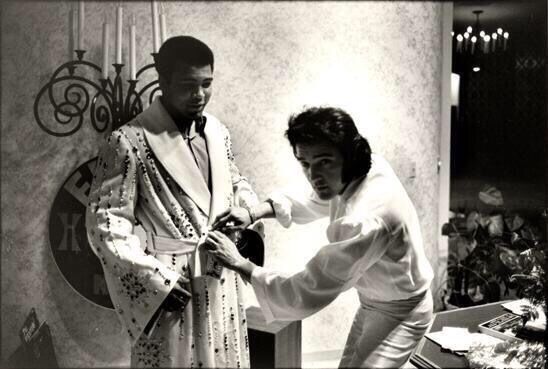
Artie goes on to tell us how Budini Brown (Ali’s cutman) was selling off memorabilia like mouthguards and pins on the side to make some extra money. Or the time Artie grabbed the rhinestone robe Elvis gave Ali when we saw two fellas looking to swipe it. 

He told us about visiting Ali in the hospital after Norton broke his jaw in the second round (Ali finished all 12 in what was his second loss), and how Ali consoled Artie, telling him they’d get Norton next time (he did). Or driving Ali around La Jolla on a book tour later on in life and restaurant owners begging Artie to bring the champ by for dinner. 

He’s telling all of these stories, and I’m reminding myself, he’s a car salesman, dumbo. 

And then Artie pulled out his phone to show pictures from Ali’s funeral. Artie has pictures with everyone. Artie and Don King, Artie and Reggie Jackson. Artie and Holyfield. Artie and Chubby Checker. Mike Tyson. Artie and Laila Ali (Ali’s daughter) with Laila’s daughter. Artie was not just at the funeral. I’m guessing he was in the first 30 rows on the main floor of what was one of the greatest collection of dignitaries, celebrities, athletes, and politicians in the last 100 years. 

There were other pictures in his phone, too. Pictures of pictures, like any grandpa has in his phone, but his are of a younger, strong Ali holding Artie’s baby back in the 70s in Artie’s living room. Old Ali and Artie together. They look like friends, not like someone asking a celebrity for a photo in a public space. 

Natalie and I were stunned by the time we left in our “new car”. We ate C+ bar food at Lazy Dog in Dublin at 9:45PM on a Tuesday and talked about our Civic, the most recognizable athlete of the 20th Century, Artie the Honda salesman, and the Trump impeachment inquiry. It’s a night I’ll never forget. – PAL 

Source: “Muhammad Ali Sells Us A Honda Civic”, Phil Lang, 1-2-3 SPORTS! (09/27/19)


Why Baseball is the Best Sport

Felix Hernandez and Mariner fans said goodbye to each other Thursday night, as his career comes to a close. Felix was great. But more importantly, Mariner fans loved him, and he loved them.

Felix came up as a 19-year old, and he set the league on fire immediately. He won just one Cy Young award, in large part because the team never – not a single time in 15 seasons – built a squad around him that managed to play in even a single playoff game. Fifteen seasons, no playoff games.

But that didn’t matter to Mariner fans. Baseball is the best spectator sport because the season is so long, fans can develop real emotional connection with the players. And more than any other player, a great starting pitcher is a gift – he makes every fifth day an event. King Felix certainly did that. Thursday night was the last such event, and it reaffirmed for me why I love baseball.

To start the game, Felix’s teammates stayed in the dugout as he ran out to the mound. This was the scene.

Then, when he was removed from the game in the sixth, this:

If those two videos don’t give you goosebumps, I wonder if you have a pulse. -TOB

Source: “Why Baseball is the Best Sport”, Thomas O’Brien, 1-2-3 Sports! (09/27/2019)


The Wildest Game I’ve Ever Seen

There are many football fans who only like the NFL. They have no time for college – the players are not as good; it’d be like investing time in AAA baseball. Then there are football fans who only like college football – they prefer players playing for their pride and not a paycheck, which IMO is gross, but they also love the atmosphere – the band, the student sections, the connection to the team (after all, I graduated from Cal, but I’ve never been a part of the 49ers). 

Then there are of course football fans who like both. That is where I reside, but I want to point out one other thing I really love about college football: because many college players are so good they could star in the NFL if they were the league, their individual talent pops. I mean, POPS. Like DeSean Jackson making college defenses look like Pop Warner teams.

Or Devin Hester doing the same.


The end result of that talent disparity results in some incredible things you would never see in the NFL. Last weekend we saw such an event in the UCLA/Washington State game. Allow me to set the scene.

Wazzu is ranked 19th , continuing their third year or so of being a pretty darn good football team under Mike Leach. They host UCLA, in its second season under former offensive genius Chip Kelly, and things look bad. Last year they went 3-9, and they started this year 0-3. The rumor mill was already churning. And at halftime, I am sure there were many UCLA fans ready to pull the plug on the Chipper Experience.

Wazzu took a commanding 35-17 lead into the break, and that is when I turned the game off. The Colorado/Arizona State game was getting tight, and this game looked over, so I flipped to CU/ASU and did not plan on flipping back. But then that game ended, and I checked in on the score. I think I did a triple take:

Wazzu 49, UCLA 46, with the 4th quarter just starting.

What. The. Hell? A 29-14 run in one quarter? But then I pulled up the box score on my phone and it was so much more than that. Wazzu opened the third with back to back touchdowns to make it 49-17 with 6:52 to go in the 3rd quarter! Read that again. So how did UCLA cut a 49-17 deficit to 49-46 in less than seven minutes?

That’s how. In 6 minutes and 52 seconds, UCLA scored 29 points on 257 yards of offense over 4 possessions totaling 4:32 of game time. Wazzu, meanwhile, went Fumble/Punt/Fumble, totaling 64 yards over 3 possessions totaling 2:52 of gametime. It doesn’t even make sense. 

Of course, moments after I tuned in, Wazzu scored to make it 56-46 with just ten minutes to go in the game. Surely, Wazzu would right the ship.

Quick sidebar: if you are not a longtime Pac-12 football fan, allow me to introduce you to the term “Coog’d It”. Washington State is so notorious for blowing games in the most unbelievable ways that opposing fans, and even Wazzu fans, use that term for any team, but especially the Cougars, that manages to snatch defeat from the jaws of victory. 

I am sure it will not surprise you now to learn that Wazzu absolutely Coog’d this one. Here’s how the rest of the game went, after they went up 56-46.

LOLLLLLL.

All told, UCLA scored FIFTY FREAKING POINTS in less than NINETEEN game minutes. They went on a FIFTY TO FOURTEEN run. The teams combined for ONE HUNDRED AND THIRTY POINTS and 1,377 yards for the game. If you’re wondering, which I very much was when the teams hit 123 combined points, the all time NCAA record for combined points is 137, set just 3 years ago, when Pitt beat Syracuse 76-61. Mind you, when Wazzu scored the 123rd point, there was still 6:11 to go in the game and I would have lost any amount of money you named if you had bet me that they would not end up at least tying the record at 137.

The entire game was outrageous. Wazzu’s QB threw for nine touchdown passes. There was absolutely no defense, sure, but as an outsider with no emotional attachment to either team, it was incredible to watch. I was texting a couple buddies throughout, but it was dangerous to take your eyes off the screen, lest you miss another big play. 

Best of all, as a fan of a team who actually plays defense, and a fan of that same team that played less than zero defense under its previous coach, I couldn’t help but be relieved that my favorite team was not involved in the game.

It was the wildest game I’ve ever seen, and I will never forget the experience of watching it. It could never happen in the NFL, and that is why I love college football. -TOB

Source: “The Wildest Game I’ve Ever Seen”, Thomas O’Brien, 1-2-3 Sports! (09/27/2019)

PAL: Man, “Coog’d it” is excellent. It just feels good to say, and I have nothing against Washington State. I like that a lot, and Devin Hester’s return looks exactly like backyard football.


Next Up for The Twins: End 15 Year Losing Streak

My number one concern as Natalie and I move this weekend is to make sure we have the TV/Cable situation figured out in time for the first round of the ALDS playoffs. My second concern: my Twins have lost 13 consecutive playoff games over the past 15 years. My third concerns: 10 of those losses were against the team’s likely opponent in this year’s ALDS, the Yankees.

This year will be different (keep your snickering to yourself).

In previous matchups, the Yankees outclassed the Twins, especially with the bats and in the bullpen. That 2004 Yankees team had Jeter, ARod, Bernie Williams, Gary Sheffield, and Posada. The Twins featured a rookie version of Joe Mauer*, 74 games of Justin Morneau, and a whopping three players hit over 20 home runs. Aside from Cy Young winner Johan Santana, the Yankees outclassed the Twins on the mound, too, especially when it came to the bullpen.

But, as the Star Tribune columnist Sid Hartman (99 years old, and still writing columns) writes this week, “The good news for most of these Twins players is that most of the history that the club has against the Yankees has little to do with them.”

That’s right. Just as I did in the opening of this Twins post, we can focus on records, good or bad, that extend far before the guys currently wearing the Twins jersey were on the team.

This year is different. This year it was the Twins who slugged into the record books (301 and counting as of Friday AM, but the Yankees have 299). This year, the Yankees have been hit by the injury bug (a record 30 players put on the injured list). This year the Yankees starting pitching is good not great. And while over the season the Yankees bullpen has better numbers, the Twins have pieced together a bullpen recently that could have just the kind of flexibility needed for playoff baseball. I like the mixture of “guys who’ve been there”, stud prospects (TOB turned me onto Brusdar Graterol), and traditional starters who could nail down several innings in a marathon game (Kyle Gibson). As another MN columnist, Jim Souhan, optimistically puts it in his column today:

The bullpen improved because of the most boring and underappreciated aspect of baseball management: Patience with young talent. The Twins became more cautious about using Taylor Rogers on short rest. They waited for May and Duffey to master their increasingly dynamic stuff. They reaped the benefits of two previously unexciting trades — landing Zack Littell for Jaime Garcia and Devin Smeltzer for Brian Dozier.

Suddenly, the Twins have a dozen useful arms and no traditional-thinking guardrails. They could throw nine pitchers in a nine-inning game, or ride a hot starter.

This year’s different, and I can’t wait for the beautiful stress of watching my hometown team in a playoff series. – PAL

Source: “Twins-Yankees playoffs history has been decidedly one-sided“, Sid Hartman, Star Tribune (09/27/19)

*Just saying, Mauer might turn out to be the best test of the Ewing Theory in MN Sports history if this team goes on a run. For those who don’t know, the Ewing Theory was penned by Bill Simmons and Dave Cirilli. Per Urban Dictionary, the Ewing Theory “explains the reason why teams inexplicably become better after their star player leaves the team for any reason (trade, injury, etc.). Two elements must be present for a situation to be explained by the Ewing Theory: 1) The team has a star player who receives a lot of attention but never wins anything, and 2) The star player leaves the team and everybody writes the team off.”

The Twins failed to win a single playoff game in Baby Jesus’ career. He retires, and the team just might win 100 games in the next season. Just sayin…

TOB: Three things: (1)Go Twins. (2) I don’t need think it’s Ewing Theory because no one had thought Mauer was good for the last decade or so. It was not like anyone was asking, “How come the Twins never win when they have a great player like Mauer?” For a long time. (3) Don’t think I didn’t notice the shade thrown the Giants’ way – this year we had a whopping three players hit 20 dingers for the first time since 2006, I believe.

Ok, four things: (4) I am so god damn pumped for the baseball playoffs. Let’s go!!!


When a Hero Becomes a Legend

Late last Sunday night in Philadelphia, a residential fire broke out. Everyone survived, in part due to the help of a passerby, Hakim Laws. He saw a man in the window of the building, screaming that his children were in the building. Laws offered his help – the man in the window threw the children down to them, and Laws and his friend caught them. They likely saved lives. Laws was interviewed by the local news, as you’d expect.

Here’s the thing. Before I continue, you should know that during Sunday’s game against the Lions, Eagles wide receiver Nelson Agholor dropped two crucial passes. Ok, now we can continue.

So Laws is interviewed, and here it is.

Incredible. To have the presence of mind to burn Agholor is some galaxy brain shit.

To his credit, after this thing went viral, Agholor reached out to offer Laws tickets to the Eagles’ next home game.

https://twitter.com/nelsonagholor/status/1176288623550853120

What a cool and funny story. -TOB

Source: Hero At Scene Of Philadelphia Fire Drops Burn On Nelson Agholor“, Dom Cosentino, Deadspin (09/23/2019)


Answering a Dumb Question That Popped In My Head

I worked from home Thursday, so I had the Giants day game on in the background. In the 4th, 28-year old rookie Mike Yastremzki hit a dinger, his 21st of the year. I said to myself, “Wow, if he had come up at the start of the year, maybe he would have hit his age.” And then I thought, “Huh, I wonder who is the oldest player to ever hit their age in dingers.” So then I set out to find the answer, using Baseball Reference’s terrific Play Index, and just started plugging in numbers.

Fittingly, the oldest players to hit at least their age in homers are Barry Bonds and Hank Aaron. But I was not satisfied there, and needed to know: who is the oldest player to hit exactly their age?

Consider that itch scratched. -TOB

Source: “Answering a Dumb Question That Popped in My Head”, Thomas O’Brien, 1-2-3 Sports! (09/27/2019)


Video of the Week


Tweet of the Week

https://twitter.com/NBCSNationals/status/1176703182791163906


PAL Song of the Week: Barefoot Jerry – “Smokies”


Like what you’ve read? Let us know by following this blog (on the right side, up near the top), or:

Email: 123sportslist@gmail.com
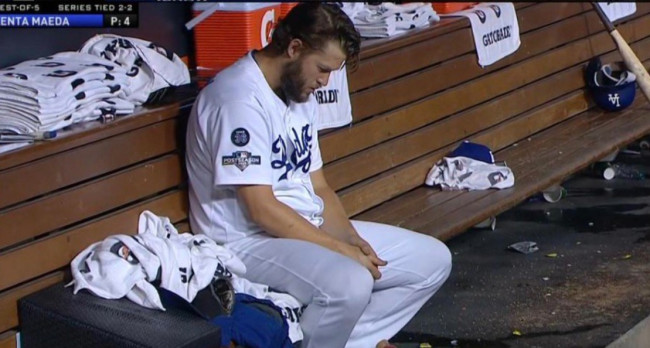
Twitter: @123sportsdigest

Facebook

Instagram: @123__sports


I think Comic Sans always screams fun. 

-Gary ‘Jerry’ Gergich

Week of September 20, 2019


Yaz Homers At Fenway

Mike Yastrzemski, that is. For folks outside the Bay Area, the grandson of Red Sox Hall of Fame Carl Yastrzemski plays for the Giants, but this is a more interesting Hank Schulman story than a grandson hitting a homerun in the stadium the elder ruled for 20+ years.


Mike Yastrzemski is 29 and made his MLB debut this season with the Giants. In other words, he is far too old for anyone making a MLB debut who plans on actually sticking around. In most cases, a position player that age gets a token call-up at the very end of the year. After being stuck with the Orioles organization for seven minor league seasons, the Giants got the younger Yaz, and he was called up in late May. And he’s been pretty good for the Giants. 20 home runs, 60 runs, 50+ RBI in 340 at bats. The home runs number is especially shocking, considering he’s never hit more than 15 home runs in a season, including college (ball is no doubt juiced!) If nothing else, he’s finally proven he’s a big league baseball player, which was far from certain in the spring. After seven minor league seasons, that has to feel good.

The idea of circling a late September game at Fenway early in the season was not his focus. Per Schulman:

As soon as Mike was promoted to the big-leagues his family reminded him that the Giants were coming to Boston in September, but he could not afford to look forward to this day.

“I kept it very focused on just surviving one more day in the big-leagues,” he said. There had been a lot of turnover on the team and I knew that they were looking for production. In order to make it to Boston I had to play well.”

Mike walked to the ballpark himself Tuesday and admitted he was struck by nostalgia from his days growing up near Boston.

Once he got to the stadium, there was, of course, a staged meeting and walk to the Green Monster ( those in the know refer to it, ‘The Wall’ as we learn in a different article this week) with his grandpa. It’s one of those things that was simultaneously staged and corny, and still cool all at once. 

I’m most struck with Schulman’s last detail in the block quote – that Mike walked to the ballpark himself Tuesday. Maybe I’m over-analysing here, but I think that detail is a great piece of writing. 

It is a detail Mike must have given Schulman, and I’m left to fill in the blanks of the nostalgia that just had to be rushing through him (did he even feel the ground beneath his feet?). And the doubts I’m sure he had, especially in the last couple of years in the minors. The pride in knowing he was going to Fenway – the stadium where his grandpa became a deity – and he was going to walk into the same stadium as a player, just like his grandpa. He earned that walk to the stadium. He no doubt could appreciated that walk more as a 29 year-old than had he been a 23 year-old phenom making that walk.

And then this happened: 

Sidenote: there is no better home run call in baseball teh Duane “Smooth’ Kuiper. It’s simple. He saves it for legit big moments, and it’s from the gut. Never, ever gets old. 

Schulman is great baseball writer. It’s not the biggest story, but he didn’t overwrite a moment that so easily could’ve been overwritten. 

And here’s an insane sidenote: Grandpa Carl didn’t see the home run in person. He was at the stadium before the game, then left before the game started. What?!? His grandson, having a breakout season as a 29 year-old rookie is the first Yastrzemski to play left field in Fenway in almost 40 years and gramps taps out before the game starts? I hope there’s a good explanation for this…

One last note: can someone please get Tan from Queer Eye to give Carl Yastrzemski some goddamn clothes that fit? Let’s look at this again:

I’m not asking for a French tuck, but hell. Those pants and jacket are legit four sizes too big and need to go. – PAL 

Source:Giants’ Mike Yastrzemski matches hype of his Fenway debut with a home run in 15-inning win”, Henry Schulman, SF Chronicle (09/18/19)

TOB: Nice write up, Phil (and Hank). Re Carl: I read he never sticks around for the games – he’s there sometimes for pre-game ceremonies and then takes off; he was described as a recluse. I agree it was surprising, but I’m ok allowing an old man to live his life his way. The next evening, Carl threw out the first pitch…to Mike. 

Carl stuck around in the Red Sox dugout for the first at bat of the game…in which Mike drew a walk. Then Carl headed inside. You do you, Yaz.

Also, I’d like to point out the other wrinkle to this story: Mike’s dad, Carl, Jr., was a career minor leaguer, too, and passed away in 2004, when Mike was 14. That sad fact adds a little weight to the grandfather/grandson moments.


Bochy Being Bochy

As Bruce Bochy’s final season managing the San Francisco Giants comes to a close, you can bet we will be reading (and writing) a lot about him. But before the career tributes start arriving, I wanted to highlight this cool story by the San Jose Mercury News’ Kerry Crowley. Crowley is a young sportswriter, in just his second year on the Giants’ beat. 

Before Thursday’s series finale at Fenway Park, Crowley and some other beat writers were chatting with Bochy. Bruce asked them if they had all been inside Fenway’s famed Green Monster. Only Crowley hadn’t. So Bochy jumped up and said, “Let’s go.” Bochy took Crowley through the little door in the Green Monster, and into a piece of baseball history – for decades, players and coaches have walked through that door and signed their names on the inside walls of the Monster (also, one time Manny Ramirez walked through that door mid-inning to go pee).


Bochy looked for names of old friends, and Crowley got to experience something most of us never will. It’s a simple story, but it gives a glimpse into Bochy – his love of the game, and his generosity to others – he took time out of his busy day to give a young sportswriter a memory he’ll never forget. -TOB

Source: My Trip Inside the Green Monster at Fenway Park with Bruce Bochy”, Kerry Crowley, San Jose Mercury News (09/19/2019)

PAL: Hell, that got me a little choked up. What a great moment between a legend at the end of his career and a kid just starting. TOB, it would be our greatest victory to have a few beers with Bruce Bochy. This needs to happen. Is there any chance he stays in the area after he retires?

TOB: Pretty sure he still lives in the offseason in San Diego… 😦

PAL: Roadtrip. Maybe a little Joshua Tree camping, and a little non-creepy Bochy tracking. There is simply no way that guy isn’t sipping a Pacifico somewhere at 5pm in his retirement.


The Conwoman of the NBA

Anyone who’s seen the 30 for 30 “Broke” knows that millions of dollars in the pocket of very young adult athletes is a volatile combination. Most of us have heard a story or two about a professional athlete getting scammed for millions, but the detail and and emotional warfare Peggy King pulled on several NBA and NFL players was a familiar story told in a fresh way. 

As is required for every con, a solid backstory is the foundation. SI’s Alex Prewitt outlines King’s backstory like this: 

Upon completing her Ivy League education, obtaining a Series 7 license and earning a fortune on Wall Street, Peggy explained in interviews for her sizzle reel, she’d entered sports management for selfless reasons. Not only would her investment acumen guarantee a long-term financial windfall for her clients—”Building Generational Wealth,” her email signature promised—but she swore to protect them against would-be scammers. This, Peggy said, was why she insisted on working for free. Her athletes were family, and helping each other is just what family does.

And that story gains the trust of young athletes who, like pretty much all of us at 21 years old, have no idea how to manage their money. Of course they have way more than most of us will make in our life, and so they try to be responsible and have someone more knowledgeable manage the finances. You know, like a Harvard-educated broker. This ruse allowed King to take nearly $6M from Ricky Williams (running back), Dennis Rodman, Travis Best (her first mark), Lex Hilliard (NFL fullback who played only 3 seasons), and Rashad McCants (NBA). These are just the verifiable amounts from one case. She surely took more money from non-athletes, as is detailed in this story. 

Another detail from this story that sticks with me is how important a referral is in these circles. Lex Hilliard did not make a fortune in his short stint in the NFL, but he was in the same backfield as Ricky Williams in Miami. When Hilliard and his wife were trying to get a pawn shop off the ground in Montana, they became victims of fraud from family members. Looking to enlist a professional advisor, Hilliard’s wife reached out to a former teammate’s wife. Kristin Williams, in what must just hurt her to this day, recommended Peggy King. 

It was under this tragic backdrop that the Hilliards enlisted the expertise of a new financial adviser, based on the recommendation of one of Lex’s former Dolphins teammates—and at first Peggy was everything Ricky and Kristin Williams said she would be. Early on she lent the Hilliards $10,000 interest-free, Rebekah says. After setting up new joint checking accounts for the couple’s daily expenditures—the rest of their savings would hypothetically be raking profits in mutual funds—Peggy also flew to Kalispell and acted as the Hilliards’ lawyer in talks with business partners as the pawn shop rebranded and relocated.

That good faith didn’t last long, though. The following spring Lex was at Jets mini-camp, optimistic about his NFL future, when his bank card was declined at the team hotel. Back in Montana with the couple’s five children, Rebekah was suddenly struggling, too. A storage facility owner was demanding months of overdue bills. When the Hilliards’ youngest daughter reached her third birthday, finances were too tight for a party.

And of course it all fell apart on Peggy King. I’m damn near incredulous at how long the ride lasted when what undid her in the end was a few very basic checks on Kristen Williams’ part: 

  1. An alumni database check at Harvard (no Peggy King)
  2. A call to Charles Schwab to check on her and Ricky’s account (there was none)
  3. A call to the bank where Peggy had opened checking accounts in their name (of course they were denied access)

Reading this made me feel terrible for these athletes. Sure, King was found guilty, but that money is gone forever. If someone offered to help me with my finances (all $300) at 22 years-old, I would have been delighted and given them whatever they needed to help me save some money. Yet, I think up until this story my reaction to these scam stories has been “how dumb are you?!?” directed at the athletes. I finally know the answer to that question is these athletes were no more dumb than I was at their age. I just didn’t have any money. 

Peggy, of course, is just one of many stories like this:

Peggy is hardly alone. According to a recent study by Ernst & Young, pro athletes claimed nearly $600 million in total fraud-related losses between 2004 and ’18. But that figure is based on only 35 cases available in public court documents, the alleged victims of which include Tim Duncan, Mark Sanchez, Roy Oswalt and McCants’s guardian angel, Garnett. It likely represents a small fraction of the actual damage. “Extrapolating from what I know,” says Steve Spiegelhalter, a former federal prosecutor who cowrote the E&Y report, “it certainly exceeds $1 billion. It’s just not discovered.”

Athletes these days would be better off following Samir’s advice. – PAL 

Source: “She Won Athletes’ Hearts. And Robbed Them Blind”, Alex Prewitt, SI.com (09/19/2019)


Video of the Week


Tweet of the Week


PAL Song of the Week – Hot Club Sandwich – “Yogiri No Shinobiai”


Like what you’ve read? Let us know by following this blog (on the right side, up near the top), or:

Email: 123sportslist@gmail.com
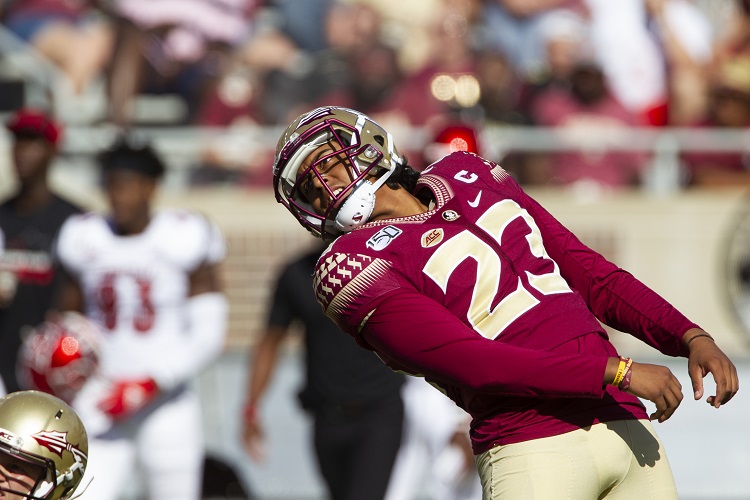
Twitter: @123sportsdigest

Facebook

Instagram: @123__sports


 I have no idea what I’m doing, but I know I’m doing it really, really well.

-Andy Dwyer

Week of September 13, 2019


Siding With the Raiders Is Siding With the Empire

(All analysis here is related only to Antonio Brown’s dispute that led to his release by the Oakland Raiders, and is not in any way related to the civil suit filed this week accusing Brown of sexual assault)

In the wake of the Raiders’ release of Antonio Brown over the weekend, the great weight of public opinion seemed to side with the Raiders: Brown is unprofessional, I read. Brown had it coming, I heard. Brown is a diva and an idiot who cost himself $30M, I saw. And I feel like I’m taking crazy pills because this is almost completely on the Raiders. Let’s recap his brief tenure with the Raiders, starting where the problems began:

Before camp, Brown suffers frostbite on his feet while undergoing cryogenic therapy. This is an admittedly odd injury, but it’s hard to lay blame at his…feet. 

Shortly after, we find out that Brown was told by the NFL that he can no longer wear his helmet. It’s the same helmet, not just the same model but the same helmet, he’s worn his whole career (including college). Brown is not happy about it, because while some helmet models were banned last summer and players were given a one-year grace period, Brown did not receive advanced notice. Some thought this was ridiculous. But a football helmet is sacred to a player – football players have that ingrained in their heads from the first time they take the field as kids. Former NFL player Nate Jackson wrote about why this was so important to Brown:

Each new helmet design foisted upon players has a new shape and a new feel. It doesn’t just change the shape on the outside; it changes the shape within. It changes the placement and feel of the pads that are touching the head. It changes the pressure points on your noggin. It changes the neurological response to a very specific tightness on your head. And because of the different shape, it changes your field of vision, the frame through which you see the field and everyone on it. This all forces you to think when you have no time to think—when thinking will get you hurt.

The Raiders seemed understandably frustrated, but all still seemed fine, and they publicly supported Antonio. So far, so good.

Brown loses the grievance. He tried to find a similar helmet that is approved. He puts out a nationwide call on twitter and actually finds one, but it fails testing. He appeals. He loses. He tried to find one he can use. He does. It fails testing. He files another grievance, and now Raiders rookie GM and career NFL Network analyst Mike Mayock gives his infamous “all in or all out” speech.

When I saw it, I expected fireworks. But Brown actually reported to practice. He picked a new helmet. Things seemed like they’d move forward smoothly. I drafted AB in both of my fantasy leagues, a steal in the third round on each. 

But then, the week of the first game, the Raiders, petty as ever, send Brown a letter letting him know they are fining tens of thousands of dollars for a missed practice and a missed walkthrough during camp way back in mid-August. So… when things were quiet, they turned up the tension with a fine. Why? Brown was understandably not happy. He gets in an argument with Mayock. He calls Mayock a cracker. People expect the Raiders to release him, but they don’t. 

Instead, Brown apologizes – to his teammates and Mayock. He seems pumped to start the season and posts a video voiced over by a phone call between Brown and head coach Jon Gruden, that had me pumped for the NFL season. Seems like everyone is moving forward, right?

Buddy, it’s the Raiders. They will do everything wrong at every opportunity. Saturday morning Brown tweets that the Raiders have voided the $30M guaranteed money on his deal. Brown will be forced to play on a week to week contract, with the Raiders able to cut him and owe him no money whenever they want. This is utter crap. NFL contracts are already crap and weighted heavily toward the teams. And apparently they’re worse than we thought because the teams can walk away from the deal because a player yells at his boss. Brown is understandably pissed. I imagine he would have won a grievance about the voiding of the guaranteed money. But Brown didn’t want to deal with it, and asked to be released. The Raiders obliged.

And people side with the Raiders? Do you root for Goliath? The Soviets at Lake Placid? I mean geeze. At every opportunity they had to move on, they instead escalated. To be clear, I don’t think Antonio was blameless in this, and I don’t think he did everything correctly. But it was the Raiders who escalated at every opportunity they had to de-escalate.

I wrote above early this week, and later in the week read this excellent interview with former 49er Jimmy Farris, who was friends with Terrell Owens during the rocky end of his tenure with the Niners. Farris basically agrees with me, and he makes some great points with his unique insight:

I thought they did a really good job of handling the situation up until they fined him. Other than Mayock coming out and doing that “he’s all-in or he’s all-out” thing, I think that probably got under AB’s skin a little bithe didn’t say anything about it at the time, but I feel like it’s kind of a shot that was unnecessary. Maybe [it was] Mayock kind of trying to prove, Hey, I’m the boss around here, or whatever. It was like a call-out, it was like a public ultimatum to a superstar. [Brown’s] whole thing wasn’t that he was not all-in, or he didn’t want to do it; he was just trying to get the helmet deal figured out.

And, look, people have different opinions about that. Was that even a legitimate thing for him to be taking it to the level that he was? Who knows, but that’s just him, okay? That’s Antonio Brown, and that’s what you’re dealing with. And you know that when you trade for him and you sign him to the big deal. So they publicly supported him. He was missing practices, and he was missing team activities doing that stuff. And you’ve got Gruden and everybody saying, “Hey, man, we support him,” and Gruden’s saying, “Hey, I like the fact that the guy’s standing up for something that he believes in, and when he’s out here, he’s great, and he brings the level of everybody around him up, and he practices his ass off”all this stuff. So you get past all that.

You got the guy in the building, he’s working his ass off, he’s getting ready for Week 1, and then they turn around and fine him for missing some activities that were weeks ago, that when he was missing those activities you said you supported him. So that’s why I said it was petty because you’re telling him while he’s missing those activities, you’re saying, “Hey, man, we get it, just get this thing resolved and get your ass in here as soon as possible and let’s go to work.” So, he thinks, “Hey, they’ve got my back, they’re supporting me.” And then it’s ****ing [five] days before the first game, you do this?

That was my thing. All the drama and the issues and all that kind of stuffyou’d gotten past it. It happened in training camp. It was over. He’s in the building now, he’s here, like, let’s go full-steam ahead. And then, for whatever reason, some procedural reason or some reasonI really don’t know, Mayock felt like they needed to fine him. To set an example or what? I don’t know.

Sure, you’ve got to draw a line somewhere with guys, right? But if the biggest problem you’ve got with the guy so farlet’s not make it more than it is, right? Yes, he’s a quote-unquote diva, or he’s a little eccentric or whatever. But if the biggest problem you’ve got with him so far is that he missed a couple of team activities, that’s not a problem. I asked some guy this on Twitter, just responding to one of the comments: How many team activities did Ezekiel Elliott miss during training camp? The answer is ****ing all of them. He missed all of them. How many has Melvin Gordon missed? All of them. And how much did the Cowboys fine Zeke? They didn’t. They signed him to the richest running back contract in history.

Jason La Canfora’s tweet that I originally responded to was he said he talked to somebody high up in the Steelers organization that said there’s a way to deal with personalities like AB, and that Mayock, being inexperienced, might not understand how to do that. That was my whole point. I agree 100 percent, because if Mayock knew what he was doing, he would know that you don’t fine AB over some bull**** like that, and make an issue out of something that’s not an issue.

[Asked prior to the Raiders cutting Brown] Do you think this is irreparable for AB and the Raiders?]

I had heard apparently what Brown had said to Mayock on the field, and what he’d called him, and what had happened. And so when it gets to that level, I feel like that was, like, some next-level type stuff that is probably irreparable for a personal relationship and maybe even a working relationship.

Here’s the thing, though. Antonio Brown can still be a Raider this year, but it’s going to take the Raiders organization being the bigger person and probably doing some things that’ll cause them to take some hits in the media and around the league from people saying, “How many times are they going to let this guy walk on them, blah blah blah, and this and that.”

All great points. The Raiders blew this. They gave up valuable draft picks to get AB, and because they are a complete clown show they gave him up for nothing, before he played a single snap for the team. Nice job, guys. So don’t support the Raiders. Support the players. As I said last week.

-TOB

Source: Why Good Organizations Know How to Handle Players Like Antonio Brown”, Dom Cosentino, Deadspin (09/09/2019)


Mets Busy Mets-ing?

Every major league team carries two or three catchers. It being the most physically grueling of the positions, even the best catchers need a day off from the squat at least once a week, which means more than one catcher is getting semi-regular playing time. 

In many cases the second and/or third catcher is better defensively than he is as a hitter (if he was a good hitter AND good behind the plate, he’d be a starting catcher). The backup catcher is typically good at framing pitches, blocking balls in the dirt, keeping runners from stealing. The backup catcher’s best contribution to the team is prioritizing the pitcher’s performance ahead of his own. 

This is the case with one of the Mets’ “ace” pitcher Noah Syndergaard (the real ace is reigning Cy Young winner Jacob deGrom). When throwing to either of the two backup catchers – Tomas Nido or Rene Rivera – Syndergaard has a 2.22 ERA in 11 starts. When he pitches to the starting catcher, Wilson Ramos, he has an ERA over 5 in 15 starts. 

Per Tom Ley: 

Over the weekend, Syndergaard went to Mets management and requested that he no longer be forced to pitch to Ramos. The Mets ignored that request, and Ramos was behind the plate on Sunday when Syndergaard gave up four earned runs in five innings; the Mets lost 10-7. According to MLB.com, Syndergaard was in meetings with management throughout Monday afternoon and evening, but wasn’t in the locker room by the time it was opened for the press. Ramos was similarly nowhere to be found. Manager Mickey Callaway and GM Brodie Van Wagenen were around, though, and both made it clear that Syndergaard is just going to have to grin and bear it

Offensively, Ramos is clearly the best of the three catchers. Nido’s OPS (on base percentage + slugging percentage) is a woeful .571, and Rivera is a career backup catcher with 17 total hits in the last two years. This year, Ramos is hitting .295 with 14 HR, 50 Runs, 72 RBI. 

With that info, you’d understand why Syndergaard would rather throw to Nido or Rivera and why management wants Ramos in the game. The Mets are only 2 games back in the NL Wild Card. With 16 games left, every game is pretty much a must-win if the Mets hope to make it to the play-in game.  

Of those 16 games, Syndergaard starts probably 3, maybe 4 games. In those starts, his pitching performance is much more likely to have a larger impact on the outcome of the game than that of the catcher’s offensive performance. 

If we’re just talking about winning, Syndergaard is right and the Mets should have Nido or Rivera start behind the plate in those games. They can be substituted out whenever Syndergaard is pulled from the game, thus giving Ramos 1-2 at bats in the last portion of the game if needed. 

There’s more at play here. I think the Mets are tired of Syndergaard and they’re trying to prove a point to him that he’s got some work to do before he gets the “ace” treatment. He’s having his worst year while deGrom is backing up his Cy Young performance in 2018 with another stellar year. 

And there’s this: if management grants Syndergaard his wish, what’s stopping deGrom from asking for the same (during his Cy Young year, he pitched to a backup catcher)? All of a sudden you have a backup catcher starting 40% of the games. All of a sudden you have an issue with your starting catcher and his playing time. All of a sudden, you’ve got a team-wide mess because an underperforming pitcher doesn’t like pitching to the starting catcher. Syndergaard hasn’t been good enough for that headache. – PAL 

Source: “Noah Syndergaard Is Mad About Catchers And The Mets Don’t Care”, Tom Ley, Deadspin (09/10/19)

TOB: I think the last paragraph is likely what’s at play here, but it’s still short-sighted. Syndergaard is 3 runs better 9 innings when the backups catch for him. Is Ramos creating 3 runs more per game offensively than his backups? I assure you he is not, because he would be the greatest hitter to ever live if he was.


Don’t Get Bogged Down In Semantics: MIke Trout is the AL MVP

This week on his podcast, The Ringer’s Bill Simmons argued that Mike Trout should not win the MVP because his team stinks (67-80 at the moment). Simmons argued the award says “Valuable” and therefore the most valuable player has to come from a good team because otherwise what “value” is the player if he makes a really crappy team into a merely crappy team? Simmons suggested a new award – the Most Outstanding Player award to the best player in the league – while also awarding the MVP to the best player on one of the best teams. This is all so stupid.

First, if you did that, the MOP award would quickly surpass the MVP. No one cares who the best player on the best team is. Everyone wants to be the best player.

But most importantly, his argument is illogical. Let’s say I have $10,000 and you have $1,000. Someone gives us both $100. Is that $100 worth more to you or me? The $100 retains the same inherent value. $100 is $100. But the $100 actually means more to you because it is 10% of your total and just 1% of my total. So either the $100 is equally valuable to us, or it’s more valuable to you.

But Trout isn’t equal to everyone else. He’s better. So let’s say I have $10,000 and you have $1,000 and someone gives you $100 and they give me $50. The $100 is worth more than the $50, inherently, and it’s worth more to you than it’s worth to me. 

And what if, say, we both have $100, but someone gives me $50 four times (the Astros have 4 players in AL’s top 10 in WAR), they give you $100 (Trout leads the AL in WAR, no one else on his team ). Are any one of those $50 worth more to you because you now have $300 than the $100 is to me because I only have $200? NO. It’s a stupid argument, and I wish it would stop. 

Baseball is the most independent of the team sports – a player could hit 100 home runs and be the best center fielder in major league history, but his team could still suck if they didn’t have anyone good hitters to help him and pitchers to prevent runs. In baseball, the MVP is the best player in the league. Period. -TOB

PAL: In team sports (outside of fantasy), winning is the currency, not personal performance…which makes the MVP award such a mucky and fun topic to debate forever and ever.

Your argument is completely logical. I agree; he’s the MVP. His contribution to a win is far more than anyone else, but that doesn’t change the fact that he is part of far fewer wins, which we ultimately value and count. Clearly not his fault, and it doesn’t take much dissection to uncover just how big his contribution is to winning, but that’s the truth.

The most valuable player is associated with far less of the thing I value most. He’s the MVP, and who cares?


Video of the Week:


Tweet of the Week

https://twitter.com/CarsonRuss_/status/1171228714685947911?s=20


PAL Song of the Week: Bon Iver – “Naeem”


Like what you’ve read? Let us know by following this blog (on the right side, up near the top), or:

Email: 123sportslist@gmail.com
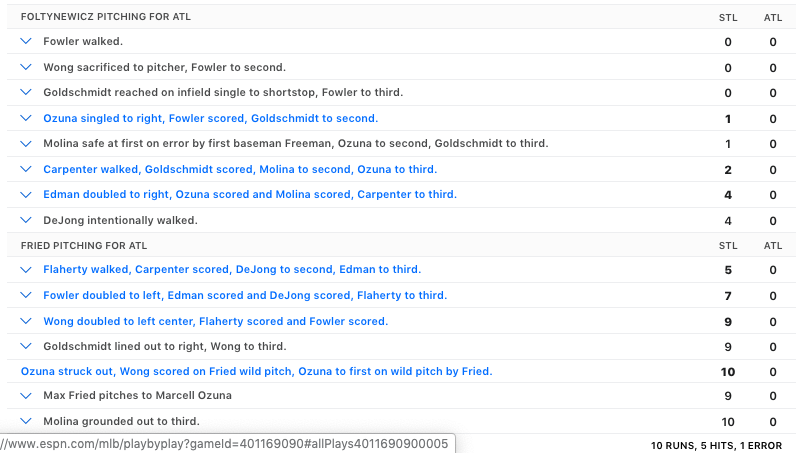
Twitter: @123sportsdigest

Facebook

Instagram: @123__sports


“Our balls are in your court.”

-Michael Scott

Week of August 30, 2019


Andrew Luck Is No Ken Dryden (or Barry Sanders or Bjorn Borg)

This is a bit of new type of post. I thought this was an interesting read the first time I read it. I liked that it puts Andrew Luck’s sudden retirement into the context of other athletes that retired while in their peaks. Canadians goalie Ken Dryden, Barry Sanders, Calvin Johnson, Bjorn Borg, and another tennis player I’ve never heard of before today. 

Katie Baker lumps them all together with the following: 

All of which is why it was such a shock on Saturday night to learn that Luck, not yet 30 years old, was retiring from football, smack dab in the prime of his life, becoming the latest in an alternately doomed and dazzling group of athletes whose careers ended not with the fireworks of celebration but with an afterburn of a lost star. 

I shared the story with TOB, and then – as we typically do – I re-read it tonight (Thursday) in preparation for a write-up. Guess what? I didn’t like it nearly as much on the second read. In fact, I found the point kind of flawed. The “afterburn of a lost star”? Come on. It’s a bit more nuanced than that. Some of the athletes simply didn’t want to play any more (maybe they never loved their respective sport to begin with?), some got hurt, and some were far more successful than Luck ever was. 

Let’s break it down, shall we? Remember, as far as we know Luck retired because he’s sick of being unhealthy and constantly rehabbing. It’s taken the fun out of the game, and – if I may posit – the experience of pain-rehab-play-pain-rehab-pain was depressing.

Ken Dryden – Goalie for the Canadians retired at 31, after helping the Canadians winning 5 Stanley Cups in a decade. Luck won nothing as a NFL player. Harsh, but it’s true. Dryden was the best on the best team for a decade. Not the same. 

Barry Sanders – running back in the NFL for 10(!) years. By all accounts he was healthy and had good years ahead of him. Enough to likely break every rushing record there was. He retired, via fax, and the consensus is a) he never loved football, and b) was sick of playing for a shitty Lions team. Barry Sanders was an all-time great that retired because he was sick of losing. Also, let’s not forget playing running back in the NFL takes a much greater toll on the body than QB, even if Sanders didn’t retire due to injury. 

Calvin Johnson – wide receiver for the Lions. You can pretty much cut and paste Barry Sanders’ paragraph here. Johnson was on pace to be one of the best receivers ever. He was sick of playing for a losing team and was an extremely talented guy who may have never loved the game. 

Bjorn Borg – retired at 26(!) after 11 Grand Slams. After folks blamed his wife, Borg responded sarcastically, “It can’t be that I don’t enjoy tennis.” 

Andrew Luck retired because he wasn’t healthy, and he was sick of the physical and psychological toll of constantly rehabbing. I get it. And I get that – after already earning millions – there’s no more money that can justify being an unhappy husband and father (to be). Hell, I’m a real piece of work to be around when my plantar fasciitis rears its head, and my livelihood has nothing to do with my feet. 

So I’m posting a story I didn’t love. Pretty antithetical to the entire premise of this blog, but I thought I’d share because the story’s definitely kicking around in my brain this week. Good or bad, it resonated, so I wanted to share it with the crew. – PAL 

Source: “Andrew Luck and the Afterburn of Early Retirement”, Katie Baker, The Ringer (08/26/19)


What Luck Went Through

When Luck’s retirement news hit, I was nearing the end of an in-person fantasy football draft. Ten minutes before, in the 12th of 16 rounds, I took Luck. I thought I had a bit of a steal, and I joked about how I never like to take Stanford guys when I made the pick. Then, a phone buzzed. And another. Someone read the news aloud. I thought it was a joke. Reader, it was not!

I couldn’t help but laugh at my misfortune, but I didn’t get angry at Luck. I mean, sure, when I heard a day later that this had been in the works for a couple weeks, and that he may have even told the Colts way back in the Spring that this was what he wanted to do but they tried to talk him out of it, I wished he had said it sooner. But I wasn’t mad at the guy. If anything, it’s a good story. Yes, I’m one of Those Guys, who drafted Luck right before he announced his retirement.

But then I got home and caught a whiff of the inevitable Sports Show talking head takes. And I saw the Colts fans booing him as he left the field after the news broke (more on that in a second)*. And I saw his press conference, and how sad he was. And I realized: the only correct takes on this story are: (1) good for him getting out while he (hopefully) can still live a normal life, and (2) this game is so brutal and we should all feel guilty for enjoying it.

Later in the week I read this depressing story from former NFL player Nate Jackson, who in his retirement has become a periodic contributor to Deadspin. And man. Were those takes ever reinforced. Here’s Jackson giving a glimpse into what he, Luck, and so many other players go through:

The glory was fleeting; the injuries were constant. And everyone I spoke to reminded me that I was living the dream. But it was never my dream to be lying on a training table for four hours a day, hooked up to machines, ice bags strapped to my body, while my teammates went to meetings and practiced. It was never my dream to wake up in the morning and wonder how I’d get through the day, to drive to work in pain and confusion, on the verge of tears, trying to understand how things got to this point. What I had done wrong—because, if I was so unhappy while living the dream, I must have done something wrong, right?

Call it a confluence of perspectives. The body is no longer cooperating. The adrenaline of game-day has subsided. The adulation of the fans no longer excites. Neither does the big check every week. The shine begins to wear off the Shield. You imagine yourself on a beach. On an island. Far from a football field, free from the mental anguish and paranoia you live with every day. Still, you soldier on, because everything in your life has steered you onto that field.

And so you play until they drag your lifeless body from the grass, and it’s all you can do to muster a thumbs-up as they wheel you into the tunnel, knowing that’s how you secure your legacy. Every football player knows how to make that sacrifice. But few know how to walk away. That seems to be changing, and thank god for that.

Ugh. Man. What a brutal game. 

*One thing about those Colts fans booing. They were roundly criticized for it, basically called country bumpkins who still don’t understand that their entertainment is not worth more than a player’s health. But for a second I’d like to give them the benefit of the doubt. 

As I mentioned above, reports are that this was in the works for months. All that time, the Colts sold season tickets for thousands of dollars to fans on the promise of another season led by Andrew Luck. Maybe some of those fans wouldn’t have paid that had they known? It doesn’t justify booing, but I think I understand the sentiment from that perspective.

One last thing: Eff Doug Gottlieb forever.

Why won’t this clown go away? -TOB

Source: Football Doesn’t Let You Leave”, Nate Jackson, Deadspin (08/28/2019)


Don’t You Dare Make Ohtani Choose

Surprise surprise: we’re sharing another Ben Lindbergh baseball story. Clearly the best baseball writer going these days. 

Remember Shohei Ohtani, the two-way sensation and the biggest story in baseball at the beginning of last year? Yeah, Tommy John surgery has a way of making us forget dudes for awhile, or – to be more precise – for about 12-18 months. Tommy John and playing for the Los Angeles Angels of Anaheim. 


Ohtani is playing this year while he recovers from TJ. As a DH, Ohtani is having another solid year at the plate. The dude can hit at an all-star level. His traditional stats, averaged out over 162 games look like this: 

.295 BA, 32 HR, 96 RBI, slugging over .500. 

When he was preparing to make his debut in MLB, most of the concern around his hitting. People wanted him to focus on taking the mound and becoming a dominant starter with a triple-digit arm and a nast splitty to boot. 

Dude has a pretty, pretty swing

Now, as he puts up impressive numbers as a hitter, the chorus has shifted. There is a mathematical argument he is more valuable as a position player only. Or, in the words of Ron Swanson, “Never half-ass two things. Whole ass one thing.”

As Miller laid out, though, the balance between Ohtani’s hitting and pitching contributions has to be just right for the stats to support continued two-way play. Only if Ohtani is very good to great at both hitting and pitching, or very good at hitting but even better at pitching, does the calculus favor two-way play. Any other combination, and a purely numbers-driven analysis would hew to one-way play. If Ohtani is a better hitter than he is a pitcher, then, the data aligns with the Rymer-Sheehan-Thomas contention that he should pick the position-player lane.

Cool. Except I don’t care what the numbers say. We may never get a chance to see someone be great at both again in our lifetime. I’m not saying Ohtani is going to be a great pitcher or a great hitter, but he’s actually shown the potential for both at the big league level. We owe it to the baseball gods to let this play out. 

Also, the Angels NEED pitching: 

Only the Orioles have received fewer WAR from their starters this season, and even if the Angels’ active innings leader, Griffin Canning, can cross the 100-inning threshold, the Angels will join the 2012 Rockies as the only two teams in the modern era to have just one pitcher reach the century mark. 

I mean, can you imagine – can you freaking imagine the scenario in which he’s pitching and hitting in the middle of the lineup in a World Series game? How awesome would that be? How can you root against that, logically or otherwise?  

New statistics should make us better understand the game, but they lose me when the numbers suggest we take the rarest joyous moments out of the game (pulling a pitcher in the middle of a no-hitter, an iconic pitcher intentionally walking an iconic hitter, this nonsense with Ohtani).

Also, god, everytime I read about him I think how much bigger a deal it would be if he played on popular team, especially on the east coast. 

Another interesting nugget – the Angles have (at least earlier this year) allowed more guys to legit try being 2-way players. Pitcher/Position players should become the team’s thing. Become the first team to assemble a lineup with several dual threats. 

I’ll leave the last word for Lindbergh:  

Baseball fans and analysts who believe that the game has grown less spectator-friendly have repeatedly pointed their fingers at numbers nerds for emphasizing efficiency over fun. Going out of our way to say that a fascinating, singular, game-reframing player who could be baseball’s best story should have his attempt at two-way immortality curtailed for at most a modest upgrade would play into that stathead stereotype. 

Amen. – PAL 

Source: “Let Ohtani Play Two-Way”, Ben Lindbergh, The Ringer (08/21/19)


In Praise of the A’s in the Moneyball 3.0 (?) Era

I am an unabashed GIants fan, of course. But I also admire the A’s from across the Bay – often admiring the fact that Billy Beane somehow turned chicken shit into chicken salad yet again, year after year, with just a few blips here and there. The question is: how does he do it? How do they do it? In Michael Lewis’ book, Moneyball, written about the 2001 season, Beane was exploiting the fact that teams vastly underrated walks, and by extension on base percentage. But many seemed to think that Beane had “solved” the game and that the edge he had figured out was gone once Lewis’ book was published. 

But Moneyball was misunderstood by many. Beane noticed a market inefficiency – the market overpaid for some skills, and vastly underpaid for other skills, and those underpaid skills were often more important to winning than the ones the other teams valued. So Beane paid less to get more out of those underrated skills. Once the league caught up on on base percentage, Beane moved on.

Rumor has it his next effort was to understand and pay for defense: after all, a run saved is a run earned. But until the last ten years or so, we had almost no way to truly measure defense. Fielding percentage is a garbage stat because a better player can be penalized for not quite gloving a ball that a worse player never would have gotten close to. MLB is now obsessed with quantifying defense.

But MLB is also obsessed with dingers, and Beane is unsurprisingly leading the charge, as laid out by Eno Sarris in his article this week: SInce 2015, the A’s lead the majors in fly ball rate (the percentage of hit balls that are fly balls). And since 2015, the A’s also lead the majors in launch angle (the angle of the ball off the bat) at 15%. What does that lead to: dingers, baby. Lots of dingers. The A’s pitching staff also leads the league in getting pop-outs – almost 5% of balls put into play against them are pop-outs. Beane and the team figured out a better way to play and acquire players who play that way, and coach the players they have to do so, too.

But the A’s don’t stop at hitting dingers and inducing pop outs. In an era where teams hoard prospects and value cheap, controllable talent over all else, Beane has exploited this swing by going the other way: obtaining cheap veterans who play the way he wants his team to play.

Finally, the A’s were ahead of the curve in buying cheap but good bullpen help, and using that bullpen as a weapon by relying on them for more innings. Since 2015, the A’s bullpen ranks in the Top 5.

Other teams pay more to players, but few teams win as consistently, over so many years, as the A’s have under Bllly Beane. The Giants are slipping out of the playoff picture (but gosh are they in better shape than they were one year ago), so the A’s might be my team to root for this postseason. -TOB 

Source: The A’s Prove Their Formula is Working in Big Win Over Yankees”, Eno Sarris, The Athletic (08/20/2019)

PAL: Finding value, that’s Beane’s talent. They find a way to compete while having a payroll in the lowest third of the league (21 of 30 at the start of the season). It’s impressive, and yet, aren’t we all kind of waiting for them to win in the way counts, as in the World Series. Unfair? No doubt! But we’re most captivated by the underdog story when the underdog comes out on top. Near the top doesn’t do it for us. 

Also, TOB. Root for the gd Twins this postseason! What the hell, man? With GTR (Good Times Rowe) is on dad patrol for the first time, who the hell is going to watch these games with me in a dark bar? The correct answer is you, sir.


Video of the Week


Tweet of the Week

https://twitter.com/meaghano/status/1166717427863830528?s=20


PAL Song of the Week: Roy Orbison – “Candy Man”


Like what you’ve read? Let us know by following this blog (on the right side, up near the top), or:

Email: 123sportslist@gmail.com

Twitter: @123sportsdigest

Facebook

Instagram: @123__sports


“I hope the war goes on forever and Ryan gets drafted.”

– Dwight K. Schrute

Week of August 23, 2019


Poppy Yaz and Young Yaz

The Giants’ mid-season run to relevance has been fueled in part by a 28-year old rookie (he turns 29 on the day we publish this) with a last name familiar to baseball fans young and old: Mike Yastrzemski. Yes, as I told my Dad the other night, Mike is related to Yaz – Hall of Famer and Red Sox great Carl Yastrzemski.

Mike is Carl’s grandson. Mike never caught the break he needed for years in the Orioles system before being traded this year to the Giants. He got his shot, and he has delivered – with 17 home runs and an OPS+ of 131 (very good!). 

The Athletic’s Steve Buckley caught up with Yaz (the original Yaz, or Poppy Yaz, as Mike calls him) to get his thoughts on Mike (or Young Yaz, as I call him), and if this doesn’t warm your heart a degree or two, I don’t know what will.

His voice cracked a little last week, too, when, sitting in that box seat next to the Red Sox dugout after he had completed his Genesis Fund duties, the old ballplayer was asked about his grandson’s ascension to the big leagues as a San Francisco Giant after six seasons in the Baltimore Orioles’ farm system.

It was a simple question: Hey, how about that Mike Yastrzemski kid!?

He waited a full eight seconds before answering.

“You know, the main thing is, he’s a great kid,” said Poppy Yaz. “He’s worked hard. He always thought he was going to make it and I’m very, very happy for him.”

“To see him come play at Fenway . . . that’ll be something,” Yaz said. “And me . . . playing here for 23 years, and then see my grandson come in and play here. It’ll be emotional, yes.

“I know how hard he worked, and to see him there, and having them announce the name Yastrzemski, I feel great because of him, how much he wanted it.”

As Buckley points out, Young Yaz’ debut at Fenway will have some bitter with that sweet. Carl’s son, Mike’s dad, was a good baseball player, too, and he got a small taste of the majors in an exhibition game in the mid-80s. But he got injured, never made it, and then passed away in 2004 from complications after hip surgery. He was 43. 

That’s sad, but I really love the proud grandpa side of Yaz:

“I’m losing a lot of sleep. I have the Major League Baseball (package) and those games don’t come on until 10:15 and I always get up 6:30 in the morning. I just always have, I don’t know why. So to watch him play, yeah, that makes for a late night.”

Young Yaz will have a few shots to bang one over the Green Monster his grandpa used to patrol in front of. He’s a lefty, but given his home run spray chart, I think he’s got a shot.

-TOB

Source: The Red Sox’ Lion in Winter: At 80, Carl Yastrzemski Looks to the Field, and Sees Family”, Steve Buckley, The Athletic (08/21/2019)

PAL: My favorite part of the article is when, following Miguel Cabrera’s Triple Crown season in 2013, Mike looks up his grandpa’s stats – the last guy to hit for the Triple Crown in 1967 before Cabrera.

What jumped out to Yaz the Younger was not the Triple Crown numbers — .326 batting average, 44 home runs, 121 RBI — that were posted by his grandfather during the Summer of Yaz.

It was another number — 23 — at the very bottom of the ledger.

“I’m looking and I see that he played 23 years,” he said. “And I’m 23 years old at the time. It suddenly hit me that every day of my life he showed up at Fenway Park. Every day of my life. And I couldn’t register that. I kept thinking about that. I went to Vanderbilt for four years. I felt like I had this long stay there. I felt like I had accomplished just about everything I needed to accomplish other than getting a national championship.

“I had been to the College World Series, we won a super regional, all this really neat stuff that everyone dreams about when you go to college, and I’m, OK, I’ll start my professional career and move on. But to take that four years and how long it felt and think about 19 more of those, it was, like, whoa, that’s a lot.”


Lee Trevino ‘Never Had Much Use For Caution’

When’s the last time Lee Trevino crossed your mind? I can’t remember either. During what is widely considered a dead time in sports (MLB playoff runs haven’t really heated up, NBA is dead, NFL camps just started, no college football, no NHL, golf majors are done), I read this absolute gem of a story about Lee Trevino’s life. 

Elizabeth Nelson uses the 35th anniversary of Trevino’s last major (he had 6 majors – one more than Mickelson and only one less than Arnold Palmer!) to share stories about the unlikeliest of golf icons. Like Charles Barkley, Mickey Mantle, Trevino one of those athletes that all of his fellow competitors have their favorite story about. 

Bernard Langer’s Trevion story is a doozy:

One day, Floyd, who would go on to win four major championships and have a Hall of Fame career, received an odd overture to play for significant cash down in El Paso. 

“Raymond Floyd drove up with his Cadillac or his limousine, or whatever,” Langer said. “So Raymond gets out of the car and Lee Trevino was the bag boy, and he says, ‘Welcome, Mr. Floyd, let me get your bag for you, and what else can I do for you?’ And Raymond Floyd says, ‘Well, young man, who am I playing against today? Do you know anything about him?’ And [Trevino] says, ‘Well, that would be me, sir.’ And so Floyd looks and says, ‘What? I’m playing against a bag boy?’ And Lee says, ‘Yes, sir, and I’ll see you on the first tee in a little bit.’” 

The obvious postscript to the story—the one in which an irate Floyd leaves the premises with his wallet considerably lighter and his mood commensurately darkened—is less crucial than the irrepressible levity with which Langer, the typically stoic and reserved German, relays it. Trevino was put on this earth to stand up for the little man—and make you laugh in the process.

Strangely enough, people love Trevino for much of the same reasons they love Caddy Shack and Happy Gilmore. He was the high school dropout and Mexican-American sharpie in Dallas who taught himself the game and stuck it to the stodgy country club folks with a grace and wit. He was a hustler, a gambler and – at his prime – a champion who could get a round with the president with one call. In Trevino’s own words, “I Represent the Public Golf Courses, the Working Man, the Blue Collar Worker.”

Other excellent tidbits from the story, which Nelson writes oh so well: 

  • He was struck by lighting…while waiting out a storm beside a green, while eating a hotdog.
  • Tom Watson said, “He always told me, ‘You learn how to play under pressure when you’ve got five dollars in your pocket and you’re playing for 10.’ 
  • Nelson has a few outstanding lines in the story
    • “After a great shot he would waggle his club like a magic wand. It wasn’t done out of disrespect. It was just so exciting to be great.”
    • “The original Dallas Athletic Club was located right in his backyard, and he spent afternoons watching the golfers amble by, alternatively ebullient or cursing the heavens, and wondering what the soap opera was all about. Eventually he’d find lost balls and sell them back for 10 cents a pop.”
    • …he’d never had much use for caution

Loved the stories. Loved the writing. Loved the video clips…and I don’t even really love golf! – PAL 

Source: The Ballad of Lee Buck Trevino, Golf Legend”, Elizabeth Nelson, The RInger (08/19/2019)

TOB: To answer your question: I think of Lee Trevino’s cameo in Happy Gilmore waaaaaaaaaaaay too often.

So, not that long ago.


“The Appropriate Question Is: “When the Hell Are They?’!” – Doc Brown

Lots of sports writing is silly; much of it is unmemorable. But over the years I have found a small little subgenre of sports writing that is silly but highly entertaining and very memorable. The best way I can describe it is: Sportswriter Reveals Observed Quirk About Professional Athletes That Only Someone Who Spends Months of the Year WIth Athletes On a Daily Basis Would Know. The most memorable of the subgenre is Henry Abbott’s story years ago on ESPN about how NBA players loooooooove Cheesecake Factory. Title: “The Cheesecake Factory Did Not Pay Me to Write This.” Opening to the story:

In some ways, I have been working on this post for years, just by listening to things that NBA players say. They talk about a massive spectrum of things, of course, from AAU to Zydrunas Ilgauskas. But sprinkled in there among the things players talk most frequently — you hear it again and again — is the Cheesecake Factory.

Nowadays, if ever someone tells me that they bumped into an NBA player out in public, I like to stop them mid-sentence and guess: “Was it at the Cheesecake Factory?” It can make you look like a freaking genius, because once in a while, you’ll be right. (If that doesn’t work, I ask if it was at P.F. Chang’s. Those two together account for a ridiculous percentage of player sightings nationwide.)

People always want to know what it’s like to be an NBA player. I feel pretty confident that one of the easiest and most accurate things you could do to live just like an NBA player is to eat a meal at the Cheesecake Factory.

He then lists the many examples of the NBA player/Cheesecake Factory thing, and dives deep into why. It’s great, and even though it’s now over 11 years old, you should read it.

This week saw another entry into the Sportswriter Reveals Observed Quirk About Professional Athletes Hall of Fame, this time by the Washington Post’s Jesse Dougherty.

Title: MLB Players Never Know What Day of the Week It Is.

I laughed before I even read the story, and when I did read it, boy did it deliver. Some choice quotes:

“Oh, it’s impossible,” Washington Nationals closer Sean Doolittle said. “Here’s how it goes: Every start of a series is a Monday, no matter what. Every last game of a series is a Wednesday. But there are other wrinkles, too, like how every day game is a Sunday. So, wait, uh …”

Doolittle realizes the problem. By that logic, if it can be called that, a day game that finishes a series is both a Wednesday and a Sunday. Having talked himself into a riddle, further complicating the issue, Doolittle smiled, turned his palms to the clubhouse ceiling and shrugged. That was the blanket reaction when fellow Nationals were asked how to follow the calendar during the season. Nothing we can do about it.

Dougherty then gets into the reality of a major leaguers schedule: 162 games in approximately 180 days, and every 3-4 days you fly to a new city, stay in a new hotel, and the day of the week just simply doesn’t matter. It’s how I imagine it’d be on a cruise ship for a month. The day of the week is of no import; the only thing that matters is what day of the trip it is and where you are headed next. Dougherty then shows how this once affected Dolittle:

So it’s hard to blame Doolittle, way back in May, discussing a pair of rough outings at his locker in Washington. It was a Monday. His most recent appearance had come that past Friday. But he kept referring to that appearance as “Monday” — because it was the first game of the series — and proceeded to do so six times in a 12-minute interview. Like, “I just didn’t have it on Monday.” Or, “Monday didn’t go my way, but if I get out there today [editor’s note: actually Monday], I’m confident these changes will work.” It was trippy.

Dougherty gives some more examples and then the coup de grâce:

A confession: I’m relatively new to the baseball beat, about a year in, and so now I never know what day of the week it is either. I often wake up not knowing what city I just slept in. I first realized this in May, one morning in New York, staring at the ceiling and wondering where I was. So I started asking around the clubhouse — veterans such as Doolittle and Dozier, a younger guy such as Stevenson, Manager Dave Martinez — to see how the pros combat this confusion of time and space.

I love this story. The writer noticed something weird, asked about it, told the story, and now I have a funny little thought in my brain every time I watch a baseball game: these guys have no idea what day it is, and isn’t that weird and funny. A welcome addition to the subgenre, Jesse! -TOB
Source: MLB Players Never Know What Day of the Week It Is”, Jesse Dougherty, Washington Post (08/22/2019)


Baseball’s Wet Guys

Another laugh this week comes courtesy of David Roth. He brings us a story about something we already know, but maybe we haven’t yet articulated: every baseball team now has “the wet guy”. 

Sound gross. It’s not that gross, but a little bit. What’s a wet guy, you ask?

Brandon Crawford:

Clay Buchholz:

This guy on the Rays…or San Diego…who cares: 

You get the idea. From where did this trend come? Who started it? Is there a competitive reason, or are baseball players just kinda dumb when it comes to this stuff? No worries – David Roth breaks it all down. 

Also, since you’re here, this is a perfect time for me to break out my long hair style theory. Likey everything, every decade or so, long hair comes back in fashion. Unlike short hair trends, the long hair (and beard) trends hang on a little longer because, well, it took dudes six month to finally get that shit into a manbun; he ain’t snipping it the first sign of a high-and-tight from the cool guy at the office. No, no, no. 

That’s why you see so many baseball players still rocking the long hair they first grew out five years ago. 

Back to the story about the wet guy on baseball teams. It’s hilarious. Real laugh-out-loud stuff. Get to it. 

Also, this: 

Source: Every Baseball Team Has a ‘Wet Guy’ Now“, David Roth, Deadspin (08/22/2019)

TOB: I mean, I lived it. Hell, I met you like that. But I still just don’t quite believe it happened.


Last Week’s Two 1-2-3 Subjects Collide: Bichette v. Kershaw

Last week, Phil was on The Endless Honeymoon, and I was low on energy, so you got a two story week. It happens, ya know. Those stories were: (1) How awesome Bo Bichette, Baseball Legacy, has been in his short time in the bigs, and (2) Clayton Kershaw whining. This week, those two subjects met. Let’s see how things went:

Bang.

DOUBLE BANG!

Ok, ok. In between those two bangs, Kershaw dropped a hammer so nasty that Bichette had no choice but to laugh and ask his teammate, “Did you see that shit?”

https://twitter.com/PitchersPlanet/status/1164324173084278785?s=20

Still. Two dingers? Game: Bo. -TOB

Source: Bo Bichette Vs. Clayton Kershaw Was A Rad Time”, Tom Ley, Deadspin (08/21/2019)


Video of the Week

Move over, Flash. We’ve got a Fridge now. Incredible.


Tweet of the Week

Also:


PAL Song of the Week – Tom Petty – “Honey Bee”


Like what you’ve read? Let us know by following this blog (on the right side, up near the top), or:

Email: 123sportslist@gmail.com

Twitter: @123sportsdigest

Facebook

Instagram: @123__sports


There was a time when the only people who texted you were the people you wanted to text you – girls. And they’d all say the same thing. “I’m comin’ over, baby.” And I’d text back “B.T.B”. Bring that booty.

-Darryl  Philbin

Week of August 16, 2019

Miss you, Skeeter


Bo (Bichette) Knows…

This is the year of the baseball kids in Toronto, who have called up three sons whose dads were very prominent names in baseball during my childhood: Cavan Bishop (son of Craig), Bo Bichette (son of Dante), and Vladimir Guerrero, Jr. (you can guess that one). After a slow start, Vladdy is starting to really heat up, but this story focuses on Bo Bichette, who is tearing up the league in his first couple weeks in the bigs (.365 with 4 dingers, and a double in nine straight game, an all-time MLB record, not just for a rookie).

The Ringer wrote a story about him, and I had to share this hilarious anecdote from when Bo was in the low minors:

One day in 2017, Dunedin Blue Jays manager John Schneider was hanging around the cage, watching his new shortstop take batting practice. Bo Bichette, then all of 19 years old, had recently been called up from Toronto’s low-A affiliate in Lansing, Michigan, where he’d hit .384/.448/.623 over 70 games. As Bichette prepared to go against a superior level of pitching, Schneider and Dunedin hitting coach Corey Hart came to him with an idea. With less than two strikes, the 2016 second-round pick liked to rear back with a big leg kick and try to clobber the ball, whereas with two strikes he’d spread out his stance and moderate his swing in an attempt to make contact. Schneider and Hart wanted Bichette to moderate his leg kick early in at-bats too. “His batting average with two strikes was astronomically high that year,” says Schneider, who in November was promoted to a spot on the Blue Jays’ big league coaching staff.

The suggestion should’ve carried serious weight: Schneider had nearly a decade’s worth of minor league coaching experience at that point, while Hart had coached in the minors since 2006. But when the pair told Bichette what they wanted him to do, he looked back at them (up, really—Bichette is an even 6 feet; Schneider is 6-foot-3, 250 pounds) and said, “No.” By way of explanation, Bichette asked his coaches whether they remembered when Tiger Woods was the best golfer in the world.

“We said yeah, but we didn’t really know where he was going with it,” Schneider says. “Bo said, ‘He would get on the tee box and he would just let it rip. He’d crush the ball 360 down the fairway and he didn’t care if he was off in the rough a little bit because he had confidence in his short game to get it on the green in two out of the rough.’

“And he just looked at us and said, ‘My two-strike approach is my short game.’”

Cocky? Sure. But, when you got it, you got it. -TOB

Source: The Growing Legend of Bo Bichette”, Michael Baumann, The Ringer (08/09/2019)


Clayton Kershaw Doesn’t Want to Be Exposed as a Fraud, Hates RoboUmps

Jayson Stark wrote a really interesting article about how things are going in the Atlantic League since they started using RoboUmps. The short of it is: there are kinks to work out, but it’s not bad. But I wanted to call attention to the whining by Dodgers pitcher Clayton Kershaw, who knows RoboUmps will prevent him from getting all the B.S. calls he presently gets – calls that make him a much better pitcher than he really is. Here’s Kershaw:

How would there not be more offense? If they shrink the box and there’s no give at all, it’s going to be crazy. There’ll be more walks. And then the walks are going to slow down the pace of play. And then the games will be longer. And then the pace of game is gone. So it’s, like, what do you want? You want a fast game with more offense but not too many walks? So I mean, that’s embarrassing, honestly.

Think about what he’s saying here: there will be more walks because pitches outside the strike zone that are currently called strikes will no longer be called strikes. Well, if Clayton Kershaw hates it, I love it. Bring on the RoboUmps! -TOB

Source: The Robots are Coming! Examining Big Leaguers’ Biggest Fears About Their Future Electronic Overlords”, Jayson Stark, The Athletic (08/14/2019)


Videos of the Week


Tweet of the Week


Like what you’ve read? Let us know by following this blog (on the right side, up near the top), or:

Email: 123sportslist@gmail.com
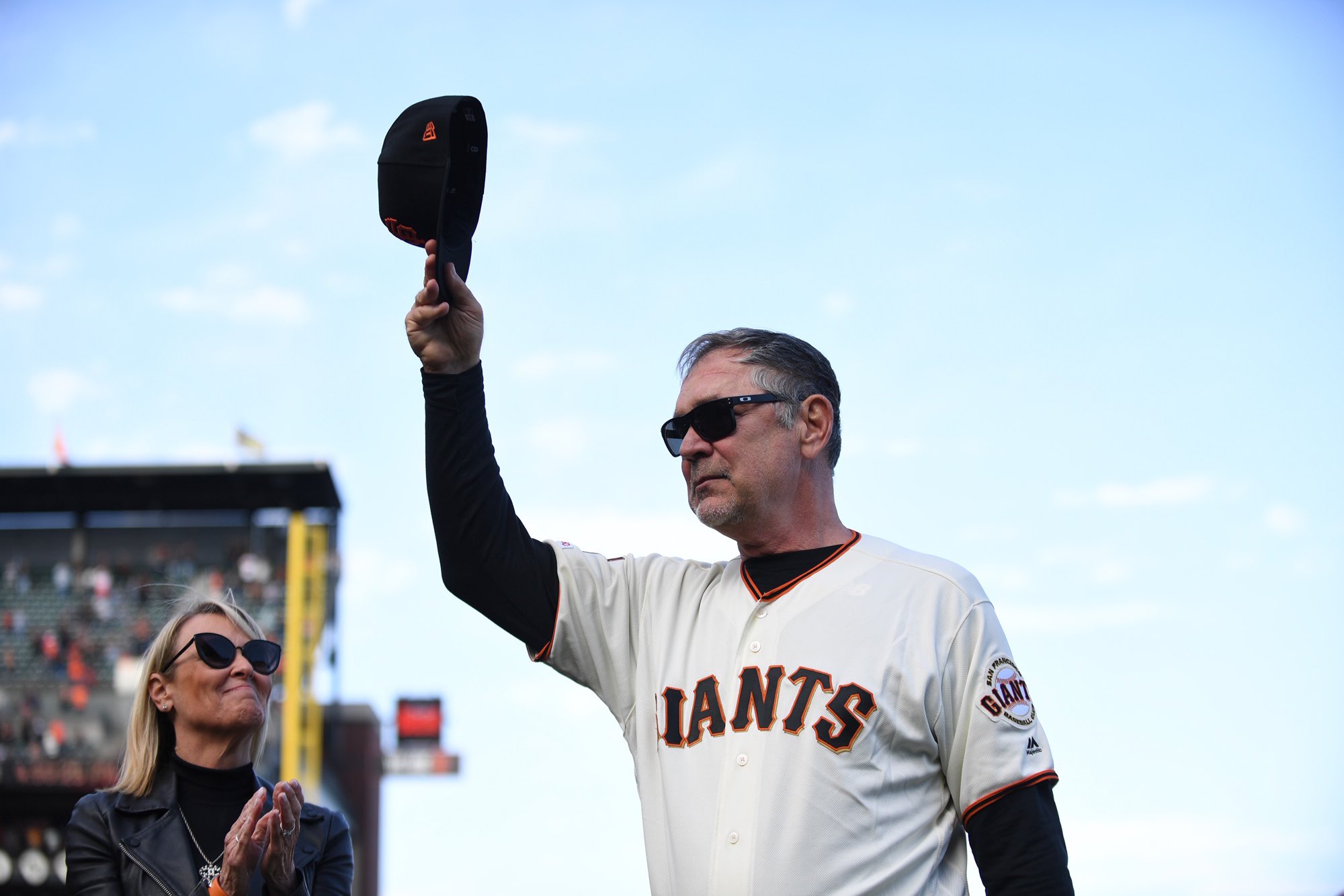
Twitter: @123sportsdigest

Facebook

Instagram: @123__sports


“This could be perfect! My full time job could be our relationship. I could wear stretch pants and wait for you to come home at 5:15. This could work!”

-Jan Levinson