Two years ago, while wondering why the dropped third strike rule exists in baseball, I wrote the following:
Baseball has some weird rules, but you can usually figure out why the rule exists by playing the alternative out to its extreme conclusion: It’s usually trying to prevent something from happening that people decided was unfair. For example, the infield fly rule exists because defenders intentionally let routine fly balls drop to the ground in order to get a double play, instead of taking the out.
I stick by that descriptive statement but I stand before you now to say this: the infield fly rule sucks. It’s TERRIBLE. It needs to go. As I said in that paragraph – baseball has some weird rules, and most of them were not in existence when the game began. Instead those rules were created as a reaction to ways in which players subverted the blank spaces of the rules to their advantage.
But there are problems with the infield fly rule – first, it’s both hyper-specific and non-specific. On the hyper-specific end of the spectrum, the rule is only invoked when there are runners at first and second or the bases are loaded, and less than two outs. Speaking from experience, this gives umpires something extra to think about before a pitch on top of the umpire’s other duties. You have to know when the rule is in play based on those guidelines or you won’t have time to realize it after the ball is hit. On the non-specific end of the spectrum, the ball must be a “fly ball” but specifically not a line drive (which is absolutely getting into a wide swath of gray area) that “can be caught by an infielder with ordinary effort.” And what the hell that means is really open to interpretation. As the comment to the MLB rule states:
The umpire is to rule whether the ball could ordinarily have been handled by an infielder-not by some arbitrary limitation such as the grass, or the base lines. The umpire must rule also that a ball is an infield fly, even if handled by an outfielder, if, in the umpire’s judgment, the ball could have been as easily handled by an infielder.
Yes, the infield fly rule can be invoked when the ball is hit into the outfield. It can also be called when an outfielder in fact makes the play. And what the heck constitutes “ordinary effort”? Worst of all, if I am reading this right, the infield fly rule can be invoked when the ball is foul (“not by some arbitrary limitation such as … the base lines.” WHAT!? That isn’t even consistent with the reason for the rule!). What a mess.
The aftermath of the play is the most confusing. “When an infield fly rule is called, runners may advance at their own risk.” What does this mean in this context? Can a runner tag up and go as soon as the umpire calls the batter out, the same they would after the ball is caught? Or, if the rule is invoked can a runner advance before the infielder catches it? And if they advance before the infielder catches it and then the infielder catches it, can the runner be thrown out for leaving early? I think I know, but the rule is not clear, which seems problematic.
The infield fly rule has always bugged me for these reasons. But it gnawed its way through my brain this week as I read How to Watch Basketball Like a Genius, by Anthony Greene. In the book’s opening chapters, Greene dives into the 13 original rules of basketball, as written by Dr. James Naismith, and how players worked within the rules to innovate the game to make it better. Here’s Greene, quoting NYU professor and game designer Eric Zimmerman:
“You can tell that Naismith was thinking about exceptions,” Zimmerman says of the first set of rules. “Trying to figure out the loopholes players will try to exploit.” But the exploitation of rules is vital to a game’s evolution. Essentially everything related to basketball that isn’t contained within its original thirteen rules developed because some player somewhere at sometime fudged with them.”
Remember what I said up there about baseball? Baseball’s weird rules were created to “prevent something from happening that people decided was unfair.” But Greene makes the compelling case that this is wrong. The thirteen original rules of basketball prevent “running with the ball,” but permit “throwing” and “batting” the ball “in any direction.” The rules, as written, expected players to be stationary. But it did not take long for some Ivy League boys to find the blank space in the rules – dribbling. Did Naismith find this innovation cheating? Did he try to stop it? Nope. Instead he called it, “one of the most spectacular and exciting maneuvers in basketball.” And he’s right. Again, from Greene’s book:
“It is a subversion,” Dr. Shawn Klein, a philosophy lecturer at Arizona State University, tells me. Klein specializes in the ethics of sport, and I reached out to him to better understand the moral (or amoral) underpinnings of dribbling. “That’s probably the best word for it. They were adhering to the rules, but they were subverting the expectations of how those rules would be followed.”
Reading this angered me more than ever about the infield fly rule – the first player to intentionally drop a fly ball was a genius. Incredible creativity! And that play is exciting as hell. Early in his book Greene speaks to another game designer, Colleen Macklin.
[Says Macklin} “A lot of game rules are modified or changed based on what the player wants. Basketball rules are modified in order to make the game more interesting to the spectator.” When she watches basketball she sees players both following and exploiting rules for the benefit of us fans. The result, she says, is “one of the most beautiful things you can see.”
Macklin loves Hickey’s example of the Dr. J behind-the-backboard layup, as it alludes to the kinds of decisions game designers must make. “When it happened, she says, “everyone was like ‘Oh my God, we’ve never seen such a graceful move before.’ And so you have a choice there. The NBA could either say it’s not allowed, or they could be like, ‘Yeah, let’s let that happen.’ The right choice is obviously, ‘let’s let that happen.’”
The infield fly rule is terrible for this reason – it is, by umpire fiat, a blown dead play. Yes, the runners can advance but they would be stupid to do so. Imagine an infield fly without the rule – if a player decides he wants to try and get a double play, he runs a great deal of risk – if he turns down the sure out, there’s a chance the ball bounces away from him and he gets no outs. Or maybe he does it perfectly. Either way, that is entertainment. And you don’t have to use your imagination to know how exciting that would be – in recent years I have seen players (particularly Javy Baez) do this on line drives. For example:
That is such an exciting play, in a HUGE moment of the NLCS. And not only was it exciting, it did almost backfire – instead of first and second with two outs, Baez almost ended the play with first and third with two outs. Now imagine that skips by him when it hits the outfield grass – chaos. Each time something like that happens, everyone watching agrees – wow that was a heads up play and wow that was fun.
Which is why MLB flat out got the infield fly rule wrong. Players subverted the rules in an entertaining way and baseball decided to litigate that fun out of the game. It’s not too late to fix it though. Let’s abolish that stupid rule forever. I’m looking at you, Theo.
Happy Opening Day, everyone! -TOB
Like what you’ve read? Follow us for weekly updates:
RT @Ken_Rosenthal: The Braves’ Max Fried joins the Cardinals’ Jack Flaherty and White Sox’s Lucas Giolito as Opening Day starters from the same high school – Harvard-Westlake in Los Angeles. All three also share the same agent, CAA’s Ryan Hamill. pic.twitter.com/Be4e6nHwuo
NBA great Elgin Baylor died this week. He was 86. As is the case with athletes before my time, I learned more about him in the past few days than I’d ever known. Bill Simmons referred to him as the “forgotten pioneer” of the NBA. Simmons, who hasn’t written a column in years, read a portion of his Page 2 story about Baylor from back in 2008. This detail was a stunner:
It’s impossible to fully capture Elgin’s greatness five decades after the fact, but let’s try. He averaged 25 points and 15 rebounds and carried the Lakers to the Finals as a rookie. He scored 71 points against Wilt’s Warriors in his second season. He averaged 34.8 points and 19.8 rebounds in his third season — as a 6-foot-5 forward, no less — and topped himself the following year with the most amazing accomplishment in NBA history. During the 1961-62 season, Elgin played only 48 games — all on weekends, all without practicing — and somehow averaged 38 points, 19 rebounds and five assists a game.
Why was this better than Wilt’s 50 per game or Oscar’s season-long triple-double? Because the guy didn’t practice! He was moonlighting as an NBA player on weekends! Wilt’s 50 makes sense considering the feeble competition and his gratuitous ball-hogging. Oscar’s triple-double makes sense considering the style of play at the time — tons of points, tons of missed shots, tons of available rebounds. But Elgin’s 38-19-5 makes no sense whatsoever. I don’t see how this happened. It’s inconceivable. A U.S. Army Reservist at the time, Elgin lived in a barracks in the state of Washington, leaving only whenever they gave him a weekend pass … and even with that pass, he could only fly coach on flights with multiple connections to meet the Lakers wherever they happened to be playing. Once he arrived, he would throw on a uniform and battle the best NBA players alive on back-to-back nights — fortunately for the Lakers, most games were scheduled on the weekends back then — and make the same complicated trip back to Washington on Sunday night or Monday morning. That was his life for five months.
The idea of that situation in modern times is so bananas.
On a more personal tip, Kurt Streeter paid tribute to Baylor by re-telling a family story in which Baylor played a large part. His family knew it well, texted him about it as soon as they heard the news that Baylor had passed. It’s a perfect story, in that it captures the folklore nature of sports. Our brushes with greatness. TOB seeing Willie Mays. My Joe Mauer tales.
Baylor floating
Mel Streeter
Streeter’s dad, himself passed away 15 years ago, knew how to tell the story, which makes sense, because it sounds like he told his kids the tale enough times to workshop it.
Per Streeter:
“Did I ever tell you about the time I played Elgin Baylor?” my father would say as he looked into my eyes, filled with wonder no matter how many times he’d begun this way.
“Elgin couldn’t score on me, no he couldn’t. Not in that first half he couldn’t.”
How perfect is that opener? It tells you everything you need to know about the second half. The story goes much deeper than Streeter’s dad facing off with an all-time great who, along with Bill Russell, changed the way basketball was played.
I wish now that I had asked my father more about his one-and-only game against Baylor, more about that league and those times. But dad died 15 years ago. As close as we were, some of his history will always be cut off from me. I don’t know what team he was on when he played against Baylor. I don’t know if it was a big game with high stakes — like the battles that helped decide who would head off to the A.A.U. national championship.
Thankfully, I have a firm recollection of the look on my father’s face as he spoke of how, in a head-to-head matchup between two tall, lithe and powerful forwards, he held Baylor to two first-half points. Oh, and dad never let any of his four sons forget that while he was holding down Baylor, he was lighting up the scoreboard. Even before my older brother Jon knew I was writing this column, the moment he heard about Baylor’s death he sent me a text with his own recollections of our family’s well-told tale: “Dad scored 11 in the first half!”
Two great reads about a “forgotten pioneer”. Both are worth reading in full. – PAL
I was looking up opening day details, and I just stumbled upon this factoid, ℅ Thomas Harigan over at MLB.com: three pitchers from the same high school will make opening day starts for their MLB clubs. It’s those young guys pictured in the tweet at the top of the post, each first round draft picks.
Jack Flaherty (Cardinals), Lucas Giolito (White Sox), and Max Fried (Braves) all went to Harvard-Westlake in the L.A. area. What’s more, they were teammates! It’s not like one of them is 34, another 29, and another 24; they were on the same team. That’s crazy, right? That’s crazy. – PAL
I started reading this, and thought, “Oh yeah; why haven’t they been doing this for years?” An engineering lab at Auburn has been 3D printing guards for football players based on body scans. And while joints aren’t yet on the table, the relatively early results have been very positive.
Per Andy Staples:
Why do the custom guards protect better? Physics. A guard that isn’t designed to fit a player’s body won’t allow the force of a blow to dissipate evenly. So certain points on the body must absorb more force. A guard made to fit the contours of the athlete’s body reduces that issue. “There are no what you’d call stress concentrations,” Zabala said. “It dissipates the stress out over the entire surface. It’s 100 percent contact area. If you can distribute the load over the entirety of the surface, then it’s safer for anybody.”
And the idea that a guy could bruise a ribs in the first half of a game and be wearing a custom guard by the second half is pretty incredible. It doesn’t take long to see the applications to other sports as well.
The story then becomes less about the idea and more about making a business out of it. 3D printers are common, so what makes XO Armor positioned to take this concept and turn it into a large company? What’s stopping another competitor from joining the game
The current plan is a subscription model with athletic departments and franchises, but they wonder if there’s a future where the company partners with sports orthopedics across the country. I mean, in three years will TOB be backing dudes down in the pickup game some XO Armor?
I enjoyed the read, but it sure read like a glowing company review from a very popular college football writer. I wouldn’t mention this, but TOB sent another story from The Athletic, one written by the great Marcus Thompson, about the rapper Macklemore finding the healing power of golf…and by the way he started a golf clothing line. Curious to hear from folks as to whether or not this Staples story read a little like an advertorial for XO Armor.- PAL
Song of the Week: Anderson .Paak – “Make It Better (Feat. Smokey Robinson)”
What’s my problem, punks like you, that’s my problem. And you better not screw up again Seinfeld, because if you do, I’ll be all over you like a Pit Bull on a Poodle.
There are cool sports traditions, and there are ones that can feel oh so forced. Here’s a story about a very, very cool tradition from a soccer team in San Sebastián, Spain. The idea, over a half century old, may have been the product of a hallucinatory haze. I’m already in. How about you?
Here it is: a single fan shoots off bottle rockets just outside the stadium when a goal is scored. One rocket means the opponents scored, and two rockets shot off means the home team, Real Sociedad, scored. This fantastic idea was courtesy of Patxi Alkorta. Now, his great nephew carries on the tradition.
One theory is, back in the day, the rockets were an easy way to let the fisherman out in the Bay of Biscay know how the game was going. The real genius of the idea is not necessarily the rockets, but the code.Per Rory Smith:
That the tradition’s appeal endured, though, was not only because it was something unique to San Sebastián — “the fans see it as something that belongs to us,” said Iñaki Mendoza, Real Sociedad’s club historian — but because of the simple genius of Alkorta’s idea: that perfect moment of suspense between the two bangs, the silence filled by hope and dread.
“When people are walking through the city on the day of a game and they hear the first rocket, they wait in suspense for the second,” Mendoza said. “And when they hear it, they resume their walk with a smile, because La Real has scored.” Izagirre described it as “a beautiful moment, where everyone is waiting.”
As the team has played to an empty stadium over the past year, the tradition has taken on another angle. While it’s not about breaking news (everyone has it on their phone), but it reminds folks that the game is not being played in a tv or some far off place but rather right there in town, and sometime soon they will be there to see it. – PAL
TOB: Oooooh that moment of suspense must be incredible.
No Direction Home
A handful of folks reading this considered working in sports as a dream job when we were younger. Maybe one of your friends gave it a shot, or maybe you did, and it becomes clear pretty quickly just how difficult it is to break into that industry. For one, you’ll likely get paid shit for a good amount of time, because the teams – whether it’s the Minnesota Twins or the Sioux Falls Canaries – know how common this dream is this dream is and they pay accordingly, and that’s if you’re lucky. Most folks have a hard time finding a spot to begin with! Per John Gonzalez:
That’s the tricky part of the whole dream job thing, especially in pro sports when there are only so many of those to go around in the first place. Unless you’re extremely charmed, there comes a time when you wonder how long you ought to keep chasing after it—and how far you’re willing to go
It’s only a matter of time that the dream is replaced with the reality that it’s likely going to take a long time and a lot of luck in order to get the job you imagined as a kid. As Adam Tatalovich says, “Not everybody can be Erik Spolestra. Not everyone is coming in as the intern and then you become the head coach. I always knew these jobs would only last for so long.”
Tatalovich is the feature in Gonzalez’s story, and he’s an interesting dude. Tatalovich is a basketball scout, which was a pretty nomadic existence before the pandemic. Back in February, he was working for Guangzhou, a team in the Chinese Basketball Association. There’s a break in the CBA season in January around Lunar New Year. Most coaches and scouts step away from the job and go on vacation; instead, Tatalovich went to Turkey to meet up with a legendary coach there. And thus began his odyssey. Tatalovich hasn’t been back to Guangzhou since.
March bled into April, and April gave way to a host of concerns—chief among them that he was officially unemployed and his prospects were limited. The woman Adam rented his Airbnb from in Belgrade let him convert it from week-to-week to month-to-month. Clothes were another issue, but that was hardly new. A lot of his belongings were left behind in China. He had an apartment’s worth of stuff stuck in storage and out of reach in Sacramento. He left behind a couple of bags worth of clothes in Australia. More of his things were scattered at friends’ houses all across the United States. All he had was the bag he packed for what he thought would be a quick holiday when he left Guangzhou.
How he spent his time and how he found his way to a job with the Knicks, and what he calls the absence of a nest – I found it all to be a distinct story and point of view on the last year. – PAL
Marvin Hagler died this week. He was my all-time favorite fighter. He didn’t take shit and he was tough as hell. Charles Pierce wrote an excellent tribute to Hagler this week, and I suggest you read it. But more importantly, if you even kinda like boxing, watch Hagler’s fight against Tommy Hearns, which in my opinion is the greatest single performance in boxing history. If you think boxing is slow and boring, just spend fifteen minutes watching this fight, and you see how two guys elevated the sport to its purest form.
Two guys, at the peaks of their career, absolutely gutting it out. Incredible. -TOB
PAL: I’d never seen this fight, and TOB is not overselling it. Honestly, this has to be up there in the pantheon of greatest sports ‘highlight’ ever. It’s incredible. Aside from the absolute grit from both of these guys, a few things stood to me, a complete boxing novice.
Hagler, a lefty, could switch stance and punish in a right-handed stance.
Hearns’ hands are is so fast. On those long arms, his punches are like a whip with an anvil on the end of it.
And I heard this anecdote a couple times in the past week that Pierce references, too. After a debatable loss to Sugar Ray Leonard, Hagler walked away from the sport with his brain and some money. He moved to Italy and never game back. Leonard wanted a rematch. Big money.
Later, when promoter Bob Arum came to New Hampshire to pitch a rematch with Leonard, Hagler’s response carried the sound of a great iron door, closing.
“Tell Ray,” Hagler said to Arum, “to get a life.”
That’s good stuff.
What Happens When a Football School’s Basketball Team is Better Than the Football Team?
This was a very entertaining article. Here’s the premise:
Every American college that has a big sports culture is either a football school or a something-else school. While a few might identify most closely with lacrosse, baseball, hockey, or volleyball, the most common alternative to football schools are basketball schools.
The article focuses mainly on Michigan and how the basketball team the last few years has been much more successful than the football team. So has Michigan become a basketball school? No, not even close. The issue is the emotional connection, and for whatever reason, certain fanbases have a deep connection with one sport over another:
Coaston got hooked on the Wolverines at their 2005 win over undefeated Penn State, when Mario Manningham caught a walk-off touchdown as time expired. “The highs would be some of the best moments I’ve ever had,” she says.
The most crushing recent loss to the Buckeyes came in 2016, when Michigan came inches away from stopping Ohio State on fourth down to lock up an overtime win. “The emotions I had had about Trump winning in 2016—I was like, ‘I’m fine, I know I can handle this,’ ” Coaston says. “ ‘For the work I do, this is a really important moment, but I’m ready for it.’ I had put all of those emotions into a box, and then I’d shoved that box into Michigan football, and then the Michigan–Ohio State game happened in 2016, and I was like, ‘Ohhhh, no. The box exploded.’ There is no emotional safe space for pretty much anything.”
The box exploded is an all too accurate way to describe it. So is this:
“I don’t think I ever have thought about a Michigan basketball loss more than like a half-hour after it ended,” Slate’s Ben Mathis-Lilley, a fan since he was a kid in the ’90s, says, “whereas there are Michigan football losses from, like, 18 years ago that I still think very vividly about all the time.”
Swap Cal for Michigan in that paragraph and it’s eerily accurate for me.
The author suggests a school cannot switch what kind of school it is. But I disagree, because it happened with Cal in the early 2000s. Cal had been a basketball school, with a very strong basketball culture and a passionate fanbase that packed its arena for every game. And then, over a span of 2-3 years, that flipped. The reasons for that are many and involve a rather unique confluence of events – the football team got good, the basketball team was involved in a pay-for-recruits scandal, and the beloved basketball gym was torn down and replaced with a sterile, sucky arena.
Still, this was a fun article and a nice primer for the start of the NCAA tournament. -TOB
What evidence is there that cats are so smart, anyway? Huh? What do they do? Because they’re clean? I am sorry. My Uncle Pete showers four times a day and he can’t count to ten. So don’t give me hygiene.
*this is a COVID-19-Shutdown-Anniversary-Free Zone*
*my heart!*
Snack Shack Queen
Snack shack food is some of my favorite food on the planet. Burgers, brats, even frozen Snickers. You can do a lot worse at plenty of places. There’s something about eating that kind of food outside that’s perfection.
I found this story about Carletta Brown. She runs the Hill House (on top of a hill, yes) – Lake Chabot’s version of the snack shack. While the course is rough around the edges, Carletta’s grilling is the very best part of golfing there.
As a purveyor of great burgers in the area (Tempest still holds it for me, but 4505 on Divis is no joke, either), and as someone who recently wrote a story that features some randos really, really enjoying their round at Chabot, I am ashamed to say I have not had the Carletta Burger at Chabot. Time to step my game up.
Brown is every bit as positive as she is portrayed in this story from Grant Marek. What Marek fails to mention is she can (and does) make an f-bomb sounds downright chipper. And the Packers love is real. She finds joy in her work, takes pride in it, and loves interacting with people. In other words, Brown is the kind of employee that makes a place special. About that burger:
What you’re getting is an ungodly combination of a 1/3-pound of burger, lettuce, tomato, onion, two types of cheese (both doused with barbecue sauce), a split hot link (also cooked with barbecue sauce bled into it, with the cheese tucked into the link) and four pieces of bacon. According to Brown, in total, there’s roughly “a pound of barbecue sauce.”
…Carlotta’s burger has reached the kind of lore that there are stories of some locals who hike all the way up the first few fairways to get one of her burgers … even when they’re not golfing.
TOB – I think we must play a round in order to properly review the burger (you can have a sausage) for our audience. – PAL
TOB: Maaaaaaaaaaaan, the Snack Shack. The absolute greatest. Nachos. Pizza. Slush Puppies. Discovering the no flavor Slush Puppies (this might sound gross but the Slush Puppy base was basically simple syrup, so “Plain” became the hot shit at my little league). Big League Chew. Bubble Tape. Chili dogs. Warheads. I could go on.
There it is, from Google Street View. The South Tahoe Little League Snack Shack. It’s had a paint job, for sure, but it’s still the same ol’ Snack Shack. The thing about the Snack Shack is the snacks were great, but the other thing about the Snack Shack is that it was a central place for a big chunk of my young life. There are few joys more pure than chasing and getting a foul ball and then sprinting to return it to the Snack Shack for a free Slush Puppy. This is not hyperbole – when I think of being a kid, and how fun being a kid was, I almost always first think of long Saturdays at the Little League field – especially when I had an 8 or 9am game, and got to hang out all day after, running around like a hooligan with my friends. My dad umpired a lot and my mom was league president and then co-Snack Shack coordinator – so, from basically 3rd grade until 8th grade we were at the field all Saturday, all spring from morning until dusk.
And, friends, let me tell you – there are few powers available to a 12-year old greater than having a mom who runs the Snack Shack. Long line? Psh, walk into the side door, and grab a slice of pizza, and tell whoever was working to put it on your parents’ tab (thanks mom and dad!). That is real power.
Now, I live in the city – and one of my great reservations about doing so is that my kids will not know the joy of the Snack Shack. This problem is one of the few things that makes me consider moving to the suburbs. The city is just too big – the fields are scattered across the city, and each is a single field. There’s no central location with four fields, like I grew up with, to see and be seen and to snack. Instead, people just show up for their game and then go home. There is no shack. There are no snacks. What a shame.
A Prospect to Build a Dream On
You know that Louis Armstrong song, A Kiss to Build a Dream On? That song plays on loop in my head every March, as I scour Spring Training box scores and scroll Twitter and tune into sports talk radio, looking for those little nuggets of hope that an unheralded prospect will turn into my team’s next difference maker.
21-year old Heliot Ramos has been in the Giants’ system since he was 17, and he’s very much making his presence known this Spring Training, hitting mammoth blasts all over the field (3 big home runs and a double off the top of the wall in his last two games). Do not get me wrong, I am so excited about Heliot that I am thinking aloud of starting a food cart outside Giants Sunday games called Heliot’s Elote y Helado (alternatively: Heliote y Heliado), and tweeting things like this on a Sunday afternoon:
Heliot Ramos got all of this one … again. The #SFGiants prospect has gone deep three times over his past two games. pic.twitter.com/oo9AS7rdeV
But Heliot was a known quantity coming into this Spring, and I’m here instead to talk about Jason Vosler.
I know, who? Well, Vosler was a former late round pick by the Chicago Cubs, out of Northeastern – not exactly a baseball hotbed. In the minors, Vosler always showed good plate discipline and a good sense of the strike zone, but never much power. And then he made a swing change. I’ll let Giants fan Roger Munter explain:
So it was time for a checkup with the swing doctors. I don’t play a swing doctor even on TV, but the term that has followed Vosler around much of his career is that he suffered from an overly “rotational” swing. I don’t want to get into the whole “rotational” versus “linear” swing debate (though I promise you a quick google search will produce a mountain of information for you to wade through), but I read Ted Williams’ Science of Hitting when I was young, and The Kid was the progenitor and original advocate of “rotational” hitting, so I think it’s probably a good thing. Rotating around a single axis, Ted believed, brought the large muscles of one’s core into one’s swing as a power-generating force, rather than relying on just the strength of one’s hands and wrists. The general visual analogy used is that a rotational swing uses the power of a pendulum, while a linear swing creates whip-like power snapping the bat on a more direct path to the ball.
Here’s a short video explaining what this is, but the short of it is that Vosler was over-rotating, causing his swing to be too long, which made him slower to the ball and cost him power. So, he fixed it. From Munter, here is Vosler in college on the left and in 2019 on the right:
The impact was immediate. Vosler began to hit bombs – 21 in AA in 2018, the second most in his league. He hit at least twenty the next two years, too, after having hit just 17 combined in the three years before his swing change. But Vosler was blocked at third base in the Cubs system, by Kris Bryant, so they dealt him to San Diego after 2019. He’s blocked there, too, of course, but had a great Spring in 2020:
In March of 2020, the now-26-year-old did something he’d no doubt been dreaming about for more than a decade — he reported to major league camp as a non-roster invitee for a talented and deep San Diego Padres team. And, mixing it up with Fernando Tatis, Jr. and Manny Machado, Vosler was the talk of camp, going 9-for-20 (.450) with a homer, three doubles, three walks and two strikeouts. Dude knows how to light up Arizona! Manager Jayce Tingler said that Vosler was having “as good of at-bats as any of our guys” before spring training was shut down by the COVID-19 pandemic. But the impression he’d made garnered Vosler an invitation in July to Summer Camp and he’d spend the year at the Padres Alternate Site, waiting for an opportunity that didn’t come. He was, again, buried on a depth chart behind guys like Machado and Rookie of the Year 2nd place finalist Jake Cronenworth
So the Giants signed him to a major league deal, which surprised some people. After all, Vosler has never had an appearance in the bigs. As Munter notes, though, Vosler checks all the Giants boxes – he is a Yaz profile come to life, per Munter:
Overlooked because he didn’t pop on traditional scouting grades.
Long history of patience, walks, and good swing decisions
Swing change unlocking power
Approach geared to swinging only when maximum damage can be generated
Vosler has not disappointed this month. His numbers:
.500 BA/ .500 OBP/ .813 SLG/ 1.313 OPS
Pretty friggin good. Will Vosler be the next Yaz for the Giants? Man, I don’t know. But that’s why I love Spring Training, and that’s why I loved this story by Munter – it’s a story, and those are numbers, to build a dream on.
P.S. I wrote this on Monday morning. Since, Vosler has gone 0 for 8 with 5 strikeouts and one walk. LOLLLLL *shrug* -TOB
PAL: “P.S. I wrote this on Monday morning. Since, Vosler has gone 0-8.” What a perfect end to a spring training prospect story.
I liked the rhythm of this paragraph:
So who is Jason Vosler, exactly? Well there are several answers to that question. Vosler is a cold weather guy. He’s a swing change guy. Not surprisingly, he’s a “good swing decisions” guy. And he’s frequently been a “victim of numbers” guy. But most importantly, he’s a serious “overcoming the odds” guy — Vosler has never been high on anybody’s scouting card, prospect list, or dynasty team. Step by step, he’s walked a long, lonely Cinderella path, well away from the limelight for many years, until suddenly finding himself in that most incredible of positions, the precipice of a dream come true.
You know what else is so great…or maybe the worst about the story? It keeps some delusional dream alive for a bunch of guys not half as good as Vosler on his worst day. The fantasy is given new life: that scouts really were focusing on the wrong numbers, that all it took was a person to see things differently in order for a guy like Vosler to get a shot. That one tweak to the swing was the difference between 14 home runs in three seasons and 20 homers in one season.
Former College Baseball Player Explains Some Hitting Shop Talk
Some people hate Twitter, because of the Discourse. But I still think it’s great because you get to curate what you see. I don’t need to see the toxic stuff. I get juuuuuust enough politics to stay informed, and then so much baseball and basketball. This week I stumbled upon this amazing and confusing conversation between former major leaguer Trevor Plouffe and current major leaguer/former MVP Josh Donaldson, delving into the depths of hitting mechanics.
And, I won’t lie, a lot of it was so far over my head. So I asked our boy here to translate. I don’t know if you know, but Phil played college baseball – there are stats online to prove it and everything. So, Phil, what’s going on here? Please translate. -TOB
PAL: Very pedestrian stat lines. This is going to take a minute. I think I caught about 75% of what Plouffe and Donaldson are talking about. I’ll do my best here to translate key points. Of course, there’s a chance I am wrong on a lot of this. One thing I’m sure of – my buddies back at Augie will let me know.
Hand slot:Slot = start of hand path to the ball. Where his hands start indicates the line his hands take to the ball. Think of it in 3D. Not just an uppercut, downward path, or straight line, but do his hands push away from his body (common for guys who hit the ball opposite field a lot or pull in towards his body (more of a pull hitter).
Clicks in the zone: Yeah, no idea what Plouffe is talking about.
TOB: If I may jump in here – I believe he means frames/clicks as he reviews the video. Three clicks in the zone means the bat is in the zone for 3 clicks/frames of the film, which is good. If a bat is in the zone for 1 click/frame, that’s too short and hard to hit – the more time the bat is in the zone the better the chance to make contact. Back to Phil…
Yes Yes No Hitter:This connects to the intent to swing idea. Every pitch, the hitter should have the same approach in terms of physical movements. Every pitch – swing or take – should be 90% the same. That last millisecond of recognition is when good hitters decide to take a pitch. Every pitch, as the ball is in flight: yes (I’m going to swing, recognizing pitch), yes (I’m going to swing, recognizing location), and then they decide whether or not to swing. Great hitters do everything the same every swing until that last moment of recognition.
More forward lower half and upper staying back:This is hard to do, and so a lot of hitters (myself included) would either overcompensate and stay back to the point where I had no momentum going through the ball, or I would get out front with my entire body. You have to come through the ball by getting your lower body moving towards the ball, but the trick is to keep your hands back and your front shoulder on the ball. That’s where the quickness comes from, and that combined with the big strength from the big muscles in the legs, butt, and core is where power comes from.
General:Donaldson always rubbed me the wrong way. No reason, really. Ok; fine, maybe it was the hair! But this made me really like him. I’d like him even more if he stays healthy and mashes for the Twinkies.
TOB: re Donaldson. My favorite tweet was at the end when he tells Plouffe, who had a few nice years there with the Twins, what was wrong with his swing and why his career sputtered out. It was brutally honest and kudos to Plouffe for accepting the way-too-late diagnosis. But – how disturbed is Josh Donaldson that he either (a) knew off the top of his head from having played against Plouffe what was wrong with his balance, or (b) took the time to check his swing during this conversation? Either way, it’s some real grinder shit.
Minor League Experimental Rule Changes? UGH! Wait, Actually…
I don’t like significant rule changes in baseball. I like baseball just how it is. But while I am a traditionalist in that sense, I am at odds with those traditionalists who want to curtail innovation. See, The Shift. In my opinion a team should be able to position its defense however it would like, because there is no rule saying otherwise. Moreover, as we have covered here before, the shift is not new – teams have been doing it for decades – they are just shifting more often now as data not previously available instructs. Not only that, but deep dives into statistics show that the shift is basically neutral in its impact.
With that said, here are rules MLB is implementing across the minors this year, which are experimental and could be coming to MLB soon:
Skip the larger bases rule in AAA and go right to the shift rule in AA. Despite what I said above, I am ok with the rule that the infielders must be, ya know, on the infield. Over the last few years we’ve seen guys thrown out at first after hitting a 100 MPH laser 100 feet past the infield, because the shortstop has not only shifted, but is essentially playing at a softball rover depth. Baseball is entertainment, and it should be fun – watching a team scoop up a weak grounder that can’t dribble through what would have been a hole is one thing; watching a team play with a cheat code and take away a line drive by playing half way between the infield and the outfielder is another.
While we’re here, I also love the high-A pickoff rule. Pickoff attempts are legitimately boring and almost always fail, while stolen base attempts are fun as hell. This rule will make it harder for pitchers to pick guys off, and easier to read when they are and aren’t. Sight unseen, I’m a big fan.I’m less thrilled at the low-A pickoff rule. Once you put a limit, and once a pitcher hits his limit, it’s going to allow runners to absolutely tee off on the bases. Stealing bases is fun, but runners taking off with impunity is not. -TOB
If you missed it, University of Texas football players created quite the stir last fall when they began refusing to stay out on the field and sing the school song, Eyes of Texas, as has long been tradition. They did this because the song has roots in racism, and good for them. The reason this is a story again, in March, is because the players correctly are not letting it go. But also because a reporter obtained e-mails sent by boosters to the school complaining about the players, and boy howdy are there some doozies. Before we get to the e-mails I have to add this.I have been to two Texas games in my life – one in Austin, the other in Berkeley. But as I read this article I realized I have no idea how Eyes of Texas sounds, or what the lyrics are. So, as I was reading, I decided to pause and go read the lyrics to the song. And, wow. Not only are they dumb as hell, but I also found out the song is set to the tune of I’ve Been Working on the Railroad! That is so hilariously stupid. Why the hell do these people care about a nursery song with dumb lyrics? I went back to the article and then read this:
Texas is not the only school that would make this choice. But it is the one school that’s in the position of forcing players to go along with this particular song, which if you haven’t heard it, is sung to the tune of “I’ve Been Working On The Railroad.” A banger, it is not.
I laughed out loud. A banger, it is not.Many of the emails threatened to pull donations – some of them claiming to have donated over $1,000,000. Again – imagine first loving a football team so much you donate SEVEN FIGURES, and then getting so upset at the idea of a dumb song set to I’VE BEEN WORKING ON THE RAILROAD not being sung by players who don’t want to sing it. The hell? Two of the emails from boosters, however, lay it all bare
“Less than 6% of our current student body is black,” wrote Larry Wilkinson, a donor who graduated in 1970, quoting a statistic UT-Austin officials have stated they’re working to improve. “The tail cannot be allowed to wag the dog….. and the dog must instead stand up for what is right. Nothing forces those students to attend UT Austin. Encourage them to select an alternate school ….NOW!”
…
“It’s time for you to put the foot down and make it perfectly clear that the heritage of Texas will not be lost,” wrote another donor who graduated in 1986. Texas also redacted that name. “It is sad that it is offending the blacks. As I said before the blacks are free and it’s time for them to move on to another state where everything is in their favor.”
THE BLACKS. That’s really all you need to know about this story: rich, white assholes want to exercise their power over others. A story as old as time. -TOB
PAL: I laughed at that line, too, TOB: “A banger, it is not.”Winning is the most valued tradition, and that comes from talented players competing for your school. It may not feel like it, but the power here lies with the players and students, not with a few boosters who try to bully the school to shape it around their incomplete, childhood memories of the school and its football team from back in the ‘good ol days’.
If the players, especially good ones, don’t want to stand and sing the song, then they don’t have to, and if the team punishes them, the team will lose more. More games, and more recruits. Fewer big-time recruits will go to Texas – because who wants to play for an average team that prioritizes some booster and his/her obsession with a dumb song? As the anonymous booster points out, there are plenty of other schools where they don’t have to do that, and I’ll add this: plenty of other schools with better football programs. If the school bows down to these boosters, then program will become more insignificant than it already has become. The school is worried about money drying up now? Keep losing and see what happens.
It’s easier to argue over symbolic traditions than it is to address what U.T. fans and boosters care about most: the team hasn’t been a title contender in over a decade. Alabama, Clemson, Ohio State, and – perhaps most painful – Oklahoma have left Texas behind. There isn’t an easy solution to that problem, so they turn their attention to a song, to preservation in the name of ‘heritage’.
Again, winning is the most valued tradition, and that comes from players. This situation is a hell of an unfair burden to put on a kid—to choose between what feels wrong (singing an old minstrel song in the name of tradition) and what you love (playing football). And for a few, that fight could lead to the end of their football days (being benched or not having a scholarship renewed). One thing’s for sure: the adults in the room will be no help. The coaches get paid a lot, and they want to keep cashing those checks. Guess who’s behind writing those checks.
Hustler
I know very little about pool. Billiards. We played in the basement growing up, and I like to play at a bar. Pool is a great conversation starter. Other than that, and Minnesota Fats, I know very little. Some guys like to wear a vest when they play, right? What’s that about?Efren Reyes is a pool legend. He’s considered the best pool player in history in the same way Wayne Gretzky is considered the best hockey player – it’s not really up for debate, and no one is looking for one. Reading his story from the perspective of someone who knows very little about the game only made this story from Eric Nusbaum and Adam Vllacin even better. The opening is fantastic:
Efren Reyes would rather not have become the most famous and universally praised pool player in the history of the world. Would rather not have gone pro or been the subject of a million YouTube highlight reels or won every single pool tournament known to man. Would rather not have become so successful, so universally admired that there is a literal X-Men character based on him.
Going pro, getting famous—this was all a last resort. Because what Efren Reyes really wanted to do was hustle.
He was born in a town called Mexico, in the Filipino province of Pampanga, about 40 miles up the highway from Manila. When he was a kid, the family moved down the highway and into the capital. Efren had an uncle there who ran a pool hall called Lucky 13. Efren started hanging around the pool hall, watching the older men—the good players and the bad ones—while working as an attendant, and goofing around at the empty tables.
Who among you is not reading a story about a Filipino from the town of Mexico who would go on to become the best pool player ever and the inspiration of a comic book character? I am thinking about what else to add to this story to convince you to read it. What other details, what other quotes. The more I think about it, what else do you need that’s not in that opening?OK, here’s Reyes dominating:
Go read the story already! – PALSource: “The Greatest Pool Player In History Just Wanted To Hustle”,Eric Nusbaum and Adam Vllacin, Sports Stories, ℅ Defector (03/02/21)TOB: I had never even heard of this guy, but now I love him. If for no other reason than this anecdote relayed in the story:
At the inaugural Derby City Classic in 1999, he won the “Master of the Table” award for best all-around player. At the ceremony he refused his trophy. “I play for money,” he said as he accepted his $25,000 check.
CTC. Cut that check, baby!
Succeed?
Well, this is interesting – two businessmen, working closely with female athletes, are trying to turn the existing concept of a sports league on its head. Or, at least, re-invent it from scratch. They wondered why women’s sports, in particular, don’t seem to have huge professional followings in the U.S. So, they did some research:
In their research, four trend lines in fan behavior stood out: 1) Supporters were more likely to exhibit passion about individual players than they were about entire teams. 2) They were engaging with sports on a variety of platforms, just as likely to play in a fantasy league or consume highlights on Instagram as they were to watch actual games. 3) They were increasingly interested in athletes’ personalities and off-field lives. And 4) They took close notice of “values orientation,” the standards and ideals that a league and its athletes center on.
…
In other words, the existing model of professional sports has been difficult to navigate for any upstart league, particularly for women’s leagues, which tended to be shut out of mainstream media coverage. But if you were building something new—if you weren’t necessarily worried about filling stadiums in a dozen different markets or landing a major cable deal; if, instead, you marketed directly to an existing segment of fans—you could make it work.
Ok, so – a league in a bubble, with fandom not centered on regional ties? This doesn’t sound all that revolutionary so far. But the devil is in the details, and when they say they are throwing out the 20th Century American Sports model, they are not kidding:
At the start of each season, a small number of players would be named as captains. Those captains would draft teams in a live-streamed event, promoted as much as any game, which would mix personality (Who’s picking whom?) with strategy (How are they approaching the intricacies of roster construction?). These teams would then play one another over the course of the next week. But while each game would look and feel familiar, with a winner and a loser, what really mattered would be the individual stats, kept with a unique scoring system, tailored to the sport, that accounted for offensive and defensive performance. These individual numbers would be tracked on a leaderboard, and at the end of each week team captains would draft anew, remaking their rosters to form completely new teams. Finally, at the end of the season, rather than a championship squad, there would be one woman atop the leaderboard. Your fill-in-the-blank-sport champion.
Uh, wow. That is certainly different. But they’re not done:
Every player would earn the same base salary but could activate performance-based bonuses that doubled or even tripled that takeaway. They’d all play in one city (Rosemont, Ill., for softball; Dallas for volleyball…) to cut out the costs of traveling and operating multiple stadiums, and to facilitate the creation of media content around the players, who’d be living and spending time together, getting drafted by their fellow athletes each week. They’d all have ownership stakes in the league. And they’d make decisions together, on the rulebook and on marketing strategy, all the way down the line.
Officially wild. Baccellieri, long one of my favorite writers and Twitter follows, succinctly explains the rationale:
Fans can follow individual athletes they already know from college or, say, from Instagram, rather than try to embrace brand-new teams with whom they have no history, no local connection.
This makes some sense. Two of my favorite Cal players of all time are Aaron Rodgers and Marshawn Lynch. When they got to the NFL, I rooted for them, but with some reservation – though I have my issues with the 49ers, they are still the team I grew up rooting for and rooting for Rodgers or Lynch often meant rooting against the Niners, usually indirectly, but often very directly, including in the playoffs. If the NFL followed this model, instead, I could unabashedly root for those two guys . I could root for Ozzie Albies or Fernando Tatis, Jr., because I like to watch them play, without worrying about what their good performances doe to my team’s playoff chances. Because I’d have no team. I’d just have My Guys. And we all know I love My Guys.That’s not to say that I want MLB to change to this model – hell no. But I see the logic for a niche sport, like women’s softball. The fanbase is small but devoted, and most start following players in college. After college it becomes difficult to follow the players – the teams, and even the leagues, are forming and folding all the time, and it becomes hard to invest in emotionally, as three of the sport’s best players all agree:
The existing model for professional softball was untenable. The average annual salary in NPF was around $5,000. The number of viable teams fluctuated each season. As much as they loved the game, they’d never banked on softball as a serious career. Almost no one could.
This is true of a lot of sports, for men and women. Even Women’s Soccer – I have lost count of how many teams Alex Morgan has been on (I just looked it up and it’s 7 in 10 years, geeze). If, instead, I could follow her on Twitter, see her highlights, and be able to see she is kicking butt on the “leaderboard”? I dunno – I think I really would pay more attention. And that’s what Athletes Unlimited hopes. They don’t just want to reach diehards. By focusing on national (“all 30 softball games ran on TV or were streamed by ESPN and CBS; 22 of the 30 upcoming volleyball matches will be on CBS or Fox subsidiaries”) and social media, they hope to reach everyone:
“There’s going to be your volleyball fans, your lacrosse fans—those are the people who are always watching, it doesn’t matter the format, right?” says Jessica Mendoza, a softball player turned ESPN analyst and now an Athletes Unlimited board member. “But now there’s going to be a guy who likes to gamble! Now he’s going to watch a women’s lacrosse game and notice stuff he never would have noticed. … And it’s not just one guy like that. There are hundreds and thousands, and they absorb sports for different reasons. I think, ultimately, a lot of them are going to walk away and be like, I like watching women’s volleyball. I like watching women’s softball. Not all of them, but I think a lot of them—and that makes me happy.”
This is an interesting concept, and a really good read. -TOBSource: “Welcome to the Grand Softball Experiment,” Emma Baccellieri, Sports Illustrated (02/26/2021)
Winter Surfing Looks Awesome and Miserable
I love a good photo essay, and the NY Times has this cool thing going during the pandemic where they feature a photojournalist taking the viewers to places in the world a bit harder to get to these days. In this most recent installment, Ryan Carter captures winter surfers on Lake Huron. Per Carter:
In recent years there’s been a significant increase in the popularity of lake surfing in North America. Unlike ocean surfers, who often depend partly on tides, lake surfers rely solely on strong, sustained winds. The stormy winter months often bring the biggest waves — and therefore the best surfing conditions.
The photos are surreal. The snow, the ice, the flurries, and the surfboard. It’s like surfers found the last place on earth – a deserted lake town. It all feels a bit apocalyptic. Check out all of the photos in the link below. – PAL
An Incomplete Guide of What Not to Shout at a Baseball Game
Spring is so close. Baseball teams have returned to Arizona and Florida. Daylight Savings—the good one—is just on the other side of next weekend. Maybe there’s an end to this pandemic up ahead, and with some luck, each of you reading this story will soon enough find yourself in a lawn chair watching a baseball game on a long, warm, golden evening. Can you feel the grass between your toes? Don’t forget the sunflower seeds.
We’ll all be rusty on the situations, players and spectators alike. Understandable; it’s been a minute. While the kid playing right field may have forgotten where to throw the ball on a single with a runner on first and two outs, you may have forgotten what to yell at the game.
Nothing is everywhere at a baseball game. It permeates. For nearly 200 years spectators have filled the nothing between the pitches with chatter. We are compelled to be heard in that nothing. Of course, leaving the nothing as silence is no good either (games with empty stadiums is a recent reminder), but often the nothing is filled with counterproductive, self-evident, too late, passive-aggressive, not-as-clever-as-you-think crap.
There are any number of sentiments fitting to yell at a baseball game, but there are a handful of phrases that need to be removed from any spectator’s rotation. They gotta go, regardless of intent. That’s what we’re here to start.
With the help of friends, family, coaches, parents, I’ve collected the following list of things to avoid shouting when at a baseball game. Consider this a living document. Send me what I’ve missed. We’ll work together on it, and in the process we’ll make games, especially youth sports, just a little less dumb.
Keep your distance, and keep yourself from yelling any of the following at the ballgame.
–
Throw strikes!If nothing else comes from this list other than one less person shouting Throw strikes! at a baseball game, then this story will have been worth it.
To the folks who yell that at a game, I ask you: what in the goddamn hell do you think all pitchers, ages 8 to 80, is trying to do? I promise, their intention was not to walk the previous four hitters. Just because they struggle to throw a strike doesn’t mean they forgot the purpose of their presence on the mound. All pitchers, at every level and every game, are trying to throw strikes, so stop shouting that.
Focus! Question: would someone yelling Focus! while you worked help you keep your attention on the task at hand? Similar: Keep your head in the game!
Tie goes to the runner! You’re superhuman? You have a slow motion feature in your brain? Oh, you don’t? So then maybe ease up on the retired gym teacher umpire making a judgement call on the bang-bang play. In fact, just resist the urge to yell rules, made-up ones—like “tie goes to the runner”—or otherwise.
Trust your arm. How does one trust his or her arm? Can an arm betray trust? Can an arm earn trust? This phrase is typically something a father will say to his child who he thinks is superior to the hitter. Trust your arm, in other words, is “your average fastball is more than this kid can handle.” Or, consider this: maybe the pitcher isn’t trusting his/her arm because it sucks on that day and the last four batters have hit standup doubles.
He’s not looking to hit. One of my favorites, ℅ my college buddy Kevin Wiessner. While the spectator is saying this to the pitcher, this is just as much directed at the opposing team’s hitter. He’s not looking to hit is saying no less than “this player is bad at hitting a baseball. So terrible that you, pitcher, don’t need to waste time thinking about pitch selection or location. The only way this hitter hurts you—the only way— is if you can’t throw three strikes.”
He’s not looking to hit is the combination of Throw strikes! and calling an opposing player trash in one succinct phrase.
Watch the junk! God love him, my dad would yell this anytime I had two strikes on me in an at-bat. Thinking about a curveball with two strikes is an effective way to watch a fastball go by and strikeout looking. We’ve all been told hitting is very hard, and it happens in less than a second. My advice: don’t put ideas into a kid’s head the moment before he/she needs to make a decision.
In fact, no instruction is helpful from the stands during the game. Practice is the time for instruction. The batting cage is time to work on technique and approach. If you want to fill your kid’s head with bad info, at least do it away from the game. That time is over once the game starts.
If you’re in the stands, then you are not the coach, so don’t coach. I know it might feel like it, but your 11 year-old’s MLB draft stock will not be impacted by the fourth at-bat in the 9 AM consolation game at the weekend tournament 50 miles on the other side of nowhere.
Special consideration for “don’t” coaching from the stands. The only thing worse than shouting stay down at the infielder who just a ground ball go between his legs is to shout don’t come up! Same goes for don’t lunge (when hitting), don’t nibble (when pitching). If you’re committed to shouting dumb things at a baseball game, at least shout what you want.
Just a long strike! A favorite phrase of the dad who fancies himself the funny guy in the crowd. Typically this one comes out after an opposing cleanup hitter who hit puberty three years before the rest of the kids sends a pitch 400-feet on a line, just foul. Whiletechnically true—the foul ball is a strike—psychologically, this was not just a strike. Anyone at the game feels it and knows it to be true. A missile foul ball can be far more damaging to the pitcher’s psyche than a ground ball with eyes.
I understand the intention of trying to get the pitcher to move onto the next pitch, but we can get there without drawing attention to the ball that cratered the hood of a SUV in the parking lot beyond right field.
Besides, everyone knows a foul ball – be it a bunt or a moonshot – is a strike. It doesn’t need to be said, and it does not deliver the positive reassurance proposed in the phrase.
Just ‘lets’ us score more! I have saved the worst for last. This is not a common phrase—thank god—and we must keep it that way.
This embarrassment is the wordcraft of an otherwise excellent coach and mentor. He knows who he is, and it is out of an abundance of respect that I don’t call him by name. Future generations of his family don’t deserve the burden, so great is this crime against the game.
Coach would like to shout this, almost with a sick glee, when the opposing team was in the frenzie of scoring several runs in an inning. There’s a momentum that comes with the opposition putting together a big inning. With each run, the weight gets heavier, and it gets harder and harder to get out from under it. Even an out is an act of mercy.
That’s when he’d shout it: Just ‘lets’ us score more!
What it felt like:
5 runs deficit? Not a problem!
8 runs? We’ve done it before!
10 runs? What an awesome opportunity!
First, the opposing team scoring a lot of runs did not then let us score more runs. A victory required more runs. Second, big comebacks happen not through blinding positivity, but through a plodding, steady persistence.
The rebuttal to my argument is that the phrase is about a mindset, of course. It’s not meant to push blind positivity. It’s more of a PG version of an “f-it” mentality. It’s about avoiding a dugout of moping. Moping leads to a little less hustle, and no team’s coming back from a big deficit feeling sorry for itself.
All of that is true and right, but there’s got to be a less lame, bright-eyed way to convey that point. Just ‘lets’ us score more is like yelling “just ‘lets’ us swim!” to the townspeople as the dam breaks.
–
So what are some good phrases to yell at a ballgame? It’s pretty simple: heap specific praise on players, especially on the young ones. 9/10 things you shout should be positive. Don’t be the a-hole who only chimes in when his/her kid does something. If you’re consistently praising all the good stuff, then it’s fine to call out a lack of hustle and mental mistakes, but maybe go with “we” instead of a kid’s name.
You might be wondering, “Who is this guy to tell me what to shout at a baseball game?”
I’m no one, man. But on this, I am right.
– Phil Lang, 03/03/21
Since we’re here, we can quickly cover off on some other sports, too, including basketball, hockey, soccer, volleyball, swimming, and more.
Here’s a start of running list of phrases to avoid:
Get the ball
Jump
Run
Skate
Shoot
Dribble
Kick (swimming)
Over (volleyball)
Let’s hear some chatter
Look alive
Take the body
Move it
Keep your head in the game
Walk it off
Box out
Any swearing at a youth game, because you’re better than that.
Not exactly a phrase, but this still ought to go: holding up four fingers to signal the 4th quarter of a football game, as if to say your team owns the fourth quarter. How unoriginal can a “tradition” be?
This is a story about the unlikely source material that helped inspire a new way of thinking and evaluating talent in baseball.
Daniel Kahneman (Cal grad, TOB) and Amos Tversky wrote Thinking, Fast and Slow, a book about behavioral economics. These guys were not baseball dudes. Kahnman won a Nobel Prize in economics. The book barely references baseball, but it’s a major influence on many general managers, executives, and scouts throughout the game.
Most of us are aware of Moneyball — both the best-seller Michael Lewis book and the Brad Pitt movie (really holds up as an all-time great sports movie) – which in large part details how the Oakland A’s took a fresh look at the stats to find undervalued players. They needed to— the team couldn’t compete with the big market teams in terms of paying big-name players.
In the movie version, one of my favorite scenes is when Billy Bean (Brad Pitt) sits down with all the old scouts and tries to explain how the team needs to take a different approach to evaluations. The scene is a perfect example of what Kahneman and Tversky defined as “the representativeness heuristic” — the idea that assessment is heavily influenced by what is believed to be the standard or the ideal.
While there were other baseball influences at play in Oakland (Bill James’ work on baseball statistics, to name one), it’s no wonder that many decision-makers in today’s game credit the economists’ work in Thinking, Fast and Slow as having a major impact on how they try to evaluate talent for their teams.
Orioles Assistant General Manager, Sig Mejdal, is one such decision-maker. He worked at NASA prior bringing his biomathematics brain to baseball.
He says:
“When we look at the players standing for the national anthem, it’s hard not to realize that quite a few of these guys are far from stereotypical or prototypical. Yet our mind still is attracted quite loudly to the stereotypical and prototypical.”
Other executives who likely have a raggedy copy of the book in their office: Andrew Freidman (Dodgers), John Mozeliak (Cardinals), Sam Fuld (Phillies). I’d bet my next paycheck the Giants Farhan Zaidi is on this list, too. Excellent read. – PAL
Baseball Players…SMH.In an article I otherwise would not have shared here, about how MLB/MLBPA negotiations regarding the expanded playoffs and universal DH are going, Andrew Baggarly included this note from Giants’ MLBPA rep Austin Slater which raised my eyebrows, about player attitudes toward the COVID-19 vaccine:
“It’s case by case how each player feels about (the vaccine),” Slater said. “It’s a decision they need to make individually and with their family. All you can do is provide information and point them in the right direction when they have questions. Hopefully that’s enough for people to make the decision.”
Wait, uh – what? Case by case? That sounds like a whole lot of vaccine resistance amongst baseball players. But then a thought hit me that made Slater’s comment make a lot more sense: Baseball players are generally pretty quiet about their politics, but we hear enough rumblings to have a good idea that as a whole they lean heavily right, and will you look at this:
According to the recent Gallup poll, the rate of willingness to get the vaccine increased in both Democrats and Republicans with 91% of Democrats (compared to 83% in December) and 51% of Republicans (compared to 45% in December) willing to get vaccinated.
Oh. Wild. To be clear: 500,000 people have died in this country alone, and somehow the percentage of Republican anti-vaxxers has soared. Last January, the percentage of Republicans who believed it is important to vaccinate kids was 79% (down from 93% in 2001), as compared to 92% of Democrats. That was bad enough, but a year and 500,000 dead later, the number of Republicans who are willing to get the COVID vaccine is 51%?
Every time I return to Minnesota, I’ll do the Body By Bennett run. I can’t remember which of the siblings authored the name the 4-mile loop through Central Park, around Bennett Lake, and back down Transit, but the name stuck. In the spring and summer months, somewhere between 1 and 1.5 miles, the trail passes the softball complex. On weekdays, starting the senior softball leagues are ripping. They dominate the fields on weekday afternoons, when everyone else is – you know – working.
So when I saw this essay from Abby Ellin about her 83-year old dad’s softball league, I had a good feeling I’d be sharing it with you. She doesn’t disappoint. This guy may as a well be playing at Central Park in Roseville.
There are sweet moments and hilarious moments, too. Their rebellion to sitting down or sitting out on life is inspiring. Although, the chatter is a bit different:
“You get the vaccine?”
“I keep trying, but every time I go to the website it crashes.”
“The Democrats are keeping the vaccine for political reasons.”
“That’s a conspiracy theory!”
Then there was movement on home plate. “I need a runner!” yelled batter Carl Slutz, who at 86 is one of the league’s oldest players. It was a good day for Slutz (“It’s pronounced ‘Slootz,’” he stressed). If he got a hit in this at-bat, he would be 5 for 5.
I love that these old guys are filling their days doing something that — for many of them, I assume—they’ve loved since they were young boys. It’s something that buoyes them in this world instead of waiting for whatever’s next.
Not my dad.
Playing sports has centered him for the past eight decades. He has been voted the most valuable player a few times. He was out on the field the day after one of the worst moments in his life, when my sister died. The camaraderie and oxygen were more critical than ever. Besides, what good would staying home have done?
“It’s not going to change anything,” he said. “I didn’t play well, let’s just say that.”
It reminded me of something Neil Lewis, 87, one of the Golden Years’ commissioners, told me last year. “When you get old, if you just lay around and watch TV you’ll go to hell, in plain English,” he said. “You’ve got to keep your mind going.”
Not so long ago I’d say I’d never play in a softball league. Didn’t appeal to me enough to make it a priority once a week. I loved baseball when I played. Softball felt so casual, and I loved how intense baseball was for me. I relented and played in a few softball leagues in SF. Nothing stuck. We should give it another go, TOB. These old dude’s seem like they’re having a blast.
A heartwarming essay worth the five minutes to read in full. -PAL
Aww, ManJulius Randle was named an All Star this year for the first time in his career. His mom recorded a congrats video and they played it on the jumbotron at MSG, as Julius looked on.
That’s cute and all, but after the game Randle provided some context that took it from, “Aw” to “I’m not crying, I’ve just been chopping onions”:
“It was definitely amazing,” Randle told reporters after the game. “Throughout the course of this past year, it’s definitely been tough on all of us. But my mother, she hasn’t been able to leave the house; she’s a diabetic. We’ve been extra cautious with her.”
Dang, man. Can we get this woman a vaccine, please? -TOB
TOB and PAL after bringing the heat each and every week.
What is the *Point* of College Sports?
For decades, athletics were seen as an integral part of most college campuses. Sure, there were outliers – like one-time Big 10 football powerhouse University of Chicago deemphasizing athletics and dropping football in 1939. But for the most part, college sports have had a good run.
Sometime around the 1980s, though, college football and men’s basketball went from big money to stupid big money. Around the same time, public colleges started to lose public funding as a share of their overall revenue. Tuition went up. Competition for admissions went way up. And over the last few years we have found ourselves in this perfect political storm: football and men’s basketball generating a lot of money, which subsidizes the other sports, while football players and men’s basketball players don’t get paid. As it happens, most football and men’s basketball players are persons of color, and most players from most of the other teams are white (especially in the so-called country club sports).
But that’s not all, because while football and men’s basketball subsidize the country club sports, so does the campus at large. Public funding and student tuition covers the deficit that most college athletic programs run each year. This has led colleges to cut smaller sports, especially smaller men’s sports, in order to reduce budget deficits. But it hasn’t been enough at most schools.
Then, in 2019, the USC/Stanford college admissions scandals brought to light an ugly truth that had been a poorly kept secret: upper-middle to upper-class, mostly white parents have been gaming the admissions systems for decades by guaranteeing their children admission to top colleges, and at least partial scholarships, by having them compete in low-participation sports. Like fencing. And crew. And field hockey. And lacrosse. And synchronized swimming. Nowhere was this more prevalent than California. The top 4 colleges by Olympic medals are: USC, Stanford, UCLA, Cal.
Sure, these Olympic medal winning athletes are world-class athletes who come from all across the world to further their training while getting an education. But there are also the kids who fill out those rosters, not with any realistic aspiration for Olympic glory, but to get into a top school and enjoy the perks of a scholarship.
Stanford, in particular, has dominated the country club sport circuit, having won the 25 out of 26 Directors Cup awards since its inception in 1994. The Directors Cup is an annual award given to the college “with the most success in collegiate athletics,” as determined by a points system “based on order of finish in various championships.” After finishing second in the first year it was given, Stanford has won the Directors Cup every single year – 25 times in a row. A large part of their success are the Olympics sports, yes. But it’s also the fact that Stanford has subsidized a massive athletic department – not just in terms of world-class facilities, which they of course have, but also in terms of sheer size – 36 athletic programs, as far as I know by far the most in the country (Cal is way up there at 27; most schools have around 20).
With all that backstory in mind, this article about Stanford’s decision to cut 11 programs and the uproar that has ensued is fascinating. The news was released last summer. After this year, Stanford will cut men’s and women’s fencing, field hockey, lightweight rowing, men’s rowing, co-ed and women’s sailing, squash, synchronized swimming, men’s volleyball and wrestling. “The 11 sports represent roughly one-third of the school’s 36 sponsored athletic programs, account for 240 athletes and include programs that have produced 20 national titles and 27 Olympic medals.”
This almost happened about a decade ago at Cal – most notably to baseball. But Cal Baseball raised $10M and saved itself, at least for now. Stanford’s sports tried to do the same – raising enough money to endow the sport in perpetuity. And some have succeeded at raising that money:
In a six-month-old fundraising effort, team leaders have raised pledges of $40 million to fund the 11 discontinued squads, and at least three of the teams have raised enough to self-endow, fully covering their operating expenses permanently.
Wow, hey, nice job. So now those sports are reinstated, just like Cal baseball was, right? Well, uh:
Presented with this information, university leaders are steadfastly committed to their decision, showing no signs of restoring the teams.
Oh. Stanford claims a budget crisis – a $12M deficit, to be specific, and also claims cutting these eleven sports will save it $8M annually. But if the sports self-fund, doesn’t that solve the budget issue? Nope.
Using the university’s own financial figures, 36 Sports Strong generated a study to show that the elimination of the 11 sports is only a minimal budgetary impact and attributes the department’s deficit to an 84% increase in salary and benefits over the last decade, much of it tied to football and men’s basketball.On Tuesday, leaders of the group presented their financial findings to Stanford provost Persis Drell during a 35-minute Zoom call, where they also pitched a proposal: Reinstate the 11 sports and give them a five-year runway to self-endow, not just their own programs but also all 34 nonrevenue sports at Stanford.“It was like we were talking to an empty suit,” says Kathy Levinson, a former three-sport athlete at Stanford in the 1970s who is leading the 36 Sports Strong movement and was part of Tuesday’s meeting. “I would say she was immovable.”
So what’s going on here, then? I know that at Cal, the land that sports facilities are on is valuable and takes up a lot of space that could go to more academic buildings or student housing, an especially important concern in Berkeley, where the housing market remains spiked. But have you ever been to Stanford? There’s room there. A lot of it. They don’t need the land. There’s another theory, though:
Many members of 36 Sports Strong theorize that the university, in part, eliminated sports to create admission flexibility. Stanford is one of the few colleges in the U.S. at capacity academically. In this theory, the university would now have the freedom to fill classroom spots occupied by athletes with those who may generate more tuition or carry a higher academic acumen.Stanford’s athlete population was one of the highest in the nation at 12%, or one in every seven students.“Maybe there was concern that 12% of the campus population was too much,” says Andy Schwarz, an antitrust economist based in California and a Stanford graduate himself. “The university admission process is trying to custom-craft a campus community.”
Aha. Stanford denies that allegation. But I don’t think I believe them – do you? Because now we come full circle. Is Stanford embarrassed by the admissions scandal and the ugly truths it revealed about how many of Stanford’s 36 sports are used to leverage admission for kids who are not otherwise qualified? Is Stanford trying to pull a 1930s University of Chicago and de-emphasize athletics? Are athletics still important to a college campus? What about when the sport is lucky to get a handful of spectators per game? Because if this isn’t about that, then why would Stanford deny reinstatement for these sports, especially the three that have already raised enough money to self-endow forever?
Now, I get why the alumni of these sports and the current athletes and their families are upset. But that $8,000,000 they are saving, conceivably though not actually, could be redirected to the revenue generating athletes at an average of about $90,000 per year. Or it could be used to reduce Stanford’s outrageous tuition. Or fund important research. Or do so many important things besides guarantee admission to a top university to someone whose parents have the money to get them into fencing at a young age. I mean, look at that photograph of the Stanford men’s crew team at the top – do those look like world class athletes to you!?
I don’t know, Stanford’s decision seems like a step in the right direction, if you ask me.
Saw this story in the NY Times, and I wondered if this would’ve even made it into the St. Paul or Minneapolis local section of paper. Still, I’m a sucker for a back-to-basics story.
The premise: a lot of ice arenas are closed in the New York area, so people are finding other places to play hockey. These backyard rinks run the gamut: some cost a couple hundred bucks, while other folks go all out.
Per Kevin Armstrong:
First-timers learned to negotiate inconsistent thaws and freezes, and anxious hosts added umbrella insurance on top of homeowners insurance in case injured visitors filed lawsuits. Like-minded neighbors knocked down fences to share space for rinks, while others complained about noise created by pucks crashing against wooden boards. With ice time at a premium, backyard rink owners were flooded with requests for open skating times.
One person who was in the perfect position for the unexpected D-I-Y rink boon: 24 year-old Dylan Gatsel. He developed a prototype backyard rink kit a couple years ago. EZ ICE Rinks sales are through the roof.
These outdoor rinks in backyards have been a longstanding tradition in Minnesota. I skated on backyard rinks all the time growing up. Three of my five siblings build rinks and make ice every year.
I wondered this fall if the pandemic couldn’t have been a once-in-a-lifetime nostalgia marketing opportunity. High school hockey is huge in Minnesota, with over 100K fans attending the 4-day state tournament in the Xcel Center in downtown St. Paul. I’m guessing that’s a no-go this year. They should’ve brought it back to the basics this year and had all high school hockey games on outdoor rinks, including the state tournament. The documentary all but shoots itself (you can already see ESPN sending SportsCenter there), the merch sales would’ve been insane, and it would’ve celebrated everything Minnesotans like to identify as.
I have no strong feelings on Blake Griffin. He was possibly the last truly great men’s college basketball player (for me, only Trae Young comes close). He had good dunks and he was funny-for-an-athlete. He sneakily evolved as a player, and I thought his series against the Warriors in 2014, when the Clippers beat the budding Warriors dynasty in 7 games in the first round, literally in the midst of the Donald Sterling scandal, was really good.
I say this because the Pistons announced this week they’d be sitting Blake while they try to find somewhere to trade him. The dude is only 31, but when so much of your game is built on athleticism and you suffer a series of lower body injuries, 31 suddenly seems very old. And when I first heard the news I shrugged. He was traded to Detroit just over three years ago. January 2018! And I had basically not thought of him since.
Ordinarily, I would have never read more than a tweet-length message about this story. But as I said at the top, a good headline matters. And when this news hit, I saw a really good headline:
Well, that piqued my interest. And damn if the article wasn’t thought-provoking. It was interesting to read a Detroit native’s perspective on Griffin’s 2+ seasons in Detroit:
If Griffin ends up in the Hall of Fame — and I think he will — he’ll be remembered as a Clipper. However, in Detroit, I think it’s safe to say the people saw him as one of them. Griffin arrived in the Motor City with a “Hollywood” label. There were the commercials, the comedy and the high-flying antics. They disguised the fact that he’s a Midwesterner from Oklahoma. When Griffin was on the floor for the Pistons, he truly embodied the grit that the city loves to see from its athletes. He played through injuries and pain. He dove for loose balls. He got in opponents’ faces. When there was very little to be thankful for in regards to basketball in Detroit, Griffin swooped in and gave the best version of himself to a franchise that didn’t always deserve it.Griffin gave everything he could to Detroit when he was able to. That shouldn’t be forgotten.
It’s a nice tribute, and a nice piece of writing. -TOB
PAL: Dude, thank you for calling out the headline. A good headline can absolutely make me stop, and I feel like a lot of sites gave up trying a long time ago. Agreed on the quality of writing. I liked the angle, too.
NBA Janitors
TOB’s take on the importance of a headline was in my head as I perused this AM and came upon this story about former NBA first-round draft picks trying to get back to the league and the perspective shift that requires. Excellent read.
The idea is that these dudes drafted in the mid-to-late first round are super talented players with skill sets centered on being focal points on a team. When that doesn’t happen, for whatever reason (bad play or bad luck), and they find themselves out of the league, a shift likely needs to take place in their game in order to make it back. It’s not necessarily about putting up huge numbers in the G League or elsewhere. As Laker Alex Caruso (undrafted) put it, it’s about understanding the job you’re interviewing for.
Per Jordan Teicher:
Lakers guard Alex Caruso went undrafted in 2016, but in a November appearance on The Old Man and the Three podcast, the former G Leaguer explained the lesson non-stars need to learn in order to fit in: “They don’t realize the position they’re trying out for. It’s like going to a job interview thinking you’re going to be the CFO of the company and they’re looking for someone to clean the bathrooms.”
Caruso represents an interesting wrinkle to this story. The expectations connected to an undrafted vs. first round draftee that didn’t make it on the first go-round.
Again, from Teicher:
The likes of Danny Green, Jeremy Lin, Spencer Dinwiddie, and Seth Curry improved in the G League before sticking in the NBA. However, those success stories are usually about undrafted players or second-round picks, not people who enter the NBA with a first-round pedigree.
“There is a stigma attached with a guy who didn’t make it the first go-around,” said Jim Clibanoff, director of scouting for the Denver Nuggets. “It’s such a recalibration for some of these kids. … How does the kid respond to it? We talk about hunger and desire, and that manifests itself in how you react to adversity.”
With fatherhood less than a trimester away, I find myself thinking about my dad’s hall-of-fame run as a sports dad and the kind of sports dad I hope to be. Check it out here to see my rudimentary math skills on full display. Here’s a taste:
Parents are like driving instructors when it comes to their kids’ emotions around sports. They ride shotgun while the kiddos take the wheel. The kids try their best to navigate the highs and lows of the wins and losses, to get the feel for triumphs and slights, all the while mom or dad are ready to take control, slow down, and get everything pointed back in the right direction if things get out of hand.
Game in, game out. Every drive home maneuvering around every bad call, success, substitution; every interaction and how it proved so-and-so really did think such-and-such.
The more I think about it, maybe the teenage years are the emotional equivalent of teaching the kid to drive a stick shift.
County rinks in Minnesota resemble oversized garden sheds. Concrete floors, pitched aluminium roofs, little-to-no insulation. They are cold, the ice is fantastically hard, and voices carry, including my dad’s on occasion.
“Pass the damn puck!”
His voice thundered off the cinder block walls and ice, overwhelming the click-clack of sticks.
Like all dads, mine had a different tone of voice kept in reserve. That ‘enough bullshit’ voice. He went to it sparingly. It was a blunt object, a force used for absolute clarity. The sound of it left me cringing on the bench in its echo. He wasn’t yelling at me, not usually.
Those hockey games were twenty-five years ago and more. How I now measure anything in that length of time is hard to believe, but here we are. Now, my point-of-view is rotating. My wife, Natalie, and I are expecting a little girl in three months. She’ll be our first, and I fill the in-between moments of the day imagining pieces of her life to come.
I know I’m 10 years away from any real sports dad moments, as any game played by kids younger than 10 more closely resembles a chaos theory experiment than any actual sport. I’m pumped for that youth sports phase, to be a sports dad. The thought of it leads back to my dad.
Jim Lang’s run as a sports dad is an all-timer. With some back of napkin math and conservative estimates, it’s fair to say he attended somewhere in the ballpark of 4,560 of his kids’ sporting events over a 24-year run (1980-2004), that comes out to a little more than a game every other day.
Here’s how I got to that number. I started with Tony, the oldest of us kids, and estimated his total amount of games/events played in a sports season, having shorter season game totals for younger ages (10-13), then bumping up for older years. Then I added up the total amount of games I played in (I am the youngest). I assigned the average of Tony’s total and my total for the other four siblings. Everyone played 3 sports when kids, and at least two sports through high school. I added estimated college games for my sister, Angie, and me.
My dad’s attendance record at these games/events is legendary. I said 95% and my brother, Matt, thought that figure was actually low. Put in another way, he remembers the games of his my dad missed, including the first inning of a Little League game in which Matt hit his only home run.
I don’t know how my dad did this while running a business for many of those years. I’m not even counting the 17 grandkids and their games. The man’s put in his 10,000 hours as a sports dad.
Adding numbers is one way to measure sports parenting. Games, years, dollars, miles. God only knows how many miles my dad rolled on the odometer cutting across the metro area to find some random soccer or baseball field behind some random middle school in a suburb across town. Worse yet, out-of-town tourneys. There’s also the emotional investment to consider. That’s not as easy to count or weigh.
Parents are like driving instructors when it comes to their kids’ emotions around sports. They ride shotgun while the kiddos take the wheel. The kids try their best to navigate the highs and lows of the wins and losses, to get the feel for triumphs and slights, all the while mom or dad are ready to take control, slow down, and get everything pointed back in the right direction if things get out of hand.
Game in, game out. Every drive home maneuvering around every bad call, success, substitution; every interaction and how it proved so-and-so really did think such-and-such.
The more I think about it, maybe the teenage years are the emotional equivalent of teaching the kid to drive a stickshift.
—
We’ve all heard a story or two about unhinged sports parents, and I’ve wondered if youth sports have become an outsized focus for many, not to mention a billion dollar industry. Still, youth sports are incredibly important, and not because they allow parents to help their children realize the dreams their mom and dad could’ve realized if only they’d had a stronger parental guide. And while the life lessons are invaluable, there’s a bigger reason why youth sports commandeer so much of us.
In sports, parents witness their kid experience success and failure in public.
Where else in a parent-child relationship is that a more regular occurrence than during youth sports? Where else can a parent watch that play out in real time from the comfort of a folding chair? Algebra tests aren’t exactly a spectator sport, and there aren’t 30 school musicals a season. First kiss, first heartbreak, a nailed or failed summer job interview— all secondhand. Come adulthood, so much success and failure is relayed, discussed with but rarely seen by parents.
We’ve manufactured elaborate ceremonies to celebrate some definition of success. Weddings (love, family), graduations (knowledge), birthdays (not dying), sacraments (spiritual progress), retirement parties (career), funerals even (you know, all of it). These are the recognition of success, but not the act itself. As for failures, we ignore those at pretty much any cost, and have mercy on anyone who experiences failure in public or has them captured on social media.
Success and failure. Success and failure. Over, and again. Those early glimpses of how a child will handle both certainties – it must be immensely vulnerable and captivating to watch how both shape a child.
—
I try to sense the volume of the numbers and emotions of my dad amassed as a sports dad. While us kids were always his priority at those games, he genuinely cared about how the team played. How could he not? He sat through too many games to watch selfish play, timidity, or mental mistakes.
“Pass the damn puck!” There was a lot more beneath those words than my dad simply being fed up with having to watch a kid’s failed attempt at an end-to-end rush for the fifth time in the period. I am only just beginning to feel my little girl kicking in Natalie’s belly, and I still need to learn, uh, everything about being a dad, but am I fool to think I can now understand just a bit of why my dad would yell every now and again?
It wasn’t too much for my dad to suggest the kids play as a team.
Not so long ago, I envisioned myself as the silent dad at my kids games. I’d played and coached enough youth sports to have made the vow so many have made: I would never be the parents losing their shit at the game.
All of us have experienced some version of these parents. They are the ones berating an umpire making $30 a game, the ones who can’t go five seconds without frantically reminding kids of techniques from across the field, the ones openly questioning coaching decisions to anyone within earshot. Nowadays, I’m guessing these are the folks starting chat groups online to talk crap and plot like cowardly teenagers.
Out of fear of becoming one of these idiots, I planned to be the silent dad, and that was a stupid plan.
My best youth sports experience was my baseball team from 13-15. I always appreciated that we had enthusiastic, young coaches (my brother, Tony, and brother in-law, Jay) that connected with the kids. I’m only now fully appreciating how great the families were. Much of the families were the same every year, and while it wasn’t perfect, there was a genuine feeling that parents were pulling for each kid to succeed on the team.
We won a lot, which never hurts, but the sports cliches regained their original meaning in large part because the parents cheered when teamwork, resilience, effort, preparation, competition manifested into great play. They would call it out when those qualities were lacking, too. Compliments were often directed to specific kids, critiques rarely were.
As much as where I was born, those families represent where I grew up. I don’t know where I’ll be living in ten years: here in California, back in Minnesota, or maybe there’s a curveball waiting for us down the line. Wherever we are, the families sitting around us in the bleachers will make up a meaningful part of our community. They will be a part of where my kids are from.
While I won’t threaten my dad’s career numbers, we’re still talking about many games, many miles, many hours, many emotions. If we’re signing up for all of that, then we have to try doing it right. I gotta do my part as a sports dad in helping create an environment where the cliches have meaning. I want to be a parent heaping genuine praise on all the kids when they deserve it, including mine. And for every ten ‘atta boy!’, I want to be part of community that understands yelling “passing the damn puck!” is not an aggression, but preservation.
I don’t want to help build community in which our fear of offending means we avoid making any positive impact on each other. Sports parents can create that environment or ensure it never has a chance.
Of course, my daughter might not even like sports. Those in-between moments I brought up at the beginning of this story? When I think about the pieces of her life, the truth is the vast majority of those won’t include sports. That’s why youth sports have to be about the lessons and the community that helps teach them. About learning how to compete, being a good teammate, celebrating success, collapsing into failure, and waking up the next day moving on from both.
—
I’ll end with one of my favorite stories of my dad as a sports dad. the concession.
My sister, Libby, was a basketball player. A good one, too. She was the only one of us kids who had any skill for that game. Plus, the Langs aren’t in the height business. She was a point guard on the high school team, and played plenty on varsity as a junior. Come her senior year, she was a likely starter, but there was this seventh grade phenom. The coach decided to bring the phenom up to varsity. Libby bore the brunt of it, and rarely played. My dad was upset. Plenty of no b.s. voice when that topic came up in the house.
The phenom was incredible, no question about it. She went on to play and coach at Marquette and now coaches at Penn State. It wasn’t her fault, and it wasn’t about her; my dad couldn’t get past the question as to why a seventh grader had to play varsity, and how that was the reason Libby couldn’t take her final lap as an athlete before going to college (Libby would agree that her participation on the J.V. golf team the following spring was strictly about getting a tan…she played in flip-flops, folks)
Ultimately, there was nothing to be done. The kid was great, coach wanted her playing varsity, and so Libby sat the bench. Who knows what factors were at play—maybe the coach was worried she’d lose a future star player to another school if she didn’t play the 13 year-old right away.
My parents still were there in the stands, even though it was clear how the season would play out. At one game, my dad walked down the bleachers, passed behind the bench and told Libby he was going to the concession stand – did she want a hot dog?
Imagining that moment kills every time. I’m laughing as the write this!
My dad has devoted the entirety of his time on building two legacies: his career and his family. That’s it. That’s the complete list of things Jim Lang cares about. Sports have been a big part of his life because they were important to his kids.
I told my dad about this story last night. His response to when I told him 4,560: “And I enjoyed every one of them.”
My dad relished our sports successes. They made him goddamn giddy. And when the puck ought to be passed, he’d say it. When we failed, he felt it. And if concession was the last option, then he’d give us a laugh as we moved on to the next piece of life waiting for us.
We are going to standup, put on our big boy pants, and walk into the weekend.
NBA Players Examining BlackHistory
The NBA players of today are the best of any era, IMO. They are the best players (by far) and the best citizens. The Athletic’s Jason Jones profiles a number of players who have made learning Black American history a priority, and it’s a really good read. He discusses what these players have learned, how they’ve learned it, and the perils of self-education on the internet. I highly recommend you read it. I especially liked this passage, from the Kings’ Harrison Barnes:
“Sometimes people have a tendency to take (Black history) and put that in a box: well that’s education, those are things you learn in school,” Barnes said. “I kind of went through that process and the reality is there’s so much about American history but specifically African American history that is not taught in schools and is not widely publicized. There are certain narratives that are taught and shared and repeated that it’s important to engage in those dialogues. If nothing else, American history is very complex, specifically African American history. A lot of times people don’t have any inclination to do the extra research on it.”
That’s a great point by Barnes, and I have been embarrassed a few times in the last year by major events in American history I had never heard of, especially in regards to Black Americans. On some levels, it’s not my fault because these events and people weren’t covered in school. As Kings’ rookie Tyrese Halliburton said:
Haliburton, like many people, has had a lot of time to look into issues during the pandemic and realized he didn’t have an in-depth knowledge of Black history.
He was able to see what he truly had never been taught.
“I learned the basics of Black history, learned about slavery, Martin Luther King, Malcolm X, the big pillars of African American history,” Haliburton said. “I feel like in full honesty, African American history is not focused on enough in school … I hate that it’s acknowledged as African American history instead of American history. No, that’s the history of our country.”
But Barnes was right – education shouldn’t stop when we leave school, and that’s on me – on all of us. -TOB
Life depended on it, what reliever from your team would you trust to get 3 outs in a 1-run game? Let’s just say it: it’s a light sports news week, folks. The Super Bowl is done, winter sports are just getting going, and baseball still feels far away. In other words, not a ton of sports stories this week, unless you want TOB and me to go rounds over the Red Sox trading Andrew Benintendi to KC…yeah, I didn’t think so.
So instead, let’s turn to Grant Brisbee for a good ol’ fashion bar debate. Since we scoured the internet for a week and couldn’t find much sports stories worth sharing, it feels fitting to only now write many words about relief pitchers. The ground rules, per Brisbee:
First, we’re talking about the best version of this reliever. You pick the season. I’m not sure if you were more impressed with Robb Nen in 1998 or 2000, but that’s up to you.
Second, it has to be a reliever. Don’t play five-dimensional chess and pick Tim Lincecum from 2008. And don’t play six-dimensional chess and pick Madison Bumgarner from 2014. He doesn’t count, either.
Third, that best version of the reliever has to be when he was with the Giants. Don’t play seven-dimensional chess and pick Joe Nathan unless you want the 2003 or 2016 version.
Let me first apply this to Twins relievers for our MN readers. Obviously, the best reliever we ever had was Jack Morris just going 10 innings in Game 7, but rules are rules. Brisbee was talking Nathan in a Giants uniform, but Nathan put together some good stats as the Twins closer. I knew that, but I was shocked to see just where his performance stacked up historically. Per Do-Yuong Park of MLB.com:
Nathan stands alone in his dominance out of the Twins’ bullpen. The club’s all-time leader among relievers in ERA (2.16), saves (260) and strikeouts per nine innings (10.9), the six-time All-Star was the shutdown force that awaited at the back end of the bullpen for much of the Twins’ extended run of American League Central success in the 2000s. He was part of the 2004, ’06 and ’09 teams that won division championships, saving 44, 36 and 47 games during those three campaigns, respectively. He was durable in that time, too, making at least 64 appearances in his first six seasons with the Twins until he missed the entire 2010 campaign due to right elbow surgery.The right-hander’s peak seasons involved some crazy numbers — ERA+ marks topping out at 316, 294 and 284, for example — and there was hardly any inconsistency to be had in his game. Consider, for example, that Nathan converted 89.13 percent of his save opportunities throughout his career, placing him just ahead of Hall of Fame closers Mariano Rivera (89.07 percent) and Trevor Hoffman (88.77 percent).
I’ll wait while you read that last sentence again. I did the same. That’s a pretty unassailable case for MN Nathan, and yet he really made me nervous, and I think a lot of Twins fans will tell you the same. He converted a higher percentage of saves than Mo friggin’ Rivera, and I was very nervous when he was on the mound. How about that, eh?1991 Rick Aguilera was pretty great, too. And he closed out nail-biters on that ’91 World Series run. 1 earned run during the playoffs, all high leverage situations. 3 saves in ALCS against a Blue Jays team that would go back-to-back in ‘92 and ‘93, 2 saves in the World Series, and he held his ground in Game 6 and got the W. High pressure playoff situations is really where a reliever makes his bones in my book. That’s a reliever I can feel good about in this situation. Also, Rick’s beard or goatee was always so perfectly manicured.
Aguilera over Nathan, on the mound in a tight situation and facial hair. I can trust that first guy to keep it orderly. Chin hair guy will leave me dangling.
For the Giants, If I’m going on feel, I felt very, very good about Jeremy Affeldt coming out of the pen for the Giants in 2012 and 2014. He didn’t give up home runs (1 a piece in each of those seasons), and he had a ERA+ of 154 in 2014, which is very good (I’m pretty sure…I just want to impress TOB with my use of ERA+). He threw hard, but wasn’t a one-pitch guy, and I never felt the moment was too big for him. He wouldn’t give in, and – yeah – that can be hard to grind out sometimes as a viewer, but that kind of confidence in a veteran reliever helped make him a key bullpen guy in all three of the championship teams. However, he really blows up my facial hair standards set up earlier, because he went to the mound with a long flavor saver quite a bit.
TOB: We have to stick to relievers here. My first thought was actually 2012 Postseason Tim Lincecum. He made 6 appearances, all in relief. He had an ERA of 2.55, a batting average against of just .150, OBP of just .209, and slugging of just .200 for an OPS against of .409. That is ELITE.
Of course, I’m cheating a bit because Lincecum was mostly not a reliever. Brisbee specifically said not to pick 2008 Lincecum, which I didn’t technically do. Plus, I hadn’t read the article when I first picked 2012 Postseason Lincecum, so I only cheated a little, and I feel pretty good about the pick.
But if I had to pick a more conventional reliever, I gotta go either 1998 Nen or 2011 Romo. And I think I’m leaning Romo, in part due to an all-time great walk-up song.
That song would get the crowd fired up for a win. And yeah, there’s also some recency bias with Romo. But, other than that and El Mechon, check out these 2011 Romo numbers:
“Simply one of the most dominant relief seasons in history. Forty-eight innings. Seventy strikeouts. Five walks, and one of those was intentional. Romo’s ERA that season was 1.50, but his FIP was 0.96. Is it rare to have a FIP that low? It is. It’s happened four times in history.”
FIP is Fielding Independent Pitching – basically your expected ERA based on walks, strikeouts, and home runs, equalizing all else to account for the fact that pitchers have varying levels of competent defenses behind him. As Grant notes, a 0.96 FIP is ridiculous. Plus, I get to walk out of the snake room, arms held in triumph with this guy:
The Mavs Stopped Playing the Anthem and Nobody Noticed, Until They Did
This week, a “news” “story” “broke” – the Dallas Mavericks had quietly side-stepped the kneeling-during-the-anthem “controversy” by simply not playing the stupid song before games. For thirteen home games, they played without playing the song and no one seemed to notice or care. And then a reporter for the Athletic noticed and asked. Mark Cuban acknowledged they had not played it all season and that the reporter was the first to ask about it.
This really ends this “controversy” doesn’t it? It was never about the anthem, or about the military, or about patriotism. It was never about the song. It was about Shut Up and Dribble. It was about not wanting a person of color to rock the boat and make white people feel uncomfortable.
Many of us knew this truth, of course. But this story really hammers it home. And for a half day I thought, “Wow, maybe the anthem will just go away before sports games forever.” Of course, that didn’t happen. In fact, the NBA chickened out. Before the season, Cuban got approval from the league to not play the anthem, but once the story broke the NBA ordered them to resume. LOL. Spineless, Adam Silver. -TOB
PAL: I read an opinion column from Ezra Klein the other day about progressivism in California. There’s a lot in there specific to California’s approach to progressive politics, but the part in his story that really resonated in the context of this Mavericks story is the following:
There is a danger — not just in California, but everywhere — that politics becomes an aesthetic rather than a program. It’s a danger on the right, where Donald Trump modeled a presidency that cared more about retweets than bills. But it’s also a danger on the left, where the symbols of progressivism are often preferred to the sacrifices and risks those ideals demand.
So, yeah, the controversy over the anthem is a dumb one. It doesn’t take much to see why someone might want to protest that song, but I also think it’s much easier to write about, comment on, argue over, symbolic gestures than it is to dig into policies that can bring about the change many seek. Each organization should make the call as to whether or not they make the anthem a part of the game experience.
Everyone knows Gretzky is the greatest hockey player of all-time. What this post presupposes is…maybe he wasn’t?
I was scouring for stories, last night, and I found this funny little throw-away post from Defector that included a video of how bad hockey goalies were in the 80s. And so was The Great One actually great?
This video is pretty damning for 99.
The amount of goals from the neutral zone is appalling. Extra credit for catching the movie reference in the headline. – PAL
Source: “Was Wayne Gretzky A Fraud”, Tom Ley, Defector (02/11/2021)
TOB: This feels very right to me. I caught hockey at the tail end of Gretzky’s prime – he was already in L.A., and did lead them to that won Stanley Cup Final loss. But he never did it for me.
But I will say that 8 minutes of cherry-picked goals is not exactly fair.
Tweet Storm
As Phil mentioned, it’s a slow week. So I decided to do a quick Tweet/Video round-up because there is a lot to share this week.
First up, this funny exchange. After baseball writer Andy McCullough wondered aloud what Royals player Kyle Zimmer has been doing this offseason, Sam Selman, a Giants player and apparent friend of Zimmer, helpfully updated McCullough on Zimmer’s goings on.
Next we have a Sacramento Kings fan with an excellent Mandalorian gif when discussing wanting to see Kings’ super rookie Tyrese Halliburton in the game.
That is perhaps very niche, as you have to be in the venn diagram overlap of Kings fan and Mandalorian fan, which fine. What’s not niche are these very relatable tweets.
That is Warriors player Juan Toscano Anderson, with the excellent skip pass, celebrating the Curry three-pointer before Curry has even caught the ball. LOLLLLLL. And of course, splash. Great stuff, Juan T.
I really enjoyed this mash up of Jason Williams highlights, spliced with former Sacramento Monarch Ticha Penicheiro. It is extremely cool.
“If he hit the ball very far, he may run on all the pillows, around the pillows. Sometimes someone is stealing the pillows. Sometimes if a man hits a man with the ball he may run to the pillows. And the boys in the trench, they sit in the trench and they look around and they spit spit spit.”

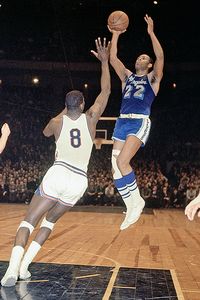




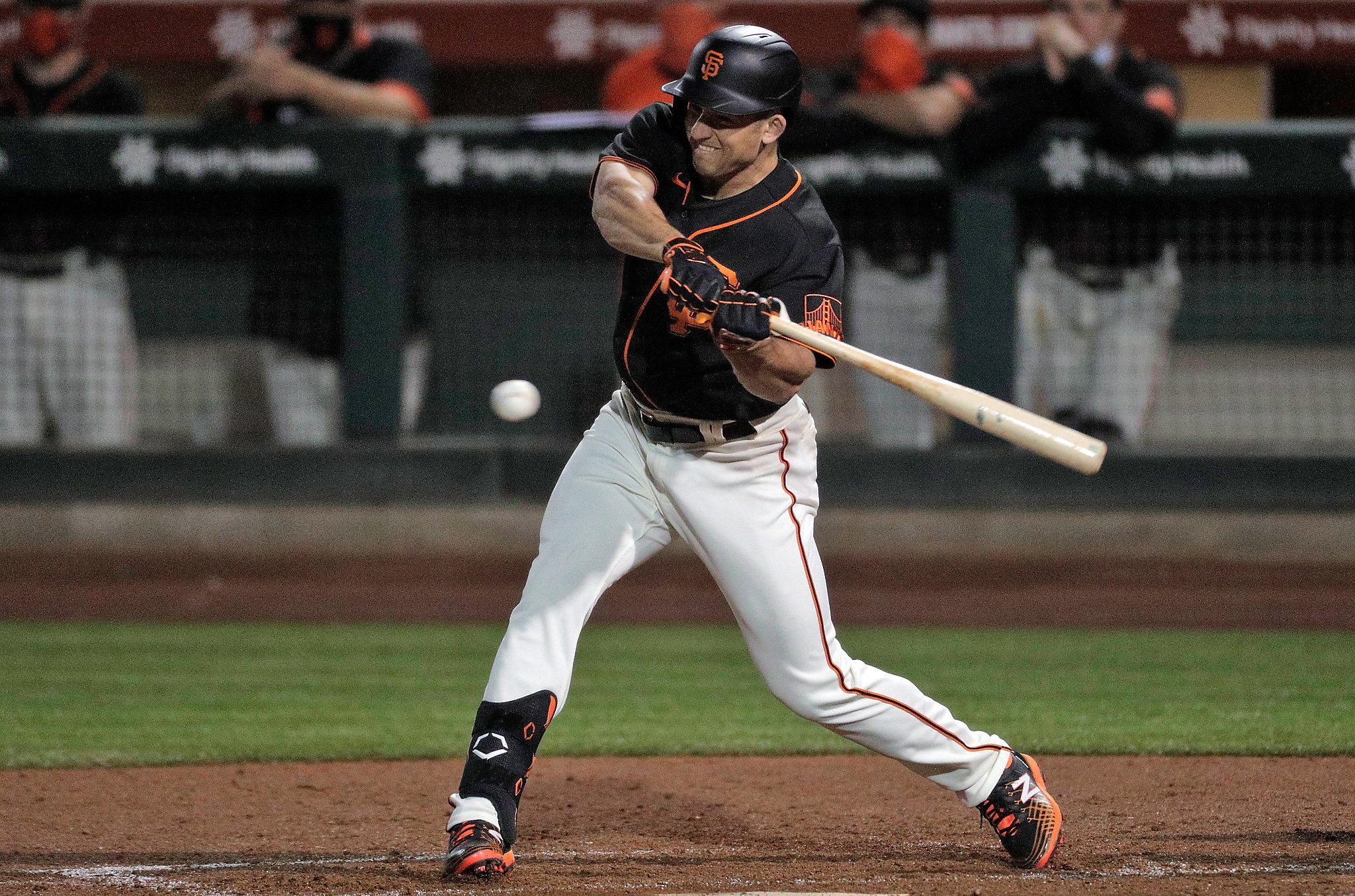
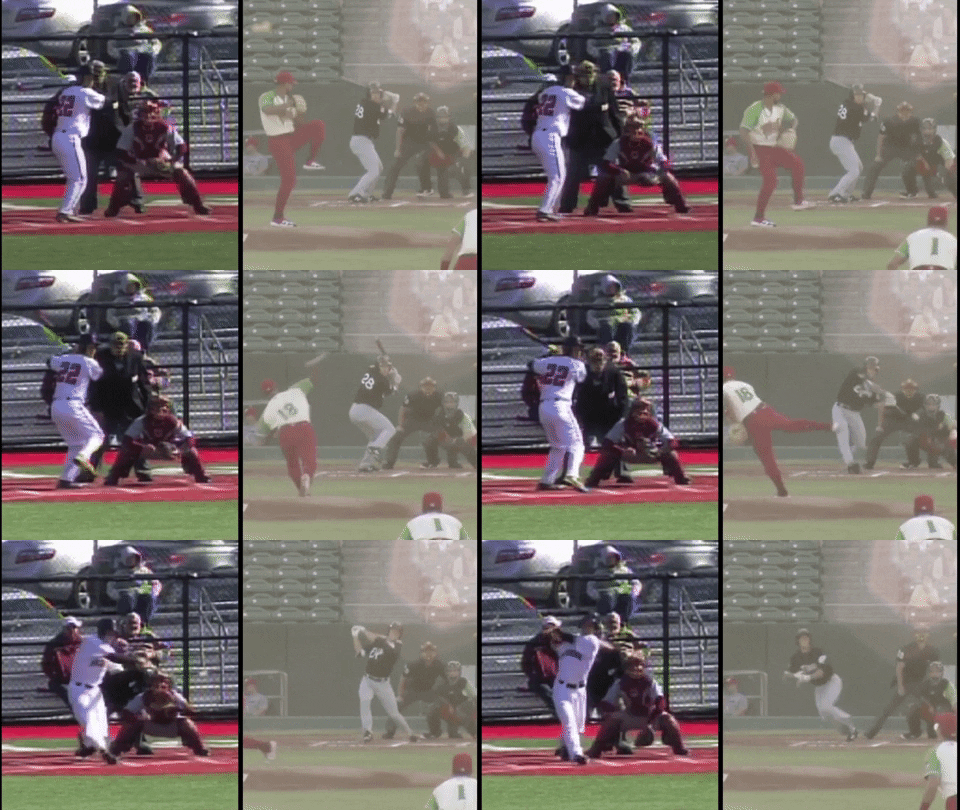
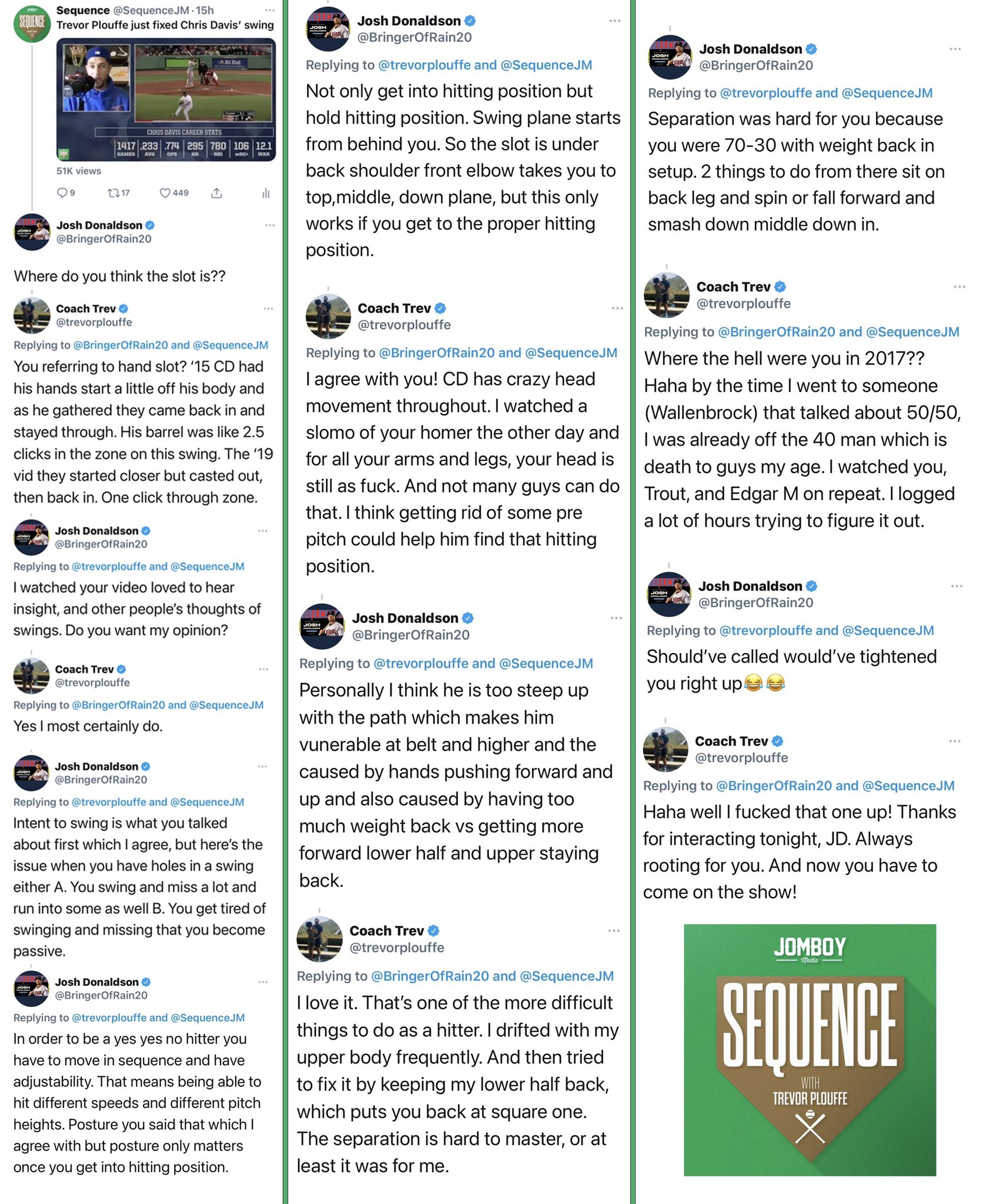
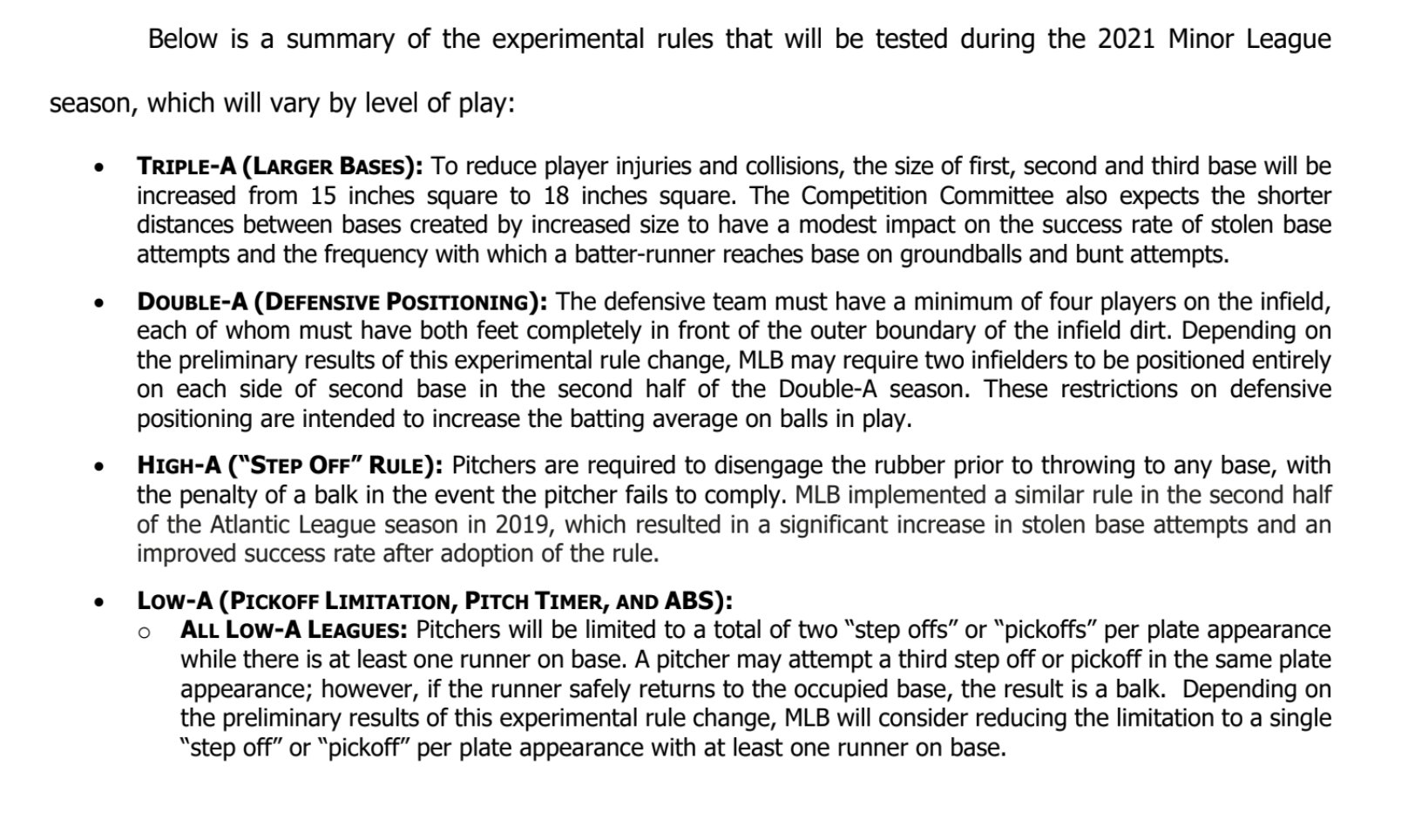

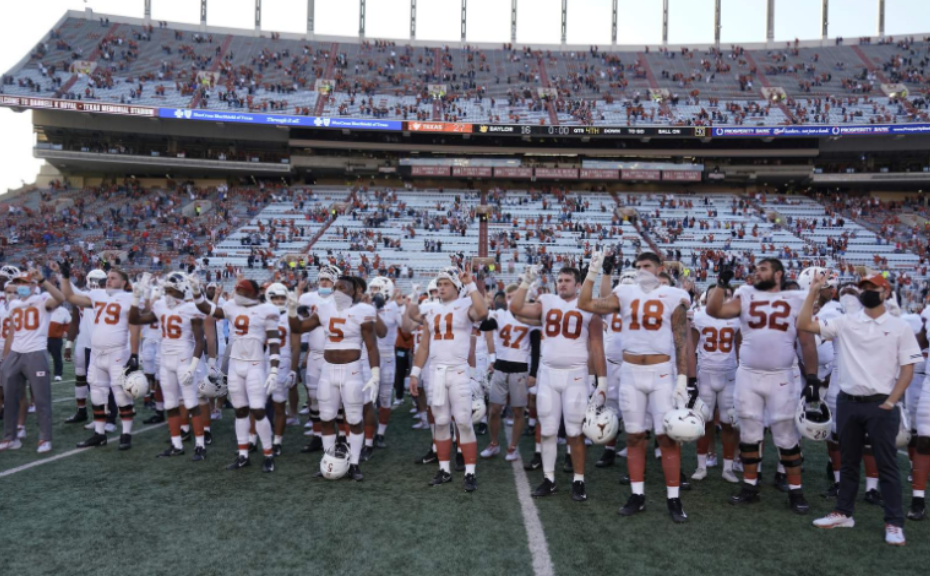


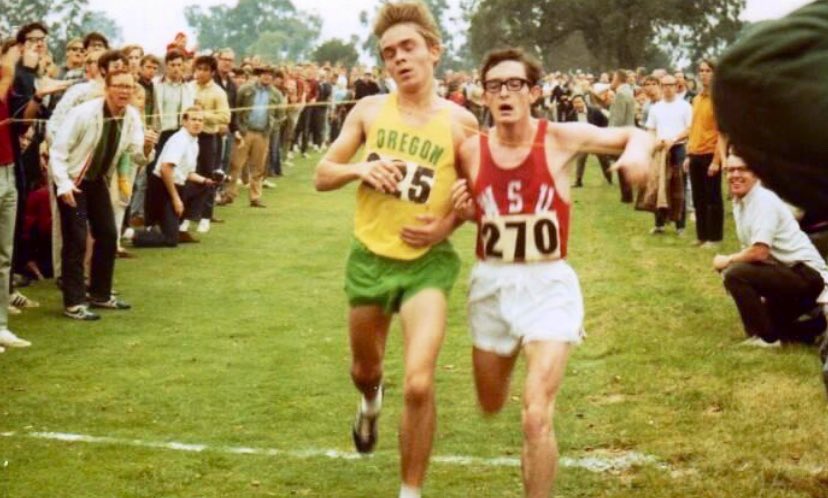

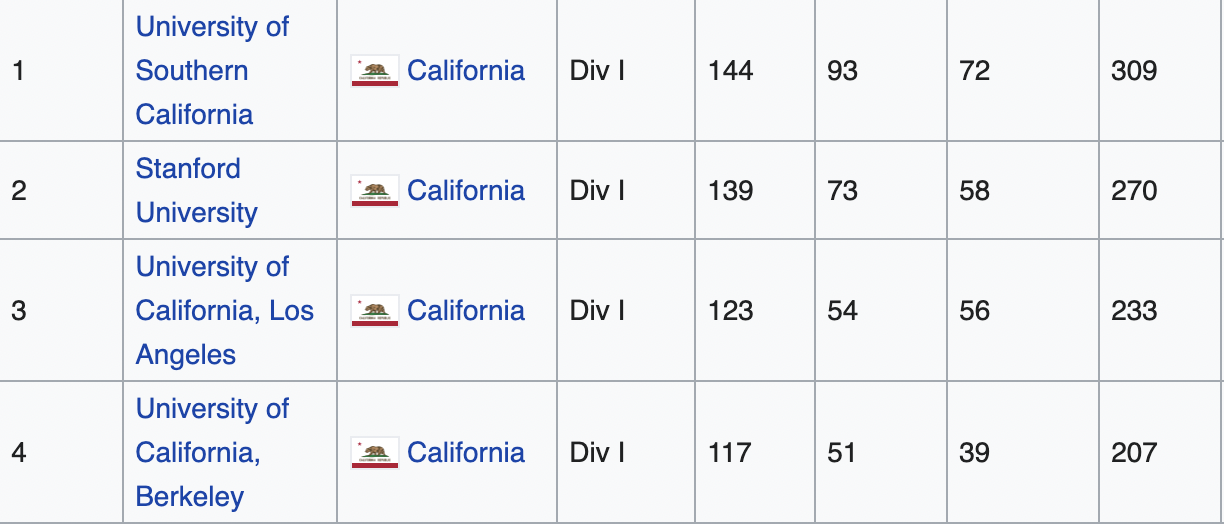


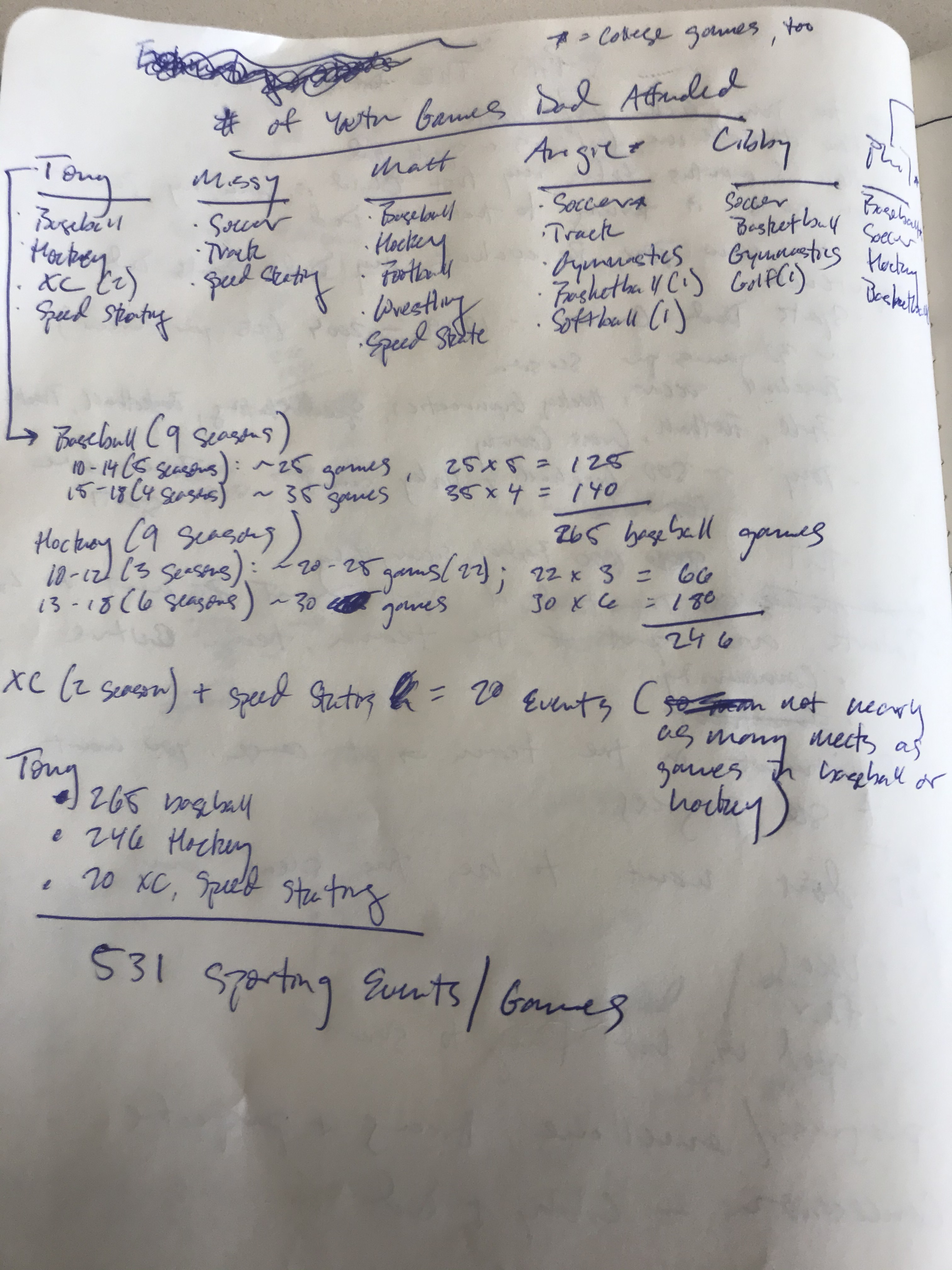
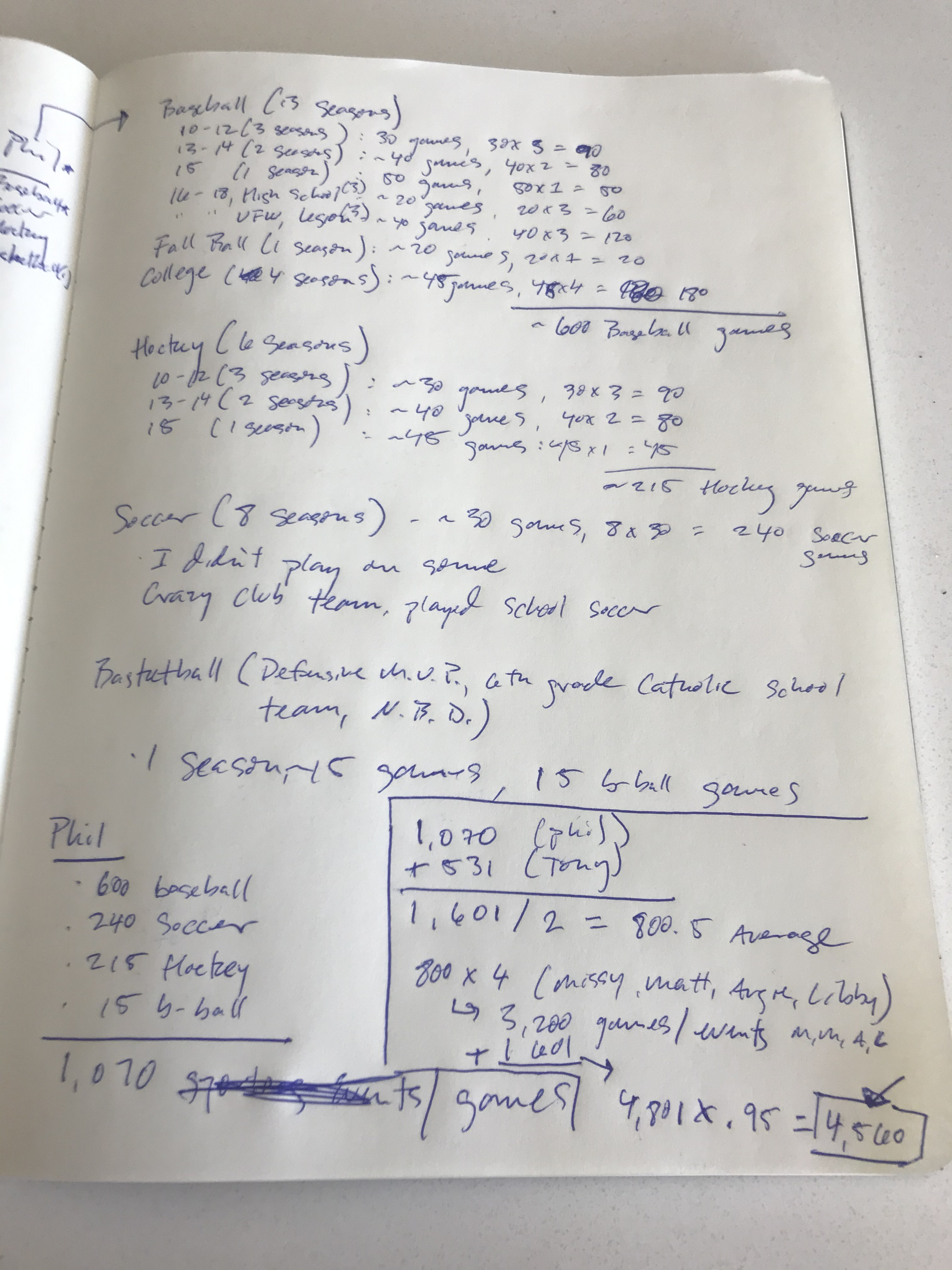


/cdn.vox-cdn.com/uploads/chorus_image/image/56483605/73495661.0.jpg)

 1-2-3 SPORTS!