Great story here from Justin Verrier on how the NBA superteams put together in 2019 are struggling mightily. LeBron James’ Lakers (2-9) is one of those teams and I couldn’t help but think about how his Decision still looms large in the NBA, but in a way you might not expect.
The league changed when LeBron James decided to form a super team with Dwyane Wade and Chris Bosh in Miami, and the impact is rippling out, even today. Although it seemed so at the time for many, it’s not outlandish for an all-time great player to want to play with great players to increase his likelihood of winning titles. And that’s what LeBron did. He was a free agent, and went to the best basketball situation. LeBron, Wade, and Bosh won two titles in four years in Miami, and went to The Finals each year.
When it was clear Wade was past his prime, LeBron went back to Cleveland. Cool that it was home, but as Bill Simmons has pointed many times, Cleveland was the best situation for him to win right away. They got (or would get) Kevin Love, then had a young Kyrie, and the Eastern Conference was there for the taking. He went to four more Finals. James making the NBA FInals 8 consecutive years is pretty impressive. During that second stint with the Cavs, James signed one-year contracts as a way to assert more pressure on the team to win now. Leverage the future for the present. And if the front office didn’t do that, well then maybe LeBron wouldn’t stick around. After the talent dried up in Cleveland, he went to the Lakers, eventually joining forces with Anthony Davis.
It wasn’t long before other stars wanted the same, and teams had to leverage the future to attract the big stars. KD and Kyrie in Brooklyn. Kawhi Leonard and Paul George on the Clippers.
Per Verrier:
For more than a decade, the NBA operated under the assumption that aggregating superstars was the key to success, to the point that even a 73-win team (the Warriors) had to enlist a former MVP for reinforcement. But it’s jarring watching the league these days and seeing a team led by James and Davis—still ranked among the league’s 20best players despite recent setbacks—look downright feckless against a no-star, all-vibes outfit like the Jazz. It’s early, shooting luck will even out, etc., etc., yet it’s hard not to wonder whether the three teams expected to dominate the league just three calendar years ago are already drawing dead—and if the blueprint that built those and other recent superteams has suddenly become outdated.
That’s not to say that the lure of star power has somehow diminished. The Cavs, lest we forget, just forked over a half decade of future draft picks to add Mitchell, whose blistering start has been the engine of Cleveland’s early success. But there’s a big difference between adding a star to an existing core, as the Hawks and Timberwolves also did this past offseason, and starting from scratch with a newly acquired superstar (or two or three) as the center of your franchise’s universe. One augments a team and its culture; the other replaces them. And by the summer of 2019, the latter was the cost of doing business with the very best players in the league.
Also, the superstars who can command this type of treatment and win-now approach from a franchise aren’t the healthiest bunch…that, or they are just getting old in basketball terms.
Since 2019:
Durant has missed 57% of the Nets games. Kyrie: 53%. Kawhi and Paul George: 53% and 40%. LeBron and Anthony Davis: 25% and 37%
A ton of draft picks and prospects were traded to put those superteams together, and none of them won a single playoff game last year. As a result of the trades made in order to get the superstar players, they have diminished assets to make any more moves.
The rest of the league took notice, too.
But the Davis and George trades, while boons for the L.A. teams, were also clear warnings to any team (and perhaps more importantly, owner) in a less glamorous market: If you want to keep the stars you have, you need to pay the exorbitant price to win now. In other words, LeBron’s and Kawhi’s power plays galvanized their competition into making similar moves, creating superish teams with younger stars and deeper rosters on the same timeline as the Lakers, Clippers, and Nets.
Verrier’s story is about positing the idea that death of the last wave of superteams assembled through free agency and trading away the future. I also see it as this odd homage to The Decision. It worked out pretty spectacularly for LeBron: 4 rings, 10 trips to the Finals (one before his move to Miami), a just about every playoff record out there. It also helped normalize the most understandable idea out there in the professional world (I would like to decide where I want to work in order to be most successful). LeBron changed the game to such a degree that he’s made winning more difficult for himself. – PAL
Obituaries fascinate me. I never heard of Jane Gross until reading this Richard Sandomir obituary, but I feel privileged to have read the summary of her life today. She’s no superstar. Far from a household name, but today I learned about a lady who led a meaningful, impactful life.
Gross was a sports reporter. In 1975, she became the first female sports reporter known to enter a professional basketball locker room while covering the Knicks for the Long Island paper, Newsday. A few years later, it became NBA policy to allow women writers in the locker room, which was essential to covering a team in the same fashion as a male counterpart.
She was scared, but Gross later said, “But I began to realize what a fellow sportswriter at Newsday had told me,” she was quoted as saying in a 1976 profile by the Newspaper Enterprise Association, “that you really can’t get the flavor of the players without seeing them in the locker room and the camaraderie they share.”
Richard Sandomir
She added: “It’s a beautiful thing, the closeness and lack of inhibition after great physical exertion. Most women rarely experience it.”
In addition to sports, she wrote about abortion, the AIDS crisis, Alzheimers and the San Francisco earthquake in 1989. Later, when her mother’s health declined, she started writing about caring for aging parents. That became her beat.
“People tended to underestimate her, and she welcomed it,” Jonathan Landman, a former Times editor who worked with Ms. Gross on the National desk, said in a phone interview. “She played the role of someone emotional, and not too tough, but she was as rigorous and tough-minded a reporter as anyone.”
Sandomir
Gross’s dad was a sports columnist, and she loved it. She followed in his footsteps, then trailblazed her own path. RIP, Jane Gross. – PAL
Whew, the Warriors. What a ride. A quick recap of where thing stood a couple weeks ago:
Draymond Green is 32. He has one year left on his contract after this year, but he can opt out and become a free agent at 33, or play that final year for $27.5M and then become a free agent at 34. Almost everyone expects him to opt out to hit free agency a year younger and to get a raise in that first year. He is the heartbeat of the team and the anchor of the defense.
Andrew Wiggins is 27. He is in the last year of his deal and will be paid $33.6M this year. He disappeared for long stretches last year, but came up big during the playoffs. He is an essential two-way player for the Warriors.
Jordan Poole is 22. This is the last year on his rookie deal. He was eligible for an extension of up to 25% of the salary cap, beginning next year. Or, if he didn’t sign an extension, he’d become a restricted free agent next year (the Warriors would have the opportunity to match any deal he signed). He is a young, talented and proven offensive talent.
Steph Curry is Steph Curry. He is 34. He is signed through 2025-26, with his contract reaching just shy of $60M (sixty. million.) in the last year of his deal. He is the face of the franchise and IMO, a top ten all time player. Everything the Warriors do offensively revolves around his skills.
Klay Thompson is 32. He is signed through 23-24. He will be paid $84M over the next two seasons. He does not yet appear to have be 100% back to his pre-achilles/ACL injuries self.
Two weeks ago, the Warriors had some tough decisions to make – both in the short-term and the medium term. Their cap number and luxury tax bill are both extremely high. Here’s their salary cap situation, as broken down by the Chronicle’s Connor Letournau:
If the team stayed its current course and kept Green on the roster beyond this season, it would stare down a 2023-24 total payroll — salaries and luxury taxes — of around $500 million. That’s simply not feasible. The Warriors might be one of the NBA’s most profitable franchises, but even they aren’t willing to spend a half-billion dollars on a basketball team.
Myers has said that majority owner Joe Lacob would have to fire him if Golden State had a roster costing north of $400 million and didn’t win a championship. Even after the Warriors won their fourth NBA title in eight years this past June with a total payroll of around $362 million, Myers showed just how serious he remains about keeping costs manageable when he declined to match Portland’s three-year, $28 million offer sheet for Gary Payton II.
The problem for the Warriors is they don’t have any easy ways to push that projected 2023-24 payroll down around $400 million. Aside from Poole, Wiggins and Stephen Curry, Golden State’s only major contracts next season are Green at $27.6 million — assuming he exercises his player option — and Klay Thompson at $43.2 million.
If Myers keeps both Green and Thompson around, he might have no choice other than to cut costs through the rest of the rotation. That would mean jettisoning Kevon Looney ($8.5 million in 2023-24), Donte DiVincenzo ($4.7 million player option) and perhaps even James Wiseman ($12.1 million team option) or Kuminga ($6 million team option). Doing that would crater the Warriors’ depth, disbanding the young core they’ve worked so hard to develop, and set the team back for years to come.
That’s not really an option.
So, two weeks ago – the question was who would the Warriors hang onto assuming 1 or 2 of these 4 must leave over the next two seasons?
It would be hard for me to let Draymond go as long as Curry is still an elite player. He brings so much to the table and allows Curry to do what Curry does. At the same time, with his body type and style of play, most expect a quick drop-off once he is past his peak. He’s also going to want a very big raise, and it feels like the Warriors would be paying for past performance.
Poole was an interesting one to me. The youngest and the highest ceiling at this point. You can squint and see Poole becoming the next Curry (or maybe just the next Nick Young). He disappeared a bit during the playoffs, but also had big moments.
Klay is old and still recovering from two devastating injuries. His offensive game has never relied on athleticism, although his previously excellent defense did. He could certainly become a spot-up shooter, but what are the Warriors willing to pay for that?
Wiggins to me was the easiest release. Not a homegrown guy like Poole, and older, too. Not a face of the franchise like Draymond and Klay. A history of being a little soft. But a good defender and talented offensive player.
And that’s kinda how I thought things might play out. Extend Draymond 3 years, extend Poole, let Klay gracefully retire or take a massive paycut to become a Korver-type player, and let Wiggins walk (or trade him for picks). But then Draymond went and blew the whole thing up:
Yeeeeesh. That is not a good look, obviously. The team was pissed at Draymond and there was immediate speculation about how this would affect Draymond’s hope for a big extension. Within a week, the news dropped like a 1-2 punch:
Golden State Warriors guard Jordan Poole is finalizing a four-year, $140 million contract extension, his agents Drew Morrison and Austin Brown of CAA Sports tell ESPN. Sides are completing final details today and formal agreement expected soon. pic.twitter.com/hIP8MaOhzp
Reporting with @kendra__andrews: Golden State Warriors All-Star Andrew Wiggins has agreed to a four-year, $109 million extension, his agents Drew Morrison and Steven Heumann of CAA Sports tell ESPN. Wiggins is now tied to the Warriors for five-years, $143 million.
Had Draymond’s punch changed the landscape that much? Or was this always the plan? It’s hard to know, but the Warriors have made their choice. And now the question is: Draymond or Klay?
The Poole and Wiggins extensions ensured that this choice must be between Green and Thompson. And Green is the far likelier of the two to go.
Even before Green punched Poole in practice two weeks ago, he figured to be the odd man out in any scenario in which Poole and Wiggins had been locked down long-term. In addition to his contract being much more tradeable than Thompson’s, Green only amplified concerns during the Finals that he could be headed for a steep drop-off.
Then there are the temper-control issues that have long gotten Green in trouble. Green’s violent strike of Poole — and the public backlash brought on by a viral video of it — did irreparable harm to his locker-room standing. Though his teammates might move past that incident to contend for another title, they are unlikely to ever forget Green attacked the much-smaller, much-younger Poole.
When making such a seismic decision about the Warriors’ future, Myers must consider Curry’s perspective. It was clear during his news conference the day after Green’s punch that Curry is growing tired of Green’s antics. If Curry were given the option of keeping Thompson — a model teammate fresh off an inspiring comeback — or Green, it doesn’t take a mind-reader to guess who he would choose.
The question is not so much whether a Green divorce looms, but rather how and when it will come.
It’s hard to imagine, honestly. He does so much for that team and if I could have one of them for 2-3 more years, I’d take Draymond. Then again, I don’t have to work with him. -TOB
This is one of the more bizarre sports stories you’ll ever come across, and perhaps one of the more profound ideas that you’ll find in a sports story. At the center of it all: an old clip from America’s Funniest Home Videos.
The clip is from a high school basketball game at Shipley in Bryn Mawr, Pennsylvania. A ¾ court buzzer beater is chucked into the air, and the airball absolutely de-cleats a young child running behind the basket on the other end of the court.
What makes the story perfect: the kid who gets smacked, Matthew Piltch, is the headmaster’s son.
The clip, which aired on AVF in 1995, was one of the first viral videos on the internet that has been uploaded and re-uploaded so many times that the origins disappeared from its online existence. Back in July, Brian Feldman set out to find its origins.
In July, he wrote,
By and large, people want the internet to be an inexplicable machine of random stuff, entertaining them with funny videos of basketball games that could have taken place in Anytown, USA.
A seemingly infinite array of no-context funny videos—scraped from archival footage, newscasts, and increasingly, other users—gets recycled online every day for the sake of likes and shares and attention. “Basketball (so funny you’ll pee your pants).avi” could well be the very first one, a watershed moment in the history of the internet.
The lack of additional information elevates the viewing experience. But every so often, if you dig into a piece of internet ephemera, the context—the who, what, when, where, and why—have the potential to dramatically enhance your understanding of the freak accident that you just witnessed.
In the original story, Feldman concluded that the clip must’ve first aired on the show in the spring of 1995, but that’s as close to the origin as he could reliably get.
After posting the story, people from the Delco community (Delco Christian is the opposing team in the video) reached out to Feldman to give him more info. They told him the video was submitted to AFV by the team’s coach after a kid working with the team recorded the game.
Then the big break: Feldman found a DVD of an AFV special “Guide To Parenting” DVD. There it was: the original clip, complete with Bob Saget interviewing the kid who got walloped and his mom.
Turns out, context is pretty important, because the kid getting laughs with Bob Saget is not Matthew Piltch, son of the headmaster. It’s Kris Jackson. Piltch had never seen the full segment – just the clip of a kid getting smacked. He always believed he was that kid. So did his parents, and so did everyone else in town.
Feldman didn’t even have the right kid in the first story. How?
It’s not that Feldman was outright lazy in the first story. He corroborated the events of the game with several people who told the same story. The bulk of Feldman’s second story has him dissecting how he could’ve possibly had the wrong subject at the center of the original story. The truth is much harder to figure out when everyone remembers the lore.
TOB: I loved this story when I read it in July and the update floored me. Memories are such strange things. How is it that dozens of people (hundreds even – an entire community) could collectively misremember something so memorable? How did Pilch’s parents remember that they had to check on their son after he was hit with a basketball, when in fact he didn’t? The last few paragraphs Feldman writes, about memory and about journalism, were really fantastic:
Piltch said that he has no clue how the idea started that it was him in the video, or where it came from. We talked it over together for a long time and came no closer to the truth. “It seems plausible that when the video popped up,” Piltch said, “someone just decided it was me. Like, what other towhead kid was running around Shipley basketball games? It must’ve been Matt.” (Piltch’s hair has darkened, but he did provide an old photo of him from around that age. His hair was indeed very blond, though not quite the level of Kris Jackson’s.) That’s certainly what his father thought.
Over the next hour, as we worked through the possibilities, Piltch came around to the idea that he’d been living with bad info for the majority of his life. “Our memories are not meant to be perfect,” he said. “This is an amazing instance of collective mis-memory.” He later noted that “it makes you wonder how much other stuff is out there like this.”
Later in our conversation, Piltch turned the focus on me. “How does this affect your perception of journalism?” he asked. Largely, I said, it had made me think about precision. I thought that I had done a diligent job buttoning up that first story—at the time, it even felt like I was engaging in a bit of overkill for such a low-stakes story about a funny viral video. Looking back, what I had actually done is uncover evidence of the video’s supposed legacy, rather than evidence of the inciting incident. I assumed that because multiple people independently told me the same thing, that thing was true. Should I have tried harder to find the provenance of the video, which would have alerted me to my glaring error? Possibly, but measuring what I was missing against what I’d already uncovered (along with the resources available to me; I didn’t have the budget to head down to Delco and ask for the yearbooks missing from Classmates.com), I felt there was enough there for a good story.
Kris Jackson might have been knocked into next week by a flying basketball, but I also got to watch Matthew Piltch get knocked senseless by something unexpected. You know, in a figurative sense. In the end, my attitude is fairly similar to his: This giant mistake of mine managed to uncover something even weirder, wilder, funnier, and—to be corny—deeply human. It was worth getting knocked on my ass.
When Does a Team Bat Around/A Round?
Last Saturday night, the Padres scored 5 runs in the bottom of the 7th to take a 5-3 lead against the Dodgers in Game 4 of their division series. The Padres would not give up that lead, and the Dodgers’ 111-win season went up in smoke. It was delightful.
During that 7th inning, the Padres sent ten players to the plate. But as usual, a debate raged on twitter: had the Padres batted around when they sent their 9th hitter up, or not until the 10th? I see this debate on Twitter almost every time a team has a big inning in an important game. Here’s one example, of a pretty evenly split poll on the topic:
Ok, mid-game poll.
To “bat around” does a team need only all 9 batters to come up, or does someone have to hit twice (aka 10 batters in the inning)
I googled, and found articles discussing this same debate. The Wall Street Journal tackled this topic in 2015. They asked a handful of players and others around the game where they stand and here’s what they found:
The day that article published, McCarthy expanded on his opinion:
takes 10 batters to bat around. If you have another opinion it's wrong and you should be placed in stocks in the nearest City Center
If you say a team “batted around” then they must send at least ten hitters to the plate. That is because the lineup has come back around to the beginning. However, if you say a team has “batted a round” then they need only send nine hitters to the plate. That is because a “round” occurs when each player has a turn (like buying a round of drinks, for example). They are different terms, but I think most people use “around.” Accordingly, it takes ten.
Weighing the impact of a website like Twitter is difficult. It has brought a lot of good to the world, and a lot of bad. But as a sports fan one thing I love is the ability to connect directly with professional athletes. I think players really underutilize it, actually. If players used it to do more than build their brand or shill for Corporate America, they could do a lot of cool things, like Brewers All-Star Christian Yelich did this week.
In Wednesday night’s Game 2 of the NLDS, the Dodgers’ Clayton Kershaw got San Diego’s Jurickson Profar to swing at a curveball that bounced about ten feet before the plate.
I think it might actually be the worst. It’s so terrible it’s hard to believe. I know that a lot of guys go up there guessing, but Kershaw doesn’t throw that hard anymore – barely cracking 90 MPH this season, on average. That’s slow enough, relatively speaking, that a professional hitter should be able to avoid looking as bad as Profar did there. But then I saw this Yelich tweet.
Spiked Curveballs actually look a lot like Fastballs cause of how low they come out especially if you’re looking for the inside FB which Kershaw does a lot. Eventually you look in to beat him to the spot and man does it suck when it turns out it’s a CB. We’ve all been there 🤣 https://t.co/UiN9uTpaOF
I’ve never seen a curveball like Kershaw’s obviously. I’ve never stood in the box for 90 MPH, either. So that’s pretty interesting – a spiked curveball starts out so much lower than a normal curveball that it starts at the same plane as a fastball. Makes sense, is simple. But without Yelich to explain it, I can’t understand how Profar can swing at that pitch. Thanks, Yelly! -TOB
This is a short article, and kinda goofy, too. But I still enjoyed it. Here’s the lede:
Francisco Lindor will make $341 million over 10 years with the Mets, but he cannot buy the thing he most covets. A World Series ring, sure. But also a World Series sweatshirt.
That’s pretty funny, but as various Mets players explain it, I get it:
Brandon Nimmo:
“It’s like if you’ve ever had a cup of coffee in a really beautiful place. You’re like, ‘Oh my gosh, this cup of coffee is so amazing!’ If I had it back home it might be the same old coffee, but because of the circumstances that are around it, it’s awesome.”
Pete Alonso:
To be able to earn that patch that says postseason, earning that postseason patch on your hat—that’s sick. It’s awesome getting new stuff, but to be a part of something that you earned even though it’s as simple as having a postseason patch or whatever—we earned that. We earned that privilege to have that on our jersey. We earned [the chance] to be able to have that new stuff that not everyone’s getting. It’s almost like a rite of passage.”
This makes perfect sense. Plus, as Lindor says – they’re human. New stuff is fun. And so was this article. -TOB Source: “Baseball Players LOVE Their Playoff Merch,” Stephanie Apstein, Sports Illustrated (10/06/2022)
2 Percent
Some of you might remember Myron Rolle. He was the Rhodes Scholar and a 3rd team All American safety at Florida State. He was a late-round daft pick, but never got into an NFL game. After being let go by the Steelers, his was having a hard time coming to terms with where he was in his career and pursuit of a dream. That’s when his mom stepped in.
Per Elena Bergeron:
Showing him his grade school notebook, where he had written both goals, “she looked me straight in the eyes and pointed at the first one,” he recalled. “She said, ‘This one’s done.’ And she looked at the second one and said, ‘Now, we need to do this.’”
Today, he is Dr. Rolle, and at 35, he is in the sixth year of his neurosurgery residency at Harvard Medical School and Massachusetts General Hospital. “Those words of encouragement, her belief in me, her thoughtfulness, her disposition during that moment was just what I needed, just what I needed to move forward to the next chapter in my life,” he said.
Good work, Mom Rolle.
There’s another bit from Rolle that I found inspiring. It’s nothing earth-shattering, but I like the idea of it. He was taught the 2 percent philosophy from a college coach, which he still applies to his all aspects in his life. As Rolle explains it:
Can you be 2 percent better than you were yesterday? You can if you take small steps every single day toward a larger goal. It helps me make more sense of the challenges, the tasks, responsibilities that I have.
Learning how to open up a craniotomy, learning how to put diapers on your newborn kids and be a better attentive husband, all these were tasks that I wanted to accomplish. Any goal, short or long term, doesn’t feel daunting or debilitating. They feel manageable. I appreciate and I pat myself on the back for the small gains, the small wins that I get every single day. It’s a rush of dopamine in my limbic lobe that says: “You’re doing right. This is a reward for doing well.”
Rolle’s story is another chapter in the “It’s Never Too Late” interview collection from The New York Times. I encourage you to peruse all of the essays.
2 percent? We can all do 2 percent better today, right? Let’s go! – PAL
Kramer: Boy, I really miss the Bermuda Triangle. Newman: I guess there’s not much action down there these days. Kramer: Oh, there’s action. There’s plenty of action. It’s that damn alien autopsy stealing all the headlines. Newman: Yeah, tell me about it. Kramer: See, what they gotta do is lose a plane or a Greenpeace boat. See, that would get the Triangle going again. Newman: What keeps the water in there? I mean, why doesn’t that disappear? Kramer: Now, what would be the point of taking the water? Newman: It’s gorgeous water. Do we own Bermuda? Kramer: No, it belongs to the British. Newman: Lucky Krauts. Kramer: So what do you think of that alien autopsy? Newman: Oh, that’s real. Kramer: I think so too.
Two Fridays ago, Phil and I wrote a lot of words about Aaron Judge’s chase for 61 and why that chase still means something to a lot of people, despite the fact that it was passed six times in a four year span (three times by Sammy Sosa). Somehow, in writing all that, we forgot to mention Albert Pujols’ chase for 700. Pujols must have felt our snub, because that very night he went out and hit two dingers – numbers 699 and 700 for his career. It was a cool moment. I think our neglect is partly for the same reason that 61 still means something, but on the other side of the coin: 700 is a round number and a big number, but it’s not a magic number. 714 is that number. 755 is that number, too (And 762? Let’s wait a bit). So while Pujols hit a milestone by reaching 700, he’s still chasing the next magic number: 714.
But what I want to think about here is how Pujols got to 700 and wonder if he’s coming back next year for 715.
The latter question is easier. If Pujols wants it, he should absolutely come back next season. He has played in ⅔ of his team’s games this year and has hit 21 home runs. If he plays in the remaining 8 games, he can expect to be sitting at 702 (Editor: I wrote this right after he hit 700; he actually hit two in his final three games and ended up with 703) or so when the season ends. If he hits home runs at 80% of the pace he’s done this year (accounting for his ever-advancing age), he would expect to hit 715 somewhere around the team’s 110th game of the season, in early August. 715 would be awesome, while 756 or 763 seem out of reach.
The more interesting question is how is Pujols doing this? The resurgence is real. You are not imagining it. And it’s not a result of moving back to St. Louis and that being an easier park to hit in. He went from the strongly hitter friendly Angel (4th friendliest to hitters) and Dodger Stadiums (7th friendliest) last year to Busch Stadium (27th friendliest to hitters) this year. And his home rates are way up. So something is going on.
Here are his home run rates since leaving St. Louis after the 2011 season:
After a steady decline since 2015, suddenly last year and this year he has jumped to a huge peak. In fact, his home run rate this year (7.18%) rivals his career peak – it’s his fifth best ever, even surpassing some of his very best seasons. He’s 42! He underwent a natural decline, beginning at age 35, that mostly stayed steady through the end of his 30s, and then suddenly he turned 41 and he found the fountain of youth.
And it’s even more interesting if you get a little more granular. On July 8, Pujols went homerless in one at bat. It dropped his home run rate to a season low 3.17% (4 home runs in 126 at bats). He hit a home run during the next game he had an at bat (July 10) and his home run rate climbed slowly from there the rest of the month. On August 1, he was sitting at 4.22%. And then he went on an absolute tear. For the month of August, he hit 8 home runs in 61 at bats (a home run rate of 13.11%), raising his season home run rate to 6.61%. He slowed down in September, just a little, hitting 6 home runs in 65 at bats (9.23%) to raise his season rate to a season high 7.32% on September 23.
So…what the hell is going on here? I have no idea but I do have a theory. No, “theory” is too strong. A “thought” is a better term for it. If Pujols decided he really wanted to get to 700 this year, and if he decided to get some “help” to get there and then retire before he could be tested again, could he get away with it?
I reviewed the MLB’s Testing Policy and could not find anything suggesting a player has a maximum number of tests per season. So Pujols can’t know he won’t be tested again. The policy simply says, “All Players shall be subject to random, unannounced testing for the use of Prohibited Substances at all times during the season, including, but not limited to, at any point in Spring Training and before and after all games.”
So, maybe the better question is this: Would Pujols risk his reputation to get to 700? I find it hard to believe. And that’s why I think he absolutely should come back for 715. And if he doesn’t, well, maybe he knows he’d get busted. -TOB
PAL: He was one of the scariest hitters I’d ever watched during his first decade with the Cardinals, and then he disappeared with the Angels. What a terrible, terrible baseball decision for him to go to Anaheim (though not a bad financial one). He was on a legend trajectory, but that is so incredibly hard to do on an irrelevant, west coast team with no meaningful history.
The notion that makes the most sense to me is this: 700 home runs is not a possibility in his mind when his time with the Angels ends. He goes to the Dodgers to be on a winning team. Guess what? It’s fun to play on a really good team again. It’s fun to hit in a loaded lineup. It’s fun to play in games that matter. He gets the juice for the game back, and then he comes back to the Cardinals to finish an incredible career, but then he gets hot in August – maybe even just a hot week – just enough to put 700 homers back on the table. And now we’re here. That, or he said screw it before August; one more shot for 700. Why not?
The sample size is just small enough (hey, he felt great in August; a 60 AB hot streak can happen) for us to consider it a fitting hot streak for one of the greats. But the dude is old and wasn’t hitting homers, then he got older and started hitting homers again.
Federer Retires
I’m not a tennis fan, really. I like tennis a lot. I enjoy it. I follow it via ESPN and news articles. But I rarely ever sit down and watch a tennis match. But when I do, it sure is a great sport. Relatedly, Roger Federer is the only tennis player I ever really loved. He’s the only guy that I ever set an early morning alarm for (it happened three times, but still). There was something about the way he played – cool and graceful, skilled and calm. There are few athletes in any sport that spoke to me like Federer did – first in his prime, and then in his twilight.
So I was pretty sad that Federer retired this week. Over the last five or so years, there were a number of times when it seemed like the end for Fed; but he always came back, and with a vengeance. But this time, at age 41, he’s really done. If you like Federer like I do, or just great writing, I must insist you read this great tribute to Federer, by Defector’s Giri Nathan. Here’s my favorite passage:
My favorite memory of Federer will be before all the tears, when both he and Nadal were staging dramatic returns of competition. In the fifth set of their 2017 Australian Open final, Roger’s friend had gone up a break to lead 3-1. I’d stayed up all night watching with some sleepy neutrals and a Nadal-acolyte friend. Over the 3:38 epic, the room grew quieter, the sofa distance between us longer. Somehow Federer began to bend the match in his favor. Winning this 26-shot rally detonated any foregone conclusions.
So much conventional wisdom dissolved here: that major titles couldn’t be won at age 36 coming off a surgery layoff, that Federer couldn’t still eke one out over his rival, that his one-handed backhand couldn’t bear the brutal weight of Nadal’s topspin. He took five straight games and the trophy. I have never been more awake at such an hour, and as I stepped onto the sidewalk, replete with dog crap and rats in retreat, I found myself in a serene mist, sound but sore, as if my own muscles had done something tougher than adjust the volume during commercial breaks or fish ice cubes out of the freezer, as if I’d had to focus on anything more than the careful calibration of caffeine and BAC. Through Federer it was possible to close the gap between sweat-free, daydreamed fantasy and hard-won, racquet-swung reality. A lifetime of playful tinkering in the lab can earn a man a career of pure liberated tennis. It was as true that night as it has been for these 24 years. “I told myself to play free,” Federer said after that victory. “Be free in your head, be free in your shots, go for it. The brave will be rewarded here.” And he was.
PAL: I didn’t watch enough of his career to know anything more than he’s very great and the smooth one (compared to Nadal being the hustler). Most impressive part of his game that I learned from this story: the SABR technique.
📚 SABR /ɛs-eɪ-biː-ɑː/
Meaning: Sneak Attack by Roger (see also: @rogerfederer)
I mean, these opponents are hitting serves pretty hard, and he’s charging the net on them. What an assertion of dominance. As Nathan points out in an earlier portion of the article, the hand-eye coordination is completely off the charts.
The other detail that stood out – his feet didn’t make a sound on the court. The amount of grace that fact requires on a tennis court – pretty incredible.
The Z Man
I’ve heard Michael Zagaris interviewed on the local sports radio station every now and again, and I knew he was a San Francisco photographer that made a name in both sports and music, but I didn’t know to what degree until reading this piece about Zagaris from David Davis.
Zagaris is a pretty good representation of everything that’s cool and fun about the Bay Area, and a nice reminder when things all feel a little too techie and priced out.
His life story started out pretty regular – a sports nut kid from central California who also liked photography. He also had a knack for sneaking/fibbing his way into sporting events and concerts. He lied about working on a coffee table book to get press credentials to shoot on the sidelines for the Colts and Redskins while in college at George Washington. When the Beatles were in New York in ‘64, he called the front desk at the Taft Hotel claiming to be on Senator Kennedy’s staff and that he’d like to go to the show. Second row.
After undergrad, he attended law school at Santa Clara (just like our TOB). He actually worked on Bobby Kennedy’s campaign. He was there at The Ambassador Hotel, and his life changed the night of Kennedy’s assasination.
The suit and tie were gone. So, too was law school. I took acid for the first time, moved to the Haight, and started documenting what would become a historical moment in music.
The story gets back to sports, and he’s shot a lot of great stuff, but I love stories about people who just always seem to be in the right place at the right time.
I constantly asked questions and I kind of evolved. I didn’t much have a plan, and I know that seems crazy. My whole life has kind of been like that, where I walk through life with my eyes open, letting everything just come through me, and the things that really resonate I’ll explore more.”
I’m beginning to understand the bravery it takes to live that kind of mantra. I don’t have it in me, but I really admire it in others. Seems to be a great philosophy for a photographer. Excellent read. – PAL Source: “Michael Zagaris Had The Backstage Pass Of A Lifetime,” David Davis, Defector (10/05/22)
TOB: There may be no story Phil likes more in this world than a story about a sports photographer.
Pro Sports is Losing the Middle Class
The Chronicle’s Peter Hartlaub is one of my favorite local writers. He’s Hella Bay (with a capital H and B). His roots are deep here, he loves San Francisco and the surrounding areas, and he is loyal as hell to our local teams. Hartlaub’s family has had 49ers season tickets for decades – for 75 years in fact, all the way back to 1947, when the Niners played at Kezar. Every time I am near Kezar I look around and marvel at the fact that pro football was once played there, and this passage by Hartlaub as relayed by his grandmother is awesome:
Kezar was an accurate cross-section of the city, which you could see on game day. There were fans walking from the Sunset, Richmond, Haight and Mission districts, like ants converging on a half-eaten bar of Pink Popcorn. The very poorest residents might have balked at a $1.50 ticket, and the wealthiest San Franciscans might have thought it beneath them. But at least every kid could go. Any child who clipped a coupon from a carton of Christopher Milk in the 1950s could get into 49ers games for free.
But Hartlaub wrote this week about his family’s difficult decision to give up their season tickets. Ultimately, between the ever-rising prices (far outpacing inflation) and the move to Santa Clara, Hartlaub and his family could no longer justify the expense:
But as the ticket prices push higher, it gnaws at me. Including parking or train tickets, a game for two of us costs $400 at the bare minimum. I stopped telling my wife how much they cost, then was stunned when we got single-game upper deck Warriors tickets for the family as a Christmas present; they cost about 60% of one football game.
I bike everywhere now, and appreciate the Chase Center and Oracle Park free bike valet through the San Francisco Bicycle Coalition, which saves at least $50 parking. A few Giants, Warriors and 49ers games a year are in my budget. With two sons going to college soon, 10 football games a year is not. We could move to even cheaper upper-deck seats in the sun with worse views than we’ve had the past 50 years, but after investing in the seat licenses fewer than 10 years ago, we choose not to.
I’ve noticed in my pickup basketball games more of my friends talking about Oakland Roots soccer tickets. I’ve been to a few San Francisco City FC soccer games at old Kezar Stadium where the 49ers started, and realized it’s less expensive to become a part owner of that team than just a fan of the 49ers.
So when my mother suggested this year might be the last, the biggest feeling was relief. My love of the team had been eclipsed by guilt over the cost of being a fan.
He’s absolutely right, of course. Every year I think, “I want to take the boys to a 49ers game.” And then I check the ticket prices online and I almost choke. For the Niners next home game, they are selling nosebleeds for $139. Two tickets in the endzone? $350. Two tickets around the 10-yard line? $800 each. Those prices are insane. Warriors tickets are not much better – for most games, you can’t get in the building for under $150 per ticket.
I’m sure there are a lot of families like Hartlaubs who have recently been forced to abandon their season tickets. It’s sad, and with so much money coming to pro sports teams from TV these days, I wish they’d consider lowering ticket prices a bit. They won’t, of course. But I wish they would. -TOB Source: “Our Family’s had 49ers Tickets Since 1947. Here’s Why This Will be our Final Year,” Peter Hartlaub, San Francisco Chronicle (10/02/2022)
Chess, Cheating, and Anal Beads
You’re still here? Good. Now we can get to the good stuff: chess and anal beads.
The guy on the left above is Magnus Carlsen. On the right is Hans Niemann.
We’ve written about Carlsen before. He’s the world’s best chess player. At a recent tournament, he lost to Niemann, am American. And Niemann was playing with black, which is extraordinarily hard to do. Niemann has a history of cheating – he admitted to cheating twice in online chess tournaments as a child at ages 12 and 16, but some feel he is still cheating in over-the-board chess.
After he lost, Carlsen dropped out of the tournament and then seemed to endorse the theories that Niemann had cheated via cryptic Twitter activity. Hilariously, there were theories that Niemann was cheating via vibrating anal beads. Yes, you read that correctly.
More recently, Carlsen and Niemann faced off again. But Carlsen resigned after just one move. Here’s the video.
Following this episode, Chess.com released a report finding that Niemann had cheated on its platform more recently and much more often than he had previously confessed to.
Chess.com can track whether a player toggles to another browser window during a match and can track how well you do when doing so, including whether your selected move would be recommended by an online chess engine – all of which suggests a player is cheating. Niemann, apparently, had been caught by Chess.com back in 2020:
The report says Chess.com’s chief chess officer Danny Rensch confronted Niemann with proof that he’d cheated in 2020, and that Niemann confessed, in an attempt to get his account back online. When Niemann made a stink about being barred from a $1 million tournament on Chess.com this summer, Rensch sent him a letter explaining that he wasn’t going to allow Niemann to play for such a big pile of money when “there always remained serious concerns about how rampant your cheating was in prize events.” Rensch also laid out a very ominous piece of evidence: “We are prepared to present strong statistical evidence that confirm each of those cases above, as well as clear ‘toggling’ vs ‘non-toggling’ evidence, where you perform much better while toggling to a different screen during your moves.”
Chess.com’s method for catching cheaters involves engine analysis, consulting the expertise of grandmaster “fair-play analysts,” and monitoring whether players opened up other windows on their computer while playing. That last bit is the “toggling” mentioned by Rensch. A player doing significantly better when opening up another window on their computer—even if Chess.com’s software can’t distinguish what is in the window—is extremely suspicious. Doing other stuff on your computer should be a hindrance to a player’s performance in a mentally intensive game like chess, especially in smaller time-control formats like rapid and blitz. If you only have 180 seconds to make an entire chess game’s worth of moves, you should absolutely not perform better in games where you spend 20 seconds doing anything in another window. We should note here that Chess.com is not a neutral body, as they are in the process of buying Magnus Carlsen’s app for $83 million.
And just when you think this story might be over, I have this for you. At a tournament this week, players were screened with a special wand that can detect metal…and silicon. Niemann showed up and yes…they screened his butt.
The Starting Pitcher, Slowly Going the Way of the Buffalo
If you’ve been a baseball fan longer than 10 years, you’ve seen a major evolution in the way teams handle starting pitchers. The starter used to be the star – innings eaters who sold tickets and won games. And they really won them, going deep into games, week after week, year after year. But now that’s all changed. The complete game is nearly extinct. In 1980, 20.3% of starters finished the game they started. This season, that number is down to 0.6%, with just 30 out of 4,470 starts resulting in a complete game. In 2022, MLB starters average 5.15 innings per start. As Passan notes, in 2022, “only one pitcher, Miami’s Sandy Alcantara, posts more than seven innings a start. Just 20 pitchers are above six. Alcantara and Milwaukee’s Corbin Burnes are the lone two who log at least 100 pitches per game. Alcantara is at 101, Burnes at 100.”
In this article, Jeff Passan asks why, and focuses on Toronto’s Alek Manoah (big fan of this guy), a dying breed. Manoah hasn’t pitched a complete game this year. He’s young and big and an innings eater, but he’s still wrestling with his team over load management. Here’s Passan:
“The story of the disappearing starter is one in which analytics beat aesthetics. A confluence of factors — small-market teams clawing for survival among their moneyed brethren, the broken youth baseball apparatus, the industry’s general ignorance about arm health — served as accelerants, but at the heart were numbers too compelling for teams to deny.”
Passan is referring here to the “times-through-the-order-penalty” – the more times a batter sees a pitcher, the better he performs. The theory was popularized in a November 5, 2013 article on Baseball Prospectus by Michael Lichtman, who noted that “over the previous 40 years, hitters gained an average of 27 on-base-plus-slugging points between their first and second plate appearances against a starter and 24 more between the second and third.”
This knowledge has changed the game. As Passan noted:
“Soon after Lichtman’s piece, innings-per-start numbers tumbled, from 5.97 in 2014 to 5.81 to 5.65 to 5.51 to 5.36 to 5.18 in the last season before the COVID-19 pandemic. The figures ran inverse to average fastball velocity, which had continued its steady climb from under 89 mph at the turn of the 21st century to 93 mph by 2019. Teams were pivoting away from pitchers who could pitch deep into games and focusing on other skills: velocity, strength and pitch design. Ultimately, that philosophy birthed a cottage industry that inside pitch labs created a new strain of swing-and-miss pitches.”
And, some argue, the effects are not good for fans. Here’s former Red Sox and Cubs president Theo Epstein:
“It’s math. It’s real. If you’re looking to just optimize for one game, of course you’d rather have a fresh reliever than a starter third time through. But when every team takes that approach there’s a real cost to the industry. We lose the identity of the starting pitcher as a prominent character in the drama day in and day out.”
Epstein notes, though, that despite fewer innings and fewer pitches we are not seeing fewer pitcher injuries. Why? Here’s Passan:
“Fewer innings leads inevitably to more max-effort pitches, which arm experts agree create more injuries. Teams remain at the mercy of a self-created beast; max effort is more effective, and the system — from youth baseball onward — prioritizes little else. No one seems inclined to interrupt the faulty feedback loop. The average minor league start this season lasts 4.23 innings. Only six of the 120 teams in the minor leagues use their starters for more than five innings per start. One team, the Los Angeles Dodgers’ Single-A affiliate Rancho Cucamonga, leaves its starters in for an average of 2.9 innings. A minor league pitcher reaching 100 pitches is blue lobster rare.”
Epstein sees dire consequences for baseball if the trend continues and suggests limiting pitchers on a roster to 11 and force a team to lose its DH when it pulls its starting pitcher. It’s not a bad idea. -TOB
PAL: For “the nerds” to be ignored for so long, to this: one article from Baseball Prospectus, and the starting pitcher is on the outs. This story made me wonder if we’re in the un-fun phase of baseball’s evolution, and yet I had a very unsettled reaction when I heard about the shift rules going into play next year, thereby limiting or diverting a trend.
Also, as a Twins fan I am contractually mandated to bring up Jack Morris’ 10-inning, 1-0 shutout in a game 7 of the friggin’ World Series. You want drama, Theo? That was dramatic. Where does that performance land on a list of things we will never, ever, ever see again?
What is Judge Chasing?
Aaron Judge tied Babe Ruth when he hit his 60th home run the other night. It is not a record-breaking home run; hell, he hasn’t even broken the team record (yet), but 60 still matters, somehow, and that’s what Barry Petchesky lays out with such sharp writing.
The game’s greatest treasure is its history, and it rarely feels more vital than when that history comes alive again. A slugger putting up an absurd number 95 entire years ago doesn’t feel so distant when a slugger wearing the same uniform chases it down now. The present informs the past, makes it real in a way newsreels and ledgers can’t quite.
And later, he addresses the fact that, as incredible as Judge’s season has been (a 60+ homer triple crown season is bonkers), he’s not breaking the home run record (14 homers in 12 games isn’t happening). So why are we treating this like a chase?
But I have a theory about 61, and it’s that a home run chase is so much fun that there’s a collective if unspoken agreement to accept that Judge is currently engaged in one. It requires a little targeted forgetfulness, and the making of strange bedfellows with those freaks still hung up on the steroid thing, but it’s worth it. 1998 was a special thing. I genuinely pity people not old enough to remember it.
We can’t relive the supernova summer of 1998, but with every Judge highlight, every live look-in for his at-bats, every astonishing statistic, we can enjoy something of its reflected warmth. A home run chase is a good time, and it reminds one of previous home run chases, and of a slightly more naive era of fandom (or maybe just of my own life) when it was easy and good to feel things so strongly. So if Judge is not going to chase down Barry Bonds—if a chase for the true home run record is simply not in the cards until and unless the game fundamentally changes—where’s the harm in acting like or believing that 61 is still a mark worth chasing? I promise you it’s more fun to be here counting dingers than to be too savvy to.
Also, not a bad year for Judge to do this. Remember, he said no to the 7 years, $213MM extension that the Yankees offered at Spring Training. Come the offseason, he’ll fetch a hell of a lot more as a free agent. I know the Twins won’t pay the kind of money he’ll get, so I hope the Giants go all-in for Judge.
TOB: This is interesting and similar to a thought I had this week. I saw a Tweet wondering if Bonds would have hit 73 in 2011 if not for 9/11 – and it’s a fascinating question on two levels.
First, Bonds hit 61, 62, and 63 in the same night! On 9/9/2001! He does that on a Sunday, has Monday off, and then on Tuesday two airplanes hit the World Trade Center. And then Bonds, like the rest of the league, got a week off, during which he no doubt rested and recuperated.
Second, after he hit 63, the nation and world’s attention was elsewhere, obviously, and so maybe there was less pressure. There was certainly less coverage in 2001 and than McGwire and Sosa got in 1998. I had always attributed that to Home Run Chase Fatigue™ and the fact that the media did not like Bonds as much as they liked McGwire and Sosa (at the time). would have been under more pressure in 2001 if not for 9/11. But in response to that tweet about Bonds and 9/11, I added another thought that touches on what Barry says here.
I wondered if, once Bonds passed 60, the pressure was off. Heck, he hit two more that same day! But 61 had been the magic number for 40 years, and 61 for decades before that. 70 was the number for just three. I think for so many people 60/61 is still a magic number – it still means something to baseball fans, no matter their opinion of Bonds or 73 or the steroid era. 62 is gonna be cool, and I am rooting hard for Aaron Judge.
In fact, like Barry Bonds himself, I’m rooting for him to a baker’s dozen more and get to 73, or higher (despite Phil’s rational thought that it isn’t happening) and then sign this offseason with his childhood team, the San Francisco Giants. That way, as a Bonds fan, I can enjoy the memories of 73 in peace, without someone whining about the Cream or the Clear or BALCO. Go Judge!
1975 San Francisco: SFPD vs a Gay Bar Softball Game
This is a cool, photo-forward story by the SF Chronicle on a softball series, played in the 1970s, between the SFPD and a softball team from the Pendulum, a Castro District gay bar. If this lede doesn’t compel you to click the link and read this story, I don’t know what will.
Because I am in. And I’m not the only one. The game was attended by George Moscone, Willie Brown, and Dianne Feinstein. Check out this crowd, part of 5,000 fans (a number larger than the reported attendance at more than a few Giants games that year):
The article tells as great story, and has some great action shots, too. Like this one. NO, JOE. That ball is too damn high!
Check out the story for how the game ended, and the sad reason the series ended just a few years later. They should really bring this back. -TOB
PAL: This story catches such a fascinating moment in time. There’s so much hope and community in these photos. That it goes away so soon after, and the reason why, is heartbreaking.
Video(s) of the Week
Look, I’ve been busy. I got a lot of videos saved up. So buckle up:
What if Bobby Knight filmed a golf tutorial about how to play out of sand traps and we got to see the outtakes? It’s pretty much exactly what you’d expect. Which means you should watch this.pic.twitter.com/8WtTkyrpTS
By now, you’ve likely enjoyed the great work of Jomboy. We regularly post breakdown videos from its founder, Jimmy O’Brien (sadly, no relation to TOB). The most famous one – the video that is credited for turning something O’Brien did in his spare time while working as a wedding videographer to a company with 64 employees and a latest funding round of $5M – was the Astros cheating scandal. You know, the garbage bins.
O’Brien’s unique skillset is on full display in the video. He wasn’t breaking news – The Athletic had the story before Jomboy…and Jmboy isn’t a sports news website anyway…it still doesn’t even have a website! – but he walked the viewer through it so they could see it with their own eyes instead of imagining the cheating while reading along. In the video, O’Brien is funny and extremely insightful, but he never even has a whiff of that self-aggrandizement that seems so common in sports talk tv and radio (the hot take).
It’s the tone that has come to define the company. In his own words, “Fun, not funny.”
Per Zach Schonbrun:
O’Brien says, “The easiest way to get laughs sometimes is to knock other people down or go negative. That isn’t really our vibe.”
This can be construed as an attempt at virtuousness, but he insists it is nothing out of character for them. He and Storiale just generally don’t like confrontation.
“We’ve both been diagnosed as conflict averse because we have older sisters who fought their moms,” O’Brien joked. “We were the peacemakers.”
It’s also likely a big reason why Jomboy has been welcomed by MLB. Chicago Cubs outfielder Ian Haap hosts a weekly podcast for Jomboy, and the company recently signed a partnership with the YES Network to produce content and simulcast shows.
As Schonbrun’s story lays out, “Fun, not funny” is also a pretty savvy place to plant a flag in this current landscape of sport content.
Joe Favorito, a sports industry analyst and lecturer in Columbia University’s sports management program, contrasted Jomboy’s goofier, more inviting approach to the path forged by Barstool Sports, the insurgent media group now worth more than half a billion dollars.
“They’re the less edgy premise of what Barstool is overall,” Favorito said. “They’ve taken that unique, irreverent position while also being respectful of baseball — with some really good insight.”
Jomboy’s escape from the toxicity and polarization on social media is what attracted some big-name investors, including Alexis Ohanian of Reddit and Seven Seven Six, who joined in its latest funding round.
“The pendulum has swung back,” Ohanian wrote in an email. “People crave the good vibes.”
TOB and I started this hobby of 1-2-3 while sitting at a bar on the corner of Geary and Masonic in San Francisco, and it sounds like Jomboy was started in the same spirit of a regular dude who just loves sports. It’s really cool to see Jomboy take off like it has. O’Brien had a clear niche, he executes it perfectly, and I love it. – PAL
Tjarks, a basketball writer for The Ringer, died this week after a long battle with cancer. I was not a big follower of his work, but I wanted to re-post a story he wrote after learning the first round of chemotherapy didn’t take, and his mindset shifted. It’s an incredible, beautiful piece of writing.
I have already told some of my friends: When I see you in heaven, there’s only one thing I’m going to ask—Were you good to my son and my wife? Were you there for them? Does my son know you?
It’s that time of year again…the tears flow in Williamsport.
The New Professional Athlete
TheNew York Times has a fascinating series going on right now. It’s an examination of sports and fame in today’s world. One of the stories really stuck out to me: Jamad Fiin. She’s a fascinating example of a trend in sports. As Andrew Keh describes it, Fiin is one of the growing number of influencers who are “professional athletes without competing in professional sports.”
Fiin is a Somali American and Muslim who lives in the Boston area. She wears a hijab, and she balls. Something that combination connected with the masses, and a clip of her finishing with a buttery smooth left amongst a bunch of boys on a playground court went viral.
The followers grew— including Drake — and so did the opportunities.
Per Keh:
Today, she has more Instagram followers than all but two Celtics players.
“Kids now, their top career choice is not rock star, athlete or actor,” said Dan Levitt, the founder of Long Haul Management, which represents Fiin and other sports influencers. “It’s digital creator on one of these platforms.”
Levitt is one of many people waiting to see what Fiin does next. Fiin said her managers had gently prodded her to make more content. They have other clients making seven figures a year, monetizing their personal brands with advertisements, sponsorships and merchandise.
So what is Fiin doing with this? She’s almost finished up grad school (M.B.A). She’s playing on the Somali national team, and she’s also putting on basketball camps for Somali and Muslim girls. Reading that made me happy. Not that I begrudge anyone for making the most out of an opportunity and earning off of your name, but it’s cool that she wants to give back, too.
Before this — before the fame, before the camps, before Drake — Fiin had to fight to play the game. Other parents in the Boston Somali community used to call her mother and ask why her daughter was playing sports and running with boys. It was not until the eighth grade that her mother let her play on a team.
That old tension is what propels everything today. Fiin is shy by nature, but she wants to be more famous, wants even more eyeballs on her, because she wants to embody something she never saw as a child.
She wants people to keep being surprised by her — until the sight of a girl in a hijab swishing a step-back 3 isn’t surprising anymore.
Loved this article from the legend Peter Gammons on the importance of base running and the nutjobs in baseball who obsess over it (Moises Alou, the Alomar family, Mookie Betts, Ron Washington, Terry Francona. Think baserunning isn’t’ a big deal? Consider this gem from Gammons:
In the 2022 season, through August 20, 22.2 percent of nine-inning major league games were decided by one run, and another 8.5 percent were decided in extra innings, which means around 30 percent were essentially one-run games. “How many of those games can be decided by running down the line on a groundball at sprint speed?” asks Sandy Alomar Jr., who Francona has in charge of the Guardians’ baserunning.
I am shocked by that number. 30 percent! Are you shocked? That’s about 48 games in a 162-game season. Maybe I’m crazy, but I can’t get over that stat.
Dodgers manager Dave Roberts describes baserunning as “the measure of a great teammate.” Of course he would, considering his 2004 moment.
Or, Giants fans, consider this from Gammons:
There are Royals people who believe that when Alex Gordon hit that fateful line drive off Madison Bumgarner with two out in the bottom of the ninth inning in Game 7 of the 2014 World Series — the single that went past Giants center fielder Gregor Blanco and rolled to the fence, allowing Gordon to reach third — that Gordon might have tried for an inside-the-parker if it hadn’t been for the presence of shortstop Brandon Crawford. Crawford is one of the best infielders at relays because he worked so hard at the craft and once said “I love practicing relays” — a reason he was so good at the art. All that practice might have kept the Royals from tying that Game 7 and secured the championship for the Giants.
This was a refreshing story about a part of the game that gets overlooked. Hopefully we are moving out of the darkness that is the three true outcomes in baseball (homers, strikeouts, walks). – PAL
An All-Star San Diego view during the 1992 MLB All-Star game. 30 years later and it’s still one of the coolest sports photo you’ll ever see. pic.twitter.com/TVTk2LOBC7
TOB and I were walking past Oracle Park with our families just last week. As we passed the Gaylor Perry statue near the left field entrance, I asked TOB, a lifelong Giants fan, what the qualifications were for a statue outside the park. For the Giants, any player that goes into the Hall of Fame as a San Francisco Giant (sorry old players from NY) gets a statue.
Perry played for the Giants for a decade and was inducted into the Hall of Fame in 1991, but TOB was pretty insistent that he shouldn’t have a statue outside the park. His main reason: Perry played for seven other teams after his time for the Giants.
Tyler Kepner must’ve been within earshot, because his story is about just that: who gets a statue and who doesn’t. Nearly every Hall of Fame member has a statue somewhere. As Kepner points out, Dave Winfield, a no-doubter Hall-of-Famer, doesn’t have a statue, and his fellow Hall members don’t let him forget it.
Because statue isn’t just about greatness. Winfield played for too many teams, splitting his best years with the Padres and Angels, winning a World Series with the Blue Jays before collecting his 3,000 hit and 400th home run with his hometown MN Twins.
To George Brett, a teammate of Winfield’s on eight American League All-Star teams in the 1980s, that only stands to reason. Brett has a statue on the outfield concourse in Kansas City, where he played for 21 seasons and is synonymous with the Royals franchise.
“A lot of these guys played in so many cities,” Brett said. “Who’s going to have a statue of Winfield? He played on eight different teams.”
Six, actually, but that raises an interesting point: Teams are more active now in celebrating their pasts, but many great players, especially over the last few decades, were only passing through on their way to better contracts elsewhere.
Kepner notes that the baseball statue boom is also due to most every team playing in a baseball-only stadium, creating space outside the park to celebrate the team’s history. Older fields like Wrigley and Dodger Stadium have made renovations outside the stadium to create nicer gathering places and plazas. That’s where you’ll find Fergie Jenkins’ statute (Cubs) and Sandy Koufax rocking back (Dodgers)
Kepner also has a cool tangent with sculptor William Behrends about how the surrounding space can dictate dimensions to the sculpture.
Fellow Minnesotan, Kent Hrbek wasn’t the player Winfield was. In fact, he’s only received 5 Hall of Fame votes the only time he showed up on the ballot, but he’s got a great statue outside Target field, as he should, and right there is the intangible quality that is fun to think about when it comes to which players deserve a sculpture. While Tim Lincecum was freakishly great for only a few seasons for the Giants, TOB didn’t miss a beat to say yes when I asked Timmy should have one.
Says Hrbek:
My daughter will go to the ballpark and take her friends or her children or her cousins and say, ‘That’s Dad; that was his favorite part of playing the game, winning the world championship, catching the ball and jumping off first base. Hopefully that memory will go on for a long time — and give the pigeons someplace to sit for a while and let them do their thing.
There are few writers out there who savor calling bullshit as much as Ray Ratto. He takes his time, tucks that napkin into his shirt, chooses his phrases carefully, and cleans his plate with a cynical panache. A couple weeks ago, his meal of choice was Tiger Woods’ take on the LIV golf tour – the Saudi-backed competitor to the PGA.
First, here’s what Woods, who had been silent on the topic, said before the (British) Open last week.
What these players are doing for guaranteed money, what is the incentive to practice? What is the incentive to go out there and earn it in the dirt? You’re just getting paid a lot of money up front and playing a few events and playing 54 holes. They’re playing blaring music and have all these atmospheres that are different.
And here’s Ratto just getting started.
He sounds like just the kind of middle-aged scold every extraordinary cultural figure becomes when the audience has moved on and abandoned him or her to the dustbin of their parents’ history. In a moment where he could explode the LIV tour as doing business with dirty money in defense of even more untrammeled greed that they already exhibit, he goes for the politically safer yet far less compelling argument that successful golfers should be more grateful to the tired old boys than hyper-acquisitive and ethically indifferent in service to the morally compromised new ones.
And Later:
One suspects that he (Woods) would be in equally staunch opposition if the Saudi billionaires were replaced by the guys who gave us the raucous Waste Management Open, which means that while he may be on the right side on the human decency, he’s doing it mostly because he hates change.
You don’t need to read too deeply into this to find Woods’ ultimate incentive. Spoiler alert: it’s not about the young guys going “out there and earn[ing] it in the dirt”. To him, this is about his legacy, because it’s only ever about his legacy. His singular obsession to be the greatest golfer makes him utterly uninteresting when he doesn’t have a club in his hands (or when he’s not being chased by someone with a club in their hands). Calling out changes to the game, changes that make it easier for future generations of golfers to win, which could then makes it even the smallest bit easier for some golf-obsessed fan in 2122 to forget the greatness of Tiger Woods. And in that way, as Ratto points out, Woods is like every other aging sports icon that’s come before him.
While Woods’ best golf is decades in the rearview, he is still the skeleton key for golf to the mainstream, at least for another year or so. He still matters more than all of the young guys who’ve surpassed his game. His last Masters win had the casual sports fan tuning in to watch his back nine. As incredible as Cam Smith’s back nine at the Open (12 putts on the back nine on a Sunday of a major), the mulleted Aussie is not sending a casual golf fan to the TV. Which is to say, if Tiger did leave the PGA for the LIV, it would be far and away the biggest blow to the PGA.
But I don’t think the PGA has to worry about that. Not yet, at least. I can’t imagine the amount of money that would sway Tiger Woods to dilute the organization that’s woven into the infrastructure of his greatness. Maybe I am yet again failing to appreciate that every single person has a price, even a billionaire who’s built his entire empire on winning golf tournaments while playing in the PGA Tour.
Because above it all, even Woods, is the money and our ability to digest what lies beneath our viewing entertainment. As Ratto so perfectly calls it, “gradations of manic greed”.
That there’s prize money as defined by corporate sponsors, there’s obscene prize money as defined by objectionable corporate sponsors, and there’s dirty obscene prize money as defined by governments who are comfortable with attitude adjusters like murder and oppression. You know, tiny subtleties you normal folk could pilot a cruise ship through sideways while irretrievably drunk.
We all remember mullet Agassi at Wimbledon, but let’s not forget to appreciate the goatee + bald-anna Agassi at Wimbledon.
We took a few weeks off. But in the words of Pat O’Brien and the O’Briens, we’re back you motherf…
Let’s go!
Brittney Griner Story Cheat Sheet
Who is she?
Griner is one of the most well-known female basketball players in the world. A high school phenom out of Houston, she’s also the first openly gay athlete endorsed by Nike (2013). She won an NCAA championship at Baylor and two Olympic gold medals.
Why does she play basketball in Russia?
She’s played for UMMC Ekaterinburg, which is a team located in a town 1,100 miles east of Moscow. A lot of the best American women hoopers play overseas during the offseason. The pay is much better than what they earn in the WNBA. According to her wife, Griner makes $1M a season overseas, compared to $220K she makes playing for Phoenix.
What did she do?
According to Griner when she entered a guilty plea, she was in a hurry to pack for her return to Russia, and forgot about .7g of cannabis oil in her bag. Vape cartridges. She’s been detained since early March.
What is Cannabis oil?
Cannabis oil is legal in 45 states. Griner had vape cartridges containing it in her bag. THC and CBD are found in hemp and cannabis plants. There’s more THC in cannabis, and more CBD in hemp. Sounds like Griner had some vape cartridges with cannabis oil.
How much is .7g?
.02 ounces…so not a lot. Based on the size, we’re talking 1 or 2 vape cartridges. Russian officials categorized it as “traces”.
What kind of punishment is Griner looking at?
She’s facing up to 10 years in a Russian prison in what’s called a penal colony. That sounds ominous, especially for a gay person in a country that does not take too kindly to the L.G.B.T.Q community, and it’s not like she would’ve had a fair shake in a Russian court. Griner pleaded guilty, which makes sense. By way of Defector, the Associated Pressreported that fewer than 1 percent of Russian criminal cases result in acquittals. They aren’t super lenient to foreigners who break laws, especially considering the climate between the U.S. and Russia, and the war in Ukraine.
Experts think that what’s really at stake here is more than likely an attempt by Russia for a prisoner exchange with the United States, and the reports are that Russia has its eye on one person in particular.
Per the NY Times:
With a guilty verdict an all but a foregone conclusion in a Russian legal system that heavily favors the prosecution, her best hope, experts say, is that the Biden administration secure her freedom by releasing a Russian held in the United States. The name of one prisoner in particular has emerged: Viktor Bout, a Russian arms dealer serving a 25-year prison sentence.
As Defector’s Laura Wagner points out, it is worth noting reports that Bout had clients other than U.S. enemies. In fact, one of Bout’s customers was the U.S. military.
But even a prisoner swap could take years, and the optics sure don’t look great for Biden if we were to trade Griner for an arms dealer with the nickname “The Merchant of Death“ with Russia as it wages war on Ukraine and faces widespread sanctions. A previous prisoner swap, a former U.S. Marine named Trevor Reed, took more than two years after the original arrest.
Per NY Times:
Griner’s detention comes at the most dangerous moment in U.S.-Russia relations since the Cuban missile crisis, as the Biden administration leads dozens of nations in imposing crushing sanctions on Russia’s economy and its political elites. President Vladimir V. Putin of Russia said on Saturday that the sanctions were “akin to a declaration of war” against his country.
A vape cartridge. This all starts with a vape cartridge. I can’t imagine how scared Griner must be right now. And if you’re wondering how big of a story this is, then consider the following: The NY Times byline names three journalists. Small stories don’t have three names in a byline. – PAL
The Death of the Pac-12 Portends the Death of College Football
Last week, news broke that USC and UCLA were leaving the Pac-12 conference and headed (in 2024) for the Big-10. Geographically, this makes little sense. Historically, this makes little sense. But financially? It makes sense. And so the move was made.
The Pac-12 can trace its beginnings to the Pacific Coast Conference, founded in 1915, comprised originally of Cal, Washington, Oregon, and Oregon State. Washington State joined in 1916, followed by Stanford in 19818. USC joined in 1922, and UCLA followed in 1928. The conference disbanded and re-formed in the early 1960s, naming itself the Pac-8 in 1968. The Arizona schools joined in 1977, and the conference was renamed the Pac-10. Utah and Colorado were added in the early 2010, and the conference was re-named the Pac-12.
So USC and UCLA’s decision upends 100 years of tradition and rivalry. How much money did it take for them to do so? Well, a lot.
The Pac-12’s TV media rights expire in 2024, and early rumors suggested the total deal would be worth $500M a year. The Pac-12’s teams divide those numbers evenly (reports suggest this had long rankled USC). After conference expenses, the Pac-12 schools could likely expect $35 million or so per year. Not a bad haul.
However, reports are that with the Big-10 expanding with USC and UCLA, Big-10 payouts will be around $100 million. $100M! And this follows the last few years where conference payouts of the SEC and Big-10 dwarfed the Pac-12’s payout (particularly in 2020, when the Pac-12 played a truncated season due to COVID, while the other conferences pressed on).
And, don’t forget, Oklahoma and Texas are leaving the Big-12 for the SEC soon, too.
So, fine. The Pac-12 is dead. The Big-12 likely is, too. Cal desperately wants to follow UCLA and USC to the Big-10. UW and Oregon reportedly applied and were turned down, at least for now. Most speculate that the Big-10 wants to add Notre Dame and three other schools. Many assume that is three out of the four: UW, Oregon, Cal, and Stanford. But no one knows if Notre Dame wants to go, or Stanford, for that matter. No one knows if the Big-10 might look eastward, and try to get UNC or Clemson, or even Miami and Florida State.
But where is this all headed? In the medium term, it seems we are heading toward two super conferences of about 25 teams each. Then, eventually, one pared down premiere league with 40-50 teams. But it’s so short-sighted, it’s hard to fathom these schools don’t see the downside.
Consider this.
The top dogs are accustomed to playing 2-4 tough games per year and then beating up on patsies the rest of the season. What happens when there are no patsies? What will happen when fanbases accustomed to winning ten games or more per year are suddenly faced with .500 seasons, year after year? Will those fans remain engaged?
What is college football if it’s a small group of schools with parity? What about those crazy fall Saturdays when a bunch of top ranked teams are upset by unranked teams? Those days will be gone. At that point, it’s the NFL Lite, isn’t it? The football is worse and more boring?
And what happens to those teams on the outside looking in? Reportedly, UCLA and USC’s defections will halve the per school payout for the remaining Pac-10 schools. Imagine if UW and Oregon go, too. And imagine schools like Cal, Oregon State, and Washington State are left with a choice of getting almost nothing for TV rights by joining the MWC or folding? Are they going to keep playing in what amounts to D-1AA football? Or are they going to make the cost/benefit analysis and determine they can no longer afford football?
Which begs a question: if these left behind teams fold, who is going to watch this new college football? The fans of the 50 teams in the super conferences, sure. But what about the fans of the other 80 current D1 teams? Are they going to adopt new teams? Are they going to care? I think a lot of them won’t. And when the ratings plummet and the TV networks decide that college football isn’t worth paying what they are paying, what happens then?
All of this is to say: college football is cannibalizing itself, taking short term gains and ignoring the long term losses they are running head first into.
The sad thing is, it’s probably too late to save it. -TOB
Last week was a very big week for women’s sports (and, I would argue, sports in general). On Wednesday, the US Soccer Federation announced that, under a new collective bargaining agreement, the men’s and women’s teams would be compensated the same. More than that, both teams agreed to the exact same terms with the federation. Hell yes!
But it’s more impressive than the same salaries. As Claire Watkins breaks down in this story, other national teams are tracking towards equal pay for the men and women. In 2019, the Netherlands agreed to a gradual increase in pay until the women are paid the same in 2023. Same goes for Australia, New Zealand, and Norway. In the agreement reached between teh US Soccer Federation and the men’s and women’s national teams, the pay will be the same immediately.
The other major factor in this comes by way of FIFA, and its World Cups (incredibly, the 1991 was the first Women’s World Cup…in the 90s people!) …and the prize money that comes with it. For the men, teams divided up $400M in 2018, with $30M going to France for winning it. The women’ purse, although growing, totaled $30M, with $4M going to the victorious U.S. team.
While the World Cup money is increasing for women, the prize money gap is widening. And FIFA, a non-profit that at least on paper exists to grow the sport, doesn’t give a shit about equal pay. Which led to something pretty remarkable from our USNT and USWNT players.
Per Watkins:
It should be noted that FIFA, like U.S. Soccer, is a non-profit organization ostensibly dedicated to the growth of the sport of football for everyone. Revenue arguments, as tantalizing as they may be, aren’t relevant to these organizations per their own internal logic. If you have a mission statement that your job is to grow the game in all corners of the world, subsidization comes with the territory until we live in a society of equal opportunity. If your organization isn’t committed to making equal opportunity a reality, then subsidization will be around for a while.
But with FIFA’s financial reluctance towards the women’s game being what it is, U.S. Soccer made it very clear that they could not shoulder the burden of replicating the eight-figure gap, and that the solution had to come from the players themselves. That part of Wednesday’s agreement is truly historic, and progressive in a way that clearly still makes some people uncomfortable.
The men and the women will pool their prize money, meaning that whatever is earned in Qatar in 2022 and Australia in 2023 will become one (hopefully large) sum of money shared equally. Perhaps even more significantly, the same approach applies to the 2026 and 2027 tournaments, the first of which will be hosted in North America,with the hope that the USMNT might make their deepest World Cup run yet.
To see how this is good for everybody takes a little faith and vision, and the USMNT do deserve credit for having both. Rather than focusing on the men giving something up, one has to see this as the financial burden of sexism now equally affecting both teams. With solidarity achieved in writing, further pressure will hopefully be placed squarely on FIFA to address the gap they’ve created, and encourage other federations to take the same step. If everyone gets on board, and the USWNT keeps winning, the men don’t stand to lose much at all.
The solidarity goes both ways, as the USWNT pushed to add paternal leave and other parental privileges into the men’s contract, with the understanding that men deserve non-gendered treatment too. It’s also an important step toward a relationship between the men and women’s teams that has historically been slightly strained, as the men’s failures became cannon fodder for arguments against the federation’s treatment of women.
How badass is that? That’s a reason to be patriotic. Watkins does an excellent job breaking down this landmark moment and all that led up to it. Excellent story – PAL
Where College Sports Stands, One Year into the NIL Era
Last year, in response to a series of lawsuits and court decisions forcing their hand, the NCAA limited its prior restriction on college athletes being compensated for license of their names, images, and likeness (commonly referred to as “NIL”).
The result has been something of a wild west atmosphere – anything goes. It’s hard to know exactly what is going on and how much money players are making. From the information we do know, it seems like there is a small group of elite earners earning the most money: the biggest stars, and shall we say photogenic female athletes. For the rest of the players, word trickles about a few grand here and there, but not huge deals.
The most interesting development has been the formation of so-called “collectives” – program boosters are pooling their money to pay for recruits, retain current players, and lure transfers from other schools (oh yeah – players are now allowed to transfer one time in their career without sitting a year, as before). The collectives are supposed to be divorced from the school – it’s like a Political Action Committee, in that way. The school is not supposed to organize or direct the funds. Yeah, good luck with that.
Well, we are one year in and the fun is really starting to begin.
This week, Alabama head coach Nick Saban, in my opinion the most successful college football coach of all time, spoke at a public event and called out Texas A&M, coached by Saban’s former assistant Jimbo Fisher, for “buying” players on A&M’s way to the #1 ranked recruiting class in the country. Alabama’s class was ranked #2, and Saban claims they bought no recruits. Instead, Saban said Alabama “did it the right way” – with their current players getting paid $3 million based on their accomplishments and popularity.
Now, Jimbo Fisher lost his mind at this, even suggesting Saban has some skeletons in this closet.
“It’s despicable that a reputable head coach can come out and say this when he doesn’t get his way,” Fisher said. “The narcissist in him doesn’t allow those things to happen. It’s ridiculous when he’s not on top.”
“Some people think they’re God,” Fisher said. “Go dig into how God did his deal. You may find out … a lot of things you don’t want to know. We build him up to be the czar of football. Go dig into his past, or anybody’s that’s ever coached with him. You can find out anything you want to find out, what he does and how he does it. It’s despicable.”
But Jimbo’s reaction suggests to me Jimbo is not very bright. Saban wasn’t accusing Jimbo and A&M of paying recruits directly. He was stating the well known fact that A&M’s booster collective paid those players.
And Saban wasn’t criticizing A&M. Saban also said that Alabama is not going to be “able to sustain [a high level or recruiting] in the future [without paying recruits].” People, like Jimbo, seem to have overlooked that comment, but that’s Saban’s tell. He was not criticizing Jimbo, but instead telling Alabama boosters to form a collective and help him recruit by offering that money to high school players. Notably, Jackson State head coach Deion Sanders (who Saban also singled out for paying a recruit $1 million) did pick up on this, noting in a statement that Saban’s comments were directed at Alabama boosters.
But the coaches do seem, overall, worried about this situation. After all, there is a finite amount of money available from any booster base. If they are paying players, who is going to pay the coaches’ salaries? Who is going to build the lavish facilities? Who is going to donate the money that funds women’s sports and keeps the school in compliance with Title IX?
The first two questions threaten a coach’s comfort. As Jason Gay writes:
Imagine a frustrated college football coach talking to someone in another business.
COACH: I’m so mad.
BUSINESS OWNER: Why?
COACH: We changed the rules so that employees are seeking compensation. If they don’t get it, they might go somewhere else.
(long pause)
BUSINESS OWNER: You’re kidding, right?
But the third question is a serious one facing all college athletic programs. If you start to pay football and basketball players, whose efforts rake in cash that the colleges use to fund the revenue-negative sports, what does that mean for women’s college sports? Or for smaller men’s college sports? No one really knows. And that’s pretty interesting. -TOB
We’ve all heard it, so let’s start the eyeroll together: the hardest thing to do in sports is hit a baseball. First of all, what a ridiculous statement, Ted Williams. How the hell would you know, Splendid Splinter? If you were comparing it to fishing, or even flying, then I’d listen, as it sounds like you were outstanding in those areas as well.
But the hardest thing to do in sports? Dunno…playing QB in the NFL looks pretty challenging. Driving a race car has some high stakes. Judging by the amount of times the kids fall skateboarding in the parking lot at the Rockridge BART parking lot, skateboarding seems like a higher fail rate than .300.
So who knows if hitting baseball is the hardest, but Kathryn Xu shared something this week that helps us regular folks get a taste of how hard it might be to just recognize a big league pitch. Forget hitting it, just identify what pitch is thrown. I can’t stop playing this game.
Before you give it a go, some insight from Xu:
Some information is constant: pitch speed, pitch location, etc. But without knowing the pitcher’s repertoire, the variety of different pitch profiles across the league renders creating a firm set of characteristics a futile task. A curveball can have straight 12-to-6 drop, or it can have some horizontal movement, like a slider. A four-seamer is a straight, occasionally rising fastball if you’re a spin warrior, unless it happens to have lateral run—shout out to Brusdar Graterol. A four-seamer can range anywhere from 88-105 mph. On the other hand, some people throw changeups at 88 mph or, in the extreme case of Gerrit Cole freakery last season, throw a 95-mph change immediately following a 102-mph fastball.
TOB: I got 13 out of 20, and 8 of my last 10 as I got the hang of it. Pretty happy with that score!
PAL: I got a string of sinkers…hard to ID those…I also had one view from behind the plate…didn’t help. 7 out of 20…YIKES.
The Packers’ President’s Fan Mailbag Column is Hilarious
Mark Murphy, president of the Green Bay Packers writes a weekly fan mailbag column, called Murphy Takes 5 (aka MT5). In a recent column, the “question” was a Packer fan complaining that the Packers didn’t draft enough white players. Hooooo boy. The woman then counted all the white players drafted in the first two rounds (11) and claimed it wasn’t enough, and accused the NFL of being racist against whites. Hooooooooooooooooo boy. Murphy’s response, surprisingly, is pointed but polite. Per Anantharaman:
In response, Murphy offered an answer far more polite than Marilyn’s email warranted, assuring her that the Packers make draft decisions based on ability and reminding her that “Vince Lombardi, who was discriminated against because he was Italian, helped change things when he came to Green Bay and built the Packers into a dynasty by focusing on bringing in Black players
What’s interesting here, as Anantharaman points out, is not only that Murphy answers her earnestly but that he answers her at all:
I was curious: If you’re not going to roast the hell out of Marilyn in your answer, why bother accepting this question at all? Marilyn’s seems like precisely the kind of email the MT5 screener makes it three words through before smashing the delete key and moving on to Audrey’s request to “please bring Paul McCartney back to LAMBEAU, it was the best concert ever. Please please please!” At the very least, don’t the team president and people in charge of the team website have some interest in concealing the fans’ true horrible nature?
So Anantharaman dove into the archives and found that Murphy does this often. He answered a question about the Davante Adams trade that began, “What the f… are you and your sidekick doing?” In response, Murphy provided a thoughtful answer. I kinda have to hand it to Murphy – most mail bag columnists are not answering a question that opens with WTF.
But it’s the other two answers from Murphy, as highlighted by Anantharaman, that I really enjoyed.
A question from Sam, The Real Big Packer Fan
Hey Murphy, why don’t you ever answer me? I think I know the answer to that, you’re a joke you know I’m right. The offense is starting to look good but this defensive unit once again stinks and why? Because every year you pass up really good defensive linemen and inside linebackers in the first round in the draft. Gary was the only player you picked, he’s a decent player but there were plenty of better players still on the board. Two years ago I was excited when I saw you guys moved up in the draft, I was thinking we’re going to get one of the best LBs still on the board, but what did you do? You drafted Love as you can tell we don’t need a QB yet you ass…! Well because of you and Gutekunst our offense is going to have to carry this team once again, pitiful!
Because you never ask questions, Sam. MT5 is based on answering five questions from fans, not responding to five complaints about our team. Thanks for understanding.
A question from Duane
Murphy! Get that jerk Gutekunst to get off his butt and make a play to get Julio Jones on the Packers!
Thanks for the email, Duane. Thanks as well for the 20 previous emails you’ve sent MT5 in recent months. Interestingly, there is not a single question among the 20 emails.
The answer to Duane continues, but I just love how Murphy is scolding these guys for sending complaints, not questions. Hilarious. -TOB



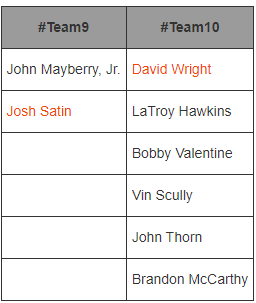
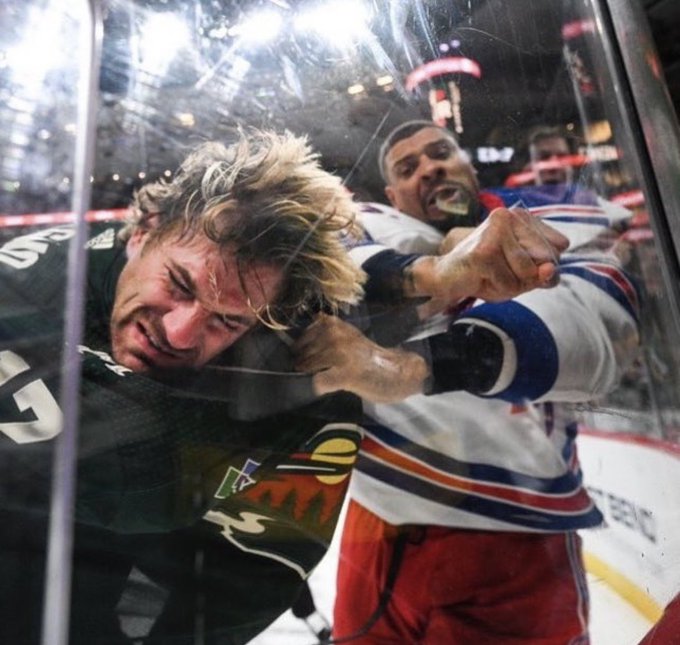

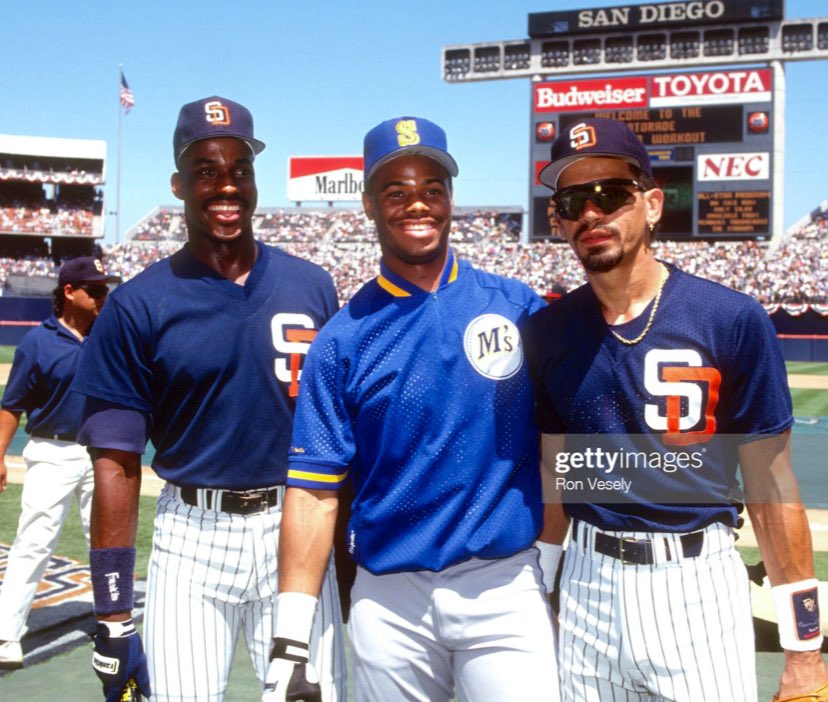
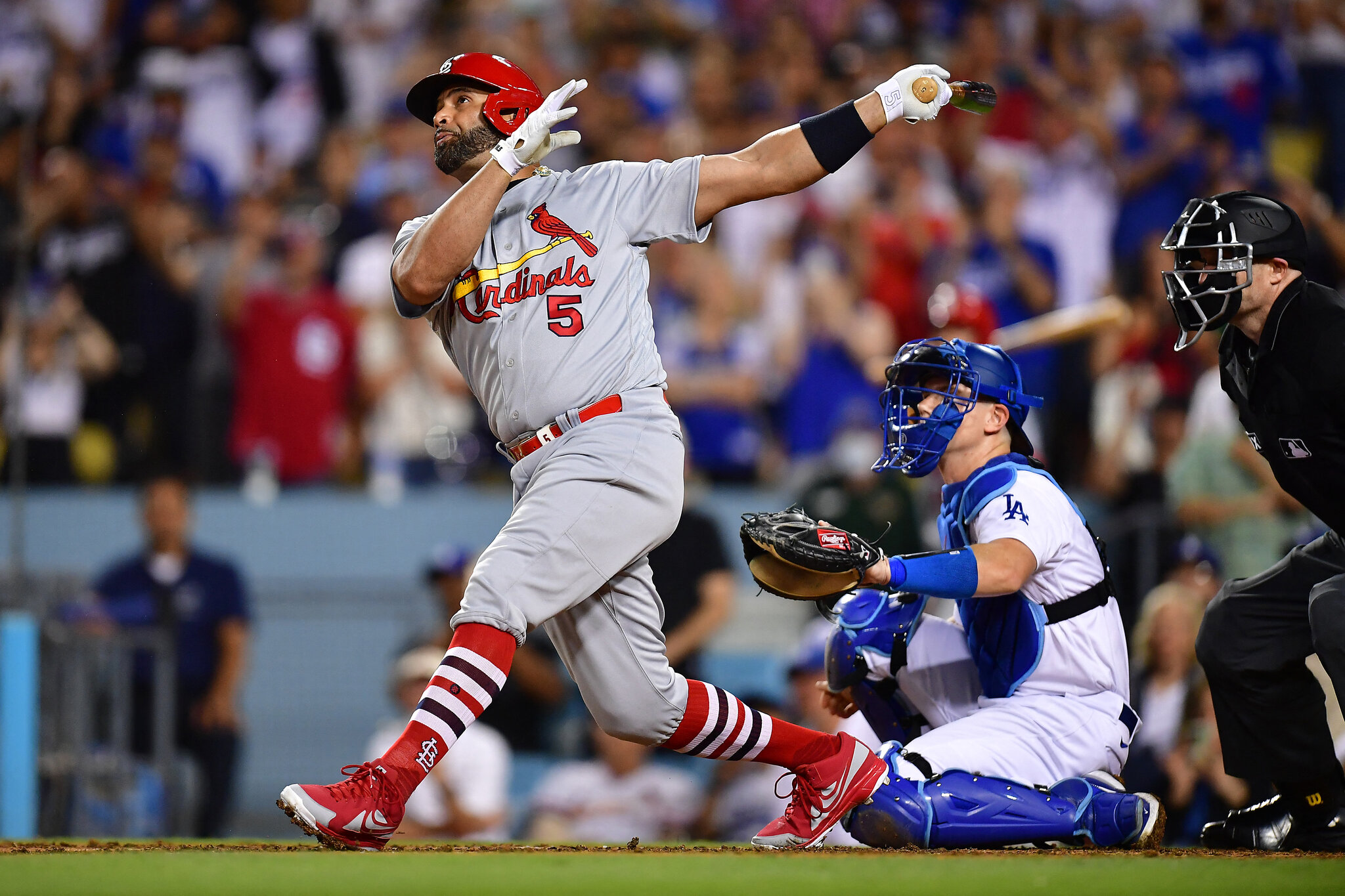
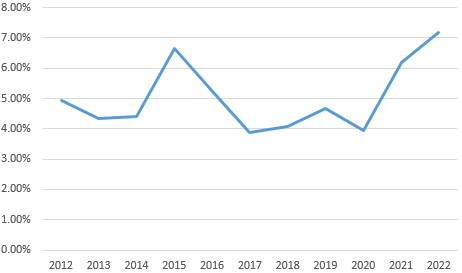
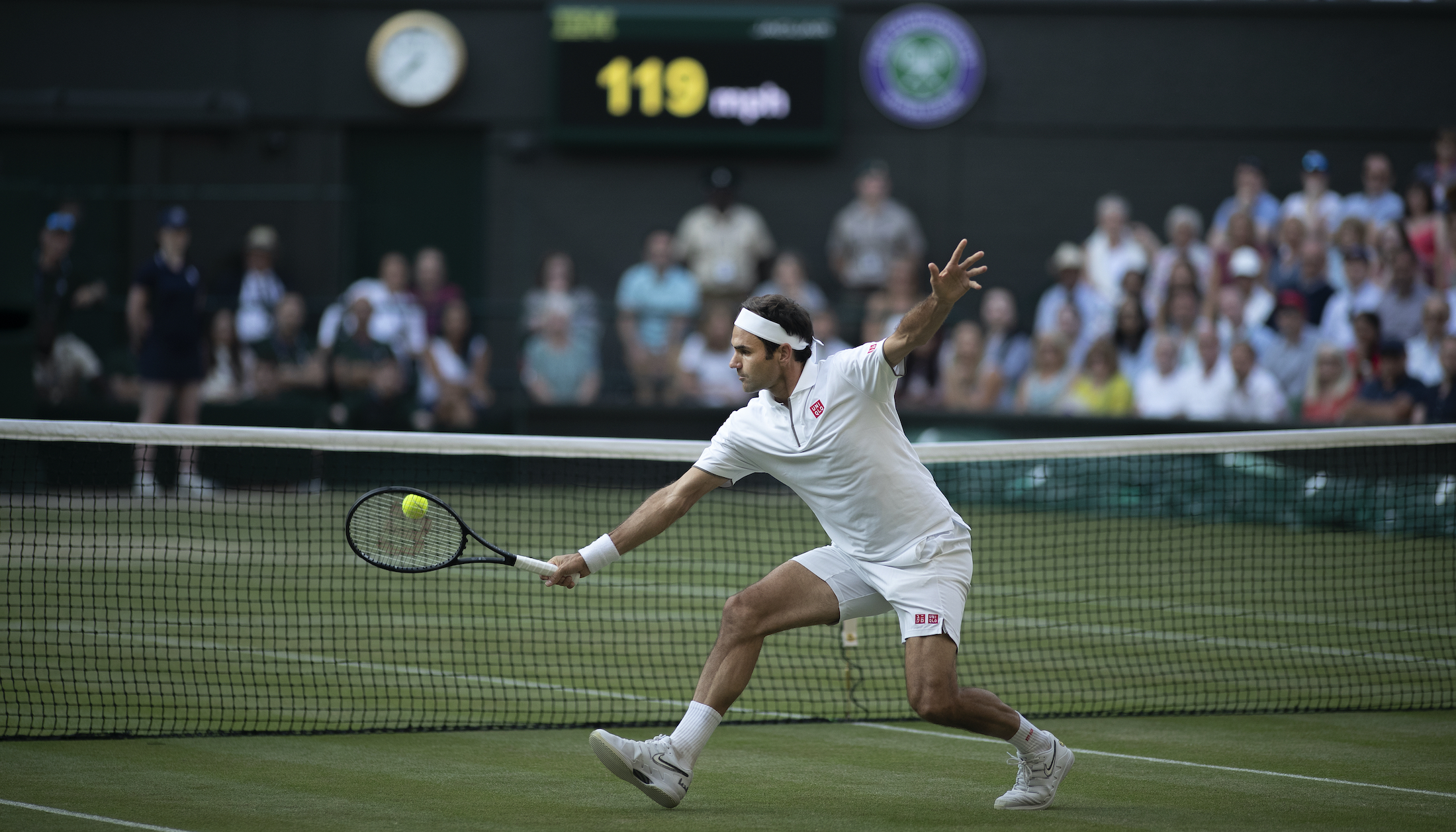
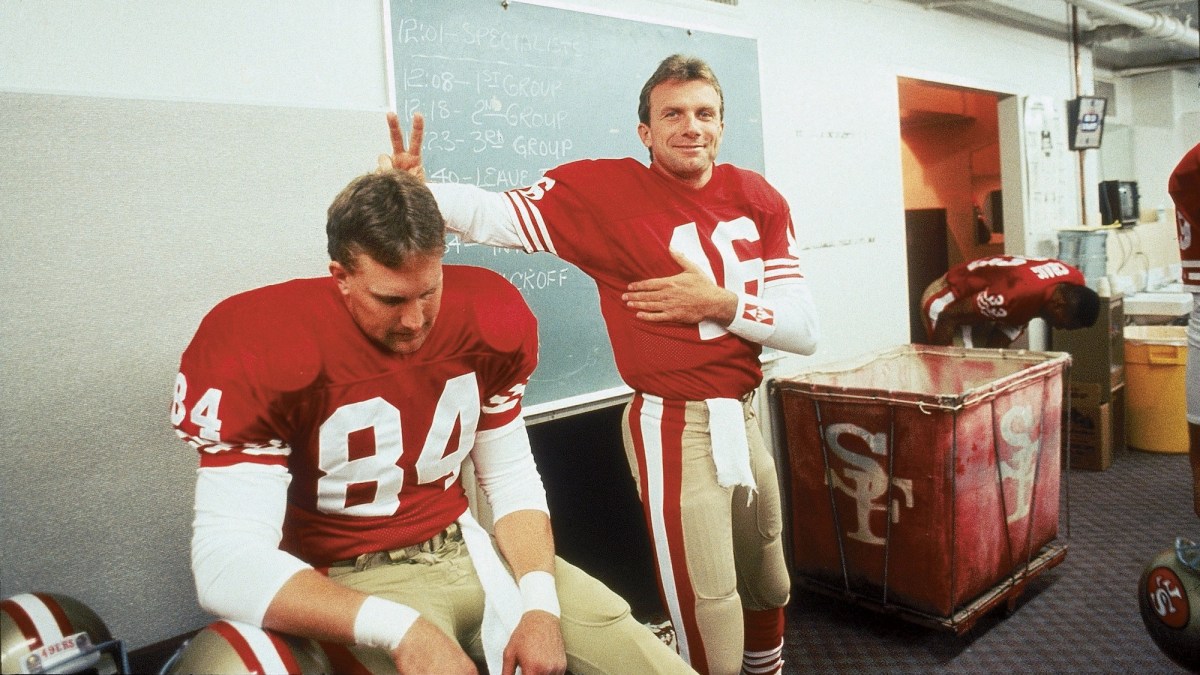



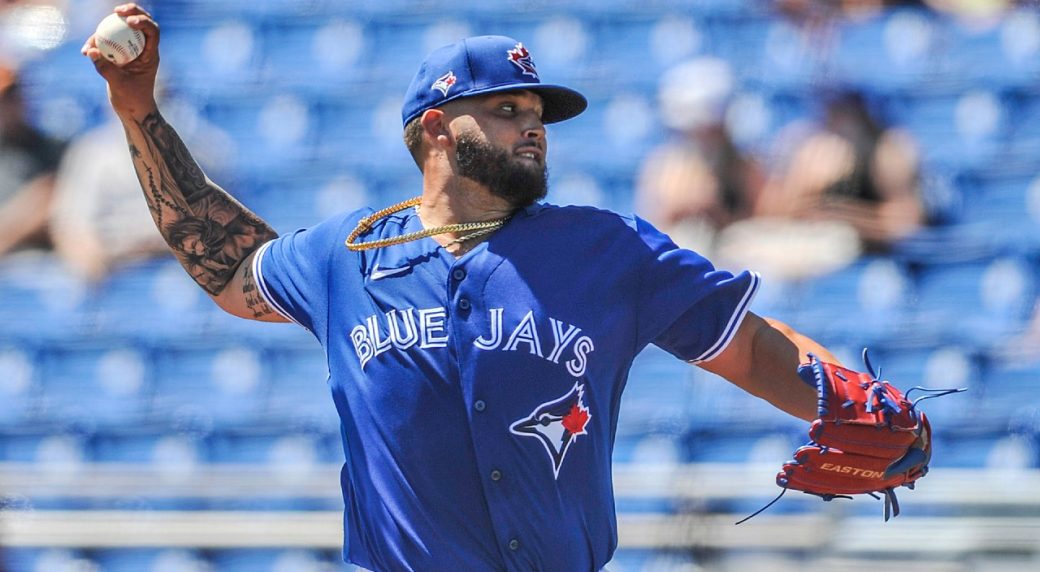


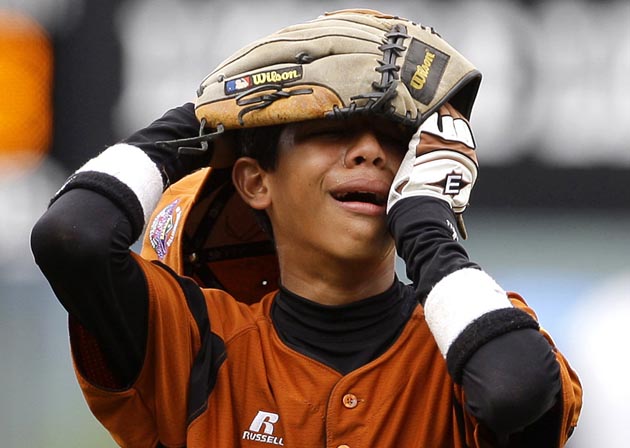


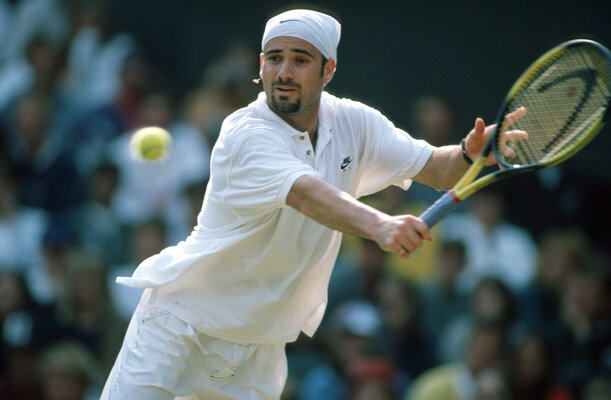


 1-2-3 SPORTS!