One of the beautiful things about baseball is that every field is different. Perhaps most famously is the Polo Grounds.
Dimensions: Left Field: 279 ft, Left-Center: 450 ft, Center Field: 483 ft, Right-Center: 449 ft, Right Field: 258 ft.
LOL. I’ve seen those dimensions before but it is always so funny. The shortest home run in today’s game is 310 down the right field line at Fenway, which is FIFTY TWO FEET longer than the right field pole was at the Polo Grounds.
I bring this up because last week, 1-2-3 favorite Jomboy (real name: James O’BRIEN) asked Twitter followers for the funniest/dumbest local baseball fields. This one was my absolute favorite:
Center field is just opens up, with no fence, into a football field. Amazing. Like all great, quirky ball parks, they made the best with the space they had and created something so ridiculous, you can’t help but love it.
Looking at the Polo Grounds reminded me that Phil and I used to play softball at a field in SF (James P. LANG Field!) that has two softball fields at opposite corners of what is ostensibly a soccer or football field.
It’s difficult to tell there how lopsided this field is, but I utilized Google Maps’ measuring tool and the dimensions are 385 to left, and 200 (yes, 200) to right. Given those dimensions, most teams stuck their worst defender in right, and shaded everyone toward center and left, because a ball getting by the outfielders in center and left would roll and roll, but a ball to right would hit that relatively short fence.
Confession: I have never in my life hit a true home run. So, for two seasons, I eyed that short porch in right and decided to make a run at it, wanting to experience a home run trot. One night, I hit the ball so hard, I thought for sure it was gone off the bat. I watched that beauty fly and felt pure joy.
One thing you can’t tell from the overhead shot is that the right field wall is very tall. Here’s the best pic I could find.
As you can kind of see in the top left of the photo, as you approach the fence, the grass heads steeply uphill. I’d say 6-7 feet (you can see in the photo the grass line is taller than a person standing out there). Then the fence is probably 12 feet high from there, so we are talking almost 20 feet.
As you probably guessed, I hit the ball high, I hit the ball deep…but I did not hit the ball high enough. The ball hit the goddamn very top of the wall. It was maybe a couple feet short of clearing it. I was crushed. And because I had been pimpin’ it, I had to scramble to eek out a double. Embarrassing.
What’s worse is this: (correct me if I’m wrong here, Phil), Phil had not yet hit a dinger at that field either, despite being a lefty (something I had given him some ribbing about). Well, Phil was the next hitter up. And as I stood at second base, I got an absolutely spectacular view as Phil crushed a home run over that same wall I had barely failed to clear. Phil was cackling at me during his entire slow trot around the bases. Insult to injury.
I never did get that dinger. I might need to get back into that league. I’ve got Dad-strength now, ya know. -TOB
PAL: That is correct, TOB. I had yet to hit a home run, despite the fact that we played ALL of our games on those two fields, and both favored the lefties big time. This is because I kinda suck at hitting softballs.
I’ve played on a lot of odd fields in my day, and – I agree with JOMBOY – it makes for a far more interesting game. That overhead shot of the Polo Grounds is crazy point of view. I also don’t think Pesky Pole down the right field line is anywhere near 310 feet from home. My brother-in-law, lifelong Red Sox fan and Mass. resident, can back me up on this: right field might not be even 300 feet. However, it juts almost straight back from there, so only a very small portion of right field is a short porch at Fenway.
For the life of me, I can’t remember the name of the field, but I seem to remember playing a legion baseball game (16-18) where a ball over the right field fence was just a ground rule double because the fence was so short. Cretin’s field in St. Paul is perfectly manicured, but the left field fence is maybe 265, a fact few people seemed to remember when looking at season stats (OH MY GOD, so-and-so from Cretin has 12 home runs!)
The worst playing field I can remember was my freshman year in college. It was about 6 degrees out and we were trying like hell to get a conference game in before or after another snow storm in March. Somewhere in Sioux City, IA. I swear we played a college game on a Babe Ruth field that, in the most perfect conditions looked like the location of a meth deal from Breaking Bad. On the day we played there, it was unthawed with the snow shoveled off of it. It smelled like sulfur (because that entire town does). It was like playing on concrete in a howling wind. Miserable.
So, that’s my story of the strangest field I ever played on. How about you?
Video of the Day
We haven’t really been doing videos of the day on our dailies, but I loved this and wanted to share: Mike Yastrzemski mic’d up.
This Week’s Best from Posnanski’s Top 100: No. 3, Barry Bonds
Barry Bonds could be an asshole, yes. But, like all of us, he is not monochromatic. He is complicated. When discussing Bonds’ reputation for being a jerk in the locker room, Posnanski writes the following:
*This personal thing must be said here: Barry Bonds was always nice to me. There was no apparent reason for it. He didn’t know me. He hadn’t read me. I feel sure he couldn’t have come up with my name if he was spotted all the letters except the “J.” But every time I needed to talk to him, probably a half-dozen times before 1998, a few times after, he was always accommodating, thoughtful — and could this be? — friendly. It was the strangest thing. It was like I reminded him of a childhood friend or something.
When I told other writers and people around baseball about this, they shook their heads and promptly told me their own Bonds horror stories. I kept waiting for mine. It hasn’t come yet. Maybe it will. But it would not be right or fair for me to discuss Bonds’ well-known media hatred without saying that he could be, when he wanted, an engaging, insightful and pleasant interview. He has a lot of charm. He dispenses it sparingly.
There are certainly times that all of us acted in a way we wouldn’t want written about; there are times we’ve been rude or mean or lashed out because we were hurt, and it doesn’t get played on loop, or written about 25 years later in an article discussing what a jerk you were when you were barely an adult. But from everything I’ve read about Bonds, he was not only a jerk. He was not a movie villain, hell-bent on ruining the day of everyone around him, every single day. As Posnanski says, he in fact could be polite and charming. That doesn’t excuse the times he was rude, or a jerk, or an asshole – but it must be said.
I think what makes me sad about Barry Bonds is that the people who do not like him dismiss that he seems to clearly suffer from deep insecurities stemming from a childhood and a life spent chasing the affection of a father who would not show it. As Posnanski puts it, Bonds wanted to be the greatest baseball player who ever lived. What Posnanski leaves unsaid is that Bonds felt that becoming the greatest baseball player who ever lived was the way to receive the love and admiration of his father, and of everyone else. And he never got it. He was deeply sensitive as a result. As his college coach put it:
“He wanted to be liked, tried so damn hard to have people like him,” Brock told Sports Illustrated. “Tried too hard. But then he’d say things he didn’t mean, wild statements. I tried to tell him that these guys, 20 years from now, would be electricians and plumbers, but he’d be making millions. … Still he’d be hurt. People don’t realize that he can be hurt — and is, fairly often.”
The tragedy of Bonds is that he was an incredible baseball player before steroids, and for some his numbers after 1998 are tainted. For some, his numbers before 1998 are tainted, because the steroids taint his integrity. I think that’s deeply unfair. It’s been written before, but Posnanski puts Bonds’ steroid use into the proper context of the time:
Then came 1998. Barry Bonds had an incredible year in 1998. I mean, no, it wasn’t incredible for him, but it was still so remarkable. He hit .303/.438/.609 with 44 doubles, seven triples, 37 homers, 120 runs scored and 122 RBIs. He won his eighth Gold Glove. He led the league in WAR for the seventh time. It was his seventh straight season with a 1.000 OPS.
And that year, he became the first player in baseball history to hit 400 home runs and steal 400 bases in a career. He was the player of his generation.
It should have been the year of Barry, one celebrated by all. It was, to say the least, not the year of Barry. No, 1998 was the year that people marveled at how far Mark McGwire could hit a baseball. No, 1998 was the year that people pounded their chests along with Sammy Sosa as he rounded the bases an astounding 66 times. No, 1998 was the year that Ken Griffey Jr. — so much more lovable — cracked 56 home runs and drove in 146 and won a Gold Glove (in center field!) and stretched the imagination.
And Bonds? Who? He was just this problematic outfielder who played for an also-ran Giants team and couldn’t hit in the playoffs. Yes, all his career, Bonds told people again and again that he didn’t care, he didn’t care, he didn’t care.
But 1998 was the year Barry Bonds discovered he did care very much.
…
Barry Bonds broke the game. That’s how good he was after 1998. The theory goes that Bonds saw how people celebrated McGwire and Sosa and others, and he knew they were using steroids, and he decided that it was time to go all in.
You can imagine Jack Nicholson’s line from “Batman” playing in his head: “Wait ‘til they get a load of me.”
There was no testing in baseball then. There was no outcry in baseball then. It was quite the opposite: The game was thriving! The home run was king! Nike reminded everybody that chicks dig the long ball! MLB even put out a comic book of baseball players with enormous muscles. Muscles were in!
So Barry Bonds got muscles. And he tilted baseball.
I don’t understand what an athlete in Bonds’ situation was realistically supposed to do. So many players were using steroids; certainly, not all of them. But so many. It was not being tested for; it was not against the rules. Most importantly, the players using steroids were being celebrated. What kind of message did that send to Barry, and the rest of baseball? Barry Bonds wanted nothing more than to be loved, and his incredible season was ignored because McGwire and Sosa and others were juiced and bashing baseballs out of the stadium at rates never before seen. He was supposed to just shrug his shoulders? That is deeply unfair.
I don’t understand the people who dislike him because he “broke the game.” Posanski touches on this, but it needs to be said: Bonds did not ruin baseball. He was not the first to take steroids. He was not the last. But even if he was, steroids didn’t ruin baseball. In fact, McGwire and Sosa’s 1998 season helped rescue baseball from the post-1994 strike doldrums. So many people made money because players used steroids. The game is more popular than ever, with attendance well above what it was before the 1990s. What gets lost is that baseball is entertainment. There’s no “sanctity of the game.” Bonds was entertaining, both before and after 1998. That’s what we pay money to see. If steroids helped him entertain more and entertain longer, so what?
But the thing I do not understand the most about Bonds, are the Bonds haters who take delight in his pain:
The Athletic’s Andrew Baggarly caught up with Barry Bonds. He found a sad and haunted man. “I feel like a ghost,” Bonds said. “A ghost in a big empty house, just rattling around.”
How you feel about that quote probably says everything about how you feel about him. Are you thrilled that he’s getting what he had coming? Do you feel sad that Bonds, who did so many incredible things, cannot find peace?
Or do you feel a little of both?
From his earliest memories, all Barry Bonds ever wanted was to become the greatest baseball player who ever lived. He paid every price. He ignored every doubt. He raged over every hurdle. He cut every corner. He shut himself off from everything else. He brushed aside every other concern. He made more enemies than friends.
And he became the greatest baseball player who ever lived.
And what was waiting for him at the end? Remember what he said way back at the start of his career: “If I’m supposed to wait for you guys to applaud me, I could be waiting a lifetime.”
Here’s what waited for him at the end: Silence.
He’s not a cartoon character. He’s a human being. Yes, Bonds made lots of money (career earnings: $188,245,322). But money isn’t everything. And what else does he have? He doesn’t even have adulation. He’s cheered in San Francisco, but that’s about it. How can someone read the stories about his father, not connect the dots to the person he was as a young man, and then think, “I don’t care, fuck that asshole.” I’m not saying he should be completely absolved of his sins. But if you can’t find it in your heart to feel for someone who was so obviously hurting, I don’t understand you. If you can’t find it in your heart to forgive someone for mistakes made 20 or 30 years ago, I don’t understand you.
Bonds does not deserve your love, but he does deserve your understanding. -TOB
PAL: As if we needed another reminder to be a good parent, eh? Bobby Bonds sounds like a real piece of work.
Posnanski’s approach (two essays – one for Bonds fans and one for Bonds critics) was a cool tweak in this series. A lot in here, so I think I’ll just add my two cents to points TOB brings up.
His greatness, especially at the plate, was something to see. And whether or not he has a bust in the Hall of Fame, I will tell my kids that I saw Barry Bonds play. It’s hard to even imagine someone being better than Bonds at his peak. It would have to be something entirely different, like Ohtani being a dominant starting pitcher for 5 years and putting up monster offensive numbers.
I will measure the best players from future generations against Bonds. What higher compliment could there be?
I sat behind home plate, in line with the right field foul line, and saw him send a pitch into McCovey Cove. And whether or not you rooted for him, everyone was in awe. A home run every 6 at bats. I mean, what the hell? Posnanksi said it – Bonds broke the game.
History will be very kind to Bonds. Whether or not he is elected into the Hall of Fame, his statistics will outlive the circumstances under which they came. The stats are too absurd. The highlights will live on. In twenty years, generations of fans will neither know nor care that Bonds was an asshole, just like we don’t care that Ty Cobb was an asshole.
My biggest takeaway from this story is actually a reminder of a lesson I had to learn from Kirby Puckett, my boyhood hero. We don’t know these guys. We love one small, insignificant part of them. We choose when we care. Kirby Puckett was the short, keg of ballplayer that brought two titles to Minnesota. He did it all with a giggle and smile. Everyone’s hero. Turns out he was far from a hero when not in the public eye. By several accounts, he could be pretty gross and mean in ways that are far more important than being rude to a reporter.
And yet, history has already been kind to Puckett, and he wasn’t half the player Bonds was. It might take a little longer, but the same is coming for Bonds. So Bonds was a selfish prick. Do you care what kind of friend Picasso was? Do you not appreciate For Whom The Bell Tolls because Hemingway was jerk drunk? There are pricks at every office, and some of them are very good at their jobs. Bonds’ personality had zero impact on my enjoyment when I watched him hit. Sure, he was annoying, and I think he always wanted it both ways (leave me alone, but appreciate how great I am), but if you think any of that came into play for anyone in a San Francisco bar during a real Bonds at-bat (not an intentional walk), you’re crazy. We were amazed, all of us.
Sports Need to Stay Shut Down
The sports world quickly shut down last month, after Rudy Gobert of the Utah Jazz tested positive for COVID-19 just before the start of a game in Oklahoma City. Everyone applauded how quickly they put their health of the players, employees, and fans. Hurrah, the billionaires did the right thing!
Yeah, that lasted all of, oh, three weeks. What began as low rumbles almost immediately started gaining steam last week: leagues are exploring ways to finish or hold their season. Over last weekend, the reports about MLB, in particular, seemed to be gaining enough steam with reporters who are typically in-the-know that it seemed inevitable: MLB wants to host their season with all teams being housed in Arizona, playing games in empty stadiums, with players sitting spaced out in the bleachers instead of in the dugout.
This is so incredibly stupid.
It’s stupid logistically. What about the staff? How do you keep players from infecting themselves on the field? A player could easily infect another player on a slide into second, or even touching a baseball touched by an infected player. Even if you put all players in hotels, how do you ensure they stay locked down? How do the players feel being away from their families that long? Same with the staff, including medical staff and other employees that make game days happen? I could go on and on.
It’s stupid on a moral level. This would require THOUSANDS AND THOUSANDS of tests – there are approximately 800 players on major league rosters every season. Add to that coaches and staff and we’re talking at least 1,200 people who would require regularly testing to ensure they are healthy and able to play. Even if you only tested them once a week, that’s approximately 30,000 tests in a 6-month season, at a time when testing is still scarce, and resources for processing tests are stretched thin with major back logs. How can they justify those testing resources going to baseball?
It’s stupid on an entertainment level. Make no mistake: they do not want to do this to lift the nation’s collective spirit. This is about money, pure and simple. I love baseball, and if you read this blog you probably know I miss it dearly. But I have serious doubts that I’d be tuning in to watch this. Baseball with no crowd? Buddy, that is batting practice. Are people really going to care? And if not, why are we risking people’s health and utilizing precious resources and subjecting players and staff to this insane plan?
This plan is absolutely madness. And it has to stop. -TOB
Mike Gundy, a Complete Moron, Gets Torn to Shreds
You may remember Mike Gundy, the longtime football coach at Oklahoma State. He went viral in the 2000s for his, “I’m a man! I’m 40!” speech. His teams have been middling, and so he’s made a name for himself again by sporting a ridiculous mullet.
But this week, perhaps taking a cue from our Commander-in-Chief, Gundy offered some insanely idiotic, dangerous, self-important arguments about how Oklahoma State Football should not be shutdown during the COVID-19 pandemic. Longtime college football writer Pat Forde was not having it. Here’s the lede:
I would like stock tips from Noted Expert Mike Gundy. Also, some cooking recipes. Could he offer best practices to our educators? How about weighing in on the Middle East?
I’m dying to be enlightened. Really.
Clearly, Noted Expert Mike Gundy knows far more than just football. Not that he’s been great in that regard lately—his Oklahoma State teams were 15–11 the past two seasons, 8–10 in the Big 12—especially given his $5 million a year salary. But it is now abundantly obvious that labeling him a mere football coach is too limiting. He is a Renaissance man, a visionary capable of seeing solutions where others see problems, a savant so cleverly disguised as a mullet-haired meathead.
Take, for example, the wisdom Noted Expert Mike Gundy dispensed upon the masses Tuesday in a media teleconference. When the only topic that matters in today’s world came up—the global COVID-19 pandemic—he flexed his intellectual prowess. He showcased his grasp of public health, economics, the workings of higher education, college athletics in general and other topics.
“The NCAA, the presidents of the universities, the Power 5 conference commissioners, the athletic directors need to be meeting right now and we need to start coming up with answers,” Noted Expert Mike Gundy said. “In my opinion, if we have to bring our players back, test them. They’re all in good shape. They’re all 18, 19, 20, 21 and 22-year-olds. They’re healthy. A lot of them can fight it off with their natural body, the antibodies and the build that they have. There’s some people that are asymptomatic. If that’s true, then we sequester them. And people say that’s crazy. No, it’s not crazy because we need to continue and budget and run money through the state of Oklahoma.”
Noted Expert Mike Gundy isn’t just talking the talk here. He is an omniscient observer with a plan. He wants to have his staff and support personnel, roughly 100 people, back to work in the Oklahoma State football facility May 1. Then the players after that.
Ooooh, fire. Forde was just getting started, though, and I highly recommend you read it. -TOB
PAL: Dan Patrick also lit into Gundy on this during his radio show. My favorite point: pro athletes, those who get paid to play, aren’t coming back, but let’s talk about bringing the student-athletes back. There are few things higher on the unintentional comedy scale than self-important college football coaches.
The Spark
This morning, The Athletic posted a complete breakdown of the night when the Utah Jazz – Oklahoma City Thunder game was cancelled just minutes before tip-off when it was realized Jazz center Rudy Gobert had tested positive for COVID-19 the night of Wednesday, March 11. That positive test led to the suspension of the NBA season. NCAA, MLB, NHL were all to follow within 48-hours. Travel restrictions and mandatory quarantines were put in place for folks coming back from anywhere in the E.U., amongst other parts of the world. Shelter in place was issued for 6 Bay Area counties beginning the following Monday. In my mind, that positive test for Gobert was the spark that lit the fuse (even when there were some very alarming details coming out of the Seattle area before March 11.
A lot of us have felt the absence of sports over the past four weeks. Of course, it’s not that important, but I realized how many moments of my daily routine intersects with sports. Coffee, breakfast, check the scores. Lunch was a time scanning a handful of sports sites for interesting stories to write about for Fridays. Having the Twins game streaming audio while I go for a run. Having the Giants game on in the background while making dinner. Again, not that sports is anywhere close to a top priority, but the absence can’t be ignored. And that’s what happened on a very large scale when this Jazz-Thunder game was cancelled just minutes before tip: as a country, we couldn’t ignore the pandemic. I don’t think many of us could wrap our heads around how scary it was going to get over the next month, but we couldn’t ignore it because it came with the absence of sports, pretty much overnight.
This was the scene in pregame between Thunder-Jazz as the officials awaited confirmation to start pic.twitter.com/3XoKWydaJh
This story tracks the Jazz in the days and weeks leading up to the positive test. It’s an interesting look at how an organization handles crisis management. This story makes it seem like the team was actually a bit ahead of the curve in terms of educating employees and players about COVID-19. Some of that had to do with coach Quin Synder growing up 12 miles from the nursing home in Kirkland, Washington, where the first epicenter of the U.S. outbreak took place, and his brother running a market in Pike’s Place. Snyder’s brother, Matt, is also friends with the Seattle-based band, Pearl Jam, which cancelled its world tour two days before the Jazz-Thunder game. So Snyder was following the story extremely closely and asking all sorts of questions early on.
Another nugget from this story: Thunder’s Chris Paul being a good guy. Never liked Paul, but this was a nice gesture for the Jazz as they waited for next steps after the game in OKC was cancelled:
Thanks to a generous and well-timed assist from Chris Paul, their moods were lifted approximately an hour after the game had been called when sources say a delivery of beer and wine arrived. Paul, the Thunder point guard who also serves as the president of the National Basketball Players Association, arranged for his longtime security guard Gene Escamilla to deliver the drinks as a way of helping them all pass the anxiety-ridden time.
Other crazy details from the story:
The Jazz had a difficult time finding a hotel in OKC that would take the team after the positive test.
Regardless of how wealthy one might be, it’s not easy to find a flight for someone who has COVID-19 – Charter flights aren’t safe. It had to be private, with additional precautions.
It sounds like this ordeal has driven a wedge between Utah’s two best players (Mitchell and Gobert) – Mitchell is still upset about this, even though he’s been told that no one knows whether he gave it to Gobert or Gobert gave it to him.
A worthwhile read, but I get it if you need a break from pandemic news. – PAL
Behind the scenes footage of Miller’s call as Ishikawa wins the 2014 NL pennant.
Bill Murray perfectly capturing the power of John Prine.
Tweet of the Week
Song of the Week: John Prine – ‘Jesus, The Missing Years’
R.I.P., John Prine. While Dylan spoke loudest to me in my teens and twenties, Prine’s music resonates in me now more than ever. Every day, his stories get funnier, sadder, more caring, and more true.
Like what you’ve read? Let us know by following this blog (on the right side, up near the top), or:
These songs, oftentimes played at sporting events, need to be removed from stadium/arena playlists when we go back to games.
‘Sweet Caroline’ – Neil Diamond. So over it. Every over-served person in America loves singing this song. Only became a Red Sox tradition in late 90s, and then this push for it to become ‘tradition’ across several teams is so lame. Also, there are so many better Diamond songs! ‘America’, “Forever In Blue Jeans’, ‘Kentucky Woman’ to name a few.
‘Centerfield’ – John Fogerty. Every pre-game mixtape, at every field, at every baseball game from Little League through college. That upbeat, bouncy melody is chiseled into my brain. I. Can’t. Stand. This. Song. No mas.
‘All Star’ – Smash Mouth. I would think many of these songs on this list don’t actually need an explanation, and this would be one of them.
‘Let’s Get It Started’ – Black Eyed Peas.
‘When The Lights Go Down’ – Journey. SF’s answer to Sweet Caroline…and just as manufactured and forced.
‘Cotton Eye Joe’. When did annoying = fun?
‘Glory Days’ – Springsteen. He’s been given a pass on this. No one calls a fastball a speedball (as many have pointed out). Super catchy guitar riff, and a good concept for a song, but that line unforgivable. It’s actually a real flex on his part. You’re telling me NONE of his friends had the seeds to say, “Hey, Bruce. We need to talk. Dude, you can’t say speedball. You sound like an idiot.” Also, ‘fastball’ has the same amount of syllables and works within the rhythm of the lyric exactly the same as speedball.
‘Y.M.C.A.’ – Village People. I don’t want to do the wave, and I don’t want to do the YMCA. Next.
‘I Gotta A Feeling’ – B.E.P. The only group in this list twice…just sayin.
‘The Greatest’ – Kenny Rogers. A one-listen song. Once you hear the punch line, it’s done. No disrespect to the recently departed.
PAL
How about you? What songs got to go? What songs am I absolutely wrong about?
For the sake of entertainment, let’s assume the world was like it was a couple months ago and all sporting events were as they were before the pandemic.
The scenario: by some stroke of luck, good fortune, or mistake you fall into a large sum of money. Enough money so that all the real important things – the house, college for the kids, buying something real nice for your parents – are taken care of, but not enough money where you’re buying a professional sports franchise or building a family compound for you and all your siblings’ families in Monterey or something. Whatever that sum of money is, there’s enough for you to live out your ultimate sports experience. I’d call it bucket list, but this seems even a bit more out of reach than bucket list stuff. As an example, my sports bucket list includes maintaining a youth baseball field at some point in my life.
I think about my ultimate sports experience every time I drive west on the Bay Bridge, where Oracle (the SF Giants Stadium…so hard to keep up with stadium names these days) is just down and to the left. I can see most of the field from that vantage point, and every single time I drive by, and have the same thought: wouldn’t it be cool to rent out the stadium for a night and have 10 buddies out there hitting, taking grounders, turning double-plays, shagging fly balls? A cooler of beer on both baselines. A bucket of seeds. Hundreds of new pearls (rubbed up, of course). Good music* playing over the loudspeakers.
That is my ultimate sports experience. And since we’re dreaming, I think this would have to take place at Fenway. Yes, Fenway over Wrigley, because the Monster is right there for righties, and it would be super fun to try to play balls off the wall. Plus, for us lefies, Pesky pole is less than 300-feet away.
Maybe the night starts in the evening when the sun is still out, but we have the park for six hours, that way you get both the day and night feel.
That’s my ultimate sport experience. What about you, TOB?
*New topic: songs that need to be removed from the ballpark canon. A teaser: “Centerfield” by John Fogerty needs to go away forever.
TOB: I like the Fenway idea. But I want Centerfield playing ON LOOP all night. That song is beyond reproach. How dare you.
How about you? What’s your ultimate sports experience? Floor seats at the NBA Finals? A college football road trip to all the rivalry games? Playing a round with Tiger Woods and Jack Nicklaus? Think big.
Wright Thompson is my favorite sports writer going, and it’s not close. I know this because I can’t wait to tell everyone whenever I read something from him. After reading this story, I told co-workers, siblings, friends, my mom. Natalie probably overheard me summarize the story 5 times this, our third week of shelter in place.
He writes about the ritual of sport so well, and how both the best and worst of sport is strengthened through ritual. His story about the Cubs winning the world series had nothing to do with what happened in the game; it’s a feature on some fans going through their usual rituals in an incredibly unusual time. It’s Ted Williams ritualistic obsession with hitting and fishing, and how it terribly impacted his ability as a father (and how his mother’s rituals in San Diego made him feel ignored). The Ole Miss rituals (football and otherwise) and their role in race riots in the 60s.
With that theme in mind – ritual – it’s no wonder he wrote a story on ESPN about food and sports in Italy.
Before I go any further, I insist you read this story. Please, just click through to it now, because it will articulate that heavy weight hovering in that gap left now that we aren’t sharing space with one another in our cities and neighborhoods, and it will give you a recipe to feel really good for a few hours.
Thompson’s story was published on 3/28. I mention that, because the world now seems to change drastically in days for a great deal more people than was the case a month ago. On 3/28, many people were starting to understand and see images of the nightmare playing out in Italy. Many years ago, Thompson lived in Florence, and as he learned of what was happening, he thought of his time there, what he loved about Florence: the Fiorentina soccer team and a restaurant in Rome called Matricianella.
“In Italy, as in many parts of the United States, sports and food are perhaps the two most important ways to celebrate your home.”
And later, Thompson writes: “As an employee of ESPN, I am acutely aware of the lack of sports right now, which is especially worrisome to me mostly because sports provide one of the few acres of common ground in a country where we too often give in to what divides us.”
Sports and restaurants: they bring us together to be joyous. To celebrate. This country sure felt divided before the pandemic. And while I absolutely feel connected to our neighbors as we hunker down here, fear has sparked this recent sense of community.
Thompson, missing sports and the ritual of eating a great meal at one of his three favorite restaurants in the world, looked up and made a traditional Roman dish with a bottle of nice red wine, a bottle “that normally would be saved for a special occasion–although I’d argue that imagining the world before the virus and being hopeful about the return of that world is as special an occasion as there is right now.”
And while the restaurant in Rome is closed until…God knows when, and while Gianni–Thompson’s waiter of choice–is home alone in Rome with a silence to it like “the silence before a snowfall,” we can still celebrate. Maybe we have to a little bit.
At the end of an article for sports website, Wright Thompson shares the amatricianna recipe from Matricianella and encouraged folks to put on an old favorite game.
I think I’ll make Amatriciana again. Instead of using the internet recipe, I got the genuine article from the owners of Matricianella in Rome. It’s printed below, so you can make it too. Maybe I’ll find some classic old Serie A game to watch once the pasta is done. I’m thinking Fiorentina-Inter, 1997, Batistuta versus Ronaldo. Maybe if you read this, and make the recipe, and find your own game to watch, this shared ritual will briefly connect us.
I did my best. I had to substitute uncured bacon in for the pork jowl. I paired it with what turned to be a delicious pinot noir, and I watched Game 6 of the 1991 World Series.
It was the most enjoyable night I’ve had since this covid-19 nightmare started. I urge you to do this same. You will feel connected, and you will feel more like yourself than you have in weeks.
Oscar Charleston former Negro league star with bat.
This seems impossible, because I had heard plenty about every other Negro League legend that Posnanski had listed here: Satchell Paige, Josh Gibson, Cool Papa Bell, and others. But before this week I had never, to my memory, heard the name Oscar Charleston. And Charleston is ranked No. 5 by Posnanski. He even says:
I want you to feel the fury of this ranking, feel it down deep. I want you to think, “Look, I’m sure he was terrific, but there’s no possible way that Oscar Charleston, who played in a struggling league 100 years ago, could possibly be the fifth greatest player of all time.”
Or I want you to think, “Fifth greatest? That’s ridiculous. He should be No. 1!”
Or I want you to think, “This is pure romanticism. We have almost no stats on Charleston. We have only a handful of quotes about him. You can’t rank someone this high on the list based on a few crusty legends and myths.”
Or I want you to think, “It’s such an infuriating tragedy that we as an entire nation never got to see the greatest player in the history of baseball.”
Or I want you to think, “How is it that I’ve never even heard of this guy?”
Or I want you to think some of those thoughts together, or even all of them at the same time. This ranking, unlike the rest, is a statement and, even more, it’s a challenge. Oscar Charleston is the fifth greatest player in baseball history? It is meant to make you think about what you think.
So, I was very interested in reading this one. And boy, does Posnanski knock the intro out of the park, about a recent visit to the Negro Leagues Baseball Museum with Buck O’Neil and Willie Mays:
There isn’t much in the little room. There are a few charts showing Negro Leagues migration, a couple of photos and a statue of Buck O’Neil. The highlight is that it overlooks the Field of Legends, a baseball diamond in the middle of the museum. Beyond the chicken wire, which separates the room and the field, there are 10 bronze statues standing at their baseball positions. The names of the players are familiar to some and, even now, mysterious to others.
Let me say something else about the chicken wire, which represents the segregation black fans endured at stadiums across the country. If you unfocus your eyes a bit and look through the chicken wire just so, with your imagination taking the lead, the statues seem to come to life.
Anyway, that’s what I thought the day Buck O’Neil and Negro Leagues president Bob Kendrick and I stayed back there with Willie Mays.
“I knew these guys,” Mays said as we all looked through the chicken wire and imagined the players as they once were. “Like that guy at third base, Ray Dandridge. I played with him in Minneapolis. He helped me become the ballplayer I became.”
Everybody else in our group had gone ahead into the museum. We had stayed behind because of Willie Mays’ eyes. Those eyes, which had once been able to differentiate between a fastball and slider simply because of the way the baseball’s laces moved, had grown terribly sensitive to light. Glaucoma. Even in that dark room, Mays wore sunglasses.
He also wore a thick San Francisco Giants coat, even though it was stuffy. He seemed to be sweating and shivering at once. He was in pain. He seemed exhausted … or perhaps more precisely, evaporated. Buck tried to get him to tell some stories, but Mays was not in the mood for stories. He just looked out on the field quietly.
“Willie,” Buck said in an effort to break through, “I saw the catch on television the other day.”
…
“You saw that?” Mays said. He smiled a little.
“Only one other guy I ever saw could have made that catch,” Buck said.
Seven days after Mays made that catch, the only other man — the statue standing in center field on the Field of Legends — died in a Philadelphia hospital. He was not quite 58 years old and he was almost entirely unknown. His obituary did not appear in the local newspapers.
“Oscar Charleston,” Mays said as he looked out on the field.
“He was you before you,” O’Neil said.
If that doesn’t make you want to read about Charleston, nothing I say will.
Williams was famously given the option to sit that last day and let his batting average round up to .400. As you undoubtedly know, he didn’t take that option, something that has been celebrated throughout the years.
That part has been over-celebrated, to be honest. Of course he played. He wasn’t hitting .400. He was hitting .3995. Sure, it’s easy to say that rounds up now but nobody saw it that way then. After he went 1-for-4 the day before, headlines like “Ted Williams Drops Below .400 Level” and “Ted Williams Down To .399” and “Williams Slumps Below Magic Mark” appeared all over the country.
Now, he definitely could have sat down after cracking a single off Dick Fowler in the second inning, which pushed the average up to .4008, or .401 on the back of a baseball card. He was given the option to skip out at that point, but he felt great, and he knew that even if he failed to get a hit his next time up, he’d still be hitting .400. Well, the next time up he homered off Fowler to make the average a solid .402, and then he singled again, this time off Porter Vaughan.
And then he singled again off Vaughan, 4-for-4, and his average was .405. At that point, he knew that he could go zero for his next five and still be above the .400 line. So he stayed, even played the second game, and ended up 6-for-8 on the day with that magical .406 average — the last time anyone hit .400.
He famously didn’t win the MVP that year, despite hitting .400 and leading the league in homers, runs, slugging, on-base percentage and walks. That was the season DiMaggio hit in 56 straight games and the writers gave the award to DiMag. The writers always thought Joe was the better all-around player and leader.
DiMaggio during the streak: .408/.463/.717, 1.180 OPS.
Williams all of 1941: .406/.553/.735, 1.288 OPS.
…
In 1999, Ted Williams rode to home plate in a golf cart for the All-Star Game at Fenway Park. He had suffered two strokes and a broken hip in the previous months, but still he stood. The greatest living players — from Henry Aaron to Willie Mays, Bob Feller to Stan Musial, Ken Griffey to Cal Ripken and all the All-Stars of the day — surrounded him and hugged him. He tipped his cap, and the crowd cheered as loudly as they ever had, and as the papers said, there wasn’t a dry eye in the house.
“Hey McGwire,” Williams shouted out to Mark McGwire, the most prodigious slugger in the world then. “You ever smell the wood when you foul one off real hard? You ever notice how it smells like burning wood?”
“I’ve smelled it,” McGwire said. Maybe he had or maybe he was just saying so, but Ted Williams smiled and nodded and said it was the best bleeping smell in the whole world.
PAL: I had bumped Williams all the way up to number 3 when predicting Posnanski’s top 7. The Kid came in at 6. As I mentioned above, I read Wright Thompson’s essay on Williams a few months back. That story focuses on the batshit crazy last few years of Williams’ life with his adult children, as well as how he was, well, not a great husband or father. In Thompson’s words, summarizing to Claudia Williams, “[M]ost people didn’t understand that the two famous acts of his life–ballplayer and fisherman–occurred only because he was hiding from the third and final act of his life: fatherhood…He hid in the hyperfocus required by baseball and fishing.”
One lesson I slowly learn as I grow older is that greatness in one aspect of life is very rare and is commonly to the detriment of every other aspect of life, including happiness. The rarest of all is someone who is both good and great.
Williams was great at seemingly three things: hitting a baseball, flying a fighter jet, and fishing. We’ll leave the flying and fishing aside for this.
Posnanski quotes, of all people, Teller of Penn and Teller, in describing Williams hitting: “Sometimes magic is just spending more time on something than anyone might reasonably expect.”
The M.V.P. stuff TOB mentions above is astounding. Man, he sure must’ve hated the writers, eh? His season stats are better than DiMaggio’s during the streak, and Joe wins it. Then Williams wins two – TWO – triple crowns and doesn’t win the M.V.P.
TOB: One last thing. In the Charleston essay, Posnanski comes clean about his rankings, and it’s very funny to me:
We are now close to the end of the Baseball 100, and all along I have made certain to almost never mention the rankings. There’s is a specific reason for this: the rankings are just a device. Someone once asked Orson Welles if Mr. Thompson, the man who goes in search of Rosebud in “Citizen Kane,” learned anything or grew at all throughout the movie. “He’s not a person,” Welles raged. “He’s a piece of machinery to lead you through.”
That’s what the rankings are … they are here to give this project shape and to spark a few feelings. Yes, they’re in the basic order of a formula I used, one based on five things in no particular order:
Wins Above Replacement
Peak Wins Above Replacement
How multi-dimensional they were as players
The era when they played
Bonus value — This might include postseason performances, leadership, sportsmanship, impact on the game as a whole, if they lost prime years to the war and numerous other possibilities.
But I have no illusions about the formula. It is as flawed as anything so, whenever possible, I attached the player and a number that fits. So, for instance, Mariano Rivera is 91 for Psalm 91, the Psalm of Protection. Gary Carter is 86 for his role on the 1986 Mets. Joe DiMaggio is 56 for the hitting streak. Grover Cleveland Alexander is 26 because that was his magical year, 1926.
I even skipped No. 19 because of the ’19 Black Sox, the biggest single-year scandal in baseball history.
That’s not to say that I couldn’t defend the individual rankings. I’m sure I could. But to do so would be to say negative things about various players’ talent, which goes against the very essence of this project. And anyway, fighting over the questions — Ted Williams over Ty Cobb? Steve Carlton over Sandy Koufax? Carl Yastrzemski over Ken Griffey? — is a big part of the fun.
I noticed the DiMaggio 56 thing. I knew that couldn’t be a coincidence. But none of the rest – not even that there wasn’t a 19.
Video of the Week:
I’m definitely here for old folks challenging other old folks to chug a beer in their garages during this Coronavirus pandemic.
A 30-year mortgage and Michael’s age essentially means that he’s buying a coffin. If I were buying my coffin, I would get one with thicker walls so you couldn’t hear other dead people.
Topic 9, Inspired by Ryan Rowe: Least Favorite Players By Decade
Age 10 (1992)
MLB:
TOB: Either Jose Canseco or Sid Bream. I was SO mad about Bream beating out Bonds’ throw to win the 1992 NLCS. But even at 10, I knew Canseco was a big dumb idiot.
PAL: Mark Lemke, 2B Atlanta Braves. This little double-flap, switch-hitting dude drove me nuts in the 1991 World Series. He suuuuuucked as a hitter throughout his career, then decides to go 10-24 in the World Series. Also, Terry Pendleton. Wanna-be Puckett. Never root for a MLB player who wears the double ear-flap helmet. I don’t care that you’re a switch-hitter. You’re in the bigs. Get two helmets, you turd.
TOB: HAAAAA. I almost said Lemke, too. Funny. I was at the Giants/Braves 2010 NLDS Game 1. We were in line for food and a guy in a Braves hat walked by. He looked like a real doofus, and very much like Mark Lemke. I was feeling myself and told him he looked like Lemke. His retort: “So I look like a professional baseball player? Thanks.” Damn. He got me!
Mark Lemke: yet another example of the double ear-flap theory.
NBA:
TOB: Wow, hm. Probably Karl Malone. I just never, ever liked that guy. Oh! Or John Starks!
PAL: Dan Majerle. Maybe he didn’t have that bronze tan yet, but I didn’t get his thing…which, in retrospect, was to shoot the three ball a lot. Also, I think Will Ferrell could pass for Dan Majerle.
NFL:
TOB: Emmit Smith. So overrated. He ran straight through holes the size of a major freeway. Barry Sanders was criminally underappreciated at the time, especially when compared to Emmit.
PAL: Emmit is a good call. Don Beebe. Speaking for shorty guys everywhere, let me just say we’re sensitive to the Rudys out there among us. Don Beebe chasing down Leon Lett in a blowout Super Bowl qualified as a bit of a Rudy play. According to Beebe, after they got their asses kicked, the owner of the Bills came into the locker room, addressed Beebe as “son” (older people: don’t do this to adult men, please), and said the following: “You showed what the Buffalo Bills are all about today. I’m extremely proud of you. I just want to say thanks.”
And now I understand why the Bills never won squat.
Karl, Karl, Karl – easy on the frills, buddy.
Age 20 (2002):
MLB:
TOB: Derek Jeter. So overrated. No range, singles power, and the media feted him like some sort of baseball god. No play in baseball history is more overrated than his interception of a throw home on the first base line and flip to the catcher to get Jeremy Giambi, except maybe the catch he made when he fell into the bleachers after taking six steps after the catch.
PAL: I’m living at the Moontower in Sioux Falls with 5 other baseball players. Plastic bottles of chew spit litter the common areas, and the bay window may or may not have been busted out due to a ping pong paddle. We’ve got a loveseat on top of a table we “borrowed” from the dorms to create stadium seating, and I have to watch Adam Kennedy from the Angels hit three motherf*&%ing homeruns in game 5 to eliminate my Twins. Just noticing that my least favorite player is another 2B.
Honorable mention: A.J. Pierzynski…and he was a player on the Twins at that point, which says a lot.
NBA:
TOB: Kobe, no question. HATED him.
PAL: Peja Stojakovic. We had a fellow catcher on the team from Sacramento (how the hell did he find his way to South Dakota?). He was the first flatbill I knew, and he loved the Kings, and he’d say “PAAAAAAAAAAAAja” every time Stojakovic touched the ball. It was so annoying to watch games with this guy. Not Stojakovic’s fault, but I couldn’t separate the player from the fan.
TOB: Hah. Peja was almost my most loved in 2002.
PAL: You would.
NFL:
TOB: Probably Peyton Manning. I was never a fan, and hated how much love he got.
PAL: Jeff Garcia. His entire aura drove me nuts.
Age 30 (2012):
MLB:
TOB: Respected, sure, but god damn did I hate Clayton Kershaw, who was in the midst of three Cy Youngs in four seasons. However, I hated Matt Holliday more, for his dirty slide to take out our lord and savior Marco Scutaro in the 2012 NLCS.
PAL: At this point, he’s a White Sox, so this is easy: A.J. Pierzynski
NBA:
TOB: Still Kobe.
PAL: I want to say Dwight Howard. The SuperMan thing he simply saw Shaq do and tried to take it.
NFL:
TOB: Still Peyton.
PAL: Richard Sherman
Of course Jeff Garcia wore his hat like that.
Pushing 40 (2020):
PAL: again with this 40 b.s….
MLB:
TOB: Gotta be Cody Bellinger. I’m sick of his goddamn smirk.
PAL: Gerrit Cole. That post-world series interview was so lame…unless he was protesting the Astros cheating scandal and wanted to distance himself from them as soon as possible…eh? eh?
NBA:
TOB: This is a tough one. The league is pretty likable right now. Luka is a dark horse, because I’m so bitter the Kings didn’t draft him, so I wish him ill. But I really don’t hate anyone at this point.
PAL: Kyrie. His act drives me nuts.
NFL:
TOB: I wish Brady would go away, but I don’t hate him. No one, really.
PAL: Russell Wilson. Can’t stand me some fake-ass Russell.
TOB: Yeah, I screwed that one up. Russell.
How about you? Which players did you hate at different points in your life?
Last Friday, Joe Posnanski published the then-latest in his series of the Top 100 players of all-time: #8, Ty Cobb. We have covered the countdown extensively. But I want to predict how the rest of this list will fall. I was able to figure out five of the remaining seven players off the top of my head easily. They are the biggest names in the history of the sport:
Ruth. Mays. Williams. Aaron. Bonds. That left two. After quickly looking at Baseball-Reference’s all-time career WAR list, I quickly picked up Walter Johnson, who is second on that list. But the final name in the Top 7 presently eludes me. I went through the Top 50 WAR, and couldn’t find anyone. So I’ll take it from 6, and will probably slap my forehead when I see who I missed.
7. ?
6. Walter Johnson.
I didn’t know what to do about the Big Train. I don’t know enough about him. He played so long ago. Comparing him to other pitchers on Posnasnki’s list, it’s hard to see why he’s so much higher than everyone else. For example, Cy Young comes in at 33rd on the list, and their numbers are very similar. While Cy played entirely during the Dead Ball Era, Johnson’s numbers trail off from their incredible heights in 1920, right as the Dead Ball Era ended. I could see Posnanski putting him as low as 7th or as high as 4th, but I think this is about right.
In his intro to the series, Posnanski specifically calls out Williams for getting credit in his mind for the numbers he would have amassed when he served during WWII. He’s one of the greatest players of all-time. But we’re splitting hairs here: He only won two MVP awards, finishing 2nd four times. If you give him credit for the three years he missed, he’d have amassed approximately 630 home runs, still below every hitter above him on this list, including behind Mays at 660. Mays, of course, missed two years during the Korean War, himself. Glancing at their numbers, Williams was probably the better hitter: .344 career BA vs. .302 for Mays; OPS+ of 190 to 156; OPS of 1.116 to .941; .634 SLG to .557.
I’m almost talking myself out of this one. But defense counts, too. Mays amassed an additional 18.2 WAR in the field, playing the all-important centerfield. Meanwhile, Williams was a net-negative in left field, posting a -13.3 over his career. I think that is a big enough swing to put Mays over Williams.
4. Hank Aaron.
Personally, I’d have Hank behind Williams. But he’s more of a longevity/counting stats guy, and I think those counting stats will sway Posnanski (I think he may even put Aaron over Mays).
Aaron’s claim to fame of course is home runs, where he is second behind Bonds (though he’s first in MLB history in RBI). But while he accumulated 755 home runs, he played 23 years and never hit over 45 in a season. He only led the majors twice. He only led the National League four times. That’s kinda surprising. Like Williams, he was a net-negative in left field – posting a -4.6 for his career. I think brilliance tops consistency, so that’s why I’ve got Hank behind the guys atop this list (and why I’d put him behind Williams).
3. Willie Mays.
See above. But also, Joe likes a story, and Willie’s love of baseball, and the greatest and most iconic photograph in baseball history, gives him the edge over Hank and Ted.
Over the weekend, my kids and I were watching Willie Mays clips on YouTube. It’s a great wormhole to get into, including the old Home Run Derby series. But one video caught my oldest’s eye:
“Overrated? What’s that mean? Let’s watch it.”
“Nothing. What? No.”
I couldn’t let his mind be poisoned by hearing that Mays’ catch was overrated, so I needed to first see what the video concluded. That night, after he went to bed, I watched. Folks, I am happy to report that the video is a really fun, informative, and glowing review of The Catch. They use multiple camera angles to determine how far he ran in how long, and and than ran MLB Statcast on those numbers. Comparing it to a catch Lorenzo Cain made a few years ago with a 2% catch probability, but Mays had a much more difficult route to the ball, having to run straight back. This pleased me, and I can’t wait to let the boys watch it this weekend.
2. Barry Bonds.
Bonds vs. Ruth is difficult. From a numbers standpoint, this is very close.
Bonds has the record for most home runs in a career (762) and a season (73). Ruth’s numbers are 714 and 60, respectively. Neither got to 3,000 hits (Bonds was very close). Bonds had 95 more doubles, but wildly, Ruth had 59 more triples. Bonds also stole almost 400 more bases than Ruth – 514 to 123. Bonds is the only member of the 500 homer, 500 steal club. For perspective, Bonds is also the only member of the 400 homer, 400 steal club. While Ruth’s batting average was significantly better at .342 to .298, Bonds nearly made it all back by walking 496 more times than Ruth – 2,558 to 2,062. Ultimately, Ruth edges Bonds on On Base Percentage by 3%: .474 to .444. Ruth also gets Bonds in slugging, at .690 to .607. One knock against Ruth is he had an insanely high .340 batting average on balls in play, compared to a relatively unlucky .285 for Bonds, which suggests fielders were not as good in Ruth’s day (and, it must be said: Ruth did not play against the all the best players in the world, because MLB was segregated during the entirety of his career).
But it’s not all about career totals. For one, Ruth had 8 fewer games per season. What about who was best at their best? Here’s each of Ruth and Bonds’ numbers at their 13-year peak (I chose this number not arbitrarily, but because they both seemed to have exactly 13-year peaks when looking at their numbers.
OPS+ is a great equalizer. It takes a player’s on-base plus slugging percentage and normalizes the number across the entire league for that season, accounting for factors like the stadium they play in, etc. It then normalizes the score, where 100 is league average, and each number above or below that is a percent above or below league average. Unsurprisingly, OPS+ has Ruth and Bonds as each better than twice as good as league average. Other than Bonds and Ruth, only 16 players ever had a single season OPS+ of at least 205. Only 8 players ever had a single season OPS+ of at least 215. Bonds holds the top three single seasons ever (268 in 2002, 263 in 2004, and 259 in 2001). Ruth has numbers 5, 6, and 7 (255 in 1920; 239 in 1923; 238 in 1921); together they have 9 of the top 13.
In thinking about this, it seems Bonds at his best was the best there ever was. His stretch from 2001 to 2004 is incomparable. In fact, it’s so far out in front of anyone else it’s unfathomable. But Ruth better for longer; plus he was a darn good pitcher early on. Bonds was the better player, but Ruth had the better career. When taking into consideration PEDs, I think Posnanski goes Ruth over Bonds.
1. Babe Ruth.
The Colossus of Clout. The Sultan of Swat. The GOAT. -TOB.
PAL:
7. I actually had Mike Trout up here (didn’t check list of players already mentioned). My thinking was that A) A little controversy is not a bad thing on list like this. B) There’s a delay to appreciating historically great players when they are still performing in their prime. Only after LeBron won the title with Cleveland were people putting him in the top 5 players conversation, even when his trajectory would say he was already damn near there. Also, Trout has had 8 full seasons already, and he’s been incredible right from the start.
6. Walter Johnson. Wouldn’t ever have guessed it outright. Almost thought Maddux. I got no feel for pitchers on this list.
5. Barry Bonds. So much better than any of his contemporaries. The gap between him at the plate the next best player seemed wide enough to drive a semi through.
4. Ted Williams. Not only is .400 (Williams hit .406 when he was 22) a magic number in baseball – one of the few that remain – the dude hit .344 over 19 years. He’s a player where the stats and the legend and the magic make him a folk hero much like Babe Ruth.
3. Hank Aaron. That’s pretty, pretty, pretty good for a very long time. Greatest in the form of consistency and longevity. Very impressive, but not so inspiring.
2. Willie Mays. The numbers, but also, the iconic highlight. The bi-coastal hero. It’s incredible to think we see him pretty regularly at ball games.
1. Babe Ruth. Bonds before Bonds. Made power a weapon, and was the face of the game that became the national pastime. I am always impressed by the fact that he hit more home runs than any other team twice in his career.
And then this one, per MLB.com, for the new-ish stats folks (which also makes my Trout selection seem even funnier).
“According to Baseball Reference, Ruth’s 183.7 career WAR is the highest all time, well ahead of Cy Young’s second-best 170.3 WAR. For reference, the highest mark among active players is Alex Rodriguez’s 118.9 career WAR. To further put that into perspective, even if Mike Trout — who has averaged a 9.3 WAR over his first four full seasons — maintains that level of production over each of the next 15 seasons, he would still have only a 177.6 career WAR.”
TOB: That last trivia is wild. Although it’s a little outdated. At this point, Trout has averaged 9.0 WAR per year for 8 years, for a total of 72.3. Ruth is almost as good as ARod PLUS Trout. WHAT. To catch Ruth, Trout would need to average 9.0 WAR for the next 13 seasons – until he’s 40 (and that’s if they play at all in 2020). Wow.
How about you? How do you think Posnanski’s list will finish? Who are your top 7 baseball players of all-time?
Best youth athlete you ever competed against/with (not how they turned out, but at the time)
TOB:
Basketball: As an adult, I have played against too many guys who played major college basketball to choose one. But as a kid, I’ll never forget the first player who made me realize I did not have a future in basketball: John Gianonni. South Tahoe High basketball was a big thing when I was a kid. The program won a ton, including state championships at the highest level, and had plenty of players who went on to play major college basketball. It’s was the thing in town; the varsity guys were local celebrities.
The school held a youth basketball camp every year, staffed by current and former STHS players and coaches. Kids from all over the state came to learn Coach Orlich’s motion offense. I went every year, and I was pretty good back then.
The camp schedule was drills in the morning, lunch, and then games in the afternoon. In 5th or 6th grade, I was put on a team with this guy John. He was from out of town. The staffers all knew me, and usually they loved me, but damn. I knew right away – John was so much better than me, and if I knew it the staffers did, too. They started calling him MJ. I wasn’t mad or sad. I was just impressed, really. He was so good.
After we left Tahoe after my sophomore year, I heard he moved there to be part of the program, and then I didn’t hear much. But I looked him up this week. John got a scholarship to Portland State, and later transferred to Chico State, where he played with, by my count, three other guys I grew up playing with in Tahoe.
His career seems to have fizzled in college. He ended up only 5’10, the same height I am now. But I think he was about that height in 6th grade. I think if he had continued to grow, he would have been very good.
Baseball: This is easy. Greg Bruso. I have no idea if this is true, but everyone said he threw 70+ as a 12-year old. My rough math puts that at about the equivalent of a 100 mph fastball at an MLB distance. I faced him once as an 11-year old. It was not fun, I assure you. Bruso was good and got better; he was eventually drafted by the Giants, spent a couple years in their system, reaching AA, and was traded to the Brewers for Eric Young in 2003. He suffered a shoulder injury and retired just a couple years later.
PAL: First of all, Timmy Sprinkles is one hell of a QB name. That could be the name of a protagonist in a Matt Christopher sports book.
Baseball: Readers of 1-2-3 know by now that I played against Joe Mauer from 6th grade catholic school league through high school. Hard to argue against a potential Hall of Fame baseball player as the best player I ever played against.
As great as Mauer was, it didn’t jump out at you. He was super athletic, but it was understated in a weird way. He had a kinda dorky demeanor about him. He was this big kid who ran kinda funny. He threw hard but it didn’t look like he was really trying to throw hard. He hit everything, but there were other players that seemed to hit the ball harder. Obviously I didn’t know what I was looking at.
One moment has always stuck with me. We were playing Mauer’s team in Legion (16-18 years old), and we had Sean Pickert come in for relief. Pickert was probably the best player I played with growing up, and while he rarely pitched (elbow issues as a young kid), he was throwing on the other side of 90 MPH when he did.
Mauer was 6”6’ by then, but the lefty stood – and I am not exaggerating here – 3″ from the inside corner of the plate. It made no sense to try to pitch him on the outside corner, as he could easily reach it. The only option was to punish the inside corner with the hard stuff. Pickert threw one an inch off the plate inside, so basically directly under Mauer’s hands. Mauer essentially picked the ball out of my glove – that’s how late he waited to swing – and hit a 90+ fastball on the inside corner onto the golf course fairway behind the left fielder. He inside-outed a ball about 400 feet to the opposite field with a beat up TPX bat.
As far as college goes, I’m going to need some help from the fellas. In terms of guys I played with, Andy Salmela was pretty damn good.
Hockey: I got to play with Marty Sertich, the eventual Hobey Baker winner, for several years. Wasn’t big, wasn’t fast, didn’t have the hardest shot – but he had the best hands I’ve ever seen, and shifty as all get out. He stickhandled unlike any player. Teams could not get the puck off of his stick, and could not check him. He was so much better than any player on the team, and he legit got a bigger kick out of setting up someone else’s goal than he did scoring himself…which he could do pretty much whenever he wanted.
How about you? Who was the best you ever shared the field/rink/court with/
A journey into how terrible Mickey Mantle’s father is:
Mickey was his father’s life’s work. His mother, Lovell, would say that when Mickey was 12 hours old, Mutt showed him a baseball for the first time and felt just a little bit heartbroken when Mickey turned toward milk instead. Mickey said he was taught baseball player positions before the alphabet and his nightly lullaby was the radio broadcast of St. Louis Cardinals games.
At this point, I’m laughing because I know it’s a little crazy…but also, I can absolutely relate to all of it.
His mother, Lovell, was distant and detached. Neither of Mickey’s parents said, “I love you,” throughout his childhood.
I’m now socially distancing myself from Mickey’s parents. I know it was a different time, but god damn. That’s awful.
The love, as it was, came through daily baseball workouts. Mickey would come home from school, and Mutt would come home from the mines, a cigarette dangling from his mouth, exhausted from his day, and the sessions would begin. They were long and intense and inescapable no matter the weather.
“Dad, I’m hungry,” Mickey would say when dinner time hit.
“Your belly can wait,” Mutt would growl, and that’s when he might throw one at his son’s head to get the point across.
“When his Dad would pitch to him for hours,” Merlyn wrote, “out of a hundred pitches, Mick would be in terror of missing one and looking bad and having his father frown or criticize.”
Mickey Mantle wet his bed until he was 16 years old.
Christ. My oldest loves playing sports (My youngest is getting there, too). All sports. He’s voracious. But he’s the one begging me to play after I get home from work. And once we play, he’s the one begging me to keep playing. But the second he is done, I’m done.
When you read this story, you will feel so bad about the obvious pain Mantle had to deal with his entire life because he had terrible, un-loving parents. -TOB
PAL: Posnanski deserves a sports writing award for these essays. What a feat, for real. Aside from the novelty of the countdown, I love the anecdotes within so many of these stories. Mantle’s is the best yet. Publish this book already!
This particular passage caught me:
He won the Triple Crown in 1956. He was even better in ’57. He played 18 years in the big leagues, and his Yankees went to the World Series in 12 of them. He hit 536 home runs and won three MVPs and along the way, he inspired the hopes of countless kids. Singer/songwriter Paul Simon was one of those kids, and when he wrote “Mrs. Robinson,” he really was thinking, “Where have you gone, Mickey Mantle.” But “Joe DiMaggio” had the right amount of syllables.
This serves as an important reminder that greatness is not always measured in sum. Longevity is just one measure of greatness, and – outside of a couple examples – it might be the least inspiring. Bill Simmons will tell you Karl Malone was a very good player, but he’s not great, even though his numbers will tell you he’s a top-10 NBA player. Simmons is right, and anyone who watched the NBA in the 90s would tell you the same.
Bob Costas described Mantle as, “[T]hat baseball hero. And for reasons that no statistics, no dry recitation of the facts, can possibly capture, he was the most compelling baseball hero of our lifetime.”
By any account, prime Mantle was the Mike Trout of his time (rather, Mike Trout is the Mantle of his time), and Mantle went to the World Series 12 times, winning seven rings! Can you imagine Trout on the Yankees and winning 7 times. Oh, and by the way, Mantle was a switch-hitter and holds the following World Series records:
Home runs
RBI
Extra-base hits
Runs
Walks
Total bases
And then there was life for Mantle. This paragraph from Posanski got me. It’s just such an incredibly sad notion:
Mantle himself couldn’t understand it. I saw Mantle a few times late in life — at events, at baseball card shows — and his body was destroyed by injuries and alcohol and all those late nights, and people would approach him with tears in their eyes as they tried to find the words to explain the role he had played in their lives. And, more often than not, he would turn away from them, as if he couldn’t tolerate their affection or, more likely, as if he felt entirely unworthy of their love.
For Mickey Mantle, living was the hard part.
But on the field, in his prime? Good grief, he must’ve been a sight to see.
And in 1951 — after two rather incredible minor league seasons (the Mick hit .383 in Joplin, Mo. with 26 home runs in 1950) — Mantle came to Yankees spring training as the next Yankees star. The team was so sure about it that they gave him uniform No. 6, to put him next in line.
And then he struggles, and then there’s the scene between father and son after Mantle gets sent down to the minors… Read this essay.
Finally, show me a switch-hitter, and I’ll likely show you an asshole dad.
TOB: One thing, though (and this is the second time I’ve had to correct Posnanski for telling an apocryphal story as truth – the last being his retelling of a previously disproven story about Roberto Clemente). Posnanski’s bit about Paul Simon using DiMaggio instead of Mantle is very likely not true. When I read it, it seemed suspicious. So I did a little digging. It was easy, though; there’s a whole Wikipedia section about it in an article on the song. Posnanski gets his story from this:
References in the last verse to Joe DiMaggio are perhaps the most discussed. Simon, a fan of Mickey Mantle, was asked during an intermission on The Dick Cavett Show why Mantle was not mentioned in the song instead of DiMaggio. Simon replied, “It’s about syllables, Dick. It’s about how many beats there are.”
But from all other evidence, it seems Simon was joking when he said that to Dick Cavett:
Simon happened to meet DiMaggio at a New York City restaurant in the 1970s, and the two immediately discussed the song. DiMaggio said “What I don’t understand, is why you ask where I’ve gone. I just did a Mr. Coffee commercial, I’m a spokesman for the Bowery Savings Bank and I haven’t gone anywhere!” Simon replied “that I didn’t mean the lines literally, that I thought of him as an American hero and that genuine heroes were in short supply. He accepted the explanation and thanked me. We shook hands and said good night”. In a New York Times op-ed in March 1999, shortly after DiMaggio’s death, Simon discussed this meeting and explained that the line was meant as a sincere tribute to DiMaggio’s unpretentious and modest heroic stature, in a time when popular culture magnifies and distorts how we perceive our heroes. He further reflected: “In these days of Presidential transgressions and apologies and prime-time interviews about private sexual matters, we grieve for Joe DiMaggio and mourn the loss of his grace and dignity, his fierce sense of privacy, his fidelity to the memory of his wife and the power of his silence”. Simon subsequently performed “Mrs. Robinson” at Yankee Stadium in DiMaggio’s honor shortly after his death in 1999.
Simon’s words about DiMaggio seem sincere and ring true. The story about Mantle seems like a joke.
Paige was one of the greatest pitchers, and characters, in baseball history. I’ve long read stories about him, but it’s nice to have them all in one place.
Paige was a natural showman. You had to come to the ballpark and see what he might do next. Sometimes, he would catch fly balls behind his back. On occasion, when he was feeling puckish, he would tell his outfielders to sit down because he was just going to strike out this sucker anyway. Sometimes he would purposely load the bases and then strike out the next three batters, just to give the fans a thrill.
He usually guaranteed to strike out the first six or first nine or first 12 batters he faced. The first time he made the guarantee, it was in Birmingham. He said he would strike out the first six, and there was much shouting and abuse from the Birmingham Barons’ bench. But after he struck out the first five — while the crowd lost their minds — the Barons players stood up in unison and waved their white towels in surrender.
Ol’ Satch took pity on them and let the sixth guy pop out.
…
Hall of Fame pitcher Robin Roberts faced Paige in an exhibition and, in Roberts’ memory, he got a hit. Years later, when Roberts was inducted into the Hall of Fame (as a pitcher; he actually couldn’t hit much), he saw Paige and reminded him of the hit.
Paige shook his head. “Roberts,” he said, “at home, I have a book with the names of all the great hitters who got a hit off me.”
He paused.
“You ain’t in it,” Paige said.
…
In 1965 — at age 58 (at least; the papers called him 60 years old) — Satchel Paige pitched one last time in the Major Leagues. You know, Paige had a pretty successful big-league career even if he didn’t get there until he was 41 (at least). He posted a career 124 ERA+. He was 10 wins above replacement.
To give you an idea of how good that is, he ranks eighth all-time in WAR after age 41, ahead of many other celebrated old pitchers including Jamie Moyer, Warren Spahn, Gaylord Perry and Grover Cleveland Alexander. How good must the young Satchel Paige have been?
His last game was a publicity stunt. Paige knew it. “I’m a gimmick,” he said. The Kansas City A’s owner Charlie Finley was looking for a big gate at the end of another dismal season, and most people saw through it — there were fewer than 10,000 people at the ballpark in Kansas City that day. A rocking chair was set up for Paige and there was a woman dressed as a nurse who stood by him as he rocked.
Paige didn’t mind. He was, after all, a great showman. And he felt like he had a surprise left for people. “I got my fastball and my famous hesitation pitch,” he said. “I can go three innings for sure. I got as good a chance as any of those young boys out there.”
He did just that. He pitched three scoreless innings, allowing one hit, a double off the center-field wall. Here’s a good bar bet: Who got the one hit in Satchel Paige’s last big-league game? It was Carl Yastrzemski, who celebrated after the game by hugging Paige tight.
“I don’t know how old he is,” Yaz said. “But that man can still pitch.”
“How do you do it?” he was asked many times about that control, and he always shrugged. Of all the extraordinary things he did in his life, working up through poverty and racism and becoming a legend, throwing strikes seemed like the easiest part of all.
“Home plate don’t move,” he said.
Haaaaaaaaaaahahahaha. Fantastic.
PAL:
“I want,” Paige said not long before his death, “to be the onliest man in the United States that nobody knows nothin’ about.”
Goddamn, that’s a great tombstone.
“Even if you’re only seven, eight or nine, it eats at you when you know you got nothing and can’t get a dollar,” he said. “The blood gets angry. You want to go somewhere, but you’re just walking. You don’t want to but you got to walk.
Heavy stuff right there. And how about this nugget:
You could argue that the greatest pitcher in baseball history, Satchel Paige, and the greatest hitter in baseball history, Babe Ruth, both began their baseball journeys in reform school.
Paige and Ruth were naturals. Paige’s rock-throwing skills transferred perfectly to the pitcher’s mound. He threw hard. He threw with purpose. And — we will come back to this again and again — he had impeccable control.
“A musician is born with music,” Paige said. “A pitcher is born a pitcher.”
I really love all the Page quotes, especially:
“How old would you be if you didn’t know how old you were.”
A Timely History Lesson from the Iditarod
I found this gem of a story about the Iditarod on Medium this week. As most of you know, the Iditarod is a month-long dog-sledding race in Alaska. This year, the race took place as the world realized coronavirus was spreading unchecked across continents and oceans. Within 48-hours of the NBA’s Rudy Gobert testing positive, it seemed all sports were put on hold until further notice. The dominos – the NBA, NCAA winter sports, NCAA spring sports, NHL, all high school sports, Soccer, etc., all fell. All except the Iditarod.
Per Jolene Latimer:
While nearly every major sporting event and professional sports league worldwide did postpone or cancel their events, the Iditarod organizers decided to persist, launching a herculean, constantly changing strategy to keep the race operative.
In reading this story, I learned the ‘origin’ of the race, which is surreal considering our current circumstances. While the competition didn’t begin until 1973, the real race began long before that:
It has been nearly 100 years now since the famed “Great Race of Mercy” occurred, a feat so epic it has since been canonized in history books and feature films.
You probably know the story but in case you need a refresher, here it goes: Faced with a diphtheria outbreak that threatened to wipe Nome off the map, a sled dog relay that included 20 mushers and 150 dogs transported a lifesaving antitoxin across the Alaskan wilderness to save the town’s inhabitants.
Early Iditarod organizers spent much time during the race’s formative years honoring these original Serum Run mushers. The solidarity they represent permeates the Iditarod’s culture even now.
“We are almost full circle,” Urbach said. “It’s interesting where we are almost 100 years later.”
Don’t that just leave you stunned? I am. Please do yourself a favor and read Latimer’s full story. – PAL
Look, it’s been a long week and it’s late and I don’t want to write a ton. But also, this story tells itself. So I’m simply going to give you the hightlights of the time a minor league pitcher tried to circumvent the rules by using a potato in a modification of the ol’ hidden ball trick.
The idea found Bresnahan in a bar. He was putting down beers with teammate/roommate Rob Swain at a place called Joey’s when they saw a story on TV about pitchers tampering with baseballs.
Years earlier, Bresnahan had read about a player who somehow deployed a potato during a game, so he mentioned his idea to Swain.
Then he did his homework.
He scoured the rulebook to make sure it was not explicitly illegal. He had one of his teammates call a major-league umpire and throw out his hypothetical idea; the umpire said at worst he might get ejected.
…
Back at his apartment, he peeled the skin and chopped off the ends with a knife. He whittled and smoothed and shaped, and when he was finished he attempted to draw stitches with a red pen (it didn’t work).
…
With a runner on third and two outs, Bresnahan asked home plate umpire Scott Potter for time. The netting in his catcher’s mitt was broken, he said, and Potter told him to get a new one.
Bresnahan emerged from the dugout with a fresh mitt and squatted behind home. No one noticed that he’d pulled an object out of the new glove, which he now held in his right hand. He called for a slider, low and away, snagged the pitch — a ball — with his glove and immediately came out firing.
All along, the plan was for him to sail the throw over the head of third baseman Swain, his roommate and coconspirator.
But…
“I made a great throw,” Bresnahan told some reporter from the Philadelphia Inquirer named Jayson Stark. “He did a hell of a job missing it.”
At that point, the third-base coach for the Reading Phillies, Jim Lefebvre, yelled to the runner on third, Rick Lundblade, to “Go, go, go!” Lundblade took off for home.
Bresnahan threw his mask, to look pissed. At the same time, his teammate, Miguel Roman, picked up the ball in left field. Roman was not in on the plan. He stopped “dead in his tracks.”
And then, right before Lundblade got to home plate, Bresnahan stuck out his glove and said, “You’re out, Rick.”
The stadium was silent. There were 4,000 people there, and no one knew what they’d just watched.
“Brez,” said Scott Potter, the umpire, “What in the hell did you do?”
Lefebvre, the third base coach, ran to the outfield, then ran toward home.
“Hey Scottie,” he yelled, “it’s a fucking potato!”
Potter was furious.
“You can’t bring another ball on the field!” he told Bresnahan.
“It’s not a ball,” Bresnahan said, “It’s a potato.”
Potter wasn’t having it. The run scored. Bresnahan’s manager, Orlando Gomez, pulled Bresnahan and fined him $50 for “an unthinkable act for a professional.”
“It’s a fuckin potato…it’s not a ball, it’s a fuckin potato.” That killed me. I’m dead. Put it on my tombstone. -TOB
Tonight as I was putting my 3yo to bed he started singing "You are my sunshine" but stopped every other sentence, prompting me to sing the in-between sentences. I'm still thinking about it 3 hours later. Truly a highlight of my day.
And, in keeping with the Mantle-theme, but the opposite:
the twins are supposed to be asleep but they’re in their rooms playing fortnite with their school friends online and laughing a lot and i’m probably gonna let them stay up just cuz that laugh is making me feel good lol sometimes being a good dad means being a bad dad
PAL: Kirby Puckett. I mean, we’re just coming off the second world series victory for the Twins in 1992, and Kirby is about to have yet another MVP-caliber season. He was bigger than Prince in Minnesota at that time.
TOB: THE KID. No contest.
Football
PAL: It slips my mind that the Vikings traded what became the foundation of the Cowboys mid-90s dynasty for Herschel Walker…but I never forget his awesome run when his shoe comes off
…in re-watching…not as sweet as I remember it. Maybe Minnesota shouldn’t have given up 4 players and 8 draft picks (3 first round picks, 3 second round picks, a third round, and sixth round)…but Walker sure was big and fast, wasn’t he?
TOB: Uh. Probably Joe Montana. Maybe Bo Jackson.
Basketball
PAL: I mean, there’s only one answer here, right? MJ
TOB: MJ.
Hockey
PAL: I was a big Pavel Bure guy for some reason.
TOB: Hah, wow. I was ALSO a Pavel Bure guy. Somewhere I have a Pavel Bure autographed card. But I don’t think I was really a Bure fan until 1994, when they had a run to the Stanley Cup Finals against the Rangers. They should bring those uniforms back. Fire!
Favorite Players – Age 20 (2002)
Baseball:
PAL: Pudge Rodriguez. I think for favorite players that never play for your team, you have to see them do something incredible live. Watching Pudge throw to second, even in between innings, was unlike any other catcher I’d seen until that point. Why anyone would try to steal third on him…
TOB: Bonds. This was the year he was just a few hits from .400, and had an OBP of .582.
Football:
PAL: Randy Moss, baby! Favorite football player ever.
TOB: No one sticks out. Maybe Vick….
Basketball:
PAL: Pass
TOB: Chris Webber.
Hockey:
PAL: Pass.
TOB: I think by this point I had mostly stopped watching hockey, but Petr Forsberg’s name jumps out at me.
Favorite Players – Age 30 (2012)
Baseball:
PAL: Timmy Lincecum. Must watch for a couple years there. Never rooted for a non-Twin so hard in my life.
TOB:
Big Time Timmy Jim. By 2012 point he had tailed off already, and was in the bullpen during the 2012 playoffs. No matter. My favorite baseball player ever. And that highlight above was my favorite game I ever attended. Incredible.
Football:
PAL: Randy.
TOB: The Goat.
PAL: I thought you said the GOAT.
TOB: That’s right. Highest single season passer rating of all-time? Aaron. Highest career passer rating of all-time? Freakin‘. Lowest career interception rate of all-time? Rodgers.
Basketball:
PAL: Give me a lil Baron Davis.
TOB: The King.
Hockey:
PAL: I mean, Ovechkin highlights are pretty sweet.
TOB: I think by this point I had mostly stopped watching hockey, but Petr Forsberg’s name jumps out at me.
Favorite Players Now – Pushing 40 (2020)
Baseball:
PAL: Can we hold off on this “pushing 40” bullshit? Back to my earlier point, you need to see something special in person for a player not on your team to be your fav. I love watching Nolan Arenado. I love watching him at third, and I love watching him slug. It feels like the Giants are either playing the Padres or the Rockies every time I go to a game, and Arenado always makes a ludicrous play in the field and goes 3-5 with a 3 RBI
TOB: Wow. Hm. I’m not sure I know. But I really like Ozzie Albies. One of those guys who is really good, hustles, and obviously loves the game. Javy Baez is another one like that.
Football:
PAL: JJ Watt. HAHAHA. Just kidding. I mean, who doesn’t love the TE era? George Kittle is a beast. Dude will not go down.
TOB: Mahomes has to be the most fun to watch. Rodgers is still my favorite, though he seems to be declining, finally.
Basketball:
PAL: A hot Curry is still mighty spicy. Must see.
TOB: Probably Curry, but this is a close one with a lot of candidates. The NBA is so deep right now.
Hockey:
PAL: Conor McDavid highlights are a nice wormhole.
TOB: I dunno. Ovechkin? I have no idea.
How about you? Share the favorite athletes of your childhood, young adulthood, and old-as-hell-hood in the comments.

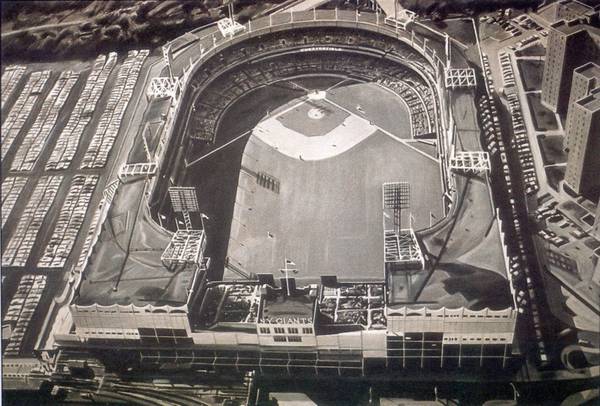
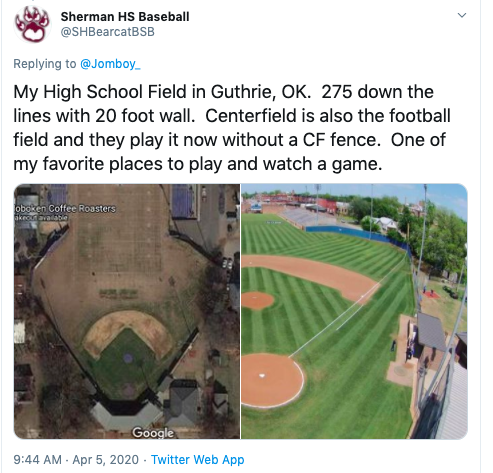
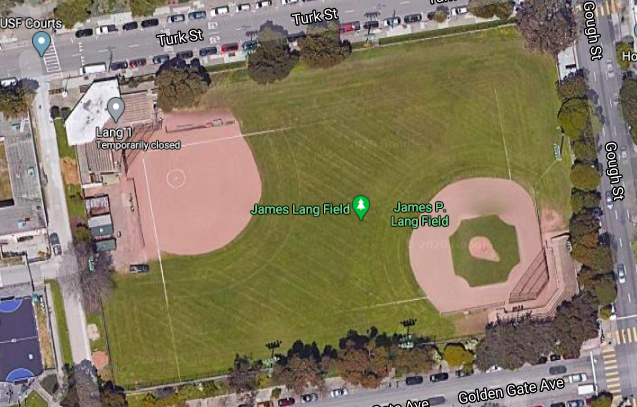

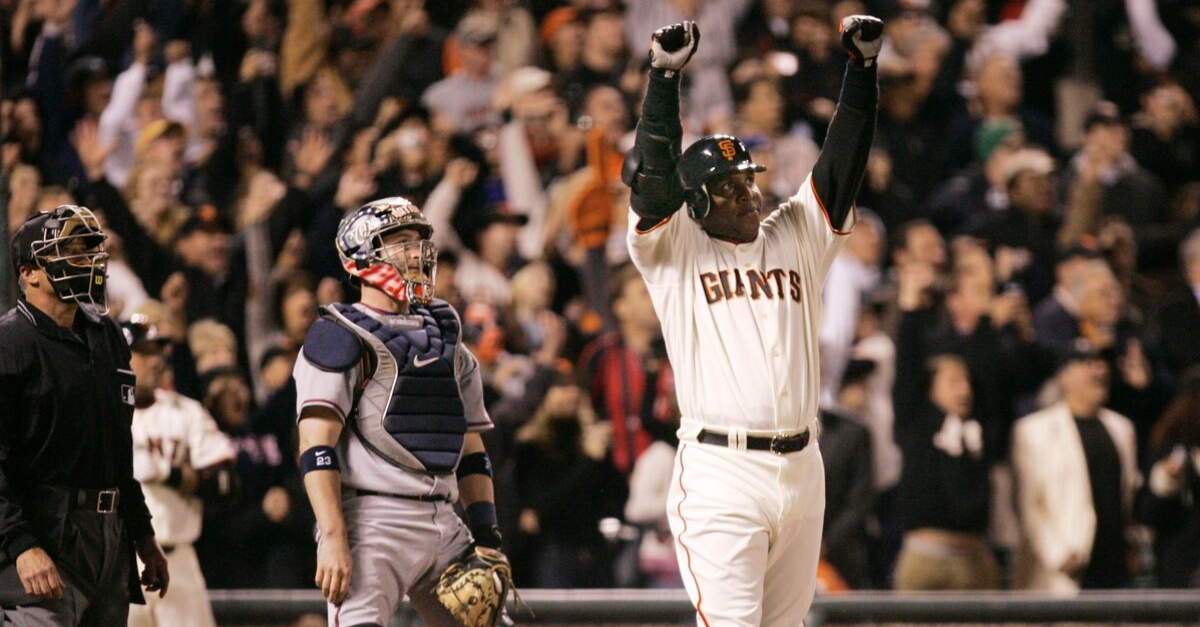
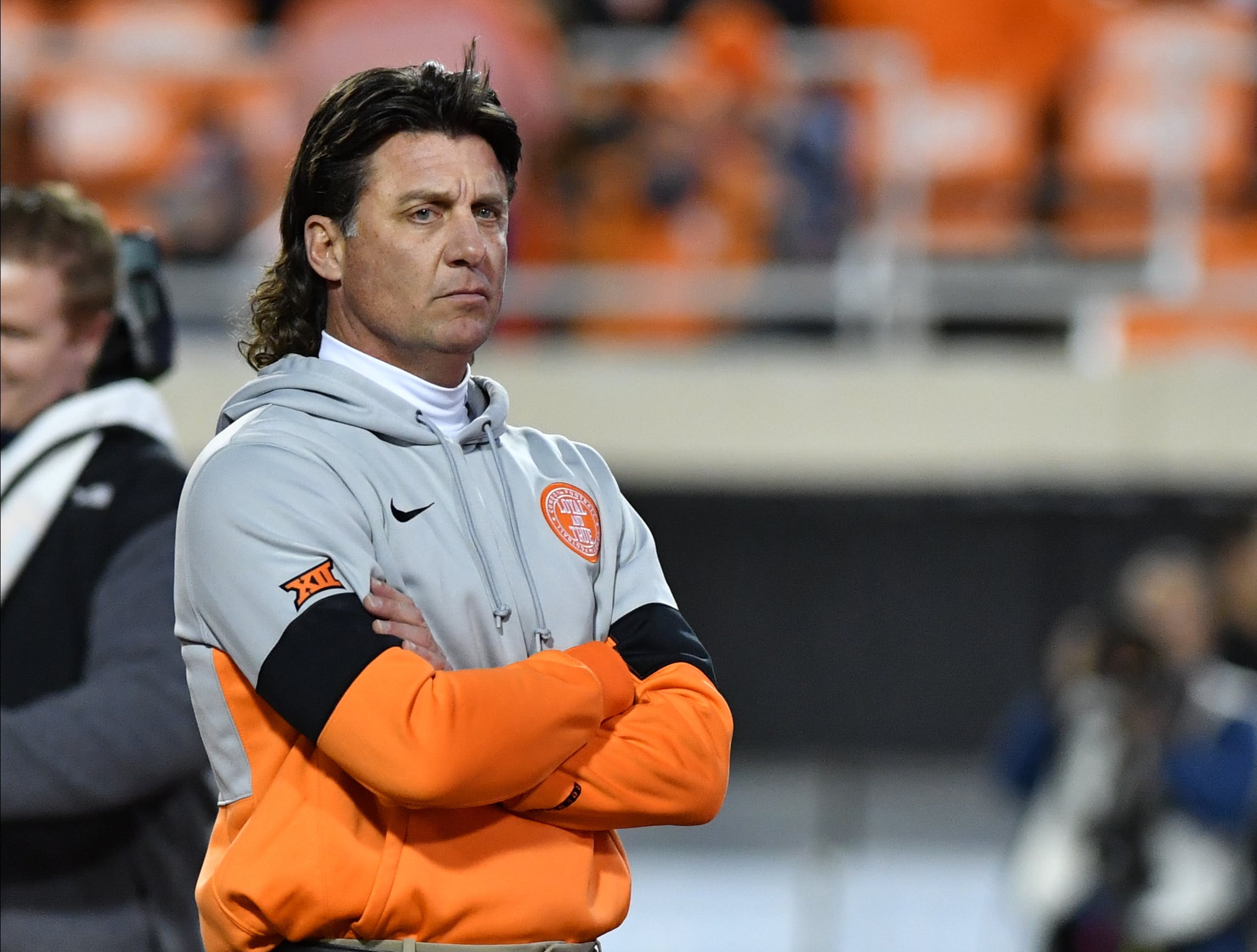
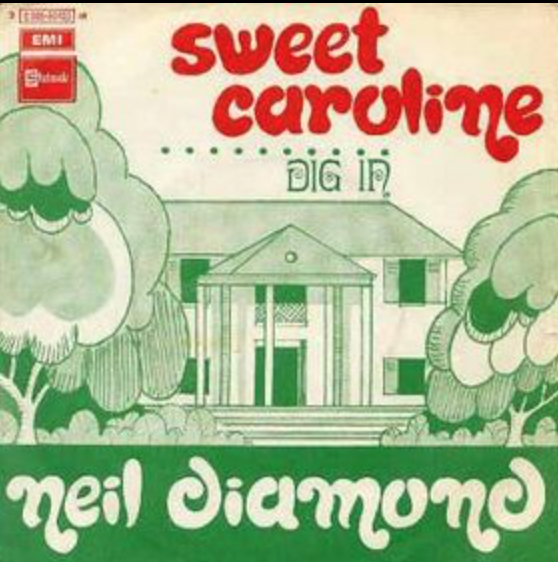

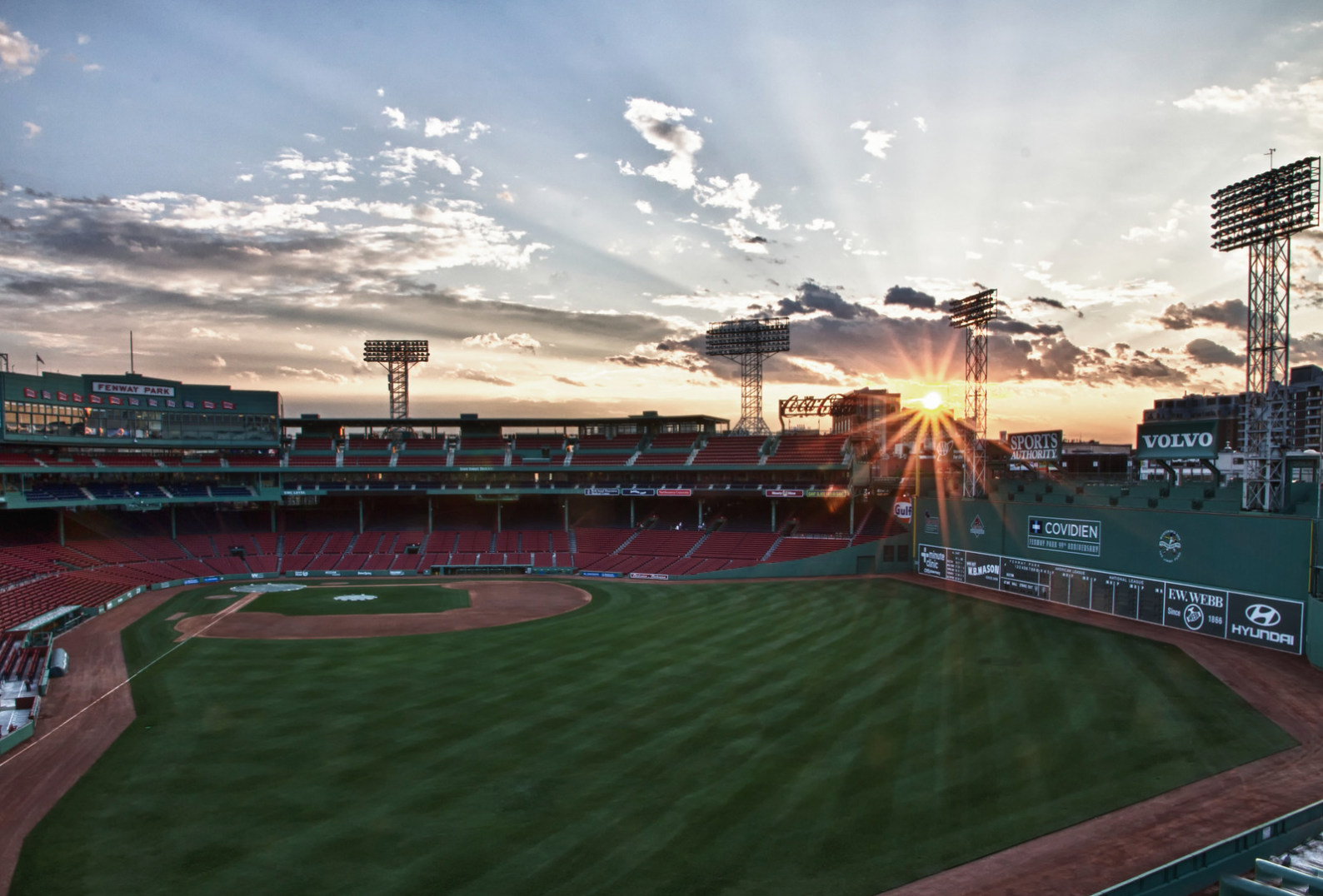

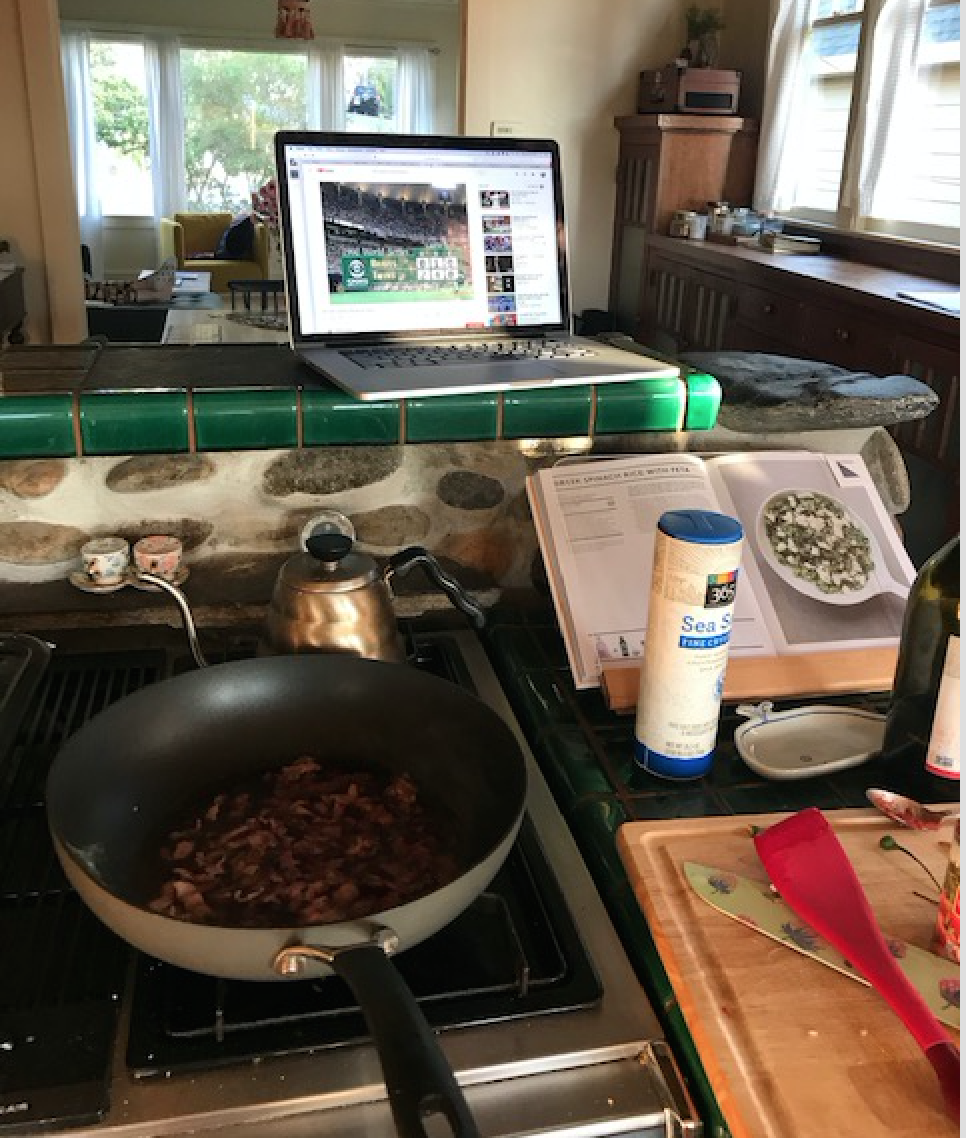

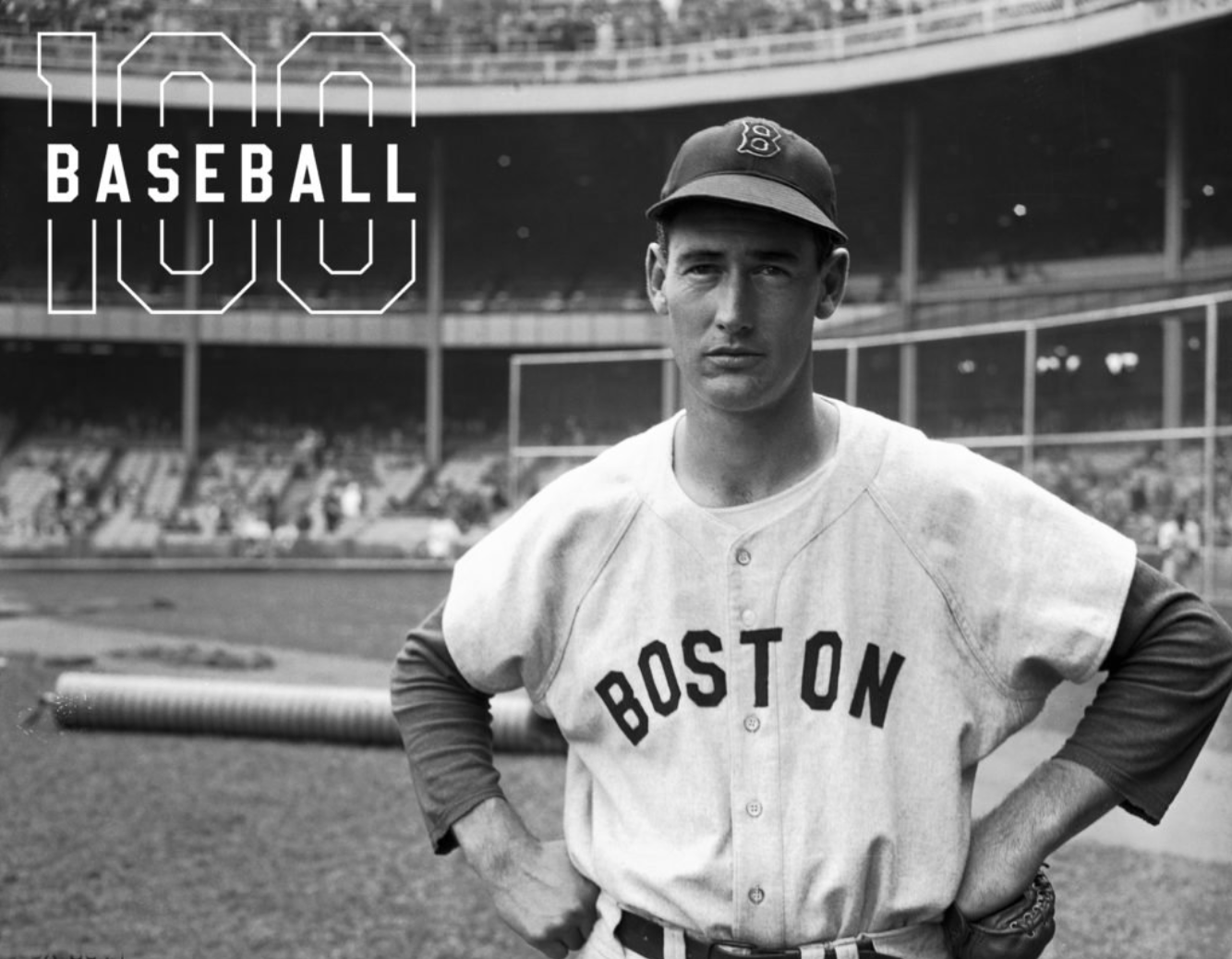
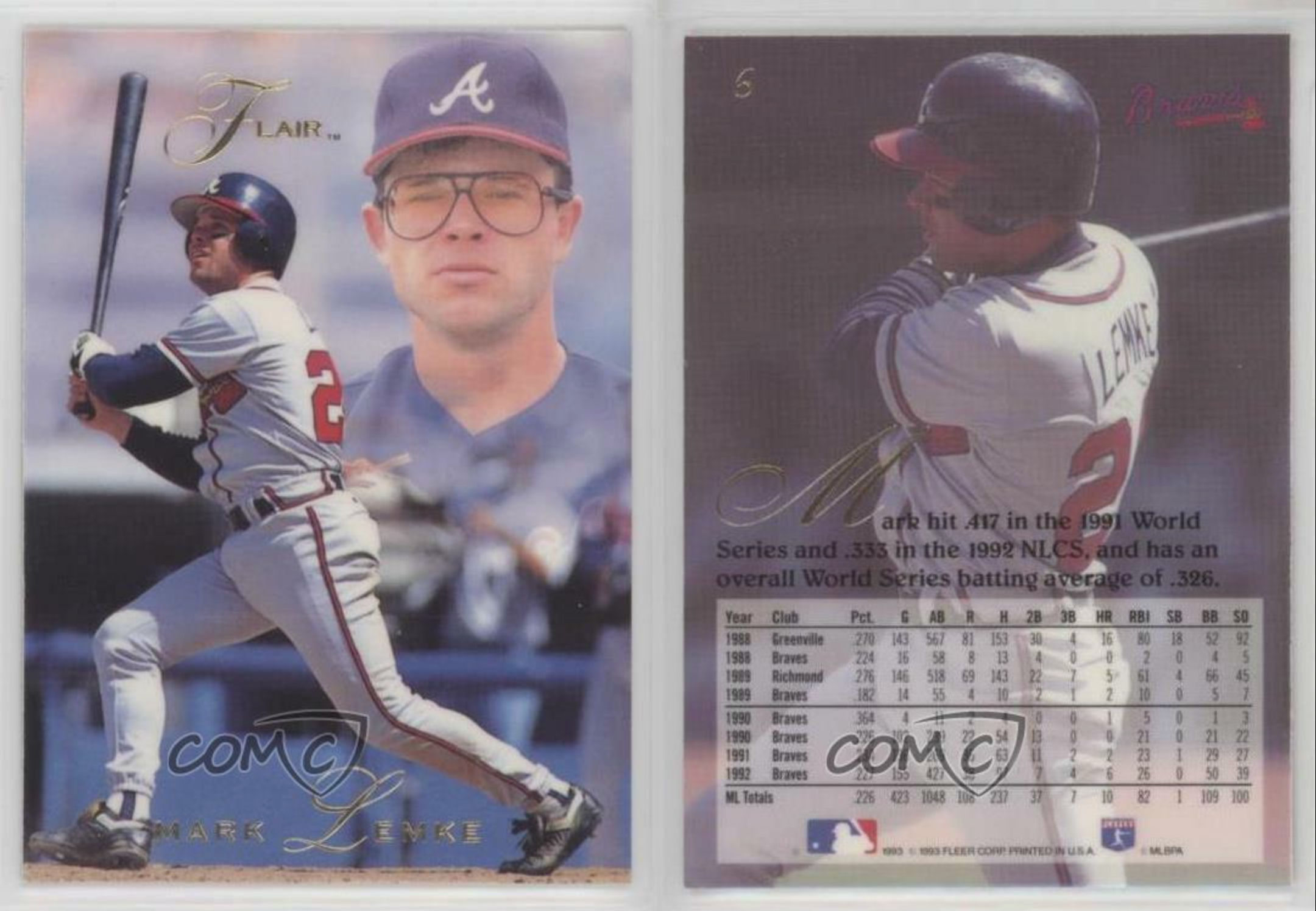
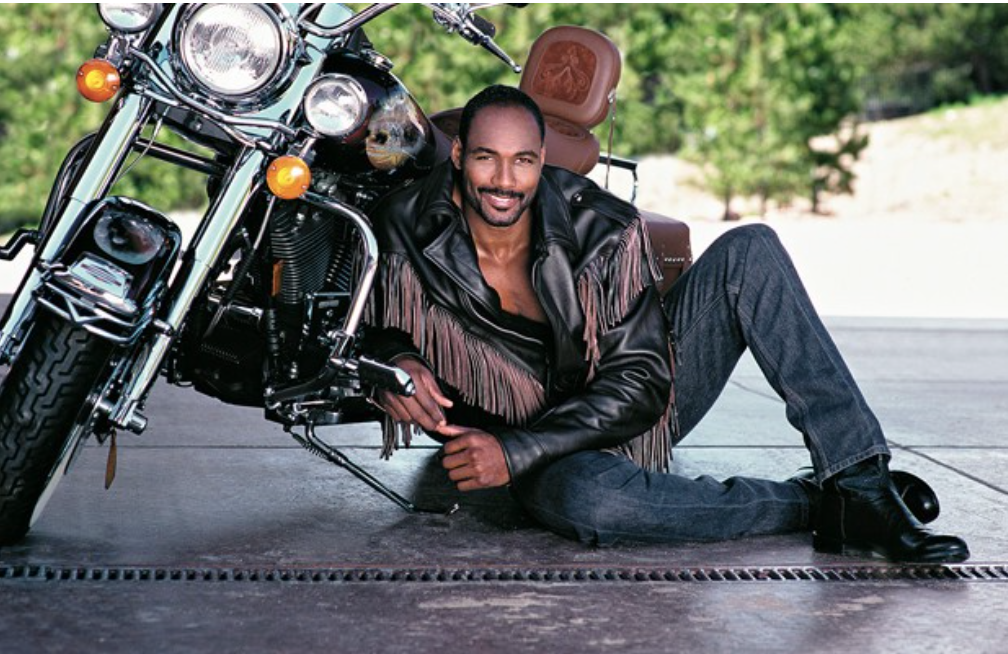
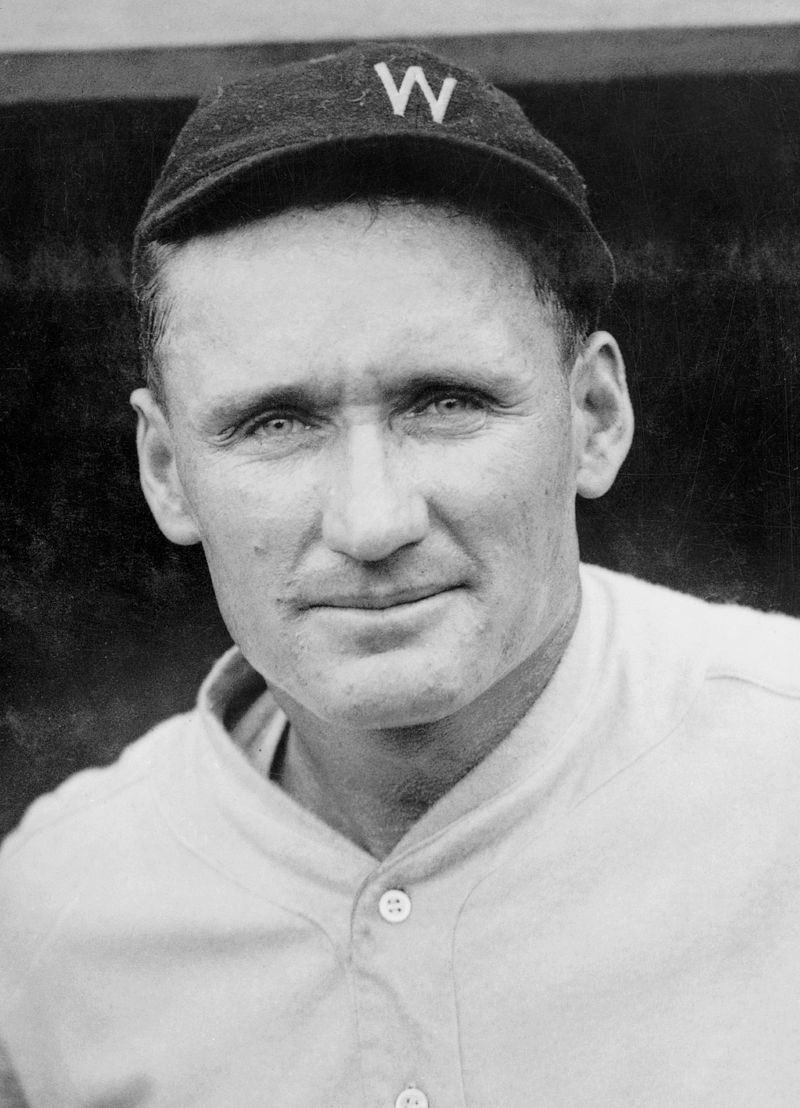
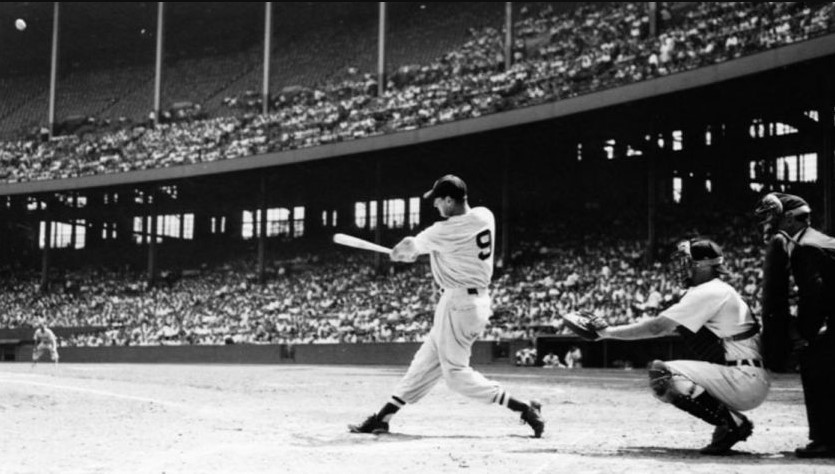
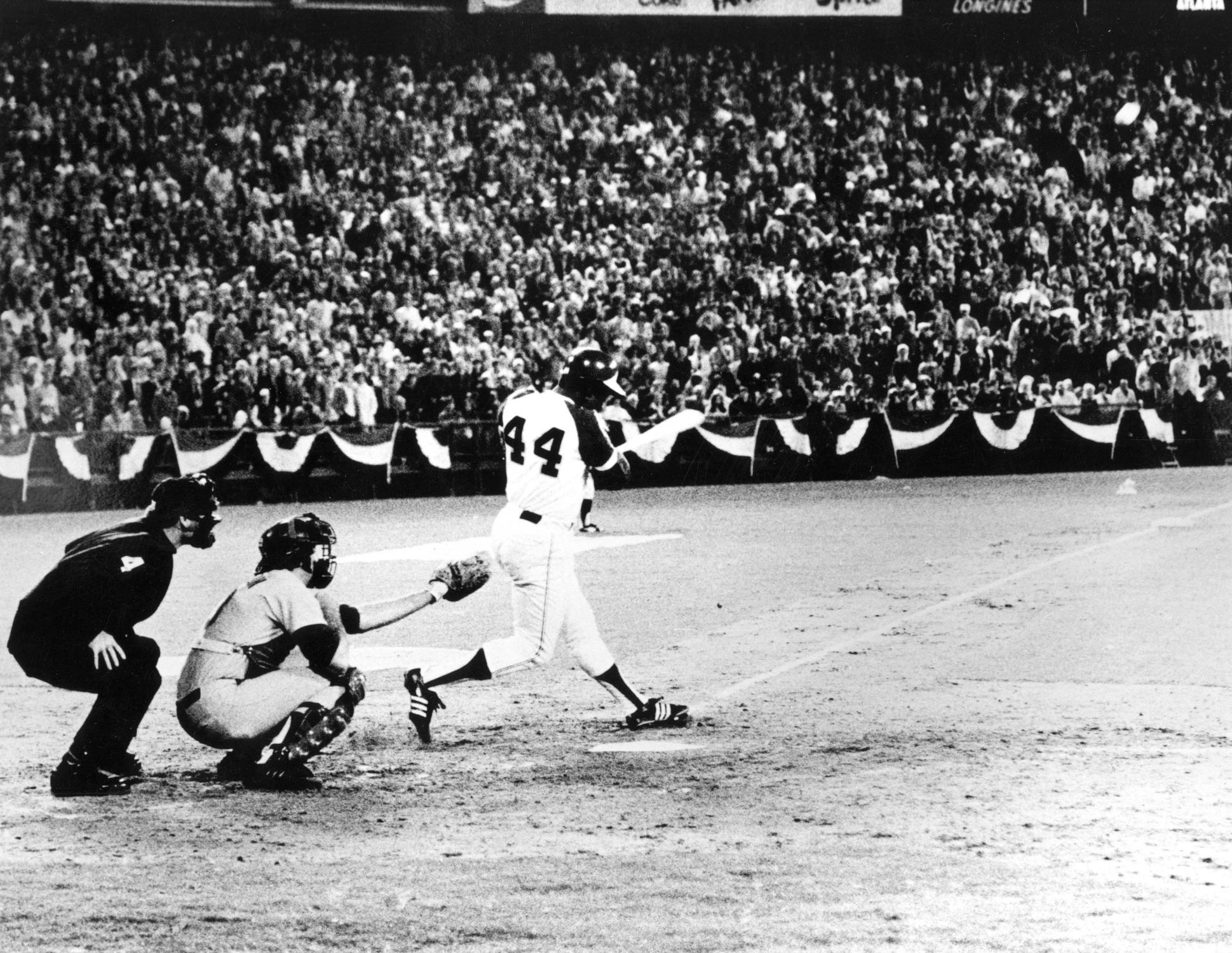
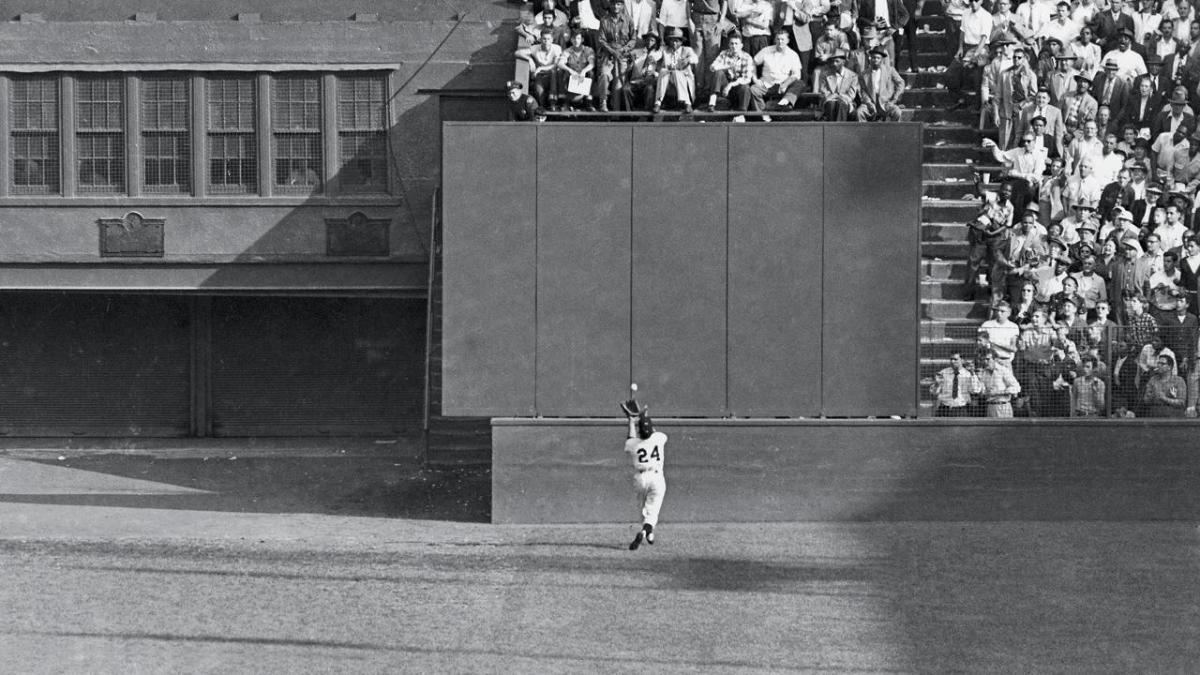

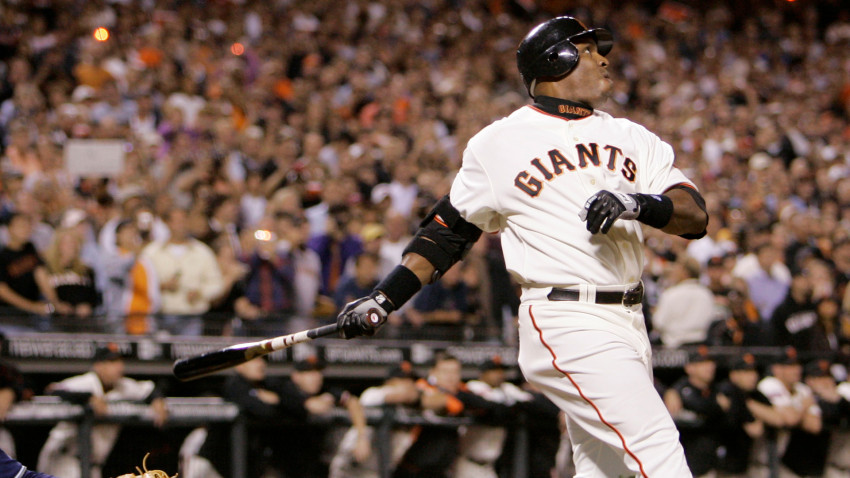
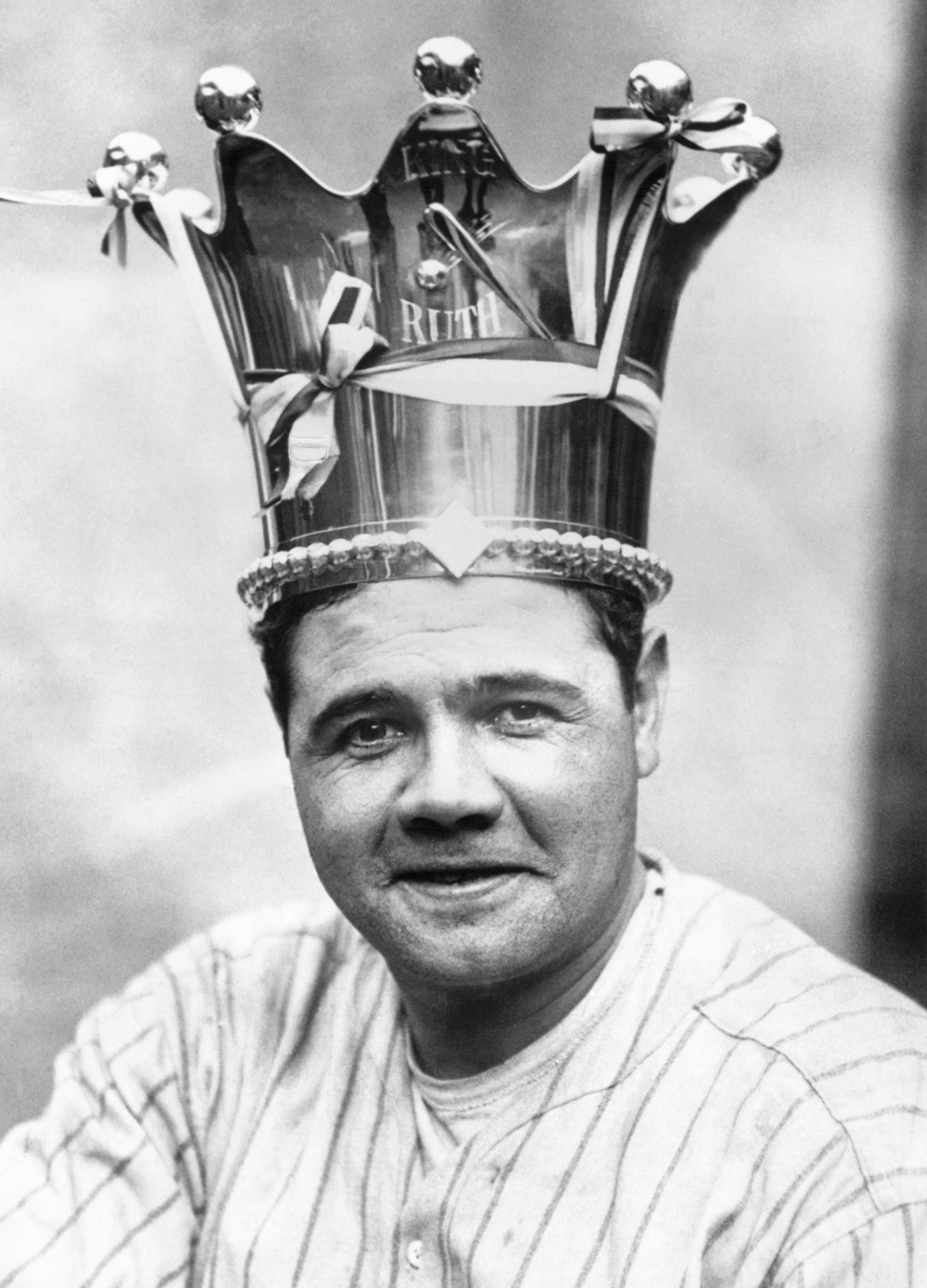
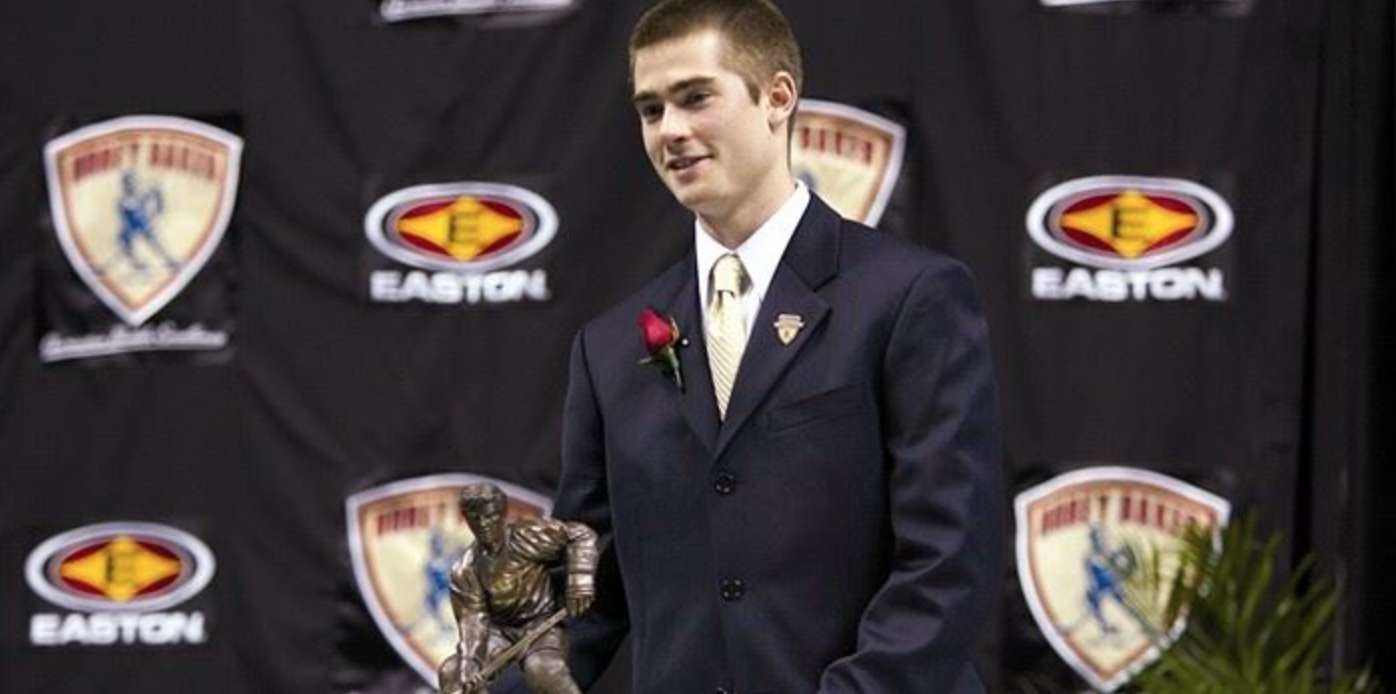


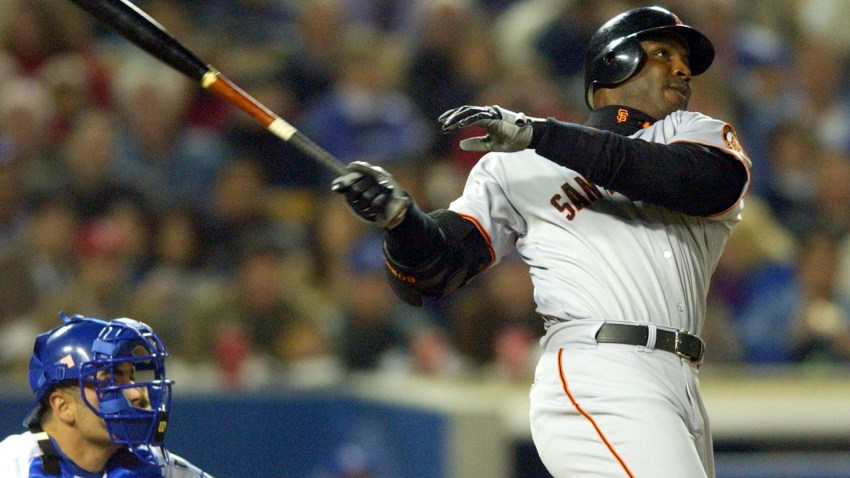
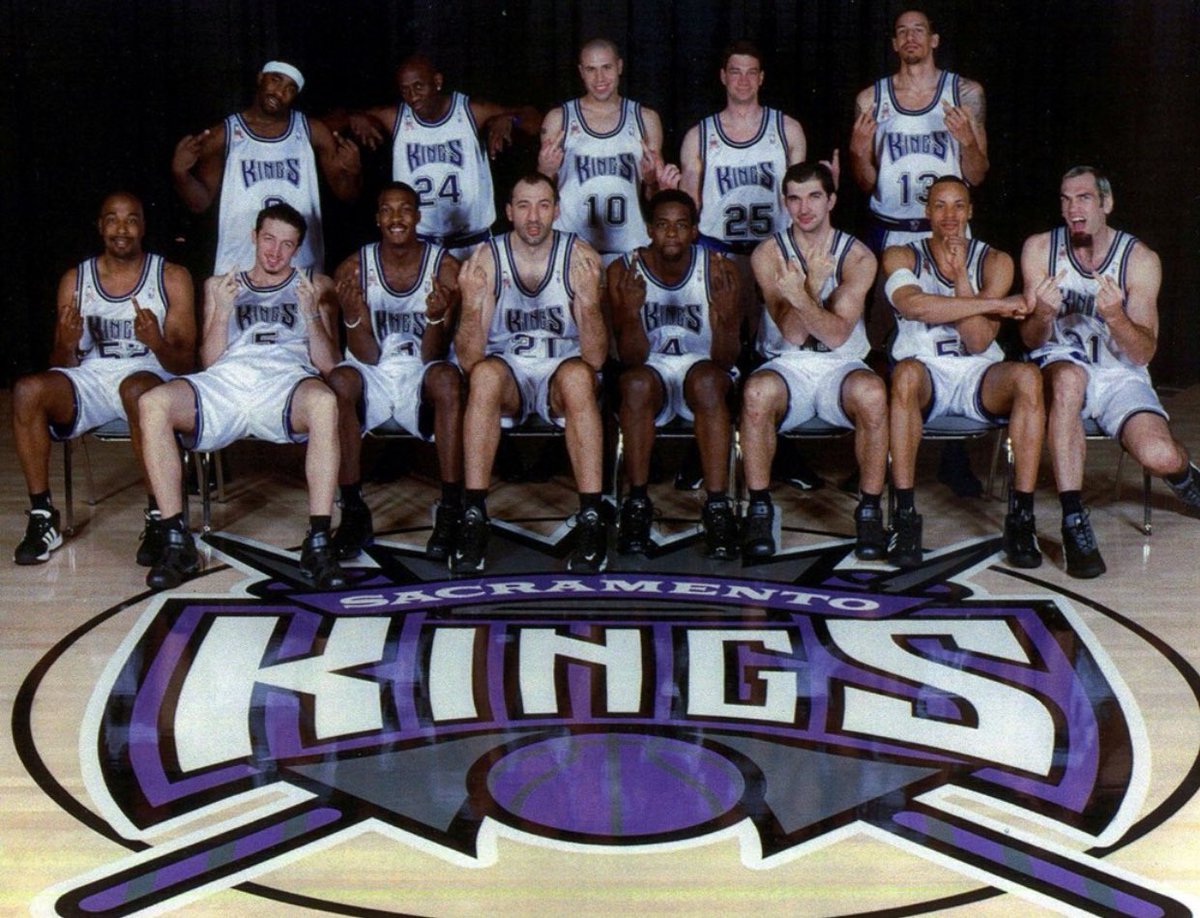
 1-2-3 SPORTS!