Week of January 19, 2018

My 2018 mantra. 


The Case for Organizational Stability

This is a really good article, exploring how two different NBA teams dealt differently with trade demands, and where they stand now. Last summer, two of the best NBA teams had their second best player come to the team and demand a trade. One of those teams gave in, making almost no effort to repair the issues leading to the demand. The other team refused and addressed the player’s concerns. A look at where those teams and players are now is a fascinating look at how to handle an unhappy player.

The latter, the San Antonio Spurs, told LaMarcus Aldridge, “Nah.” Well, they told him they’d trade him if they could get a player like Kevin Durant in return. Which…lolololol. Instead, Aldridge and coach Greg Popovich met over dinner and wine a number of times. They discussed the issues. Popovich realized he was a big part of the problem – Aldridge has been in the league for a long time, playing at a high level, and Pop was trying to force his square peg into a round hole. Aldridge’s play is much improved this year, putting up the best numbers since his apex in Portland.

The former, the Cleveland Cavaliers, traded Kyrie Irving. Owner Dan Gilbert made no effort to change Irving’s mind, and traded him a short time later without ever talking to Irving again. Irving, finally out of LeBron’s shadow, is excelling in Boston. The Cavs are stuck in a roller coaster season. They just got Isaiah Thomas, the centerpiece of the return they received from the Celtics, back from a pre-existing injury. The team is having trouble integrating their new, ball-dominant point guard. It’s hard to imagine the team is not wishing they had a do-over.

This isn’t really surprising. The Spurs have been fantastic for decades, and continue to be very good even after Tim Duncan’s retirement. The Cavaliers, meanwhile, for years have been buoyed only by the greatest talent in NBA history, in spite of the terrible ownership and management around him. It’s good to be the King, but I have to imagine LeBron looks at what Irving is doing in Boston and is really frustrated. -TOB

Source: How Cavs, Spurs Handled Trade Demands by Stars is Worlds Apart”, Brian Windhorst, ESPN (01/16/2018)

PAL: Agreed – solid story. Having said that, Pop is respected and in charge. As the owner, Gilbert is in charge, but all decisions are made with only one consideration: LeBron James. It’s the only logical approach for the Cavs. He is truly a force unto himself, but here’s an instance where that might not be a good thing.


Protecting Larry Nassar
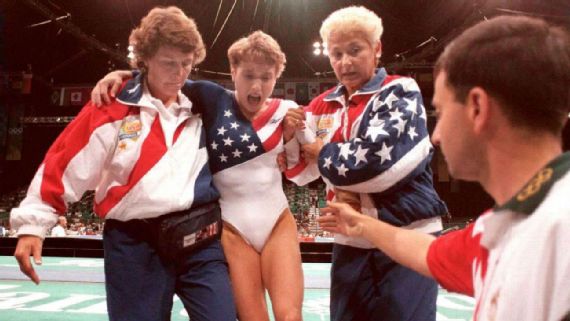
By now you’ve likely heard of Larry Nassar. He was the doctor who sexually abused hundreds young female gymnasts while serving as a physician at gymnastics clubs, Michigan State, and the Olympic team. He did all of this under the guise of medical treatment. It’s a disgusting, twisted, tragic story. A hard read, to be sure, but you really should read the link below.

As we learned with the Jerry Sandusky/Penn State and the Catholic church scandals, for atrocities like decades of sexual assault to take place there must also exist a culture of enablement. A different culture where the athletes/children’s wellbeing is first doesn’t change monsters like Sandusky or Nassar, but they certainly aren’t allowed to continue irrevocably damaging lives for decades.

Understanding how Nassar gained unfettered access to young girls and young women over the course of a quarter-century — despite repeated warning signs — means confronting an uncomfortable truth: He didn’t gain that access alone. Nassar was surrounded by a collection of adults who enabled his predatory behavior — a group that included coaches of club, collegiate and elite-level gymnasts, the USA Gymnastics organization, medical professionals, administrators and coaches at Michigan State University, and gymnasts’ parents, whom he groomed just as effectively as those he violated. Now that so much of the Nassar tragedy has been exposed, a lingering question remains: Were each of those enablers complicit or simply conned by a man described as a master manipulator?

As you will read in this story, the amount of times that girls and women had the courage to speak up about Nassar – truly believing doing so would put their gymnastic dreams at risk – only to be ignored or accused of outright lying is staggering. And then there are the women who were victim to his abuse at such a young age that they didn’t even know enough to know what he was doing was wrong.

Michigan State University allowed him to continue to treat athletes, and allow intravaginal treatments while under criminal investigation for sexual assault. “At least” 12 women have accused him of sexual assault during that time period.

USA Gymnastics also didn’t want to address the accusations around Nassar. The timing wasn’t good for them, as the Summer Games in Rio were fast-approaching. According to a mother of a gymnast who accused Nasser of abuse, the president of USAG, Steve Penny, called her and told her, “We need to keep this quiet.”

Gina Nichols says Penny repeated his initial request for discretion in several conversations over the ensuing months, requests that struck her, an operating room nurse, and her husband John, a physician, as odd. Penny, Gina Nichols says, put them in an impossible situation and “was in a position of authority over me and my husband. Our whole family gave up everything so we could put [Maggie] on this road.”

As medical professionals, the Nichols are both required by law to immediately report suspected child sex abuse to authorities, but, out of concern they would hurt their daughter’s future in the sport — and because they had been told Nassar had already been reported and any action on their part might jeopardize the investigation — they remained silent.

Sadly, parents like the Nichols played a role in enabling the abuse to continue. Many of them were friends with Nassar, and would drop their children off for treatments. It was a point of pride – their daughters were being treated by the physician treating Olympians. For some, they never knew what was going on, but others simply wouldn’t believe their daughters when they told their parents what was taking place.

Of all the terrible stories, this was the hardest one for me to read:

Stephens, whose father did not believe that she had been abused, says the fact she refused to apologize to Nassar was a constant subject in what had become a contentious relationship with her father. She says he branded her as a liar. Her father suffered from chronic debilitating physical pain throughout much of her life, and she says the cocktail of drugs he was prescribed to manage that affected his mental well-being.

A month before she left for college in 2010, she decided it was time to try again to tell her father that Nassar had assaulted her.

“I wasn’t lying,” she remembers telling him, before his hand shot out and pinned her neck to the chair where she was sitting. “Then he said — well, he growled, ‘What did you say?’ I gasped, ‘I wasn’t lying.’ He said it again. I was basically choking, and I said, ‘I. Was. Not. Lying.’ He just crumpled. You could see his face just completely shatter, like, ‘Holy shit, this 18-year-old doesn’t have any reason to stick to that story at this point.’ He just sat on the couch and just stared into space for a while.”

On March 30, 2016, he died by suicide.

Again, this is a hard read, but it’s important for obvious reasons. It’s also a reminder of the kind of quality reporting can be done when enough attention is given to a story. – PAL

Source: Nassar surrounded by adults who enabled his predatory behavior”, John Barr & Dan Murphy, ESPN (1/16/18)


How Big of an Asterisk Do You Got?

This is one of those instances when I’m not sure what’s better: the story or the subtext. Fresh off the Minneapolis Miracle (see video below), the Minnesota Vikings are one single win against a backup QB away from being the first team to host the Super Bowl.

The usual rule with regards to ticket allocation is the following:

  • 17.5% to NFC team season ticket holders
  • 17.5% to AFC team season ticket holders
  • 5% to host team ticket holders (in this instance, that would also be the Vikings)
  • The rest is divvied up amongst NFL sponsors, “auxiliary press”, and – you know – rich people with connections.

If the Vikings win against Philly, they would split that 5% with the AFC team, meaning both teams would have ~20% of the capacity seating. At US Bank Stadium, that breaks down to a little over 13K seats that season ticket holders, picked by random drawing (please), can have the opportunity to purchase for $950.

Nearly 40K of the 66,655 of the seats will be held for the sponsors and whatever the hell “auxiliary press” means. I knew sponsors get a good chunk of the tickets, but I didn’t know it was that high.

OK, so this story amounts to an interesting factoid, but the subtext here is fantastic. While the comments are pretty mellow, I can just feel Vikings fans gripping while reading this story. Do I mention the story to a friend? Does the mention of it jinx the entire thing? If I win the drawing do I go, or do I sell the tickets, and what does that say about my fandom? Life is about the experiences!…but 8K sure would help out right about now.  

I promise you all of these scenarios are racing through every Minnesota fan’s mind. 

By the way, the photo up top has nothing to do with this story. I had to share what appears to be the dumbest collection of tattoos this side of Arnoldisdead- (yes, that’s real). An NFL shield, the classic barbed wire, the Vikings head, “Freak” in with an old English font, and what appears to be a Cowboys star.  – PAL

Source: If The Vikings reach Super Bowl season ticket-holders find out Monday if they can buy tickets”, Ben Goessling, Star Tribune (1/17/18)


This Is Not a Political Story

But it sure is funny. As you might know, Donald Trump’s doctor released a few details from his annual check-up. Among them, Trump is listed at 6’3, 237 pounds. As the article points out, Trump claims to be a great athlete: “I was always the best athlete, people don’t know that.” Totally, Don. Dan Gartland helpfully puts Trump’s stats into context, comparing him to professional athletes of similar proportion. A sampling:

That Trump, what a great athlete. h/t Michael Kapp -TOB

Source: “Athletes Who Are the Same Size as Donald Trump”, Dan Gartland, Sports Illustrated (01/16/2018)

PAL: Love this. Humor me: what would your reaction be if a friend told you, “I was always the best athlete, people don’t know that.” I’ll answer on your behalf: You would scoff, then tell him to shut the hell up, and then never completely trust his opinion from that moment until the day you die.

Also, there is no friggin’ way he’s 237. Not a chance in hell. 267 maybe, but not 237.


Videos of the Week: 

PAL’s Song of the Week: Sean Rowe – “Newton’s Cradle” (c/o Jamie Morganstern)


Like what you’ve read? Let us know by following this blog (on the right side, up near the top), or:

Email: 123sportslist@gmail.com
Twitter: @123sportsdigest

Facebook

Instagram: @123__sports


I thought about getting a tattoo on my back as well at one point. I was thinking about getting ‘Back to the Future’. ‘Back’ because it’s on my back. And ‘Future’ because I’m the kinda guy who likes to look ahead, into the future. I just think a tattoo should mean something, you know? And it’s my second favorite movie.

-M.Scott

Week of January 12, 2018

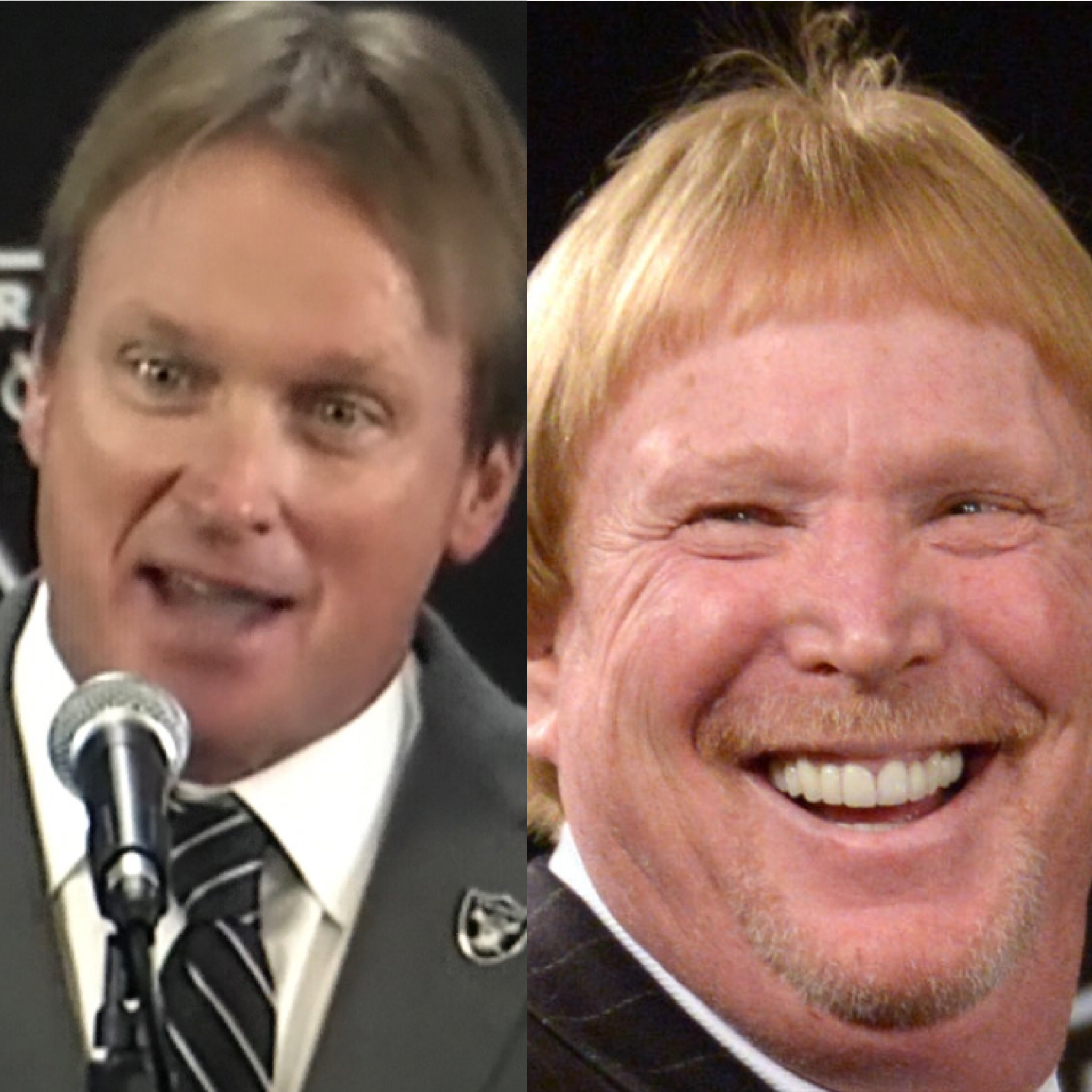
When your new boss pays you $100 million, you use his barber.


Tonya Harding Was This Close To Being A Real Life Rocky

Funny story: A few weeks ago Natalie and I were having dinner with a couple friends and Tonya Harding’s name came up. Our friends chuckled. Natalie asked, “Wait, who’s Tonya Harding?”

If you ever wanted to know the difference between being 28 years old and 35 years old today – Natalie’s question is as precise an indicator as you’re ever going to find.

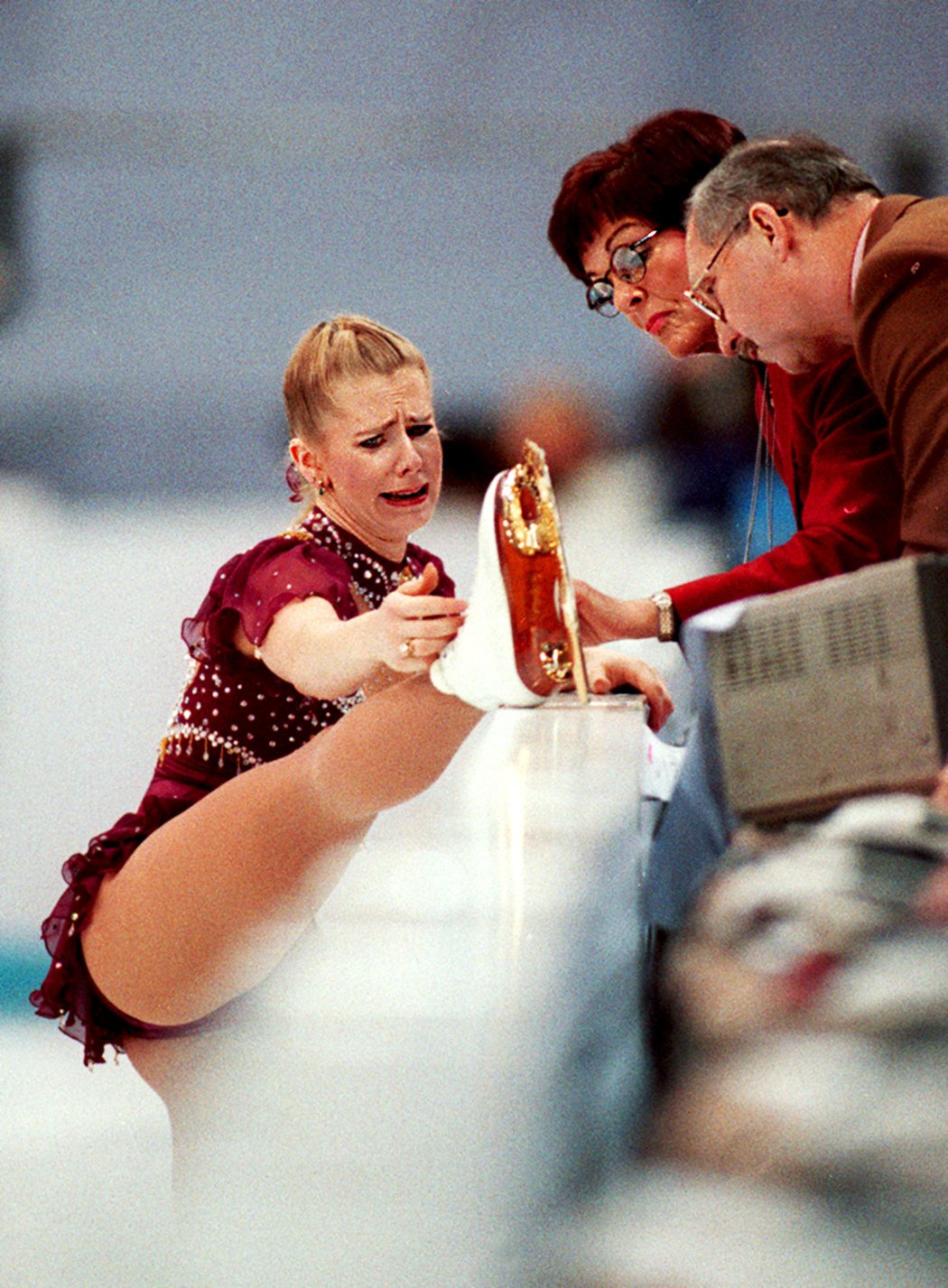
For those of you older than Natalie, I don’t need to tell you who Harding is (and for the young folk, here’s the gist of the story). The feature film I, Tonya, released back in December (I haven’t seen it yet) profiles the person at the center of the most famous Olympic scandal, so it makes sense for Taffy Brodesser-Akner to meet up with Harding 23 years later. I like how she went about a profile about a person who is trying to leave her past behind while still clearly bitter about her past.

Let’s start with the name. Tonya Price. She recently married and took her husband’s name. For a serious reporter, Bodesser-Akner has to be accurate. Her name is Tonya Price, and so she really should refer to the skater by her current name. But this is a story about Tonya Harding. Tonya Price is also Tonya Harding. It turns out the name confusion is actually a perfect metaphor. “This is basically how this entire story goes,” Bodesser-Akner writes. “There are facts, and then there is the truth, and you can’t let one get in the way of the other or you’ll never understand what she’s trying to tell you.”

Price/Harding goes on to tell her version of the Tonya Harding story, and it’s a grim one. This lady did not have it easy. A very poor, abused, tiny, but powerful skater trying to upend a sport that essentially judges on feminine grace. But for perhaps a broken skate lace, Harding might very well have won gold, and all of a sudden hers is added to the pantheon of great american underdog stories. Rose up from nothing to win a gold medal in a stodgy, beauty pageant sport of figure skating. However, the lace did break, and she was found guilty of not reporting that she knew who did the deed on Kerrigan’s knee (Price still insists she only knew after the assault). The underdog story vanishes, all the scrapping and grinding – all those values we love to associate as somehow uniquely American – they will never be associated with Harding.

Over drinks in Washington, Bodesser-Akner wants to hear Price’s version of the story, and she gets it. The writer’s final take:

Here’s the thing: A lot of what she said wasn’t true. She contradicted herself endlessly. But she reminded me of other people I’ve known who have survived trauma and abuse, and who tell their stories again and again to explain what had happened to them but also to process it themselves. The things she said that were false — they were spiritually true, meaning they made her point, and she seemed to believe them.

…Here is something I’ll never understand, that you can be sitting across the table from someone who certainly did something bad, who appears to show no remorse for it and you can still feel the oxytocin rush of love and sympathy for her.

Interesting read, especially for us over the age of 28. – PAL

Source: Tonya Harding Would Like Her Apology Now, Taffy Bodesser-Akner, The New York Times (01/10/2018)

TOB: Longtime readers of the blog will not be surprised that I rooted for Tonya Harding over Nancy Kerrigan. At 12 years old, I didn’t even know the emotional and physical abuse she endured – I just saw the crap she took from the sports media and was drawn to her as the underdog. After the attack I was lukewarm, but still didn’t like Kerrigan. I felt vindicated when her infamous Disney World video surfaced.

This was your darling, America!

Anyways, I watched the 30 for 30 documentary about the whole thing, and it was pretty sad. I read this article, and it’s also sad. Tonya Harding/Price has certainly been treated unfairly, and poorly, by many people in her life. But as Phil notes, she’s unable to move on. I haven’t seen I, Tonya yet, but I am happy that Tonya liked it, and felt her story of abuse was finally told, even if others see the movie in another light.


Bill Simmons Should Retire

This morning, Bill Simmons posted his thought on last Friday’s Seth Wickersham article on the reported inner-turmoil with the New England Patriots. Simmons’ take is bad. It was so bad that I postponed our post and quickly wrote this up. As he did on his podcast, Simmons argues that many points in the Wickersham story shouldn’t be believed because they were “denied”. Oh, ok. The principals of a big story deny the veracity of the details and therefore the story is necessarily false? I take biggest issue with the following, though:

 I know someone who spent time with Kraft last weekend; Kraft was more dumbfounded by the story than anything.

We couldn’t afford to keep both of them, Kraft kept saying. Why is this so hard to understand?

Let’s unpack this. First, Simmons uses an unnamed source, something he complains about in Wickersham’s article. In the same moment, he attempts to use his connections to give himself some authority. Then he quotes Kraft, without actually quoting him, and uses this “quote” to refute the report that Kraft ordered Belichick to trade Garoppolo. But does it, really? All that it actually says is Kraft was dumbfounded because they couldn’t keep both of them, and why can’t people understand that. How does that refute that Kraft was involved in a personnel decision? Doesn’t it more likely support Wickersham’s report? Other reports say Garoppolo was offered a large extension. If Belichick is in charge of player personnel decisions, that means he made the extension offer to Garoppolo. But if Kraft said they couldn’t afford both Brady and Garoppolo, then doesn’t it follow that Kraft vetoed Belichick’s attempt to keep both of them, and Kraft ordered the trade?

Simmons also draws a terrible comparison to Kraft allowing Belichick to bench his “beloved” Drew Bledsoe in favor of 6th round pick Tom Brady, and allowing Belichick to release or trade other players, like Jamie Collins. That comparison is laughable. First, Bledsoe got hurt, and wasn’t available until the playoffs, and by that time they were on a roll with Brady. Second, Bledsoe never won a Super Bowl. Brady has won five. You think Kraft felt the same loyalty to Bledsoe as he does to Brady? No. Kraft has said Brady is like a son to him. Brady has said Kraft is like a second father. You think Brady is like Jamie Collins, Simmons? Get outta here, man. Seriously, it’s time to retire from writing. You’re rich and lazy. Your writing is lazy and dumb. You’re so far from objective that it’s painful. -TOB

Source: The Story That Tried to Divide Brady and Belichick“, Bill Simmons, The Ringer (01/12/2018)


Baseball: The (Potentially) Neverending Story

One of the greatest things about baseball is that you can never run out of time. You can and will run out of chances, if you don’t make good on them, but you can never say, “Geeze, things might have been different if we had more time.” 27 outs. That’s what you get. That’s what the other team gets. Theoretically, a baseball game could go on forever. A team could simply never make 27 outs. But there’s another way a baseball game could go on forever – extra innings. Again, theoretically, a baseball game could go on forever, as long as neither team leads after each complete inning after the ninth. It’s sort of wild when you think about it, and that brings us to this great Sam Miller article.

Sam opens the article by invoking the great Eli Cash:

On Sept. 5, Hanley Ramirez flared an 0-2 fastball into shallow center field. Toronto Blue Jays center fielder Kevin Pillar charged in but couldn’t catch the ball, and Mookie Betts — who took off almost on contact — raced home from second to score. With that bloop single, Ramirez and the Boston Red Sox won the longest game of the 2017 season, after 19 innings, 544 pitches and exactly six hours of play.

What this article presupposes is: What if they didn’t?

What follows is an excellent exploration of the stages players, and fans, would go through if a baseball game went 50 innings. My only issue is this – the game he chooses to piggyback off of is a regular season game. Though it had some playoff implications, it’s still just 1 of 162 games. What I want to know is how MLB, and the networks, would react if a playoff game went that long. In the regular season, the players, managers, and even the league may eventually decide to call it a night and come back the next day. But in the playoffs? In the World Series? In a Game 7? What do they do?

In Game 2 of the 2014 NLDS, the Giants and Nationals played 18 innings, in a game in D.C. It was a day game (well, it was day here), and Phil and I watched the game at McTeague’s, a bar here in SF where we watched most of the Giants’ 2012 and 2014 playoff runs. I’ll never forget the bewildering and disorienting feeling walking out of the bar after the game and realizing it was still daylight. I’ll also never forget the intensity of every single pitch in the bottom half of innings 10 through 18. With one swing, the game could end.

MLB was lucky it was not a later game. Many MLB playoff games begin at 7pm, even 8pm EST. That game lasted 6 hours and 23 minutes, and it was on a weekend. Imagine it was a Tuesday night, and began at 8pm EST – it would have ended at almost 3 am. What would MLB do in that case? What would they do if it went another 6 innings? Miller’s article points out that, unlike in prior eras, MLB no longer has a curfew. The current record holder for longest MLB game in the modern era is a 1984 game between the Brewers and White Sox, but that game was paused due to curfew, and later resumed. Would MLB stop a playoff game and resume it later?

And what of the long lasting effect on the clubs? In a playoff series, it would almost certainly be a pyrrhic victory. You might win that game, and even the series but it’s going to so thoroughly screw up your bullpen and your rotation going forward that you’d have no shot in later rounds (of course if this happened in the World Series, there’s no such concern).

The other interesting aspect of this is the long term effect of the players themselves. Miller invokes what he calls the Something Important phase of an extremely long game. The Something Important phase is where fans and players realize that history is in the making (which I buy wholeheartedly, after having sat through that 18-inning Giants game mentioned above – very few things could have dragged me away). Miller discusses a college baseball game from 2009 between Texas and Boston College. It went 25 innings. Texas’ closer threw thirteen innings of shutout ball. As Miller relates:

Around the 15th or 16th inning, Austin Wood, Texas’ senior closer, was approaching 100 pitches of no-hit relief. He approached head coach Augie Garrido: “Don’t you even think about taking me out of this game.” He would end up throwing 13 scoreless innings in relief, 169 pitches, a performance that can only happen if the limits of the game get so badly extended that unthinkable possibilities can fit within them.

“When a player breaks through to that level, it changes his life,” Garrido said at the time. “… Now he knows something not many people know: You really can be anything you choose to be. … And if he gets a sore arm in the next 10 years, it’ll be my fault.”

And, was Wood’s career affected? You betcha.

“His professional career ended three years later, after shoulder injuries, and plenty of people think Garrido’s decision was unforgivable. Wood has defended Garrido, first by saying there was no connection between that game and his injuries, but ultimately concluding that it doesn’t matter if there was a connection: “If you offered me anything in the world, I don’t think I would trade it for the experience of playing in that game,” Wood told the Austin American-Statesman later. “It was that meaningful.”

Man. It’s hard to understand that statement. We don’t know that this game cost Wood his career. But he essentially says even if it did, he’d do it over again. 13 innings and 169 pitches are worth an entire MLB career? I wonder if he’d say the same thing had Texas lost.

Anyways, go read the article. It’s fantastic. -TOB

Source: What Would Happen if a Baseball Game Went 50 Innings?”, Sam Miller, ESPN.com (01/09/2017)

PAL: Such a fun read, folks. TOB nails the summary above, but one other comparison Miller provides is that of endurance dancing. It was a brief craze in the 1920s, and after watching some video on it, I concur with Miller: it’s the most miserable thing I’ve ever watched.

Also, TOB and I did not watch this game together (but we watched most of them at McTeague’s). I actually heard the Belt homer on the radio while sitting on a porch. Kind of cool to experience the greatest of baseball feats (game-winning playoff homer) over the radio. Thought the connected backyards, you could hear the neighbors all but jump up when he hit it, then lose it when it went over the fence.


Please Don’t Speak Ill of Canadians, Eh.

This is so damn funny. Some San Jose Sharks players were asked to name their least favorite road trip. Tomas Hertl, Justin Braun and Tim Heed all named Winnipeg, citing the fact that it’s cold, it’s dark, and the hotel wifi is slow. Honestly, that’s pretty inoffensive. Well, the prideful city of Winnipeg disagrees. The CEO of Economic Development Winnipeg was trotted out to correct these Sharks:

Spiring also noted the Sharks players have their facts wrong. Winnipeg is actually the second most sunny city in Canada with an annual average of 2,353 hours of sunshine, just below Calgary at 2,396.

As for temperatures, Braun’s home city of Minneapolis is much the same as Winnipeg.

Winnipeg’s average temperatures range between –12 C in the winter months to 26 C in summer. Minneapolis has an average of –9.1 C to 23.2 C.

Hertl is from Prague in the Czech Republic, where the temperature range is –3 C to 25 C. And Heed’s home of Gothenburg, Sweden, where winter temperatures average –3 to 3 C and summer temps average around 20 C.

That’s super funny. But, I’ll allow the retort so long as it ends there. Oh, no sir. It will not end there. Winnipeg Jets coach John Hockeyguy stepped in to give the Sharks a little whatfor.

The coach began by noting he hadn’t heard the comments. Perhaps a reason not to comment? Nah. Where’s the fun in that? Coach Hockeyguy then proceeds to lecture the Sharks players, and every player in the NHL, about how petty it is to whine about the cold and the dark and the slow wi-fi, when by god, they’ve got a good life.

#FirstWorldProblems, am I right? -TOB

Source: The Winnipeg Kerfluffle Has Reached Dangerously Canadian Levels”, Barry Petchesky, Deadspin (01/09/2018)

PAL: I love when coaches insist they “didn’t read” the story on which they’re being asked to comment. They usually make it about 1.5 sentence before they can’t contain themselves, and they take a “where are we at in the world today” stance. Guys, you aren’t generals in a war. You’re not giving away strategic positioning. You tell extremely talented athletes when to go in the game and when to come out of the game. No one will think less of you if you admit that you’re keeping tabs on the insignificant details.


Real Worms Vs Fake Worms

This article crystalized what we’ve known for years: sports stories can be – and oftentimes are – created out of nothing. The qualifications to what makes a sports story newsworthy have become blurry at best. Most of our news is provided by companies that earn large chunks of their revenue from advertising. Advertisers want eyeballs and clicks-thrus, and stories that generated the most clicks will be reported and posted – newsworthy or not.

This is why you know LaVar Ball, father of Lakers rookie Lonzo Ball. LaVar drives clicks and eyeballs. He says crazy things in a bombastic tone. Like this:

This was not the first time LaVar said that. But let’s be honest, sports dads say some pretty absurd stuff, they just aren’t sitting on a TV set while saying it. He’s a dad. Dads are more or less crazy about their kids’ sports (TOB: Careful…). A dad’s commentary about his son’s basketball abilities hardly seems like news. But ESPN helped make it one, and they’ve done this before.

A few years back, our old pal John Koblin wrote a piece for this here website about ESPN manufacturing a sports story out of thin air. It began, in that case, with ESPN football pundit Ron Jaworski issuing the empty but hot-sounding statement “I truly believe Colin Kaepernick could be one of the greatest quarterbacks ever” (my, how times have changed!); other ESPN properties treated this statement as news and other ESPN pundits reacted to it, leading eventually to Kaepernick (then with the San Francisco 49ers and not yet famous for kneeling during the national anthem) being asked to comment on it, and ESPN treating his comments both as newsworthy in and of themselves and also as the basis for the weird meta-story that an ESPN employee (Jaworski) had said something controversial. The playbook for this sort of thing goes back farther than that, as Koblin noted—at least as far back as when the network staged its own phony intramural culture war over Tim Tebow and sustained, for whole entire years, the entirely fictional story that either Tebow’s football ability or his performative religiosity were matters of genuine controversy anywhere outside the folie à deux between ESPN and its own viewership.

On and on we go. ESPN’s take on vertical integration.

LaVar Ball is not new. He’s just the soup du jour, and we say, ‘Mmmm. That sounds good. I’ll have that.’ Here’s the playbook tailored to the Ball family. Note: LiAngelo just left UCLA (he was a freshman), and LaMelo was a junior in high school.

An ESPN reporter seeks out—in Lithuania!—a noted blowhard and wrings a controversial take out of him (despite the blowhard’s best efforts to temper and walk back that take pretty much as it is leaving his mouth). ESPN spends the following days performing air-raid drills behind it, spawning a succession of follow-ons: Lonzo Ball is asked to, in essence, choose between his coach and his dad, and his tepid choice of athlete-interview boilerplate itself becomes a story; hysterical NBA coach’s union president Rick Carlisle says ESPN has betrayed its covenant with the doofuses who donate ten seconds of distracted “gotta get stops” talk to its between-quarters interviews, and that’s a story; Steve Kerr has takes about ESPN devoting multiple reporters to the LaVar Ball Beat when it has laid off talented people who do actual smart work, and that’s a story. Walton cracks a joke about it in a postgame presser, and that’s a story.

Why is ESPN bankrolling this and shoving LaVar Ball in our face, day after day after day? We click on it. We watch their First Take segments, then listen to their podcasts that comment on the First Take segment, and…hell, I’m writing about this non-story at this very moment. The non-story is now a story about whether or not it’s a worthy story. It’s not like they have the choice to run highlights all day (we don’t use ESPN for that anymore). 

For a company that’s gone through two rounds of layoffs in the past year or so they are fishing for the clicks. Instead of digging for worms, ESPN has been manufacturing plastic ones for years now. LaVar Ball will go away just as soon as he stops landing us fish. – PAL

Source: “ESPN: It’s Bad That We Keep Squeezing Juicy Quotes Out Of LaVar Ball”, Albert Burneko, Deadspin (01/10/2018)

TOB: Yes, thank you. It’s time we please stop the anti-Lavar backlash. ESPN is the problem! And here it is in a nutshell:

The Lakers have a problem now, in ESPN’s formulation. ESPN reporters think the Lakers must do a better job of preventing LaVar Ball from making, to ESPN reporters who follow him to Lithuania, stick a microphone in his face, and ask him for his opinions on issues related to his famous sons, statements that those ESPN reporters may then parse for their most incendiary content and package as inflammatory on ESPN’s various platforms.


Video of the Week


PAL Song of the Week – The Fugees – “Killing Me Softly with His Song” (Roberta Flack)


Tweet of the Week


Like what you’ve read? Let us know by following this blog (on the right side, up near the top), or:

Email: 123sportslist@gmail.com
Twitter: @123sportsdigest

Facebook

Instagram: @123__sports


Anybody who’s ever had the privilege of seeing me play knows that I am the greatest pitcher in the world.

-Dizzy Dean

Week of January 5, 2018


We’re #1, Too!

In our December 8 post, we argued whether or not the NCAA football playoff should be expanded to eight teams, which would include automatic bids for the 5 power conferences (Pac 12, Big 10, Big 12, SEC, ACC), and 3 at-large bids. Any team from a non-power conference in ranked the top 15 gets a bid. This year’s non-power conference team would have been UCF. TOB was for it. I was against it. My argument:

I’m sorry, but that schedule (UCF’s) in no way holds up to USC’s schedule this year (ending the regular season ranked 8th), or any a Power 5 conference schedule. I find it highly, highly unlikely UCF would have gone undefeated playing in the Pac-12, and I highly doubt they lose 2 or fewer games in the Pac-12. They played 2 teams in the top 25, and 4 teams ranked outside of the top 100! We try to make the case for the little guy, but the little guy has to play real games (I know this is hard due to scheduling being done so far in advance).

Well, UCF did play a big boy in its bowl game, beating Auburn 34-27 (Auburn lost to Georgia in the SEC championship) to complete an undefeated season (and USC wasn’t a good comparison choice on my part, as they got trounced by Ohio State 24-7 in the Cotton Bowl). So I was wrong about UCF this year. I’m still not convinced that an 8-team playoff is better, but I was wrong about UCF, the only undefeated FBS team in 2017.

They won’t play for a national championship, but that’s not stopping UCF from claiming one. Here’s what the school’s A.D., Danny White had to say on the subject:

“If you take the long view of the history of college football, there’s an awful lot of national championships being claimed by universities that didn’t accomplish what we accomplished this year in those respective seasons, so we feel we’re more than justified to claim our first national championship, and we think it’ll be the first of many,” White told ESPN. “I don’t think our kids should be penalized because we weren’t respected by the College Football Playoff committee, nor should our program be penalized because we weren’t around 20 or 30 years ago when people were claiming national championships left and right.

“We’re trying to build our program, and we feel very strongly as the only undefeated team and having beat Auburn, who beat both teams competing for the national championship, that we have an extremely sound case to claim the crown.”

What’s he referring to when he says, “I don’t think our kids should be penalized because we weren’t around 20 or 30 years ago when people were claiming national championships left and right”, you might ask. Well, just that. There was no singular mechanism to award a national title for 130 years in college football.

In fact, there are a lot of ignored polls out there, and all UCF has to do in order to meet the standards other schools have used to justify a national championship is to show up #1 in a single poll. Sounds shady? It is, but the big boys have been doing this for some time now.

  • Minnesota, Texas A&M (2), USC, and Oklahoma State claimed titles decades after the season in question in an era before polls existed. Someone ran the numbers and said they were the best. Good enough. Hang two more banners, Aggies (1919, 1927)
  • Tennessee (3), Oklahoma, Minnesota (again, Gophers?), Alabama (2) claimed titles decades after the season based on rankings that did not take into account bowl games, which all of these teams lost!
  • Ohio State and USC claimed a title in a year in which the real winner vacated the championship due to violations.

While it seemed funny at first, I am now completely on board with UCF claiming a 2017 national championship. Not only are the celebrating it with a parade, but all of the coaches are receiving a national championship bonus…a nice parting gift as they all follow head coach Scott Frost to Nebraska. – PAL

Source: “If Power 5 teams can claim these 24 dubious national titles, 2017 UCF can do whatever the hell it wants”, Jason Kirk, SB Nation (1/3/18); “UCF to celebrate perfect season with national title banner, parade”, Andrea Adelson, ESPN (1/4/18)

TOB: I have to admit, I gleefully informed Phil of UCF’s win on New Years’ Day. And one thing I’d like to point out in UCF’s claim to a National Title, that Phil left out: As Phil mentioned, UCF  beat Auburn, who lost in the SEC title game to Georgia. Georgia plays Monday night in the National Title game. Their opponent? Alabama. The week before Auburn lost to Georgia? They trounced Alabama, 26-14. So, UCF beat the team that (very recently) beat the team that very well may win the national title. Transitive property does not strictly work in sports, but it can certainly lend some credibility for the fact that UCF deserved consideration for the playoff. And I believe Scott Frost, UCF’s coach (well, he is now the coach at Nebraska, where he played) who says the playoff committee made a “conscious effort’ to suppress UCF’s rankings throughout the season, to make sure they wouldn’t be close to the top 4 in the last weeks of the season, in case of upsets.


Go to Hell, Bruce Arena

I am still extremely bitter about the U.S. missing this year’s World Cup, and that bitterness will only grow as the tournament draws near. But this article sent me into orbit. Jonathan González is an 18-year old from Santa Rosa, California. He’s one of the better players in the U.S. Soccer youth system, and this season emerged as one of the best players in all of Mexico’s top league, Liga MX. He has a bright future, to go along with some other very good young Americans. But the team failing to qualify for the World Cup could cause USMNT to lose González to Mexico’s national team, El Tri. González is eligible to play for Mexico, through his parents, and though he has played for U.S. youth teams since he was 13, FIFA rules mandate a player is not tied to a national team until he plays for the senior team in a competitive game. You can probably see where this is going – because the U.S. did not make the World Cup, Mexico is trying to woo González to play for them in a friendly on January 31, which would forever bind him to El Tri, and potentially allow him to play in this summer’s World Cup – an enticement the U.S. cannot offer. González could go from this:

Excited to play for USMNT!

To this:

Not excited to play for USMNT.

Compounding matters, though, is the fact the U.S. had a friendly last November against Portugal, and while the team could have played González, binding him to the U.S. forever, they didn’t. In fact, they didn’t even try. Says, González:

“I wasn’t called in, in November. Personally, nobody came and talked to me and let me know about that friendly. I just wasn’t called in.”

BRILLIANT, GUYS. Now one of the U.S. team’s best and brightest may play for Mexico, where he’s lived since he was 14, and help kick our ass for the next decade. Cool, cool. -TOB

Source: Mexico Set to Test Waters With U.S. Youth Jonathan Gonzalez”, Tom Marshall, ESPN.com (01/04/2018)

PAL: The only question is why wouldn’t González elect to play for Mexico at this point?


Less Than 5%

One of the more enjoyable baseball conversations is remembering players other than the all-time greats. Gary Gaetti was never getting into the Hall of Fame, but in my mind he was a lock-down third baseman that could yank a homer in a big situation for the Twins. History will remember Barry Zito’s massive contract with the Giants, but I’ll never forget his 7 ⅔ shutout performance against the Cardinals with the Giants down three games to one in the NLCS. Sports history is for the masses and future generations, while memories are for the fans.

With that in mind, I really enjoyed scrolling through Jay Jaffe’s SI write up of players on this year’s Hall of Fame ballot who are never going to get in. Most will likely not earn the required 5% of votes needed to stay on the ballot next year.

Chris Carpenter

Jaffe’s summary: “A lanky, 6′ 6″ righty who played a vital part on three St. Louis pennant winners and two world champions and won a Cy Young award as well, Chris Carpenter had seasons where he ranked among the game’s best pitchers. Unfortunately, he couldn’t stay healthy, but he might be the only pitcher who battled back from labrum surgery, Tommy John surgery and surgery to alleviate thoracic outlet syndrome (to say nothing of the bone spurs and multiple nerve injuries he also endured).”

My memory: I feel like this was one of the guys the announcers would say how awesome he was before a playoff game, but I never saw him dominate a big game. Never scared me.

Livan Hernandez

Jaffe’s summary: Awesome for a moment with the Marlins, underperformed thereafter.

My memory: Now this is a guy that would scare me in the playoffs for longer than he should have. That playoff run with the ‘97 Marlins (4-0, 3 starts, 2 relief appearances, NLCS & World Series MVP). Never seemed phased, which made me think he was capable of a gem.

…oh my god, the ump was giving him anything close to the plate!

Brad Lidge

Jaffe’s summary:  Devastating slider (which he learned in the minors and it instantly became his ticket to the bigs. Massive K per 9 innings number.

My memory:

Never seen a ball hit harder. I thought I saw a closer’s career end with that swing, which was not the case. Lidge made a comeback with the Phillies in their 2008 World Series, and he dominated in that playoff run.

A fun little read on the subject of the Hall of Fame that has nothing to do with steroids. Also, how cool would it be just to have your name on a hall of fame ballot? – PAL

Source: One-and-Dones, Part 1”, Jay Jaffe, Sports Illustrated (12/26/17)

TOB: Man, this is great. There are part 2 and part 3, by the way.

Jamie Moyer

Jaffe’s Summary: “One of the majors’ great stories of survival and persistence, Jamie Moyer was the epitome of the ageless, crafty lefty. Moyer spent 25 seasons in the majors between 1986 and 2012, with eight different teams, peaking in his age 34–40 seasons with the Mariners and pitching until he was 49 years old. He’s the oldest pitcher ever to start multiple games in a season.”

My memory: Look, I know he wasn’t the greatest pitcher of his generation, but if a guy who was that friggin good until nearly FIFTY (FIFTY!), then what are we even doing? Especially late in his career, every time your team faced him you thought, “The smoke and mirrors have to fall apart NOW.” And then he’d throw 7 innings of 4-hit, 1-run ball. I was so excited when he retired. Put him in the Freakish Ageless Wonders wing of the Hall.

Kerry Wood

Jaffe’s Summary: Few pitchers in recent baseball history have had as much hope invested in them as Kerry Wood, who took the majors by storm in 1998, riding a fastball that could reach 100 mph to a record-tying 20-strikeout performance in just his fifth major league start. Even after enduring Tommy John surgery a year later, Wood—in tandem with fellow first-round pick Mark Prior—was viewed as a pitcher who could lead the Cubs to their long-sought championship. Bad luck and injuries prevented him from doing so, and while his perseverance helped him carve out a 14-year career, he’s one for the Hall of What Might Have Been.

My memory:

Dude really threw a 20-K, 1-hit game against a lineup featuring Hall of Famers Bagwell and Biggio, along with Very Goods Derek Bell, Moises Alou, and Brad Ausmus. Again, I know the amassed numbers are not there, due in this case to injury. But come on! When I take my kids to Cooperstown, I want to be able to show them Kerry Wood. I think baseball takes this too seriously, and considers it a personal honor, instead of a museum.

Aubrey Huff

Eff that guy. NEXT!

Hideki Matsui

Jaffe’s Summary: Just the second Japanese position player to become an All-Star—Ichiro Suzuki was the first—Hideki Matsui arrived stateside to much fanfare in 2003, accompanied by a memorable nickname (“Godzilla”) and a three-year, $21 million deal with the Yankees. He made the AL All-Star team in each of his first two seasons, helped the Bronx Bomber to a pair of pennants and a championship, and won World Series MVP honors in 2009 before departing for free agency. His 175 homers are the most of any Japanese-born player in MLB.

My memory: As a Yankee-hater, he was the most terrifying hitter to face in a big playoff moment (Career Postseason: .312 BA, .933 OPS; Career World Series: .389 BA, 1.213 OPS – I love when the stats bear out my memory). I know he’s not better than Ichiro, but he sure was scarier.


The Joy of the Unexpected Burn

I rarely write about the Sacramento Kings, because: they suck, they’ve sucked for a long time, that is frustrating, and I couldn’t even watch them if I wanted to because I don’t live in their local tv footprint, and because of time constraints. My fandom mostly lies dormant – cheering them on from afar, getting excited at the draft and during every offseason, and then being disappointed the minute the season starts. I’m just awaiting their return to glory. It has to happen at some point (right?).

So while I can’t watch them daily, I do follow the happenings of the team, mostly through box scores and Twitter. This week I noticed a headline on Twitter from Sactown Royalty, a Kings blog. It said: “George Hill: ‘It’s not what I expected’; Sounds like Hill chased the money and is regretting it.” Well, that intrigued me enough to click through. It was a fairly straightforward article – Hill gave quotes to the local paper recently expressing frustration with the team’s performance, his role, etc. Then, Greg Wissinger’s article looked back on Hill’s (rather surprising) decision last summer to sign with the team. And then Wissinger got to the end.

First, he quotes Hill:

“Whatever they ask me to do is fine,” Hill insists. “We’re trying to develop the young guys, get them on the court. You’re going to have bumps and bruises when you have so many young guys with only one year of experience or less. My thing is, when you play a team like the Spurs, learn to play the right way. They commit, they talk, they screen hard. They get into their man. Become better by learning.”

And then he adds some commentary of its own:

George Hill talks about how the Spurs play the right way. Hill would know. He spent his first three years with the Spurs, learning from their veterans. Veterans who taught him to play the right way, to commit, to talk, to screen hard, to get into their man. Veterans taught Hill, and he’s enjoyed a long and successful and lucrative NBA career because of it.

It would be nice if Hill realized his role is now to be that veteran.

BAH GOD! I did NOT see that snark coming. And I loved it – it’s a really good point. Instead of whining about how the young guys don’t know how to play the right way, why don’t you be this team’s Tim Duncan and show them, George. -TOB

Source: George Hill: ‘It’s Not What I Expected’; Sounds Like Hill Chased the Money and is Regretting It”, Greg Wissinger, Sactown Royalty (01/04/2018)


Video(s) of the Week:


Tweet of the Week


PAL Song of the Week: Radiohead – “Videotape”


Like what you’ve read? Let us know by following this blog (on the right side, up near the top), or:

Email: 123sportslist@gmail.com

Strippers do nothing for me. I like a strong, salt of the earth self possessed woman at the top of her field. Your Steffi Graf’s, your Sheryl Swoopes’, but I will take a free breakfast buffet anytime any place.

– R.Swanson

Week of December 29, 2017

Not cool, hockey guy.


Longevity = Greatness?

The most successful athletes today – Tom Brady, Serena Williams, Roger Federer, Rafa Nadal, Lionel Messi, Cristiano Ronaldo – are doing something the past greats never did: they have transcended eras. Lebron James’ has averaged over 25 points per game in 13 seasons (astounding), whereas Jordan’s dominance lasted 10 seasons.

Pete Sampras won his then record-breaking 14th Grand Slam at 31 years old, running on fumes, then never played again. This year, Federer (36) and Nadal (31) split the 4 Grand Slams. Nadal has 16 Grand Slams to his name, while Federer has collected 19.

You can see where this is going, and you can fill in the blanks for Brady vs. Montana, Messi and Ronaldo vs Maradona and Pele. There is no exaggeration when I say we are seeing individual feats in sports that have never been seen before, and it’s in large part due to the fact that athletes are performing at the highest level for much longer.

Does longevity tip the scale in LeBron’s favor in comparison to Jordan? Is Brady truly better than Montana, or has he just done it longer? Chris Almeida puts it this way: “While it’s clear that our standards for recovery and decline are being distorted, it’s unclear how this generation of athletes will change our comprehension of greatness.”

At the highest level, more time = bigger numbers, and so the numbers established by greats of past eras will fall by the wayside. But, as Almeida points out, greatness is not limited to addition:

For as strongly as greatness is linked with statistics and head-to-head matchups, those have never been solely what the concept is about. Greatness is about dreams and images, and in that respect Michael Jordan is something that no athlete who succeeded in 2017 — not LeBron, Serena, nor Cristiano Ronaldo — is: monolithic, spotless, mythic. He represents the model of dominance in sports as it’s always been understood.

Solid read! – PAL

Source: The Year Age Stopped Mattering in Sports”,  Chris Almeida, The Ringer (12/27/2017)

TOB: *hot take alert*

I did NOT like this article. I considered a full-on Phil-Style Breakdown, but I’ll just say a few things:

  1. This is NOT new. Medicine (of legal and illegal varieties), Medical Care, Nutrition, and all sorts of other ways athletes have learned to take care of their bodies, especially as the money in sports have soared, have had athletes playing at elite levels far later for the last decade or two. Saying 2017 is the year this broke through is a strong overreach.
  2. Saying Derek Jeter was elite across generations? OH COME ON. It’s such a strange choice as an example and really took me out of the piece. Jeter was NOT elite for long, and baseball is not a sport where this is new. Jeter was above league average (I’m being generous here) for fifteen years or so, which has been the on the low end of the baseball standard for Hall of Famers for decades. Willie Mays, for example, was elite (not just above average) for just over twenty years, until age 40. DiMaggio was elite for thirteen seasons, until age 36, but he lost three seasons to World War II. His career began nearly eighty years ago. This is not new for baseball.
  3. As I’ve said here before, I love Federer. But you’re not payig attention at all if you say, “There is no reason to expect a sudden decline.” A year ago, Federer looked possibly done. He took many months off, won two Majors, and then looked toast again. I would never bet against him, but don’t be surprised if he never wins another Major.
  4. “[W]hat LeBron has already done is less interesting than what he seems to be capable of, or where he might harness those capabilities.” UGH. More overreach. LeBron has had an amazing career, and the fact he seems as good as ever is crazy. But does anyone think he’s going to get BETTER? He might ride his peak into an extended plateau…but up? I just don’t buy it. And if the argument is “what’s more interesting is how he might continue to do what he does at an advanced age”, ok, fine. Maybe if he sees no drop-off another five years, that’d be nuts. But it wasn’t long ago people argued LeBron looked toast (the 2015 Finals, for example). He’s human, and for elite athletes, the end often comes quickly.
  5. I don’t follow tennis a lot, but doesn’t the staying power of Federer, Nadal, and the Williams Sisters speak more to how weak the generation behind them has been? Does anyone think Serena Williams now could beat Serena Williams at her prime? I sure don’t.
  6. I also don’t get his point about men’s tennis and how it will change our perception of tennis greatness in the future. Even against their own peers – Federer, Nadal, and Djokovich sit 1-2-4 in the career Major titles list – that’s insane. Federer is a few years older, but more or less three guys from the same generation gobbled up every title for a decade or so. Yes, they are great. But it also seems like a very top heavy era, as opposed to anything to do with longevity.
  7. “The most interesting part of Brady in 2017 is the idea of him excelling in 2022.” Stop saying that!

If it wasn’t clear, I did not enjoy this article.


Iron Sharpens Iron

Mike Davis once took the Indiana Hoosiers, an 8-seed, to the NCAA Tournament’s championship game, in only his second year as a head coach. So the man knows something about coaching winning basketball. His career never really took off after that early success, though, and he’s presently coaching at small school Texas Southern. The team is 0-13 so far this year. So, why are they a favorite to make the NCAA tournament? The answer is in the schedule. As they are finally set to begin conference play next week, here are the teams Tigers have played so far: Gonzaga, Washington State, Ohio State, Syracuse, Kansas, Clemson, Oakland, Toledo, Oregon, Baylor, Wyoming, TCU, BYU – 9 of the 13 were against Top 50 opponents. All 13 were on the road.

Wait, what? Davis believes in sharpening his team by playing tough, non-conference road games. He believes it gets his team ready for conference play, and thus a better shot at winning the conference and then making the NCAA Tournament.

It’s hard to argue – under Davis, Texas Southern has made the tourney three of the last four years. In fact, Davis says he will ALWAYS schedule all his non-conference games on the road:

Economics also come into play. In 2016, Texas Southern made $900,000 in paydays for non-conference road games. Meanwhile, as Davis puts it:

“To have a home game you’ve gotta pay the officials $4,000-$5,000. The people [working the scorers’] table are another $2,500. So in order to have a home game, we’ve gotta clear $10,000. We’re not gonna clear $10,000. And I don’t want to waste my time playing NAIA teams. If we play a lower team, nobody’s gonna come in and see that. The math is simple.”

Again, I can’t argue with that. Davis’ stated goal is to win a national title at Texas Southern. This seems crazy to me, but then again, Butler almost won a few years back, and who would have seen that coming? -TOB

Source: This 0-13 Basketball Team Is A Favorite To Make The NCAA Tournament”, Dan McQuade, Deadspin (12/27/2017)


A Real Cinderella Story

This crowd has gone deathly silent, the Cinderella story, outta nowhere. A former greenskeeper and now, about to become the Masters champion. It looks like a mirac- it’s in the hole! It’s in the hole!

The “Cinderella” sports trope is well-worn, especially in college basketball, where an underdog team can catch fire for a couple days and become a big story for the tournament. But in football? College football? The blue bloods tend to win, and it’s very difficult to break in to that group. It’s so difficult, and there is so much money at stake, that coaches tend to be very conservative in their assistant coach hires. They spend big money to hire coaches who have proven themselves at the highest levels, or at least for guys who have proven themselves at a half-rung below. They have way too much money to lose if a hire goes poorly.

But Oklahoma State head coach Mike Gundy is not most coaches. First of all, he’s a man. He’s 40!

(No, I’ll never stop playing that in my head every time I see his face or hear/read his name, and we’re at the ten-year anniversary)

But Gundy set himself apart when he hired his current offensive coordinator, Mike Yurcich, in 2013. Gundy’s three previous offensive coordinators had been plucked away (all for head coaching jobs) after two or fewer seasons in Stillwater. Gundy was tired of the turnover, and decided to try to find a good coach at the lowest levels of football in order to engender some loyalty. So, he started looking on the internet:

Gundy went online and looked up offenses that excelled both with rushing and passing numbers. He then narrowed the search to no-huddle, tempo-based offenses similar to Oklahoma State’s. Next, he found coordinators who also coached quarterbacks. The last step, the trickiest, was identifying lesser-known coaches who might stick around even after successful seasons.

Gundy found Yurcich, the offensive coordinator for Shippensburg University, a DII school in Pennsylvania. It took some effort, but Gundy got some Shippensburg gamefilm. It took some more effort, and Gundy got ahold of Yurcich. The two met at a hotel in Pennsylvania, and spoke for three hours. The next day, Gundy called and offered Yurcich the offensive coordinator job for Oklahoma State:

“Mike, here’s the deal,” he told Yurcich. “I’m going to offer you the job, and I have a three-year contract that pays $400,000 a year.”

Silence. Three seconds, four, five, six … Gundy worried that Yurcich had been caught in a snowstorm.

“Are you there?” he asked.

“Yessir.”

“Well, do you need to talk to your wife?”

“I don’t need to talk to anybody.”

Yeah, no kidding. I love this story. And to top it off, it has a happy ending. Gundy got a lot of flack for the hire, from fans and the administration, but he stuck to his guns. Yurcich has done so well he’s been in the mix for some head coaching jobs. Gundy seems happy for him, and vows to conduct a similar search when Yurcich does leave. Gundy doubts he’ll have much competition, as most coaches don’t have the guts to make such a hire. It’s hard to disagree. Also, I’m starting to think Gundy is a hell of an offensive coach. -TOB

Source: How Mike Gundy Found His Offensive Coordinator on the Internet”, Adam Rittenberg, ESPN.com (12/28/2017)

PAL: Perhaps as important, let’s get an update on Gundy’s mullet. This thing has been going on for quite some time now. He just looks like a mullet guy, doesn’t he? This may have started as a joke, but it’s not any more. I mean look at him. Here he is in the week leading up to their bowl game against Virginia Tech. This is a guy that loves the 80s:

Is that a fake tan?

Here he was as a player:

I mean, this guy was trouble.

And here is the car I bet he has somewhere in his garage:

You can all but hear Mötley Crüe’s Dr. Feelgood blasting as he peels out of gas station.

TOB: And that reply, folks, is why Phil gets paid the big bucks by Big Sports Blog. Bravo!


The Most Controversial Anthem Protest Yet

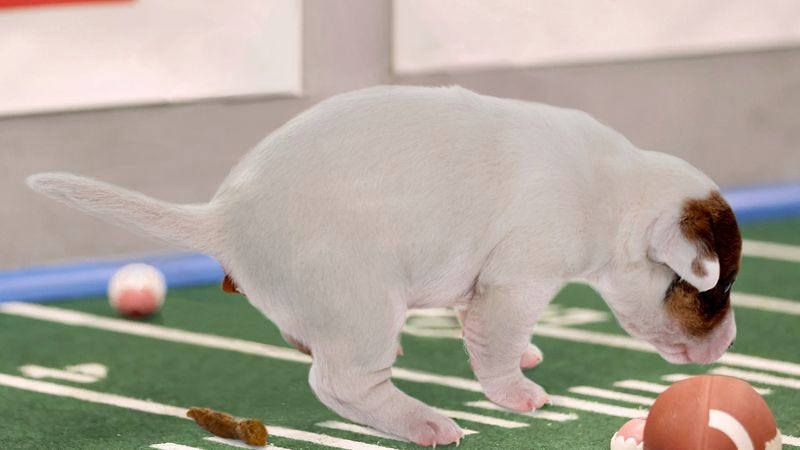
Yes, it’s an Onion article. Yes, it’s mildly amusing. Yes, it’s short. Yes, it was an excuse to post that photo. You should go read it.

Source: Controversial Puppy Bowl Star Shits During National Anthem“, The Onion (02/05/2017)


Video of the Week

That was awesome, but that can’t count…can it?


PAL Song of the Week: My Morning Jacket – “Holding On To Black Metal”


Tweets of the Week


Like what you’ve read? Let us know by following this blog (on the right side, up near the top), or:

Email: 123sportslist@gmail.com

Twitter: @123sportsdigest

Facebook

Instagram: @123__sports


David here it is, my philosophy is basically this, and this is something that I live by, and I always have, and I always will: Don’t ever, for any reason, do anything, to anyone, for any reason, ever, no matter what, no matter where, or who, or who you are with, or where you are going, or where you’ve been, ever, for any reason whatsoever.

-M. Scott

Week of December 22, 2017


“Everesters”

First and foremost, I implore you to click the link below and read the entirety of this story. It’s so well done. The writing, photography and videos bring you on a fascinating journey that picks up where most end on Mount Everest. Writer John Branch describes it better than I ever could:

Where most of those stories end is where this one begins, long after hope is gone — the quiet, desperate and dangerous pursuit, usually at the insistence of a distraught family far away, to bring the dead home. The only search is for some semblance of closure.

Here are the numbers: About 5,000 people have summited Everest since 1953. Nearly 300 have perished on their attempt. Of those, about 200 bodies never have been recovered from Everest.

Most of the bodies are far out of sight. Some have been moved, dumped over cliffs or into crevasses at the behest of families bothered that their loved ones were someone else’s landmark or at the direction of Nepali officials who worry that the sight of dead bodies hinders the country’s tourist trade.

A lot of variables go into the decision of recovering a body or leaving the body on top of the world. First, it’s expensive (in some cases more expensive than the original expedition). It’s also extremely dangerous. Rescues don’t typically happen when the climber is in danger because every other climber’s life is in peril as well with a finite of supply of oxygen.

There are also questions of religion and transcendence. This story follows the recovery efforts of two West Bengali climbers, both Hindu, who believe in reincarnation. Leaving a body on Everest would be to deny a loved one’s soul the opportunity to pass through to their next life.  

More practically, dying on Everest can make it very challenging for family members to receive death certificates and life insurance benefits in certain parts of the world.

There are about 50 other fascinating points in Branch’s story as he tracks two recovery efforts, so just click on the link below already and have a look for yourself. – PAL

Source: Deliverance From 27,000 Feet”, John Branch, The New York Times (12/19/2017)


How to Handle Fantasy Ohtani

Getty Images/Ringer illustration

Earlier this week, it struck me that I should see if Shohei Ohtani is available in my baseball keeper league run through ESPN.com. I was hoping ESPN added him to the system so I could pick him up before our rosters lock in February, ahead of our draft. He was not. As luck would have it, I stumbled on this article later that day about how fantasy sports services are planning to treat Ohtani, a 22-year old from Japan who signed with the Angels. The kicker is Ohtani expects to be both a pitcher and a hitter, likely serving as a DH a couple days a week – an excellent pitcher, Ohtani can also swing the bat.

This is more complicated than you’d expect. Traditionally, fantasy sports have not counted pitcher at-bats. Players are either in a hitter pool, or a pitcher pool. The hitting stats for National League pitchers (or AL pitchers when playing in NL parks) are not counted for or against the fantasy player. Ohtani presented a unique challenge. How should fantasy sports treat a player who expects to be both a good pitcher and a good hitter? There appear to be two approaches the companies are taking.

Yahoo and CBS are splitting Ohtani into two players – you can either draft Ohtani the pitcher or Ohtani the hitter. Or, I suppose, you could draft both. But the point is there will be two Ohtanis. This comes mostly down to ease for the software engineers.

The other approach is interesting, and CBS has hinted they will use it: There will only be one Ohtani, and he’ll be eligible both as a pitcher and a hitter, but his hitting stats will only count when you don’t start him as a pitcher. This makes sense – why would Ohtani’s hitting stats count, but not any other pitcher? You’d be giving Ohtani owners an extra hitter in the lineup each time he starts.

The second approach makes the most sense to me, but the first approach creates for a very interesting draft strategy. Ohtani the pitcher would go fairly early – but how would owners treat Ohtani the hitter? Ohtani the hitter might not be draftable – it’s possible he only DHs twice a week, in addition to his weekly start. If he is a phenom, then those at bats might be worth it. But who is gonna risk it to find out? Rowe. The answer is Rowe. -TOB

Source: Shohei Ohtani Is Already Breaking Fantasy Baseball”, Danny Heifetz, The Ringer (12/20/2017)

PAL: I mean – you’re play a game with “fantasy” in the title. Why wouldn’t you want to draft this guy?


Houston Hittin’ Switches

The Houston Rockets are 25-4, and looking like a real threat to the Warriors in the West this season. The Warriors have been alternately banged up (Steph, KD, and Draymond have all missed significant time), and when they haven’t been hurt they’ve been unfocused, says coach Steve Kerr. The Rockets, though, are hungry – and talented. They don’t seem to have any weaknesses, and run Coach D’Antoni’s offensive system to perfection – they lead the league in offensive efficiency, and they take an astouding 43.2 three-pointers per game, by far the most in the league (by contrast, the Warriors are 8th in the league, taking 30.6 threes per game, and the Rockets take almost ten more threes per game than the Nets, who take the second most threes in the league at 34.0 per game). But what makes the Rockets a real threat to the Warriors come May is the Rockets surprising defensive performance. The Rockets are a surprising 7th in the league in defensive efficiency, an improvement from 17th last season, allowing 4 fewer points per 100 possessions than last season.

At the heart of their defensive improvement is a strategy akin to their offensive strategy – take something that works and take it to its extreme. On defense, for Houston, this means switching every single screen, even those off the ball. They’ve created a roster of long, strong, athletic, and versatile players who can guard almost every possession in a pinch, preventing teams from taking advantage of mismatches after a switch. In this article, Dylan Murphy highlights the defensive play of Ryan Anderson, who we’ve profiled here before. Anderson has long been known as a stretch-four who can shoot the 3 and rebound a bit, but is not known for his defensive abilities. Murphy, though, argues that Anderson has become an excellent defender by defending smart. Historically, when a big gets switched onto a smaller player, the big backs off to avoid a blow-by, and then tries to use his length to contest a shot if the offensive player pulls up. But when Anderson gets switched onto a smaller player, especially a 3-point shooter, he crowds the player, making him uncomfortable, and forcing him to either take a well-contested three, or funneling him into the rest of the defense in the player tries to drive. Here’s an example of Anderson (and Capela) using this strategy after being switched onto Steph Curry back on opening night:

Curry seems very uncomfortable, and in both cases ends up taking (and missing) well-contested shots (the Anderson possession, in particular, reminds me of Kevin Love’s defense on Curry at the end of Game 7 of the 2016 NBA Finals). As Murphy points out,

“Although his feet aren’t moving as quickly as Curry’s, Anderson is not trying to play angles in space. Just touching Curry’s jersey gives him a frame of reference and cuts down on how far he has to slide. Despite each Curry move, Anderson doesn’t overcommit his feet. Reaching out for a touch keeps him grounded, and does not allow Curry to toss him around in space. When Curry decides to fire, the contest is right there.”

Contrast that with the way most bigs defend someone like Curry:

While Curry will be able to blow by a player like Anderson if he chooses, Murphy notes that most players, especially shooters as good as Curry, will not choose to do that all game. As Murphy argues, this is a team set up to give the Warriors a real run in May. Should be fun. By the way, the Athletic is running a 20% off sale with a free trial right now. Check it out. -TOB

Source: The Defensive Versatility of the Rockets Could be a True Threat to the Warriors”, Dylan Murphy, The Athletic (12/20/2017)


Winning by Getting to Average

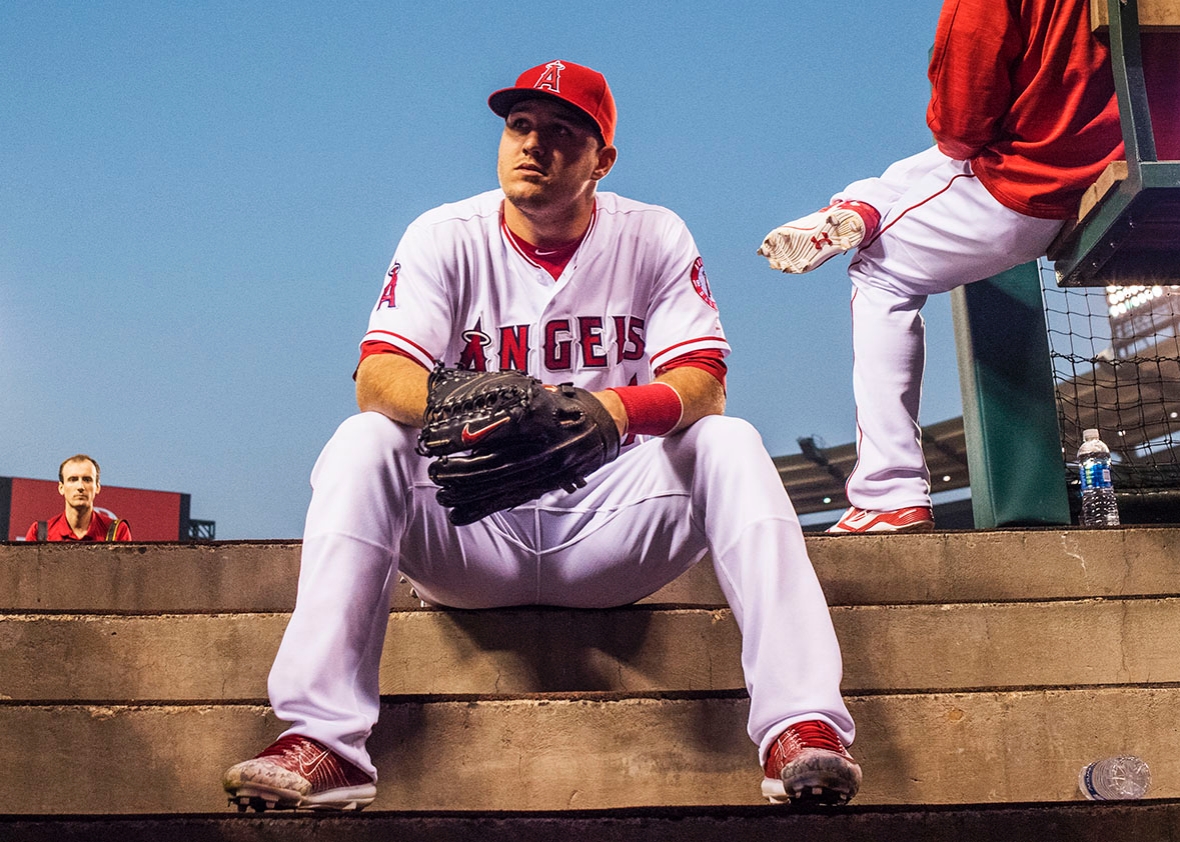
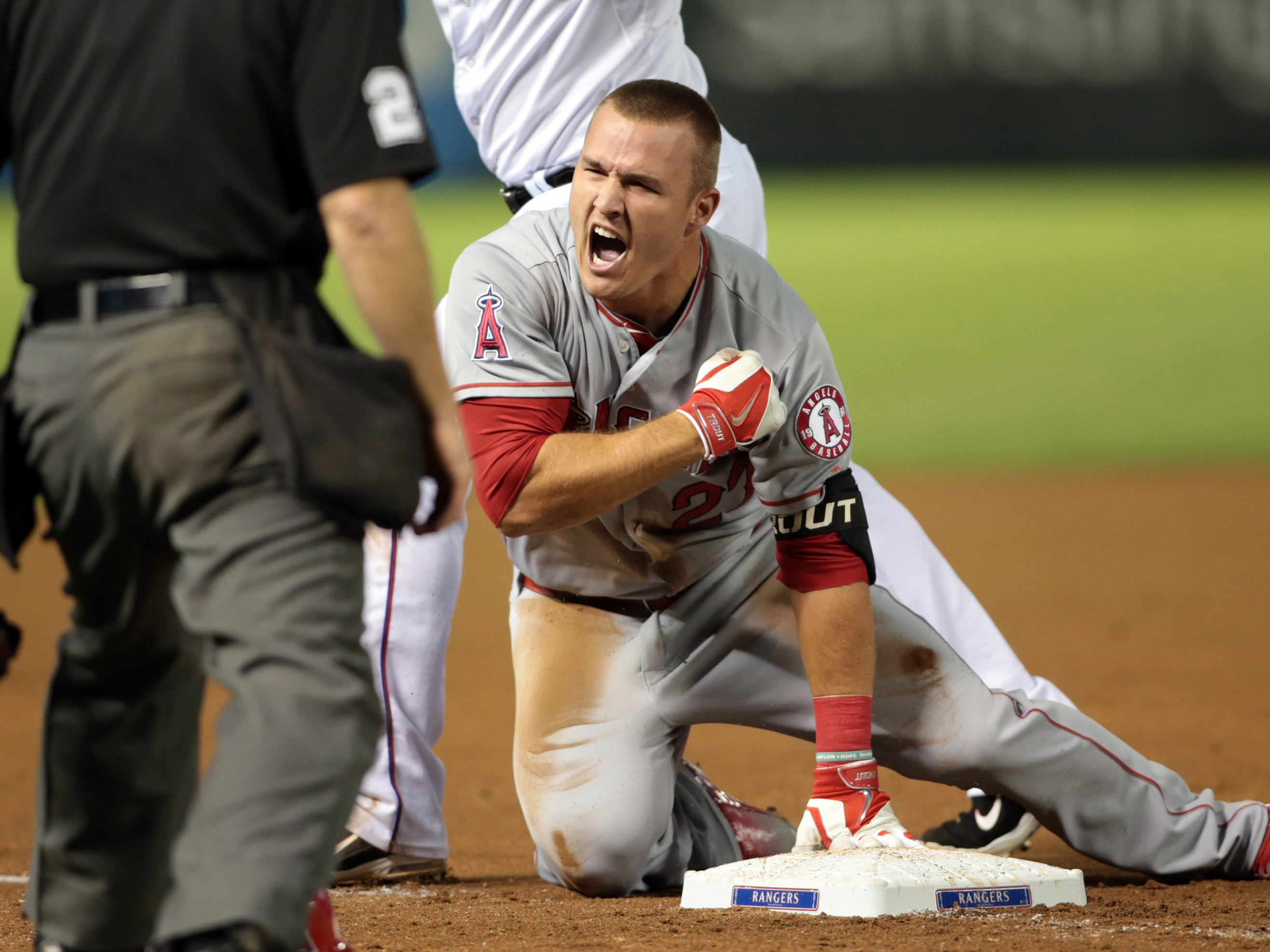
Mike Trout is the best baseball player of his generation, but he has only made the playoffs once in his career (where the Angels got swept) because the team around him has been so unbelievably bad. despite a Top 10 payroll. In his 6 full seasons, Trout has averaged just over 6.1 WAA – a simple to understand stat; using all sorts of metrics, WAA measures how many wins a player created for his team over a league average player. A single-season WAA of 6.1 is extremely good, and Trout has had a couple seasons over 8.0. In other words, the team has utterly wasted his talent, averaging just 84 wins in his career. Even worse, they’ve averaged only 77 wins the last two years.

Sad Trout.

Rebuilding a bad team is a difficult task…but the Angels have been so bad, and Trout is so good, it makes things a bit easier. In August, the Angels traded for left fielder Justin Upton, who post a very good 3.5 WAR last year. For the season, Angels left fielders posted a WAA of -0.3. Last week, they picked up Ian Kinsler, who was a 0.1 WAA last year, the lowest of his career. Very average. But he replaces Angels second basemen who combined for a -3.0 WAA last year. Then they picked up former Reds shortstop Zach Cozart, who they’ll move to third, where they collectively had a -2.0 WAA last year. Add it up, and they can expect to improve by ten wins, even if Kinsler doesn’t have a bounce back, and that’s before you take into account their signing of two-way Japanese star Shohei Ohtani (see above).

Happy Trout

That’s far more than the Yankees can expect to improve in their trade for Giancarlo Stanton (6 WAA), and the Angels did it simply by turning their extreme weaknesses into mere mediocrity. -TOB

Source: The Angels Might Finally Stop Wasting the Best Baseball Player of His Generation”, Michael Baumann, The Ringer (12/19/2017)

PAL: When measured by way of WAR, I thought this quote summarized the the premise of the story perfectly:

That’s why it’s so important to understand where the Angels are starting from: These two unremarkable moves [Kinsler and Upton], paying the going rate for competent big leaguers, could very well improve the Angels as much as trading for Stanton improved the Yankees.

Obviously, having a once-in-a-generation talent like Mike Trout on your team is an advantage, but I’ve never really thought about him as a differentiator in terms of how the team can be built to improve. They don’t need more great players to get better. They need less terrible players. That should be a comparatively low bar to meet.


A League of Her Own: Mamie Johnson (9/27/35 – 12/19/17)

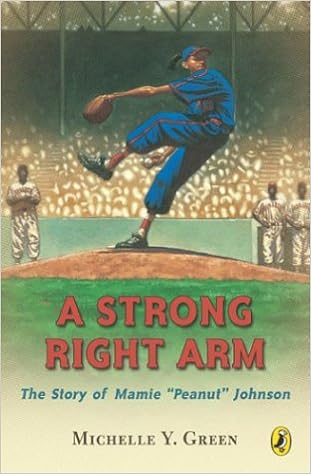
Did you know three women played in the Negro Leagues? I did not, and so it was very cool to learn about Mamie “Peanut” Johnson, albeit from an obituary.

After being turned away from the All-American Girls Professional Baseball League (the league fictionalized in A League of Their Own), the then 17 year-old Johnson joined the Indianapolis Clowns. And she wasn’t just marketing ploy to sell tickets. As the only woman to pitch in the Negro Leagues. “Peanut” posted a 33-8 won-loss record in three seasons, not to mention batted .270, and crossed paths with the likes of Hank Aaron and Satchel Paige along the way.

During the offseason she attended NYU and later earned her nursing degree (she was a nurse for 30 years after her playing days were over). She’s gave speeches at the Library of Congress and the White House, she’s featured in not one, but two, exhibits at the Baseball Hall of Fame, and has what looks like a great stocking stuffer of a book:

Here’s to a full and inspiring life! – PAL

Source: SC native, baseball pioneer Mamie ‘Peanut’ Johnson dies”, Noeh Feit, The State (12/19/2017)


Video of the Week


PAL Song of the Week: Bing Crosby & The Andrew Sisters – “Mele Kalikimaka (Hawaiian Christmas Song)”


Tweet of the Week


Like what you’ve read? Let us know by following this blog (on the right side, up near the top), or:

Email: 123sportslist@gmail.com

Twitter: @123sportsdigest

Facebook

Instagram: @123__sports


Ooh the Crunch Enhancer? Yeah, it’s a non-nutritive cereal varnish. It’s semi-permeable, it’s not osmotic, what it does is it coats and seals the flake and prevents the milk from penetrating it. 

-C. Griswold

Week of December 15, 2017

Malcolm Gladwell approves.


Portrait of a Broken Down, 38-Year Old, Former NFL Star

I’ve seen, and read, profiles of aging NFL stars before. Their memory is gone, they can barely walk, their families describe them as mercurial, politely. But I’m not sure I’ve ever read one this sad. Larry Johnson was the best running back in the NFL for about a year or two. He set an NFL record for carries in a season, with over 400. His shelf life, for an elite player, was incredibly short. He only went over 1,000 yards twice (1,700+ yards rushing and over 2,000 all purpose yards in both of those years), and otherwise was a mediocre back who either split time or suffered injuries. He retired in 2011, after a combined six carries in his final two seasons.

Larry Johnson is just 38 years old. Larry Johnson is not well. He routinely has suicidal ideations, and says he has come very close to going through. His memory is so bad, he makes highlight videos of his playing career so that he can remember, and so that his 7-year old daughter will know – know he’s not a monster, know that he’s sorry when he lashes out when she can’t figure out her math homework. His memory is so bad that he doesn’t remember two full seasons from his NFL career. It’s as if they didn’t happen for him. He’s sure he has CTE, and believes he won’t know his own name by age 50. He feels a kinship with Aaron Hernandez, as frightening as that is – like Hernandez, Johnson has a history of violence, and has been arrested a number of times for domestic violence. Johnson says, “his decision to publicly describe his darkest thoughts is meant not as a way to excuse his past but rather a way to begin a conversation with other former players who Johnson suspects are experiencing many of the same symptoms.”

His daughter is his saving grace. He says she’s the only reason he hasn’t acted on his darkest, violent impulses. But it’s the scenes with his daughter that are the most heartbreaking.

They’re in the living room now, Papi and Jaylen, surrounded by walls undecorated but for the blotchy spackling compound behind them. That’s where, a few years ago, Johnson punched through the drywall.

Jaylen was there, and Johnson says he sent her upstairs before making the hole. The way he describes it, the best he can do sometimes is to shield her view.

“Did you think it was something that you did?” Johnson recalls asking Jaylen afterward, and the girl nodded. “I had to explain it: It’s never your fault.”

Or worse, the aforementioned homework scene:

Johnson has high expectations for Jaylen, and he believes the universe was making a point when it gave him a daughter. How better to punish him for shoving or choking women than to assign him a girl to shepherd through a world filled with Larry Johnsons?

“My greatest fear is my daughter falling in love with somebody who’s me,” he’ll say, and he believes if he’s honest and tough with Jaylen, she’ll never accept anyone treating her the way her father treated women.

With the sun filtering between the blinds, Johnson plays with her curly hair as she slides a finger across her sentences.

“All people,” Jaylen reads aloud, and her father interrupts.

“No,” he says. “Why would it say ‘all people?’ It . . .”

He stops, sighs and presses two fingers into his eyelids. She looks back at him, and he tells her to keep reading. He rubs his hands, massages his forehead, checks his watch. He’ll say he sometimes forgets she’s only in second grade.

They move on to her page of math problems: twenty-seven plus seven.

“How many tens?” he asks her.

“Two.”

“And how many ones?”

“Seven.”

“No,” he says, visibly frustrated until Jaylen reaches the answer. Next: fifty-seven plus seven. She stares at the page.

“So count,” he says. “Count!”

Thirteen plus eight. Again staring at the numbers. Johnson’s worst subject was math, another trait Jaylen inherited. But his empathy is sometimes drowned out by more dominant emotions.

“You start at thirteen and count eight ones,” he tells her, and in the kitchen, a watch alarm begins to beep. Jaylen counts her fingers.

“No,” her dad tells her, again rubbing his face. The beeping continues in the next room. “No!”

Abruptly, he stands and stomps out of the room without saying anything. Jaylen’s eyes follow him, eyebrows raised, and listens as her father swipes the beeping watch from a table, swings open the back door and throws it into the courtyard.

That is brutal to read (and a reminder to check my own tone when frustrated with my children). Larry Johnson is no saint. He has admittedly done some terrible things. And as the article notes, “Will she remember this, or has Johnson shielded her from something worse? Is he managing his impulses as well as he can?”  But I can’t help feel bad for him. And worse for his daughter.

In the article, Larry Johnson says, ““What would it be like for this to be the day for people to find out you’re not here?” It’s a profound thought for all of us, but coming from Johnson it is deeply sad. After reading this article I can’t help but think of him as a ticking time bomb, and this begs the question: is today the day we hear some awful story about Larry Johnson, whether it’s something he does to himself, or someone else? -TOB

Source: The Demons Are Always a Breath Away”, Kent Babb, Washington Post (12/12/2017)

PAL: As disturbing as this read is, nothing came off is shocking or new. We’ve read versions of this story quite a bit in last five years. While Johnson says sharing this story is not meant excuse his past, I can’t help but wonder if it’s an attempt to excuse what he hasn’t yet done.


Blue is Fa$ter:

When the difference between gold and no medal whatsoever can be measured in hundredths of seconds, speedskaters preparing for the 2018 Winter Games will try (or believe) anything. This year’s trend: blue is the fastest color.

It’s hard to believe – if everything else is exactly the same – that color dye could impact the time it takes to skate around a rink, but the risk in ignoring a technical advantage is greater than the risk of believing a myth. Andrew Keh examines this funny dance between faith and science playing out right now in speedskating.

“With any new piece of equipment, there is an assumption that it has been tested, tested again and tested some more. At ice rinks, laboratories and wind tunnels around the world, the top countries are engaged in a hush-hush arms race, a different sort of cold war.”

While South Korea skaters have historically worn blue, competitors from Germany (combo of black, orange and red) and Norway (red, always red) are joining the party this year, tossing aside their typical colors. The trend has competitors, coaches, and researchers talking.

  • Dai Dai Ntab, a sprint specialist for the Netherlands: “It’s been proven that blue is faster than other colors. Every Olympic season, everybody is trying to find the hidden gem. This year it’s the blue suits.”
  • Renzo Shamey, professor of color science and technology: “I have come to a point in my life that I have sufficient confidence in what I’ve done and what I know, but at the same time I’m not so arrogant to dismiss claims people make. Having said that, based on my knowledge of dye chemistry, I cannot possibly imagine how dyeing the same fabric with two dyes that have the same properties to different hues would generate differing aerodynamic responses.”
  • Mike Crowe, the coach of the Canadian team: “I look at that as the oldest trick in the book. It’s just gamesmanship, really (on the part of Norway). Make them doubt. Make them wonder.”

Likely, the reason for the blue suit is far more obvious. Give this article a read to find out. I mean – come on – when are you going to read a speed skating story if not now?- PAL

TOB: Blue is the fastest color? Someone tell that to the Cal football team.


Why the Giants Might Need to Stand Pat on a 98-Loss Team, or a Lesson in the MLB CBA

Don’t tell my wife, but I signed up for The Athletic last week, when I was devouring every detail of a possible Giants trade for Giancarlo Stanton or signing of Shohei Ohtani, or both, that I possibly could. Don’t worry. I’m sure it’s some sort of tax write-off, boo. Well, spoiler alert: the Giants whiffed on both Stanton and Ohtani. After reaching a deal with the Marlins for Stanton contingent on Stanton waiving his No Trade Clause to go to SF, Stanton refused. The kicker here is that Stanton reportedly told the Marlins before any trade talks began that he would only accept a deal to a small number of teams (rumored to be the Yankees and Dodgers), but the Marlins engaged the Giants and Cardinals, anyways, and reached agreements with both. The Marlins then went to Stanton and told him to choose the Giants or Cardinals or he’d be a Marlin for life. Stanton, knowing the new ownership group was desperate to shed his $295 million in future payroll, gave them a big f-u and said no. The Marlins predictably caved and sent him to New York for peanuts. Ohtani then shocked everyone and chose the Angels. But I digress.

Once the dust settled on that, the question for the Giants became: What now? Do they go after free agent JD Martinez? Try to trade for an available, expensive, aging star like Andrew McCutcheon or Jacoby Ellsbury? Or trade for a young star like Marcell Ozuna?

This is the part where I finally get back around to shelling out for the Athletic, which recently announced they had hired longtime Giants beat writer Andrew Baggarly. Baggarly is very smart (two-time Jeopardy champion, y’all!) and a good writer. In this article, Baggarly makes a very strong argument that the 98-loss Giants very well may, and probably should, stand pat because of the Competitive Balance Tax, or CBT. The CBT is a progressive tax for teams who go over a designated payroll threshold. The tax progresses the higher a team goes over the threshold, and also progresses for teams over the threshold in successive seasons. This year, the threshold is $197 million. Baggarly makes it simple:

A first-time payor gets taxed at a rate of 20 percent. A three-time payor gets levied at a rate of 50 percent…. On top of the base tax on the overage, you pay an additional 12 percent on every dollar that exceeds the CBT by more than $20 million. Then the league levies an additional 45 percent on every dollar that exceeds the CBT by more than $40 million….The penalties for teams that exceed the CBT include stingier draft pick compensation, too. Teams that lose a qualified free agent receive a compensation pick after the first round — unless they were into the CBT, in which case they get a pick after the fourth round. Teams that sign a qualified free agent from another club must forfeit their third-round pick as compensation — unless they were into the CBT, in which case they lose their second- and fifth-round picks, as well as $1 million from their international signing bonus pool.

The Giants have been over the CBT threshold three years running now, and so their penalties are high, but the team can reset those penalties if they get under $197 million threshold next year, heading into a monster free agent class after 2018 headlined by Manny Machado and Bryce Harper (hey, let me dream, ok?). The problem for the Giants is they are going to have a devil of a time getting under the threshold at this point. As Baggarly points out:

Well, you might not like this. They already have 11 players under guaranteed contracts that add up to just more than $150 million toward the total payroll for CBT accounting purposes. Their five arbitration-eligible players project to cost an additional $15 million. It would be another $6 million or so if they were to fill out the roster with players who have fewer than three years of service time.

That’s $171 million. More than a bit of wiggle room before you get to $197 million, right? Except payroll calculations also include a raft of expenditures not limited to but including: contributions to benefits plans, player medical costs, workers compensation premiums, spring training allowances, All-Star Game expenses, contributions to the postseason players’ pool, meal and tip allowances and even moving and travel expenses.

Baggarly estimates the total, then, to be $185 million, leaving them $12 million to work with. In other words, look forward to a lot more bad baseball at AT&T Park in 2018. Then, uh, good luck luring a marquee free agent next Winter. -TOB

Source: Why the Giants Are Motivated to Slip Under the Tax Threshold — And What That Would Leave Them to Spend”, Andrew Baggarly, The Athletic (12/12/2017)

PAL: And if you want to understand it from the Marlins front office, check this out from Michael Baumann. “This is not a baseball trade. This is a liquidation of assets.” The investment group that bought the team this year is immediately in debt, to the tune of $400MM.


Video of the Week


PAL Song of the Week: Buffalo Springfield – “Burned”


Tweets of the Week:


Like what you’ve read? Let us know by following this blog (on the right side, up near the top), or:

Email: 123sportslist@gmail.com
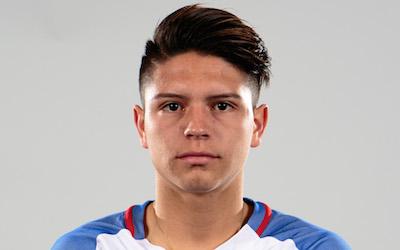
Twitter: @123sportsdigest

Facebook

Instagram: @123__sports


In the end, the greatest snowball isn’t a snowball at all. It’s fear. Merry Christmas. 

-D. Schrute

Week of December 8, 2017

Phil: Champ.


Woodson Wins Manning’s Heisman

There were four Heisman finalists in 1997 (there is no preset number of finalists). Three will have Hall of Fame busts in Canton, Ohio. Can you name the four without looking?

Peyton Manning, Randy Moss, Ryan Leaf, and – the winner – Charles Woodson. He remains the only (primarily) defensive player to win the award in its 80+ year history.

Let’s just take moment to truly admire Randy Moss in this pic.

Winning the Heisman obviously takes one hell of an individual performance over the course of a college football season, but it’s also about timing and moments. November heroics and incredible highlights travel better across a country (and voters) than really good stats. The former are emotive, while the latter are logic. If we’ve learned anything in the past year, it’s that people vote with their guts and not their heads.

Since seemingly the dawn of time, Peyton Manning has been everyone’s favorite, and he was the favorite to win the Heisman in 1997. Through the words of the finalists, their college coaches, and former teammates, hear how Charles Woodson took a what felt like a formality of an award from a golden quarterback in Chris Low’s oral history of perhaps the most stacked Heisman contest.

Before we get to Peyton and Woodson, I just want everyone to enjoy this college highlight from Randy Moss and his best quote from this story.

Moss, from Marshall, was not going to win the Heisman, and he knew it, despite being the most dominant player of the bunch (26 touchdowns as a wide receiver!). The dude who made news for breaking his parole and only one year of college football under him was not competing with the senior, all-everything Manning, and he wasn’t going to compete with Michigan’s hype machine behind Woodson. His take on his trip to New York, courtesy of Michigan Safety (and Woodson teammate) Marcus Rey:

Then Randy walks in and said, ‘None of us is going to win, so we might as well get through this ceremony, hang out tonight and tear it up in New York City.’ 

As if I needed another reason to love Randy Moss.

Now, back to the Manning – Woodson competition. It was Manning’s to lose from the start of the season. Manning returned for his senior season at Tennessee. He surely would have been a high first-round pick after his junior year in a draft that featured an astonishing two quarterbacks taken in the first 98 picks (Jim Druckenmilller at the 26th pick to the Niners and Jake Plummer to Arizona in the second round). I would say he would’ve been the number one pick, but the St. Louis Rams got Orlando Pace, a Hall of Fame left tackle.

The one scab on Manning’s college resume coming into his senior year victory lap was that he couldn’t beat Steve Spurrier’s Florida Gators. He came up short again in ‘97, with a pick-six to boot in a 33-20 loss in September. That opened the door just a crack early in the season for Woodson.

Most remember that Woodson did it all at Michigan. Shut down defensive back with seven interceptions. Wide receiver with 3 touchdowns. Punt and kick return good for another touchdown. The Wolverines also went undefeated that year and split the National Championship (before the playoff or BCS) with Nebraska (Nebraska was number 1 in the Coaches poll, while Michigan was number 1 in the A.P. poll.

Perhaps as important as the stats and success was the fact that Woodson had not one, but two “Heisman Moments”. First, a one-handed pick in October against Michigan State that, as Lloyd Carr puts it, put Woodson “on everyone’s radar”.

Second, and an electric punt return for a touchdown against Ohio State in the last conference game of the season.

All of this leads to a lot of back-and-forth between the peanut gallery of coaches, former teammates, and broadcasters in this article. Enjoy some of the best comments below:

Keith Jackson on Woodson: The game was changing, and I think people realized his brilliance and weren’t afraid to do something out of the norm — and that’s voting for a defensive player. But he was more than just a defensive player. He was the most impactful player in college football, and that’s why I voted for him.

Tennessee coach Phillip Fulmer on Woodson: I thought it had maybe gone from a lock to a closer race because Woodson had a big game against Ohio State and returned a kick and caught a touchdown pass. I knew it might be close, but didn’t want to think so. But what do I know about that world?

Manning teammate Jeff Teague, on Woodson winning: We were well-stocked, food- and drink-wise [back at Tennessee]. It never crossed my mind, not for one second, that he wasn’t going to win. We were just there to watch him get it. It was a party. When it went down, it was just a stunned silence. A few guys stood up and threw something. But, really, it was just kind of quiet.

Teague on Brian Griese’s assessment that Woodson was the better player (Teague and Griese were teammates on the Broncos): Brian still can’t see through the maize and blue and be objective on that subject. Brian’s a great guy, but he’s blinded by that ugly helmet.

A fun read looking back 20 years on the eve of what most think will be am anticlimactic Heisman ceremony. Then again, they thought the 1997 ceremony would be anticlimactic, too. – PAL

Source: The Oral History of the Epic 1997 Heisman Trophy Race”, Chris Low, ESPN (12/05/2017)

TOB: I have always had a rebellious streak, and so it should be no surprise that I did not like Peyton Manning as a 15-year old kid. I have always distrusted anyone the media universally liked. I couldn’t stomach the Gameday stories about Peyton and how much film he watched, how he was the first one in and the last one out, and about how gosh darn smart he was. I’ve also always been pro-Michigan. And Charles Woodson was cool as hell. So, yeah, I was rooting hard for Woodson over the Golden Boy.

I don’t remember many Heisman ceremonies, but I remember that one. Heading into the ceremony, I was resigned to the fact that Peyton would win. I was ready to bitch and moan. I was 15, so it meant a lot more to me than it does now. It seemed important in a way that it no longer does. And the kicker is – I didn’t even get to watch. As a kid, we went to Saturday night mass, and my parents made me leave after the show had started, but before they announced the winner. I remember getting home, expecting the worst, and being shocked to hear that Chuck had won, Peyton had lost. I took great joy in that, and I took great joy in this article. Sometimes sports surprise you, and sometimes, it’s great. Peyton never winning the Heisman will always bring a smile to my face.

PAL:  You’re on the ‘Chuck’ level with Woodson?


Which Block Was Most Dope?

Last Thursday, in one NBA evening, we saw three amazing blocks. I couldn’t decide which block was dopest, so we’re putting it to a vote. The contenders:

LeBron on Dennis Schroeder

Giannis on Dame Lillard

LeBron on Taurean Prince

So, which block was dopest? Vote! -TOB


Expand the Damn Playoff

I have been on the fence on whether the NCAA four-team playoff should be expanded. I was watching the Conference Championship games last weekend, and it occurred to me that we, kinda, already have an eight-team playoff. There were 10 teams with a shot at the playoff. In the SEC, Auburn and Georgia playing in the title game, and Alabama (who did not win its division and was idle). In the Big 10, Wisconsin and Ohio St., playing each other. In the Big-12, Oklahoma, playing TCU in the title game. In the ACC, Miami and Clemson, playing each other. And USC, playing Stanford in the title game. It wasn’t a true playoff – as it was, SC and Ohio State won but were left out. Still, unless you are Alabama, you’re not making the playoffs without winning your conference championship game. So, it’s kind of a playoff.

But then I read Dan Wetzel’s proposal for an eight-team playoff and I can’t find a problem. In fact, it sounds awesome as hell. His plan:

  • Scrap the conference title games.
  • The five power conference winners (determined by each conference on its own) gets a spot.
  • Three at-large bids. If a non-power five member is ranked top 10 or 15, it gets a spot (I’d add you could limit this to the top ranked non-power five member).
  • Play the first round in early December, and go from there.

Here’s how this year’s playoff would have looked.

I love it. As Wetzel points out, in the current system Alabama lost its season finale and somehow earned an effective bye to the semifinals, while the team they lost to (Auburn) had to play Georgia, in Atlanta. Sees fair.

Some may argue there’s no reason to include the non-power 5. But, I like it. Who doesn’t like rooting for an underdog? And while they might not be the 8th best team, the 8th best team rarely has a reason to argue they are the best team in the country, so who cares. Do better than 8th next time. Anyways, I’m all in. Eight is great! -TOB

Source: Here’s the Solution to College Football’s Inefficient and (Often) Meaningless Postseason”, Dan Wetzel, Yahoo! Sports (12/03/2017)

PAL: I guess I’d care if I were on the eighth best team. What if the eighth best team is more deserving than the the top-ranked non-power 5? You’re telling me USC isn’t more deserving than UCF this year…wrong question to ask TOB. I love the automatic bid for a non power 5 conference gets at first blush, but the only problem is UCF didn’t play very good teams. And what I mean by that is they played maybe two marginally good teams all season. Here’s UCF’s schedule in this undefeated season (and the opponents CBS ranking, which goes to 130):

    • Florida International (#70)
    • Maryland (#82)
    • Memphis (#16)
    • Cincinnati (#107)
    • East Carolina (#109)
    • Navy (#56)
    • Austin Peay (not on CBS top 130)
    • SMU (#59)
    • UConn (#114)
    • Temple (#79)
    • USF (#23)
    • Memphis (#16)

I’m sorry, but that schedule in no way holds up to USC’s schedule this year (ending the regular season ranked 8th), or any a Power 5 conference schedule. I find it highly, highly unlikely UCF would have gone undefeated playing in the Pac-12, and I highly doubt they lose 2 or fewer games in the Pac-12. They played 2 teams in the top 25, and 4 teams ranked outside of the top 100! We try to make the case for the little guy, but the little guy has to play real games (I know this is hard due to scheduling being done so far in advance).

I don’t love the idea of automatic bids to power 5 conference champs (what if a 3-loss SEC team wins its championship while a 1-loss Pac-12 team loses), but it’s the better than what we have now.  With that said, the either ditch the conference championship games or make them mean something. Just don’t guarantee an at-large to anyone. Play it year-by-year.


Fear and Loathing in Carson, California

The subheadline to Kevin Clark’s story says it all:

The Los Angeles Chargers are playing in a tiny soccer stadium in a city that doesn’t seem to want them. There’s no way they’ll be able to fill a full-size arena, but they’re already on the books to be shared residents with the Rams in 2020. Somehow, the best solution might be to just stay where they are.

The Chargers left San Diego, have no fans in L.A., and can’t even fill a 30,000 seat soccer stadium. This is a great article exploring what the Chargers did wrong, the obstacles they face in setting down roots in L.A., why they should just own being the little-brother-team by staying in that soccer team, and what it’s like to attend an NFL game in a small stadium where no one gives a crap about the home team. Fantastic read. -TOB

Source: The Football Team Without a Home”, Kevin Clark, The Ringer (12/05/2017)

PAL: Comparing the Chargers in Carson City to U2 giving away albums we didn’t want on our phones in the first place such a great analogy, and Clark’s writing only gets better from there. Highly recommend this story.


Don’t Be A Jackass At Your Kid’s Game

Typically not a fan of self-help or advice columns. In appealing to the masses, they oftentimes are diluted to the lowest common axiom. With that said, there’s some interesting stuff in this guide on how to behave at your kid’s game.

First off, we’ve all heard that the chances of your kid going pro are infinitesimal. But how about some cold hard facts? Here are the probabilities of high school athletes that go on to play NCAA sports:

And here are a couple tips for all you parents out there.

  • “If you haven’t encountered game-day maniacs, well, I’ve got some bad news for you: it’s you.”
  • “If you have the means to afford a private shooting coach for your little baller, you have the means to fund a college savings account. Let the ball game be a game, and nothing more.”
  • Learn how to ref…hell, try being one  – “Once you experience the behavior of parents from the perspective of the people who are working diligently to make the games happen, you’ll behave yourself on game day.”

And if none of that persuaded you to chill the f*&^ out, how about two videos of parents losing it and looking like losers of the worst kind.

The Classic:

The Overreacting Mom:

The Worst:

Don’t be that guy, folks. -PAL

Source: How Not to Be a Raging Maniac at Your Kid’s Soccer Game”, Geoffrey Reddick, Offspring (12/6/17)

TOB: Clearly, I am, and will continue to  be, a very level-headed sports dad.

Also, one in EIGHT high school lax bros/bras plays in college? Looks like my boys are getting pinneys and lax sticks for Christmas!


Herm Edwards at ASU is Going to Be Fun (For Everyone Else)

Herm “YOU PLAY. TO WIN. THE GAME.” Edwards has not coached in ten years, He spent the last decade as a talking head, and not a particularly analytical one. He is mostly a guy they go to for discussion on player behavior. So, it was with incredible shock to the rest of college football when ASU was rumored to, and then did, hire Herm as its next head football coach. The introductory press conferece was…hilarious. First, Herm explained how he’d run his offense, and in doing so pinned our country’s problems, at least in part, on the fact that “we don’t huddle anymore in our society.” Uh, ok. Next, he got all weirdly religious when a reporter identified himself as from Devil Digest, and in the process seemed to suggest he has NO IDEA that ASU’s mascot is the Sun Devils. I’m not kidding. Check it out:

A day later, Herm was presented with a game jersey and could not believe how small it was, and thought it was a “girl’s” jersey.

Look, he’s right. Those things are crazy tight these days. But it does NOT HELP with the perception that he’s completely out of touch. As a fan of a conference opponent, I am delighted. Should be a fun 10 months (no, I don’t think he’ll be the coach for even one full season). -TOB

Source: New Arizona State Coach Herm Edwards Had A Bizarre First Press Conference”, Samer Kalaf, Deadspin (12/04/2017)

PAL: Bet. Edwards’ dog-and-pony show lasts for at least 18 college games. Even Odds. $10.


The Early Aughts Were a Weird Time

Presented without further comment:


Video of the Week


PAL Song of the Week: Daniel Caesar – “Hold Me Down”


Tweet of the Week


Like what you’ve read? Let us know by following this blog (on the right side, up near the top), or:

Email: 123sportslist@gmail.com

Twitter: @123sportsdigest

Facebook

Instagram: @123__sports


You all took a life today. The life of the party. 

-M. Scott

Week of December 1, 2017

Strong argument. 


College Coaches: Pass on Tennessee

Tennessee fans didn’t want Greg Schiano as the head coach, and rather than claiming his mediocre head coaching record, they used sexual abuse as their rationale. You see, it was a moral issue, but not really

Backstory: From 1991-95, Greg Schiano served as a graduate assistant, then assistant coach for Penn State football. During that time, Jerry Sandusky was sexually abusing children, many times in within the Penn State football complex. We know how that story has played out. Per Joe Drape of The New York Times:

In a 2015 deposition, the former Penn State assistant coach Mike McQueary testified that another Penn State assistant coach, Tom Bradley, had told him that Schiano had talked to him about seeing Sandusky abusing a boy sometime in the early 1990s. Both Schiano and Bradley, most recently an assistant at U.C.L.A, have denied the allegation and said they had no knowledge of the abuse.

Since his time at Penn State, Schiano went on to coach at Miami, Chicago Bears, Rutgers, Tampa Bay, and now he’s the defensive coordinator at Ohio State. He’s had success as a coordinator, and less success as a head coach. At Rutgers he had a 68-67 record, the highlight being 2006, when the team finished 11-2. As the Tampa Bay Buccaneers head coach, he posted a 11-21 win-loss record in two seasons. Take out the 2006 Rutgers season, and he’s been a below  average head coach if you simply look at won-loss. It could be he’s better suited as a big-time coordinator.

Which brings us to Tennessee, a football program and fan base under the delusion that they are a premier SEC program, despite having won more than 10 games in a season exactly zero times in the last decade. They’ve won a single National Title since the Johnson administration.

Since they are delusional, they actually believed (I’m laughing as I write this) that they were going to be the program to lure Jon Gruden back into coaching. When – shocker – that didn’t pan out, they offered the job to Schiano, a move that was vetted internally and approved within the program by the likes of  Peyton Manning. Word got out before it was announced, and the fans were not pleased, and they hung their argument on the allegation that Schiano knew about the Sandusky abuse and didn’t do enough. They made enough noise that the University of Tennessee caved and re-opened the coaching search, despite Athletic Director, John Currie, providing this response to Schiano’s vetting: “He received the highest recommendations for character, family values and commitment to academic achievement and student-athlete welfare from his current and former athletics directors, players, coaching colleagues and experienced media figures.”

The only time Schiano’s name ever comes up in the Sandusky scandal is in a deposition in which one coach (McQueary) said another coach (Bradley) told him Schiano saw Sandusky abusing a boy. Bradley and Schiano deny any knowledge of the abuse. That, as far as I’ve found reported, is it.

Fans didn’t like the hire – not because of sexual abuse – but because Schiano was not successful enough as a coach. It wasn’t a big name, and so they used child rape and molestation as front. I mean, my God.

No coach should take the Tennessee job (as of 12/1/17, 7:30AM PT no one has). 

Obviously, this won’t happen – they’ll pay someone a boatload of cash – but who wants to work at a place where absurd allegations from the fanbase can cause the athletic department balk?

A young hot commodity like Scott Frost will have other big-time offers within a year (the coaching carousel at big-time programs seems to constantly have openings these days. In just the last week, Jimbo Fisher seems to be on his way from Florida State to Texas A&M, UCLA hired Chip Kelly, Florida filled its position, and Nebraska’s looking for a coach).

Here’s to another decade of crap Tennessee football. They deserve it. – PAL

Source: Tennessee, Greg Schiano and Moral Outrage in College Sports”, Joe Drape, The New York Times (11/27/17)

TOB: I hesitate to so broadly paint the Tennessee fans. As Drape says:

Certainly some of the people in Tennessee who objected so swiftly and vociferously on Sunday to the Schiano news were drawing a moral line. For others, though, this is about the University of Tennessee wanting to be good at football again. They want a better coach than Schiano.”

The article makes it sound as though this started when someone painted the rock you see above. I believe the person who did so was in fact making a strong moral stand, and would have done so even if Schiano had Nick Saban’s record. Yes, others piled on, many of whom would not have protested if Schiano had Saban’s record. But the thing is, schools make unpopular coaching hires all the time. Fans call into radio, or flood message boards. But I’ve never seen anything like that. And while I think there’s herd mentality going on, I do think the unique situation here (McQueary testifying that another coach told him Schiano had seen Sandusky raping a boy years before McQueary did) does fuel the flames. It’s child rape. It’s among the worst crimes that can be committed. And if there’s a chance a coach turned a blind eye to that? Well, I get the outrage. I wouldn’t want him coaching my school, either. The fact he’s been a mediocre head coach just makes the decision even easier.


The NFL…Whatever.

I am just so, so, so sick of writing about the NFL. It is such an incredibly cynical, ugly organization. But, I must. Under Roger Goodell, the NFL has tried to suppress any and all individuality among the players. They care about profits, and profits alone. So the NFL borrows a line from Michael Jordan, who once reportedly said, “Republicans buy shoes, too.” That is – stay out of politics. Keep everything vanilla. Be everything to everyone. You can imagine, then, that the NFL hates the protests to the national anthem that have gone on for the last year and change. NFL ratings are way down – due in part to anger over the protests, in part to fan concern for player safety, in part to the continuance of a gradual decrease in ratings owing to a whole host of reasons. But the protests are tangible. It is something the NFL can do something about. So first, they tried to co-opt the protest. But many players would not budge, and continued the protests. So the NFL formed a taskforce with the Players Coalition, a group of 40 or so of the more vocal players, and promised to come up with some solutions. This week, the NFL and the Players Coalition released some news. The NFL would commit $89 million dollars to various causes “important to African-American communities.” Wow! Hey! Not Bad! But the on the eve of that news, 49ers safety Eric Reid and Dolphins safety Michael Thomas publicly announced they’d left the Players Coalition as the coalition’s beliefs were “not in [their] best interests as a whole.”

Well, that’s odd. I wonder what’s…oh. Right. It’s the NFL. So here’s the real deal behind the this great-sounding deal: there are strings attached. While the agreement does not require an end to the protests, ESPN reports the NFL “hopes this effort will effectively end” the protests. On top of that, Reid said he was specifically asked if he’d stop his protest. Shocking.

Worse, the deal is not as great or generous as it sounds. For one, the $89M is to be paid over 7 years. Each owner only pays $250,000 per year, a paltry sum. The players pay the same amount. The balance, about $85M comes from the league. But even so, there’s no guarantee the NFL couldn’t simply reallocate funds already earmarked for other charity projects. And there’s no guarantee the money will actually go to charities the players, or African-American communities, care about. The agreement calls for a group of twelve people – five players, five owners, and two league staffers, to determine how the money will be spent each year. That’s right: the NFL owners and the league have a 7-5 majority, meaning the players’ voices on that committee are effectively silenced. Finally, the NFL apparently threatened that if a deal didn’t get done soon, the deal would be off the table and the NFL would take unilateral steps to ban the protests. Swell. As Deadspin’s Barry Petchesky says:

“So, let’s recap. NFL owners are pledging to spend a relatively paltry amount, not pledging that they won’t just take that money from previous charitable pledges, not promising that they won’t veto players’ preferences on where the money should be spent, setting up a voting body specifically designed to outvote those players, and expecting that this will stop players from protesting during the national anthem.”

Sigh. I can only hope Will Leitch is right, and that the end is already near for the NFL. -TOB

Source: The NFL’s $100 Million Ploy to Stop Player Protests”, Jeremy Stahl, Slate (11/30/2017)

PAL: Every week we tell you “Here are our favorite stories of the week.” This is not one of my favorite stories of the week. I’m not excited to share this with you, my friends, and talk about with over the phone or over a beer.

Is it an important story? Yeah, it is. And while we are absolutely aware that this is not a news site, and we are not journalists, in this small corner of the sports blogs, I for one want to take that moment to share what I think is worth your time.

When we look back on the year of 2017 in sports in 5, 10, 20 years from now, the NFL protests will at the top of the list of topics. That counts for something, and while I don’t like writing about it time and time again, it is a national conversation transcending sports.

To the N.F.L., it’s always about advertiser dollars and ratings. It has nothing to do with patriotism or protests. To take the money under those terms would mean nothing less than to be bought-off by N.F.L.. Good for those players.


What Does A Hero Owe His Hometown

Here’s a sports story I haven’t read before: the small town boy done good, gives time and money to his hometown, but unlikely to return.

Earl Thomas III may be small (5’10”), but the 3-time all-pro has been one the most lethal safeties in football during his eight-year career with the Seahawks. Take it from Tight End Rob Gronkowski (6’6”, 265 lbs), who said this Thomas hit was one of the hardest he’s ever taken.

Thomas grew up in the southeastern Texas town of Orange. In his profile on Thomas, ESPN’s Joel Anderson describes Orange, TX as carrying “a bedeviling legacy as one of Texas’ most palpably inhospitable regions for black people, a town where Confederacy enthusiasts recently erected a monument on Martin Luther King Jr. Drive, to be seen from Interstate 10 and the 55,000 cars per day that pass by.”

For generations, the Thomas family has been a rock of the community. Thomas’ grandfather, Earl, Sr., worked at the grocery store for 43 years and built a church in the toughest part of town. His father, Earl, Jr., has been spending the weeks following Hurricane Harvey hanging drywall in the community, and his mother is an unpaid church secretary after retiring from the school district. 

While the longstanding dominance of West Orange-Stark high school football can bring the community together, it doesn’t seem to carry over beyond Friday nights.

The bitter fights over desegregating the schools that took over Orange in 1977 don’t seem that far off now, as the schools in the area are becoming more segregated by the year. While ⅓ of Orange is black, ⅔ of the student population at West Orange-Stark is black. Most white kids head north, out of Orange, for school. Add to that a recent Confederate monument erected on Martin Luther King, Jr. Drive, and – well – you can decide for yourself what that says about the state of life in Orange.

After Thomas starred at University of Texas for two seasons, Seattle drafted him in the first round.  Seattle is 2,410 miles away, but the distance in thinking might be even further. Thomas is still connected to his home and carries on the Thomas family legacy within the community. He still trains there in the off-season. He puts on free youth camps attended by hundreds of kids. He chartered buses for his community to watch the high school team play in the State Championship. After Hurricane Harvey, Thomas and fellow UT Alum Jamaal Charles were “this area’s Red Cross”.

No one questions his devotion to his hometown, but he got out, and unlike most everyone in Orange, Thomas’ was allowed to see the world through a lens other than Orange.

It’s so draining, and I think it’s why [Earl Sr.] passed away so early. My uncle is going through the same situation. I feel like, going forward, the older I get, the more I kind of push away. I don’t really grow as much when I’m back.

…I want my daughter to have the best schooling. I want my daughter to be around diverse people, where you don’t see the racism and stuff like that going on.

I know I’m always going to maintain a presence there, but living there? No.

This one’s worth the click-thru, folks. – PAL

Source: Earl Thomas is the favorite son of a troubled Texas town”, Joel Anderson, ESPN (11/24/17)


Hey, Everybody! Phil is Running a Marathon This Weekend!

Go get ’em, buddy!

Good luck!


Video of the Week: 


PAL Song of the Week: Burl Ives – “Silver And Gold”


Like what you’ve read? Let us know by following this blog (on the right side, up near the top), or:

Email: 123sportslist@gmail.com
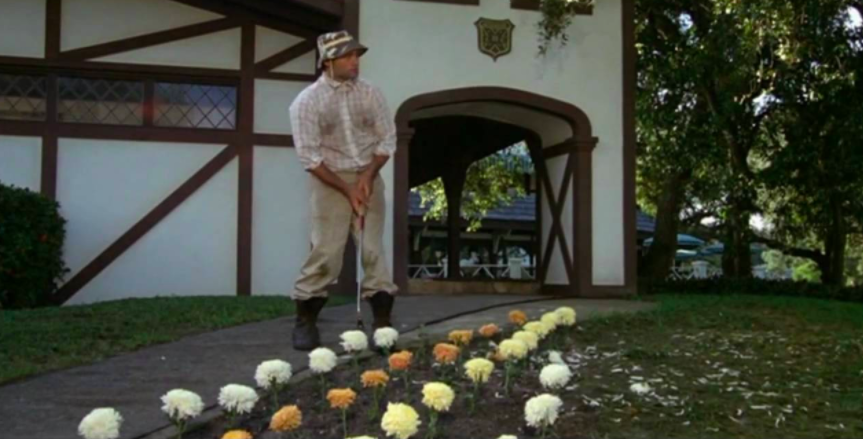
Twitter: @123sportsdigest

Facebook

Instagram: @123__sports


My mom always used to say that average people are the most special people in the world. And that’s why God made so many.

-M. Scott

Week of November 24, 2017

I told them not to talk politics at Thanksgiving…


Breaking: Sports Owner Gouged Loyal Fans

I know, I know. It’s a story as old as professional sports. But this one was especially egregious, and I’d never heard it before. Really, it’s kind of amazing. Bill Wirtz was the longtime owner of the Chicago Blackhawks. Wirtz was especially cheap. We all know of the NFL’s old blackout policy – NFL games were blacked out on TVs in the home team’s home market if the game was not a sellout by a few days before the game. The thinking was this would encourage fans to go to games. (The NFL scrapped this policy a couple of years back, likely when they realized TV money is more lucrative than fans in seats). But Wirtz, for decades, took it a step further. He didn’t allow local fans to watch ANY home game on TV, even if it was a sellout. His thinking was it created some exclusivity for ticket holders – the only way to see Blackhawks games was to actually go to the game. This is an unfathomably bad business idea, but that was Wirtz.

In 1992, the Blackhawks were really good. Balfour. Roenick. Chelios. They ended up making a run to the Stanley Cup Finals. In the leadup to the playoffs, the Hawks were a hot ticket. Wirtz had a brilliant idea for the playoffs: Pay Per View. He called it HAWKVISION.

For the low, low price of $16.95 per game, Chicago fans could finally watch their team’s home games from the comfort of their own home. I looked it up, and the team played 9 home games that playoffs. To watch them all at home, you’d have to pay $152.55 – adjusted for inflation, that is $270 today. Could you imagine paying that much to watch, say, the Warriors home playoff games on TV? And if that wasn’t bad enough, he brought it back for the following season, this time charging $29.99 per month, an inflation adjusted $53 today. Per month! To watch the home games for ONE team. HawkVision did not return after the 1994 lockout, but Wirtz’ tv policy did. Chicago fans could not watch the team’s home games on TV until 2007, when Wirtz died. Needless to say, the fans hated Wirtz, and booed the team’s attempt to eulogize Wirtz.

Well deserved, I say. -TOB

Source: In Unloving Memory Of HawkVision, A Low Point In Sports Owner Shamelessness”, Ed Burmila, Deadspin (11/20/2017)


When Good Promos Go Wrong

It was such a nice idea: The Bavarian Bierhaus, a Wisconsin bar, has long offered free beers to all patrons from the moment the Packers game begins until the moment the Packers first score. With Aaron Rodgers at quarterback, that’s usually been pretty quick. The Packers usually score on their first or second drive. The promotion gets people in the door, and then they stay for the game. It’s a nice way for the Bierhaus to differentiate itself from other area bars. But last Sunday, it backfired. Aaron Rodgers broke his collarbone a few weeks back and he’s been replaced by Brett Hundley.

Hundley is no Aaron Rodgers. Last week the team got shutout, the first time that happened since 2006, which means the Bierhaus served free beer the entire game: from kickoff to final whistle. Owner Scott Bell estimates they gave away as many as 300 beers. Bell had a good sense of humor about it – saying everyone had a good time, and were even apologizing to him for taking his beer. Amazingly, the Bierhaus will continue the tradition this weekend. Karmically speaking, the Packers will return the opening kickoff for a touchdown. -TOB

Source: Packers Fans Drink Free Beer All Game at Wisconsin Pub Because Their Team Never Scored”, Carol Off and Jeff Douglas, CBC Radio (11/21/2017)


One & Done

There are the first ballot Hall-of-Famers. There are the multiple Super Bowl champs. There are those with Hall of Fame careers as players and as coaches or front office personnel. These are exclusive clubs within pro football, but perhaps the most exclusive club of them all is that of players who appeared in exactly one NFL game. These men are, as Ben Shpigel puts it, “Football versions of Moonlight Grahams”. He profiles six members of this club for his article, and it’s a pretty fascinating read.

Some, as you could guess, played only one game because of injury. Some finally made it into the game, only to have a change in management, which doesn’t bode well for the guys right on the edge. Some made the best of their opportunity, and some live with the regret of what they did with the moment. Some hold onto excuses, while others look back to that game as proof they made it to the summit.

It’s really interesting to learn how each of the guys view that game in the context of their respective lives. 

Mark Reed has been an engineer at 3M for 30+ years. He made his one and only appearance in an NFL game as quarterback for the Baltimore Colts. He completed 6 of 10 passes for 34 yards and an interception. He likes to tell his co-workers that he had a career 60% completion rate.

The real value of his time in the NFL came to Reed when, as a young father of two, he went back to school to finish his engineering degree. He remembers his coach telling him the difference between winning and losing is infinitesimal, a lesson that proved true for his life as an engineer.  “Everything that I learned from the N.F.L. as far as hard work and intensity, I basically took that to the classroom.I was just bearing down.”

It’s not that these guys were on a team for only one game. In most cases, they spent multiple seasons on various NFL teams’ practice squads waiting for their moment. Martin Nance’s moment came on 12/31/06. He started for the Vikings, had 4 receptions, and made a good impression on the team going into the off-season. That year, the team drafted bulked up on receivers and tight ends in the draft. With new investments at Nance’s position, it came as no surprise he was cut.

He reunited with Roethlisberger in Pittsburgh and waited for his next chance for over 2 years while on the practice squad. When star receiver Hines Ward was injured going into the 2009 Super Bowl, Nance was prepared to make it back onto the field on the biggest of stages. Ward ended up playing, and while Nance wears his Super Bowl ring with pride, he could see his time as a player was up.

Shortly thereafter, he went to graduate school at University of Michigan, snagged an internship at Gatorade, and has had a successful career in marketing ever since. He considers himself lucky to have left the game in relatively good health.

‘“I don’t walk around and wonder if I had a career in football; my body reminds me,” he said. “I know there are guys who are in more difficult situations than me, but I still consider myself strong and capable. I consider that a blessing.”’

Not all of the athletes featured made such a smooth transition, and you should tap the link below to read each of their stories. – PAL  

Source: One Game to Remember. Just One.Ben Shpigel, The New York Times (11/22/17)


Video of the Week

The best Georgia Dome implosion video.

Bonus Video

Mike Leach wedding advice.


PAL Song of the Week – Michael Gulezian – Watermelon


Like what you’ve read? Let us know by following this blog (on the right side, up near the top), or:

Email: 123sportslist@gmail.com
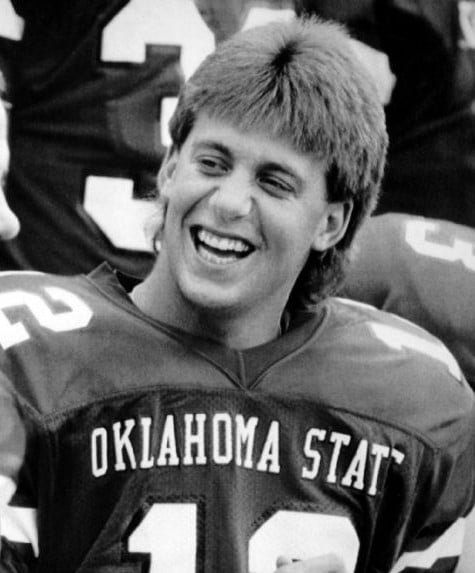
Twitter: @123sportsdigest

Facebook

Instagram: @123__sports


My resolution? Meet a loose woman.

Dwight Schrute

Week of November 17, 2017

There’s never a wrong time to share Vince Wilfork hitting a softball in overalls


What About The Great Ones?

Over the past month I’ve written about a 3-part series on spread of club sports in Minnesota: its impact on the young athletes, their parents (their parents’ checkbook), high school sports, and even the health-related issues popping up at younger and younger ages as a result of repetitive use.

My question throughout the series was “What is the point of youth sports?”. After reading and writing about the series, I suggested we cannot measure the success of a youth sport system by only looking to how good the best athletes become. Youth sports has to be about more than how far the best go, it has to avoid a participation equals success mentality, and we can’t lose a sense of a community – one defined by geographical proximity – in the process. Not the easiest recipe to perfect.

During that same period of time, the U.S. Men’s National Team was struggling with its own recipe. The team failed to qualify for the 2018 World Cup. Missing out on the once-every-four-year tournament was a big failure for many reasons, and a lot of people are now trying to figure out what went wrong. The coach resigned, and a new president of U.S. Soccer is likely to be elected in February. But all of this matters less to me than having wait another four years the opportunity to see Christian Pulisic represent the U.S.A. in a World Cup.

TOB wrote a spirited summary of the loss and the cost of the U.S. not qualifying, and the the missed opportunity for us to see Pulisic. BTW, I think this might be the first time we’ve quoted the other guy’s story in a post.

The team has been graced with the Christian Pulisic, who is starting for a top tier team in the Bundesliga, and who, at age 19, pretty much no one disputes is the greatest American soccer player of all time. Pulisic has the vision, touch, and creativity that separates the great soccer players from across the world from the pretty good ones that the U.S. has produced in the past.

So I was writing about youth sports culture, and TOB wrote about the cost of the USMNT missing the World Cup, which is why I want to share this story Pulisic contributed to The Players’ Tribune. Here’s his experience of not only the failure to qualify, but also his take on youth soccer in the U.S. and his experience in the highest levels of club sports: academies.

Due to his dual citizenship (U.S.A and Croatia), Pulisic left the U.S. at 16 and was able to develop at what is regarded as the best training academy in Germany – Dortmund, which is funded by a professional team. He believes that made all the difference:

In the U.S. system, too often the best player on an under-17 team will be treated like a “star” — not having to work for the ball, being the focus of the offense at all times, etc. — at a time when they should be having to fight tooth and nail for their spot. In Europe, on the other hand, the average level of ability around you is just so much higher. It’s a pool of players where everyone has been “the best player,” and everyone is fighting for a spot — truly week in and week out. Which makes the intensity and humility that you need to bring to the field every day — both from a mental and physical perspective — just unlike anything that you can really experience in U.S. developmental soccer.

Without those experiences, there’s simply no way that I would be at anywhere close to the level that I am today.

It makes sense. For the best to reach their potential, they need to compete. They can’t always be special, and they need to learn how to respond to challenges and pressure.

I guess I want it both ways, right? I want youth sports to be the beacon of a community, but of course I want to cheer the absolute best of the best to bring home big wins, especially for the ol’ U.S.A. By all accounts, the club methodology is the right way to develop the skills of the most talented, but I don’t want to give up the quaint, neighborhood aspects of youth sports.

I think there are degrees to club sports. I understand the highest order of them – the academies and the like in the soccer world – but I wonder if a lot of the stateside club teams are profiting off of the youth academy model, rebranding them with gratifying names like “Perfect Game”, “Super Select”, and tacking on a hefty price tag.

So, yes, there should be room for both, but I wonder how broad the spectrum needs to be to account for us regulars and the Pulisics of the world.

Put in another way, a virtuoso violin player shouldn’t play with the high school symphony. A 12-year old with an exceptional math mind shouldn’t be sitting in Algebra to fulfill a sense of community. Their respective talent cannot be developed in that environment, and their contribution to community pride is to show what’s possible.

So where do I net out? Club teams are fine, but I’d be wary if they are expensive. If a check clearing plays a major role on whether or not a kid is allowed to play, then maybe investment is on the wrong side of the table. -PAL

Source: 1,834 Days”, Christian Pulisic, The Players Tribune (11/13/17)


Epic College Reunion

The 2018 Winter Olympics will not feature NHL talent for the first time since 1994. This stinks. I always want to see the best of each country, and while the ‘Miracle On Ice’ was possible in part due to no ‘professional’ players participating, the Iron Curtain created an environment where professional talent was indeed on display for the Soviets. Apples to oranges when compared with the 2018 and the NHL withholding its players from the games.

Quick tangent – don’t you think the NHL would love to put its players on an international stage? Wouldn’t the league benefit from that kind of promotion? Ditch the All-Star Game, take a 3-week break in the middle of the season, and let the studs play. I don’t know the inner-workings behind this decision, but on the surface it seems shortsighted.

All of this creates a pretty cool opportunity for some guys who’s hockey dreams were seemingly behind them, including four former college teammates at Yale – Mark Arcobello, Sean Backman, Broc Little and Brian O’Neill.

[They] have chased hockey careers in Finland, Germany and Switzerland. Together, they exemplified the traits of the American group that found its way to Augsburg: Those who let their N.H.L. dreams fade, who pursued the game wherever else they could, who now have an opportunity to add one spectacular highlight to their careers.

The team, for which the roster is not yet set, is off to a rough start: 0-3 so far, but these guys are thinking about the bigger picture, and put it in perfectly hockey terms.

O’Neill has been trying to manage his own expectations during the national team selection process. But he admitted he had at times imagined what it would be like to attend the opening ceremony and walk alongside the other athletes, “all dressed up in Ralph Lauren stuff.”

I’m trying to be positive about this, and when the NHL guys aren’t playing, these are the fun little stories that give you a little more umph to tune in. – PAL

Source: An Unlikely Yale Reunion on the U.S. Men’s Hockey Team”, Andrew Keh, The New York Times (11/13/17)


Video of the Week: 


PAL’s Song of the Week: Mandolin Orange – ‘Wildfire’


Like what you’ve read? Let us know by following this blog (on the right side, up near the top), or:

Email: 123sportslist@gmail.com

Twitter: @123sportsdigest

Facebook

Instagram: @123__sports


There was a time when the only people who texted you were people you wanted texted you. Girls. 

-Darryl  Philbin