Week of September 1, 2017


You big, fat winner.


Aaron Rodgers: More Than a Quarterback

Aaron Rodgers is my homeboy. Let’s start with that. In his first game at Cal, he came off the bench. His first pass was a deep out and the ball seemed to explode out of his hand. I told a friend he was going to win the Heisman one day. I was wrong, but he did win multiple NFL MVPs and a Super Bowl MVP, so I feel vindicated. I’m also very proud that Rodgers went to Cal because he’s not a bimbo who only cares about football, unlike some other quarterbacks.

Rodgers grew up in a devout Christian home. After he left Cal, there were rumors that the Berkeley environment made him uncomfortable. For a few years, this fact prevented me from fully embracing him as my favorite player. But as it does with many of us, time allowed Rodgers to mature and grow, and to see the world in a new light. In this interview, Rodgers opens up about his enlightenment, which occurred shortly after he became the starting quarterback in Green Bay. Rodgers talks about losing his Christian faith, his broadening acceptance of all people, his recognition that life exists beyond football, and his daily struggle with these things and more. The best and most surprising part comes right at the opening:

After the game, Aaron Rodgers got on the bus. It was unusually cold in Arlington during the week leading up to Super Bowl XLV; a winter storm had barreled into Texas, blanketing Cowboys Stadium with so much snow that slabs of ice cascaded from the roof. When the game against the Steelers ended, the team was showered with confetti, then the players trudged down to the bus, where they sat for a while in the bowels of the stadium before heading back to their hotel. Someone brought the Vince Lombardi Trophy on board, and the players passed it around like a collection plate, each taking a moment to palm the sterling silver.

As his teammates chattered away, the quarterback sat and listened and thought about the plays he had made that night: three touchdowns, zero interceptions, 304 yards. The bus rolled along, and he ran it all back in his mind, then pressed rewind and visualized his entire career, retracing the steps he had taken from Chico, California, to Arlington, from beleaguered backup to Super Bowl MVP. As he reflected on the sacrifices and the slights, he wondered whether it was all worth it, and then he felt something unexpected — not regret or fulfillment but a different sensation, like a space had opened inside of him. He thought about life and football and everything he had invested in his sport, and a jarring realization sprang into his mind.

I hope I don’t just do this.

I don’t think I’ve ever heard a professional athlete admit to questioning the importance of achieving the pinnacle of his sport moments after doing just that. Rodgers also discusses the Kaepernick situation, using the platform he enjoys not to duck and hide, but to state authoritatively that Kaepernick should be on a roster and isn’t because of his politics. I can’t recommend this story enough. -TOB

Source: The Search For Aaron Rodgers”, Mina Kimes, ESPN The Magazine (08/30/2017)

PAL: Rodgers and I are about the same age (he’s 33, I’m 35). The idea of living my life with one interest is absurd, so I can understand a smart, curious dude setting out to formulate his own way to live instead of putting the blinders on and being a one-dimensional human football throwing machine.

Having said that…

…I got to go at Rodgers a bit. It’s my duty to balance out TOB’s mancrush.

It’s hard for me not to laugh at this Deep Thoughts by Aaron Rodgers while the article is buoyed by glamour shots of him in a leather jacket in holding himself in a corner against some austere, expensive, rich dude walls.

Aaron Rodgers is a late-blooming hipster. Single origin coffee. Getting into the organic super market thing. Going to local rock shows in LA. Defining his own concept of faith and spirituality. Talking about not wanting to talk about things. Being on Instagram but not sure if he likes being on Instagram…COME ON, Dude. Aaron’s a 33 year-old hipster with too much money living in LA. No wonder no one notices him when he goes out.

TOB: He’s a world treasure and you will respect him, even if he’s not perfect. Hell, who is?

PAL: I will have the last word.


Outdated History

Perspective. When TOB and I were talking about starting this digest over three years ago, that word came up a bit. In an era of immediacy, a little time and perspective goes a long way. That, and we weren’t willing to commit to daily posts. 

While most of what we share with you is fun, interesting, and ultimately insignificant sports writing, perspective still helps dial in appreciation just right, especially when we’re oftentimes sharing stories about the why instead of the what. We are inundated with the what every second of every day. The why needs a little time to breathe. 

We’ve made the joke a few times – Stick to Sports! And you might be asking what any of the words you’ve read above have to do with sports. Well, Charles P. Pierce makes perhaps the most compelling argument that sports are inseparable from all the heavy, impassioned debates on the history of racism that even recently have led to outright violence.

The Unite the Right rally began – or was at least billed – as a protest of the removal a Robert E. Lee statue. In the wake of Charlottesville, Red Sox owner John Henry told the press that he is haunted by the legacy of former Red Sox owner and noted racist Thomas Yawkey. The street behind the left field foul line is named after him, and Henry is open to changing the name. It should be noted, the debate about renaming the street has been going on for years.

Pierce uses this as a jumping off point to his column to his assertion that the world of sports has oftentimes dealt with outdated history long before our politicians or communities do, and not always successfully. To use Pierce’s words, while some may call it sanitizing history, he calls it fumigating history.   

[O]rganized sports have been wrestling with this profound question in public for longer than the political world has. Thousands of high school and college programs around the country have dropped their Native American nicknames and mascots over the past 40 years.

The battle flag of the Confederate army, revived in the 1950’s as a symbol of resistance to the Civil Rights Movement, has been another regular flashpoint. Something of a tipping point, however, was reached two years ago when NASCAR, born in the South and created by one of George Corley Wallace’s first political sugar daddies, banned the flag from all of the infields at all of its tracks.

Only now is the political world truly confronting the question of why this country should honor men who were hell-bent on destroying it so that they could continue to own other human beings. That race has been the fuel for these controversies is so plain that it hardly needs to be mentioned…These are healthy arguments to have. We understand ourselves better as a country and as a people, when we have them right out there in the open, loudly and with great passion, and there’s a big one going on not very far from this keyboard. As I wrote somewhere else, this isn’t sanitizing history. It’s fumigating it.

…Tom Yawkey saved baseball in Boston, and for that, he deserves the plaque that hangs on the Fenway bricks. But he does not deserve a public street, the common property of all Boston citizens, to be named after him, any more than Jefferson Davis deserves to have a statue in the Capitol of the nation he sought to dismember. Sports got there first on this question and the industry of sports has not fully answered it yet to anyone’s satisfaction. (Washington Redskins? In 2017?) We cannot be true to our country’s history and slaves to our country’s poisonous myths.

I can only add that I strongly encourage you to read Pierce’s full article. For a blog that likes to share stories with some perspective, this one sure gives a healthy dose of just that.  – PAL

Source: Sports, Like The Rest Of The U.S., Still Struggles With The Legacy Of Racism”, Charles P. Pierce, SI (08/27/2017)


Mays and Mantle: Once Banned From Baseball

I’m a bit of a sports history buff. There are not many things anymore, especially on this level, that stump me or leave me baffled. But I randomly came across this tidbit this week: In the 1970s and 1980s, Wille Freakin Mays and Mickey Freakin Mantle were banned from baseball.

Yes, like Shoeless Joe and later Pete Rose. Mays and Mantle were not allowed to have any affiliation with baseball. Why? It is, of course, the stupidest reason ever. Having retired a few years prior, Mays and Mantle were hard up for cash and took jobs as ambassadors for Atlantic City casinos. Each was paid $100,000 per year (not bad for the late-70s). Then-MLB Commissioner Bowie Kuhn decided this merited a ban from baseball. Incredible. Thankfully, in 1985, new Commissioner Peter Ueberroth lifted the ban. In doing so, Ueberroth noted both the changing times and the utter hypocrisy of Kuhn’s ban:

”The world changes. We are going to look for stronger, more clarified guidelines to keep gambling and baseball apart. I went through the files, and I found there were people who owned baseball teams and casinos at the same time. There are all kinds of items that could be revised.”

Kuhn was asked about the lifting of the ban, and stuck to his guns while accepting Ueberroth’s decision. Which, whatever. What an asshat. -TOB

Source: “Mays, Mantle Reinstated by Baseball Commissioner”, Michael Martinez, New York Times (03/19/1985)

PAL: How do you say no to this offer when you need some cash? All they did was make some appearances, shake some hands, and collect checks. My favorite tidbit from the story was learning one of the challenges to Mays ‘working’ at the casino was his garden back in the Bay Area was suffering. Willie Mays had a garden…that he tended to!

Also, Pete Rose is such a turd.

TOB: I loved that, too. Seems like an old man thing. He was in his late-50’s, which tells me my backyard has another 20 years before I turn an eye to it. Sorry, Suze.


To Play a Rookie QB, or Not to Play a Rookie QB

Increasingly, NFL teams have immediately thrown rookie quarterbacks into the fire, and letting them sink or swim. This is not ideal for the player. Generally, if a team drafts a quarterback in the first round, it means the whole team is not very good. But because the team is not good, and because the GM and the coach’s job security depends on turning the team around quickly, there is incentive for the coach and GM to see if they’ve hit the jackpot by starting the quarterback. If they don’t play the rookie QB, they’ve just used a high draft pick on someone who won’t make their bad team any better, and they aren’t long for their jobs. If they do play the rookie QB and the guy isn’t ready and plays terribly, the coach and the GM will lose their job, anyways. Might as well hope the guy is great so you look like a genius. The future of the team and the future of the talented but raw QB, be damned.

This article is well done, getting the quarterbacks’ perspective on the effects of the decision to play or not play a rookie QB, including guys like Aaron Rodgers, Phillip Rivers, and Carson Palmer, who sat their first season or two or three who see it one way, and the veterans they replaced, and who were tasked with mentoring their successors, who see it another. Really interesting stuff. -TOB

Source: The Strange Life of an NFL Team’s QB of the Future—and the Guy Starting Ahead of Him”, Robert Mays, The Ringer (08/30/2017)

PAL: Jake Plummer is the MVP of this article:

Plummer used the final month of that season to soak in the quieter moments of life as an NFL quarterback. He saw it as a chance to eat actual meals before games again, and during pregame warmups he would play “football golf” with practice squad quarterback Preston Parsons, kicking the ball toward a target and counting the strokes. On Saturday nights, he’d dig into the beers left out in the hotel for coaches. “I’d sit there and have three or four pops,” Plummer says. “Guys were pissed off at me. I’d be drinking beers, and they were just like, ‘You suck, man.’ Well, they benched me. It wasn’t my decision, so I’m having a Bud Light.”


Video of the Week: 


PAL Song of the Week: Fake Laughs – ‘Melt’


Like what you’ve read? Let us know by following this blog (on the right side, up near the top), or:

Email: 123sportslist@gmail.com

“You may look around and see two different groups of people. White collar, blue collar. But I don’t see it that way. You know why not? Because I am “collar blind”.

-Michael Scott

Week of August 25, 2017


Dodgers Mess Up Hill’s History & Other Tough Breaks In Pursuit of the No-No

Rich Hill, a journeyman lefty for the Dodgers, almost had a very special night on Wednesday. He is one of the few pitchers to take a no-hitter into a tenth inning. He is the first pitcher to lose a no hitter on a walk-off home run. What’s more, the dude had a perfect game into the ninth.

As SI’s Ted Keith points out, this isn’t Hill’s first close encounter with perfection:

This wasn’t Hill’s first taste of perfect disappointment. Last Sept. 10 he had been removed from a game against the Marlins in Miami after throwing seven perfect innings because Los Angeles manager Dave Roberts was concerned that Hill’s recurring blister problem would pop up again and limit his effectiveness or ability to pitch at all in the postseason. It didn’t.

Despite his recent success, Hill (37) hasn’t exactly had the career you might expect from a guy who’s come this close to history. While his MLB debut came in 2005, he has only 7 years of MLB service. Arm injuries, back injuries, and recurring blisters are just the beginning. He tried to become a side arm specialists as a reliever. He returned to the minors. In 2015 he was out of baseball and playing catch with teenagers when he decided to give it one more shot. This time it would be on his terms as a starter and going back to his old, more traditional motion. By December, 2016, he had signed a 3 year/ $48MM contract.

A perfect game or a 10-inning no-hitter would have been a cool cap to his comeback. It’s too bad the world-beating Dodgers couldn’t muster one measly run for the old lefty. Such a damn shame the boys with the whitest uniforms in all the land found a way to mess it up, isn’t it?

Yep, Wednesday night was a tough beat for Hill, but, as Keith chronicles in his article, his is surely not the worst loss of all-time. Check out the list to see for yourself, but it’s hard to top Harvey Haddix’s heartbreak in ‘59. Check out this line:

12 2/3 IP, 1 H, 1 R, 0 ER, 1 BB, 8 K

Facing the two-time defending National League champions, Haddix retired the first 36 batters he faced, but Pittsburgh had not yet been able to push a run across against Milwaukee’s Lew Burdette despite picking up 12 hits. In the bottom of the 13th inning, the Braves finally got a baserunner when Felix Mantilla reached on an error by third baseman Don Hoak. Eddie Mathews, who led the majors with 46 home runs that year, followed with a sacrifice bunt and Haddix then walked Hank Aaron intentionally to set up a possible double play.

Instead Joe Adcock hit a ball over the wall in right-centerfield. Aaron, thinking the ball landed in play, stopped running and Adcock passed him on the bases. He was ruled out but Mantilla’s run, the only one that mattered, still counted, giving Milwaukee a 1-0 victory.

Don’t feel too bad, Rich Hill. Haddix had it worse, and he didn’t have $48MM to help him grieve.

By the way, did you know that more people have gone to the moon (24) than have thrown perfect games in Major League Baseball (23)? Also, the only completed no hitter of more than 9 innings that I can find is Fred Toney’s from 1917 (let me know if I’m missing any). What’s even crazier is that game in 1917 marks the only time in MLB history when two pitchers made it through 9 innings without giving up a hit. Toney preserved his, while Hippo Vaughn (what a great baseball name) lost his on a base hit in the 10th. The only run scored came by way of an infield hit by Jim Thorpe. Baseball is the best. – PAL

Source: Extra Heartbreaking: From Haddix To Hill, Top Five No-Hitters Lost After The Ninth Inning”, Ted Keith, Sports Illustrated (08/24/2017)

TOB: This tickled me. In a bad Giants season, while the Dodgers march to an inevitable World Series title, I needed this. But Dave Roberts played this terribly. After the 9th, Hill had thrown only 95 pitches, so I’m guessing Roberts figured he wasn’t gassed, and wanted to give him a shot at the no-hitter. But once the Dodgers didn’t score in the top half of the 10th, unless you’re going to let pitch the ELEVENTH, then what’s the point of letting him pitch the 10th? I just can’t believe, even if he maintained his no-hitter through ten, that he’d have pitched the 11th. I wish a reporter would have asked Roberts about this.


Some Things Are Bigger Than Sports

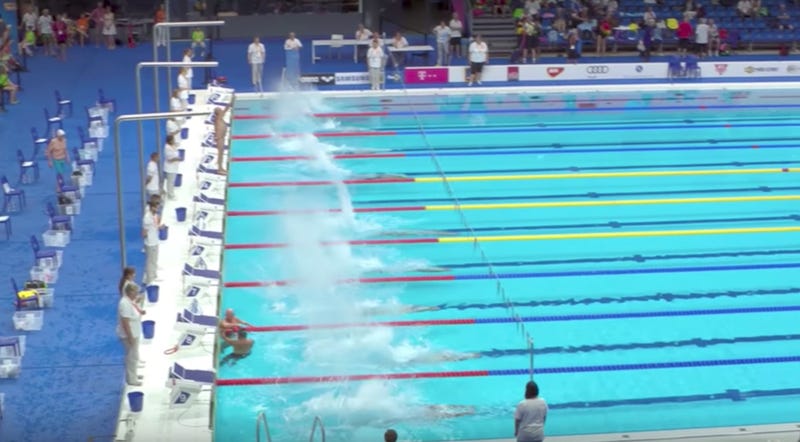
After the terrorist attack in Barcelona last week, Fernando Alvarez, a 71-year old competitive swimmer competing in the Masters World Championship in Budapest, asked race officials to hold a minute of silence for the 15 victims. Officials declined. Because…well, there was no explanation. Alvarez was not content with this answer. So when the race started, Alvarez held his own moment of silence, standing on the starting block long after the other swimmers had jumped into the water and begun the race.

Alvarez ultimately did jump in the water, and completed race. In the ultimate act of pettiness, race officials did not list him in the official results. Nice. Idiots. -TOB

Source: Spanish Swimmer Sacrifices His Race To Pay Tribute To Barcelona Victims”, Patrick Redford, Deadspin (05/21/2017)


Chess is a Young Man’s Game  

If you were to ask me to name chess players, I could name two: Bobby Fischer and the “Kasparov” guy. There’s also something on Netflix about a kiddo named Magnus (current #1 player in the world). That’s where my knowledge ends.

Chess seems like a game built on study and experience. I’m guessing a great player must commit the various strategies (and the one’s employed by his/her competitor) to memory, and draw on competitive experience to make the best decisions at pivotal moments.

It seems like a player would age nicely. More experience, more knowledge, better player.

This is not the case:

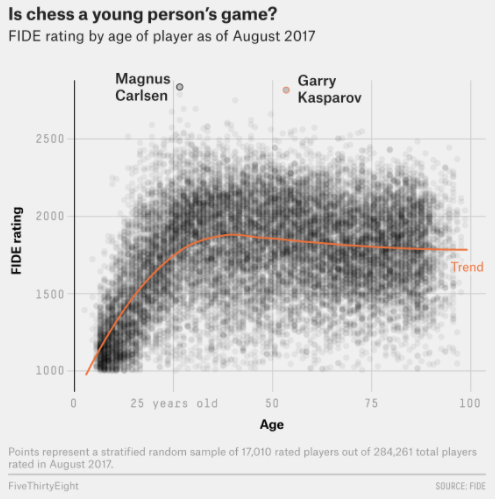
Like athletes, and – well – like all of us, chess players’ abilities peak in in their late thirties, and then most of them get worse.

Garry Kasparov, 54, is perhaps the most iconic chess legend. At 22, he became the youngest undisputed world champion. Now, 12 years since his last competitive match, he’s making another go at it. It’s not going exactly perfectly. His record thus far at a 10-player, round robin tournament with some of the best, was five draws and a loss as of Wednesday, August 23, 2017.

It appears Chess is a young person’s game, and Kasparov, considered one of the best of all-time (and this game goes back a few years), is trying maintain is elite status into his senior years. Our mental abilities, like our physical abilities can fade slightly. In a game as competitive as chess, at the level Kasparov is trying to compete, that slight downturn can make a huge difference. -PAL

Source: Is Garry Kasparov Too Old To Dominate Chess Again?”, Oliver Roeder, fivethirtyeight (8/16/17)

TOB: I’ll point out that in high-level chess, draws occur at a very high rate. For example, in the 1984 World Championship, the first Kasparov competed in, ended 5-3-40. Yes, 40 draws in 48 games. The fact he’s 0-1-5 suggests to me he’s lost his fastball, but is still very good. In fact, the chart up there suggests his rating is damn near the same as Magnus’ rating. Also, you’ve never heard of the Spasky Bishop Block? Spasky practically invented chess!


If You Put Your Mind to It, You Can Accomplish Anything

In a short and entertaining article, the Ringer’s Kevin Clark explores the possibility of an in-game 70-yard field goal. Is it possible? Well, kinda. Justin Tucker of the Baltimore Ravens is the most accurate kicker in NFL history. In college, he hit a 67-yard, in-game field goal (the NFL record is 65). Tucker absolutely believes he can make it from 70 in a game, and practices it often. He has hit from 79 in practice, and believes he could hit from 84 in Denver, where the altitude allows the ball to travel farther. Here he is, at Pro Bowl practice, hitting from 75.

Tucker has the ideal weather in mind (80 degrees), and the game situation would have to be right, but he knows he can do it. His holder, Sam Koch, has no doubt he’d make the kick, if given the chance. But there’s the kicker: no coach is likely to give him a chance. If the kick is short, there’s the possibility of a long return for a touchdown the other way. There’s also the possibility of a blocked kick being returned, because the trajectory of the ball needs to be lower. NFL coaches are almost universally conservative play-callers, and would rather take their shot with a Hail Mary, which they see as having far less risk. But, if it’s the end of the game and you’re down 3 points or less (but not tied of leading), where’s the risk? Who cares if the other team returns it for a touchdown. Once the kick misses, you’ve lost. The return is of no importance. So, come on, John Harbaugh. Don’t be a wuss. You know your brother would try it. He’s got guts. Do you, John? Do you? -TOB

Source: Justin Tucker’s Quest for the 70-Yard Field Goal”, Kevin Clark, 08/22/2017

PAL: Can you think of another sport that has a valuable, outlier play like kicking a field goal in football? The vast majority of the game is played one way – big, athletic men running and throwing a ball. Then, at a crucial moment, some skinny dude runs in from the sidelines and kicks a ball through a couple posts for 3 points.

TOB:  Rugby has similar kicks – both like football’s field goal and PAT. But that makes sense – the games are related. And, how dare you call Seabass skinny.


Video of the Week


PAL Song of the Week: Leo Kottke – “Tiny Island”


Like what you’ve read? Let us know by following this blog (on the right side, up near the top), or:

Email: 123sportslist@gmail.com

Twitter: @123sportsdigest

Facebook

Instagram: @123__sports


I hate, hate being left out. Whether it’s not being picked for a team… or being picked for a team and then showing up and realizing the team doesn’t exist. Or that the sport doesn’t exist! I should’ve known. Poop ball?

– M. Scott

Week of August 18, 2017

That’s almost 90 mph.


Is Floyd Mayweather Going to Take a Dive?

Next week, Floyd Mayweather, the best boxer of his generation, is going to come out of a 2-year retirement and “risk” his 49-0 career record against Connor McGregor, an MMA fighter who has never boxed professionally in his entire life. When this first was rumored months ago, I shook my head at the obvious cash-grab publicity stunt. I vowed not to order the fight, and ignored the story for months.

And then over the last couple weeks, my curiosity got to me. After all, the best part of a big boxing match is the spectacle – and this would surely be a spectacle. McGregor is a better self-promoter than Mayweather. Mayweather is loud and brash and braggadocious, but if you look closely, you can get the sense he doesn’t believe what he’s saying (indeed, Mayweather did not always demonstrate the Money Mayweather persona). McGregor, on the other hand, strikes me as a truly deluded meathead who believes every dumb word that comes out of his mouth.

Now that the table is set, we can eat. When the fight was first announced, I figured both guys just saw it as a nice pay day. McGregor has never made a fortune, because the UFC controls fighter pay. Mayweather has made hundreds of millions, but he’s not very good with his money. He even owes a very large tax bill to the IRS. But then I read this interesting article by a former fight promoter, Charles Farrell, with a seemingly thrown-away line that put a bug in my ear:

If [Mayweather] didn’t care about the legacy he single-handedly constructed (and, as a brilliant con man playing out the string at the end of a long, long con, he shouldn’t care), his final stroke of genius would have been to bet against himself at the beginning of the odds cycle during the very brief time they were 225-1—before jackpot hunters and McGregor hysteria brought the line closer—and then lose the fight in a freakish manner that didn’t hurt his reputation or foreclose the possibility of a redemptive rematch and would allow him to walk away with an additional hundred million dollars or more.

That would be the ultimate fuck you. I don’t think Mayweather is smart enough or secure enough to pull it off.

I just kept thinking about this and thinking about this. Would Floyd do this? Would he risk his perfect record? And then I started to piece some things together, like the director of Loose Change. Consider:

Right after the fight was announced, each fighter released a training video. Here they are, side-by-side:

Mayweather, though 40, looks as sharp as ever. McGregor, who again is not a boxer, looks like dog crap. He’s slow, rather uncoordinated, and looks like the amateur boxer he is. So, why would McGregor release this video? At first I thought, maybe this idiot doesn’t realize how bad he looks? Then I wondered if he wanted Mayweather to see it and not take him seriously? But after I read that passage above about Mayweather taking a dive, I got to thinking: Mayweather opened a -2,500 favorite (meaning you’d have to bet $2,500 on Mayweather to win in order to profit just $100), and Gregor opened at +1100 (meaning a bet of $100 would net you $1,100 if McGregor wins). So, what if they coordinated this video release to try to get the betting public to put money on Mayweather, and thus drive the odds on McGregor higher still? Ok, the evidence is weak so far, but let’s keep going.

Mayweather retired at 49-0, equaling Rocky Marciano’s record for most wins in an undefeated career. This fight would make it 50. Farrell thinks Mayweather will not risk that legacy. But, Mayweather is not as dumb as some think. What if, after he retired, he realized no one cared about 49-0? While generally considered the best of this generation, no one seriously ranks Floyd in even the Top 10 fighters of all time. Maybe Floyd, facing financial troubles, decided his legacy was worthless, and why not make his $100M on this fight, and also bet a huge amount of money on McGregor to win. At the opening odds, Mayweather could bet $10M on McGregor and net himself another $110M. Plus, if he loses, a rematch would be likely, where he could make another $100M. This is all still speculative. Is there anything more concrete I can point to that suggests the fix is in? I’m glad you asked.

Floyd has had a long history of hand problems. It’s one of the reasons his fights got so boring as he aged. He’s a defensive wizard, yes. But he was at one time a knockout artist, too. 13 of his first 15 fights ended in knockout. 19 of his first 27 did, too. After that, only 6 of his last 22 fights ended in knockout, the rest going to decision. Not surprisingly, around that time is when his hand issues began. In his 26th fight, he suffered his first career “knockdown” when Floyd punched his opponent and felt so much pain in his hand that he dropped his hand to the ground. He was never really the same fighter. Late-career Floyd embarrassed opponents with his footwork, quicks, and smarts. But he did not destroy them, and rarely even put them in trouble. It was like watching a boxing clinic, not a war.

What’s this have to do with Floyd throwing the fight? Well, about a month ago Floyd’s dad was interviewed. His dad has been part of the hype machine for this fight, saying Floyd is gonna “whoop [McGregor’s] ass.” But in this interview, Floyd, Sr. let it slip that he doesn’t think his son can knock McGregor out because Floyd, “has something wrong with his hands.” This is not really news to anyone following Floyd’s career, except for the fact that after a two-year break, the hands are still a problem.

And this is where things get inexplicable. In boxing, fights in Nevada at 147-pounds and above (this fight will be at 154-pounds) must use 10-ounce gloves. This is to protect the fighters. But last week, both McGregor and Mayweather petitioned Nevada boxing authorities to allow them to use 8-ounce gloves. McGregor is known as a strong puncher in MMA, and MMA fighters use 4-ounce gloves. His preference for lighter gloves makes sense. But for Floyd? Who is not a strong puncher, has a history and reportedly lingering hand injuries? Why on Earth would Floyd Mayweather want smaller gloves? He wore 10-ounce gloves in his matches against Oscar de la Hoya, Miguel Cotto, and Canelo Alvarez (he did wear 8-ounce gloves in his rematch against Marcos Maidana, but that was a peculiar case where Mayweather was risking both his 147 and 154 pound titles, and both fighters were required to make the 147-pound weight).

Surprisingly, on August 17, the Nevada State Athletic Commission agreed to a one-time exception. They will use the smaller gloves. I can’t shake the feeling Floyd is trying to set up a situation where he loses, has an excuse for it, and sets up a rematch. As I said at the outset, if he bets against himself and sets up a rematch, he stands to make an enormous profit. If he simply wins, he won’t be set for life, after paying his outstanding tax bill, plus the taxes on this purse.

Charles Farrell doesn’t think Floyd is smart enough or secure enough to do it. But considering all I’ve outlined, it makes ya think, doesn’t it?

Source: Floyd Mayweather, Jr. Vs. Conor McGregor Is The Second-Biggest Possible Fuck-You”, Charles Farrell, Deadspin (07/28/2017)

PAL: The 0 in Floyd’s 49-0 record is what makes him culturally relevant. Everything about his brand, aura, mystique is contained within that zero. I would argue it’s priceless to Mayweather.

While I understand you’re pulling the 10MM number out of thin air, it leads me to questions. When someone makes a $10MM bet, word gets out. I mean, that seems like a massive number. Even if Mayweather passed out the money to a handful of people to make the bet for him, there would be buzz, right? Also, he’s at claiming he doesn’t have the cash on hand to pay his taxes (he’s asked the IRS to give him until after the fight to pay the taxes), but he’d put the money up on a fixed bet. Never mind the legacy – does he have the cash to pull this off. If not, who would bankroll it? This seems like a plan you’d want as few people as possible to know about. I wouldn’t be borrowing money to throw a fight. 

Yes, the largest best is a $880,000 (I haven’t seen $888K). The Maloof brothers — former owners of the Sacramento Kings — put it down as a PR play for a charity. I know this because the bet was big enough to attract national press. One of the Maloof brothers was on Dan Patrick’s radio show on Wednesday. Again, it seems like a PR move on their part, but a bet for less than $1M attracted a lot of attention. Just saying.

Hey, if you’re right, then this would be a great call. Almost as great as my Patriots comeback call in the Super Bowl. I should’ve put my money where my mouth was, and maybe you should, too, TOB.

TOB: As you note, I pulled the $10M figure out of thin air. But it’s not far-fetched. Of course he can’t place personally place a bet against himself, and of course he can’t have someone make a $10M bet all at once. As you said, the largest bet taken by a casino is $880,000 (on Mayweather). But if Mayweather gives 10 of his buddies $1M each, and they made bets at various casinos, they could easily dispose of the $1M each rather quickly. Of course, there are always mob-types to arrange this, too. It’s boxing, and it’s Vegas.

As for the 49-0 – this was my thought, too. But my argument here is that, after two years, he realized 49-0 doesn’t matter as much as he thought it would. I am so angry at myself for thinking this, let alone typing it, but I can’t wait to see what happens.

Finally, EXPLAIN THE GLOVES, PHIL. EXPLAIN THE GLOVES!


Trick Play Freezes Time

Every high school baseball team has a trick play. They are fun, choreographed, off-the-wall, sometimes outright rule-breaking plays that rarely work.

There’s the one where the pitcher fakes the pickoff throw, and everyone on defense acts as if he has thrown the ball into the outfield:

There’s the old hidden ball trick:

There’s the straight fake throw from a catcher

And there’s the old third-to-first:

There’s also the rumored “skip third” play where a baserunner simply cuts the corner at third base and advances home. This only works if there are two inattentive umpires calling a game. I’ve never seen it and I can’t even find evidence of it on YouTube.

There are a lot of trick plays, but I’ve never heard one as creative and bizarre as the one at the center of the this story.

For one, the ‘Skunk in the outfield’ play lasts over two minutes and thirty seconds. That is an absolute eternity for a baseball play to be live.

Second, it  exposes a rule I never knew existed. “In the rulebook, the baseline is not — contrary to what most people think — the line between two bases. Rather, it’s a straight line between wherever the runner is and the base he’s going for when a tag is attempted.”

Third – and perhaps most ingenious – is The Skunk Play is sheer absurdity. It depends on the defense reacting to something it’s likely never seen before.

So, with runners on first and third here’s how it works:

Did the play work? You’ll have to read the story to find out. Sam Miller clearly had fun writing this story, and it’s one of the most enjoyable reads so far this year. – PAL

Source: “Skunk in the outfield”: How the most epic trick play in history broke baseball, Sam Miller, ESPN (08/17/2017)

TOB: Great read. I love this play. [PAL: SPOILER ALERT. TOB indicates the outcome of the play in the next sentence.] Hats off to the pitcher, though, who defensed it perfectly. When it began, he didn’t balk or panic, which is what the play is designed to get him to do. That’s a ball player!


Respect The Game!

Good: Funny choreographed handshakes amongst adult teammates.

Bad: Handshake between teams.

Why don’t MLB teams shakes hands after a series? Be it the formality of the NHL playoff series or the more informal gathering at the center of an NFL football field or NBA court – the tradition holds true in other major sports. Why not baseball? ESPN’s Dave Schoenfield breaks it down in his column and gives us a tease that a handshake might be coming to an MLB game real soon.

We’ll get to that in a second. Why no handshake?

Baseball teams play almost every day for 7-8 months out of the year. Unlike other sports, the regular season is broken up into either a three or four game series. A handshake after every game would be a bit much. I get that, but I didn’t know that there’s actually an MLB rule that prohibits it: “Rule 4.06, which has been on the MLB books since at least 1950 and dictates that ‘players of opposing teams shall not fraternize at any time while in uniform.'”

Schoenfield points out that the rule does nothing to stop opposing players for shooting the bull during batting practice or the lovefest that ensues when a first basemen and a baserunner laugh it up during the game, but it’s interesting the the rule exists in the first place.

For a game that loves to use the argument of “respect the game” more than perhaps any other sport, it seems incongruous that a handshake doesn’t take place after the last game of a series or at the very least when a playoff series ends.

This all might change, for one night at least, in Williamsport, PA.

On Sunday evening, Matheny and the Cardinals will face the Pirates in the inaugural MLB Little League Classic. The game, which takes place right smack dab in the middle of the Little League World Series, will be played at Bowman Field in Williamsport, Pennsylvania. The pint-sized park has about 2,500 seats, nearly all of which will be occupied by Little Leaguers and their coaches and families. Translation? If ever there were a time to green light Operation Handshake, this would seem to be it.

First of all, how cool is it that an official MLB game – in August – is being played at a 2,500 seat park, in Williamsport, during the Little League World Series? Is this being promoted? This is the first time I’ve heard about it. MLB should be shouting about this as its answer to the NHL Winter Classic. I would love to go to this game, and if they do it next year, TOB, we got to go.

Second, this is absolutely the setting for an MLB handshake. Little League preaches about sportsmanship like it’s gospel. It feels like the announcers have to mention it a minimum of once every inning. Let’s see the idols live by the same expectations we preach to the kids. I dig it. The only thing that would be better is if an MLB player bawled after this game like a 12 year-old who just lost at the Little League World Series. If it would ever happen, it would probably will be a player from the Cardinals. – PAL

Source: “Forgotten lessons from Little League: Why don’t MLB players shake hands after games?”, Dave Schoenfield, ESPN (08/15/2017)

TOB: Yadier.


The Taste of Revenge is Salty

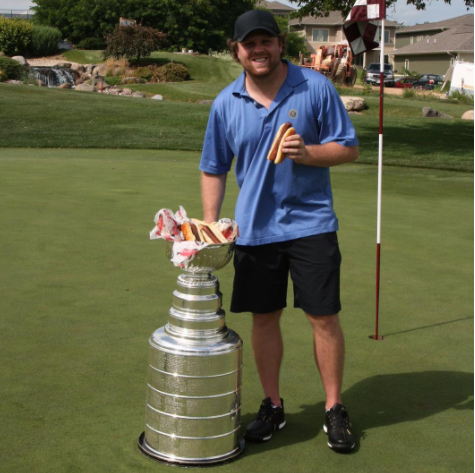
The Pittsburgh Penguins’ Phil Kessel is a supremely talented athlete. He doesn’t have the appearance of one, despite being one of the fastest skaters (if not the fastest) and a big time goal-scorer in the NHL. All the more reason to like him, right? Especially considering he has back-to-back Stanley Cups.

Before Pittsburgh, he was run out of Toronto. In fact, Toronto will be paying over $1M of Kessel’s salary for the next eight years for him to not play for the Leafs. It got bad between him, the fans, and the media – I’m sure Kessel’s to blame for some of it – but on his way out one columnist tried to give him a kick in the ass. Per, Steve Simmons:

“The hot dog vendor who parks daily at Front and John Sts. just lost his most reliable customer. Almost every afternoon at 2:30 p.m., often wearing a toque, Phil Kessel would wander from his neighbourhood condominium to consume his daily snack.”

Kessel neither lived nor worked near Front and John Street. Although the rumor was more or less dismissed, Toronto fans looked at his chubby face and bad attitude, and the hot dog story stuck.

Kessel hasn’t forgotten either:

I think that’s what Duane Kuiper calls “ownage”. – PAL

Source: Phil Kessel Ate Hot Dogs Out of the Stanley Cup,” Satchel Price, SB Nation (08/14/2017)


What Is Art? Are We Art? Is Art Art?

Every time the Marlins hit a home run, the gigantic “sculpture” in left-center field is set in motion. If you’ve never seen it, enjoy:

When the stadium first opened a few years ago, people were horrified. It was the butt of many jokes. But time passed, and as often happens, the once reviled “sculpture” became…sorta beloved. The sculpture hit its peak at the All-Star Break, hosted by the Marlins. This great article by Grant Brisbee is a good example. Not long after the break, though, the Marlins announced their intention to sell the team to a group that includes Boring-as-Hell Derek Jeter. It did not take long before news leaked that the group, and Boring-as-Hell Derek Jeter in particular, planned to remove the sculpture. WHY DO YOU HATE FUN, JETER?

Thankfully, the local government has stepped in. The sculpture will not be going anywhere:

Standing 73 feet tall, the mechanical display sends marlins and flamingos whirring whenever the Marlins hit a home run (TOB Note: Haha. Still funny). It was commissioned as part of Miami-Dade’s Art in Public Places program, which requires construction of county buildings to include art as well. The sculpture by well-regarded pop artist Red Grooms is named “Homer,” cost $2.5 million and, like Marlins Park, belongs to Miami-Dade’s government.

“The County commissioned and purchased the Home Run Sculpture with the public art funds generated by the ballpark project,” Michael Spring, head of the county’s cultural affairs arm, said in an email Thursday. It “was designed specifically for this project and location and is permanently installed. It is not movable.”

HAHA. EFF YOU, JEETS! -TOB

Source: “County on Marlins home Run Sculpture: ‘It is not movable.’ (Also, the Mayor Doesn’t Like It)“, Douglas Hanks, Miami Herald (08/17/2017)

PAL: If anything, it will serve as a very large reminder to never publicly finance another stadium.


Chick-Fil-Ha!

The Falcons new stadium opens this season. Cool, cool. Another terrible waste of taxpayer money. But that’s not why I’m writing about it. I’m writing because the stadium has a Chick-fil-A inside. Mmm, delicious, chicken-y (homophobic) Chick-fil-A. Wherever your politics land, Chick-fil-A is inarguably tasty. Not the best, but tasty, especially for fast food. Falcons fans are no stranger to Chick-fil-A. It is headquartered there, and there are dozens in and around the city of Atlanta. But if you’re at a Falcons game this Fall, it is very unlikely you’ll be able to get some Chick-fil-A. Why? Well, Chick-fil-A observes the sabbath. No Chick-fil-A, no matter where it is located, is open on Sundays. Can you see where this is headed? Yes, they built a Chick-fil-A, in the stadium, that won’t be open on Sundays, when NFL teams generally play. It will only be open when the Falcons play on Thursdays or Mondays. This year, that will occur once. HAHA. Dadgum, that’s some terrible planning. -TOB

Source: The Falcons’ New Stadium Has a Chick-fil-A, Which Won’t Be Open For Most Falcons Games“, Matt Bonesteel, Washington Post (08/16/2017)


Video of the Week: 


PAL Song of the Week: Ryan Adams – “Ashes & Fire”


Like what you’ve read? Let us know by following this blog (on the right side, up near the top), or:

Email: 123sportslist@gmail.com

Twitter: @123sportsdigest

Facebook

Instagram: @123__sports


“I hate disappointing just one person. And I really hate disappointing everyone. But I love Burlington Coat Factory.”

-M. Scott

Week of August 11, 2017

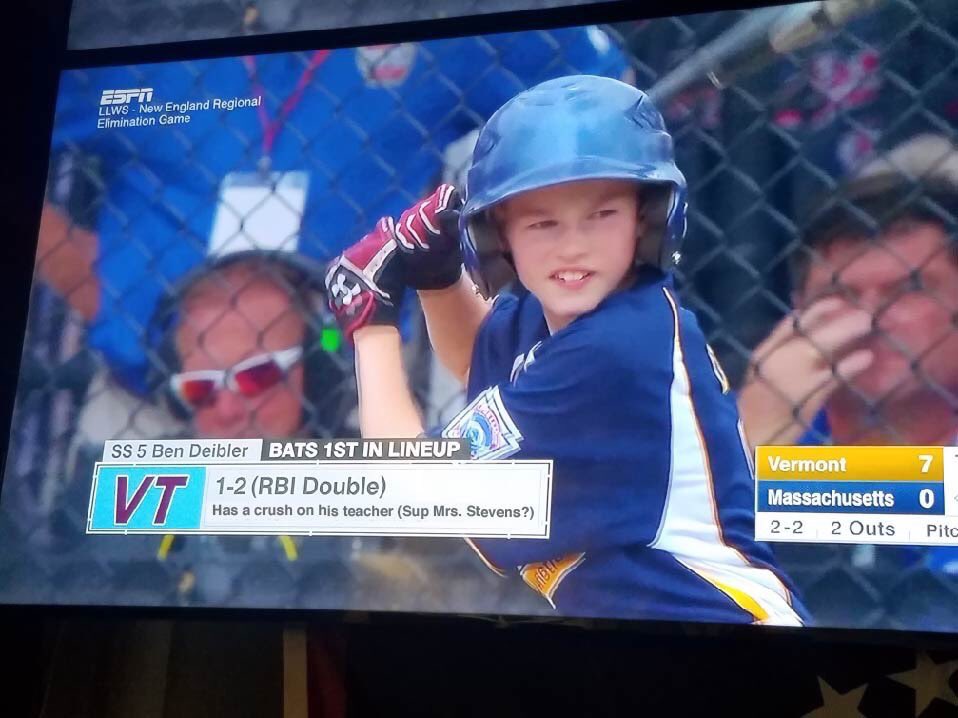
Swing for the fences, Benny.


The Olympic Gift That Keeps on Giving

One year later, it is safe to call the Olympics an absolute disaster for the city of Rio de Janeiro. The laundry list of problems is exhausting:

  • 15 of 27 venues have not been used even once since the Olympics ended.

RICARDO MORAES/REUTERS

  • The Maracaña, the iconic soccer stadium built for the 2014 World Cup just two years prior to the Olympics, has been vandalized and had its power shut off due to an unpaid $950,000.00 electric bill.
  • Olympic park, “long hailed by Brazilian politicians and Olympic proponents as a path to upgrade one of Rio’s poorer neighborhoods, is shuttered.”
  • “The community pool that was supposed to come out of the canoe slalom course was closed in December and has yet to re-open.”
  • The pool at the Deodoro Aquatics Center “is now covered in bugs, mud and rodent feces.”

ANTONIO LACERDA/EFE

  • A fire from a “flying lantern” torched the velodrome roof, badly damaging the track.
  • The plan to turn the handball arena into four public schools has been abandoned.
  • The 31-tower Athlete Village, which was said to be turned into luxury condos, sits largely vacant.

Oh, but that’s not all! No, no. That is not all!

“Promises that the Olympics would modernize Rio and make its streets safer and favelas cleaner have also failed. According to Brazil’s Institute of Public Safety, street robberies are up 48 percent and deadly assaults by 21 percent, to the highest rates since 2009. In the first three months of 2017, violent crime spiked 26 percent compared with the same period in 2016. The state of Rio is still unable to pay its teachers, hospital workers, police and other public employees on time, if at all. Many favelas still lack running water or proper sewage removal.”

When Brazil was awarded the 2016 Olympics way back in 2009, its politicians promised the Olympics would transform the nation’s sports infrastructure. And it did, for a while.  The government and private industry poured money into Brazilian athletics over the next 7 years in order to maximize Brazilian performance at the games. But since?

“Athletes who had been showered with opportunity in the lead-up to Rio were now in the middle of a nightmare, a few with the Olympic medals around their necks…. And perhaps no segment of Brazilian sports has been hit harder by the post-Olympic downturn than aquatics. For 26 years, the Brazilian Postal Service sponsored Brazil’s entire aquatics federation. But after Rio, that investment was slashed by 67 percent, from $5.2 million to $1.7 million a year. Earlier this year, the president of the Brazilian Olympic Committee, Carlos Arthur Nuzman, admitted that economic investment in Brazilian sports has recessed to where it was in 2000, nine years before Brazil was even awarded the 2016 Games.”

In some ways, this is for good reason. The economy is so bad, and the corruption so deep, that the country can’t afford to spend money on athletics:

“Coupled with sagging oil revenues, the people’s lack of trust in government led Brazil into its worst recession in history. Ten days after the closing ceremonies, Rousseff was impeached, largely blamed for the country’s crisis. No segment of the government was immune from scandal, including sports leaders. Coaracy Nunes Filho, the president of the Aquatic Sports Federation, and two of his directors were arrested and charged with the misuse and misappropriation of $13 million in funds, for their own personal gain and by giving favorable contracts to associates. Sensing a larger problem, the TCU launched an investigation into 10 sports entities, including Brazil’s Olympic Committee. Nine of the 10 were found to be misusing public funds. The only organization that wasn’t: the Brazilian Confederation of Sports for the Visually Impaired.”

Unlike the U.S., Brazil’s government has long provided stipends to its Olympic athletes. Those stipends are being slashed. And who can fault that, at this point? As Judo Gold Medalist Rafaela Silva puts it, “Everybody will want a good performance in 2020, but sports are no longer a priority. We understand the government had to decrease the investment. How can you justify the expense of millions on sports when we have no hospitals?” -TOB

Source: After the Flame”, Wayne Drehs and Mariana Lajolo, ESPN (08/10/2017)

PAL: It’s been a pretty common topic over the past few years: hosting the Olympics does jumpstart an economy is bureaucrats promise when they are pitching the idea. I’ve made my opinion known several times on the blog that the Olympics should rotate between a handful of locations with the infrastructure in place and a history of putting on the event. Those arguments can feel a little abstract. Drehs’ story does a good job of putting the impacts of the Rio games right in your face:

Even some of the medals awarded to the athletes have tarnished or cracked, with more than 10 percent of them sent back to Brazil for repair. Rio officials blame poor handling by the athletes.

Almost a year since the Games closed, the Rio 2016 Organizing Committee still owes $40 million to creditors. Bloomberg reported in April that the Olympic organizers were attempting to pay creditors with air conditioners, portable energy units and electrical cables. In July, the organizing committee asked the International Olympic Committee for help with its debt; the IOC said no.

Above all else, the perhaps the most fitting symbol of the lasting impact of Rio 2016 are the seedlings every athlete carried with them during the opening ceremony. These seedlings were to be planted in Rio to help offset the environmental impact of the games, but they also represented a bigger promise: Rio 2016 was not to be a circus that came through town, but rather it would mark the beginning of a long term investment in the community and its athletics. Where are those seeds now?

[J]ust over a year later, there is perhaps no greater example of the Rio Games’ complicated legacy. The seedlings sit in planting pots under a sheer black canopy on a farm 100 kilometers from Rio. Prior to last week, Marcelo de Carvalho Silva, the director of Biovert, the company responsible for the seeds, hadn’t heard from Olympic organizers in months. He had no idea what the plans were for the seeds, but he painstakingly watched over them for free, knowing what it would mean for his company — and the country — if something happened to them.

That’s when the TCU, following up on the Olympic promises made for Rio, started asking questions. And then, sure enough, Olympic officials finally reached out. Twenty-four million seedlings were supposed to be planted to offset the environmental impact of the Games. But that has not happened. The trees that were part of Olympic Park are dying from a lack of irrigation and maintenance. The mayor blames the organizing committee; the organizing committee the government. And, as a result, there is a stalemate.

What a scam.


I Was So Much Older Then, I’m Younger Than That Now

The Ringer’s Bryan Curtis explores the retired athlete’s impulsive, seemingly unavoidable need to tear down the accomplishments of today’s athletes. As Curtis notes, this has been going on since at least as long as modern sports have existed – in September 1939, Hall of Famer Tris Speaker was asked about young Joe Dimaggio. Speaker spat, ““Him? I could name 15 better outfielders!” Joe D was 26, and finishing up a season in which he’d hit .381 with 30 home runs, and an OPS of 1.119, FYI (Speaker later walked back his assertion…sorta).

More recently, Dennis Rodman said the early-90s Run-TMC Warriors were better than today’s Warriors. His reasoning? Run-TMC scored 130 points per game, and the Warriors did not. For the record, the Warriors scored just 115 last year, while giving up 104, while the Run-TMC Warriors scored 116 and 116 (never close to 130), and gave up 119 and 115, in 1990 and 1991, respectively; they missed the playoffs in 1990 and won a single round in 1991. The current Warriors fared a bit better.

Michael Jordan is perhaps the most interesting recent case. When asked to compare Kobe and LeBron, MJ said Kobe is the better player because “5 is more than 3”, referring to the number of titles each player won. This analysis is flawed on many levels. For one, Kobe’s career is done. LeBron is still in his prime. For two, it ignores so much more that goes into career. No one other than Laker fans would argue Kobe was the better player than LeBron. But Jordan has a reason to argue Kobe is better – Kobe, who again is retired, is no longer a threat to MJ’s legacy. After all, 5 is less than 6, using Jordan’s logic.

Legacy protection aside, what’s this phenomenon all about? Curtis makes a strong argument:

Anyone who has listened to their grandfather complain about the modern world knows these complaints are most interesting as a window into the insecurities of an aging man. Imagine a star player being the greatest for his entire career. Then, in his golden years, he is constantly baited: What do you think of the New Guy? Is he better than you? Are you ready to surrender your title as homerun/touchdown/scoring king?

The particulars of the gripe are less interesting than the yearning behind it: Oh, to be a young man enjoying the pleasures of the modern world. Now that’s a story.

(In true Ringer fashion, the ending of this story is abrupt and off-putting. But, I still enjoyed the article, so there you go.) – TOB

Source: Sportswriting’s Old-Timers Game”, Bryan Curtis, The Ringer (08/08/2017)

PAL: All this talk of Mike Trout being the best centerfielder – give me a break. Kirby Puckett has 2 World Series rings. 2 is more than zero. Puckett is the best. That’s all I can add, because Curtis nails it. However, he fails to mention how much we love it. We love talking about what the old, out-of-touch player said about so-and-so. It fills our afternoons of sports radio and podcasts every day.


Tell Me Who You’re Loyal To

Getty Images/Ringer illustration

I remember reading somewhere – maybe it was about Chuck Klosterman talking about Kevin Durant coming to the Warriors – that the real “team” of an athlete isn’t found on jersey they wear, but rather the shoes they wear. Kevin Durant, LeBron James, Steph Curry – Nike and Under Armour will likely pay them more money than any NBA team. These are the athletes primary employers. 

It makes sense when you extend that thinking to coaching and trainers, too. Coaches come and go. There are exactly 3 NBA coaches that have been with their team for more than 5 years. With a revolving door of coaches (and their staffs), who is thinking about the individual player’s development over the long haul?

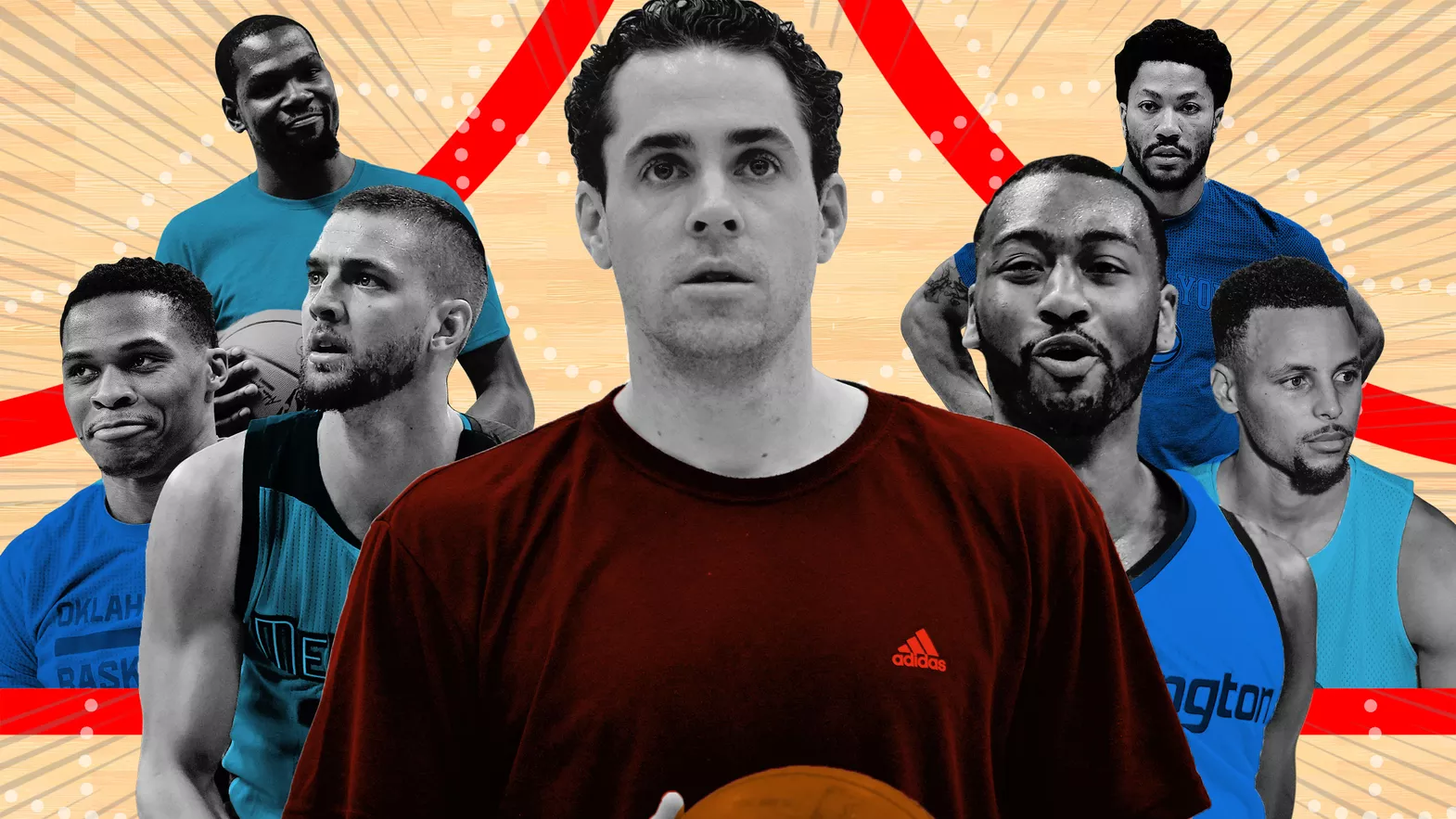
Enter Rob McClanaghan. This former gym teacher is carving out one hell of a life for himself as a trailblazer in the new world of specialized trainers. He’s not there to make sure Steph Curry is lifting weights or adhering to his diet. Nope, he’s there to make sure that beautiful, perfect shot stays just so. Makes sense, right? A lot of guys can keep a professional athlete in shape and eating right, but not a lot of dudes can keep a shooter’s stroke finely tuned.

McClanaghan’s small empire started like many small empires – with a flier. The high school gym teacher started with kids, then met college players in the area. His persistence and his players’ results finally got him a gig at the legendary ABCD camp (invite only camp for the best high school players in the country). At around that time, in 2007, former NBA player and new sports agent B.J. Armstrong had an idea.

[I]t occurred to Armstrong that elite draft prospects should spend the nearly three months between the college season’s end and the NBA draft training to transition to the NBA, rather than playing in the various, then-popular All-Star games. Armstrong saw the average age of draftees drop and more NBA teams hire coaches with “development” in their titles.

“The draft started placing emphasis on potential,” Armstrong says. “The guys were 19 and 20 instead of 22 and 24. Summers went from honing your craft to real basketball development. The attention to potential shifted development.”

A mutual friend suggested Armstrong discuss the idea with McClanaghan, whose name had become known around the league.

In the span of 5 years he went from charging $40 for a personal lesson with a kid to training lottery draft picks and NBA stars like Derrick Rose, Kevin Durant, Russell Westbrook, and Steph Curry.

We’re seeing it more and more in all sports. Like McClanaghan, quarterback coaches, hitting instructors, and skating coaches are working with ‘clients’ from middle school to professionals on one component of the game. Honestly, a part of it makes me shake my head, but I concede that it makes sense, I guess. More than anything, I like how McClanaghan saw an opportunity and hasn’t taken his foot off the pedal ever since. – PAL

Source: Meet the Man Behind Your Favorite NBA Jump Shots”, Sam Fortier, The Ringer (08/09/2017)


Video of the Week


PAL Song of the Week: Neil Young – “Till The Morning Comes”


Like what you’ve read? Let us know by following this blog (on the right side, up near the top), or:

Email: 123sportslist@gmail.com

Twitter: @123sportsdigest

Facebook

Instagram: @123__sports


It’s funny that pirates were always going around searching for treasure, and they never realized that the real treasure was the fond memories they were creating.

-J. Handy

Week of August 4, 2017

TOB and family are off camping this week. Looks like it’s just me. 


The Biggest Catch

When I stop to think about it, the notion of upper decks in baseball stadiums are crazy. Go up a couple hundred feet in the air. Sit on ledge on a steep incline, and drink alcohol. Then, when a $6 baseball is hit in our direction, we lost all sense of where we are. Multiple decks holding tens of thousands of people are stacked on top of each other with short railings to keep us from falling to the deck below us.

People die at baseball games from falling over short railings. In 2011, a fan died after falling over a 20 foot wall in Arlington while trying to catch a ball Josh Hamilton tossed him between innings. Tyler Morris fell 35 feet from the upper deck a year before that in the same stadium. He broke his skull, but didn’t die. Another fan died at Turner Field in 2015 after falling from the upper deck. 

The thought has crossed my mind at nearly every game I’ve watched from the upper deck. It wouldn’t take much. A missed step at the wrong time and I’m in a bad way. It’s a nightmare scenario, and Randy Kobman has lived through it. Per Dave McKenna:  

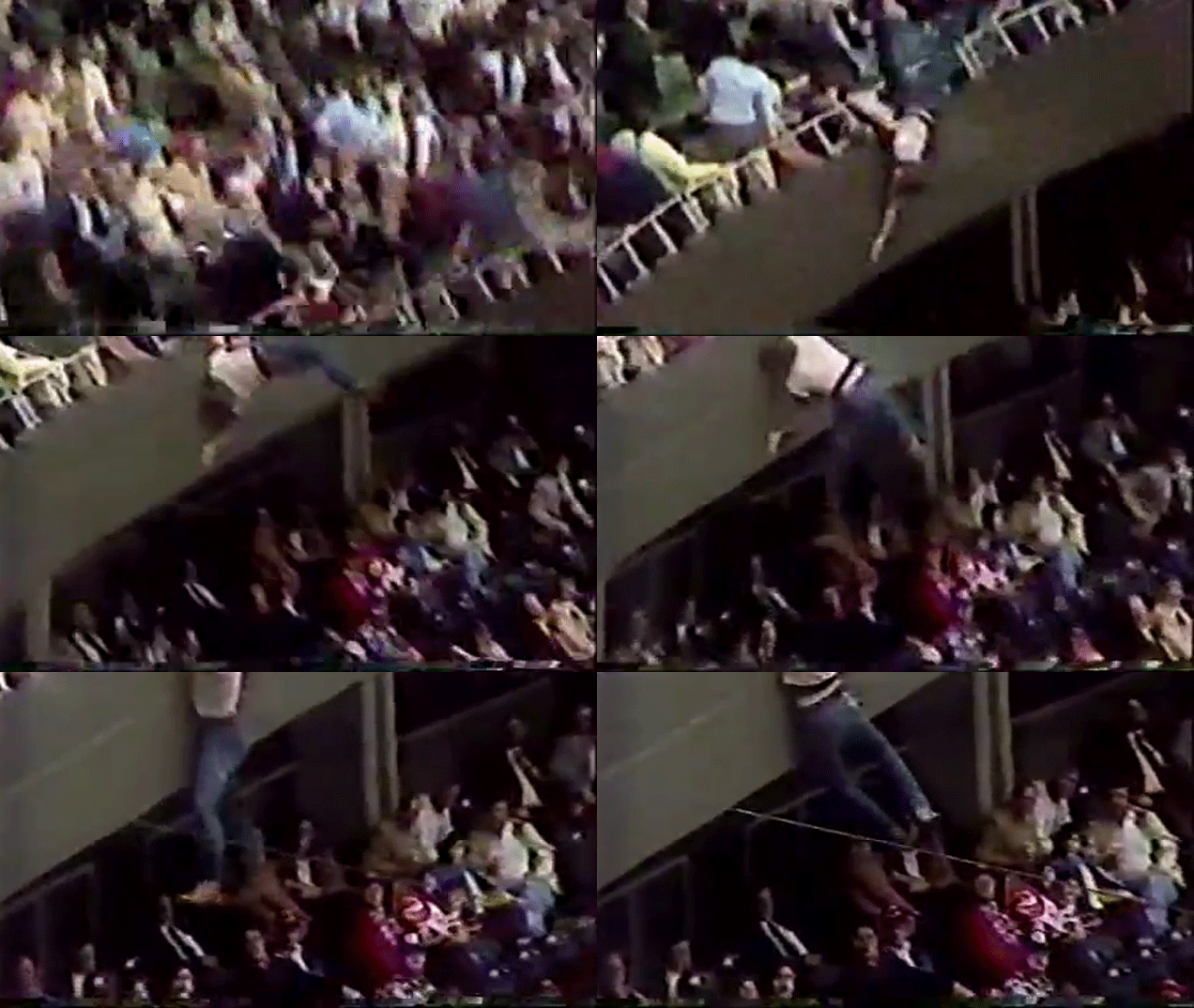
On April 22, 1981, an Ohio teenager named Randy Kobman skipped school to go to Riverfront Stadium to see the Cincinnati Reds play the Atlanta Braves. In the bottom of the 8th inning, Reds slugger George Foster fouled a pitch from Gaylord Perry into the grandstands behind home plate. The ball caromed off the the press box and headed back toward the field. Kobman, sitting in the front row of seats in the stadium’s second deck, moved toward the aisle to make a play for the bouncing ball. He caught it. Then he flipped over the railing.

How he holds on, I’ll never know. I can’t believe I’ve never heard this story or seen this clip.

McKenna’s story isn’t just about that clip; rather, he uses that moment as a junction to explore multiple paths of the story. In fact, we have two stories that use a blurry instant in that manner. McKenna digs into those impacted on that day (George Foster, and Lee Corso – yes, that Lee Corso of College GameDay, among others). He and Kobman explore Kobman’s life after that moment.

But perhaps the most alarming component of this story is the fact that people continue to fall over railings at baseball games. Kobman’s catch happened in 1981! Last I checked, it’s 2017.  The notion that anyone has fallen over a railing at a baseball game in the last in the last 26 years is at least absurd and quite possibly negligent. Of course, I understand not wanting to obstruct a spectator’s view, but there has to be some common sense here.

On a lighter note, Kobman ditched school to catch a the Reds play the Braves. While he didn’t die, his cover was most definitely blown. Solid read! – PAL  

Source: The Kid Who Didn’t Die At Riverfront Stadium”, Dave McKenna, Deadspin (8/1/17)


Glove Love

This is some fun writing here, folks. The premise: home runs alone make for bad highlights. What’s more important is Sam Miller absolutely nails just what does make for a good highlight:

A great highlight is like a magic trick, in which the magician pledges to do something impossible, does it in a way that surprises you, and manages not to fully give away the secret. How did Nolan Arenado make this throw? How did Kenny Lofton make this catch? How did David Wright use his bare hand?

How did Aaron Judge hit a ball so far? Well, the answer’s pretty simple. He’s stronger than everybody else and he hit the ball squarely. It’s not that that’s not incredibly impressive. It’s just impressive in the way that a great clean-and-jerk or a record long jump is impressive. He was capable of an act of extreme strength and this is it. It’s less like a magician doing a trick and more like a guy who can bang a gong loudly. Like, incredibly loudly, but still, that’s the act.

To prove his point, Miller gives us some spectacular ‘magic tricks’, including this gem from Mark Buehrle:

And then you’re in a YouTube wormhole of great baseball plays – most all of which are defensive plays. It’s a delightful wormhole, one from which I reluctantly emerge. Fun story, excellent writing, great video clips. – PAL

Source: Dig the longball? Here’s why home run highlights are the worst”*, Sam Miller, ESPN (7/21/17)

*When did we officially give up on headline writing? “Dig the longball? Here’s why home run highlights are the worst” – really? That’s the best we can come up with? I’m guessing there’s some pretty convincing research telling websites and blogs that clever headlines don’t get the clicks that painfully obvious headlines receive, but this headline sucks even by those standards. How about “The Worst: Home Run Highlights”? Do we have to reference a Nike ad from 20 years ago? Give me a little effort, guys!


How To: Iconography

This is the second David Davis story we’ve shared on 1-2-3 Sports! Both are about iconic olympic photographs. The first, posted on 8/19/16 examines the moment olympic favorite Mary Decker realizes her dream is running away from her. Today, we look at sprinter Ben Johnson.

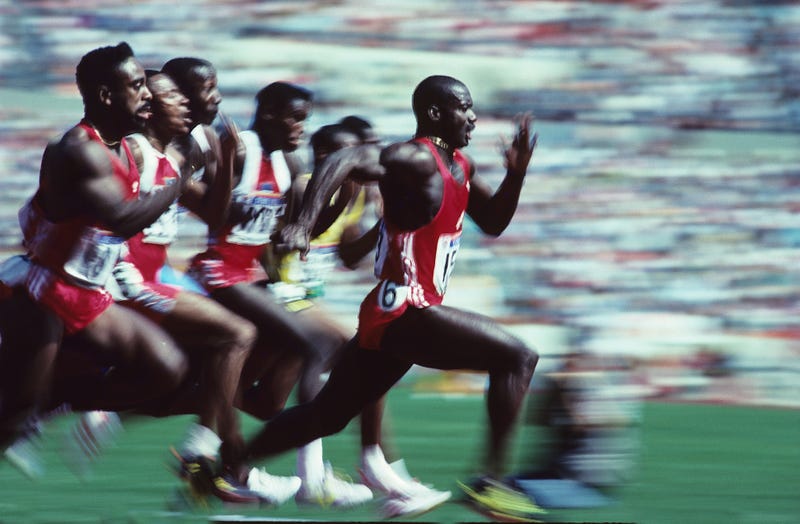
There’s no point in avoiding the cliché: if a picture is worth a thousand words, then give me both. That’s exactly what Davis does in his deep dive into Ron Modra’s photograph from the ‘88 Olympics:

For all-time photographs like this, the right person needs to be at the exact right place at the exact right time. The circumstances matter, and the circumstances are many. How Modra captured this shot is not just about snapping the shot, it’s about how he got there. There being 20 meters off of the start line instead of the finish line. There being Sports Illustrated. There being in Canada leading up to the Olympics. Hell, there being a photographer in the first place.

As a kid he helped out around his dad’s small printing business. One of his jobs was to shoot displays. After serving in Vietnam, he avoided college by shooting sports for local papers in Milwaukee. Turns out, 1970 was not a bad time to be earning your stripes as a sports photographer in Brew City:

A self-taught “grinder,” Modra finagled credentials to shoot Milwaukee Bucks games. The Bucks were an expansion club, but behind their big three of Kareem Abdul-Jabbar (then known as Lew Alcindor), Oscar Robertson and Bob Dandridge, they won the 1970-71 NBA championship in only their third year of existence. Modra’s work was noticed by the PR department for the other new pro team in town: the Brewers, owned by Bud Selig, a local car dealer who had bought the Seattle Pilots out of bankruptcy and moved them to Wisconsin in the spring of 1970.

He worked hard, produced, and was eventually noticed by Sports Illustrated, which was the leader in sports journalism. His wasn’t a meteoric rise. Hell, he wasn’t even on the ‘A-Team’ at SI when he snapped the shot of Johnson at the olympics. I’ll leave it there, because you should really read the entirety of Davis’ story.

There’s the story of the photograph, and then there’s the story of what the photograph has come to represent. Davis puts it simply and powerfully: “Indeed, Johnson’s transgression was the first time that a major sports star was caught, exposed publicly and penalized harshly for steroids.”

Turns out, there’s a hell of a lot of luck involved, too, which makes this an even more fascinating read. Take the time to enjoy every word of it. – PAL

Source: The Story Behind The Iconic Photos Of The Olympics’ Dirtiest Record”, David Davis, Deadspin (8/2/17)


Video of the Week: 

PAL Song of the Week: Led Zeppelin – “Rock And Roll”


Like what you’ve read? Let us know by following this blog (on the right side, up near the top), or:

Email: 123sportslist@gmail.com

Twitter: @123sportsdigest

Facebook

Instagram: @123__sports


“I wouldn’t miss it for the world. But if something else came up I would definitely not go.”

-M. Scott

Week of July 28, 2017


17776: One of the Weirdest and Most Creative Things I’ve Ever Read

That title might seem hyperbolic…but this is really something else. The story is set in the year 17776. That is not a typo. The premise is simple enough: Sometime around the year 2024, human beings stop aging. We live forever. But no one new is born. We have infinite time. And what do we do with it? We play football. But with infinite time, football evolves significantly. Instead of 100 yards, the field and end zones become entire states. The entire country, even. Mostly told through three satellites hurtling through space, Pioneer 9, Pioneer 10, and JUICE, 17776 touches on an incredible range of topics and themes – aging, mortality, the existence of life, the existence of God, the existence of existence. It ridicules the NFL’s rule book, especially the rules that have developed around what is or is not a catch. Global warming. Cartography. Rising sea levels. Technology. Isolation. The evolution of the minivan. It’s all there, and it’s funny, and weird, and incredible. Jon Bois is a writer I have long enjoyed reading, and this is his magnum opus, in my opinion. If you read it, you may get confused at times, but you will not be disappointed. Or maybe I’m just weird as hell, and the appeal I see in this will not be seen by others. Which would be fine. But I loved it, and I hope you do, too. And, if you’re curious, there are some questions and answers from the writer here. -TOB
Source: 17776”, Jon Bois, SB Nation (07/15/2017);

PAL: I got through a bit more than half of this. It’s definitely something to read over the course of the week. Going through this reminded me of Kiss of the Spider Woman, The Book of Daniel, and even A Clockwork Orange. When you first start reading, how the story is told can overshadow what is being told. This 17776 story is perfect for a MFA literary criticism paper.

In the abstract, I like the idea of exploring the big ideas — isolation, evolution, god, mortality — through the insignificant absurdity of sport. It’s a nice bit of irony. But, as was the case with Kiss of the Spider Woman, I found it more interesting to write about 17776 than read it.

The art that we learn in school — the books that we read, the music we learn, the paintings we discuss — they aren’t necessarily the best of the lot; in many cases they are taught generation after generation because they broke the form of their time, and for that they can hold a significance that more expertly crafted pieces cannot claim. The rarest of air is reserved for those that both broke the form and were expertly crafted, emotionally revealing stories. Stories like The Book of Daniel and A Clockwork Orange.

I do love how hard Bois goes for it with this one. It’s way, way out there. – PAL


Running For Your Life

Several years back I joined seemingly every person even partially interested in running and read Born To Run, a nonfiction book detailing the all but forgotten Tarahumara people in Mexico known for running incredibly long distances with little more than a flap of leather between their feet and the ground. You can thank this best-selling work for all those people who wore toe shoes for a couple years. The idea was that the marketing of running shoes was dismantling millions of years of fine-tuned evolution in the human foot, and here was this tribe of people, some of the most elite distance runners in the world, that simply missed the shoe craze of the 70s and 80s. I tore through the book, and found the stories of the running farmers from Tarahumara fascinating.

The sequel to Born To Run should be one of Olympic glory, or winning the Boston Marathon. That is not the case. This story linked below provides a more morbid sequel for many Tarahumaras.

When it comes down to it, drought can make a farmer do just about anything.

The cartels took over much of the land surrounding the Tarahumara people. Droughts beat up their crops, and several of the Tarahumara men turned to a different kind of endurance challenge: drug running. They literally haul 40-pound bags of drugs over the border for the cartels. Their crops can’t support their families, and the other available jobs don’t pay enough. With their reputation for endurance known, the Tarahumara men became quite the commodity for the cartels.

We’re not talking about life-changing money – $700 – $800, but it is life-sustaining money. It’s also about the same amount as the prize money for winning an ultra-marathon in these rural parts of Mexico. 

Not surprising, a good number of runners trying to cross the border get caught, so it makes sense that this sad trend was discovered by a West Texas attorney named Paul Chambers. Like the men he defends, Chambers has carried his own weight of drugs. This story does an excellent job profiling the pawns of the drug trafficking world. – PAL

Source: The Drug Runners”, Ryan Goldberg, Texas Monthly (July, 2017)


Friggin’ Millennials

By now I’m sure many of you are sick of the talk about Kyrie Irving requesting a trade out of Cleveland. Hell, it’s a slow time in sports – The NFL and college football hasn’t started, baseball is still a little bit outside of a playoff talk, Wimbledon’s over, the three golf majors that matter are in the rearview – but even with all of this, the amount of talk radio spent on Kyrie Irving has been a bit much.

Still, I share this story because it clearly breaks down just how little sense Irving’s request seemingly makes. The writing is crisp and clear.

Why does Kyrie Irving, 25, no longer want to play with one of the best 5 players in NBA history any more?

He wants to be the centerpiece of a team and is envious of players like John Wall and Damian Lillard.

  • Wall and Lillard have won nothing. Kyrie has been to 3 straight finals, has an iconic moment in NBA history from game 7 against the Warriors, and has won a championship
  • Kyrie is more popular in terms of jersey sales, all-star votes, and shoe sales than either of them

Kyrie wants to be the focal point of the offense. But what do the numbers say?

Kyrie attempted more shots per game (19.7) than all but five other players in the NBA this past season; more than Harden (18.9), Wall (18.4), Curry (18.3), or James himself (18.2), and only 0.1 fewer than Lillard—who, again, missed the All-Star Game and whose team got swept out of the first round of the playoffs. Irving had the ninth-highest usage percentage (30.8) in the NBA—again, higher than Wall’s (30.6), Curry’s (30.1), and James’s (30.0). As ESPN’s Zach Lowe notes, Kyrie even held the ball longer than James did, according to the NBA’s player tracking database.

Kyrie provide a list of potential teams he’d like to join: San Antonio, Miami, New York, Minnesota.

  • San Antonio has their focal point and MVP candidate: Kawhi Leonard
  • Minnesota has a couple studs, Jimmy Butler and Karl-Anthony Townes that aren’t simply going to hand over shots
  • The Knicks are the Knicks…let’s move on.
  • Miami is not good.

So what does he want? I think writer Alberto Burneko nails it:

“It’s possible that no one in the history of the league has ever had it that good. Kyrie Irving wants to give it away so that he can play with worse players, so that he can get a larger share of dimmer shine.”

Talk about a millennial, right? – PAL

Source: Just What In The Damn Hell Is Kyrie Irving Thinking?”, Alberto Burneko, Deadspin (7/25/17)

TOB: Something smells fishy about this to me. The buzz about LeBron leaving after next season has been strong for weeks, months even. Suddenly, out of nowhere, Kyrie says he wants a trade. Either he wants a trade because he knows it’s his only shot to get out – they are not trading their only good, young asset next year after LeBron leaves – or he and LeBron are somehow in cahoots. Consider: When LeBron left in 2010, Dan Gilbert made a fool of himself with his comic sans letter to LeBron. LeBron came back, but the relationship never seemed warm, and I think LeBron came back to win a title for Cleveland and rescue his legacy, and the fact Gilbert got a ring along the way was a necessary evil. But if he now wants to leave, he needs to do so while saving face – he needs the public to think, “Well, of course he left. Who wouldn’t leave?” So, maybe LeBron and Kyrie work together to get what they each want – Kyrie gets out now, so he’s not stuck there post-LeBron, and LeBron gets to leave without becoming the villain. As Michael Scott would say, win, win win. The third win is for me, because I solved the mystery.

Video of the Week: Caddyshack was released 37 years ago this week, so let’s just stop and appreciate genius –


PAL Song of the Week: Alabama Shakes – “Dunes”


Like what you’ve read? Let us know by following this blog (on the right side, up near the top), or:

Email: 123sportslist@gmail.com


“I have flaws. What are they? I sing in the shower. Sometimes I spend too much time volunteering. Occasionally I’ll hit somebody with my car.”

– M. Scott


Week of July 21, 2017

Our thoughts exactly.


What’s Right with Sports, c/o Tour de France

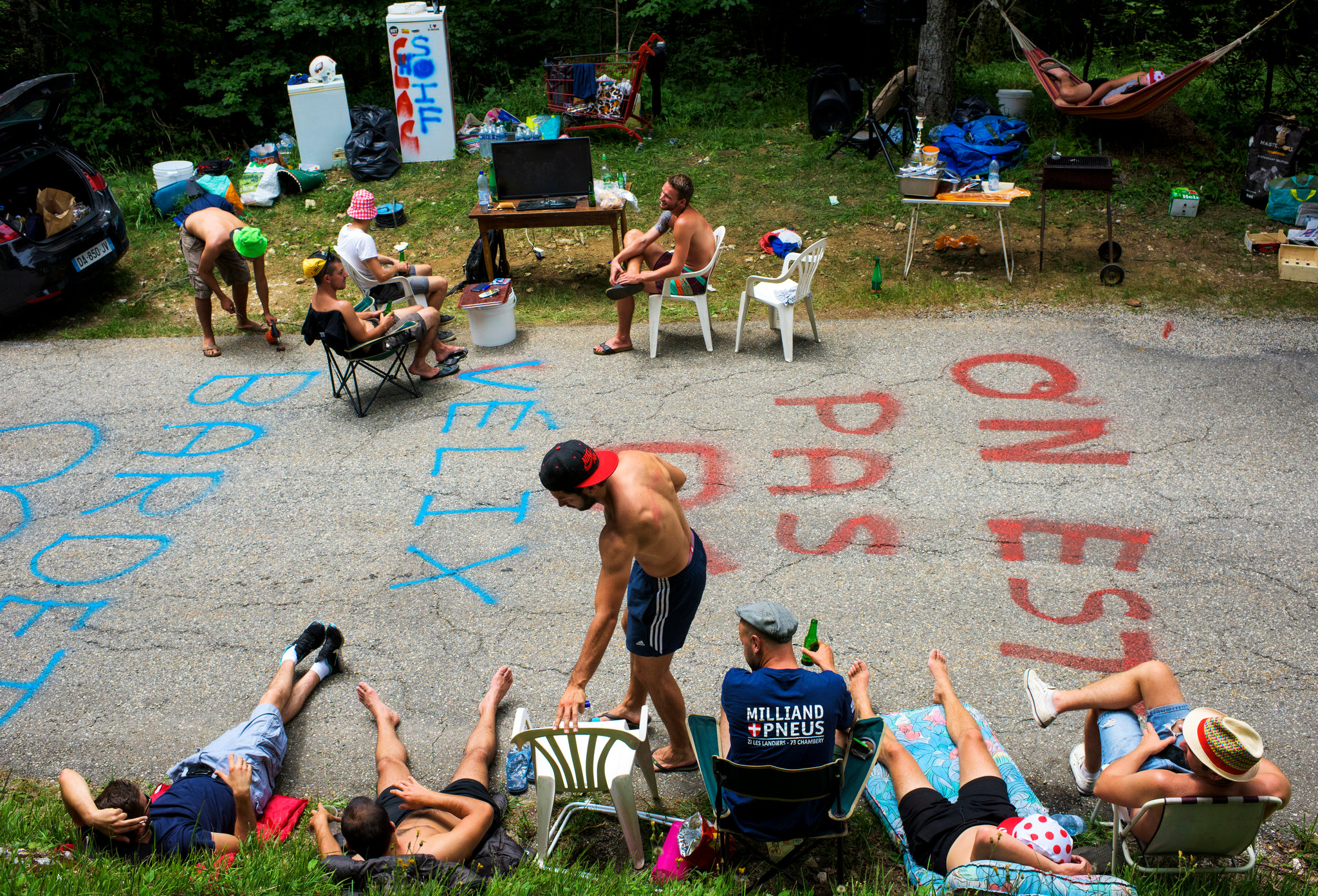
MONT DU CHAT, France — A white-haired man was dancing naked in the middle of the mountain road, his sunburned body rocking imprecisely to a pop song pounding from a set of speakers. His halfhearted attempt to cover himself with one hand as he swayed was mostly ineffectual, which only made his friends laugh harder and cover their eyes. Behind them was a 20-foot-long, homemade banner that read, “VIVE LE TOUR.”

This could be the first line of a novel (and one I’d no doubt keep reading). Instead, it is the opening to a story about the rabid crazies who run alongside cyclists as the chug, heave, and trudge up mountains in the Tour de France.

Every year fans make their way up winding mountain roads, set up camp to witness a sporting event they will see with their own eyes for less than 30 minutes (the overall race is takes place over the course of 21 stages and covers over 2,000 mile). Some fans come up days before, and others scope out the prime real estate along the route weeks before the riders suffer past them. They pass the time with seasons of Top Chef, wine, endless games of pétanque (a french lawn bowling game), more wine, late night firecrackers, and beer, all along a mountainside. Obviously, the race is just a small part of it. Said one spectator, “If the cyclists never came up on Sunday, we’d still be O.K.”

It’s not just retired guys crossing off a bullet on their bucket lists, and it’s not just college kids looking for an excuse to drink on a mountain. No, it’s all of them and everyone in between. And it’s exactly the kind of loose, unsponsored tradition that hits me just right.  You’ve got some experienced crews, who’ve learned over the years that a little class and fine cuisine don’t weaken the camping experience:

And then you have these idiots (I use that term affectionately):

The fridge, the TV on someone’s desk from school, the grocery cart – it all screams college adventure. Of course, all of this leads to the race. Spectators choose to watch on the mountains because of the speed. On flat portions of the race, teams whiz by in a blur. It’s different in the mountains:

Crowding the course, inches from the cyclists, the spectators could yell almost directly into their ears and look straight into their eyes. George Bennett of New Zealand cracked a big smile when he spotted a man dressed like an insect, furiously snapping his cloth pincers. But otherwise the riders had blank, detached expressions. Some seemed pained. A few of the stragglers received pushes from helpful fans.

The irony of my speaking to the purity of the spectator experience of a sport that has been anything but on the up-and-up is not lost on me, but I want to do this. It looks like a lot of fun. Hell, a woman from a nearby town brings up fresh baguettes each day! – PAL

Source: On Tour’s Mountain Roads, Beer, Baguettes and, Briefly, Bikes”, Andrew Keh & photographs by Pete Kiehart, The New York Times (07/18/2017)

TOB: I’m certainly not one to turn down a party, but there’s something about this I can’t get behind. Hanging out for up to a week to see some dudes ride by on bicycles for a few minutes? As one of the spectators said, “You’re here so long, and then it’s over so quick. It’s bizarre, if you think about it.” I’m with you, dude. I would have a lot of fun, but I don’t think I’m traveling to France for that. 


The Greatest Tennis Player Ever is Still Doin’ the Damn Thing

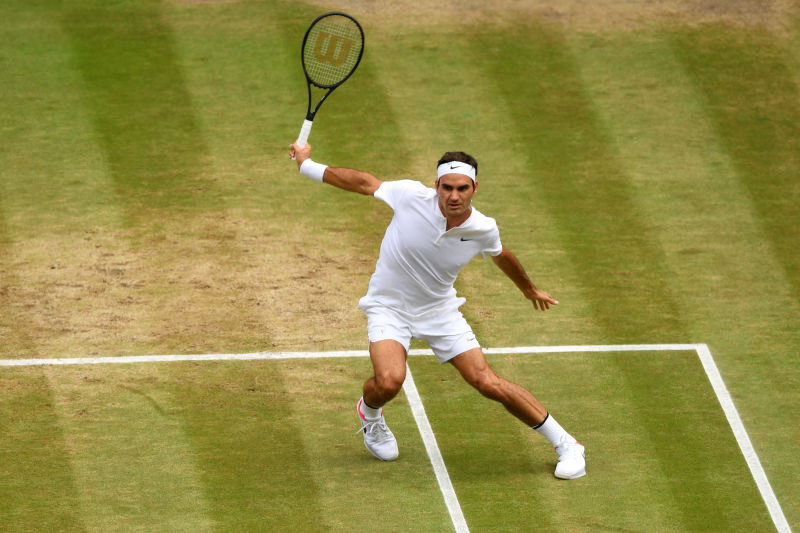
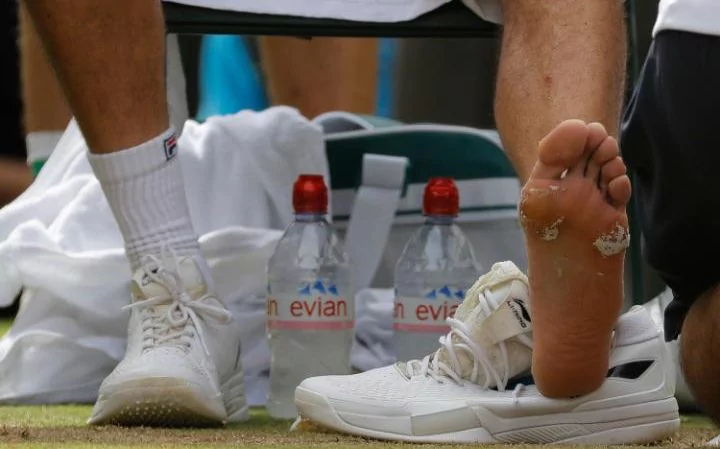
I’m not really a tennis fan, though I find it interesting to follow from afar. That doesn’t particularly make sense, but it’s true. I don’t watch, but I like to read about the players, and the rivalries, and the records. From a distance, I’ve become a huge Roger Federer fan, despite watching maybe three Federer matches in my lifetime. The first was his Wimbledon Final in 2008 against Rafael Nadal. Nadal won in an epic match, and I woke up at like 5am to watch (it lasted nearly 5 hours). The most recent time I watched Federer was this year’s Wimbledon Final, last weekend, against…honestly I already forgot his name. Celic? Cilic! Roger crushed him, though to be fair Cilic was suffering from a truly gnarly blister on his foot.

There’s something about Federer that makes him easy to root for. A lot of it, for me, has to do with his age. He’s just a few months older than me, and he’s playing tennis at a level no one his age has ever played. He’s also simply, undeniably, great, which is something I can always appreciate in an athlete. And there’s something just likeable about him. As Giri Nathan points out…it shouldn’t be that way. Federer should be an absolute tool. But he’s not! Or he comes off not that way. Even his opponents report being unable to dislike him. He’s just too goddamn nice. And not in a fake way. He wipes the tennis court with his opponents. He’s an absolute killer out there. And then he smiles and embraces his foe afterwards, almost apologetic for the whuppin he just gave.

I tuned into this year’s Wimbledon Final (ok, on DVR-delay – Roger and I aren’t 26 anymore, ok?) because this really could be his last. After last year’s Wimbledon, even Federer thought he might be done. He needed a break. So he took a full 6 months off from tennis. When a 35 year-old athlete does that, the end is near. But what did Federer do? He came back and won the Australian Open and Wimbledon this year.

But how long can he keep it up? He’s now outlasted his once young, upstart nemesis Nadal, age 31 (while he won the French Open this year, it was his first since 2014, after having won 9 of the previous 10). He’s also outlasted his even younger upstart nemesis, Novak Djokovich, age 30, who failed to make a semifinal in a major this year for the first time since 2006, and is battling injury.

So, this might be it for Fed. Or it might not. I hope not. The match last week was nothing special, but I will gladly watch him do things like this a few more times:

-TOB

Source: There Is No Hiding From Roger Federer”, Giri Nathan, Deadspin (07/17/2017)

PAL: We have some really great writing in the stories this week. Giri Nathan’s musing on rooting for Goliath nails it:

If he is in your commercial break or in the pages of your magazine, he is peddling things outside the realm of almost every viewer’s means. If he is on the tennis broadcast, he is doing things outside the realm of almost every peer’s physicality. Nor is he particularly bashful about any of this. His personal monogram, a precious little gilt alloy of his initials, could inspire a world of resentment, but, somehow—no, this makes a weird sort of sense, even when it appears on corny cream blazers or cardigans. Maybe this is the most direct way of framing the issue: I see a man walk onto court caked up in all this, as Federer did in 2009—

—and not only do I not loathe this man or cheer for his humbling, I even hope for him to win, and want him to keep winning even after he’s already won more than any other man ever has.

Like TOB, I’ve maybe seen Federer play five times, and yet I was sucked into watching a “best Federer shots” compilation at lunch today. That one-hand backhand is…damn, if it isn’t a thing of beauty, headband and all. I don’t really care enough to take into account whether or not Federer is a good guy. I just like to see obvious, masterful grace in a sports.


Do It for the Bumper Sticker

With SF Marathon taking place on Sunday (remember that, drivers), it’s fitting to share this cool, interactive series of 7 runner profiles from the Chronicle. In addition to their varied backstories and reasons for running, the subjects also share training logs. It’s pretty interesting to see the different approaches. Jorge Maravilla, who finished 3rd in last year’s race, has a very different training program than someone who’s trying to finish his or her first marathon. That much is a given. But would it surprise you to find that he doesn’t log the most miles, or even the most elevation gain?

It’s also a bit alarming to see some of the training logs, and you find folks only putting in 3 days of running in a week. Not going to lie – I think Lauren going to be struggling at mile 19 on Sunday. She’s averaged 18 miles of running a week in her training.

And then you have the over-achieving family. The dad runs ultra marathons at record-setting times. The dude’s 70. He’s the guy running more miles than the guy hoping to win the damn thing. His daughter ran seven 20+ mile runs in her training and is hoping to qualify for Boston. Hell, they ran together on her wedding day.

All kidding aside – all the best to the runners this weekend. Don’t poop your pants. – PAL

Source: Seven Runners, One Mission”, Erin Allday, Emma O’Neil, The San Francisco Chronicle (no date given)


Goals.

This is a shameless shoutout to my father-in-law, Ed, a loyal reader of the blog. Ed loves soccer more than you love any non-living thing. I’m fairly certain of that. Ed is 71, which sounds old (sorry, Ed), but he doesn’t let that keep him on the sidelines. Ed plays soccer every week (multiple times per week?) with a group of guys around his age. But they aren’t a bunch of old dudes struggling to motor around the pitch. No, Ed and his team, Golden State Legends, also travel the world to lay waste to the competition. In recent years, soccer has taken him as far as Peru. Last week, Ed traveled to Nashville, Tennessee, for the United States Adult Soccer Association’s Soccerfest, and, for the third straight year, Ed’s team took home the championship. Competing against teams from as far away as Japan, Golden State Legends won the title 3-1 against a team from Georgia. Ed even scored a goal in the tournament, while wearing a do-rag, and there’s photographic proof!

I have mentioned before that I play a weekly basketball game in my neighborhood with a bunch of guys as young as their 20s and as old as 70 or so. I have always hoped my body will hold up and allow me to continue to play basketball until that age. But now I have a new goal: play basketball at such a high level, at age 70, that someone gives me a big ol’ trophy.

Congrats, Ed! -TOB

PAL: The things guys will do to curry the favor of the in-laws, am I right, folks? I kid! I kid! Love that Ed and his buddies are getting after it, chasing down titles, and doing it with a little do-rag flair to boot.


Video of the Week

The drive-by-dunk challenge. Not nearly as cool as the pool slam dunk craze from a few summers back. Good lord, teens are bored.


PAL Song of the Week: Pink Floyd – “Have A Cigar”


Like what you’ve read? Let us know by following this blog (on the right side, up near the top), or:

Email: 123sportslist@gmail.com

Twitter: @123sportsdigest

Facebook

Instagram: @123__sports


“He’s a great guy. Smart. Strong. Loves holding my hand…People don’t realize he loves holding my hand. And that’s good, as far as that goes. I mean, really. He’s a very good person. And a tough guy, but look, he has to be. I think he is going to be a terrific president of France. But he does love holding my hand.”

-Trump, on French President Macron

Week of July 14, 2017

Casper Lang making it look good. 


Ain’t Nothing But A Family Thing*

The same thing happens to me after every 4th of July. I go back to Minnesota, spend a summer week at my favorite place on earth: my parents’ cabin. I play catch with my nieces and nephews, play cards, take boat rides, sit around the bonfire, and run long stretches of country roads. The days go on forever, the mosquitos are insufferable, and the conversations run into the morning hours. Then I say goodbye, again, and hop on a plane back to California, having caught another nasty case of homesickness.

I love California, but I miss Minnesota. And then Uncle Gary sends me this story. It’s a great story, but it’s not helping this round of homesickness.

There are pockets in Minnesota that are obsessed with baseball. Yes, we’re known for hockey, but the entire state doesn’t fall in line on that one. In fact, there are many parts of the state – places like Chaska, New Ulm, Wilmar, and Luverne – small, beautiful towns more or less out of Field of Dreams that love baseball. Baseball has a long tradition up north, and nowhere is that tradition more alive than Stearns County. I know, albeit secondhand. We’ll get to that in a jiff.

It’s called townball. Mens league baseball. In Stearns County, a collection of small towns 100 miles up I-94 from the Twin Cities, townball has seen very little changes over a very long period of time.

The uniqueness of the Stearns County League is that it dates to 1950 in what is basically its present form. Regal was an early member, as was Freeport. Meire Grove and Greenwald were Green-Grove until separate teams were formed in 1959.

For nearly six decades, it has been those two, plus Farming, Lake Henry, St. Martin, New Munich, Richmond and Roscoe. Of course, 1983 saw the admission of Elrosa and Spring Hill.

To be a true Stearns County town, Farming resident and Mike Schleper claims three requirements: “a Catholic church, two bars, and a ballfield.”

I was 18 when I first saw just what Stearns County baseball was all about. My future college roommate, Ryan Nett, invited me up to his place for the weekend ahead of us going to school. We had played on a fall league team together, hit it off, and ended up deciding to play baseball at a small college in South Dakota. I grew up in the suburbs, and by that I mean exactly what you’re picturing in your head right now. As far as I knew, Ryan grew up just outside of St. Cloud, a 15,000-student state college town.

Ryan did not grow up in St. Cloud. He grew up in Farming, Minnesota, on a farm. He played on a townball team with his three brothers. His dad had played on the same team. The Farming Flames field, to a suburbia kid, seemed to be in the middle of nowhere, along a country road surrounded by nothing. But — and I mean no disrespect — much of the township of Farming is a series of country roads surrounded by open space.

I go to the game. The small, grandstand is selling unmatched 6-packs of Premium and Mich Golden and Bud Lights. I sit and watch a wood bat game between teams comprised of has-beens, teenagers, and hot-shot college ballplayers. I get slowly drunk on the metal bleachers, and so does everyone else in the stands (which are full). Cars are backed up along the right field line. It could’ve been a postcard. Ryan, his older ox of a brother Aaron, and I think Ted play in the game. Ryan will want you to know he hit a home run, so let’s just slip that in right here. And the game, it’s not just ‘Hey, we’re just having fun’. These men with beer guts and teenagers with wristbands of faux flair are competing. They’re arguing with umpires and going in hard at second.

I loved it, but I thought it was absurd at the time.

Patrick Reusse’s story below captures the wonderful tradition of the Stearns County league. 17 year later, I don’t think it’s absurd at all. No, 17 years later, as I play softball in San Francisco, I think the Stearns County League sounds just about right. Remember, I’m in the thick of the post-cabin homesickness.

I stand at shortstop in these softball games, and – if I’m being honest – I can’t stand that I’m playing softball. I have to admit, A League of Their Own got baseball right: It’s the hard that makes it great. While everything about baseball requires precision, everything about softball is proximity.

There’s a familiarity in going through the paces of playing softball, but I don’t love softball. I don’t know if I even like it. Everything about softball is going through the motions of baseball at a slower, meandering pace, aided by longer, lighter, trampoline bats swung by men who either take it way too seriously or not nearly serious enough. There’s nothing exact about it.

My first love was baseball. So why am I pulling up short at second on a force out when there are guys older than me mixing it up in a real baseball game under the lights in Farming, Minnesota?

It’s easy to read this story and look at the pictures and react to the Rockwell, Greatest Generation quaintness of it all, but that would be missing the point. The league is more than that.

The Stearns County League pays for the Little League and Babe Ruth teams. They raise money from pull tabs and sausage breakfasts. When they’re short on funds to get lights, they reach out to family and the community, and they get it done. These communities built the league, and it became a part of their identity, as much as the Catholic Church and the two bars in town.

I’m realizing now my summary reads more like a meditation than a pitch for you to click on the story link below. But I think romance can lead one to meditate, and there’s something damn romantic about townball in Stearns County. – PAL

Footnotes:

  • This story was submitted by our loyal reader, Gary Livingston. Have a great story you think we should post? Send it to us at 123sportslist@gmail.com
  • * I’ll buy a burger and a beer to the reader who can tell me what show this title comes from (don’t be that guy and look it up)

Source: The Summer Game: Townball Rules Sundays in Central Minnesota”, Patrick Reusse, Star Tribune (7/10/17)


Don’t Be That Sports Dad

This week, Rays’ outfielder Colby Rasmus mysteriously “stepped away”from baseball for “personal reasons”. Rasmus will walk away from over $2M with this decision, which is ever the more peculiar because he’s on the disabled list, anyways.  He could have just sat there and collected his money. Rasmus was having a nice season – hitting .281 with an OPS of .896 and 9 home runs in just 37 games before he was placed on the DL on June 23. So why is he walking away? And what does that mean? Is it a retirement? Or a temporary break? And what are the personal reasons that led to his decision? I was curious about this, and then saw the following tweet from Toronto Star reporter Brendan Kennedy (Rasmus had spent the last few years with the Blue Jays before signing with the Rays in the offseason):

Yes, Colby Ramus’ dad made Colby and his brothers practice for four hours, every single day, year-round. That is some terrible parenting. In the short-term, I guess he was “successful” – Rasmus and his two brothers all played professional baseball. In the long-term, though, he was decidedly not successful. I am speculating, of course, but it’s not off-the-wall to suggest Colby is walking away because he hates playing baseball, and that he hates playing baseball because his dad forced him to play so much. Colby’s brother, Casey, unexpectedly retired, too, at age 24 while in the minor leagues.

Whether this is the reason for Rasmus’ retirement is unclear, but what is clear, from Colby’s quote in that tweet, is that his dad was a terrible sports parent who made his kid not enjoy the game he has played his entire life. The story evokes memories of other bad sports parents like Todd Marinovich’s dad, or Mary Pierce’s dad:

Jim Pierce’s treatment of his daughter Mary was possibly the most brutal of all. He once admitted training his daughter eight hours a day, sometimes until midnight.

“For seven years, eight hours a day, I hit 700 serves at Mary. I wouldn’t let her leave until she got it right. Sure she cried,” he said.

Like Damir, he was well known for berating Mary in public. After an altercation with a spectator in the French Open in 1993, he was banned from all Women’s Tennis Association Tour events for five years and Mary dropped him as her coach and placed a restraining order on him.

He then became embroiled in a knife fight with her bodyguard. Mary was eventually reported to have paid him £300,000 to leave her alone when he subsequently sued her, claiming a share of her earnings.

Geeze. Don’t be like that, Sports Dads. -TOB

Source: Rays Outfielder Colby Rasmus Steps Away From Baseball For Personal Reasons”, Dan Gartland, Sports Illustrated (07/13/2017)

PAL: This is a tough one, because there’s a lot of speculation. The guy could be sick, or someone in his family could be sick. He could be going through some personal problems that have nothing to do with his dad.

With that caveat in mind about Rasmus, I’ve never understood the overbearing sports parents. It just seems like a lose-lose situation, even under the best circumstances. I don’t know about you, but the “I know what’s best for you” approach doesn’t usually seem to work out with kids. Even if the kid turns out to be a professional, what kind of parent-child relationship does that lead to? Where is the joy in the game when your parent is berating you for the millionth time?

TOB: I want to be clear: I agree he could be leaving for many reasons, and I state I am speculating that it’s because of his dad. BUT. That doesn’t change the quote from Colby about his dad – that’s a Bad Sports Dad.


Cubs Trade for Quinana Leads to Greatest Media Correction Ever

On Thursday, the White Sox traded their ace, Jose Quintana, to the cross-town, defending World Series Champion, but struggling mightily, Cubs. The Cubs gave up four Top-100 prospects, including the their top hitting and pitching prospects – no small price to pay. Quintana has been a very good pitcher the last 6 years. He struggled early this season, but has been very good again since early June, and he’s under relatively cheap control over the next 3 years, for a total of $30M. The story would not be very interesting, and not something I’d normally write about here. BUT. The story got hilarious, quickly.

News of the trade hit without any leaks or rumors, which is rare. The GMs of the two teams reportedly met in private during the All-Star game, which explains how they could have done a deal of this magnitude without any major press picking up on it. I say major because a few hours after the trade was announced, a Reddit thread from the night before started making the rounds. There, a reddit user named “KatyPerrysBootyHole” (yes.) started a thread about a possible Cubs trade for Quintana:

Hey guys, take this with a grain of salt, but I heard from a friend who’s brothers friend works for the cubs (sounds like bullshit I know), that Q is going to the cubs in exchange for 4 players. Has anyone heard anything similar?

A short while later, another user named “Wetbutt23” (hell yes.) confirmed the rumor though clarified it was Quintana for four prospects, and later confirmed the deal was done and the players were undergoing physicals (KatyPerrysBootyHole confirmed Wetbutt23 was his/her source).

The names are funny, obviously, but what really got me was the fact the news of the Reddit thread forced CSNChicago.com to post this amazing correction to a story about how the trade stayed under the media’s radar:

Correction: While no national media had this story, a Reddit user named “wetbutt23″ had it last night. CSNChicago.com apologizes to wetbutt23 for the error.

Ohhhhh, yes. Every time I read that second sentence, I laugh. It’s days like these the internet really delivers the goods. -TOB

Source: KatyPerrysBootyHole And Wetbutt23 Broke The Jose Quintana Trade”, Barry Petchesky, Deadspin (07/13/2017)

PAL: My only question is whether or not this post is NSFW.

TOB: I sure hope not…


Video of the Week: 

PAL Song of the Week: Johnny Cash – “One” (U2)


Like what you’ve read? Let us know by following this blog (on the right side, up near the top), or:

Email: 123sportslist@gmail.com

Twitter: @123sportsdigest

Facebook

Instagram: @123__sports


“It’s nice because the flavour of the Starbursts really bring out a similar flavour in the Skittles.”

-A. Dwyer

Week of July 7, 2017

Loyal readers,

It’s the week of Independence Day, and we’ve gone fishin’. Picture us as LeBron, more or less.

We’ll be back next week.

-PAL and TOB

Week of June 30, 2017

This is the look PAL’s going for on the annual trip back to MN. 

TOB: Also, happy birthday to one of our loyal readers, my dear mom! Mom turns a certain number of years today. Have a great birthday, Ma!


Damn Librulz.

The professional wrestling heel (bad guy) is as old as the sport. The heel’s job is to rile up the crowd by doing things to get the crowd to actively and loudly dislike him (or her). Wrestling companies have long used current events to generate “heat” for a heel. I can remember the Iron Shiek (Iran) in the early 1980s, and Russian wrestlers in the late 1980s, for example, who juiced up a crowd by railing against America as they prepared to take on All-Americans like Hulk Hogan and Hacksaw Jim Duggan. Our country is very divided politically these days, and it is no surprise that one wrestler has used that division to his advantage.

Known as the Progressive Liberal, Dan Richards wrestles for a small Kentucky  wrestling company. His shtick is too easy: he plays a liberal (and claims to be one IRL), and angers the crowd by advocating for such terrible policies like education for all and clean energy. He’s definitely a little condescending (e.g., intentionally mispronouncing how the people of Appalachia prefer to say Appalachia)…but it’s a bit disturbing to see how the crowds react.

One fan threatened that “if that fucking liberal” showed up to a show, the fan would bring his gun. Part of me laughs at this. The Progressive Liberal is supposed to be funny. It’s wrestling, after all. But there’s also a part that is a little sad that our society has come to a place where advocating for education, for example, is seen as a bad thing, to the point someone threatens to bring a gun to a wrestling event. Yikes.

Source: The ‘Progressive Liberal’ Is Maybe the Perfect Wrestling Heel”, Samer Kalaf, Deadspin (06/26/2017)

PAL: You can’t fix dumb, TOB. That’s been the case long before Don Trump. I do think “The Progressive Liberal” is my favorite wrestling name of all-time. This is the first wrestling story I can get behind. I just wish Richards was a little more polished. The role is too good to be wasted on an amatuer.


Intangibles Are Unacceptable

These days, we all have at least one friend who’s all-in on distance running, rock climbing, cycling, triathlons. Endurance sports have expanded, and – at the highest levels – that put a premium on finding the perfect balance between being as light as possible and still maintaining the strength to exert the energy needed to win.

It should come as no surprise that eating disorders – for men and women – are a part of many athletes’ lives.

While the long-term effect are universally bad, that fact of the matter is the short-term effects contribute to success. It works. 

Take this excerpt from Nora Caplan-Bricker’s piece:

One of the first things Tyler Hamilton learned on day one of his career as a professional cyclist was that he needed to lose weight. It was 1995, and he’d just touched down in the Barcelona airport, having signed a contract with U.S. Postal Service. When the team director picked him up, “He made fun of my baby fat straightaway,” Hamilton recalls. “I was like, ‘What’s this about? I’m super skinny!’ I had no idea.”

While female athletes, like women in general, are inculcated all their lives with the importance of thinness, male athletes are also bombarded with messages about their bodies. Some of the cyclists and runners I interviewed—both men and women—told me they think coaches and directors on women’s teams have grown more attuned to the issue, and, in many cases, are more careful with what they say about an athlete’s weight or eating, while men’s coaches are years behind.

Early in his career, Hamilton thought of himself as a “big engine”—sure, he had bulkier muscles than some of his beanpole teammates, but that’s what powered him to victory in his best stage: the time trial. But after a few years of feeling his team’s nutritionists “eyeballing me every time I went up to get a cookie,” and of hearing from coaches and more seasoned cyclists that he could really be a contender if he shed a few pounds, Hamilton took the advice to heart. “When I lost weight, I basically learned to climb,” he told me. “There was a time”—around 2003, when he placed fourth in the Tour de France—“when I was one of the best climbers in the world.”

Every spring and summer, the 5’8″ Hamilton would work to whittle himself down to about 130 pounds. “The three months before the Tour were hell to get there,” he says. He’d bike for six or seven hours, come home famished, and chug a Diet Coke as fast as he could. A Diet Coke, and maybe an apple, and “you go from ravenous to ‘okay, maybe I can go another hour now.’” Once, after a hard training ride, Hamilton’s director gave him a handful of sleeping pills to help him “make it until dinner” without eating. The message was, “If you make it through the night, even better.”

Hamilton describes these patterns as an eating disorder, though he was never technically diagnosed with one. At the same time, he believes achieving a skeletal physique did make him a better cyclist. Weight is only one of many factors in an athlete’s performance. But in races that are won and lost by a fraction of a second—not only in cycling, but also in running, swimming, and skiing—athletes who fantasize about the perfect ratio between power and leanness usually find that the latter is easier to quantify and control.

This story digs into a dangerous combination where eating disorders seem to flourish (I’m obviously no expert): a person driven to win and that success can be helped by doing something that is bad for you. What makes most elite athletes different from us is they are willing to do things the rest of us are simply not willing to do every day for an extended period of time. They are singularly focused on success. It is the only priority. And when success is that black & white, well, that can be a slippery slope.

Sometimes in sports, fractions – of a second, an inch, a fingernail – separate the legends from great unknowns, while the rewards between first and second can be measured in tax brackets. This can be especially true for fringe sports like rock climbing, cycling, and distance running. In that teeny tiny gap between great and legend is where uncertainty simmers. Athletes can’t stand for uncertainty, which is why they are as good as they already are. The gap needs to be filled with a plan, with measurement, with incremental progress. That’s where something as quantitative as calories and weight and ultimately disorder can root itself. In a way, an eating disorder is similar to doping.

Do me a favor: name me two world class distance runners? Name me three world class swimmers. Now, name me 15 basketball or baseball or football players. 

Is it any surprise that we find eating disorders more prevalent in those whose success is dependent upon obsession? – PAL

Source: The Inextricable Tie Between Eating Disorders and Endurance Athletes”, Nora Caplan-Bricker, Outside Magazine (6/23/17)

TOB: This story surprised me, because we definitely think of athletes as healthy. But it makes sense, as Phil so eloquently expands upon.


This Is Why You Should Always Look Out For Number One In Job Decisions

Two years ago, on the eve of free agency, Clippers center DeAndre Jordan was all set to sign as a free agent with the Dallas Mavericks, much closer to his hometown of Houston. So a bunch of his Clippers teammates, including Chris Paul and Blake Griffin, showed up at his home in Houston and basically held him hostage, convincing him not to leave. The players had a lot of fun with it on Twitter. For example, Blake Griffin tweeted a photo of a chair barricading the door at DeAndre’s house.


It was pretty all pretty amusing, and in the end they convinced him not to leave. But this week, just two years later, Chris Paul told the Clippers he was opting out, and so they traded him to what he sees as a better situation with the Houston Rockets. Blake Griffin can also opt out, and with Paul gone, many expect him to sign elsewhere. Where does this leave DeAndre Jordan? Probably wishing he hadn’t re-signed with the Clippers, a team now completely devoid of talent. The internet had fun with this fact.

https://twitter.com/rashadalaiyan/status/880151489179566081

https://twitter.com/AlphaSixFour/status/880103196190023681

Poor De’Andre. Let this be a lesson to us all: You do you. -TOB

Source: After Chris Paul Trade, Twitter Absolutely Savages DeAndre Jordan”, Jimmy Traina, Sports Illustrated (06/28/2017)

PAL:

TOB: Hey, sure. He’s richer than shit. But, he’d have that money if he’d gone elsewhere, too. It’s not like the Mavericks were offering him $150,000.00.


Blazers Twitter Welcomes New Player, Mr. Considerations

As part of the Houston Rockets’ maneuvering for the above-mentioned trade for Chris Paul, they made a trade with the Portland Trailblazers. The Blazers sent Tim Quarterman (uh, who?) to Houston in exchange for “cash considerations”. The Blazers’ official twitter account, generally one of the best team accounts in sports, had quite a bit of fun with this.

I laughed. Hell, a bag of cash is certainly better than Meyers Freakin Leonard. You suck, Meyers. -TOB

Source: Blazers Twitter (06/28/2017)


Video of the Week: 

PAL Song of the Week: Maggie Rogers – “Alaska”


Like what you’ve read? Let us know by following this blog (on the right side, up near the top), or:

Email: 123sportslist@gmail.com

Twitter: @123sportsdigest

Facebook

Instagram: @123__sports


“Whenever Leslie asks me for the Latin names of any of our plants, I just give her the names of rappers. Those are some Diddies. Those are some Bone Thugs-N-Harmoniums, right here. Those Ludacrises are coming in great.”

-T. Haverford