Week of November 20, 2020


“One step forward, two steps. One step. Two steps. Three. …” Last week, Chris Kikic became the first person with Down syndrome to complete an Ironman triathlon: 2.4-mile swim, 112-mile bike ride, and a 26.2-mile run in under 17 hours (the cut-off). As inspiring as the accomplishment is, the story leading up to that finish line is even better in this story from Kurt Streeter.  The story details the challenges for a child with Down syndrome. The number of surgeries, the amount of time it took Chris to learn tasks that other kids would figure out in a day or two. For instance, it took him months to learn how to swing his arms when he ran. To learn to tie his shoes took years.  Sports was the one area he didn’t feel like he was reminded about the limitations or being excluded. He took part in the Special Olympics, and – after learning how to ride a bike, the idea of a triathlon came up.  Such a feat would not just put him in the record books. It would also prove to himself and those around him that he could, in fact, do big things. And if he could do big things, then maybe one day he would be able to fulfill his ultimate dream: to live independently and have a wife and a family of his own. So what did the family do? Made a plan. They found a coach, started in on the work. A kid who won’t quit on learning how to tie his shoes knows something about sticking with it, of grinding it out. They turned the dream into a plan on that big whiteboard shown in the photo up there. He trained for over a year. 

Something was changing. He added muscle to his stocky, 5-foot-10 frame, but it was more than that. Everyone around him noticed that as he grew fitter he seemed mentally sharper, more attentive and confident.

Chris competed in the race tethered to his coach, and despite a run-in with some red ants and falling on a downhill on the bike, things were going well until mile 10 of the marathon, the last of the three sections of the race. Chris hit the wall and was barely moving. And that’s when the following scene unfolded. I’ve read it several times now, and the tears pool every time. “Nik Nikic clutched his son, drew him close and whispered in his ear: “Are you going to let your pain win, or let your dreams win?” Every time. I know it sounds corny. I don’t care. Maybe it’s because the idea of being a dad isn’t so abstract anymore. It must be such an incredible feeling to watch your child achieve something hard. Something they really had to reach for. Knowing that feeling yourself, and watching them experience it for themself. I’m looking forward to it.  As Streeter says, “Take a bow, Chris Nikic, for holding tight to your dreams, for your patience and hopeful perseverance and guts. We could use a little more of that in this world.” Such a powerful and inspiring story. – PAL 

Source: Chris Nikic, You Are an Ironman. And Your Journey Is Remarkable”, Kurt Streeter, The New York Times (11/16/20) 

TOB: Great story, great read. Incredible what he has achieved. Also, major kudos to the volunteer coach, who put in probably hundreds and hundreds of hours to help make this a reality for Chris. Also, to Chris’ parents. Raising kids is not easy under the best of circumstances. I can only imagine the nights they cried about how difficult things were. But they only showed him love and support, and this is the result.

PAL: Totally, TOB. Daniel Grieb is Chris’ coach who was his partner in the race.


Punting is Not Winning*

Just hours before this week’s NBA Draft, in which the Warriors would pick second overall, some ominous news started circulating on Twitter: Klay Thompson, who missed all of 2019-20 after tearing his ACL in the 2019 NBA Finals, suffered a significant lower leg injury during a pickup game. The details were scarce, but from the deepest bowels of the internet came bubbling that ugly word for every athlete: achilles. The Draft had to go on, and the Warriors took James Wiseman, a 7’1 freak of an athlete who has the potential to be very, very good. The choice was necessary – the Warriors are crazy short in the front court, with almost no depth, and their road to a title goes through a gauntlet of the best big men in the game, including Anthony Davis and Nikola Jokic. Wiseman will face unfair expectations out of the gate, especially for a player who played all of two games in college before being declared ineligible.

But back to Klay. With the Warriors’ title window rapidly closing as Curry and Draymond get older, they cannot afford to run the ball out there with a lineup of Curry, Draymond, Wiggins, Wiseman and…I have no idea what else. The injuries to Klay and Curry last year gave them the benefit of an extended look at their other options, and for the most part, with the possible exception of Paschall and Looney, they head into the coming season with very little outside of their top 4, now that Klay is out. The problem, of course, is that it would seem difficult for Golden State to improve. They have no assets they can afford to give up that anyone would want in a trade for a star. And they have no cap room. They do have a $17M trade exception, allowing them to take back up to $17M more in trades than they send out. Certainly, this seemed useful – but it seemed they’d need to be willing to take one team’s bad contract in order to get a useful player along with them. 

The problem, even with that plan, is that the Warriors are so far over the cap that such a move would crush them in luxury tax payments. The Warriors are already paying a $66 MILLION tax bill this year, with the roster as is. Every dollar they take on at this point is taxed at 4x. No one would blame owner Joe Lacob for saying, “No, we’ll punt this year.” I feel confident saying every other owner in sports would have done so.

Lacob, for all his flaws, does not punt. Instead of dredging the bottom of the barrel for bodies at the vets minimum, the Warriors went out the day after the draft, just hours after confirming that Klay Thompson indeed tore his achilles and would miss the whole year, and used that trade exception to land Kelly Oubre, Jr. – a talented, productive, young, and expensive player. The Warriors only gave OKC a heavily protected first round pick. But they gave a whole lot more.

Yes, that’s right: Oubre’s $14M salary will cost the Warriors an additional $68 million in luxury taxes, bringing their tax bill (so far!) to ONE HUNDRED AND THIRTY FOUR MILLION.

And this in a year where the Warriors will not have fans in attendance, the same week the City of San Francisco blocked Lacob’s attempt to allow a few thousand fans at each game. What’s crazy is that I don’t think this makes the Warriors a title team by any stretch – but it will make them competitive. That’s how much Lacob is willing to pay to ensure that. You may have wondered about the story title here. This is an old Rick Neuheisel reference. One year UCLA’s offense was so bad, Neuheisel started punting on third down. It was a total surrender. When asked about it at halftime, he said, “Punting is winning.” He did not last much longer at UCLA. Like I said, Joe Lacob does not punt. -TOB

PAL: I love a TOB original (notice there’s no link to a story on this one) Man, Lacob and the Warriors were banking on that brand new Chase Center in the Dogpatch to be cash machine, and then everything it was built to host was shut down to fans – sporting events and big concerts, namely. 

It seems to me that Lacob’s ambition is long-term with the Warriors, to build the Death Star Yankees of the NBA, and I wonder how much of that bravado comes from a lightning-in-a-bottle Warriors team from 2015- June 13, 2019 (KD’s achilles injury in the Finals). For a historically bad team, all of a sudden everything broke the right way for the Warriors, and we were asking if it was the greatest team of all-time. This injury to Klay comes at the absolute worst time. Steph Curry will be 33 in March, and Draymond will turn 31. It’s not a given that Klay (31 in February) will be fully healed in a year, and it’s not given that he’ll ever be the same player he was before the injury.

The end is easily visible through the windshield. While Klay and Steph will be able shoot until they die, the movement, the defense (Draymond and Klay), the pace with which the Warriors play is in jeopardy unless they fill some key roles with draft picks. Wiseman needs to hit. 

The Spurs run was so long and impressive because they were able to reload three times through non-lottery draft picks to put around Tim Duncan (1st, 1997) who then turned into hall of famers: Manu Ginobili (57th, 1999), Tony Parker (28th pick 2001), and Kawhi Leonard (15th, 2011). If the Warriors hope to extend their run, then they’re behind on the reload.  With all of that in mind, with their salary cap situation, the injuries, the empty arena, I wonder why they don’t punt this year, as much as it would suuuuuuuck to waste another Steph in his prime year. That is a lot of money for Kelly Oubre, but I wonder if the losing last year was that painful for a franchise that was historically great just two years ago. Maybe Lacob and Bob Myers have something up their sleeve. It better be a doozy. 


Kim Ng’s Journey To Making History This week, the Miami Marlins hired Kim Ng as the team’s next General Manager, making Ng the first female to hold the position in any of the major men’s leagues in North America. Many also consider her the most qualified first-time general manager. Tyler Kepner and James Wagner detail her journey in this story. This much is certain  – Kim Ng loves baseball and was determined to become a general manager.  In her 30-year career in Major League Baseball, Ng has worked as an assistant GM for several teams, oversaw scouting and player development, she’s worked in the league office, she’s negotiated contracts, and she was a chief architect on international signing protocols. She’s seen the game through more than a few lenses.  Ng, pictured with her four sisters and mother, is second from the left.  And the person that hired her – Derek Jeter – seems fitting, too. After she was hired, Ng showed her mom and sisters an old video: 

Ng played a video clip from 2000 on her iPad. On the screen, a young Derek Jeter, the star shortstop for the reigning world champion Yankees, presented Ng with an award from an organization for women in the business of sports. She was the Yankees’ assistant general manager at the time, and now, all these years later, the man in the video was giving her a chance at the top job with his own team. 

Of course, it shouldn’t have taken this long for a woman to be hired as a general manager for a major mens sport team, but we still ought to celebrate its happening, especially when the person seems so fitting of such an honor. 

Another story this week about perseverance. – PAL  Source: Kim Ng Has Been Ready for Years”, Tyler Kepner and James Wagner, The New York Times (11/18/20)

TOB: When this news broke, I saw a lot of tweets from Asian Americans, and especially Asian American women, discussing how important it was for someone who looks like them to get a job like this. Representation matters. That is apparently hard for a lot of people, mainly white males, to understand. I was puzzling on why that is, in the shower of course, when it hit me: this should not be difficult for white people to grasp at all:
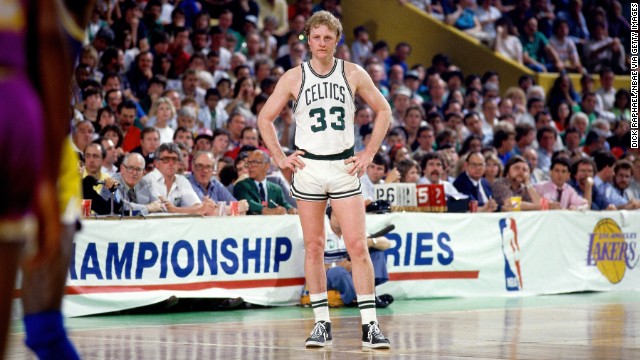
A great player, yes. But his popularity among white people in the 1980s was due in large part to the fact that for the first time in a long time, one of the best players in the NBA looked like them. This shouldn’t be so hard to understand.


Video of the Week (a year too late for TOB’s wallet): 


Tweet of the Week: 

https://twitter.com/unexpectedbass/status/1328889390517653504?s=20


Song of the Week: Willie Nelson – “The Man With The Blues”


Like what you’ve read? Let us know by following this blog (on the right side, up near the top), or:

Email: 123sportslist@gmail.com

Twitter: @123sportsdigest

Facebook

Instagram: @123__sports


I think I’m being very clear what I’m asking. Would an average-sized rowboat support her without capsizing? It bothers me that you’re not answering this question.

-Michael Scott
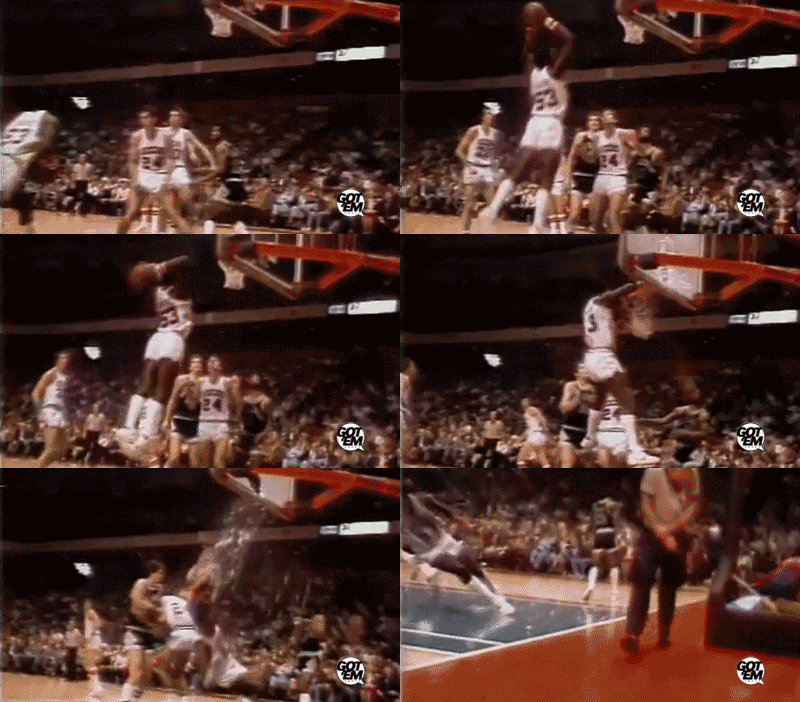
Week of November 13, 2020

Chocolate Thunder shattered his first backboard on November 13, 1979.


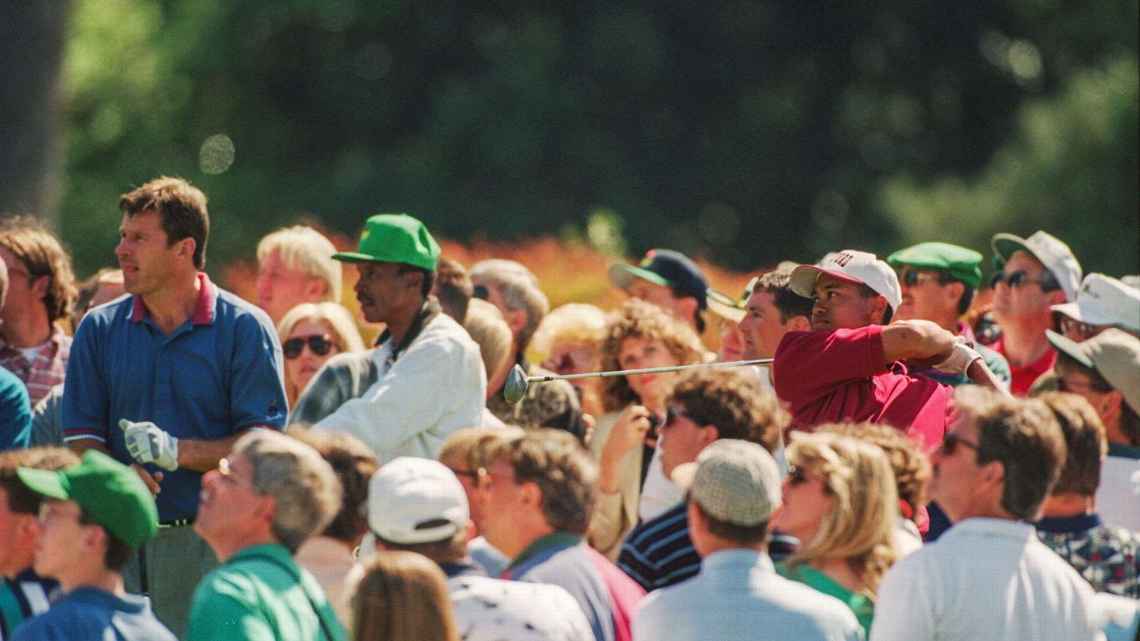
Local Knowledge The Masters is a two laptop sporting event – one laptop for work, and one laptop off to the side streaming the tournament. It’s 80% Tiger watch for me. With the tournament upon us, I had to share this story about Tommy Bennett. Bennett, a local Augusta caddie, was on Tiger’s bag for the amateur’s first Masters appearance back in 1995.  There’s a few fascinating storylines to this piece: the history of Black caddies at Augusta National and the courses in the surrounding area, Bennett’s early baptism to Augusta National, the anecdotes about the regular skins games at the local muni between local Black caddies (Bennett’s putting has been slipping, and at 71 carries a 6 handicap), and Augusta National’s heel-dragging commitment to tradition and segregation. Above all, this is about Bennett being on the bag for the young phenom, his retelling and – for a week – his small role in Tiger’s ascension.  The idea of having Bennett on the bag for the Stanford freshman and reigning U.S. Amatuer champ, was local knowledge – something that’s less and less valued these days. Also, wasn’t his choice – he was assigned to the kid by the club. After deciding, as a 63 year-old smoker, he couldn’t carry the bag on the hilly course for his son, Earl Woods had a long walk and talk with Bennett early in the week. He essentially told Bennett that they’d see how it goes early on in the week.  Tiger played a practice round with Nick Faldo. Per Ian O’Connor: 

The oversized galleries couldn’t get close enough for their first look at the phenom, who gave them something to talk about on the 500-yard 15th hole when he blew his drive 70 yards past Faldo’s, hit a 9-iron to 4 feet and made the putt for eagle. “Faldo looked stunned,” Bennett recalls. Woods grabbed lunch, then turned his first day at Augusta National into a 36-hole day. He had beaten Trip Kuehne in the most dramatic U.S. Amateur comeback ever, erasing a six-hole deficit in the final, and now the runner-up wanted another crack at him. They agreed to play a $5 match. Bennett was reading Tiger’s putts, picking his clubs and telling him where to land his approaches. “Damn, you’re good,” Woods told him late in the match, when Tiger, down three, charged past Kuehne again by winning the final four holes.

And on Thursday of the week, when Tiger would debut as a teenager playing THE FRIGGIN’ MASTERS, Bennett still remembers this incredible bit:

Tiger played Wednesday morning with Norman and Nick Price but cut his round short when he felt a spasm in his back on the fifth hole. He got treatment on site, then played the Par 3 Contest with Gary Player before his father made it official and informed Bennett that he had passed the audition. After Woods caught five hours of sleep and went on a Thursday morning run, he met Bennett at the course for his 1:03 p.m. opening-round tee time with defending champ Jose Maria Olazabal. The caddie looked inside Tiger’s black leather bag and found a problem. “You’ve only got three balls,” Bennett told his player. “That’s all I need,” Woods responded. “Man, this is Augusta National,” Tommy told himself. It was a raw, rainy day, and Woods’ heart was racing on the first tee. He crushed his opening drive over the right bunker and then landed his sand-wedge shot safely on the green, 25 feet from the cup. Woods had prepared for Augusta’s lightning-fast greens by putting on Stanford’s hardwood volleyball court, yet when he hit his downhill putt too hard, he watched in horror as his ball spilled off the green and toward the gallery. Bennett had never seen that before at the Masters. He told Tiger, “Listen, we all get nervous. We’ve got a long week here. Just chip it back up there and make the putt.”

I’ve read that anecdote several times now. Still can’t get over Tiger having three balls in his bag. And I love Bennett’s advice after he cooked his putt off the green. Both of those details stick with me. This is a cool story about a relatively anonymous guy working alongside a great. Of course these caddies aren’t executing the shots, but – hey – there’s only one dude out there walking the course alongside the player. They are a team out there – caddies and golfers – and for one week, Bennett was on the same team with the kid who would become the greatest. Definitely worth following the story link and reading the full piece from O’Connor.  – PAL  Source: The journey of Tiger Woods’ first Masters caddie, Tommy Bennett”, Ian O’Connor, ESPN (11/10/20)


Reasons To Run NYC Marathon  I was in the middle of training for the Vancouver Marathon back in March. The race was scheduled for early May, and – it’s laughable now – but I remember checking my email daily wondering if they were going to cancel the race. In October, the Twin Cities Marathon back home is a great reason to return home and run the marathons with some collection of my sisters. Obviously, that didn’t happen either.  I was also hoping to run a race with Natalie this summer in one of the national parks. Nope. Instead, we made a course in Oakland that Natalie ran with our friends, Basma and Chris. I was the course designer, and Natalie made race shirts. The shirts were great, my chalk markings on the course were not, much to the dismay of the (three) racers.  Throughout the pandemic, I’ve seen virtual marathons pop up. You can register, run the distance, get the shirt and fill check that box for the year. As well-intentioned as the idea came off, it wasn’t the real thing in my mind. Far from it.  And then I read this story about this year’s New York City Marathon. It was supposed to be the 50th anniversary, and this was the first time I felt the draw of one of these ‘unofficial’ races.  In 2019, there were over 53,000 runners in the race, each with their reasons to run. And the reasons people ran this year are similar to years past – to prove something to themselves, to process a loss, to meditate, to celebrate the city they love. If anything, for them to run this year is more inspiring without the banners, spectators and streets closed to traffic. I don’t know why this story and this race finally got that point across to me, but it did. These runners had an excuse to skip it this year, and they didn’t take it.  People like Kristina Nungaray:

Kristina Nungaray, who started the race in Brooklyn on Sunday morning, was singularly focused on reaching the finish line in what would be her first marathon. “Running for me in 2020 has been like this primal scream I needed to get out,” Nungaray said last week from her home in Jersey City. “When those unknowns become a little too oppressive, I would get out and run.” Two days after she signed up for the virtual marathon, she received a call from her family in Texas. Her father had Covid-19. During a run, she came to terms with the fact that her father might not survive. And it was after a run through Jersey City that she got a call. A nurse offered to read text messages to her father aloud. “Essentially that is how we said goodbye, via text message,” she said through tears. After going to the funeral and quarantining upon her return, she started running again. “It was one of those things that helped me breathe better,” she said. “And there was something in the back of my mind that reminded me, ‘Oh, yeah, you’re registered for this marathon.’” She has felt a pull to do a marathon in tribute to her father, in recognition of her city, in pursuit of herself. “I signed up for this race to push me out of my comfort zone once upon a time ago,” Nungaray said. “And now I’m doing this race to move forward and reconnect me to my comfort zone.”

I think I’ll have to add the NYC Marathon to my list. – PAL Source:The New York City Marathon Was Cancelled. Runners Ran the Course Anyway.”, Talya Minsberg, The New York Times (11/2/20)


Video of the Week:


Tweet of the Week


Song of the Week: Warren Zevon – “Keep Me In Your Heart”


Like what you’ve read? Let us know by following this blog (on the right side, up near the top), or:

Email: 123sportslist@gmail.com

Twitter: @123sportsdigest

Facebook

Instagram: @123__sports


[A] lot of the people here don’t get trophies, very often. Like Meredith or Kevin, I mean, who’s gonna give Kevin an award? Dunkin’ Donuts? Plus, bonus, it’s really, really funny. So I, you know, an employee will go home, and he’ll tell his neighbor, “Hey, did you get an award?” And the neighbor will say, “No man. I mean, I slave all day and nobody notices me.” Next thing you know, employee smells something terrible coming from neighbor’s house. Neighbor’s hanged himself due to lack of recognition.

-Michael Scott

Week of October 23, 2020

Happy anniversary, Joe Carter.


The Stiff Arm: Presented by Derrick Henry

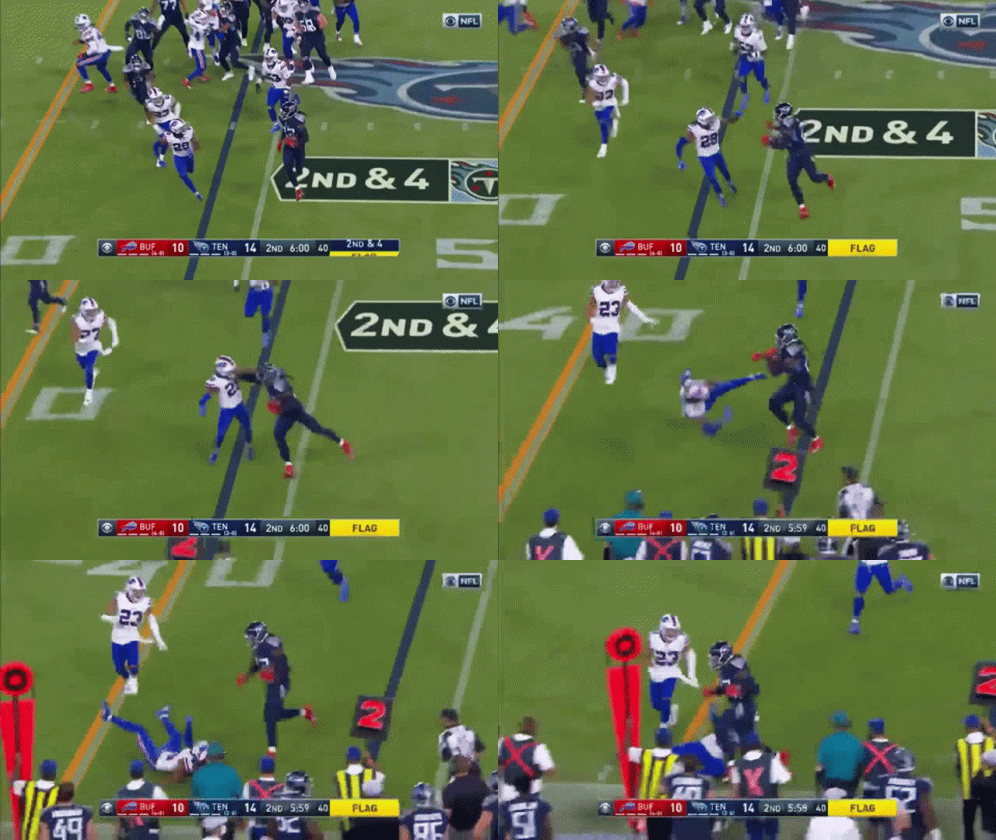
If you haven’t caught Derrick Henry play football, it’s time you tune in. He’s huge (6’4”, 240lb), he’s fast (4.5 40-yard sprint), and in an era when the NFL is going to the air more and more, Henry’s a bit of a throwback. It works. Last year he carried the Titans to the AFC title game.  One of the most effective moves in his repertoire is the stiff arm, all three versions of it. 

In the words of Ken Belson, “Henry has made regular use of a move so old-fashioned that it is immortalized on the Heisman Trophy — which Henry won for Alabama in 2015.” This gif is from a recent game (look how much bigger he is than pretty much anyone on the field, by the way), but Henry’s been using his long arms keep defenders off of him since he was in ninth grade, breaking all sorts of records along the way. Bobby Ramsey, Henry’s high school coach, noted that Henry actually has three versions of the stiff arm. 

Ramsay, who now coaches at Mandarin High School in Jacksonville, described one of Henry’s stiff arms as a “social distancing” move, where Henry leaves his long arms stretched out in advance of contact, keeping defenders away. Another is the “it’s time to go to bed, son” move where a defender makes the mistake of going for Henry’s waist, only to have Henry push down on the defender’s helmet, like a father patting his son’s head. For the Norman play, Henry employed what Ramsay called the “barroom get the heck away from me” move. It’s a version of the stiff arm reserved for when a defender is already in proximity, and it is not nearly as easy as Henry makes it look. I keep watching that gif above, and I’m also struck by the timing, and placement of the stiff arm. Henry hits the back shoulder, and he drives into the defender right between strides. Force – yes – but there’s a good deal of technique there, too. 

From Ed Smith (the running back actually on the Heisman, which I didn’t know), to John Riggins, to Earl Campbell, and now to Derrick Henry – the stiff arm is in good hands in Henry. Fun article with a lot of good clips, too. – PAL Source: Derrick Henry and the Art of the Stiff Arm”, Ken Belson, The New York Times (10/23/20)


RIP Sid Hartman

Sid Hartman died this week at the age of 100. For our Minnesota readers,  I don’t need to underscore just how much of a Minnesota institution the sports columnist was, but it’s been fun throughout the week to revisit or discover stories that help build that institution. Plus, isn’t our duty to share Hartman’s incredible story with the other readers far and wide?

Hell, the man started working in the newspaper business in 1928. His last column was published the day he died. You read that right.

Patrick Reusse – another longtime sports columnist from MN – wrote the obit, and I’ll put Hartman’s sports resume against most anybody in terms of local impact. Jeff Day, who worked with and helped Hartman for the past 15 years, tells a much more personal story. Between Reusse and Day’s words, we get an incredibly unlikely success story that honestly seems too far fetched for a movie, and we also get of a Hartman’s loyalty to a young guy that so desperately needed it.

https://www.instagram.com/p/0V58VKjkxu/?utm_source=ig_embed

There are too many incredible details from Ruesse’s obit to quote here, but here are two details I learned about Hartman that were astounding:

His basic job – selling newspapers – never changed throughout his entire life:

Hartman started selling newspapers as a 9-year-old kid, pedaling his bicycle to Newspaper Alley, where he would buy 100 copies of the Minneapolis Star, the Journal, the Morning Tribune or the Evening Tribune for $1.10, then sell them for two cents apiece.

How about this for a different era: he was the GM of the Minneapolis Lakers while still writing for the paper.

In 1947, Hartman took a $15,000 check from Morris Chalfen to Detroit. He met Morris Winston, the owner of the Detroit Gems, at the airport, gave him the check, and the National Basketball League franchise relocated to Minneapolis as the Lakers.

Chalfen’s partner was Ben Berger. Hartman, then 28, was offered the job as general manager, with the stipulation that he quit his newspaper job. He wouldn’t do that, so Max Winter — a former boxing promoter — became the official GM, with Hartman involved in personnel decisions.

“Involved”’ was not a word Sid would use, by the way. He insisted that he made all of the personnel decisions that turned the Lakers into a dynasty in the early years of pro basketball.

Hartman insisted he also had worked a trade with Boston that would have sent veteran Vern Mikkelsen to Boston and brought a chance to draft Bill Russell, the great University of San Francisco center, to the Lakers. Sid told and wrote that story so often it became part of his legend among Minnesotans, even after Boston’s Red Auerbach denied it.

For sure, Hartman and Winter were able to get the NBL’s rights to George Mikan. When they signed the great center early in the 1947-48 season, after his Chicago team had folded, the Lakers were a powerhouse.

The man sat in on meetings to bring MLB baseball to Minnesota, he scooped Notre Dame resignations, watched the last Gopher football dynasty in the 30s after selling his papers outside the stadium. He was a newspaper man, a columnist, but he’d be the first to tell you he wasn’t a good writer. For him, it was about reporting, getting the info, making contacts. The writing was never his focus.

And Jeff Day knows that as well as anyone. Due to his ability to type fast, his first job out of college quickly turned into transcribing audio tapes from an endless supply of Hartman interviews. After two years, Day was laid off. Life got dark for Day:

I used to chain smoke in the parking garage and think, “I’m going to kill myself.” Whatever the thing is that makes people happy and gives them purpose had left me.

Sid called me a year after I was laid off and said, “I’d like to take you out to Murray’s.”

We had dinner and he told me that the paper had an opening and he wondered if I would take it. He wasn’t asking a question. When I went back to work I was employed by the Star Tribune, but I was there for Sid, and it was intensive. Whatever other work I had to do for the paper did not matter to him.

Day kept looking for meaning outside of the office. He became an addict, had legal trouble, relationships, too. But he kept coming to work. 

But I kept going to work. Every day. I never missed a day of work with Sid.

I remember once leaning over him at his computer — I can see his face right next to me — and him saying, “Have you been drinking?”

I denied it. He said I was lying. He was right and he never said anything about it again.

When he saw my mother he would tell her, “He’s like a son to me.”

When he saw my father he would tell him, “I couldn’t do this without him.”

My wife sat next to him in the Twins press box and all of a sudden, he was the most charming man on earth.

He came to my wedding dressed better than I was.

And he told me, constantly, that he hoped I wouldn’t leave him for another job.

And because Sid kept going to work, I kept going to work. It was the most stable thing in my life. But somewhere in all of those columns, in all of those years, in all of those tapes, I found a thread and started the work of trying to find myself outside of the office.

I never told Sid about any of it.

I didn’t tell him about getting sober or going to years of therapy or regaining some faith in myself.

I just kept going to work.

Of course, I have no idea what kind of guy Hartmas was. To be honest, he was the old guy who’s column I’d skip over as a kid. A lot of “a close personal friend told me” kind of stuff. But reading these two stories are a refresher of his impact. His mark is all over sports in Minnesota – yes – but I can’t help but appreciate his impact on Jeff Day even more. – PAL

Source: “Star Tribune sports columnist Sid Hartman dies at age 100”, Patrick Reusse, Star Tribune (10/22/20), “I helped Sid Hartman keep up his column. He saved my life.”, Jeff Day, Star Tribune (10/22/20)


Video of the Week:


Song of the Week: Menahan Street Band – “Queens Highway”


Like what you’ve read? Let us know by following this blog (on the right side, up near the top), or:

Email: 123sportslist@gmail.com

Twitter: @123sportsdigest

Facebook

Instagram: @123__sports


SWAG! Stuff we all get. I basically decorated my condo with all of my SWAG.

-Michael Scott

Week of September 25, 2020

Take my money. Send Bomba Robe.


Nostalgia & Inclusions

Near the beginning of the pandemic (a little over six months ago), Joe Posnanski counted down the 100 greatest baseball players of all-time, complete with an essay about each one. It was a gigantic undertaking, and one that this little digest greatly enjoyed. Posnanki’s back with his follow-up: greatest moments in baseball history. A perfect appetizer to the playoffs, which as of this exact moment, has the Twins facing the Astros, i.e. NOT THE YANKEES, in the first round of the playoffs. 

Posnanki’s number two moment might surprise you (and delight Giants fans): 

Duane Kuiper hits his one and only home run

Aug. 29, 1977

Huh?

Do I really believe that Kuiper hitting a meaningless home run for Cleveland, which was terrible in 1977, is a greater baseball moment than Ruth’s called shot or Puckett’s Game 6 homer?

Of course I do. Because I grew up in Cleveland in the 1970s. If I had grown up in New York in the 1930s, I’d have the Ruth homer on there. If I were Garrison Keillor or Steve Rushin, I’d have the Puckett homer on there. The greatest moment in baseball history is your moment, that instant when — among the thousands of baseball games that happen every year — everything comes together just so and a tiny instant of perfection happens.

Interesting that – in describing what makes a moment great, Posnanski uses my greatest baseball moment  – Puckett’s Game 6 homer in the 11th – within his argument about how great baseball moments have to be personal. Of course Puckett’s home run has more historical significance than Duane Kuiper’s single big league home run, but that didn’t even enter a 10 year-old Posnanski’s mind. It’s worth noting I was about the same age for Puckett’s moment as Posnanski was for Kuip’s ‘bomb’. That age is not coincidence. 

Of course, Posnanski is absolutely right about the weave between sports greatness and each of our biographies. I regularly tell people that Puckett’s moment is the highest purity of joy I’ve felt to date. Before you jump on me – of course my wedding day was a happier moment. I have many moments of greater joy, but an ‘instant of perfection’, to use Posnanski’s phrase, must also be about purity. It must include an absence of flaws. 

As we move on down the line, we accrue more inclusions, to borrow a diamond term. We are the diamond, and the moments are the light shining through us. What we bring to a moment when we’re 10 is likely to be purer than what we bring to a moment when we’re 38, and that impacts how the light of a moment reflects through us. Just as is the case for Posnanski and Kuiper, Puckett’s home run was pure because I was pure. 

What an unending comfort to recall as I go on collecting more inclusions along the way, each one making Puckett bounding around the bases pumping his fist more brilliant by comparison. 

With that in mind, what’s your perfect baseball moment, TOB? – PAL

Source: 60 Moments: No. 2, Duane Kuiper’s singular home run”, Joe Posnanski, The Athletic (09/21/2020)

TOB: The Giants provided a lot of pure joy over the last decade, including Tim Lincecum coming out for the 9th in his and my first playoff game, as he finished off a 14 K, 1-hit, 1-0 complete game shutout; three pennant wins, three World Series wins, and lots of crazy moments in between. But to go back a bit farther, I go back to July 25, 1996.

I was visiting my grandparents in Orange County, and my grandpa took me to an Angels game. The Brewers led most of the way, and tacked on an insurance run in the top of the 9th to make it 4-1. My grandpa was not a huge baseball fan and wanted to go home because the game was basically over and he wanted to beat the traffic. Baseball Reference indeed shows Milwaukee with a 97% chance of winning. In fact, while trying to find video of the game, I found this from a look back at the game: “The Brewers added one in the ninth and down 4-1, we can imagine that some of the 16,000+ in attendance were headed to the exits early.” But I said, “No, they’re going to make a comeback.”

In the bottom of the 9th, future Giants fan favorite J.T. Snow led off with a dinger to make it 4-2. After a couple singles and a couple outs, Angels shortstop Gary Disarcina came to the plate and hit a home run down the left field line that just stayed fair – it was one of only 28 home runs in Disarcina’s nearly 4,000 career at bats. 5-4, Angels won. I gloated to my grandpa all the way home.


Badass Women In Sports: Maya Gabeira 

The NY Times multi-media projects alone are worth the subscription. The full-screen video with text overlay pulls you in from the jump. José Sarmento Matos’ photography makes you pause, and Adam Skolnick’s reporting is multifaceted. Just a cool team effort all around. 

On the surface, this is a story about a woman, Maya Gabeira, recording the biggest wave surfed this year – 73.5 feet – off the coast of Nazaré, Portugal. There’s so much more to unpack than a record ride.

Of her ride, Gaeira said, “I had never been so close to such a powerful explosion. I had never felt that energy and that noise. It felt really terrifying.” 

I bet. 


It’s cool that a woman caught the biggest wave this year, and that Gabeira and a few women are charging right along with the men of big wave surfing. Seven years ago, Gabeira barely escaped death on the same break. 

In 2013, Gabeira wiped out on a 50-foot wave and was held underwater for several minutes. She was barely conscious when she grabbed a dangling tow rope, only to be dragged toward shore facedown, getting pulled from the water without a pulse. CPR saved her life, but she had snapped her right fibula and herniated a disk in her lower back.

Her recovery took four years and three back surgeries. She lost all of her sponsors, dealt with an anxiety disorder and panic attacks, and was scolded publicly and warned privately by legends of her sport, including Laird Hamilton, who publicly criticized her after her 2013 accident.

What did Gabeira do? She doubled-down, moved to Nazaré, trained like a beast and got back out there and rode monsters by any measure. I have a hard time imagining the amount of drive it takes to paddle back out there after an experience like that. 

But how do experts look at that wall of water and calculate, down to the half foot, its size?

“It’s an imperfect science,” the big wave surfer Greg Long said, “and when we’re talking world records it’s imperative that you bring in a more scientific and specific means.”

Michal Pieszka, a surf scientist at Kelly Slater’s wave pool, led the study in collaboration with researchers. They examined the tides, light and shadows, which can affect perception and size in a photograph, and the objects in each picture. They analyzed both camera angles and the camera lenses involved in capturing Gabeira’s and Dupont’s waves.

I was just talking to my brother, Matt. Our nephew, Anthony Rabeni, made his varsity golf team as a freshman (way to go, Anthony!). Matt and I were remarking how there’s no gray zone in golf, and what a refreshing that quality is in a sport. Golf and surfing…feels odd to lump them together, but it’s correct. No excuses. No restrictions. Not your age, gender, size, race – either you ride it or you don’t. You count your strokes. Simple as that. Hardly the first time this idea has been made, but one worth repeating every now and again.  

Maya Gabeira: badass lady on display in the word, video, design, and photography of this feature. – PAL 

Source: The Biggest Wave Surfed This Year”, Adam Skolnick, The New York Times (09/22/20) 


Is It Fair to Use Tests to Get College Football Players on the Field?

Yesterday the Pac-12 announced it will play a 7-game season, starting November 6. I mentioned in recent weeks that this was a strong possibility after the conference secured rapid testing for each of the 12 campuses.

The business of college football is troubling and layered and problematic as it is; but conducting that business during a pandemic, when kids can’t go to school and many businesses cannot open, and these players are still not being paid is beyond problematic.

As a fan, I’m excited. I know that many of the players want to play, and I don’t want to try to tell them how they should feel, so I’m also happy for them. But as a society there are questions that must be answered.

First, should college sports be played on campuses where students are not allowed to attend class?

I’ve thought about this a lot. I’m ok with that. I think we should be opening what we can, when we can. We can’t safely let 50,000 people back on the Berkeley campus. But we can let 150. So why not do that?

Second, should the schools be using financial resources to pay for this testing? Again, I say yes. As I noted a few weeks back, the school and the athletic department are basically separate entities. Schools even charge the athletic department tuition for players on athletic scholarship. Especially for athletic departments that are in the black, I see no problem with them using their revenue to pay for testing in order to ensure continued revenue.

But my final question is should the testing resources themselves (not the money, but the testing machines and materials used in the tests) be used to get college football players on the field? Is this taking tests away from other places that need it? I have no idea, but the San Jose Mercury News’ Jon Wilner set out to answer that question after his a wife asked, “Why is the Pac-12 getting those tests? Why aren’t they going to teachers and other essential workers?” So he called the CEO of Quidel, the company the Pac-12 purchased the rapid testing machines from.

During a 30-minute conversation, Quidel CEO Doug Bryant told the Hotline that he “worried a lot about the perception” that his company’s rapid-result antigen tests, which have the potential to change the battle lines with coronavirus, were being deployed to 12 college athletic departments.

“I’ve said all along that our company would do the right thing,’’ he told me.

The deal with the Pac-12, he added, will help Quidel do exactly that.

“How so?” I asked.

“It was bit of a perfect storm,’’ he said. “Larry and the universities needed our tests, and we needed their data.”

Quidel had been providing testing to first responders and nursing homes since May, and they were collecting data that they say will help fight COVID-19, especially as to asymptomatic cases. But they wanted to expand to a younger population.

In order to provide the most effective antigen test for all age groups, Bryant explained, Quidel needs data points. Hundreds of thousands of data points.

All the shipments to nursing homes and first responders have enable the company to refine the tests for adults and symptomatic cases.

But it needs more data … cardiac data … serological data … on children and young adults. Specifically, Bryant said, it needs data on asymptomatic young adults.

“For a greater understanding of performance,” Bryant said, “we have to figure out the right algorithms.

“We wanted a generation of asymptomatic data to give the public confidence that it worked.

Now, keep in mind this is the CEO, and part of his job is to spin the PR on what his company has just done. But I believe him when he says this will help. Of course, want to believe it, too. But these are all hard questions without easy answers, and we all do our best to answer them. -TOB

Source: “Quidel’s Antigen Tests Saved Pac-12 Football: A Deep Dive Into the Origin of Their Relationship,” Jon Wilner, San Jose Mercury News (09/23/2020)


Video of the Week:


Tweet of the Week

https://twitter.com/BobbyBigWheel/status/1307106004526657545?s=20


Song the Week: Little Willie John – “You Hurt Me”


Like what you’ve read? Let us know by following this blog (on the right side, up near the top), or:

Email: 123sportslist@gmail.com

Twitter: @123sportsdigest

Facebook

Instagram: @123__sports


Well, you know what, Jim, it is not my fault that you bought a house to impress Pam. That is why carnations exist.

-M.G.S.

Week of September 18, 2020


Dodgers Giveth, Whine Like Little Babies When They Take

I am on the record that I love when baseball players talk trash, pimp home runs, scream when they strike a guy out, etc.. What I don’t like is hypocrites who are happy to do those things when they do something well, but whine and cry when someone does those things to them (ahem, MadBum).

Which brings me to the Dodgers. They are in a (surprisingly) tight race for the NL West with the Padres (who look like they’re going to be a headache for the next decade). In a close game this week, the Padres’ Trent Grisham crushed a dong off Clayton Kershaw. When he hit it, he turned to his bench and yelled, “Let’s go!” Although you can’t hear it, I think someone on the Dodgers then yelled at him because he suddenly turns toward either Kershaw or the Dodger bench and smirks. He then gets very animated as he rounds the bases. Let’s let 1-2-3 favorite Jomboy break it all down:

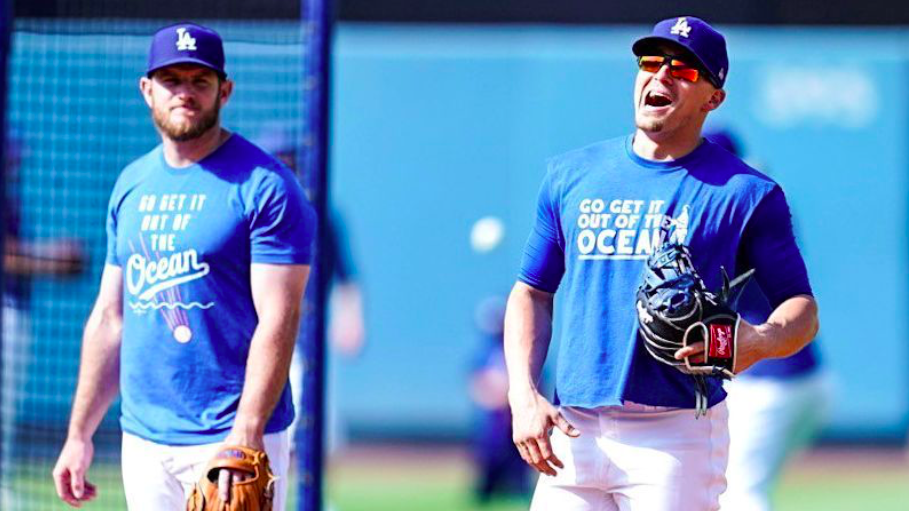
I’m not even mad about the Dodgers yelling, “SHUT THE FUCK UP!” That’s hilarious. What really bugs me are the comments after the game by Dave Roberts and other Dodgers, because they are such friggin hypocrites. Do I need to remind you of the time when Max Muncy hit a bomb off Bumgarner, told Bumgarner to go get it out of the ocean (again, we’ll ignore Muncy’s misunderstanding of simple geography), and then half the Dodgers team made and wore “Get It Out of the Ocean” shirts!? Including Muncy himself:

And honestly I thought that was all REALLY funny. But tell me, Dave, why was that ok and what Grisham did not? Take your team’s advice: STFU. -TOB

PAL: I dig the young, talented, cocky Padres leaning into this role.


I’ve Discovered TOB’s Second Career: Spotter

We’ve all had that moment watching a game when we make an observation, only to have the color commentary echo the statement the next second. It will impress the significant other on the couch, and – let’s all cop to it – it’s a nice little moment of validation, that we’re seeing what the expert sees, at least that’s what I thought until reading this story from Bryan Curtis. 

For decades, TV has peddled a vision of the booth as a pair of announcers gazing over the field. This is pure illusion. “It’s a working kitchen at a diner back there,” said Joe Buck. Every announcer in Fox’s “A” booth—Buck, Aikman, even Mike Pereira—has an extra football brain within arm’s reach. Additionally, Buck has a spotter, Bill Garrity, and a statistician, Ed Sfida, stationed at his left; a stage manager, a camera operator, and a makeup artist stand behind the announcers. All told, there are usually 11 people in the Fox booth. NBC’s Sunday Night Football booth has more than 20.

When it’s laid out like that, I’m not shocked, but I just never really thought about it. And now when I do think about it, of course these analysts aren’t processing and articulating every nugget in real time. Enter  David Moulton – the guy behind the guy, just off camera. 

Moulton in action:


Before the pandemic and need for social distancing in relatively small booths at the stadiums, Moulton would be right next to the analyst (Troy Aikman for NFL, Gary Danielson SEC), in the ear piece, writing nuggets on notecards, a real-time “spell check” of sorts as Joe Buck puts it. 

Some of Moulton’s value is practical. At the two-minute warning, he reminds Buck and Aikman how many timeouts each team has. But the spotter’s job has an emotional component, too. Danielson said that being an announcer can feel like a comedian telling jokes to an empty room. Danielson can look at Moulton and see a fist pump or a shake of the head. “It’s someone having an audience,” he said.

Another key distinction is that Moulton has to think like his guy. While he compares his role to that of caddieing for a world-class golfer –  “You know that the golfer is going to be Top 3 in the world without you” – he has to see the game and offer notes to his guy in a way that resonates with Aikman’s voice. It’s not enough for something to be interesting to Moulton; rather, he has to think about what’s compelling to the audience as told by Aikman.  In that way, his role reminds of a joke writer more than a caddie: he needs to understand his analysts voice and sensibilities. 

Excellent read on a topic that’s completely fresh to me. Also, I genuinely believe TOB could be a guy-behind-the-guy for basketball and college football. – PAL 

Source: Meet the Man Who Makes Your Favorite Announcer Sound Smarter”, Bryan Curtis, The Ringer (09/14/2

TOB: Haaaaaaa. I’m not going to argue – I would love this. You nailed that moment of validation when your partner is impressed when you say something right before the announcers. And let me tell you – it’s now happening with the kids and their minds are BLOWN.

Also, I did know this job existed. I’ve definitely heard a few announcers mention their spotter by name, and in either Little Big League or Major League there is someone handing the announcer funny and obscure stats. 


College Football TV $ Is More Important Than My Niece’s College Education 

Up until recently, I was a (wavering) holdout wanting to believe in the idea of a student-athlete. I clung to theidea that a free education is absolutely worth something. But the recent reversal from the Big 10 is the last bit. It’s time to officially call it: college football and basketball players are not student athletes; rather, they are an unpaid workforce. 

The other day, the Big 10 unanimously voted to play the fall football season, just six weeks after voting 11-3 not to hold a fall sports season. Nothing has really changed in that time in terms of treatment or scientific breakthroughs. What’s changed is a handful of extremely rich and powerful football programs saw that the SEC, Big 12, and ACC were not going to follow suit and delay/cancel the season, and money was going to be left on the table. 

Per Berry Svrluga of The Washington Post:

‘The coronavirus pandemic has completely laid bare the contemptible nature of college athletics. The Big Ten’s decision to reverse course and try to stage a football season made it as crisp and clear as a Saturday afternoon in the fall: Athletic departments do not exist to afford opportunities to compete for thousands of “student-athletes.”’

Think about the disparity here. The conference, at its expense, will provide coronavirus tests every single day to a junior economics major if he happens to play football and a sophomore sociology major who excels at soccer and not to the kids who sit alongside them in class — virtually or in person — but don’t play sports.

That pisses me right off. These institutions of higher learning – these schools that are collecting FULL tuition from tens of thousands of students/parents for remote learning in many cases, these nostalgia receptacles that love to wax poetic on code, honor, and values are prioritizing money over the wellbeing of its non-athlete students and staff. 

Put simply, physics majors don’t generate money for their schools. Quarterbacks do. But more than that: The schools that make up the Big Ten are institutions of higher learning. The Big Ten itself is a massive business that stages athletic competitions and creates content for its media partners. The objectives of those two entities don’t always align.

Nevermind the irony we all know – that it’s the goddamn physics major who will bail us all out one day, not the all-conference QB. 

And while I’m rolling, it’s absurd that the football team will receive daily tests while the rest of the student population is signing into a 500th Zoom. Unconscionable. And it’s absurd that one goddamn cent is being dedicated to something other than first figuring out a safe way (including rapid response testing, like the ones the almighty football team receives) to get young kids back in elementary and middle school. And it’s infuriating that people will prioritize exercising  their personal freedoms to not wear a mask over getting kids and teachers back in schools in the safest possible environment (which, really, are you fucking kidding me? Is a mask such an intolerable inconvenience)? But – hey – let’s make sure Big 10 football has games. 

What is going on?

The amateurism argument is officially settled. 

And a general memo: stop referring to college students as ‘kids’ when you need something from them and ‘young adults’ when you want to blame them for something.

Hold steady, Pac 12. If you really think it’s dangerous, then lead and don’t play until  every student has access to the same testing as the football team. Stick to your convictions. – PAL 

Source: The Big Ten might save its football season, but the myth of college sports has been shattered”, Barry Svrluga, The Washington Post (09/17/20)

TOB: I have bad news for you regarding the Pac-12…news broke this week that they are expected to start as soon as late October.

In the bigger picture, though, while you are correct to see that the “student-athlete” concept, as applied to college football and men’s basketball, is a myth, you’ve got to take it a step further. The money being spent by these colleges to test football players is NOT money being taken away from the education of the general student population, like your niece. Major college football programs make money for their schools. The football (and to a lesser extent men’s basketball) money goes to pay for the other sports that take a loss. In fact, the athletic departments pay the school the tuition for each athlete on scholarship. A college athletic department is, essentially, an outside business licensing a college’s trademarks. When you look at it like that, to me, the effort to put college football on the field while other students are remote looks less ridiculous. 

Last point: I don’t believe the daily tests for football players is taking away resources from general populations. The testing machines, as I understand it, will be on each campus, paid for by the conference/the schools. It’s not like the early days of baseball’s return where they were mailing tests to a lab in Utah and utilizing that lab’s resources.

Which is all to say – I’m happy you’re on the side that recognizes that major college football and basketball players are not “student athletes” – but I’m also ok with those teams deciding to play this Fall.


Video of the Week:

https://twitter.com/Coach_Yac/status/1306411025579868160?s=20

I think we all had a George Kittle on a team growing up. 

Tweet of the Week

https://twitter.com/BrianMFloyd/status/1304947459211186177?s=20


Song of the Week: Wynton Marsalis (feat. Joe Farnsworth, Russell Hall, Isaiah J. Thompson & Jerry Weldon) (Jazz Arrangement) – “Daily Battles”


Like what you’ve read? Let us know by following this blog (on the right side, up near the top), or:

Email: 123sportslist@gmail.com


What is it like being single? I like it! I like starting each day with a sense of possibility. And I’m optimistic, because everyday I get a little more desperate. And desperate situations yield the quickest results.

-Michael Scott


Week of August 28, 2020

Swaggy since high school.


Going D-I

As fall and winter college sports begin to be cancelled or postponed, a lot of attention has been spent on the big-time football conferences and teams (Ohio State, USC, Texas, Clemson, etc.). Top prospects sitting out or missing the season, what the playoffs will look like (if any), and whether this is the moment when the major conferences officially break from the NCAA and start their own thing. We’ll be talking about blue blood basketball programs, the NCAA tourney, and the game’s top college prospects next. Billions of dollars, a public health crisis, and the very idea of amateurism – these are a few factors at play. 

That’s one end of the spectrum, but there’s a high stakes game on the other end of the D-I spectrum: schools trying to break into the D-I ranks (a four-year process). Replace Ohio State, USC, Texas, and Clemson with UC San Diego, Bellarmine, Dixie State, and Tarleton State. There’s also been talk at my alma mater – Augustana, a tiny school with 1,700 students – about jumping from D-II up to D-I. 

The first step in the process is for the schools to pay the NCAA 1.7MM for a D-I application. That’s a pricey bit of paperwork! What follows is an odyssey: booking non-conference games with known schools to raise the visibility of the new programs and earn some revenue in those early seasons; recruiting kids to take a chance on a program and school for which they never dream of playing, constantly trying to raise money and sweetalking rich alumni. 

For example, UC San Diego was scheduled to play TOB’s Cal in its first game as a D-I basketball program. Cal would’ve paid for the privilege of beating up on the Tritons, and UCSD would’ve used the game as a centerpiece of a weeklong celebration for donors, not to mention making it a recruiting bonanza. With non-conference schedules being the first part of the schedule to go in the pandemic, the revenue, marketing, and recruiting goes with it. 

Per Brian Bennett:

COVID-19 has already wreaked havoc on guarantee games, which most low-major teams vitally need. The typical going rate for those contests has been anywhere from $85,000 to $100,000, and playing a handful of them can fund an entire athletic department. Especially with no football this fall — Dixie State was supposed to enter its first year as an FCS independent before postponing — the school hoped to make money on basketball games, most notably its road trip to BYU. 

Those guarantee games also provide a crucial and one of the only major sources of revenue during this transition. And make no mistake: Moving to Division I isn’t cheap.

The NCAA charges schools $1.7 million simply to file the application for Division I membership. Dixie State and Tarleton State used fundraising efforts to pay for part of that tab.

Required facilities upgrades, required expanded coaching staffs…

UC San Diego helped fund its move with an increase in student fees. In a May 2016 referendum, students who voted approved the fees hike by a 70 percent majority. Ever since, the students have been paying $480 more per year in fees to underwrite Division I sports while waiting for an actual higher-level game they could attend on campus. Total fees over a four-year period run close to $3,500 per student.

All of that for the privilege to get whooped by Cal? What’s the point? The point can be found at the end of a long play, and that point – as it usually is – is money. 

Teams new to Division I must go through a four-year transition period during which they are not eligible to compete for NCAA championships. They also don’t get any money from the NCAA Tournament or other NCAA revenue streams until the transition is complete. It is up to them to balance budgets for four years until that spigot is turned on.

The ultimate goal, of course, is to grab a slice of that juicy NCAA Tournament pie. The tournament reaped a reported $933 million in revenue in 2019, and the NCAA distributes money from that pool to conferences based on performance. These are divvied up into “units,” which is how the NCAA defines wins and at-large bids in the tournament field. One tournament unit — which would be what a one-bid league whose representative loses in the first round would earn — was scheduled to be worth $282,100 in the 2020 bracket that never was. Teams that advance deep into the tournament can earn millions more for their conferences.

Most leagues, like the WAC, hand out that tournament cash equally among member schools. According to a 2019 study by the Associated Press, the SWAC earned the minimum amount from the NCAA’s basketball fund and received $25 million in payments from 1997 to 2018. The Big Ten brought in $340 million over that same period.

The prospect of all that dough is tantalizing, and it has led to an explosion of growth in Division I men’s basketball. 

Those are big numbers. That’s why the number of D-I schools has ballooned to nearly 350, that’s why I wouldn’t count out the NCAA basketball tourney just yet, and that’s why the SEC, ACC, and Big 12 football teams are making a go of it this fall. That’s a ton of money established programs and conferences are used to pocketing. It reaches all corners of the universities and the surrounding communities. And if someone is of the mind that this pandemic is being blown out of proportion to begin with (I am certainly not one of them), then it’s not that far of a leap to push for games being played. 

No matter what, a big loser in all of this will be these schools just beginning their journey towards D-I relevance and revenue. This will be a tough academic year for them to keep afloat. This was an excellent read about a part of college sports we don’t usually hear much about. – PAL 

Source: Transitioning in these trying times a challenge for four new Division I programs”, Brian Bennett, The Athletic (08/24/20)


In Appreciation of Yaz

The MLB trade deadline is Monday, and the Giants find themselves in a tougher spot than last year in answering the question: hold ‘em or fold ‘em? Last year they were just outside the WIld Card at the trade deadline and decided to split the baby – holding Bumgarner and Will Smith, moving Melancon, Dyson, and Pomeranz, for prospects. After a monster July got them into the playoff picture, they tanked in August and September and fell way out. Still, it’s hard to say they were wrong for keeping Bumgarner and Smith: first, we don’t know what offers they had on the table; second, they got compensatory picks in the June draft which gave them both more picks and more signing bonus money to spread around.

So, what do they do this year? Like last year, they approach the trade deadline on an upswing – before Thursday’s brutal double header loss to the Dodgers, the Giants were winners of seven straight. Plus, in the four games prior to those seven wins, the team had blown three wins in the 9th, two of them to the A’s, one of the best teams in baseball, and the two leads blown to the A’s were BIG leads. And all three blown wins were at the feet of the same pitcher – Trevor Gott. If Gott doesn’t go all 2001 World Series Byung-Hyun Kim, the GIants would  have entered Thursday tied for 3rd in the NL.So there is reason to think this team, suddenly in line for a playoff spot, might actually be good.

Meanwhile, the Giants traded for Mike Yastremzki last Spring for basically a can of beans. Yaz, the grandson of Hall of Famer Carl Yastremzki, had never broken through to the majors after many years in the Orioles’ organization. The Giants acquired him and he made his big league debut when he was almost 29, very late for a baseball player. But Yaz has turned into a star. After a very good 2019, he is out of his mind this season. I will admit the sample size is still a little small, JIFF,  but he’s putting up MVP, literally! MVP!, numbers. 

All of this begs the question: what should the Giants do with Yaz? He’s now 30. His stock has never been higher. The fanbase loves him – he looks like JT Snow but puts up numbers like peak Jeff Kent, and plays the outfield like Jim Edmonds. For weeks, I’ve been wondering what the Giants might do with him. I would understand why they’d move a 30-year old late bloomer for a top prospect, but also…the team is in this thing! And the fans love Yaz. I was starting to get nervous, and then I read this from Roger Munter:

History tells us that prospect-for-veteran trades invariably favor the team acquiring the vets — even though our dumb lizard brains remember the ones that favor the team getting the future star. They’re all John Smoltz for Doyle Alexander, right? The vast majority of prospects moved in deals turn into trivia answers (“Man, you remember who they got Yaz for?”), not stars.

So have I set the stage appropriately for why this can’t and shouldn’t happen? The risk involved in moving Yaz is too much to bear. End of story. The Giants front office has a bonafide win in hand — they turned career minor leaguer Tyler Herb into a Star, Capital “S.” Once you’ve traded your broken down milk cow for magic beans and the beans led you to the goose that lays the golden egg….what exactly could another milk cow have to offer to tempt you into trading the goose for it?

Maybe I wanted the above to be true but I have to give it to Munter – he brought me back to the light. Yaz is 30, true, but he still has a few good years left, and because he’s a late bloomer, he’s cheap. If he’s a star, he can absolutely help the next good Giants team. And, as we’ve seen (Dubon, Davis), trading for a highly regarded prospect doesn’t always work out. At this point I’d rather have a star like Yaz for 3 years, than the chance someone like Dubon, who is struggling, turns into a star. Plus, being a fan favorite matters. 

The Giants have a lot of choices once again as the trade deadline approaches. I hope they keep the guys who are helping them win now, and can also do so in the future. -TOB

Source: Let’s Make a Deal: Mike Yastrzemski,” Roger Munter, There R Giants (08/26/2020)


The Ultimate Bartender

Every morning starts the same. After I get my coffee and breakfast ready, I open up the laptop and start with the same three tabs: The New York Times, San Francisco Chronicle, and the Minneapolis Star Tribune. Being a St. Paul family, the Langs were historically a Pioneer Press bunch, I must say, but the non-digital subscription got to the point where even my parents switched.  

Most of the sports stories from the Star Tribune and The Chronicle could more or less be interchangeable if some team names swapped: you have your recap of the in-season sport, the 365 days a year obsession with the NFL, some homer columnist heaping unearned praise on nearest university, and a profile of some high school prodigy once a month or so. 

Sometimes I’m in danger of forgetting what sports page I’m reading, but every now and again a story like this one comes along – a story so utterly St. Paul that I nod along as a I read. 

Tim Tschida is about as St. Paul as one can get. If the name sounds familiar, then you were likely a hardcore baseball fan, because Tschida was an MLB umpire for 27 years. He got in early – he umpired his first MLB game at the age of 25 –  and got out early. He was far from an old fogie when he called it quits in 2012. So he traded his umpire uniform for a hawiian shirt and went back to the job he’d work to make some extra dollars while a minor league ump: bartender.

He started bartending at the legendary Mancini’s Char House in St. Paul (damn good steak) and at Giggles Campfire at the State Fair (never heard of it). 

As Pat Ruesse puts it: 

A man constantly on the road as an umpire for 32 years, he’s been single since 2012, lives in a duplex near West Seventh, works for the Mancinis and Giggles; meaning at 60, Timothy Joseph Tschida is back to being as thoroughly St. Paul as when he was a bat boy for a Jack Morris-led baseball team.

That Jack Morris reference is perfect, because when you think about it, who would have better bartender stories than a guy who umpired in the bigs for nearly 30 years? Seriously, can you imagine the tales? I mean, here’s just a taste:

The one dearest to Minnesotans would be his involvement as the plate umpire on Aug. 3, 1987, when Twins starter Joe Niekro was suspected of trying to make baseballs less aerodynamically predictable for hitters.

“Joe wasn’t exactly suspected,” Tschida said. “We knew what he was doing. We also knew scuffing the baseball was absolutely out of control that season.

“I finally had to go out there. I said, ‘Joe, I want to see your glove and your hands.’ He turned a whiter shade, stammered a little, and then put his hands in his back pockets.

“As it turned out, he had a hunk of sandpaper trimmed and glued to the palm of his left hand. It was touched up to look like flesh. And when he wanted the extra movement, he would take off the glove and rub the baseball as if he was trying to improve the grip.

“He had his left hand in that pocket, trying to work the sandpaper off his palm while making more of an act out of going into his right pocket. He took out a small photo of his son Lance, maybe 11 or 12 then — great kid, by the way — and tried to sound defiant, saying, ‘I have a picture of my son, OK?’

“Davey Phillips said, ‘Dig a little deeper, Joe,’ and out came the emery board. That’s what most people remember, but I wouldn’t have thrown him out for the emery board. I would have just said, ‘Keep that in the dugout.’

“What happened is the piece of sandpaper fell out of the other pocket. Joe wound up getting a 10-game suspension and the appearance on Letterman.”

Tschida paused with a smile and said:

“Best quote of the night came from Gene Mauch, managing the Angels. He said, ‘Those baseballs weren’t scuffed; they were mutilated.’ ”

My post-pandemic to-do list is growing, but I think TOB and I need to make a trip to Minnesota next summer and throw back a few local brews at Mancini’s when Tchida’s working and report back to the readers. – PAL 

Source: Brew chief: Former MLB ump and St. Paul native Tim Tschida goes from behind the plate to behind the bar”, Patrick Reusse, Star Tribune (08/25/20)


Video of the Week:


Tweet of the Week: 

https://twitter.com/LegionHoops/status/1298467850089242626?s=20


Song of the Week: Bon Ever – “AUATC”


In Italy, you must always wash your hands after going to the bathroom. This is considered to be polite.

-Michael Scott
Week of August 14, 2020

When Laureano gets beaned (again), he offers up tips on how to throw a slider.


A Major Designation

Sometimes it pays off to procrastinate on a 1-2-3 post. Found this thought-provoking story from one of our favorite writers, Ben Lindbergh. This year marks the 100th anniversary of the Negro Leagues. In addition to many celebrations and commemorations planned, MLB is considering retroactively designating the Negro Leagues a Major League. That means all the stats are added to the MLB record books and all of those players denied a chance to play at the highest level (before and after Jackie Robinson broke the color barrier in 1947) would finally be big leaguers. Pretty incredible. 

There are not just two leagues recognized as ‘Major League’ – it’s not just the National League (1876)  and the American League (1901). There are four other leagues categorized, and counted in the record books, as a major league, per the definition put forth by 1968 commissioner’s committee put together to create The Baseball Encyclopedia: American Association (1882-1891), Union Association (1884), Players’ League (1890), and Federal League (1914-1915).

The story goes into how, back in ‘68, this committee decided on what leagues made it and what did not. According to those around the committee at the time (all the committee members are now dead), the notion of including the Negro Leagues didn’t even come up. It wasn’t about stat-keeping (as one committee member would retroactively justify years later) or quality of competition; the Negro League was never even brought up in the discussion!

“The one thing that I am absolutely certain about is that there never was any SBRC discussion about treating the Negro Leagues as major leagues,” says David Neft, who oversaw the assembly of the Encyclopedia. 

Which begs the point, what if they had been given proper consideration? What then?

If the Negro Leagues had been brought up by the SBRC, they would have had to satisfy several of the committee’s criteria. Neft says that in addition to scheduling irregularities such as varying lengths, frequent unofficial games, uncompleted campaigns, and inconsistent playoff formats (sound familiar?) “the factors that were used in discussing the other leagues included the populations of their cities, the media coverage of their teams relative to the NL, AL, and the 1880s American Association, the capacity of the stadiums, the level of play, and the number of proven major league players who ‘jumped’ to these leagues.” 

In most of those categories, of course, the Negro Leagues are at a disadvantage relative to white leagues precisely because of the racism and segregation that forced Black ballplayers to create a separate (and in some respects, unequal) place to play. Negro Leagues clubs were owned by Black businesspeople who were cut off from capital and didn’t own their home parks. Their financial circumstances were precarious, and they were forced to barnstorm and play local exhibitions to survive. It would be harsh to hold that against them. Gary Gillette, coeditor of the The ESPN Baseball Encyclopedia and many other sports reference books, says that if you denigrate the Negro League’s credentials on the grounds of erratic conditions and schedules, “What you’re saying is ‘We would like to undo the discrimination and isn’t it a crying shame that they were discriminated against. But we can’t undo it because they were discriminated against and their records aren’t that good.’ And I think that’s a horseshit argument.”

Populations? Media coverage? Stadium capacity? Number of players that ‘jumped to these leagues’…setting aside the racism, who the hell came up with this list of categories? 

More important, the record. Black teams played Major League clubs quite frequently over the course of the first half of the 1900s. Over 600 games, actually. Their record against those Major League teams: 315-282-20. Over roughly the same time period (1900-1950), Major League teams went 1690-677 against minor league teams. 

Legendary statistician Bill James sums it up this way: 

“My argument has always been that it is impossible for a league to produce that many players of that quality in that period of time, unless the quality of play in that league was not only equal to the white leagues, but probably superior to it. You just can’t reach that level of excellence while playing against minor league competition. So … designate it as major league.” 

And to bring this all the way back to 2020, one of the most commons ‘concerns’  over including Negro League stats alongside MLB stats is an inconsistency of schedule. Josh Gibson hit .466 in 69 games in 1943. Does that jump past Ted Williams .406 in 1941 (143 games)? Well, MLB currently recognizes Ross Barnes’ .429 batting average over a 70-game season from 1876, so there goes that. 

Or, for that matter, some similar statistical outlier from MLB’s current small-sample season, which will be treated the same as any other season’s despite the many compromises that the pandemic has imposed. “The last remaining plausible objections to not including the Negro Leagues as major leagues have been eliminated with the 60-game season,” says Gillette, who adds, “If there ever was a season more erratic than 2020, I’d like to see it. … There’s no moral justification for excluding the Negro Leagues, and the last rational arguments you could even advance have been destroyed.”

This is such an excellent read about correcting history. Not re-writing it, but correcting it, and this moment – this centennial year of the Negro League, as the BLM movement gains recognition and support, as MLB sells us a 60-game season, is the exact time to do it. – PAL

Source: “As it Celebrates the Centennial of the Negro Leagues, MLB May Undo a “Major” Mistake”, Ben Lindbergh, The Ringer (08/14/20)


Sports Are Good, Exhibit #137: Atalanta 

There have been a lot of stories written about sports in the pandemic, and this one might be my favorite so far. 

Atalanta, a small market soccer team by comparison to the big hitters that compete in the Champions League tournament (Milan, Real Madrid, Barcelona, PSG, etc), made quite a deep run in the tournament this year. Considered the “Queen of the provincial clubs” – which is a backhanded compliment if I’ve ever heard one, Atalanta’s success this year would be like a AAA baseball team making a deep playoff run against the Yankees, Cubs, Dodgers, and other big market teams. 

The team’s unlikely run was more special this year, because Atalanta’s home base is Bergamo, Italy – right in the heart of the madness when COVID ripped through northern Italy.

One of the club’s greatest moments came on February 19, 2020. With seemingly the entire town transported on charters to Milan to watch, the club put up four goals on its way to it’s first ever Champions League quarterfinal. 

The match would remain meaningful, but for much different reasons. Per Rory Smith: 

The next day, the mayor was in his office in the center of Bergamo when news started to emerge that a patient in an emergency room in Codogno, a town southeast of Milan and about an hour’s drive away, had tested positive for the coronavirus. The next day, a second case was confirmed in Alzano Lombardo, only a few minutes outside Bergamo.

In those long, harrowing days in late February, the coronavirus crisis seemed to bubble around the people of Bergamo, gathering force until it consumed them, too. The city shut down, the silence filled with sirens. The hospitals were overwhelmed. The local newspaper filled with the names of the dead. The army was called in to remove the bodies. Quickly, memories of that night in San Siro seemed to drift and fade, as if it had happened in another world.

“It was the last day of total ignorance,” Gori said. He had stopped smiling. “It was the last day when we did not worry.”

This great moment happens, then – wham – something that few had even considered now dominated every thought in the city. That match in Milan filled with 40,000 fans from northern Italy would later be described as a ‘biological bomb’ by the chief pneumologist in the area. 

What followed was a group of fans utilizing the community built around the soccer team to help out. They raised money for the hospital, helped the military build a field hospital, coordinated and commissioned an artist to design a special jersey that thanked first responders. 

In other words, as Smith puts it, “The team is an expression of, and an outlet for, a broader civic identity.”

And when the team returned to the pitch in June, they kept the unlikely run alive. They rattled off 6 wins, and a tie against the much larger Juventes before the run finally ended against Paris St.-Germain (perhaps the richest club in the world). 

The director general of the local hospital summed it all up perfectly when she said, “The suffering of the people mourning for their families cannot be relieved. Sport cannot overcome that grief. But for the city as a whole, a city that has suffered a lot, it offers hope.”

Excellent stuff from Smith. – PAL

Source: “The Dark Fairy Tale of Atalanta”, Rory Smith, The New York Times (08/11/20)


Video of the Week

Song of the Week  – Western Centuries – ‘Sarah and Charlie’


Like what you’ve read? Let us know by following this blog (on the right side, up near the top), or:

Email: 123sportslist@gmail.com

Twitter: @123sportsdigest

Facebook

Instagram: @123__sports


“I am the bait. Men find me desirable.”

-Dwight Schrute

Week of July 17, 2020


An Ode to Candlestick Park: A Joyous Dump

Grant Brisbee wrote an incredible article this week about the history of Candlestick Park, and I am telling you that you must read it. The premise is simple: when did San Francisco know Candlestick was a dump? (Spoiler: not long after it opened). I will say though, and Brisbee acknowledges, the place sure looks like a better place to watch a game in that picture from the early days, before the 49ers moved in and ruined the place (much like what happened when the Raiders moved back to Oakland).

Perhaps the most interesting part is the politics, backroom deals, corruption, and incompetence that got the stadium built there in the first place.

There was a more logical reason for the decision to build a ballpark on Bayview Hill: There were profits to make with public money. If there’s anything more reliable than wind in San Francisco, it’s that every story from San Francisco’s history leads back to some sort of graft.

Well-known contractor Charles Harney purchased land in Candlestick Point from the city of San Francisco in 1953 for $2,100 an acre. Land adjacent to it sold in 1957 for $6,540, which means that Harney should have been in line for a cool 311-percent profit. Except, somehow, the city paid $65,853 an acre for the 41 acres they needed for the 77-acre site. (Most of the additional 36 acres were already owned by the city, and they needed some of it to fill in Harney’s land, some of which was occasionally underwater, depending on the tides.)

The ballpark would be constructed by a local contractor by the name of … Charles Harney, who received a $7 million fee for the project.

Harney was awarded the contract in a no-bid process by Stadium, Inc., a non-profit corporation that was created after the city realized that the original $5 million bond, approved by voters in 1954, wasn’t going to be enough for a new ballpark. Giants owner Horace Stoneham wouldn’t even discuss any proposals that were less than $10 million, so San Francisco mayor George Christopher created Stadium, Inc. as an arm of the city government, which allowed it to issue its own bonds and get around that pesky city charter.

Stadium, Inc. needed a board of directors, of course, so they got some local businessmen to fill the roles. Specifically, they got … Charles Harney. And his brother-in-law. And the executive vice president of his company.

This is shady as hell, but I also can’t knock the hustle. 

The article is full of other interesting tidbits. But the best part is when he closed with a personal story that resonated with me. I suggest you read it. But it made me remember the first time I went to Candlestick. I was nine. 

Driving up, the stadium looked huge. It was like nothing I’d ever seen. When we first emerged from the tunnel and saw the field, it was so green. I couldn’t believe I was there. There’s Kevin Mitchell. There’s Will Clark. When I got older, I realized it was…a dump. But that was ok. It was my dump. It’s gone now, which is weird. Every time we drive up the 101 past Candlestick Point, I look at that weirdly empty spot off the freeway and shake my head. If you didn’t know Candlestick had been there, you would never know by looking at it. I usually point it out to my kids, even though there’s literally nothing to see. Just memories of a place that made me happy, and still does. Every time I walk into a major league ballpark, I get the same giddy feeling I got when I was 9. Candlestick Park, dumpy as it may have been, is where that started. -TOB

Source: How Quickly Did San Francisco Realize That Candlestick Park Was a Debacle?Grant Brisbee, The Athletic (07/09/2020)

PAL: My brother, Matt, has started to say he misses the Metrodome. The Twins new stadium is very, very cool. They killed it, but the Dome is setting for childhood memories. It was a home field advantage. It was where the Twins actually won playoff games and two World Series. The grass wasn’t even real when I walked into the dome, but I was in awe. To see the game we played in the front yard at that scope and scale – maybe that’s what so favorably preserves the memories of those dumps. 

Also, this story is a great plot for a comedy. The pursuit of a publicly funded stadium – hell, even attempting to build a stadium – is an absurd shady pursuit from the jump. I could see Adam McKay and Will Ferrel killing an idea like this, The Big Short style. 

OK, so Candlestick was a disaster, but this seat warmer idea was brilliant. So they messed up on the execution. Still, that would be a game-changer (I’m looking at you, Cal). Are there any stadiums out there where regular seats (not the suites or club level) have the warmer built in? 

Just in case, though, the plans included radiant heat to be installed underneath the seats. A 1959 issue of Popular Science declared that fans would be “warmed up by their seats in the cool night air.” More than 35,000 feet of wrought-iron pipe was laid, and the plans were to circulate hot water from a boiler that would cut through the cold. According to the aforementioned Sporting News article, “Giant owner Horace Stoneham says radiant heat won’t be needed, and if he has his way, it will never be turned on.”


Short Putts for Big Bucks 


I was in on this story the moment I read the headline: 

‘I Just Cost Myself 250 Grand.’

Missing a short putt worth hundreds of thousands of dollars is a golfer’s nightmare, but PGA Tour veterans have ways of psyching themselves up to try anyway.

Sure, I’ve thought plenty about the pressure standing over a 3-foot putt to win a major, but the pressure to secure a 9th place finish can be counted in hundreds of thousands of dollars. I’ll admit it – my sphincter gets a little tight standing over a $20 putt for a couple skins carry-overs.

This is a story about how tour players – young guys trying to stay on tour and vets – deal with that stress. 

When their rounds are complete, golfers enter the privacy of a nearby scoring tent, which one player called “the loony bin.” It is there that players come face-to-face with the tournament’s prize money chart delineating the payouts for finishing first, second, third, and so on.

“Guys say, ‘I just cost myself 250 grand,’” said Jim Furyk, the winner of 17 tour events. “I’m sure I’ve said it. It’s a really hard moment.”

Gary Woodland, the reigning United States Open champion, insisted the angst was worst at high-profile tournaments, where a final short putt can be worth $1 million.

“I don’t care who you are, that’s a lot of money,” Woodland said. “Maybe you weren’t thinking about the money before the putt, but if you miss you are.”

Woodland, with a career earnings north of $27MM (I couldn’t believe it either), and Jim Furyk (holy shit – $71MM – good for third all-time behind Tiger and Mickelson) can breath a little more freely as they set up for that 9th place putt than someone like Martin Trainer. He’s a second year pro ($780K). I love how he describes it: “Those short putts on 18 are terrifying. It’s part of the treacherous illusion of competence in golf.”

Of course, all the strokes count the same – be it the drive on the opening hole on round 1 or the last putt on Sunday, but there’s a ‘blueprint’ that comes with those putts on the tour:

“At first, you probably let the dollars get into your head and you screw up and it costs you a lot of money,” said Kevin Streelman, who has been a tour regular since 2008. “You get tired of that happening and start treating the last putt of the day the same as your first putt of the day.

But for unproven players on tour, it’s difficult to focus on tour longevity when they are in a desperate, weekly struggle to finish near the top of the leaderboard so they will qualify for an invitation to return to the tour the following year.

“That stress and anxiety is constant,” Wyndham Clark, a second-year tour pro with four career top-10 finishes, said in recalling his first year on the tour. “It affects your sleep. I wasted so many nights worrying about it.”

Quick side-note: let’s all savor the fact that there is a pro golfer out there named ‘Wyndham Clark’. 

OK, back to the story. 

This isn’t a story about a guy struggling to put food on the table vs. the guy that’s, well, made over $70MM, but miss enough cuts and these young guys who haven’t won a tournament won’t keep their card, and the purse money on the PGA Tour vs the (hold on, let me look up the name of the second best tour) Korn Ferry Tour is drastic. I took a look at purse breakdown for the TPC San Antonio Challenge (Korn Ferry Tour) and the Byron Nelson Classic (a regular PGA Tour event). Understand that prize money is a percentage of the total purse, so dollar amount reflects a percentage. Per TOB, we think ties being averaged out between the two spots (so two guys who tie for fifth get the average of prize money for 5th and 6th). 

Place San Antonio Challenge Byron Nelson 
1 108K 1.4MM
2 54K 853K
3 31K 537K
4 22K 379K
5 19K  316K
6 16K 284K 
7 12K 264K
20 5K 102K
Total Purse 600K 6MM+ 


So I understand why these dudes look at a putt for 10 minutes from every conceivable angle. 

Good read! – PAL 

Source: ‘I Just Cost Myself 250 Grand.’, Bill Pennington, The New York Times (07/09/20)

TOB: Two things. First, I’m glad they mentioned Gary Woodland because just last week I was thinking, “I could not come up with the name of the guy who won last year’s U.S. Open that we attended if you offered me a million dollars to do so. So unmemorable.

Second, is Justin Thomas going to have to make me bust out the Rick James clip for a second week in a row? Look at “JT” (ugh) contradict himself immediately:

“You probably aren’t going to believe me, but I’ve never had a putt where I’ve thought, ‘if I miss this, I cost myself two hundred or four hundred thousand,’” Justin Thomas, the world’s fifth-ranked golfer and the 2017 P.G.A. Championship winner, said. “A lot of people could tell you what a three-way tie for sixth is in a $9 million purse, whereas I have no clue.”

Thomas, however, admitted to one exception — when he needed to make a three-foot putt to tie for third at last year’s Tour Championship, which would earn him $3.5 million. Finishing in fourth-place would have earned him $500,000 less.

“That was the first ever time I was like, ‘This is probably a million-dollar putt,’ ” Thomas said.

“I’ve never done a thing, except that time I did that thing.” What a rich prick, bragging (in another quote) about how he doesn’t know how much money he each place gets at each tournament. GET OUTTA HERE WITH THAT NOISE, JT!


Joey Bart and MLB Service Time Manipulation in a Short, Weird Season

One of my favorite things about being in a years-long baseball keeper league with prospects is that it has forced me to pay attention to, and read, top prospect lists. You see names rise and fall on the list, and when they get to the bigs (especially if they’re on your squad), it’s EXCITING. Gleyber Torres. Ozzie Albies. Syndergaard. Walker Buehler. Blake Snell. Pete Alonso. All Ron Popeils years before they were on their big league teams, and all had me buzzing when they got called up. 

But this league has also caused me to pay more attention to service-time manipulation. Briefly, to gain a year of service time, a player must be on a roster 172 of 187 days in a season. Once a player has gained six years of service time, he can be a free agent at the end of that season. Unsurprisingly, teams “manipulate” service time to keep them from reaching free agency as long as possible, because players are cheaper before free agency.

One of the most famous examples was the Cubs’ Kris Bryant. He was an absolute can’t-miss prospect. The Cubs should have begun the season with him on the roster. But they sent him to AAA to start, saying he needed to work on his defense. Magically, he was ready to be called up on the exact day that, if he played the entire rest of the year, he would not reach 172 days until the first day the following season. This meant he would be a free agent after 2021, and not 2020, because the Cubs turned “six years” into seven seasons. But it happens ALL THE TIME. 

Egregious cases like Bryant’s, or Vlad Guerrero, Jr., or even Buster Posey, really suck. A good young player is robbed of helping his team, his teammates are robbed of his help, the fans are robbed of watching him, and the player loses a year of high earnings in his prime. MLB has not solved this issue, but this year could be really bad. The Athletic’s Andrew Baggarly does an excellent job explaining why.

Joey Bart is the Giants’ top prospect. Bart is the heir apparent to Buster Posey: a young, power hitting catcher, who was the second overall pick in the 2018 MLB draft. The Giants maintain they do not want to promote him yet, correctly pointing out that he’s had very little minor league experience: just 130 games over two seasons, due to injuries (and only 144 games in college). Especially for a catcher learning that craft, that is not a lot of games. 

“We just see Joey as a player who can really benefit from more reps in the batter’s box, more opportunities to game plan and more opportunities to work with some really great player-development and major-league coaches,” Kapler said. “We’ve sort of been having this conversation now for several weeks and stayed with a really strong conviction that Joey’s best path to being an excellent major-league player is through more repetition and more time to develop.”

The team wants to get him more reps, as they would with most prospects. Complicating this plan is the fact there’s no minor league season this year, so Bart would not be able to learn in real games, just simulation and practice in an extended training game.

But most complicated of all for the Giants is that Bart has looked very good during the team’s ongoing preparations for the season: he’s reportedly showing good power and approach at bat, and his defense and arm behind the plate are drawing oohs and ahhs. 

Joey is playing so well that his teammates are openly lobbying for him to make the team.

“I really like Joey Bart’s approach,” Flores said. “He can hit the ball hard. I didn’t get to see him in spring training, but I’m getting to see him now. He’s really got some pop.”

Longoria said Bart “is the closest we have to breaking through and being an impact player out of the chute.”

For his part, Joey must want to make the team badly: he went to college, so he is already 23, turning 24 in December. This means if he doesn’t get a year of service time this year, he will not be a free agent until the winter he turns thirty. Guess how many 30-year old catchers get big deals in free agency? I’m guessing zero.

But this short, 60-game season, raises another issue for the Giants. Baggarly points out the following: Bart would need to miss only the first five days to miss out on a year of service time; but with the real risk the season gets shut down with a COVID-19 outbreak, that’s not necessarily true because if the season gets canceled, all players get a year’s service time, even if they only played one game. Ooooh. I am very pro-player, but it would suck for the Giants to lose a year’s cheap service time for a top player for a handful of games in a season that isn’t even completed.

Baggarly points out yet another wrinkle: Bart was drafted by the previous regime, and the new regime took another catcher with this year’s first round pick. Is it possible they are looking to use Bart as trade bait for a top of the line pitching prospect? If so, they run a huge risk letting him get to the majors before he’s ready, because if he stinks it up his trade value plummets. 

I am interested to see what Farhan does. Baseball is *fingers crossed* BACK in six days. -TOB

Source: The Real Reason That Joey Bart Won’t be a Giant on Opening Day,” Andrew Baggarly, The Athletic (07/16/2020)

PAL: First of all, tuck in your shirt on the field, Joey Bart.  And can we drop the ‘y’ while we’re at it? You’re a professional now, not a 10-year old playing up an age group. 


Now that we’ve got that out of the way, there are more than a few angles to this scenario, and I appreciated this note; 

From inside this fishbowl, anyway, it sure seems like players are sending a message to management. They took on the personal risk to travel to San Francisco and take part in a truncated season amid a pandemic for what will be a fraction of their guaranteed salaries. They made the effort to do this. They don’t want to go through the motions. If they’re going to play a season under these conditions, why not go all-in to win? Why not embrace the crazy and take bold steps?

Totally fair point. 

I’m with TOB: very pro player – because it’s such a treat to watch young, supremely talented, raw athletes compete with the fire of something to prove burning in their belly – but this is a situation when I think the Giants have to hold him back just for a week or so.


How Wedding Crashers Football Magic Was Made

I came across this fun story about the legendary football scene from the movie Wedding Crashers. I’m always impressed anything ever comes off natural in a movie whenever I read ‘making of’ stories, because there are so many people involved in the production, the staging is so methodical, and the number of takes and angles needed for a action scene involving a bunch of characters is insane. It took the production 5 hours to film this 4-minute scene: 

The director, David Dobkin, learned everything he needed to capture this complexity and tension of a big scene from watching the NFL broadcasts. Per Danny Emerman:

But the scene took much more than comedic dialogue to execute. Shooting it was a whole different challenge. When Dobkin studied film at New York University, a professor told him if you ever want to see how to edit a great scene, watch the NFL. Broadcast teams know when to cut to a nervous wife in the luxury box, a coordinator covering his mouth with a play-call sheet, a wide shot of the field while a play develops, an injured player on the sideline. 

Dobkin, a lifelong football fan, applied the NFL lesson in the most literal way possible. The cutaway shots to Kathleen (Jane Seymour) and Gloria Cleary (Isla Fisher) for their reactions after each play come straight from NFL Sunday crowd pans. So does the three-quarters shot of pre-snap motion. “It’s always really guided me,” Dobkin says. “I had that in mind when I went to go shoot this scene, because there are so many points of view, so many characters, and so much movement.”

But, of course, the best part of this scene are the one-liners. Despite a 3-week prep process, which involves the actors walking through each scene and working in ad-libbed lines (which are then re-written into the script), Vaughn’s held his best for the shoot: the pre-snap count was all ad-libbed:

Vaughn: Blue 17! Blue 17! Red seven! Red seven! Red seven! Hot route! Hot route! Hot route! Red seven, red seven red sev-en! Hot route! Red seven! John! Red seven!

Wilson: I don’t know what “red seven” means.

Vaughn: Hot route!

Wilson: I don’t—what is “hot route”?

Vaughn: Will you just go stand on the other side, please?

Also, a special shout-out to Sack’s friend in this scene. Flip, the minor character in the movie, goes 3/3 in this scene: 


  • Are you ready? Are you ready for some football? You want the noise brought on you, cause here it comes. 
  • Crabcakes and football. That’s what Maryland does. 
  • Numnumnumnum. That’s what we call a sack lunch. 

A fun read on how much work goes into a laugh, and just how hard it is to capture the essence of a game on a movie set. – PAL

Source: “‘Hot Route! Red Seven!’: How the ‘Wedding Crashers’ Football Scene Came Together”, Danny Emerman, The Ringer (07/15/2020)

TOB: I also enjoyed this article, but the “CRABCAKES AND FOOTBALL THAT’S WHAT MARYLAND DOES!” actually gets short shrift here, IMO. Gleeson and I have spent the last 15 years either quoting it, or adapting it to wherever we are living. Example: “BAD SHIRTS and MCMANSIONS! THAT’S WHAT EDH DOES!” Unlike many of the jokes in this movie, it is timeless.


Sports? No. But a Wild Story About Ballet and Hippies in San Francisco in 1968

This is a very amusing story passed on by my mom, about the time Dame Margot Fonteyn and Rudolf Nureyev, world class ballet dancers, came to San Francisco. 

After their performance, they went to Trader Vic’s, got drunk, met some hippies, went to a hippie house party in the Haight, and got arrested while trying to escape via the roof when the party was broken up…at 3:30 a.m. If that’s not a story you want to read, I doubt we are friends. Be sure to check out the full photo gallery, because there are some wonderful pictures. Thanks, Mom! -TOB

Source: The Great Haight Ballet Bust of 1967,” Bill Van Niekerken, San Francisco Chronicle (04/05/2016)


Videos of the Week (wait for it):

PAL: This guy below nails it. Trust me – seeing Mickelson do that smile and thumbs up live is one of the more ridiculous, hilarious displays I’ve ever seen at a sporting event.

Tweet of the Week: 

For Don Loflin (Father In-Law, pole-vaulter):


Song of the Week – Taj Mahal – “Corinna”


Like what you’ve read? Let us know by following this blog (on the right side, up near the top), or:

Email: 123sportslist@gmail.com

Finishing that 5k, was the hardest thing I have ever had to do. I ate more fettuccine alfredo and drank less water, than I have in my entire life. People always talk about triumphs of the human spirit, well today I had a triumph of the human body. That’s why everybody was applauding for me at the end. My guts and my heart, and while I eventually puked my guts out, I never puked my heart out. And I’m very, very proud of that.

-Michael Scott
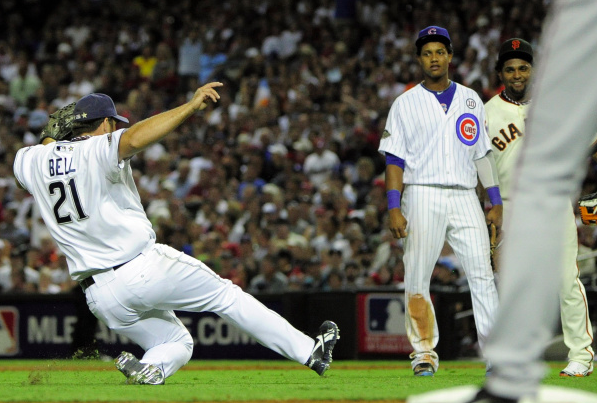
 

Week of June 19, 2020

On this day in sports history…


We Don’t Need Sports to Heal

I can barely stomach writing about baseball again. The negotiations between the owners and players are exhausting. But I come here today to discuss something else about those ongoing discussions. Over the past few months, I have seen baseball writers, fans, and politicians expressing some variation of the following:

Commissioner Manfred said it back in March:

“Whenever it’s safe to play, we’ll be back. Our fans will be back, our players will be back, and we will be part of the recovery, the healing in this country, from this particular pandemic.”

Senate Majority Leader Mitch McConnell:

“America needs baseball. “It’s a sign of getting back to normal.”

Agent Scott Boras: 

“Time and time again, baseball has helped our country heal,” he wrote, citing its role after the strike on Pearl Harbor, the 1989 earthquake in Northern California, the Boston Marathon bombing and the Sept. 11, 2001, terror attacks.

New York Governor Andrew Cuomo:

“We’re very, very hopeful that we can get going,” he said. “Baseball has stepped up in troubled times to be a leader. We’re used to it. It’s a distraction. It’s comforting to people. It comes with the rhythm of their life.

Baseball, and all sports, are entertainment. But the above sentiment really bothers me. Most of these statements were made during the height of the COVID-19 pandemic (which is not over, even if you’re over it). 110,000 people have died in this country alone. Baseball would have been a mild distraction, at best. 

But as the Black Lives Matter protests have rightfully raged across the country (and the globe), I can’t help but think that the lack of sports at this time have helped our country reckon with its past, and its present. Governor Cuomo was right: baseball is a distraction. Sports are a distraction. 

But for too long we have utilized distractions in our daily lives to allow us to avoid the problems in our society, in our culture. The silver lining to the dark cloud of the 110,000 deaths of the COVID-19 pandemic is the fact that we don’t have those distractions right now. We can’t turn the channel to a baseball game and pretend everything is alright. We can’t go to a basketball game, see the melting pot in the crowd, and act like we are all living in racial harmony. We can’t avert our eyes from the pains others are feeling, and have felt all their lives.

This week I read “Between the World and Me” by Ta-Nahesi Coates. As I read him describe his daily life as a child, the things he had to think about on a daily basis just to survive, it was striking what very different worlds he and I grew up in. We haven’t even begun to rip off the scab of 400 years of racism and oppression. Until we do, we are not ready to heal.

I love baseball. But I don’t need baseball right now. And the country doesn’t, either. -TOB


Nemesis: Heath Bell never game up a home run in 27 innings of work at Coors

We’re back with another installment from Andrew Baggarly’s “Nemesis” collection. It’s a bit different this time, as our subject is a nemesis of a stadium. This is a story about Coors Field’s nemesis: Heath Bell. 

Who’s Heath Bell? He’s a 69th-round draft pick who once entered an All-Star game like this:

And wore his hat like this:

That guy never gave up a home run while pitching at Coors Field. Keep in mind, a big chunk of Bell’s career was with the Padres, a Rockies division opponent. In all, Bell pitched 27 innings and never gave up one gopher ball. Of the 322 pitchers who’ve logged at least 25 innings at Coors, Bell’s the only one who can make that claim. 

Bell confessed that he was as intimidated and uncertain as any other pitcher the first time he walked into the ballpark on Blake Street. But he credited two teammates with giving him the tips he’d need to thrive there.

“We had Doug Brocail in the ‘pen and Greg Maddux was one of our starters,” Bell said. “I remember playing catch and I’m throwing my curveball and it’s not breaking at all. Then Doggy walks up — that’s what we called Maddux — and he comes up all nonchalant like Doggy does. He says, ‘Hey, less is more here. Throw it easier. It’ll break more. Throw it hard and it’ll break less.’ You want to try harder to throw it past guys because you know how the ball flies. But that’s the opposite of what you should be doing.

“But I was still a little scared to do it. So in the bullpen, I asked Brocail, who was someone I talked to all the time. He said if you throw the curveball just below the belt, it will always break. But an inch above the belt, it’ll never break. And if you try to throw your big curveball, the one that comes out of your shoulder and breaks over, that won’t move at all. These guys were such great teammates and they knew from experience.”

Bell worked in a few of his own tricks, too. When the Padres would play the Rockies in San Diego, he’d throw Colorado hitters a ton of get-ahead curveballs for strikes. He was baiting them for those away games.

I love all of that: Maddux’s nickname being Doggy, doing the opposite of what your inclination might be, and especially setting players up in games played in San Diego. All of that is gold. 

Also, in some sick twist, Coors Field is the setting of one of Bell’s worst memories as a player: the Rockies incredible comeback against the Padres in the 2007 play-in game. Bell pitched great (again), but the Padres ultimately lost a wild one on a controversial play at the plate. 

Loving this series. -PAL 

Source: Nemesis: The pitcher who dominated Coors Field still couldn’t escape heartbreak”, Andrew Baggarly, The Athletic (06/03/2020)

TOB: We need a Maddux documentary. Ten hours, like The Last Dance. Is there a player whose public perception during his career turned out to be more different from reality than Maddux? He came across very vanilla. But the stories that have slowly trickled out over the last few years paint a very different picture. He’s like a Lincecum in sheep’s clothing.


The Tale of the Real Tiger King

This was an extremely fun read. Here’s the intro:

While flipping channels not long ago in desperate search of a sports fix, I stumbled across Tiger King.

No, not that one.

Right there, in the closing credits of “The Rookie,” a few dozen names below stars Dennis Quaid and Rachel Griffiths, was the listing for the guy who played the not-so-memorable role of “Durham catcher.”
https://twitter.com/BrownieAthletic/status/1243738600170237959

That glorified extra was Tiger King. He even had a line — “You wanna warm up?” — and uttered it to Quaid without a single animal trainer getting his forearm gnawed off.

Curious about whether that was Tiger King’s real name, I went to Baseball-Reference. And there he was, the 29th-round pick of the Cleveland Indians in 1993, an infielder who went on to play two seasons for the independent league Lafayette (Ind.) Leopards.

TIGER KING! The article is basically a series of anecdotes about a guy whose life is almost as bizarre as that of the Netflix star who has borrowed his name. How he ended up in The Rookie is a good example of something that happened to Tiger King that seems unbelievable:

After his minor-league baseball days, Tiger King found a new career as a traffic signal technician. It’s not a job that screams Hollywood but it turned out to be his big break.

John Lee Hancock, who directed the movie, envisioned a scene in which Quaid tested his fastball velocity by firing a pitch past a roadside speed limit sign.

Hancock wanted the lights to fritz and flicker at 76 mph before fully illuminating at 96 mph. (It’s right here in the trailer at about the 1:18 mark.)

Tiger King delivered that speed limit sign to the set. He also taught the crew how to get that flicker effect by touching two wires together.

Then he swung a hell of a trade with the director.

“I’ll tell you what,” Tiger told Hancock, “if you can get me in this movie, I’ll give it to you for free.”

Tiger had himself a deal. He was supposed to be an extra in the baseball scenes but so charmed everyone that he met, including casting director Beth Sepko, that he wound up with a speaking role.

He also became Quaid’s personal catcher off the set, the guy who would warm up the actor before the pitching scenes. Privately, sports-action coordinator Mark Ellis warned Tiger to never, ever, ever throw hard on the return throw. Rule No. 1 in sports scenes is to avoid injury to the A-lister.

“I was like, ‘Alright. Yeah, I won’t,”‘ Tiger recalled. “And every day, we’d be out there and Dennis Quaid would say, ‘Here’s my fastball!’ One out of every three or four pitches is sailing. He’s not an athlete. He couldn’t throw.”

Still, Tiger would pretend as if he were playing catch with Nolan Ryan himself, sometimes shaking his glove in feigned anguish. He’d say stuff like, “Oh that was a good one!” and “That stung a little!” Talk about acting.

In 1994, during the baseball strike, Tiger King was playing on an independent team in Minneapolis. The team ran out of money in August, but twelve players stuck around to play for free, including King.

The funny thing is, the crowds started getting larger. Sympathetic to the players’ plight, especially at a time when MLB was on hold because of the 1994 strike, fans started filling the seats in support.

“And I’m not exaggerating. We had a fish tank set up on the concourse. And we would tell people, ‘Hey, they’re not getting paid. Donate whatever you can,’” Gonzales said. “They’d throw it all in there and we’d split it up between the 12 players every night. They might get $20 bucks, it might be $10, it might be $50. It just depended on how good the crowd was.”

Another desperate-for-cash promotion offered raffle winners a chance to suit up as the “13th Man.” The winner was just supposed to sit in the dugout for the game, but players once cajoled Gonzales into dispatching a 40-year-old Denny’s busboy to the plate as a pinch-hitter.

“And on the first pitch he got drilled in the back,” Gonzales said. “Man, and I thought they were going to have to get an ambulance to get him to first base. He got smoked.”

That was the one and only plate appearance for the guy from Denny’s. He got his cup of coffee.

The whole thing is funny. Big recommend! -TOB
Source: “His Name is Tiger King, and He’s the Best Baseball Movie Netflix Never Made,” Daniel Brown, The Athletic (06/09/2020)

PAL: Dennis Quaid can’t throw? I’m shocked, based on this trailer for The Rookie. How do they cast someone who can’t throw for that role in that movie? How?

Tiger sounds like the exact kind of guy you’d want on a team.

Sounds like he was absolutely made for independent league baseball. Love the story about the broken bat, and King hitting the home run, going directly into the stands to ask the kid if the bat was juiced up in any way.

The engagement was cute enough, but – dude – secure the ring!

The summer after my freshman year, I worked as a beer vendor at the St. Paul Saints games. This was before the Twins had their new stadium, so the carrot was always “outdoor baseball”. The stadium was packed most nights. And everyone was primarily concerned with everything but the game. Tailgating was priority 1. Drinking beer was the priority for the rest of the night. Actually, a pretty great way to make a buck as a 19 year-old. Independent baseball does have some magic to it. When you take the seriousness out of baseball, it’s a great way to enjoy a warm summer night.


Press League Softball in Central Park Must’ve Been So Fun

On the surface, this is a bit of a fantasy read for me. In another life, maybe, maybe, just maybe I could’ve been working for one of these publications with a team in the Press League. Maybe I could’ve found myself playing in the Wednesday afternoon games in Central Park. 

Look a little deeper, read a little longer, and you’ll see that the rise and fall of the Press League follows a similar arc to print media. Or, in John Walter’s words: 

The internet killed the Press League, some say. And sure, it’s tough to get away for two hours on a Wednesday if it means a Woj bomb is going to derail your career. Besides, it’s hard enough to play third base without also having to constantly refresh your Twitter feed.

This league seemed like an absolute hoot. Until ringers took over, that is. Every publication would mine the corners of the company for good softball players. Jobs were offered in order to get some much-needed outfield defense. 

Given that on/off-field interplay, careers could hinge on softball prowess. Jimmy Colton went on to be the photo director at Newsweek into the late ’90s, and he played a flawless left field for the AP. Steve (Down the Line) Fine, who held the same job at SI, was a dead pull hitter. After more than a decade of frustration, Fine hired Colton in ’98 as his deputy chief. “Half the reason Steve hired me,” says Colton, “was to lift his batting average.”

Characters, the league was full of characters. Catcher Joe (who looks exactly like you’re imagining right now), Murray Chass (The Bantam Rooster), Butch, and so many more. 

What shines through is a group of (mostly) fellas who loved this little tradition. There is something inarguably awesome about playing in a work softball game on weekday afternoon. To be going to the park while everyone else was stuck at work.

And while there are some absolute gems for anecdotes (like when Al Pacino, playing in the Show League, wore an Armani suit, Gucci loafers, and cheated up in the batter’s box, or the umpire Butch moved the bases back 10 feet in order to make the game go faster), of course the league lost itself in the heat of competition. Ringers started showing up. Guys that didn’t work at any of the publications. Guys who played in the SEC. Guys on World Series rosters. Much like its industry, the Press League became almost unrecognizable to what it began as in the 70s. 

Walters characterizes his story as an “elegy. To a softball league. An industry. A generation.” The entire time reading (and it’s a bit of a slog), I wished I was there in the memories. – PAL 

Source: The Spectacular Rise and Sudden Fall of Print Media … on the Softball Field”, John Walters, Sports Illustrated (06/02/20)


Video of the Week: and the crowd goes…wait.

Tweet of the Week:


Song of the Week: Fiona Apple – “Ladies”


Like what you’ve read? Let us know by following this blog (on the right side, up near the top), or:

Email: 123sportslist@gmail.com

Twitter: @123sportsdigest

Facebook

Instagram: @123__sports


Look, I didn’t say anything when her dad upstaged me during the ceremony. 

-Michael Scott

Week of May 29, 2020


Andre Dawson Is A Mortician?

Yes. Hall of Fame baseball player Andre Dawson is a mortician. Crazy, right? Read this wonderful story from Peter Keating, and you’ll learn that it makes sense. The work, what it requires, fits perfectly in line with how Dawson approached his baseball career. 

He happened upon the mortuary business as a member of an investment group. 12 years ago, there was an opportunity for him to purchase a funeral parlor that was often used by members of the church Dawson attended. It didn’t take long for Dawson to realize the investment required more than money. 

“Do I keep [the funeral home]? Do I sell it? Does the community really need it?” Dawson asked himself. Meeting with local pastors convinced him the answer to the last question was yes — churches worried about losing services from a partner they had relied on for more than two decades. Dawson began to sense that he personally needed to reopen its doors. 

So he got involved. He learned what it took to be good at this next career. Now, Dawson refers to it as “my calling.” 

But Dawson didn’t go out of his way to seek publicity. He rebranded the funeral home as Paradise Memorial rather than using his own name, and he doesn’t speak at most services. It’s Vanessa, outgoing enough that she once considered a career in broadcast journalism, who makes funeral arrangements with most visiting families. Her husband threw himself into all the less visible of aspects of their work. Dawson retrieved corpses from deathbeds. He drove a hearse. (On his first trip, he found himself reassuring the body inside the casket that he would try to keep the ride smooth.) He delivered cadavers to cremations.

“The funeral home business is not about volume,” Brown says. “It’s about controlling the quality of what you do and making it rewarding for the families that come to you and the people who work for you. Andre seems to have found enjoyment in that. Strangest thing!”

Maybe not so strange. Determined, studious and willing to deal with pain, Andre Dawson turns out to be who his fans always thought he was.

Now, as the death tolls rise from COVID-19, and as every element of a wake or viewing changes, Dawson and his team carry on. As he told his staff early on, “It’s not about me, it’s not about you, it’s about the service being rendered to this community,” he told his employees.  

No wonder Dawson was the kind of teammate the other fellas named their kids after. Great story. – PAL 

Source: The Baseball Hall of Famer Who Runs a Funeral Home: Andre Dawson’s Second Act”, Peter Keating, ESPN (05/28/20)


Do Not Fall For the Owners’ Bullshit

We discussed this in the abstract a couple weeks back, but this week the MLB owners went even beyond what I would have imagined in their public negotiations with the players union regarding how the finances will work in an abbreviated 2020 baseball season.

To quickly recap: When the start of the season was postponed, the players graciously agreed to prorate their salaries according to how many games are played. In an 81-game season, that’s a 50% pay cut for all players. I say graciously because they did so with almost no push-back, assuming (perhaps stupidly) that they would accept this entirely fair position and not receive any pushback from the owners. LOLLLLL. 

In the last few weeks, the owners floated through trusted media channels that they’d need more of a give back from players due to the fact fans would not be permitted in the stadium. The players said they’d need to see the owners’ books, for the first time ever, to understand if things were as dire as the owners claim. Owners claim they rarely make large profits as is, and that the lack of ticket sales and concessions would be ruinous (When considering the owners’ claim that they don’t make large profits in normal seasons, keep in mind the small market Kansas City Royals were sold a few months back for $1 billion. Do you think people are eager to pay $1 billion for failing businesses? Me neither).

But this week, the owners released their “proposal” and it is a truly insulting offer. Ignore the people arguing it’s an “opening” offer. Remember, they already HAD a deal. And also understand that in negotiations, if your initial offer is so outrageously one-sided, many times people will simply walk away – you are not to be taken seriously. So, without agreeing to show their books, the owners proposed pay cuts as follows:

It would be at that point I would tell the owners to either make a serious offer or we’d be walking away. That is completely ludicrous to the point that I actually think the owners might prefer to skip the season altogether, and so are making an offer they know would enfuriate the players.

But it’s worse than that. The public nature of it all suggests this was nothing more than a bad faith offer intended to get the players to balk, in an attempt to get the public on the owners’ side. As expected, and understandably so, the players were not happy. Here’s Max Scherzer, a member of the MLBPA’s 8-person executive committee with a representative response, and to see if the owners’ were successful in their PR ploy, wade into Scherzer’s replies. Here’s an example:

And another:


As I’ve said many times, though, I do not understand why people side with billionaires over millionaires. Yes, the players get paid a lot. But they will be risking their lives, and potentially be separated from their families for months, for a fraction of what they agreed to play for. Meanwhile, the owners will still collect billions with no risk, and without being separated from their families, for sitting on their butts and writing some checks. 

I think the owners overplayed this hand. They have pissed off the players in a way they haven’t been pissed for 25 years, when the last labor stoppage took place. Buster Posey, of all people, tweeted an article by Roger Ehrenberg, a venture capitalist and baseball fan, discussing how awful the owners’ offer was:

The owners flopped a deal that perverts economic logic and fairness in order to win in the court of public opinion and to pressure the players to go along. Stripping things down to their essence, the proposal calls for players on the lowest end of pay scale to get their prorated pay based upon games played, while those at the highest end to get what amounts to 40% of their prorated salary (read: 20% of their annual contract value). So what you have here are the employees being asked to subsidize the owners — the equity owners- of the business during tough times. Not giving up their fair share, e.g., straight proration, but 60% of their fair share. As an investor for more than three decades, I have to say I’m impressed with the owner’s wanton disregard for fairness and the willingness to create the most hostile dynamic possible with their most valuable assets – the players – and using a sports-starved public as a battering ram to have their highly compensated employees look like selfish a**holes. I am impressed — and aghast.

Here’s what Posey said about the article:

If you know Buster, this is an incredibly surprising thing for him to say publicly. He’s practically a PR robot. As Grant Brisbee put it:

If Posey is saying something like that, the players are PISSED. As two agents put it:

“I have never seen a collective response like I’m seeing today from the players,” one agent said. “They are livid.”

Another agent said, “It’s such a shame there is so much distrust on both sides that we can’t be pragmatic adults. There’s no way MLB would think that proposal would get a favorable response from the players. It’s ‘right back at you, screw you.’ And where are we? They’re playing a pretty dangerous game of chicken.”

I get unreasonably angry at fans when they fall for the owners’ crap. Because we really shouldn’t. As Ehrenberger puts it:

Now here’s the important part: take a deep breath, divorce yourself from the sums involved and think about principle…. The owners of baseball clubs own the equity. The club and all of the cash flows associated with its operation are its assets. When someone owns equity, they’re supposed to get the benefit of an increase in asset value, and to bear the loss of a decrease in asset value. With the steady rise in TV revenues and sweetheart stadium deals, team values have generally skyrocketed. During COVID-19, there has been a short-term hit to asset value as ticket sales, ad revenues, merchandise sales, etc. have slowed to a trickle. The owners have fixed costs (like stadium leases and/or maintenance, supporting the farm system and supposedly player contracts) that need to be covered regardless of revenues, so on a cash flow basis the lack of baseball is costing them real cash. But guess what — this is what being an equity owner is — benefiting from the ups but paying for the downs. But that’s not what the owners want — they want their highly compensated employees to cushion the blow, without any return for what is an implicit financing of the owners by these players.

YES. Thank you. As I wrote a couple weeks back, the owners do NOT share in the profits (or skyrocketing values of their teams) when times are good. They should not get to share in the risk when times are uncertain. They make more than you and me, but the players are still labor. Don’t be a tool of the owners. -TOB

Source: Re-Starting Major League Baseball: Motivation and Manipulation,” Roger Ehrenberg, Medium (05/27/2020); MLB Proposal Made, Players Now Have Say Over Restart,” Ken Rosenthal and Evan Drellich, The Athletic (05/26/2020)

PAL: To our readers: isn’t it great when TOB threads together a topic through several articles like he does above? 

The exercise of removing the sums of money is a great point on Ehrenberg’s part. The sums are a distraction. Could be wrong, but people get mad at the players because guys like Max Scherzer and Buster Posey get to live the dream a lot of us had as children, and there’s some residue of anger that their lives were able to stay on some trajectory set in a childhood dream millions shared while a lot of people began their drift towards anonymous mediocrity. That residue isn’t a lot – you don’t even notice it most of the time – but every now and again we’re reminded it’s there.


Roy Halladay’s Battle 

10 years ago today, Roy Halladay threw a perfect game, and that wasn’t even undoubtedly the highlight of his career. Before reading this, I forgot just how excellent Halladay was, After reading this, I learned how much trouble Halladay tried to navigate throughout his life. This story from John Barr, Mike Farrell and Brian Rivera serves as another reminder that we have no damn idea who we are rooting for and what is going on in their lives beyond the field of play. 

No two ways about: this story is a sad one to unwrap, but it’s important to share stories of people who struggle, especially those who we tag, unfairly, as idols. And in that word – struggle – is also something admirable. To struggle means there’s a fight, and Halladay fought against his demons. 

Please read the full story. Here are some moments that have stuck with me: 

On Brandy Halladay recalling her first memories of her husband showing signs of addiction: 

It started with chewing tobacco, a habit she says she hated. She’d find the partially empty tobacco tins everywhere — in toolboxes, under plants in the living room, in food boxes in the refrigerator.

Halladay, then in his early 20s, would frequently disappear, alone, into a room in the home he purchased outside of Denver to work on model airplanes or watch TV. It struck Brandy as odd that Roy would lock the door. She recalls one day finding a stack of empty Crown Royal whiskey bags inside the room.

When she confronted him, Roy explained it away, she says, by saying he relished his time alone, unwinding with a few drinks, adding he’d always had a controlled life growing up in a Mormon home and was enjoying his newfound freedom.

On Halladay’s shame of being demoted to the minors and early struggles with addiction:

By then, Roy and Brandy had their first son, 6-month-old Braden. They spoke of buying a home in Florida because Halladay was too ashamed to show his face in Colorado, she says.

That night, Brandy drove to the bookstore and bought Roy a book she now credits with saving his career and their marriage. The now-well-worn copy of “The Mental ABC’s of Pitching,” by sports psychologist Harvey Dorfman, has few highlights or handwritten notes from the pitcher, but one passage is marked with a single pen stroke in the column:

“Pitchers must have a clue,” it reads. “One must know something is breaking if he is to keep it from shattering.”

Rich Dubee, Halladay’s pitching coach in Philly, on the kind of heart the star pitcher had: 

To this day, every day, Dubee wears the Baume & Mercier watch that Halladay gifted to teammates, coaches, clubhouse staffers and front-office personnel after his perfect game 10 years ago.

“We did it together,” the engraving reads on the back of each watch.

A tough read, but an important one, and one that is very well-written. -PAL

Source: Inside Roy Halladay’s Struggle With Pain, Addiction”, John Barr, Mike Farrell and Brian Rivera, ESPN (5/27/20)


Not to Pick on MLB Owners, But…

Just kidding. As long as these rich pricks keep being rich pricks, I’ll happily pick on them. But this one is directed at a specific owner: Oakland A’s owner John Fisher (estimated net worth of $2 BILLION). This week, Fisher announced the A’s will stop paying their minor leaguers, their measly $400 weekly stipend, starting this week. 

This cost saving move will save the A’s oh, about a million dollars.

https://twitter.com/legaleagle88/status/1265439924636880897?s=20


So, are those players free agents now? Are they free to sign with teams that don’t treat their players like shit? LOLLLLLLLL. No. Of course not. 

This is about as disgusting as it gets, A’s. -TOB

Source: Minor Leaguers Make $400 a Week. The A’s Are Cutting Off Payments,” Jared DIamond, Wall Street Journal (05/28/2020)


Video(s) of the Week:

I can’t decide if I’m impressed:

Tweet(s) of the Week: 


Song of the Week: Bobby Womack – “Lookin’ For A Love”


Like what you’ve read? Let us know by following this blog (on the right side, up near the top), or:

Email: 123sportslist@gmail.com

We’re not supposed to PDA.

-MGS