
Category Archives: Uncategorized

Week of June 16, 2017
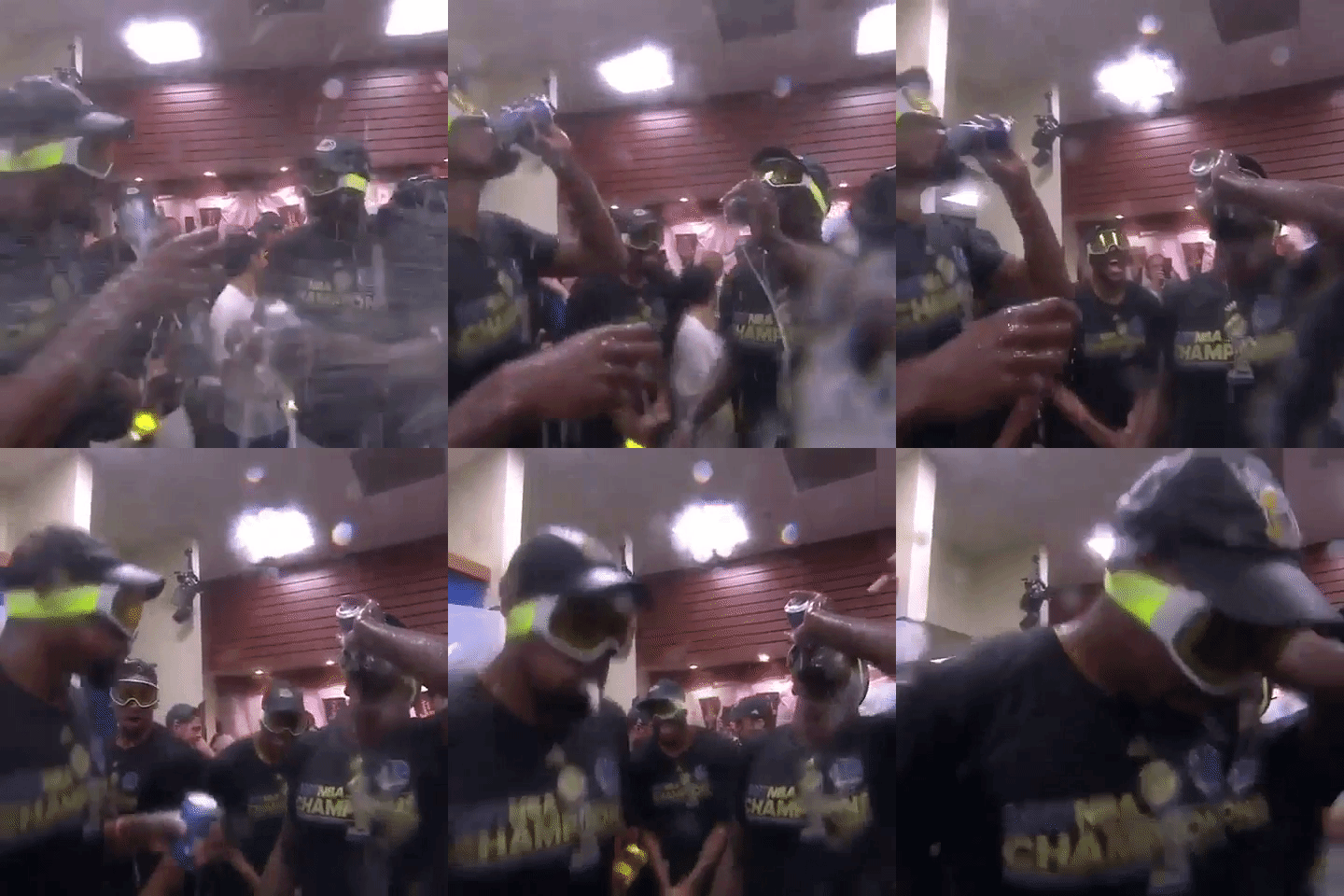
The Stanley Cup is Temporary
I am ashamed that we ran zero stories about the Stanley Cup Final in the previous couple weeks. Playoff hockey is the best thing this side of your baseball team making a World Series run, and we wrote nothing. Piss poor, I say. Here’s a fun little story to partially make up for it.
The best trophy in sports is the Stanley Cup. There’s no debate there. World Series trophy – lame. Larry O’Brien trophy – weak. College Football – I’ve seen better crystal in a retirement home. And the Super Bowl trophy looks like a hood ornament.
No, the Stanley Cup is the best, by a long shot. It’s (kind of) been around since 1892. The names of every player and coach from the winning team have been engraved on the cup every year since 1924. There was a good chunk of time when each winning team added its own ring to the bottom of the cup. As time went on, more rings were added to make room for new teams. More years, more rings added, and so on, until the cup was referred to the stovepipe:
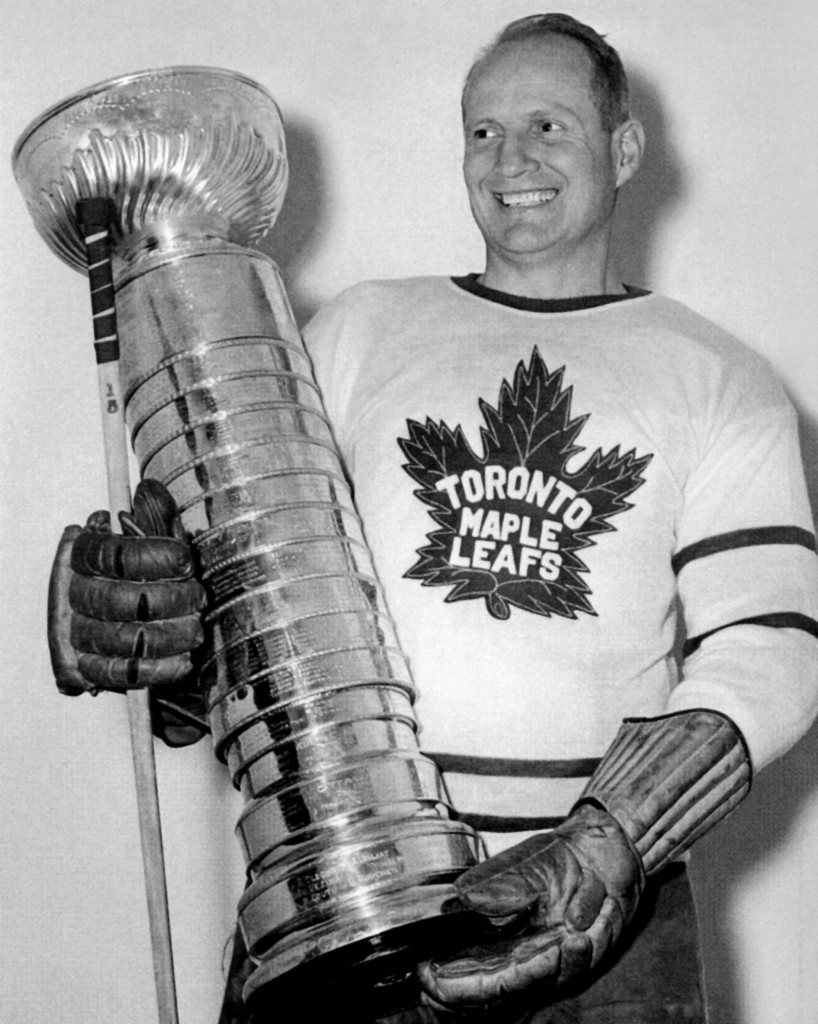
The decision was made to remove old rings from the cup (and place them in the Hall of Fame) and cram multiple years on each ring. Now, each time a ring is added, a ring is removed. All of this begs the question: How tall would it be if none of the rings were removed?
Eight feet, nine inches. I want to be in favor of this, but let’s face it: The thing would look like a men’s softball tournament trophy from Vegas or something. That or a NASCAR trophy. No, that won’t do. Not for the best trophy in all of sports.
It’s likely that members of the Pittsburgh Penguins will be alive when their names are removed from the Cup (2070). That’s the day when some snot-nosed grandkid of theirs will question whether or not grandpa was a great hockey player saying, ‘Then why isn’t your name on the trophy, grandpa?”. Then gramps will pull the kid’s sweater over his head just to show that gramps could get a couple shots in if we really wanted. – PAL
Source: “How Tall Would The Stanley Cup Be If The NHL Never Removed Anyone’s Name?”, Dan McQuade, Deadspin (06/12/2017)
TOB: If it makes you feel any better, I wanted to write a story about what a goddamn fun-hating, whiny little bitch Sidney Crosby is last week, but I didn’t get around to it. We also didn’t too much about the NBA playoffs.
As for the Stanley Cup as a trophy…I think it’s a little overrated. Saying the Stanley Cup is the best trophy in sports is one of those weird hockey-isms that even non-hockey fans have come to accept, without questioning. For example, hockey players are the toughest! Or, no really, you have to see hockey live, it’s soooo much better live! TV doesn’t do it justice!
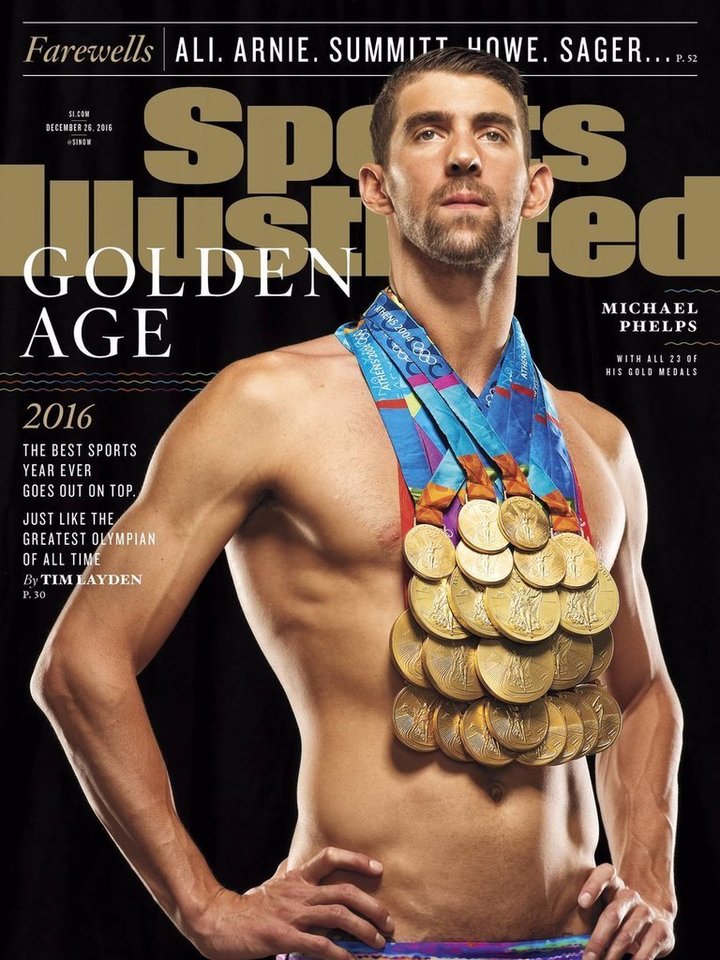
Don’t get me wrong, the Stanley Cup is pretty cool. But as a trophy, it’s unwieldy. Now, the fact that each member of the winning team gets to spend one day with the trophy each offseason is without question the coolest trophy-related practice in the North American team sports. But I don’t think the trophy itself is the coolest. For example, Gold medals are cooler.
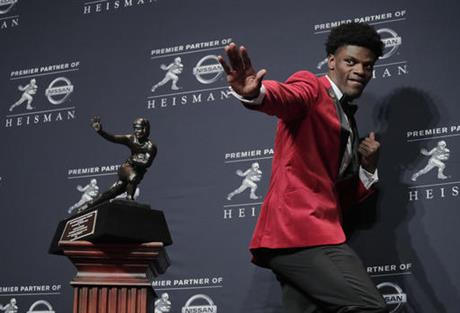
The Heisman is cooler.
Wimbledon’s men’s trophy is cooler, assuming you can drink out of it, which I will believe even in the face of concrete evidence to the contrary.

However, the Claret Jug is, in my opinion, the coolest.

Like the Stanley Cup, the winner’s name is engraved. Like the Stanley Cup, the winner gets it for the year, until the next tournament. Plus, It’s been around longer than the Stanley Cup (1872). And finally, you can, and people do, drink out of it, like the Stanley Cup. But it’s much more manageable than the Stanley Cup. Imagine taking that thing into a crowded bar the night you won. Goddamn. You would be the belle of the ball. And, on top of all that, it’s a JUG, which is many times cooler than a cup. #jugcore.
PAL: Tennis & golf? When did TOB go country club on all of us? I should clarify: Best team sport championship trophy. Medals are a separate matter. While they award athletic achievement, I wouldn’t classify them as a trophy. The Heisman is great, but it’s an individual award and not entirely related to winning games or a tournament.
The Ball is Juiced, Part Deux
Since the All-Star break in 2015, the home run rate in major league baseball has dramatically, and suddenly, increased. You can see in this chart, it’s the biggest 3-year increase ever, including over the end of the dead-ball era, and the beginning of the Steroid Era.
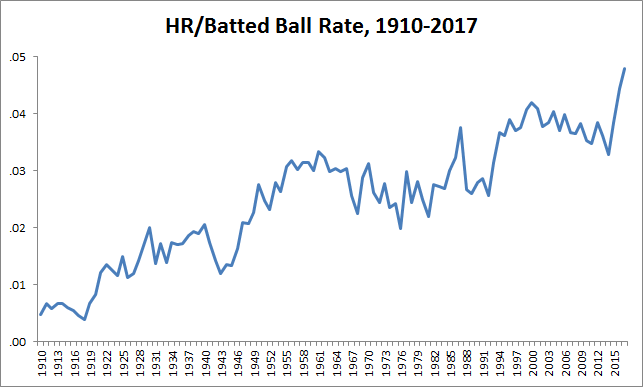
The 2015-post All Star Break gain was so dramatic in fact that it was the largest home run rate increase between a first half and a second half ever, and the rate continues to rise: there have been 2,395 home runs hit already this season, on pace for the most ever. Yes, ever. More than the height of the steroid era. So…what the hell is going on? The 2015 second half home run surge was fueled by a spike in batted ball exit velocity. But why? As you may have guessed, there are some theories. Some have wondered about warmer temperatures, but while that would affect the distance a ball travels, it would not affect exit velocity. Others have opined about a changing strike zone, or widespread PED use, or even the fact that pitchers are throwing harder (but a 1 mph increase of pitch speed only increases a batted ball’s distance by less than one foot).
The Ringer’s Ben Lindbergh, however, makes a very convincing argument that, this time, the ball really is juiced. First, changes in the baseball have produced dramatic changes in offense in the past, including in MLB, Japan, Mexico, and the NCAA. Second, the fact the spike occurred so suddenly, at the 2015 All Star break, suggests player behavior cannot account for the change. Third, the home run levels in AAA did not change, and they use a different ball than MLB. Fourth, the home run levels have risen not at the top of the leaderboards, but at the bottom. As this article notes, “[p]layers who previously had warning-track power might have more to gain from adding extra feet to their flies and regularly reaching that sweet spot than the elite sluggers who were already comfortably clearing the fence.”
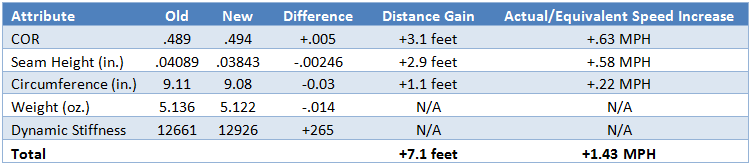
For its part, MLB denies there has been a change in the ball, and claims they have performed multiple studies proving their claims. This article, however, scientifically calls into question those studies. The author of the article purchased a number of game-used baseballs from MLB. 17 balls used before the 2015 All Star Break, and 10 used in May, June, or July 2016. The balls outwardly appeared the same, but they were not:
The testing revealed significant differences in balls used after the 2015 All-Star break in each of the components that could affect the flight of the ball, in the directions we would have expected based on the massive hike in home run rate. While none of these attributes in isolation could explain the increase in home runs that we saw in the summer of 2015, in combination, they can.
OHH SNAP. The newer baseballs are bouncier, have lower seam height, and are smaller, all of which increase the distance a batted-ball will travel.
The ball is juiced! That is some mighty fine journalism. Maybe next Lindbergh can investigate why only San Francisco Giants’ opponents’ pitchers are using the old baseballs, which is the only explanation for the Giants’ moribund offense. -TOB
Source: “The Juiced Ball is Back”, Ben Lindbergh,The Ringer (06/14/2017)
PAL: Whoa, that was one hell of an article. Best thing I’ve read on The Ringer, that’s for sure. I’m convinced the balls are juiced. Also, who gets to make the call to change the circumference of a friggin’ baseball? What?!? Hey, the Twins, a team made up of a lot of WTP guys (warning track power) are hitting bombs left and right and were busy kicking the crap out of the Giants last weekend. I’m good with it. Hell, maybe Joe Mauer can even hit 15 home runs this year while making a gazillion dollars playing an average first base and hitting .280 with no power.
Sir Edmund Hillary Posthumously Hosed
Back-to-back weeks with a mountaineering story! Aside from the mountain itself, the most well-known, iconic characteristic of Mt. Everest is Hillary Step. Named after the Sir Edmund Hillary, one of the first two confirmed humans to summit Everest, the boulder sat perched a mere 200 meters below the summit and was one last major challenge for climbers so close to standing on top of the world.
Turns out, Hillary Step is no more. A 2015 earthquake is likely the culprit. What’s crazy is that it took this long to confirm it. Climbers have a small window, usually in May, when the weather cooperates to summit Everest. In many cases, Hillary Step is covered in snow, so one couldn’t tell for sure whether it was under the snow or not. American climbers summiting this year have pretty clear photographic evidence that the main boulder is gone.

Kind of sucks for Sir Edmund Hillary, doesn’t it? I mean, talk about a bad ass monument. You can have your statues outside of ballparks, hall of famers. Take your spot on Mt. Rushmore, presidents. Sir Edmund Hillary’s monument sat atop the world. – PAL
Source: “American Climbers Confirm the Hillary Step Is Gone”, Jay Bouchard, Outside (6/12/17)
Track & Field’s Surrender
The longest-standing track world record – Jarmila Kratochvilova’s 800 meter time of 1.53.28 (holy crap) – is in jeopardy. Not because there is an up-and-coming superstar tracking it down, but because a group of people want to just erase it from the record books.
“European Athletics made a striking proposal in May to have the sport’s global governing body void all world records set before 2005. That year, storage of blood and urine samples began for more sophisticated drug screenings.”
This is the most aggressive approach to anti-doping I’ve come across. I’ve never heard a proposal for fending off doping in sports that basically says, ‘let’s start over’ and erase history. Is there any better piece of evidence the governing body has no real way of getting ahead of cheating than a solution that looks to correct the past?
I mean, if you want to start over, then really start over. Change the distance of the races altogether. Replace the decathlon with tough mudder. Hell, scrap the name of the sport, too, and sell the naming rights to a sponsor. “Track & Field” can become “Monster Energy Dashes and Obstacles”.
Rant over. The most fascinating part of the article is the legend/backstory of Kratochvilova. She makes Michael Jordan’s will to win look like Nerf ball:
Kratochvilova was born, and still lives, in the village of Golcuv Jenikov. As a girl, she worked on her uncle’s farm, harvesting beets and potatoes by hand. When Track and Field News named her athlete of the year in 1983, the accompanying story by a Czech journalist said, “At 12, she was already able to toss a pitchfork of hay into the loft as well as any adult farmer.”
While working as an accountant and training for the 1980 Moscow Olympics, Kratochvilova sometimes ran beneath streetlights at 4 in the morning before heading to her job. At those Games, even as a part-time athlete, she won a silver medal at 400 meters for Czechoslovakia.
She then began training full time here on a cinder track and forest paths. The stories about her immense willpower and strength are legendary in the track world. And whether they are repeated matter-of-factly, or told with awe or wariness, they remain astonishing.
She sprinted in spiked shoes on a frozen pond when snow covered the cinder track in winter. She ran repeats of 200 meters while dragging a tire filled with varying amounts of sand. To recover from surgery on her left Achilles’ tendon, she dashed through a foot of water in a pool, wore a weighted vest and placed a gas mask over her face to restrict her breathing and raise her pulse rate.
There’s an obvious point that we’re avoiding: In her prime, Kratochvilova was built like a very strong man.

Combine her physique with a record that’s never been broken (or even really seriously challenged), and a state-sponsored doping program, and people are going to draw some conclusions. In fact, take a look at the women’s 25 fastest 800 meter times. Anything stand out?
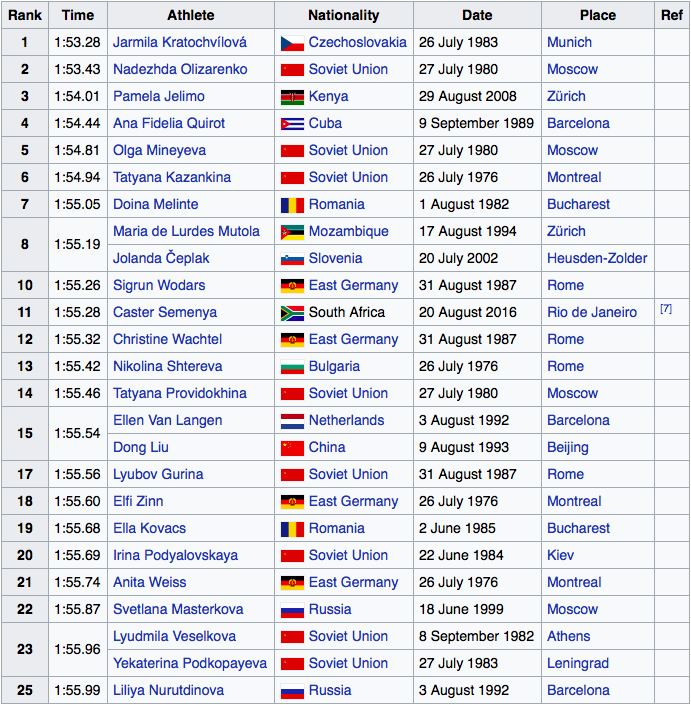
No one’s ever come within a tenth of a second of Kratochvilova’s time in over 30 years. Also, exactly 2 of these times would exist if the proposed measure of removing world records pre-2005 was enacted. Lastly, look at the countries dominating the this list. A whole lot of “Iron Curtain” countries represented.
So, while the suggestion of wiping away all world records before 2005 is absurd, I can understand the path that led to absurdity. Still, you just can’t just take a record away based on era and geographical generalizations. If they had something on Kratochvilova, it would be different, but they don’t.
The hard part is we’re in the general vicinity of Barry Bonds/Lance Armstrong territory (no positive tests). But I’d rather be fooled than be a sports pessimist. – PAL
Source: “Track’s Most Resilient (and Suspect) Record Is in Danger”, Jeré Longman, The New York Times (06/15/2017)
TOB: This is pretty appalling, as it judges everyone before 2005 (which is not that long ago) as guilty of doping by association. Is Kratochvilova’s record legit? Hell if I know, and that’s the point. As the article points out, there is “no proof that every record set before 2005 was aided by doping and no guarantee that every record achieved since then was unassisted by banned substances.” What of Mike Powell, the long jump record holder? As we profiled here last year, Powell’s record is unlikely to ever be broken because it takes years of specialized training that no one wants to put in, because why strive to jump 30 feet when 27 feet will get you a gold medal? Now? Powell’s record will be gone. As will Bob Beamon’s behind him, whose record stood from 1968 until Powell broke it in 1991. The new record would be Dwight Phillips, at 28 feet, 8 inches, back in 2009.
As for Kratochvilova, the evidence against her is sparse. There is a document from 1984, a year after her record was set, with Kratochvilova’s name on a list of athletes “who were to” undergo “specialized care”, believed to be doping. On another document, showing an internal doping test given to Czechoslovakian athletes in 1987 to ensure they would pass drug tests, Kratochvilova’s test was negative. And, there are no documents “showing that (Kratochvilova) signed a consent form, as required, to participate in the doping program,” and “no document showing dates and doses of drugs administered to” her. Whether she doped or not, I find this to be a compelling point:
Nekola, the Czech antidoping expert, said any revocation of records should carry an asterisk. It should be clearly stated, he said, that athletes participating in state-sponsored systems were victims. That they were treated like “guinea pigs,” essentially left with no choice if they wanted to remain at the elite level and enlisted in a scheme where sport could not be separated from Cold War politics.
“If we cancel the records, automatically athletes will be the guilty ones in the eyes of the public, but the true guilt lies with the system,” Nekola said.
He added: “I do not want individual athletes to be judged. But I believe we must judge the system that required them to take banned substances.”
The Baseball Scout Glossary
Vice Sports polled several baseball scouts and compiled the best scouting terms.

This is hilarious. Here are my favorites:
“High Ass: No, really, stop laughing. This is a term. Alternately referred to as “high back pockets” or a prominent “lower half,” having a big posterior is said to portend good power potential. But it’s more than a little weird when you think about a grandfatherly scout using the term on a teenage prospect.”
“He’s a baseball player: Though it would seem to apply to anyone on the field—I mean, is everyone else playing a different sport?—this sentiment is intended to be a noble compliment conveying an evaluator’s utmost respect for a prospect, often connoting intangible skill or countenance that exceeds his physical tools. In Dollar Sign on the Muscle, a Phillies’ scouting report on Bip Roberts praised him because, among attributes, he “can run, play defense, play baseball.” Yes, play baseball, indeed.”
“Red Ass: A fiery, argumentative, hard-nosed player is said to be a red ass, a term that apparently dates to at least the 1920s. (See: Lo Duca, Paul)”
“Hyphenated names: Two incredulous scouts said they’ve heard peers speculate that conjoined appellations are indications of poor potential. One of the scouts summarized the ridiculous thinking as follows: neither parent is an Alpha, so they’ll allegedly lack a killer instinct. Really. We don’t get it, either.”
“Redhead: Another insane marginalization of an entire subset of people: some scouts are said to shy away from red-headed ballplayers, apparently because of an inability to cope under the hot summer sun. (Speaking as a ginger, I do go through an awful lot of sunscreen . . .)”
“Has an idea: Having an idea suggests a player has know-how. Often this is used to discuss his hitting approach and strike-zone discipline. It also means his brain is working.”
“Milk drinker: A scout told Perkin that he prefers players who aren’t too wholesome and have an edge.”
That last one made me laugh out loud. I hope you enjoyed this as much as I did. -TOB
Source: “Good Face, High Ass: The Baseball Scouting Glossary”, Joe Lemire, Vice Sports (06/15/2017)
PAL: In scouting for 1-2-3, we ultimately had to pass on writing prospect Ryan Rowe. Here was my analysis:
While he has an idea around the written word, but his arm slot while typing utilizes the inverted W. He’s got plus stuff, but worried about carpal tunnel in near-to-mid term. He’s not a milk drinker, and some scouts consider him a toolshed, but in the end it’s a can or can’t. Don’t think he’s ready, and I’ve never seen a prospect with a lower ass.
Baseball Art
Video of the Week
PAL Song of the Week: Cake – “Stickshifts and Safetybelts”
Like what you’ve read? Let us know by following this blog (on the right side, up near the top), or:
Email: 123sportslist@gmail.com
Week of June 9, 2017

“Moon Landing”: Sacramento Rock Climber Alex Honnold Just Did The Unthinkable

Do you remember the first time you drove through Yosemite Valley? I do (and if you haven’t been, then let me know. I’ll gladly take you there). It’s awesome, and not in the colloquial way. The beauty is spiritual. The monolith walls of granite form almost a right angle with the valley, towering so severely that you have to stick your head out of the car window to see the top. The scale and power and art of it all seem impossible, and yet there you stand, craning your neck to the heavens saying to yourself, ‘My god…”.
At the center of it all is El Capitan. It is one giant piece of granite extending 3,000 feet straight up from the valley. Alex Honnold, a Cal dropout from Sacramento and the goofy, unassuming face of rock climbing just climbed it with no ropes. Free solo.
Mark Synnott of National Geographic classified it as perhaps “the greatest feat of pure rock climbing in the history of the sport.”
One world class climber referred to it as “the ‘moon landing’ of free soloing”, and another said “I really don’t see what’s next.”
Honnold is an incredibly skilled climber, world class to be sure, but that’s not what separates him from every other climber. “[N]o one else has matched [Honnold’s] ability to control fear. His tolerance for scary situations is so remarkable that neuroscientists have studied the parts of his brain related to fear to see how they might differ from the norm.”
By all accounts, Alex Honnold just achieved the rarest of accomplishments: He took something that was impossible and made it possible by himself. So why am I so conflicted to admire it?

I brought this up with Natalie the other day on our drive to dinner. We talked about the moon landing comparison. They had no idea what would happen when they got out there. What would the landing be like, what would happen when they set foot on the moons? A new frontier. I don’t think Honnold’s free solo of El Cap is the moon landing. El Cap has been climbed after all. Many elite climbers have completed his route, just with ropes in case something happened – be it the climber being overmatched or something completely out of the climbers control.
Is it like Roger Bannister’s 4 minute mile? I don’t think so. While a pulled hamstring or a headwind out of nowhere would keep him from running a fast time, the loss was a new benchmark, not a life.
The best comparison I can come up with is Philippe Petit. He’s the guy who tightrope walked between the Twin Towers in 1974 (there’s a fantastic documentary on Petit – Man on Wire). His response when asked why: “There is no why.”
In many of us there is a fear of average. In a few of us there is a competition to be great. Then there is the rarest of all: Those that must do something that’s never been done. To them, dying suddenly in pursuit of what’s never been done is better than dying gradually doing anything less.

We are captivated by Honnold for one primary reason. If he falls, then he dies. That says a hell of a lot more about us than it does about him. Or is there something more to it? I don’t know. I really don’t. I would bet that Honnold’s response to that would be similar to Petit: There is no why.
One last interesting tidbit. I once met Honnold. I’m novice climber, and I like to boulder at lunch. One day, about four or five years back I was at Dogpatch Boulders. Super quiet day at the gym, and one section is blocked off. I didn’t know who it was at the time, but Honnold was being filmed for an interview. I went off to climb in another part of the gym, and after a while he’s climbing a route near me. I realized who it is at that moment. We’re pretty much the only people climbing. On the ground, he appears scrawny, and then he gets on the wall and you can see his shoulders and biceps. But most of all, you see his hands. I’ve never seen muscular hands before. At least that’s how I remember them. For a moment I consider asking him for a climbing tip, and it felt comically wrong.
I told a buddy it was like testing out a guitar at a shop – doing your best little riff – only to find Jimi Hendrix plug into an amp next to you. What do you do? You don’t ask for an autograph, because you’re not nine years old. Here’s what you do: You acknowledge that what you do and what he does is in not in any way similar, so there’s no tip to ask for. – PAL
Source: “Climber Completes the Most Dangerous Rope-Free Ascent Ever”, Mark Synnott, National Geographic (6/3/17)
TOB: I have to admit I was taken aback when I read Phil’s slightly unimpressed take on Honnold’s feat. In comparing what Honnold did to a moon landing, I actually think what he did was more impressive in challenging what seems humanly possible. This may be showing my age – when I was born, we had long since landed on the moon, and doing so had even become boring. My parents, for example, may strongly disagree with this opinion: I think the astronauts themselves get way too much credit here (yes, I’m splitting hairs). But, before the Apollo 11 landing, we sent plenty of craft up to space, unmanned and then manned, orbited the moon, and came relatively close to a landing. The Apollo 11 astronauts flew a largely automated craft farther from earth than anyone ever had, and then landed it some place no one had been. That’s cool. But, thousands of others did the math/engineering to make it happen, and we had run plenty of tests to understand what would happen.
Conversely, Honnold did this climb solo. Like Phil, I’ve been to Yosemite and I’ve seen El Capitan. What Honnold did is just not fathomable to me. Any mistake and he’s dead. There is zero room for error. And he did this QUICKLY. In less than four hours. He sorta made it look easy, which it of course is not.
And I think it’s certainly better than Philippe Petit’s tightrope between the the World Trade Center towers. In the same way Honnold somehow turns off the fear center of his brain, certainly Petit’s walk is impressive. But, on some level, a tightrope over 20 feet is the same as over 1,350 feet, as Petit’s was. Consider – Petit performed up there for 45 minutes. He freaking danced. This was easy for him.
But Honnold’s 2,900 foot climb is not the same as a 2,900 foot climb elsewhere. It’s not just the fear of death – I’ve seen pictures of his climb and I can’t even fathom how it’s possible. Granted, people have done it. But with ropes, you have the courage to make a move that might fail and know you will (probably) be ok. WIthout them? It’s hard to get my brain around. Phil posits that we are captivated by Honnold because if he falls, he dies. I don’t agree, at least not with the implication we are excited by the fact that life and death is on the line. For me, at least, I like seeing things that challenge my understanding of human capability. Honnold absolutely did that.
One last thing: My favorite tidbit I read about Honnold’s climb (and maybe this undercuts my point, but whatever): After he finished, Honold said he was planning to work out because he’d only had “four hours of light exercise” but definitely needed lunch first.

But look at his face. I suppose he’s not wrong. That dude is not wired like the rest of us.
The Uninspiring Greatness of Real Madrid
This week, Real Madrid won its second straight Champions League title, its third in four years, and wrapped the La Liga title, as well. Objectively, it is one of the greatest runs in soccer history. If you don’t pay attention to European soccer, you may not know, though, that Madrid’s run has been met with yawns. I don’t watch enough to truly know why, but i’ve had my theories. I am, admittedly, biased. In the Great Soccer Debate of the last decade – Messi or Ronaldo – I am firmly in Camp Nou – the stadium that plays home to FC Barcelona and the greatest soccer player of all time, Lionel Messi. I like Messi because he’s little (5’6”?) and he does incredible things on the field. He’s a true soccer genius – dribbling, passing, moving without the ball, and scoring – and even a novice can see this if you sit down for a game and focus on him. His counterpart, Cristiano Ronaldo, on the other hand, does things with brute force. It’s not as pretty, but it is effective. He’s always a threat to score, but it’s not as inspiring. Also, he comes off as a real asshole. This does not help his case.
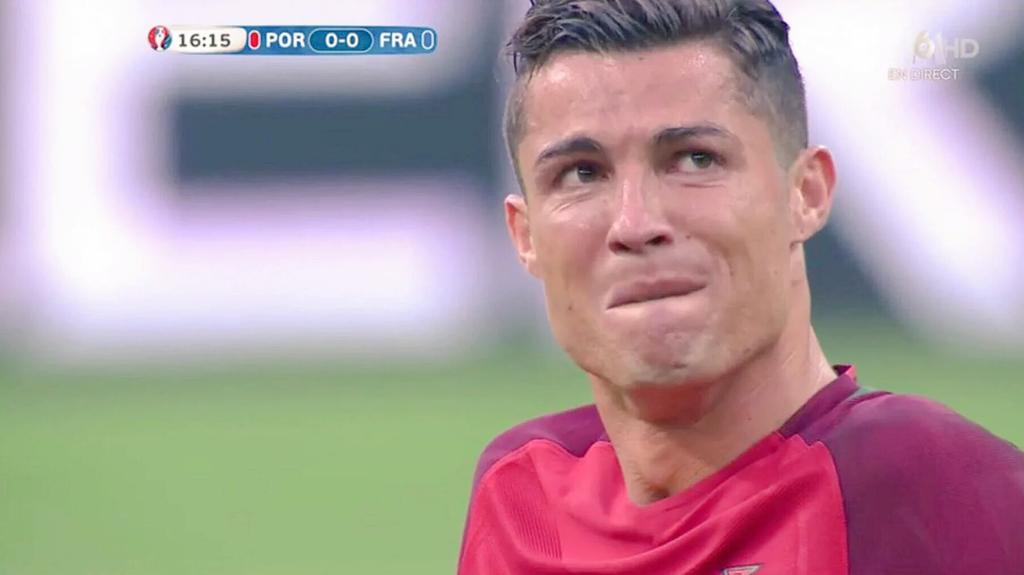
But there must be more, and Deadspin’s Billy Haisley makes a convincing argument. Over the course of soccer history, there have been teams that implemented tactical innovation that changed the understanding of the sport – from the Dutch “Total Football” to Barcelona’s “Tiki-Taka”, and more. These innovations make fans think, “Holy crap, why didn’t anyone think of this before?”
Madrid is not innovative. Madrid was faced with a problem: Lionel Messi, the greatest player of all-time, and needed to figure out how to beat him. So, they threw money at the problem. Gobs of it. They bought everyone they possibly could, even if it meant stashing that player on the bench. Players like Gareth Bale and James Rodriguez are some of the greatest in the world, and out of 29 games, they started only 17 and 13 games, respectively, for Madrid this season. Just sittin’ there, wondering when they get to go in. This is like when the Miami Heat signed LeBron and Bosh to go with Wade, but then if they ALSO signed Chris Paul, Carmelo Anthony, Kobe Bryant, Tim Duncan, Kevin Garnett, and Kevin Durant, and the majority of them played only a few minutes a game, because there weren’t enough minutes to go around.
As Haisley puts it:
When looked at through this lens, it makes a little more sense why this recent-vintage Real Madrid group don’t feel like the era-defining bunch their titles would seem to imply. Their strategy of signing great players and letting them play well doesn’t appear to add much to our understanding of what soccer can be. The only principle Real’s success stands for is that incalculable (and to all but four or five top-top-top clubs, impossibly expensive) greatness of talent begets great success. Which is a fine and self-evidently true principle, but it doesn’t point one way or the other to where the sport might advance. Real aren’t in conversation with the sport, they are a statement on it, and the statement is tautological: being good means you win, and winning means you’re good.
While reading this story, I couldn’t help contrast this with the Golden State Warriors, who as I write this are up 3 games to 0 on the Cleveland Cavaliers in the NBA Finals, one win away from SWEEPING THROUGH THE PLAYOFFS, something I cannot even fathom. I say contrast, of course, because the beauty of the Warriors is that they are a story of so much more than talent. They are great scouting, a lot of luck, and that undefinable quality all great teams must have: chemistry. If you’re not a Warriors fan, you’re rolling your eyes because Warriors fans are sooooooo annoying. I know. I live and work amongst them. But watching the Warriors play is beautiful.
During Game 3 on Wednesday night, it looked like the Cavs might pull it off (it being win a single game in the series). Up six with just over two minutes left to go. LeBron and Kyrie Irving had played spectacularly. Kyrie, especially, had some amazing finishes at the rim. But they each burned so much energy to get those buckets. The Warriors, on the other hand, implement the concept of “pace and space” – move quickly, and stretch the defense by spacing the floor with dangerous shooters and smart/willing passers. Unlike the Cavaliers, they were relatively fresh, and they closed out the game on an 11-0 run that, in hindsight, somehow seems like it was inevitable.
Don’t get me wrong. The Warriors are extremely talented. But, as opposed to Real Madrid, to me their story great talent producing great success. The Warriors have fundamentally changed the way basketball is played. Even if the Cavs had a couple more great players and won this series, in twenty years, people would remember this era as the time when the Warriors changed our understanding of what basketball can be and where it might go. -TOB
Source: “Real Madrid Won Everything and Don’t Have Much to Show For It”, Billy Haisley, Deadspin (06/05/2017)
PAL: It was the next logical step in the big business of sports. To a lesser degree, this has been happening for a little while now (Yankees and Heat are the first to come to mind), but it could be most problematic for basketball and soccer. Kevin Durant has made it perfectly clear in this playoffs the impact of adding one great player to a sport where only 5 guys are on the court for each team. And there’s even money in soccer “over there”. With no salary cap, Real Madrid – the Yankees of organizations – can spend just that much more money.
I overheard the PTI guys talking the other day about whether or not dynasties are good for sports. They both said yes, and referenced the Celtics, UCLA, the Lakers, the Patriots. Dynasties are interesting as archives. We talk about the Yankees of the 20s (and 30s and 40s and 50s) or the Celtics of the 60s as some of the greatest teams of all-time, but we didn’t see it – we’re just counting championships and regurgitating stats. Dynasties can also be interesting when there is a real rival. Lakers had the Celtics in the 80s. The rivalry is what made it legendary, not the amount of rings.
Super interesting read and cool context to consider the Warriors as they approach history. Great writing, too.
Dream Job: Going Deep

This, by far, is the best writing assignment I’ve ever come across. Writer Michael McKnight was paid by Sports Illustrated to try to hit a homerun out of a major league ball park. Tough gig.
Turns out, it was tough, but one man’s home run odyssey makes for a super fun read. Here are just some of his challenges:
- He needed to learn how to hit.
- He needed someone to pitch to him (pitching machine homers don’t count)
- He needed to do it with with a wood bat, which meant he needed (a lot) of wood bats
- He needed a Major League ballpark to allow him to take BP
- He needed to get into shape
Let’s start with the swing. It starts brutal, and it didn’t get much better looking along the way, but the local batting cage owner pointed out, “We’re not trying to make you a .300 hitter. All you need is one.”
I give McKnight a lot of credit. He worked on his swing every day for a long time (we’ll get to just how long in a moment). At the cage, off a tee in his driveway, and at the local high school fields. It was cool to hear about some relatively advanced technical hitting concepts being applied to an average dude. And the dude put in work.
His odyssey also took him to Baton Rouge to visit the bat makers of Marucci bats. They gave him a tutorial on what separates a pro bat from a bat we buy at a local sporting good shop, and sent him home with 20(!) bats. Wood bats are unforgiving, and McKnight found this out quickly. You hit a ball off the end of the bat or up the handle – just a couple inches from the sweet spot – and a wood bat is breaking. He was going through $300 Marucci’s like snack size Snickers.
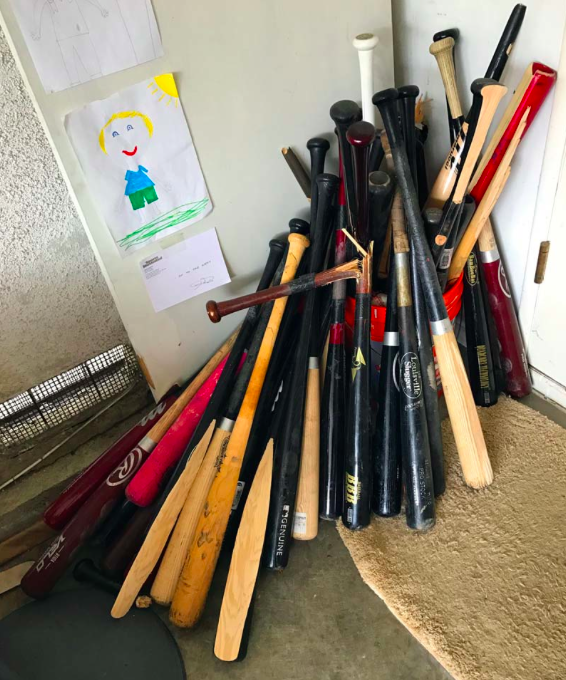
And he needed a ballpark. The Dodgers said no, because they are snobs and, in the words of Clark W. Griswold, wouldn’t know a good time if it came up and bit them.
The A’s said yes, because of course the A’s would (and it’s not like anything else is going on at O.Co Coliseum).
He came up short, but then got another chance when the Astros gave him a date. Short porch in left at Minute Maid, but also a higher wall.
After 15 months, 384 days, and over 30,000 swings, McKnight did it. That SOB did it, and now I’m very jealous that this guy, with that swing, got to take BP at not one, but two big league ballparks and hit a homerun. Nice work, Michael.
This wasn’t about me as much as it was about what’s possible for any of us. Those athletic feats we watch the pros execute effortlessly: How hard are they for a layperson to pull off? How much work is required to even come close to landing a triple Axel? If your tax-attorney neighbor trained hard enough, could she hit a contested three in a WNBA game? Could she hit five? Would she raise “three goggles” to her eyes and jaw at her defender as she backpedaled on defense?
But more than any other demographic, this Home Run Project was for overwhelmed, under-rested parents such as myself who wonder, What could I have accomplished had I chosen a more athletic path? It’s for those among us who yell at our TV screens—You can’t take that pitch! You gotta crush that!—forgetting how impossible it is to swing a round bat and strike a round ball snaking by at 90 mph.
Now that I think about it, and wonder who’s feat was more improbable: Alex Honnold free soloing El Cap, or Michael McKnight hitting a homerun. – PAL
Source: “How to Homer”, Michael McKnight, Sports Illustrated (no date given)
TOB: As Phil said, this was super fun, and I urge you to read it. But know this: that epic troll-job at the end did not go unnoticed, PHIL.
PAL: Whatever it takes to get new readers.
Video of the Week: Elton John releases video for ‘Tiny Dancer’ 40 years later. I loved it. TOB liked it.
PAL Song of the Week: Charlie Rich – ‘Behind Closed Doors’
Like what you’ve read? Let us know by following this blog (on the right side, up near the top), or:
Email: 123sportslist@gmail.com
Week of June 2, 2017
Mission: Accomplished (?)
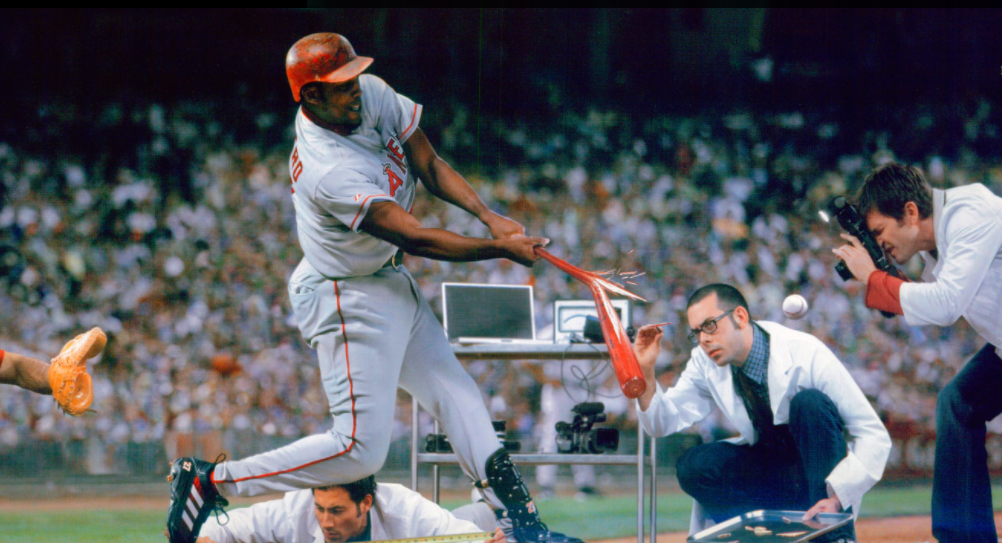
Now that the Astros are in first place and laying waste to the rest of baseball, this is an interesting read. Written in 2014 in the midst of the Astros rebuild, the final year of a 4-year stretch in which they lost 416 games, Ben Reiter got Moneyball-level access to the Astros braintrust as they prepared to make an unprecedented third straight #1 overall pick in the draft. The Astros considered 4 players and weighed the merits of each, using their blend of analytics and traditional scouting: Carlos Rodon, a college pitcher, Alex Jackson, a high school outfielder, and Brady Aiken and Tyler Kolek, high school pitchers. They eventually settled on Aiken, despite their reservations about taking a high school pitcher – historically a very risky pick. It’s fascinating to read, three years later, because I have the benefit of hindsight to see how they did. So, of course I did.

Aiken, Jackson, Rodon, Kolek
Aiken is a major bust at this point, and making matters worse for the Astros is the fact they never even signed him. After the draft, they claimed their doctors found an issue with his elbow, and so they offered him a lowball signing bonus. Aiken called their bluff, and re-entered the draft the folllowing year. He has since undergone Tommy John surgery and has never pitched above A-ball. Yikes.
Kolek has not fared much better. He went #2 to Miami, also underwent Tommy John surgery, and has also not pitched above A-ball.
Jackson at one point was rated highly enough to warrant me taking him in my keeper league as a prospect, but has failed to develop.He strikes out a ton, and has also not produced the kind of power expected from a player who led the entire state of California in home runs as a high school sophomore. Needless to say, I released him.
Finally, Rodon – the guy they should have taken. Rodon was called up in 2015, and has been a nice addition to the White Sox rotation, if not a star. He strikes out just over a batter an inning, doesn’t walk many guys, and has a career ERA of 3.90.
All told…yikes. I wouldn’t be too harsh on the Astros, though. I checked – it was a pretty bad draft. Not many of the guys are even major league starters, let alone stars. Interestingly, Houston’s #1 overall pick from the previous season, Stanford’s very own Mark Appel, has also been a complete bust, never appearing in the majors, with a career minor league ERA of 5.27 and a K:BB ratio of just 2:1. Houston finally gave up on Appel last year, and he’s in the Phillies’ system at present. So, the Astros did a complete rebuild and got zero from two straight #1 picks, making their current destruction of the league all the more impressive. The players leading the charge are featured quite a bit in the article- then-prospects like Jose Altuve, Carlos Correa, and George Springer were so promising at the time that Sports Illustrated even wrote, at the end of the article, a fake “Dispatch from the Future”, discussing the Astros’ victory over the Cubs in 2017 World Series. That prediction does not look bad, at the moment.
If you read and enjoyed Moneyball, or wanted to read Moneyball but never found the time, you will enjoy this look into the braintrust of an innovative, and ultimately successful, baseball front office. -TOB
Source: “Astro-Matic Baseball“, Ben Reiter, Sports Illustrated (07/27/2014)
PAL: Great stuff. I loved Moneyball, and, as Reiter points out, the Astros represent the evolution of innovative baseball analysis. Projecting MLB talent is absolutely gambling. If a player represents a blackjack hand, the team is trying to figure out whether to hit or stay on him.
Definitely worth the read!
The Legend of Frank Deford

“His stories, along with those of other Sports Illustrated writers including Dan Jenkins and Mark Kram, helped raise sportswriting from the daily chronicle of victory and defeat to something with more literary ambition.”
I can’t imagine a more honorable quote for a sportswriter, but Frank Deford wasn’t just a sports writer.
Deford, Jenkins, and Kram set the groundwork for the legend of Sports Illustrated, and the impact of that publication on sports lovers cannot be diluted in the world of Bleacher Report, Deadspin…hell, even 1-2-3 Sports! Box scores are a snapshot, but to those of us with the sports hook firmly set, we want more, and we want more because of the types of stories Deford wrote.
“For Mr. Deford, it wasn’t enough to present in-depth profiles of familiar names, such as coaches Paul “Bear” Bryant and Bobby Knight. He sought to grasp how sports were an inescapable part of the American soul, an emblem of loyalty, aspiration and, all too often, heartbreak.”
That heartbreak was uncovered in Deford’s story on Kirby Puckett’s downfall. It still pains me to read, but you can’t discredit the writing.
I came to Deford when his prime as a writer was in the rearview, and some of his later work could lay the Americana storytelling on a bit thick, the guy was a giant. Here’s to the next who will redefine it for my nieces and nephews. – PAL
Source: “Frank Deford, who wrote about sports with panache and insight, dies at 78”, Matt Schudel, The Washington Post (05/29/2017)
No Fan Left Behind
God damn, this is funny. The morning after the Coca-Cola 600 NASCAR race last weekend, clean-up crews filed in to clean up the mountains of trash left behind. They found the usual – beer cans, etc., but also found tents, a kiddie pool, a woman, a couch. Wait, a woman!? Yes, Jody Nash, whose friends and/or family left her behind. I’m guessing they had difficulty rousing her…but it sure made for a great local TV spot.
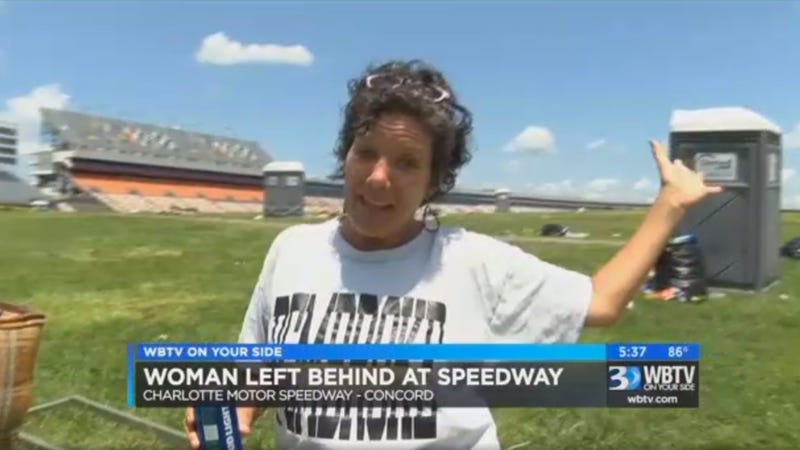
“Hey, Mom, I’m okay!” Nash said, holding a Bud Light. “I’m still here in Turn 2!” Y’all come get me?”
Follow the link for the excellent video. -TOB
PAL: I think we might have to go to a NASCAR race. One of the funniest videos I’ve seen in quite some time.
Source: “Woman Left Behind at Charlotte Motor Speedway“, WBTV (05/30/2017)
Video of the Week
https://twitter.com/Takk/status/870319043177086977
Richmond, California’s own Takk McKinley. I’d be dancing like that, too, if I got a $5.5 million signing bonus.
PAL Song of the Week: Delicate Steve – “Butterfly”
Like what you’ve read? Let us know by following this blog (on the right side, up near the top), or:
Email: 123sportslist@gmail.com
Week of May 26, 2017

On the weekend we celebrate one of our most loyal readers, the many faces of Ryan Rowe.
Yip, Yip, Yip.

ESPN has a very interesting and well-researched story about LeBron James’ free throw struggles this season. Whereas most free throw shooters, especially the good ones, maintain the same pre-free throw routine for their entire careers, LeBron who is right at the league average for his career, has altered his pre-shot routine considerably throughout this season, and even within the same game. Whether it is blowing into his right hand, rocking back onto his left foot, or shrugging his shoulders, LeBron has employed 18 distinctive variations to his free throw routine this season, and he has used those 18 variations in countless combinations. Why? LeBron, shooting only 67.9% from the line, by far the worst of his career, might just have the “yips”.
http://www.espn.com/video/clip/_/id/19417706
It is, surprisingly, affecting how LeBron plays the game. This season, he took only two free throws (on the same trip to the line) in the final minute of a one possession game – way back on December 29. That’s it. That placed him in a tie for 117th, with a couple guys I’ve never even heard of. That’s not normal for LeBron. He’s averaged 18 such shots per season in his career, with as many as 32 in 2007-08. This tells us his free throw woes are changing the way he plays, because he is simply not trying to get to the rim in late and close situations. Could this affect his quest for a fourth title in the rubber match against the Warriors? It very well might.
There was another interesting nugget in this story:
In 1993, a white-haired podiatrist from Long Beach, California, named Tom Amberry etched his name in the Guinness World Records by making 2,750 free throws in a row. In March, Amberry died at age 94, leaving behind a 144-page manual, published in 1996, on mastering free throws. It includes seven steps to successful free throw shooting, stressing the importance of keeping things simple and routine. In a 1994 Sports Illustrated profile, Amberry offered this advice: “You have to perfect all parts of your technique, then it’s just focus and concentration. A free throw takes six seconds, and you can’t think of anything else during those six seconds — you have to put all other thoughts out of your mind. Each shot is a separate shot, and it’s the same ritual every time.”

First of all, 2,750 consecutive free throws made is incredible, moreso for a guy who was 70 years old. Second, I reeeeeeeally want to find that manual. How can someone write a 144-page manual on how to shoot a free throw? I bet it’s insane and hilarious. Someone find it for me. -TOB
Source: “Fifteen Feet of Trouble”, Tom Haberstroh, ESPN (05/19/2017)
Becoming Curry
Danny Chau writes about Game 1 of the 2013 Western Conference Semifinals between the Warriors and Spurs, the night Steph Curry broke out and started to become the unstoppable force we know him as today. Prior to that postseason, Steph Curry was a pretty good, oft-injured, player mostly known for his outstanding three-point shooting, and not much else. He missed the majority of the previous season with the latest in a long line of ankle injuries that appeared to seriously threaten his career, and he was still so skinny that it just seemed impossible a guy his size could ever withstand the physical grind of an NBA season.
I’ll never forget that series, because I was particularly invested in the Warriors’ playoff success. Indulge me. That season, I was involved in a game of Turnerball, invented by my friend, Turner Sparks. Turnerball is simple. Starting at the all-star break, each player picks three teams to win a game, straight up, each week. You cannot pick a team more than once. After the regular season ends, the players then select who they think will win the NBA title in order of their regular season finish in a draft conducted through e-mail.
I had the 9th pick, and I was eyeing the #6 seed Warriors, playing the #3 seed Nuggets. Complicating matters was the fact I was on my honeymoon during the draft, and in fact would be on a long flight when the #7 and #8 selection was to be made. I was hoping the Warriors would be available when I landed. When I did, I turned on my phone and eagerly checked my e-mail. Despite having warned the group of my flight, I had a few e-mails wondering what the hell was taking so long, but I didn’t mind because the Warriors were there.
As I expected, the Warriors pulled the first round upset against the Nuggets (who were selected fifth in our draft). They went on to play San Antonio in the second round, and though they lost, Curry was a one-man wrecking crew. The offense was get Steph the ball, get out of the way, and let’s hope he shoots us to a win. The Warriors absolutely gave away Game 1, and still got the series tied at 2, before the Spurs closed it out in Games 5 and 6.
But Curry put the league on notice. He had arrived. He did things we’ve never really seen before – taking deep, contested threes, and making them over and over at a clip (watch the video above, but the shot at 03:52 into the video is illustrative). He might be my favorite basketball player to watch, and it all started in 2013, coming full circle this week when the Warriors brushed aside the Spurs, albeit without the retired Duncan or the injured Parker and Leonard, in four largely noncompetitive games in the Western Conference Finals. A rubber match with Cleveland awaits, and I can’t wait to see the best team and most exciting player against the best player. -TOB
Source: “The Night Steph Curry Became a Star”, Danny Chau, The Ringer, 05/23/2017
Missed It By That Much

It’s one thing to never come up short on a dream by a lot. Take, for instance, me. I dreamt of playing for the Minnesota Twins when I was a pipsqueak. Spoiler: It didn’t happen. It was never going to happen. I got over it.
It’s another thing to come up short on a dream by the thinnest of margins. That must be a little harder to get over. That’s what Billy Witz’s story is about – the guys who made the last out in a World Series.
We’ve all heard it. Hell, many of us probably uttered the familiar lines while playing in the back yard. Bottom of the ninth. Two outs. Down by 3. And [enter your name here] walks to the plate as the [enter your team] last hope for a World Series…
Michael Martinez, a utility infielder for the Indians last year, lived a real version of that. So did Babe Ruth, Jackie Robinson, Tony Gwynn, Carl Yastrzemski, Willie McCovey, Mike Piazza and Honus Wagner. And they all made the last out of a World Series. Read the story below to learn of the incredible way in which Ruth ended the 1926 season.
This story is also about Martinez, and his journey to that moment when he grounded out to Kris Bryant, ending the Cubs 100+ year championship drought (and extending the Indians 65+ year drought).
Baseball is the best. – PAL
Source: “We All Remember the World Series Celebration. How About the Guy Who Made the Last Out?”, Billy Witz, The New York Times (5/22/17)
The Time Tupac Ran Into the Long Beach Poly Football Team at an In-N-Out in Barstow Just Hours Before He Was Shot

That title was a mouthful, but there’s really no other way to put it – and this is a fun story. Long Beach Poly is one of the country’s best high school football programs, producing tons of talent over the years, including DeSean Jackson, JuJu Smith-Schuster, and Willie McGinest. In 1996, the coaches decided it was time to take the team on their first out of state road trip. They decided to go to Las Vegas, to play the defending Nevada State champions. It was a disaster. A team of mostly inner-city kids from Long Beach staying on the Las Vegas Strip? Yeah, most stayed out all night drinking and gambling…what you do in Vegas. Predictably, the team was listless the next day and got their butts kicked. On the way back, they stopped at an In-N-Out in Barstow. Who happened to be at the same In-N-Out, heading to Vegas?
After the two buses pulled into the allotted parking spaces along the northern side of the In-N-Out, players wearily rose from the green vinyl seats, when Robert Hollie, the Jackrabbits’ backup quarterback, gazed out a window and said, softly at first, “Yo, it’s Pac!”
What?
“It’s Tupac!” he yelled. “It’s Tupac!”
That’s right. Tupac. Pac and his crew happened to be heading to Vegas to see the Mike Tyson/Bruce Seldon fight that night. Suge Knight was there, too. The kids made a bit of a mistake, though:
Hollie and Gary Barnes, a nose tackle, led a dozen or so teammates toward Tupac. According to multiple witnesses, the rapper had his back toward the players and was speaking loudly—and animatedly, with his hands—to the small number of Knight’s Mob Piru members beside him. They were leaning against the black SUVs. At one point, Tupac heard the approaching footsteps and spun. Meanwhile, two of his colleagues pulled out what looked to be Glocks. Hollie, Barnes and the others stopped in their tracks. “Bloods, you can’t be walking up on me like that!” Tupac yelled. “You don’t know me like that!”
“He was extremely paranoid,” Croom says. “He started cursing—he was irate. We were just kids, so it was definitely an overreaction.”
“He yelled, ‘Don’t run up on me!’” Lewis says. “The guys with him were big dudes. Really big.”
According to Rideaux, Tupac looked over the Long Beach Poly group, noted the collective youth and seemed to calm down. Around this point Knight had returned from inside the In-N-Out, and the players were equally shocked to be in his presence. “It was crazy,” Lewis says. “Not your ordinary rest stop break.” Tupac realized the teenage boys did not pose a threat.
“Where are all y’all little niggas from?” he asked.
“We’re from Long Beach,” Hollie replied.
“Oh, so y’all know my homie Snoop?” Tupac said.
A few nodded. They did indeed.
Everyone seemed to take a deep breath. The Glocks were put away.
“When we first approached Tupac, I wasn’t star-struck—I was scared,” recalled Rideaux. “There was this feeling of anxiety and unease. Growing up in Long Beach, you had these moments when the police would pass you and slow down to question you, even though you did nothing wrong. And you get that anxious feeling in your stomach. That’s how this felt at first.
“But because of the way Tupac embraced our group, it got a little lighter. A couple of guys peeled off as soon as they saw the guns and heard him talk angrily. But those of us who stayed around connected with him. It was brief, but it was a little connection. So that was nice.”
Tupac would be shot later that night, and died a few days later from the injuries. Reading the above, I can’t help but wonder – was living in fear like that Tupac’s every day life, or did he know something was up on that particular day? The story reminds me of the time I stopped at a fast food spot in the middle of I-5 in Nowhere, California, and in front of me in line was the WWE’s Big Boss Man and Dustin Runnels aka Golddust. I was not a huge wrestling fan at the time, but I knew them both from when I was as a kid. Still, it wasn’t Tupac. What a wild story. I can’t believe it took nearly twenty years to tell it. -TOB
Source: “Tupac, Glocks, and In-N-Out: A Football Team’s Run In With the Rapper Revealed“, Jeff Pearlman, Bleacher Report (05/23/2017)
Video of the Week
PAL Song of the Week – There’s only one choice on this bachelor party weekend…Banda MS – ‘El Mechon’
Like what you’ve read? Let us know by following this blog (on the right side, up near the top), or:
Email: 123sportslist@gmail.com
Week of May 19, 2017
Worst. Trades. Ever.
This is a quick and fun read – what are the WORST trades in sports history? But I have a major beef with the rankings here. First is the Babe Ruth being “traded” from the Red Sox to the Yankees. I say “traded” in quotes because his contract was actually sold, for $100,000 and a $300,000 loan. It’s a technicality, but I will allow it. It was a horrible decision. But then you continue down the list…Randy Moss from the Raiders to the Patriots for a 4th rounder, sure; Washington’s big trade to get RGIII in the draft, ok. Those are not good trades!
But then you get to #4. In order to draft NBA legend Bill Russell, the Celtics traded their #2 pick and, I kid you not, “a week with the Ice Capades” to the the Rochester Royals for their #1 pick. Uh, what? I needed a little more context, and here’s what I found:
HOLY SHIT. As the article notes, Bill Russell went on to win five MVPs and eleven NBA titles, and is considered one of the greatest players ever. FOR THE ICE CAPADES FOR A WEEK. Mind-boggling. That’s so so so bad. That’s at least #2 on the list, and I will make a strong argument for it being #1 over Ruth to the Yankees if you get a couple beers in me.
Oh, and the Royals eventually became the Sacramento Kings, because of course they did. God damn, we always sucked. -TOB
Source: “Most Uneven Trades in Sports History”, David Ubben, Sports on Earth (05/18/2017)
PAL: Randy Moss is my favorite NFL player ever, and even I would have traded him after his two years in Oakland.
You Ought To Know Steve Palermo

Until this week, I thought I knew nearly everything about the 1991 World Series between the Minnesota Twins and the Atlanta Braves. It is more than just my favorite fan memory. A few of you may have heard me say that Kirby Puckett’s 11th inning walk-off home run remains the moment of my life in which I’ve experience the purest joy. I was nine, so I knew just enough to appreciate the drama of the moment and to have chosen a favorite player in Puckett, but not enough to know that there were more important things to life that the Twins winning the World Series.
The series was incredible: 5 of the 7 games decided by 1 run, 3 extra inning games, and an all-time classic game 7, in which Jack Morris went the distance to shutout the Braves 1-0. It was outstanding.
I never knew the most outstanding story from that series: Steve Palermo walking out to the mound before Game 1 and throwing out the first pitch.
Palermo was a Major League umpire from 1977 until July 6, 1991. He was eating dinner in Dallas after a game between the Rangers and the Angels when he and two friends rushed to help two waitresses who were being beaten and robbed by three men. Palermo and his buddy chased down one of the attackers while the other two attackers fled. They came back and opened fire. One of the bullets hit Palermo.
“Hit me, belt high, and tore a path through my body,” Palermo said. “And then instantly, I was paralyzed. I just kind of melted into the pavement. I knew right away that oh boy, this is serious.”
His doctor told him it was unlikely he would walk again. 3 months later, with the help of braces and crutches, he got himself to the mound to throw out the first pitch of the World Series. At the game, Palermo offered his assessment of his situation to the Pioneer Press:
“If I wanted to get out of this game, that would be one thing, but for somebody to take it away from me like this doesn’t feel right. I’m looking forward to being booed again.”
While he never umpired again, he remained very much a part of Major League Baseball. He worked as Bud Selig’s special assistant, an analyst, and eventually an umpire supervisor. His professional umpire career began when he was noticed umping a Little League game, and he was the third base umpire the day Yankee Bucky Effin Dent (as Boston fans refer to him) popped a home run down the left field line over the Green Monster. Palermo’s dad was a Red Sox fan.
“What, you couldn’t have called in foul?” his dad said after the game.

Steve Palermo died of cancer on Sunday. – PAL
Source: “Steve Palermo, Whose Umpire Whose Career Was Ended by a Bullet, Dies at 67”, Richard Sandomir, The New York Times (5/15/17)
Source: “Steve Palermo, a hero, former MLB Umpire and KC resident, dies at 67”, Blair Kerkhoff, The Kansas City Star (5/14/17)
TOB: A few thoughts:
-Please, don’t be a hero. Palermo says he’d do it again, and would hope others would, too. But, I can’t agree. Helping the woman being attacked was absolutely the right thing to do. But once the attacker fled, it’s not worth risking your life to chase the attacker down. Palermo was paralyzed, and he could have died. For what? Be a good human and help the victim, and then let the police do their jobs.
-Boy, do I love those AL/NL umpire hats. That is classic. I miss when the AL and NL were truly different.
-Phil left out my favorite part of the story about Palermo’s dad and the Bucky Dent home run. After his dad asks why he couldn’t call it foul, Palermo said, “It was, like, 20 feet fair.” His father replied, “So?” Ha!
Francona Better Not Ask Cash to Get His Shinebox
This is so good. Kevin Cash is the manager of the Tampa Bay Rays. He both played and coached under Indians manager Terry Francona. Cash was not a very good major league player. Francona and Cash obviously have a good relationship, because Francona is absolutely killing Cash every time the Rays come to Cleveland. Last year, the Rays were greeted with this message on the big screen:
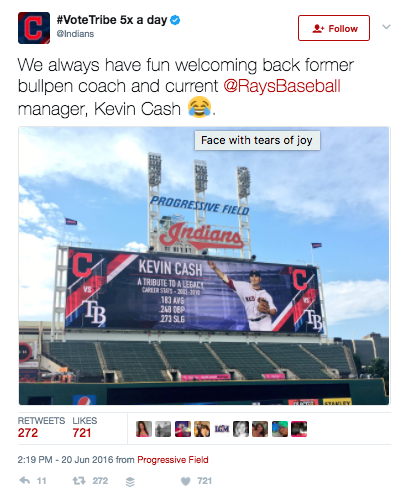
Savage. And this year?
https://twitter.com/MLBastian/status/864212995760586753
God damn, that’s good. But if I were Francona, I’d stop short of telling Cash to get his shinebox.
-TOB
Source: “Terry Francona Won’t Stop Owning Rays Manager Kevin Cash in Increasingly Public Ways”, Patrick Redford, Deadspin (05/15/2017)
PAL: Being an MLB manager sounds like a pretty awesome gig. You essentially get to wear sweatpants to work every day, and you can pull rank on a scoreboard operator. Does it get any better?
Overthinking It
I don’t care about college softball (unlike some fictional presidents), but this story is ludicrous. Add to it that Minnesota is on the wrong end of it, and – well – now you have a 123 post, don’t you?
The U women’s softball team went 53-4 this year. By any measure of baseball or softball, in any level of competition, that’s a hell of a record. Good enough for the team from up north to be currently ranked #1 in the country. And when the selection committee released its seedings, The U failed to garner a top-16 seed in the NCAA tournament. How in the you-know-what is that possible?
A laughable explanation:
When selecting the top 16 seeds the committee emphasizes a team’s performance against Top 25 teams along with other variables including strength of schedule. Additionally, two regular-season rankings were released, however, the rankings are not used by the committee when determining the seeds and final bracket that was released yesterday.
When the committee compared Minnesota against other teams being considered for the top 16 seeds, Minnesota did not have as many regular-season Top 10 and Top 25 wins as compared to other teams. The teams that were selected as the 16 seeds had at least one or more Top 10 wins and between four to 18 Top 25 wins. Minnesota did not have any Top 10 wins and only two Top 25 wins.
Furthermore, Minnesota’s strength of schedule was 114. The top seeded teams had strength of schedules ranging from 1 to 36.
That strength of schedule is glaring—I’ll give the committee that— and ranking sports teams is a subjective pursuit without head-to-head games, and that’s especially the case for a fringe sport like college softball, but give me a break. At some point wins have to matter more than the qualifiers of a win, e.g., quality wins, strength of schedule.
In a sport in which one conference – the SEC – had every single damn team make the tournament, you have the a team that’s ranked #1 in the country in the coaches poll to fail to garner a top-16 seed. Talk about paralysis by analysis. Go Gophers! – PAL
Source: “The Top-Ranked Softball Team In The Country Is Somehow Unseeded In The NCAA Tournament”, Dan McQuade, Deadspin (5/16/17)
TOB: This is just so stupid. IMAGINE. For one minute, that…Gonzaga was ranked #1 in the country. They have a soft schedule every year, and this hypothetical year is no different. But they plow through everyone they play and are ranked #1 in the country. And the Selection Committee decided they were only a 8 or 9-seed. People would go nuts.
But you know who hates this as much as Minnesota? Florida. Florida is ranked #2, and now has to play the #1 team in the first round. So, not only did the Committee not give #1 Minnesota a regional to host, but they put them in #2 Florida’s regional. That means they thought Minnesota is 32nd best team. The only other question I have is for Phil: What does Miami have to do with this story?

Video of the Week:
PAL Song of the Week – Van Morrison – “Real Real Gone”
Like what you’ve read? Let us know by following this blog (on the right side, up near the top), or:
Email: 123sportslist@gmail.com
Week of May 12, 2017
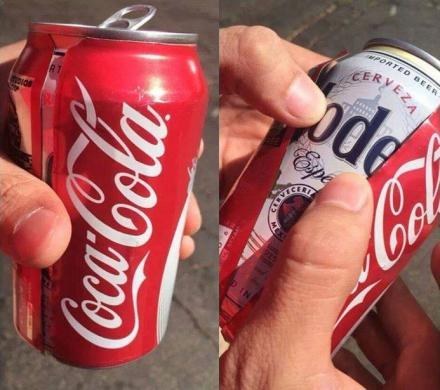
Ingenuity is a beautiful thing.
Big Baller or Big Bluster
We have covered Lonzo Ball and his one-man-hype-machine father, LaVar, before. I thought LaVar was kinda funny. Not everyone agrees. After proclaiming he’d be looking for a $1 billion (yes, with a b) dollar sneaker deal for Lonzo and his brothers (both still in high school) or he’d start his own shoe company, LaVar and Lonzo made the rounds at the big sneaker companies. He…did not get a billion dollars. LaVar reported Nike offered Lonzo a 5-year, $2 million per year deal. The Balls did not accept, and I would have loved to have been in attendance at that meeting.
Instead, this week, LaVar announced Lonzo’s first shoe, on their own “Big Baller Brand”. It’s…fine.

If it was under $80, I might even wear them. Others have pointed out they look like the Kobe 8, which isn’t a bad thing. That’s a nice shoe!

But these shoes are not under $80. Or $100. Or $200. These shoes start at $495. Five hundo!!! For a pair of shoes! And they go MUCH higher. Plus, there is no way to know if they are even decent shoes. It’s not like LaVar Ball has been producing shoes for decades. Five hundred dollars!! GTFOOH. Even funnier, they are also selling these stupid slide sandals for $220.

These are not affordable for most anyone…but that’s kind of the point.
LaVar is attempting to market the shoe as a luxury item/brand – to create a status symbol. I’m betting he will fail spectacularly, but I imagine people thought he was insane when he was guaranteeing his kids would play in the NBA, so who knows. Check out the article, though. It breaks down why Lonzo’s offer from Nike was so small (compared to, for example, John Wall’s $15 million per year deal given before he played a game). The economics simply don’t make sense for shoe companies, unless you become a true star who can give your company credibility. -TOB
Source: “Why the Hell Are Lonzo Ball’s Sneakers $495?”, Dan McQuade, Deadspin (05/05/2017)
PAL: The Balls are DIY, and I’m all for that as a business philosophy. We need more of it! The problem is that LaVar Ball doesn’t know his product, and he’s impatient. That’s a dangerous starting point for a business.
The value of Big Baller Brand (a cringeworthy name) is currently based on one unknown data point: Lonzo Ball’s ability to excel in the NBA. If he appears to be a transcendent player next year, then BBB has a slim chance of success, and that’s looking past, as one expert notes in McQuade’s article, the fact that LaVar knows nothing about the sneaker business. I’m not sure Lonzo being great is good enough. As McQuade’s article points out, there are a lot of great players in the NBA who can’t push shoe sales.
It’s reported that LaVar was not just looking for an endorsement deal from the likes of Nike, Adidas, or Under Armour; rather, he wanted them to license Big Baller Brand. Do you think the execs openly laughed him out of the room when he made that demand, or texted each other what a piece of work during the meeting?
If LaVar was looking to negotiate with the big three shoe companies, or — better yet, a bidding war to ensue — then he grossly overestimated his leverage.
I can understand two options for the father-son duo (let’s keep the younger Ball boys out of this for the moment):
- Play it safe. Take the $10MM as an insurance policy and renegotiate after the 5 year endorsement. If Lonzo’s for real, then he’s essentially a sneaker free agent in the early stages of his prime. That’s when you have the leverage. Worst case scenario, Lonzo has a career ending injury day 1 and you walk away with millions.
- You bet on your son. Don’t take the $10MM. Put every ounce of energy making sure Lonzo is ready to kick ass game 1 of his rookie season. He has a fantastic first half of his rookie season. Surpasses the hype and he’s a legit MVP candidate. At that point you go back to the shoe companies with some leverage and demand the licensing deal + a whole lot more money. Or, you launch Big Baller Brand with some some juice that’s based on actual performance.
The path they chose doesn’t make business sense to me, and that’s why I don’t buy LaVar when he says it’s all about his kids. Right now, until Lonzo steps on an NBA court, it’s about LaVar. That’s why they launch Big Baller Brand now. That’s why he makes foolish demands with companies that have a pretty good idea of how to market athletes. He doesn’t want to wait, and marketing his son is his job right now. Waiting either minimizes the father’s role as a public figure (at that point, it will be about Lonzo the player), or worse, demonizes him as a father who got in the way of his son’s ability to succeed.
Back At It Again

The Golden State Warriors are sweeping their way towards a NBA Finals for a third consecutive year (8-0 in the playoff so far). They’re stacked with talent: 4 of the 5 starters were All-Stars this year. Some would argue that anyone could coach this team to a championship, but head coach Steve Kerr has played a major role in turning a 50-win team team into a historically great, championship team. I include him in the “stacked with talent” category.
As many know, Steve Kerr is not coaching the team right now. He had back surgery in July of 2015, and it did not go well. He missed 43 games last year, and now he’s missing the playoffs this year due to nausea, head, and neck pain stemming from the original surgery. He had a corrective spinal-cord-leak procedure at Duke last week (how terrible does that sound?), and there’s no timetable for his return.
The Warriors are on a historical run that Kerr’s leading, and it’s so strange to see such large chunk of it take place in his absence. When his coaching career is complete, I’m sure some hot take talking head will look to minimize his success due to his absence, and that will be dumb argument. Even while away, Kerr is making his impact known.
He’s watching tape, strategizing offensive schemes and player rotation with acting head coach Mike Brown. He’s also communicating directly with players. It all makes for a easily written story—Kerr’s impact is felt in his absence—but I just come back to how difficult it must be to be put in such a great coaching position (his first coaching gig), only to have to watch from afar, especially for a former player whose professional life has largely taken place on the court.
Suffering through greatness. This also seems to be foundation of Kerr and Bob Myers (GM) friendship.
I would be shocked if the Warriors didn’t cruise to another championship, but I wouldn’t be shocked if Kerr isn’t on the sideline to see it, and that doesn’t seem right. – PAL
Source: “Warriors’ Steve Kerr trying to help without imposing orders”, Connor Letourneau, SF Gate (05/09/2017)
TOB: This whole story has me very sad. As longtime readers (3 years!!) of this blog know, I am a huge Steve Kerr fan. I don’t have much else to say. I have actually avoided clicking tweets or links about Kerr, because I don’t want to read bad news. I am hoping his body will heal, and he’ll return to continue making the game of basketball even better.
Talent > Technology

Nike wants to own the first sub-two-hour marathon. It is the driving force behind a multi-year marketing campaign called “Breaking2”, and last week they put on quite a show.
The concept: Create the absolute ideal conditions to run the fastest marathon possible. It would not count as an official time, but that was not the point. If you asked Nike, it was about human potential, and as Sarah Barker points out, it’s also about selling merchandise through a production of awe.
Nike announced their plan to breach the two-hour marathon six months ago, though they said they’d been working on it since 2014. They made soaring statements likening their mission to a moonshot, Roger Bannister’s four-minute mile quest, a dreamer’s starry-eyed push at the limits of human potential, but let’s face it—Nike is a retailer, first and last. The plan was to control external factors—weather, altitude, course—and apply the latest and greatest shoe and clothing design, hydration, fueling, training techniques, pacing strategies and physiological knowledge—all with marvelous retail potential—to already accomplished athletes. They chose Kenyan Eliud Kipchoge, Ethiopian Lelisa Desisa, and Eritrean Zersenay Tadese, in the same way they chose the Formula 1 racetrack in Monza, Italy, as the perfect parts for their marketing machine.
I’ve watched chunks of the race (it’s worth skimming through here). It’s essentially a three-hour Nike advertorial mixed in with live footage of the runners making laps on a Formula 1 track. Pre-taped features on the science, the gear, the nutrition, and short bio features on each of the runners. It’s heavy-handed, but done cool and interesting in a way that Nike has mastered over the years. It motivates you to run, but only after you buy some new-fangled Nike shit.
Of the three runners, only one – Eliud Kipchoge – finished the race within a shouting distance of the pacers (the pacers would rotate in 5K increments). His time: 2:00:24. With the current world record standing at 2:02:57, it may seem like we’re very close to breaking the two hour mark. We are not. Running – not racing – on a closed track in ideal settings with a pelaton-like wall of world class runners to draft off of is far from racing. I’d say it’s a 50/50 shot that a clean 1:59:59 marathon happens in our lifetime.
Barker’s beautifully written article is not only a dissection of the infomercial, but the surprising conclusion. While Kipchoge did not succeed in Nike’s “moonshot” (its comparison), watching a generational talent do the one thing he was seemingly born to do under ideal conditions is mesmerizing:
It was the Kipchoge show. The commentators blathered endlessly about Nike science, but that all went out the window the minute the camera focused on Kipchoge. Nike’s gimmickry did little for the other two unfortunates, which was driven home like a knife with every velvet step Kipchoge took. Flying on after 30K, faster than any human had ever run, it was increasingly clear that this part, going over the wall where the strain on mind and body must have been excruciating, this was about one extraordinary athlete. The shoes, all that, had fallen away, useless, silly. What was happening was not Nike-made, and had very little retail potential. It cannot be reproduced on others. Though no doubt unintended, Nike produced a two-hour opus by Kipchoge, on Kipchoge.
Good work, Kipchoge. Good work, Sarah Barker. – PAL
Source: “Nike’s Two-Hour-Long Eliud Kipchoge Documentary Was Beautiful”, Sarah Barker, Deadspin (05/08/2017)
It’s Back: The WHL Bantam Draft Name Game
We covered this last year, too, and it’s still so goddamn funny. The WHL recently held its Bantam Draft (14-15 year olds), and the names are so stupid and hilarious. God damn you, white people. As Barry Petchesky points out, “This is a snapshot of a time and place: naming conventions in the American and Canadian Wests (including Mormon Country and the Prairie Provinces, crucially) circa 2002.” Behold:
There are FOUR different ways to spell “Kaden” and FIVE different ways to spell “Braden”. As Petchesky says, “We will have a President Braeydaen in our lifetimes.” I can’t argue.
Other highlights: Cohner. Come on, what? TRUE!!!!! They named their kid TRUE.
Nurse: You need to come up with a name for the birth certificate.
Parents: Oh, that’s true.
Nurse: Got it, thanks.
There is a Talon and a Talyn. There’s a kid named KRZ. WHAT THE HELL COME ON. KRZ??? What kind of name is that? Oh god, it’s pronounced “Cruise”. I am dying laughing. A kid named Cannon? Ok, actually, that’s pretty dope. If only LaVar had named one of his kids Cannon. -TOB
Source: “The Future of Hockey Remains a Bunch of Kids With Irritating Names”, Barry Petchesky, Deadspin (05/05/2017)
PAL: People can name their kids whatever dumbass name they want. I feel the same way about standard names as I do about people without tattoos. In 10 years, nothing will be edgier than a tattoo-free college student named John.
The thought of an expecting couple in bed kicking around these names, then talking about the spelling of the name has me laughing out loud right now.
You know what the shit of it is? Krz might grow to become a grounded, generous, kind person, and I would never know it because it would be damn near impossible to get over that first impression.
Machismo and the Mexican Fighter

Art by Jim Cooke/GMG; photos via Getty/AP
This is a great article putting Julio Cesar Chavez, Jr.’s blowout loss last weekend to Canelo Alvarez into historical context. This article explores the Mexican psyche, the origins of “machismo”, and goes in-depth on the 1996 fight between Oscar de la Hoya and Julio Cesar Chavez (Sr.), including why Mexicans and Mexican-Americans embraced Julio Cesar Chavez and considered Oscar de la Hoya a “gringo”. I urge you to set aside 45 minutes and read this. -TOB
“Julio Cesar Chavez, Jr. Lost So Much More Than a Fight“, Roberto Jose Andrade Franco, Deadspin (05/11/2017)
Video of the Week
PAL Song of the Week: Bob Dylan – “Abandoned Love”
Like what you’ve read? Let us know by following this blog (on the right side, up near the top), or:
Email: 123sportslist@gmail.com
Week of May 5, 2017
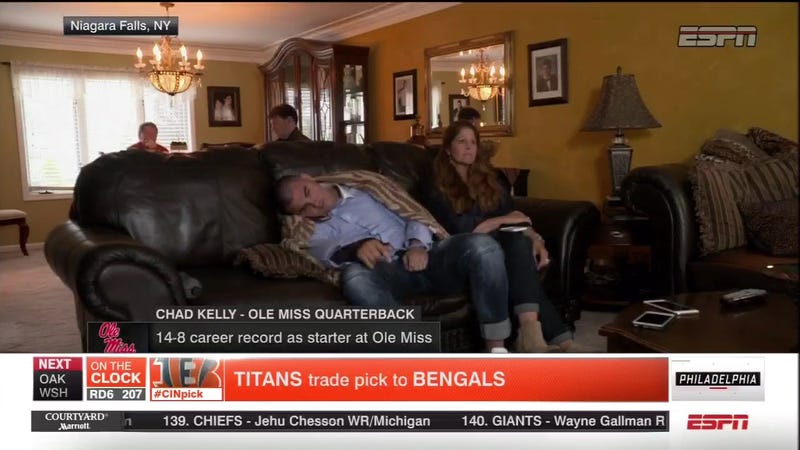
That’s how I’d look if I watched 206 picks of the draft (Kelly was this years Mr. Irrelevant – the last player selected)
Bad is Good

One of my favorite stories of 2017 so far. Karen Rinaldi is a “kook” surfer. That’s slang for someone who’s not good at surfing. It took her five years to catch her own wave, and she’s far from good now, but she loves it. It’s not just the sport that she loves, but what it gives her: The freedom from a world polluted with perfection.
When I do catch a wave and feel the glide, I’ll hold onto that feeling for hours, days or even weeks. I’m hooked on the pursuit of those moments, however elusive they may be. But it’s not the momentary high that has sustained me. In the process of trying to attain a few moments of bliss, I experience something else: patience and humility, definitely, but also freedom. Freedom to pursue the futile. And the freedom to suck without caring is revelatory.
No one ever tells you how much you suck at something. Unless you have a mean boss, an abusive parent or a malicious friend, most people are happy to help us maintain the delusion that our efforts are not in vain. No, we cannot count on people around us to let us know how much we suck. It is far more acceptable to compliment than to criticize. So the onus is on us as individuals to admit to ourselves how much we suck at something. And then do it anyway.
To the physical meditation in humility and sympathy in a culture of “cocksuredness” – that strikes a chord with me. Doesn’t it feel like everyone’s super into everything they do, and they are super serious (re: proficient) about it, too? It’s not enough to go skiing, you have to go on some epic Art of Flight type excursion. It’s not enough to mess around on the guitar, you have to be in a band playing Hardly Strictly. It could be that I’m projecting here.
I read this article, and I wonder how much our pursuits are influenced by Facebook or Instagram. Do we do things for the feeling, or do we do things for the reaction? Rinaldi provides a great reminder to do it for the feeling, no matter how bad we look in pursuit of it. – PAL
Source: “(It’s Great to) Suck at Something”, Karen Rinaldi, The New York Times (4/28/17)
TOB: Surfing seems to me an activity that would be ok to do even if you sucked. You’re in the ocean, floating around, catching some rays, etc. What’s not to love? Though, doing it for FIVE years without EVER catching a wave takes some persistence that I doubt many possess. But, I get it. Though I am not a good singer, I love to belt out any song I know. Hell, as I type this, my 2-year old and I are singin’ the hell out of the Frozen soundtrack, his latest favorite. But otherwise, I don’t particularly enjoy spending time doing things I suck at. For example, I wouldn’t often choose to play soccer, because I’m not very good, and I’d rather spend my time doing something I enjoy more. I get her point – it’s freeing to not be good, and still take enjoyment. But the trick is finding an activity that you suck at and still enjoy. Easier said than done.
When to Put an Old Catcher Out to Pasture

Catchers, generally, are not great hitters. The venn diagram of people who are great hitters and have the skill-set to be great catchers has a very small overlap. So, when a great-hitting catcher comes along, almost immediately people start to ask, “When are we going to move him to first base?” Playing catcher is very tough on the body; it shortens careers and saps power. Moving to first base allows the player a longer, more productive career.
The question has been asked of Giants catcher Buster Posey pretty much from the time he entered the majors. He won a batting title and hit 28 home runs in 2012, being named MVP for his efforts. But that was five years ago. He just turned 30 and has hit just 5 home runs since last year’s All Star break. He’s still got a good batting average, but he hits for almost no power. History shows there will be no reversal – he will only get worse. And so, the discussion about when to move Posey to first are heating up. Move him to first, prolong his career another five years, and maybe even improve his hitting. Seems simple, right? Well, maybe not.
First, Posey doesn’t want to move:
“If I ever got to the point where they said, ‘Hey, we feel like this is better for the team,’ I’m not gonna be a guy that’s stubborn and says no,” Posey says. “Until they tell me that, my value is behind the plate. As cliché as it is, it’s about winning ballgames.”
Perhaps more importantly, is the concept of positional value. Even diminished, Posey is probably the best hitting catcher in the league. He would be far from the best first baseman in the league, though. As Jerry Crasnick points out: “[I]f a catcher is a strong producer behind the plate but middle-of-the-pack at another spot, what’s the point?” He’d also force Brandon Belt, at this point the Giants best hitter and a good defensive first baseman, to move to left field (or out of the organization) to make room. And THEN you have to replace Posey at catcher, who will not be as good of a hitter OR a catcher as Buster.
And if you think moving him to first will improve his hitting because he’s no longer enduring the grind of catching every day – look to Twins first baseman Joe Mauer. Mauer also won a batting title and an MVP. Then, injuries and the catching grind took its toll. Mauer became a singles hitter and could barely stay on the field. So he moved to first base…and he is a bottom of the league first baseman, ranking 22nd in slugging percentage last season. So, as Posey says, “I’m not saying this in an egotistical way, but I think there’s value in having a good hitter behind the plate and being able to put a bat at first base as well.”
He’s right, and the Giants know this. As Grant Brisbee points out in a companion article:
“Are the Giants better with Posey catching, Belt in left, and Shaw at first, or are they better with Nick Hundley catching, Posey at first, and Belt in left? You know the answer to this. And it doesn’t have to be Belt in left, either. The same question applies to the outfielder of your choice. Let’s say the Giants do something wild, like ‘acquire a good left fielder.’ Are the Giants better with Hundley catching and Belt on the bench in that scenario, just to get Posey out from behind the plate?”
You know they aren’t, and you know that they aren’t better with Hundley catching and Belt sitting in any scenario. This is an argument about the short-term, which isn’t really the primary concern elaborated by Crasnick, but it’s going to work for every season. If
Replacement catcher + Posey at first + left fielder
… is better for the Giants than …
Posey catching + first baseman + left fielder
… then the real issue is that the Giants need to get a new left fielder.
Exactly. Let Posey, still a great hitter for a catcher, and the best defensive catcher in the league, well…catch, damnit. As Buster said: “Maybe my career is three years shorter this way. But I know I’m getting the most out of it.” -TOB
Source: “A Catcher’s Dilemma: How Much Longer Can Buster Posey Stay Behind the Plate“, Jerry Crasnick, ESPN (04/27/2017); “Buster Posey Still Wants to Catch, and the Giants Will Let Him“, Grant Brisbee, McCovey Chronicles (04/28/2017)
PAL: With the exception of 2 years in his career, Mauer’s been primarily a singles hitter from day one. That MVP season was a sticks out like a sore thumb on his baseball reference page.
As a guy who logged a some time in the squat, I love watching Buster Posey play. Favorite Giant to date. He’s one of those guys that is so good at something so difficult that he makes it look ho-hum. And while his power numbers at the plate have been declining, I think he just might win a batting title this year. You heard it here first!
Mauer, known as ‘Baby Jesus’ back in Minnesota when he was winning batting titles (2006, 2008, 2009) and Gold Gloves (2008, 2009, 2010) for the Twins, was everyone’s favorite catcher. My mom remains in the “Joey Mauer” super-fan club. He should have been mine, but his knack for dumping singles into left field with two outs and nobody on base drove me nuts.
I’m lucky to have been in San Francisco to watch Posey – every bit as good defensively as Mauer – rake at the plate while leading the teams to titles.
I’d take Posey over anyone else of his generation. You can have Molina and his neck tattoos. It’s also worth noting Bruce Bochy, a former catcher, has been captaining the Giants ship throughout Posey’s career, and I like how they are utilizing interleague play, mixed in with some games at first, to keep his games played in the 140-150 range, while limiting his catching games to a bit over 100. That move, which they’ve been doing for a couple years now, will buy Posey at least a couple more years behind the plate.
Video of the Week:
Ahem. That’s a former Cal Bear with the smart, and patient, play.
PAL: Cal, Cal, Cal. A Cal fan would appreciate patience. They’ve been waiting for a winner since god knows when.
PAL Song of the Week: Monsters of Folk – “Whole Lotta Losin'”
Like what you’ve read? Let us know by following this blog (on the right side, up near the top), or:
Email: 123sportslist@gmail.com
Week of April 28, 2017
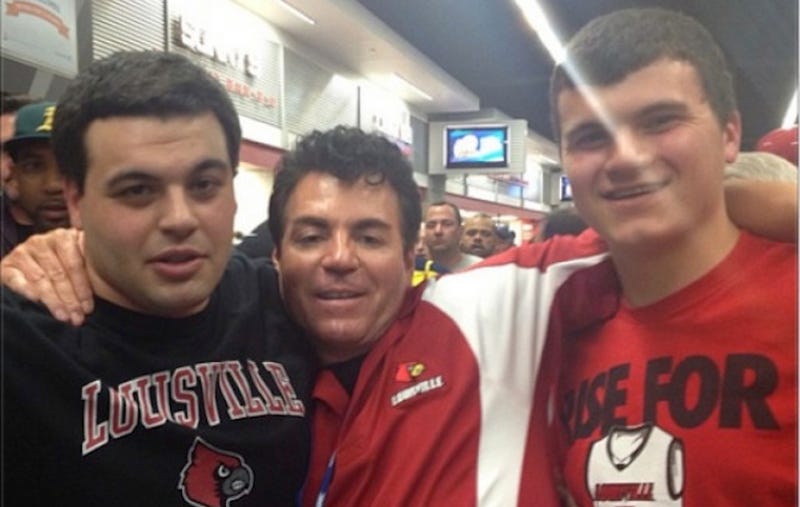
Better ingredients. Better buzz. Papa John’s.
Long Live the MVP?

Very early this season, the MVP race became, effectively, a two-man discussion: (1) Russell Westbrook, who finished the season averaging a triple-double and dragging a bad, talent-bereft team to 47 wins in the Western Conference, through sheer force of will; (2) James Harden, who moved to point guard under new coach Mike D’Antoni and damn near averaged a triple double on his own, while leading the Rockets to the 3-seed in the West. The online debates are raging, and I find myself firmly in the Westbrook Camp. I don’t care if a triple double is arbitrary; I don’t care if he’s a ballhog. What he did this season is amazing, and will be talked about for decades to come. Harden is a boring player, by comparison, flailing and falling into defenders to get to the free throw line, and doing much of his damage there – he did have a great season, but if we’re splitting hairs I’m going to split some god damn hairs.
Finding himself as a complete afterthought in these discussions is the reigning two-time MVP, Steph Curry. Curry got hurt in last year’s playoffs and never regained his form, as the Warriors blew a 3-1 lead to the Cavs in the Finals. It was, perhaps, a long-term blessing for the team, as I find it hard to believe they really would have signed Kevin Durant in the offseason. Durant was the league’s MVP before Curry first won it two years ago, but seemed tired of playing in Oklahoma City, alongside the mercurial Westbrook. The Thunder, of course, also blew a 3-1 lead in the playoffs…to those same Warriors.
When you look at Curry’s numbers, though, you start to wonder why he’s not a bigger part of the MVP discussion. Even adding Kevin Durant, though his numbers are not as insane as they were last season, they are nearly identical to his 2014-15 MVP season. His team once again won a ton of games, and they are the favorite to win the title this season.
FiveThirtyEight broke down the candidacy for Steph Curry, and it is hard to argue with, and this chart is Exhibit A:

I’ll let Benjamin Morris explain:
There are stories to be told in each section of that chart, but for our purposes, focus on the fire raining down from the sky in the Curry section. Not only do virtually all of his teammates (10 of 11 players with at least 30 shots, representing over 1,700 shots taken without him shoot worse without Curry on the court to draw attention, they shoot dramatically worse. Overall, Curry’s teammates shoot 7.3 percentage points worse with Curry off the court, with his average teammate shooting 8.3 points worse. Among our MVP candidates, LeBron has the next-highest impact on average teammate shooting (3.9 points), followed by Westbrook (2.5 points). When it comes to opening up a team’s offense, Curry has no equal.
For the uninitiated, “true-shooting percentage is a shooting efficiency statistic that acts like field-goal percentage but is adjusted for three-pointers and free throws. Essentially, because three-pointers are more valuable than two-pointers, and because free throws are not accounted for in shooting percentage, it adjusts shooting percentage based on those numbers to get the “true” value of a player’s shooting.
So, looking at the chart, not only is Steph Curry very good, but both the shots and spacing he creates for his teammates makes them all (or nearly all) much better players.
Another chart helps explain the end result of this.

When Curry is off the floor, his team is a good team. When he’s on the floor, though, they are great. The delta between Curry on the floor and off the floor is second only to LeBron’s impact on the Cavs. There’s more, and if you like basketball, you should read the article. You might just end up wondering why there wasn’t more support for the two-time defending MVP to win his third. -TOB
Source: “The Case for Stephen Curry, MVP”, Benjamin Morris, FiveThirtyEight, (04/13/2017)
PAL: Sold. How can anyone make a case for someone other than LeBron or Steph win this award after reading this article?
I watched just enough of Westbrook this season to strongly believe he is not the MVP, and Houston’s drubbing of the Thunder in the first round only firmed that up (I know – the votes were cast before the playoffs). His season was an unbelievable showcase of effort, volume, and endurance, but that does not equate to MVP. No doubt, that’s a critique on Westbrook and the team around him. To be honest, Westbrook seemed a bit like a sideshow.
Surely, LeBron could average a triple double if that was his goal coming into a season (even at this stage of his career), which I think was the case with Westbrook. And I don’t doubt Steph could average 35 a game if he shot as much as Westbrook (Curry attempted 18 shots per game, Westbrook attempted 24). If either of those scenarios played out, LeBron or Curry wins the MVP this year.
LeBron and Curry didn’t do this, because it wasn’t the best approach for their teams to win a championship. Westbrook’s approach may have very well been the best way for the Thunder to win, but it was never going to amount to a significant run in the playoffs, which is really easy to say after they lost in first round of the playoffs.
Westbrook’s triple double season is historic, and it will age well, but it tastes a bit flat coming right out of the brewery.
The Search for ‘The Next Jordan’ has Ended

Note: All of these graphics are pulled from the original story linked below.
In many ways, Michael Jordan has been our North Star by which we’ve navigated the past three decades of athletic greatness. While his success on the court is measureable (averaged 30 PPG for his career, 6 NBA Championships, 6 Finals MVPs, 5 season MVPs, 10 All-NBA first team, 9 All-Defensive first team), it’s harder to quantify the magnitude of his cultural significance. As Howard Beck writes, every superstar athlete is “playing in a world MJ practically created.“
However, in one way his significance has faded, and that’s the anchor to Beck’s article, which you should absolutely read. At the end of his career, we started looking for ‘The Next Jordan’. For decades, anytime a talented player with some hops – be it a high school phenom, or a college kid with a few great games in the NCAA tournament – made a splash, the media asked if he was ‘The Next Jordan’.
This premature coronation of promising basketball players spanned generations of players. From Len Bias to Penny to Harold Minor to Grant Hill to Vince Carter to Kobe to LeBron.
We don’t hear that curse wrapped as a compliment much anymore – a fact that Google search term stats back up. What’s more, Beck asserts “that might be the best thing to happen to the NBA since, well, the Age of Jordan began.”
Beck makes a compelling case as to why that phrase has floated away from relevance.
Reason 1: We are not that young.
The following anecdote from Jordan’s former teammate and Bulls announcer Bill Wennington captures it all in one fan exchange:
Overheard at the United Center at a recent Bulls game, where two fans were admiring a large photographic display:
Fan No. 1: “Oh, wow! Look at that guy! He’s wearing the original Jordans!”
Fan No. 2: “Dude! That is Michael Jordan.”
You want numbers to back it up? Beck has numbers for you, and they are not going to make you feel very spritely, my friends.
- 17 active players competed against the creaky, Wizards edition of Jordan, who sank his last field goal 14 years ago.
- Lakers rookie Brandon Ingram was nine months old when Jordan clinched a sixth championship with his iconic jumper over Utah’s Bryon Russell. Steph Curry, now an elder statesman and an idol at age 29, was 10 years old.
Damn.
Reason 2: The game today hardly resembles the one Jordan played.

“The hero-ball style that Jordan inspired may be as out of fashion as acid-washed denim in today’s pace-and-space, three-point-obsessed NBA. And just three of the league’s top 20 scorers this season play Jordan’s once-glamorous position of shooting guard (DeRozan, Beal and CJ McCollum), while only two shooting guards made the All-Star Game (DeRozan and Klay Thompson) alongside eight point guards.
“The game has changed radically—more wide-open, more free-flowing, less grabbing on the perimeter, less banging in the post—and it no longer demands, or rewards, the repertoire of footwork and mid-range isolation artistry that made Jordan elite.”
Jordan’s dunks might be the posters of our youth, but those dunks were set up by a mid-range jumper that is now seen as the worst shot on the court. A higher volume of three-pointers, combined with a higher percentage of shots by the rim is a formula nearly all teams have adopted in recent years. Combine that philosophy with a game that made the hand checking illegal in 2000 and the maturation of a generation of kids shooting three-pointers from grade school on, and you have better long distance shooters in a league where it’s also easier to get to the rim.
Michael Jordan made 591 3-pointers in his 13-year career. Steph Curry made 402 last season.
Reason 3: Unique is more interesting than commonality.
Jordan was transcendent, so it makes sense that we wanted to bask in that greatness after he retired the first, second, and third time (well, maybe not so much the third time). How foolish. Here was this once-in-a-lifetime talent, and we knew that fact while simultaneously criticizing the next phenom who didn’t match the once-in-a-lifetime talent. Vince Carter, one who was dubbed ‘The Next Jordan’ for a minute, provides blunt honesty on the topic:
“I want to be me, man,” Carter recalls of his sentiments as a springy 6’7″ guard out of UNC in the late ’90s. “I just don’t want to put that pressure on myself. In no way, shape or form I’m thinking that I am him, will be him or could be him.”
“As soon as I walked in, my first year, that’s what you hear. For as cool as it may be, you don’t want it. You’re like, ‘No, thank you.'”
“There was a point where [critics said], ‘He doesn’t have the approach, his mentality is not like Michael Jordan,'” Carter recalls. “You’re right. Because I’m not Michael Jordan. You’re right. You’re exactly right. And that was starting to get frustrating.”

As I’m thinking about this, LeBron, who in Beck’s opinion represent the end of ‘The Next Jordan’ lineage, seem like the first great player that escaped the shadow of Jordan. Kobe, featured prominently in this article, admittedly impersonated Jordan in every way; LeBron is so unique that admiring him within the Jordan context isn’t as fun.
Sure, we can compare the numbers, but you don’t think of him in terms of whether or not he’s like Jordan. Furthermore, the NBA is so flush with unique talents right now —Curry’s shooting, Westbrook’s triple-doubles, Giannis’ essentially playing point guard as a 7-footer in Milwaukee to name a few—that the comparison to Jordan seems not only dated, but downright lazy.
Thanks to my college roomie and battery mate, Ryan Nett, for sending this article along. He threw a good knuckleball one time, and he never misses an opportunity to bring that fact up. – PAL
Source: “The Ghost of The GOAT: Why There Isn’t a ‘Next Michael Jordan’ Anymore”, Howard Beck, Bleacher Report (04/26/2017)
TOB: Man, what a fun read, and great job by Phil of pulling it all together.
Dion Waiters With the Best Players Tribune Article (And Headline) Ever
Dion Waiters has always struck me as an interesting guy. He seems moody and overconfident in his skills. He’s kinda J.R. Smith, but less athletic and less talented. Dion had a very good season with Miami, though, his first with the Heat. The Heat just barely missed out on the playoffs, and likely would have made it if Waiters hadn’t been injured for an extended period early in the year. This week, sitting at home, not in the playoffs, Waiters wrote an article for the Players Tribune…and it’s REALLY good. The dude is funny. Here’s Dion talking about his best friend growing up, Rhamik:
Everybody in our hood loved Rhamik. He was just a legendary kid. The thing people knew him for, other than ball, was skating.
See, in Philly, skating was a huge deal. Still is. I’m not talking about, you know, Tony Hawk. I’m talking about roller skating — the brown skates with the four wheels. Every Sunday, we used to have these skating parties run by Ms. Doris. If you were up to no good in school (which I usually was), Ms. Doris would catch you at the door and be like, “Dion! You’re banned from the skating party until you start acting right.”
That was a dagger. You did not wanna be banned from the skating party. That was the spot for meeting girls. If you’re picturing some disco thing, that’s not what it was. This was like 100 Philly kids skating around to Rick Ross, doing the Philly Bop.
Sadly, Rhamik was killed when Dion was away at a boarding school to play basketball. Which is kind of Dion’s story. No, it’s not a unique one, sadly. Lots of professional athletes came from impoverished areas and buried friends and family members, just as Dion did. But the way he tells it is very good. Including how he responds to his critics:
You know, it’s hilarious to me. I’m not a big Internet guy, but I see things. I see what people say about me. I see the GIFs and all that. They say, “He never seen a shot he don’t like.” “He’s got irrational confidence.” “He thinks he’s the best player in the NBA.”
Hell yeah I do. I have to. Listen, now you know where I’m from. Picture yourself walking into a South Philly playground at 12 years old, with grown-ass men, bleachers packed with people, trying to get a run in. You think you can survive in Philly without irrational confidence?
https://gfycat.com/BeneficialFortunateAquaticleech
He also tells the story of meeting his boss, Pat Riley, for the first time, last summer:
I walked into his office and … damn. The hair was slicked back, and he was wearing one of those suits of his, you know, real O.G., looking like a million bucks. Behind him, he’s got photos of all his championship teams lining the walls. He’s wearing one of his nine rings. He’s sitting there looking like De Niro in Casino. He’s looking like the boss. He’s looking like he’s seen it all, because he has.

And he gives us a great headline, to boot. Quintessential Dion Waiters. -TOB
Source: “The NBA is Lucky I’m Home Doing Damn Articles”, Dion Waiters (04/25/2017)
Truer Words Have Been Written

Stephen Krupin was a speechwriter for President Obama for about a year, but he’s been a Washington Capitals fan his entire life. Being a Caps fan means hating the Pittsburgh Penguins, who have beat the Caps in 8 of their last 9 playoff appearances. Ouch! The Penguins won the Stanley Cup last year, which comes with a visit to the White House and a speech from the president. Krupin wrote the president’s speech praising the hated Penguins.
On the eve of yet another Caps-Pens playoff series, Kupin shares his experience writing the speech last year, and it’s pretty damn funny.
Cody Keenan, our chief speechwriter and a die-hard Chicago sports fan, offered me an out. He recalled that on the day the Super Bowl-winning Green Bay Packers came to the White House, Cody didn’t just delegate the speech assignment; he worked from home rather than risk running into any cheeseheads in the hallway. “You don’t have to be a hero,” Cody counseled.
At one point, a baby in the crowd cried. President Obama ad-libbed an apology for the dad jokes we scattered through the speech. “These are so corny,” he said. Good, I thought to myself; the Penguins don’t deserve our best stuff anyway.
One of the problems in writing a speech is you have to research the subject, which meant Krupin had to get to know the people behind the Penguins jersey. What he found didn’t help: Acts of charity, brotherhood, grace, and community building.
I place speechwriter for the president in the dream job category, and I assume Krupin would agree. I imagine him watching the Penguins close in on another Cup and realize he could play a role in their celebration. Painfully hilarious. Just the the thought of having to heap fake praise on the Yankees or the White Sox disgusts me. – PAL
Source: “The one speech I wrote for Obama that I didn’t believe in: Praising the Penguins”, Stephen Krupin, The Washington Post (04/27/2017)
TOB: Nah, I couldn’t do it. I’d beg off. Because if I didn’t, I’d make subtle and not-so-subtle digs at every chance I got. Like, if it was the Dodgers I’d congratulate them on their first World Series win in the last 7 presidential terms! What an accomplishment, I’d say. And then I’d get fired.
Video of the Week
That did NOT happen at my school.
Bonus video:
PAL Song of the Week: Minutemen – “Corona”
Like what you’ve read? Let us know by following this blog (on the right side, up near the top), or:
Email: 123sportslist@gmail.com
Week of April 21, 2017
Required reading.
I Can’t Stop Thinking about Aaron Hernandez

Aaron Hernandez was convicted of murdering one person, recently acquitted of murdering two others, and allegedly shot another in the face. At the time of his apparent suicide on April 19, Hernandez was appealing the murder conviction that had him facing life in prison without parole.
As many of you know, Hernandez, 27, was also a very talented tight end for the Patriots. He was at one time the youngest player in the NFL, a major contributor to the team’s 2012 Super Bowl victory, and after just two years in the NFL, he was awarded $40M contract extension. He was so good that his troubled past – both in his hometown of Bristol, CT, and during his time at University of Florida – was worth the risk and the effort.
Clearly, he had some major issues. From MMQB’s Albert Breer:
Both at Florida and in Foxboro, Hernandez had one of the defining qualities of a sociopath. As one coach of his whom I know well described him, “He’s the most talented liar I’ve ever been around.” As such, he could move as smoothly with guys in the financial district in Boston as he could with the people on the street in his hometown, something that facilitated the double life he was able to lead.
To many around him, it seemed like Hernandez had put his life in order. He was a beast on the field, and a favorite of owner Robert Kraft. But this timeline tells a different story:
- July 16, 2012: Two people are shot and killed in their car in Boston. This is the double murder of which Hernandez was recently acquitted.
- August 27, 2012: Hernandez signs a $40M contract extension with the Patriots and donates $50,000 to the Myra Kraft Giving Back Fund (Kraft had recently died of cancer).
- February 13, 2013: Alexander Bradley, then a close friend of Hernandez is shot in the face in Miami. Bradley was reportedly the only witness to the double homicide in Boston. Bradley survives, but does not name his Hernandez or any other assailant when police question him.
- June 13, 2013: Bradley files a lawsuit against Hernandez for, in plain speak, shooting him in the face.
- June 17, 2013: Odin Lloyd murdered, shot multiple times in the back and chest in a industrial park 1 mile from Hernandez’s house. Hernandez destroys the home security system, his phone, and hires a cleaning crew to his house the day Lloyd’s body is found. Hernandez is later convicted of the Lloyd murder.
In light of his apparent suicide, Breer recounts a dinner he had with Hernandez in Indianapolis in February 2013. While Breer doesn’t give an exact date of the dinner, the 2013 NFL Combine began on February 20 and ended on February 26, so it seems like Breer’s dinner with Hernandez took place 1-2 weeks after he allegedly shot Bradley, the only witness in the 2012 double-homicide. With this info top of mind, consider the following from Breer:
As for Hernandez himself, I think back to a February night in 2013 when I had dinner with him at a steakhouse in Indianapolis during the combine. I think about the truth of why he was there to talk to his then-coach, Bill Belichick, and about the way we treat athletes in this country…
…The Patriots’ then-star tight end was in Indy in February 2013 to tell Belichick he was going to spend the bulk of the coming months rehabbing his shoulder in California, rather than Massachusetts. Hernandez told me he was doing so to be closer to Tom Brady, who was spending the offseason in Los Angeles. It was only after Lloyd’s murder four months later that I found out that was far from the whole story.
I later discovered what Hernandez’s lawyer, Ronald Sullivan, detailed on WEEI radio in Boston earlier this week. Hernandez told Belichick that day in Indy that, at the very least, he needed to stay away from Foxboro because the heat was on back home in Connecticut. Hernandez broached the idea of a trade to get him out of the area. Belichick told Hernandez he couldn’t trade him but offered to help with security measures.
Hindsight certainly is 20/20, but this look back is down right scary. In my opinion, he killed two people in 2012, tried to kill the only witness, then killed another friend in less than a year. He was completely out of control and made one last effort to get as far away as possible by way of a trade.
Side note: There’s been some stories about whether or not the Patriots are on the hook to pay Hernandez’s estate millions of dollars because, at the time of his death, he was appealing the murder conviction. In Massachusetts, there’s a legal principle called “abatement ab initio”, which essentially means that if someone dies before he or she can exhaust all appeals, then they die innocent. This article makes a pretty strong case that, no, the Patriots in all likelihood are not on the hook. For one, Hernandez was very likely in breach of his contract. Second, he and the Patriots had a grievance settlement, which, in all likelihood, ended the matter once and for all.
One last thought, and I might be missing something, so please correct me if I am. Reports are that Hernandez had written “John 3:16” on his forehead before hanging himself with a bedsheet. Is it safe to assume there are no mirrors in a maximum security cell? If so, wouldn’t it be pretty difficult to write anything on your forehead without a mirror, considering you’d be essentially writing it backwards? I just tried tracing it on my forehead – it’s not easy to do. – PAL
Source: “Hernandez’s Suicide: Questions We’re Left Asking”, Albert Breer, MMQB (04/19/2017)
TOB: Such a great heart, that Belichick.
The Things New Englanders Do for Tom Brady
Words to live by: If you’re going to be loud and obnoxious, then be right, too.
The Boston Marathon was this past Monday (which my sister, Missy, completed and kicked butt once again). One guy, Abdul Dremali, found some great motivation for the runners on an unseasonably hot Patriots’ Day:
Funny. Local. Topical. Solid post! The pic was so good, in fact, that ESPN reached out and asked the Dremali (not the guy in the picture) if they could use it on its platforms. To put it politely, he said no, because of “the witch hunt” they led against pretty boy Tom Brady. He used other words, too, and it’s impossible to read them and not hear Morgan O’Mally, Casey Affleck’s character in Good Will Hunting, drunkenly uttering the tweet (click on the story for the unfiltered tweet).
Dremali was the toast of the town. He gave permission for seemingly every other outlet to post the photo, even though Twitter is public so permission isn’t necessarily needed.
There was just one issue. Can you guess? It wasn’t Dremali’s picture. They were asking permission for a photo that wasn’t his, and Dremali never exactly corrected media outlets when they asked for permission they did not need.
https://twitter.com/GarrettQuinn/status/854023967748886528
Deadspin’s Samer Kalaf sums it up poetically: “There’s a lesson in all of this: Validation on the internet is the most addictive drug of all.”
Still, it was some damn good sign work. The real hero is the subject of the photo. I think those might be cargo shorts. – PAL
Source: “Patriots Fan’s Heat Check Goes Wrong”, Samer Kalaf, Deadspin (04/18/2017)
TOB: I’ll just leave this here:
Update: Bud Grant Garage Sale

In May, 2016, we posted about a tradition unlike any other: Bud Grant’s garage sale. This year will be the last garage sale for the Minnesota Vikings hall of fame coach. His reason is pretty straightforward: “I’m running out of stuff.”
This last one comes with a great marketing campaign: a Bud Grant bobble head.
Grant, who led the Vikings to 4 Super Bowls (0-4), is a big deal to football fans in Minnesota. He’d definitely be on the Mount Rushmore of Minnesota coaches. With this in mind, it’s kind of crazy to think he’s never had a bobble head. Well, not a mass produced one at least (a few prototypes were made, but Grant and the bobble head maker could not agree on a price).
Grant has been approached about a bobble head many times. So why the change of heart this year?
“[S]omebody suggested to have them at your garage sale to advertise. You’ve got to have a hook. You can’t just say, ‘Come to my garage sale and buy baby clothes.’ ’’
That’s true, Hall of Fame football coach and Minnesota legend. It’s not the baby clothes that brings them to your garage sale. – PAL
Source: “Bud Grant’s final garage sale will include unique bobble head“, Chris Tomasson, Pioneer Press (4/20/17)
NFL Doctors: We Should Receive Military Exemptions Because Our Players Are Warriors on the Field of Battle

photo: Robert Clanflone/Getty Images
The arrogance of the NFL knows no bounds. There is presently a federal class action lawsuit against the NFL brought by former players regarding the illegal distribution of addictive painkillers and anti-inflammatory drugs by NFL teams to its players. At a meeting in 2011, the DEA warned the NFL doctors and trainers about drug laws and how the NFL was violating them. The DEA gave a presentation, and the doctors got defensive, and angry:
“Rannazzisi lectured them on their duties and responsibilities in the context of the opioid epidemic that was sweeping the country. The doctors felt they were being compared to pill pushers, and the meeting became confrontational. “He was treating everyone like a criminal,” said one doctor in attendance.
The teams’ medical personnel were unhappy with the DEA official’s tone, his message and the laws he was outlining. Groans, catcalls and even some boos filled the hotel ballroom at times.”
“I’d done hundreds of presentations,” Rannazzisi said in a recent interview. “I’d never experienced that before.”
One doctor gave some insight into just how warped the NFL really is:
“The 2011 Indianapolis meeting marked a flash point for the NFL in which team medical personnel were advised of the federal laws they later would be accused of violating. Those in the Indianapolis ballroom say the doctors were particularly frustrated to learn they couldn’t travel with prescription-strength medications across state lines to road games, as they had for years.
At one point, Rannazzisi said, a doctor raised his hand and asked why the president is able to travel with drugs aboard Air Force One. The DEA official explained that Air Force One is a military plane and statutes allow exemptions for military aircraft to move drugs around the country.
“I’m thinking as I’m saying this, ‘This is surreal,’ ” Rannazzisi recalled. “So he says, ‘The military is exempt? Well, think of our players as warriors every Sunday on the field of battle.’ I was stunned.”
Who was this doctor? Kellen Winslow, Jr.?
Needless to say, the lecture did not help. NFL teams continued their illegal practices, indiscriminately pumping their players with dangerous levels of drugs, allegedly. Good work, guys. -TOB
Source: “The DEA Warned NFL Doctors About Drugs Laws in 2011. It Didn’t Go Well“, Rick Maese, Washington Post (04/20/2017)
Video of the Week:
PAL Song of the Week: Kendrick Lamar – “DUCKWORTH.”
Sorry, song is not on youtube.
Like what you’ve read? Let us know by following this blog (on the right side, up near the top), or:
Email: 123sportslist@gmail.com
 1-2-3 SPORTS!