Get it, Brian Boyle! This week, he scored his first goal since being diagnosed with chronic myelogenous leukemia in September.
Signed, Sealed, Delivered: Counterfeit Autographs
I’ve said it before, and I’ll say it again: the draw of autographs – sports or otherwise – is lost on me. As we find ourselves in at least the second decade of the online marketplace, the hobby of collecting autographs is an even more removed experience. The signature symbolizes no interaction, no moment when the ordinary and extraordinary paths cross. There is no story, only an online bid.
While it should come as no surprise there are counterfeits out there, here’s a story that highlights a case which uncovers the how and the why behind one such counterfeit – Cliff Panezich.
Before Panezich forged the vast majority of 27,000 ebay items and sold more than $2MM worth of items on eBay, he was a baseball player looking for a shot. He was also an autograph seeker. The autographs were not for a personal collection.
2009 was his first year out of baseball. Panezich had gone undrafted after college ball, but had workouts with MLB teams and fared well enough in an independent league to earn another minor league tryout with the Phillies. His physical with the team revealed not one, not two, but three tears – two in his labrum and one in his rotator cuff. Surgery. Two years of rehab for an undrafted guy means the dream is pretty well squashed. This gave him more time for autographs. He and a friend took a road trip to Tuscaloosa to gather some signatures from Crimson Tide players.
This is what autograph investment looks like. Not exactly the kid waiting after the game for a glimpse of his hero:
This was a business trip, but the end did not justify the means:
Altogether it took Panezich and Bollinger nearly a week to gather the signatures they wanted, and Panezich says they shelled out more than $1,000 to players—but he figured the investment was worth it. He’d seen a team-signed Bama ball sell on eBay for roughly $800 earlier that month. Even if his own fetched just $500 apiece, “we were in pretty good shape,” he says. But once Panezich made it back to Ohio and listed the items on eBay, he says he found a marketplace newly flooded with what he believed to be forgeries—most selling for less than $150.
You can see where this is heading. Panezich embraces the forgery route, and he has a talent for copying signatures. When the feds close in on him and finally question him – they dubbed it “Operation Stolen Base” – they wanted to see him in action.
The most surreal autograph session of Panezich’s life takes place a month later in a conference room in the FBI’s office in Boardman. He wasn’t arrested during the raid, but he’s since agreed to be interviewed under proffered protection in hopes of improving any future plea deal. The FBI and the Mahoning County prosecutor’s office have decided to pursue the case under Ohio’s version of the RICO Act—rather than bring federal charges—because of the number of potential defendants at the local level. (More than 20 other people, mostly in Ohio, are suspected of being involved in selling the forged items.) This makes Martin Desmond, a Mahoning County assistant D.A., one of the lead interviewers.
“I’m curious,” Desmond tells Panezich from across a conference table. “I want to see how good you are.”
Panezich shoots a look at his lawyer, Robert Duffrin—Is this really happening?—and is reminded that he’s under protection. He grabs a pen and a legal pad and asks Desmond to name an athlete.
“LeBron,” Desmond says, assuming Panezich will then ask to look at an example.
“Number or no number?” Panezich replies.
“Number.”
“Six or 23?”
“Do both.”
Panezich signs two variations—one the way James signed it during his first stint with the Cavs, the other the way he did it in his Heat years. One of the Ohio policemen at the table fires up his iPad and finds a real LeBron, and they all compare it with Panezich’s work.
To the investigators’ untrained eyes, it’s difficult to tell the autographs apart.
Panezich got six years for what is one of the largest eBay frauds on record. Hell, he even had his mom working for him. And while I find it hard to imagine anyone questioning his responsibility in all of this, Sports Illustrated’s Luke Winn brings up an interesting point – what about eBay’s role, if any?
The most successful party—in the end—appears to be eBay, which would have earned more than $300,000 on auction and PayPal fees on $2.4 million in sales. Although eBay cooperated in the case, a company spokesman declined to answer SI’s questions about whether it had contacted potential victims or returned any of the fees.
So – yeah – I have no problem with athletes turning down adult autograph seekers (story four from our September 22 post). Honestly, I have little sympathy for folks buying autographed items on an online marketplace, too. I don’t get it, and stories like this surely don’t help. – PAL
Source: “Operation Stolen Base”, Luke Winn, Sports Illustrated Longform (11/06/2017)
Man, Roy Halladay Died, and I Barely Knew Him.
A bummer out of baseball this week, as former pitcher Roy “Doc” Halladay died after he crashed his small plane into the Gulf of Mexico. He was 40, and leaves behind a wife and two kids. This story hit the baseball world hard, as Roy Halladay was not just the best pitcher in baseball for a decade, but widely known as one of the nicest and hardest working players, too. He was tall and lanky, and he was all angles when he pitched. He was incredibly difficult to hit, winning two Cy Youngs, a remarkable 7 years apart, in different leagues. He only played in two postseasons, but boy did he make it count.
In his first ever postseason game, Game 1 of the 2010 NLDS, Halladay threw a no-hitter. It was only the second ever postseason no-hitter (the first being Don Larsen’s perfect game). I remember the game distinctly, even though I didn’t watch it, which is a perfect microcosm of my experience with Halladay’s career. As I recall, it was the first game of that season’s playoffs, and it started during the day, when I was still at work. I was intently focused on the Giants’ soon to begin series against Atlanta. I even had tickets to Game 1 the next night, so I wasn’t paying attention to the score of a Phillies game while I was at work. But I remember leaving the office right around 5:00pm, and heading over to a bus stop directly in front of Irish Times, a sports bar in San Francisco’s Financial District. I peeked inside and saw the Phillies leading 4-0 in the 9th. Meh. I got on the bus, and just before it departed, I’ll never forget a HUGE roar from the crowded bar. I thought, “Geeze, it’s only Game 1 of the NLDS, and the Phillies have won a World Series and another pennant recently. Calm down, Phillies fans.” Moments later I got an alert on my phone, telling me Roy Halladay had just completed a no-hitter. I had not only missed a playoff no-hitter, but unknowingly walked out of the bar, in the 9th, as he was closing it out. UGH.
As I said, it’s a microcosm of my, and many baseball fans’, experience with Halladay. The postseason is when many fans get to watch the best players in the league, but because Halladay made just five postseason starts, I simply did not get to see him pitch much. I did see him in person that postseason – he started Game 5 of the NLCS against the Giants, beating Tim Lincecum 4-2, in a rematch of the Giants 4-3 win in Game 1. But…I don’t really remember too much about Halladay that night. And I didn’t remember that Cody Ross’ two huge home runs in Game 1 came off Halladay, either.
But this week, I read a lot about how others experienced him. Like Blue Jays and Phillies fans, who saw him pitch every five days, the best in the game at the peak of his powers. I know how fun that experience is. Phillie fan Michael Baumann summed up why we love sports, and why we are sad when athletes die too soon:
But for me, and for numerous others who had the good fortune to be Phillies fans in a certain time and place, this is different, because of the memories he created, the community his team fostered, and, above all, the ineffable feeling of being part of something special that he inspired. I never met Roy Halladay, never high-fived him as a fan or interviewed him as a reporter, but he changed my life all the same.
Deadspin rounded up many of the tweets from players who played with and against Halladay. Brandon McCarthy seemed to capture Halladay best:
Roy Halladay was your favorite player's favorite player. A true ace and a wonderful person. Heartbroken for those who knew him best.
And I really enjoyed this old SI article, written at the height of Halladay’s powers, about his early career struggles, and what Halladay went through to turn it around. It’s really quite a remarkable story. Rest in peace, Doc. -TOB
PAL: I enjoyed the Baumann article as well. I actually highlighted the exact same passage TOB pulled out above. And to those asking why he was flying so dangerously – implying that he deserved it in some way – just go away (I’m not going to even link to the story about it, but you can find them if you want).
Damn The Birds, Build The Stadium in Oakland
The Raiders: Vegas. Warriors: San Francisco. Sports teams are dropping Oakland like a high school boyfriend or girlfriend come second semester of college. The A’s are looking to stay in Oakland with a privately funded, 35,000 seat stadium. They want to put it right by Lake Merritt near downtown Oakland.
But what about the birds?
Cindy Margulis, executive director of the Audubon’s Golden Gate chapter, said in an interview that a new ballpark built near the Lake Merritt Channel would devastate large numbers of bird species that nest each year at Lake Merritt, especially herons and cormorants.
The ballpark could cause a die off of birds and perhaps force them to leave the Lake Merritt area completely. And Margulis says she sees no way for the A’s to prevent what she predicts will be an ecological catastrophe.
I run around that lake a lot, and let me tell you something: The birds are out of control. I have no beef with the herons, but if they could find a way for the new stadium to kill off the seemingly millions of geese and their poop that litters every inch of grass around the lake, then I’ll personally contribute to the stadium.
Lake Merritt is a good looking lake. It’s a small lake, and it can smell a bit, but it’s a nice, downtown lake. People love to grill out and just hang on the weekends. It’s packed with folding tables, grills, and loud, bumping music. I love it, but for the geese.
Geese suck. They poop white poop everywhere, they waddle around like they own the place, and they’re jealous of the swans. Build the stadium. Damn the birds. Eagles are cool. Hawks are impressive. Owls: I’m in. The rest of them – meh. Birds are gross. Privately funded stadiums built near downtown are cool. Stadium > birds. – PAL
This article was written, and I read it, in advance of Wednesday’s glorious Game 7, where the Houston Astros extended the Dodgers non-World Series winning streak to 29 years. Here’s to 30, a nice round number. Now that the gloating is over, I just can’t get over how badly I think Roberts managed this, and why everyone seems to take it as a given that he didn’t. Specifically, why didn’t he start Clayton Kershaw in Game 7? In the last few seasons, managers have really begun to get creative with their bullpen use in the playoffs, especially in Game 7, and especially in Game 7 of the World Series. I don’t know if it began with Bumgarner in 2014, but it seems like his performance that night, after having dominated in Game 5, made every manager since realize you should live and die with your best. Before Game 7 this year, both managers said every starter, save perhaps the starter from Game 6, was available to pitch out of the bullpen if necessary.
But…this is what I don’t get. Kershaw is an excellent pitcher. Possibly the best of his generation. He’s struggled in the playoffs, but he was great this year at home, where the Dodgers were playing Game 7. He’s available. And not in an emergency. It was reported that Kershaw texted manager Dave Roberts and told him before Game 6that he was available for that night’s game, after having been rocked and giving up two different 3-run leads two days prior in Game 5. Roberts replied, telling Kershaw he’d be closing out Game 7. So we know that Roberts intends to pitch Kershaw for at least the last 3 outs. This is not a break glass in case of emergency situation.
For his starter, though, Roberts went with Yu Darvish, who gave up 5 runs in 1 ⅔ innings, the same as he had in Game 3.
The Dodgers were down 5-0 when they brought in Kershaw. Yes, the pressure on him at that point is lower, but he was lights out and gave his offense a chance to come back. So why not start Kershaw? If you have the best pitcher of his generation, and you’re going to pitch him, why not start him? You can let him go until he begins to fatigue or gets into trouble. Here’s what Sam Miller says:
So, ideally, in a perfect world, you’d do the only logical thing: You’d start with your best pitcher, Kershaw. You’d let him go until you realize he’s not your best anymore. You figure out as you go how many pitches that is, and you figure out as you go how many outs that is good for. Then you bring in your second-best pitcher, Jansen. You do the same. Once he’s not your second-best pitcher anymore — which you’ll see, because you’re a baseball genius and spot these little tells that a pitcher has that he’s tiring — you look up at the scoreboard. Maybe it’s the third inning at this point. Maybe it’s the eighth inning. The difference between those two situations is massive, and you’re glad, looking at the scoreboard, that you chose to do it this way, because now you know exactly what you need to get from your third-best pitchers and beyond. But you can’t do this, can you? Because, most likely, you’re still going to be asking a lot from Yu Darvish, and he needs to be good for this plan to work. He needs to be Yu Darvish good. And you just don’t know whether Darvish, coming out of the bullpen for the first time in his career, with all the nerves of Game 7 of the World Series affecting his preparation in the bullpen, is going to be able to handle that. If he can, he throws the final six or four or two innings and you hold the parade. If he doesn’t, you’ve just ruined the third-best pitcher you’ve got.
I just don’t buy that argument about Darvish. Later in the game, after their starter Lance McCullers also struggled, the Astros called on normally starting pitcher Charlie Morton. He slammed the door shut for 4 innings and finished out the game. Did Morton turn mentally soft because he wasn’t asked to start? No. Did Kershaw? No. If I’m managing Game 7 of the World Series, I am trusting my best pitcher, especially if he’s Clayton Freaking Kershaw, to get as many outs for me as he can. So, thank you, Dave Roberts. Thank you for starting Darvish. I had an enjoyable Wednesday evening. -TOB
PAL: Why did the Dodger pick up Darvish midseason? So they don’t have to think about starting Kershaw on two days rest in a game 7. Because Kershaw can’t be the only guy if they want to make a World Series Run.
You ride or die with your generational talent. As much as I like to disagree with TOB, he’s right on this – if Kershaw’s told he’s pitching anyway, why not just start him and see how many innings you can eek out. Kershaw’s already great (3x Cy Young Winner, with a 2.36 ERA, averaging 248K per season, and his team wins almost 70% of the games he’s pitched), so you bet on him to be legendary.
Roberts (or the Dodgers front office – I wonder who was calling the shots, to be honest) completely and utterly overmanaged the world series, and they sh*t themselves, quite frankly. They wrote out a plan that made sense on paper, and then they proceeded to run their entire bullpen into the ground. The bullpen, which was perhaps the one facet of the game where they had an advantage over the Astros, ended up overworked and couldn’t deliver, which is understandable since they pitched the majority of the innings in the series.
As loaded as that team is, there is no guarantee the Dodgers will ever get back to the World Series. I think you need to keep this in mind when you manage. If this is the last World Series game this collection of Dodgers ever plays, who do you want on the mound. A fresh Yu Darvish – no scrub by any means, but did pitch awfully in game 2 – or Clayton Kershaw on ½ of a tank. I’d see how far Kershaw’s tank gets me – from the beginning of the game.
TOB: What’s wild to me is how many sportswriters (like Ben Lindbergh and Michael Baumann from The Ringer) I saw after the game saying Roberts was correct not to start Kershaw. Now, this reminds me of the scene in Swingers when Trent tells Mikey you always double down on 11, and when Mikey does and busts, Trent keeps insisting, “You always double down on 11.” Mikey says, “I lost! How could you say ‘always’?” But I do get their point. The outcome was unknown when he made the decision, so you shouldn’t take the outcome into consideration when determining if he made the right call (plus, who knows how things turn out if they do start Kershaw. Maybe he takes a liner to his head that ends his career or something). But my point is this: I thought this before the game, and I just disagree with the logic. Baumann and Lindbergh’s argument is that you don’t know what could happen, so go with Darvish because that’s why you traded for him. Sorry, if I’m a manager, I’m winning or losing on the back of a generational pitcher. If you beat him, so be it.
What is the Point of Youth Sports, Part III: Coaching High School Sports in a Club World
Let’s start the third and final chapter on youth sports with a quote that seems to pretty much sum up the current state of coaching high school sports today:
The e-mails from angry parents come faster and more often than any time in his 25 years as a high school coach, sometimes waiting for Carl Pierson by the time he arrives home from a game.
Each time it happens, the Waconia girls’ basketball coach knows a long night is about to get even longer.
After he enters statistics, uploads and edits game film and creates a scouting report for the next day’s practice, Pierson faces a choice: Take the time to carefully craft and send a response, or put it off until morning and endure a lousy night of sleep dreading the thought of hard feelings festering with a parent and their player.
The old adage says there is no ‘I’ in team, and that seems to be the problem in high school sports these days. As we’ve written about the previous two weeks, players and parents are investing a lot of time and money on personal athletic pursuits through pay-for-play club sports and 1-1 training. When a varsity high school coach – who gets about $6K stipend in Minnesota – doesn’t have little Johnny in the regular rotation – well, there’s trouble in paradise.
When expectations aren’t met, parents blame the high school coaches — whose work now extends well-beyond a season’s start and end — and even push for their ouster.
After the ouster of two high-profile boys’ hockey coaches — Jeff Pauletti at Roseville and Tony Sarsland at Elk River — Rep. Dean Urdahl authored a bill in 2013 to forbid parental complaints for being the sole reason to not renew a high school coach’s contract. The measure was passed into law, but its effects are hard to discern.
Fast-spreading complaints via social media can further stoke tension. In 2016, Tony Scheid resigned as Stillwater girls’ hockey coach, saying he and his family had been subjected to “unrelenting and vicious” verbal attacks from a group of parents.
Let’s just pause for a second. We can be such wimps. Such frauds. I include all of us – whether we have kids or not – because we are parts of communities where this crap happens every day, and ‘our kids’ isn’t limited to flesh and blood. We want our kids to learn about character and competition and teamwork and perseverance, but only if that happens in a way that’s acceptable to us – only while making varsity as a sophomore, and playing regular minutes/innings/shifts. When it doesn’t go our way, we act like wimps. We post pithy complaints on social media like teenagers, and we either work to get the coach fired or acquiesce to those that do. We don’t use the most minor of setbacks – a youth sports setback – to actually have a moment to say to our kids, “This is a challenge, and I’ve got news: You will be challenged for the rest of your life. It’s actually a big part of each day. How you respond tells yourself and the world what kind of person you are. This is what the word ‘character’ means.”
Full disclosure: I absolutely failed my first sports character test.
I was a sophomore on the high school baseball team. The catcher ahead of me, a junior, was suspended for two weeks (maybe I was a junior and he was a senior…I can’t remember). He served his suspension, and was back in the lineup. I was the designated hitter for a couple weeks, I’m wouldn’t be surprised my hitting cooled off, and then I wasn’t playing. The guy in front of me was a natural athlete, but didn’t seem to care too much, and that just ate at me. I wanted to succeed with every ounce in me. I had quit hockey to spend more time on baseball. I wanted to play D-I baseball. It was my only goal, I had a plan worked out to the day, and my plan was getting off course because an upperclassmen who didn’t seem to care about anything. I wanted to know why I wasn’t playing (even when maybe deep down I knew he was more gifted than I was), and I was worried that I wouldn’t get any college looks if, you know, I wasn’t on the field.
My brother and I met with the coach in the dugout. My feelings about his coaching are beside the point here, so I’ll just leave that alone. My brother did most of the talking while I sat there.
To this day I regret that I didn’t find the guts to talk with my coach one-on-one. Ugh. This isn’t something that comes up once every few years; I think about it pretty regularly.
What is the point of youth sports? It’s all the stuff we rolled our eyes about as kids – teamwork, competition, the feeling of earned success and a camaraderie that can only be achieved by spending seasons of ups and downs together with teammates you love and teammates you learn to get along with over time. It’s all the cliches. The cliches are true. They were when I was playing as a kid, and they are true at my job today. A great day at work is due to teamwork – and everyone buying into that idea.After reading this series, it’s hard to make a case that parents and players share my feelings on this.
Individual success in sports – like any other facet of life – is not guaranteed just because there’s been an investment of time or money or desire. We all know life isn’t fair. While adults seem to understand that truism when it happens to them, the idea that their children are faced to learn that lesson destabilizes mom and dad.
High school coaches – the good ones, the bad ones (and there are bad ones), and the indifferent ones – have always had to deal with crap parents, but they had leverage. With the ubiquity of club sports, it seems that leverage has shifted.
What’s lost in all of this is the the most beautiful part of high school sports – a team made up of kids from the same neighborhood or city winning a state championship. A group of guys or girls, who grew up playing together from when they were 10 years old all the way through high school bring home a goddamn state championship to their hometown. It’s beautiful.
Pride. I fear that’s what’s lost in all of this. – PAL
As we’ve written about here before, NCAA basketball is embroiled in a developing pay-for-play scandal that broke when a number of assistant coaches from some of the top programs around the country were simultaneously arrested a few weeks ago. One of those recruits, Brian Bowen, was preparing to start his freshman year at Louisville. It has been alleged he, or his family, were paid $100,000 by Adidas for choosing Louisville.
At first blush, that sounds like a lot. But $100,000, even for one year of basketball, is not a lot of money.
Economist Dan Rascher, an expert witness in the O’Bannon case, estimates that Division I football and men’s college basketball players only receive about 10 percent of the $10-12 billion of annual revenue that they generate. By contrast, NBA and National Football League players receive roughly 50 percent of total league revenues. Three years ago, the National College Players Association, a campus athlete advocacy group, applied that same split to athletes in Football Bowl Subdivision conferences and estimated that the average basketball player was worth $289,000 a year.
That’s the average player at the average program. Bowen of course is not average. Louisville is not average. If Louisville paid its players 50% of revenue like NBA players get, each player on the team would be paid $1.72 million per year. The tenth pick in last year’s draft, for example, is making over $3 million this year, thirty times what Bowen was allegedly paid. This well beyond stupid at this point. Maybe he doesn’t need to get paid $1.72 million, but $100,000 is a bargain, and the players should get paid a fair amount.
PAL: I hate the notion of paying college players, but any semblance of amateurism left big time college basketball decades ago (UCLA in the 60s, right TOB?). Wherever you stand on the issue, this article breaks it down by the numbers, and it’s a pretty logical, measured argument. Glad TOB posted it this week. We just didn’t get to it last week.
Sports Screaming Explained
It’s in every sport now, the screaming. Tennis, Football, Track & Field, and all of the others. The screaming is to a point where we don’t really notice it anymore, but there was a time – not that long ago – when this didn’t happen.
After losing the first set to Monica Seles in ‘92 Wimbledon semifinal, Martina Navratilova went to the chair umpire to make Seles stop grunting after every shot. It was so unprecedented at that time that the umpire didn’t know what to do, so he gave Seles a warning. Seles went on to win the match, and by the end of the match, the grunting had turned into screams. Seles had opened the screaming door in women’s tennis, and “[o]ver the next 20 years, Navratilova watched in horror as an entire generation of tennis players proceeded to copy Seles.”
Nick Zarzycki does a nice job organizing a handful of theories as to why athletes now scream.
There have been several studies, including some that contend screaming can “increase our maximum jumping distance, improve our ability to withstand pain, and increase coordination.” As Zarzycki points out, there seems to be connection to the fight or flight response.
And fear is part of the fight or flight equation.
Working with neuroscientists at Dr. David Poeppel’s lab at NYU, Arnal found that screams are different from any other kind of human vocalization because they possess a sonic attribute called “roughness,” which is particularly good at activating the brain’s fear and danger processing centers.
So perhaps there’s something to either creating or reacting to danger when it comes to today’s sports. Vikings great John Randle was a big yeller (and all around gab machine on the field). What’s fascinating is when you wonder whether or not he was yelling at the offensive line as a reaction to danger or in an effort to create fear. Maybe a bit of both.
There are less combative sports where the breakdown between creating and reacting to danger is less complex. Take, for instance, the skeleton (the luge-type winter olympic sport where one competitor sleds head first down an ice track at 75 m.p.h.
Why do athletes scream? Because we’re all animals! – PAL
There is no scenario in which a proposal of marriage at a sporting event is acceptable. I don’t care if you just won the World Series, Carlos Correa. There are no exceptions to this rule.
Sure, he was having the best night of his life, and – to repurpose a phrase TOB uses in the Dodgers writeup, he doubled-down and proposes. Exuberance is at an all-time high, she’s a total babe. He goes for it. I get it. It’s just the wrong play.
We are conditioned to give it the ah, that’s so sweet. Resist that urge. It is not sweet. To propose at a sporting event is unoriginal, thirsty, and puts the fiance being proposed to in an impossible position.
What’s she going to do – say no? Hey, honey. I know you just won the World Series, and you’re an incredibly successful, young, good-looking, wealthy shortstop who bats cleanup for the World Series champs, but…can we talk about this? Yes, the diamond the size of small island is beautiful. It’s not that. I just don’t feel like we’ve talked about each of our visions of the future.
So – yeah – that was never going to happen. Did I mention he’s the shortstop and bats cleanup? Hell, I might have said yes. But that doesn’t make it OK. Propose on your own time, and make that day special because you got engaged on that day. Of all the moments in your life, don’t tack that one onto any other special day, and don’t do it at a baseball game.
What’s that? Yes, I am 35 and never been married. – PAL
TOB: I have mixed feelings here. First, I think everyone should do it their own way. She looked happy as hell. He looked happy. It was a sweet moment, good for them. On the other hand, when it happened I did think, “It makes for a bit of an awkward engagement night.” I mean, now he’s gotta leave for the trophy ceremonies, then head to the locker room for the champagne celebration, and then get absolutely hammered with his teammates. Is she in the locker room? Either way, once the celebration is done, Correa is drunk and celebrating his own thing, while also trying to celebrate their thing. In the end, I go with my gut: They seemed happy, so…
“No, don’t call me a hero. Do you know who the real heroes are? The guys who wake up every morning and go into their normal jobs, and get a distress call from the Commissioner and take off their glasses and change into capes and fly around fighting crime. Those are the real heroes.”
What’s the Point of Youth Sports, Part II: “Checkbook Baseball”
Here’s part II of the 3-part series from the Star Tribune. This “chapter” digs into the club sports epidemic, and its rippling effect. There are a lot of variables at play here: the cost (a lot), the perceived need to participate in order to keep up with other kids in the community, and the cottage industry club sports has become.
It wasn’t that long ago club teams were the exception to the rule:
Barely 20 years ago, clubs and organizations devoted to a single sport were few. Today, it’s become increasingly rare for an athlete to join a high school team in the most popular sports without having extensive, and often expensive, training from a club program.
Clubs offer the promise of exposure. A better chance to play in college is central to the sales pitch. Regional tournaments comprised of “select” teams are the most efficient way for recruiters to see the most talent in one place.
Yes, unless you’re really, really good – in which case, your talent transcends any system – club teams is how you are recruited. Again – and I want to emphasize I played at a smallD-II school – but even at that low level, this is how I was recruited.
However, this trend doesn’t just impact players bound for collegiate athletics. If every high school volleyball player is at it 10 months a year, then the the ripple effect impacts anyone who even wants to play varsity. At some point, you need one of the top players, and if all of the top players in your community are busting ass most of the year, then you either need to follow suit or face the reality that you simply might not make the high school team.
“It’s staggering,” Storm said with a chuckle of incredulity in his voice. “It’s gone from only elite kids trying to play in college basketball to a situation where a kid says ‘If I want to make varsity, I better find an AAU team.’ ”
This ecosystem is how you produce the highest yield of exceptional players, i.e., D-1 athletes, but most simply aren’t that. So what is the impact on the majority of kids who simply want to partake in the high school athletic experience?
“Parents say, ‘We have to do it. There’s no way we can’t,’ ” Lakeville South volleyball coach Stephen Willingham said. “I call it FOMO: Fear of Missing Out. If I go to play basketball, while in the meantime 15 or 20 classmates go play winter volleyball, am I going to miss out on that training? What’s going to happen next fall? Am I going to make the team? People are fearful of stepping away from a sport and not being able to catch up.”
Let’s talk dollars here. Just how much is this? Last week I quoted a dad saying that he didn’t even want to think about how much he’s put into his kid’s youth sports. Here are some numbers to digest:
The costs of playing for a for-profit club go toward paying for coaching, facilities, tournament fees, administrative costs and travel, which eats up a significant portion.
At Northern Lights [Volleyball], the single-season cost to play for the program’s top level is $4,775. For the beginners, it’s $2,230. A season of play for Midwest Speed, the state’s top softball club, runs about $3,600. The Minnesota Baseball Academy, which runs the Minnesota Blizzard Elite program, charges $3,150 annually for players ages 12 to 18.
Often those fees don’t include camps and clinics.
“It’s a business,” Klinkhammer said. “We refer to it as ‘Checkbook Baseball.’ ”
I wonder, is there any greater force in the known universe than a parent’s fear of coming up short on providing his/her child every advantage to succeed?
And – to be clear – this isn’t about the Joe Mauer’s of the world. For no other reason than Catholic upbringing within St. Paul, I played against Mauer from sixth grade through my senior year in high school (his sophomore). Guess what: he was special when he was 10, he was special when he was 13, and he was special when he was 16. The scouts and USA Baseball found out about him because he was plainly special.
Here’s a lesser known example: Marty Sertich. We grew up in the same town. I spent many hours skating in his backyard rink (hell, I broke his garage window with an errant shot, and his dad, a US Olympic hockey player…maybe 5’7” didn’t even bat an eye). Marty was a year younger than me. From mites to high school, there was not one game in those ten years – not one – where the short, skinny kid with incredible hands and vision wasn’t clearly the best player on the ice. It was inarguable to anyone at the rink. He was undersized, but he won the coveted Mr. Hockey award in Minnesota, played a couple years of Junior hockey, then won the Hobey Baker at Colorado College – the college hockey equivalent of the Heisman. The rink in Roseville has a big painted sign over one of the goals that says “Marty Sertich 2005 Hobey Baker Award Winner”
The explosion of club sports isn’t for the Joe Mauers or Marty Sertiches of the world. Nope, it’s for the folks whose greatest fear is that their kid might be Mauer or Sertich if they only have the right coaching and exposure, but their kind of talent transcends systems.
I have a niece and a nephew going through the hockey club circuit in Minnesota. I don’t know a ton about scouting young talent, but I know they are good. Very good. They are also very young. I have no idea what becomes of this talent. Lost in all of this is…you know..puberty. We all played sports with kids that were Babe Ruth or Wayne Gretzky at 12, and then they didn’t grow another inch or acquire another skill. You blink, and you find yourself playing in high school wondering whatever the hell happened to so-and-so.
Here’s what I believe when it comes to my niece and nephew: the time they have spent with their dad at open skating and on the backyard rink has far more to do with how good they are than whatever club team they are on. They are good because they love to play, they love to spend time with their dad, and he knows enough to drill the fundamentals while keeping them laughing and having fun. It has much less to do with whatever super select team they are asked to play on (and their parent are asked to pay for). – PAL
TOB: My feelings here are mixed. First, the costs are outrageous. Nearly $5,000 for volleyball!? That’s not a knock on volleyball – I’d say that no matter the sport charging $5,000. Second, whether participation in clubs sports is “good” depends to me where the pressure comes from. If the parents have a grand scheme to get their kid a college scholarship and throw $5,000 a year for eight years (which is how many age levels Northern Lights volleyball has) at a volleyball club, well, congrats. You just spent $40,000 in hopes of getting a scholarship worth not much more than that, and pressured your kid into something he or she likely now hates. But if the kid really wants to play a club sport or wants to focus on a sport, I find it difficult to look down upon that. Hell, as an 11-year old I had a grand scheme to give up all other sports at age 13 to focus on basketball, and no adult put that idea in my head.
But what bothers me is the keeping up with the joneses. The Marty Sertiches of the world will probably benefit by focusing on a sport, though probably not as early as many kids do (I’ve read elsewhere coaches and experts think specialization should not occur until 16 at the earliest). In a perfect world, those kids would do so and everyone else would play multiple sports throughout the year like we all used to. Instead, “normal” kids are feeling the need to specialize, when they shouldn’t. Then they miss out on playing other sports, their parents spend a ton of money, and they risk getting burned out on the sport (as we saw in last week’s installment).
I don’t know what the solution is. The nuclear option would seem to be instituting a rule whereby participation in a club sport makes you ineligible for your high school’s team in that sport. Would that kill high school sports? Probably. It would certainly drain talent, which would lower interest, and then maybe high school sports start to disappear. What a bummer that would be. As the Beach Boys sang – be true to your school, let your colors fly.
The World Series Has Turned into Early 2000s College Baseball
On Wednesday, Phil and I both, separately, went to the Warriors game. The game began as Game 2 of the World Series was winding down. When I got to Oracle, it was 3-2 Dodgers, when Marwin Gonzalez hit a dinger in 9th off Kenley Jansen on an 0-2 pitch.
In the 10th, Altuve hit a dinger. 4-3.
Then Correa hit a dinger. 5-3.
Then Puig hit a dinger for L.A. 5-4.
Then the Dodgers got a two-out run on a walk-wild pitch-single, their first non-home run hit of the night. I repeat: the Dodgers scored 4 runs in 10+ innings and their first non-home run hit of the night came in the 10th.
In the 11th, Springer hit a two-run dinger. 7-5.
Then Culberson hit a dinger to make it 7-6 AND ARE YOU FREAKING KIDDING ME?
Here’s the thing: I didn’t watch the game. I followed on MLB’s app. But when I got home, every sportswriter was raving about what a wild, amazing game this was. Funny, it feels like so many other games this postseason. For example, the AL Wildcard game. Game 5 of the Nationals/Cubs NLDS. Most of that Yankees/Indians ALDS. The ball just won’t stay in the park. Dinger after dinger. No lead is safe. Look at this graph:
Flyballs are carrying out of the park at unprecedented rates. It’s a fascinating graph. The rates were slowly rising for decades, peaked at the height of the Steroid Era around 2000, began a steady drop and then…boom. All-time highs beginning 2014. Dingers are fun, sure. But what makes a dinger fun is that it doesn’t happen that often. In the playoffs, especially, runs should be at a premium. When home runs are hit as often as they are being hit, it just sorta feels inevitable. It’s like a sugar rush – it’s great in the moment, and then you feel empty. Please, MLB, fix the ball. It’s gotten out of hand. -TOB
PAL: It’s also worth noting the temperature at game time was in the 90s. The ball carries in that kind of heat. Obviously, that doesn’t explain the broader trend, but I wanted to add that bit of info.
I love the College World Series comparison. In 1998, both LSU and USC hit 17 home runs at the CWS. SC needed six games, while LSU needed just four. LSU averaged over four home runs per game!
It was bad for college baseball. The bats they were using simply needed to be modified. While they should’ve just gone back to wood bats, there was too much money at stake from bat makers to quit cold turkey on aluminum or carbon bats.
Since big leaguers are already using wood bats – yes – we need to take a look at the ball. As TOB says, runs should come at a premium in the playoffs, and home runs should not be the primary way teams are scoring. I wish I could say Tuesday’s game was an outlier, but it’s clearly a trend.
Kill the Frat
Frats are bad. To me, this is not a particularly hot take. But former and current frat guys are very defensive about the benefits of frat life, and I enjoy every opportunity to shine a light on how stupid and dangerous frat life really is. In this case, the subject is Tim Piazza, a sophomore at Penn State, who died this past February following a frat initiation. The name of the frat doesn’t matter, they’re all the same. And Tim is certainly not the first frat guy to die – that’s been happening, more or less at least once per year (there have been sixty in the last eight years), since frats first took hold on American college campuses. But Tim’s story is especially heartbreaking because the house was extensively equipped with security cameras that captured the entire thing. Tim’s story also highlights the dangers of unintended consequences.
“Hey, man, what the hell. Stick to sports,” you’re probably muttering right now. But in this case, the author gives me just enough cover to pretend that I am:
When I talked with people about Tim Piazza’s death, many brought up an earlier Penn State crisis, the Jerry Sandusky scandal, in which the longtime assistant football coach was convicted for a decades-long practice of sexually abusing young boys, and the university’s head coach, Joe Paterno, was abruptly fired. Both cases gestured to a common theme: that of dark events that had taken place on or near the campus for years, with some kind of tacit knowledge on the part of the university. There is also the sense that at Penn State, both the fraternities and the football team operate as they please. To the extent that this is true, the person responsible is Joe Paterno. It’s hard to think of a single person with a greater influence on a modern university than Paterno, who died in 2012. Because of his football team—which he coached for half a century—Penn State went from an institution best known as a regional agricultural school to a vast university with a national reputation. He was Catholic, old-school, elaborately respectful of players’ mothers—and eager to wrest their sons away and turn them into men, via the time-honored, noncoddling, masculine processes of football. To say he was a beloved figure doesn’t begin to suggest the role he played on campus. He was Heaney at Harvard, Chomsky at MIT. That he was not a scholar but a football coach and yet was the final authority on almost every aspect of Penn State life says a great deal about the institution. He was also a proud Delta Kappa Epsilon man and a tremendous booster of the fraternity system, and—as was typical for men of his generation—he understood hazing to be an accepted part of Greek life.
In 2007, he gave the practice his implicit endorsement. Photographs had surfaced of some members of the wrestling team apparently being hazed: They were in their underwear with 40-ounce beer bottles duct-taped to their hands. “What’d they do?” he asked during an open football practice that week. “When I was in college, when you got in a fraternity house, they hazed you. They made you stay up all night and played records until you went nuts, and you woke in the morning and all of a sudden they got you before a tribunal and question you as to whether you have the credentials to be a fraternity brother. I didn’t even know where I was. That was hazing. I don’t know what hazing is today.” He wasn’t upset that the wrestlers had engaged in hazing; he was scornful of them for doing it wrong. Looking back at the past two decades at Penn State, we see a university grappling with its fraternity problem in ways that pitted concerned administrators against a powerful system, and achieving little change.
Joe Paterno: the gift that keeps on giving. But the hold frats have on campuses like Penn State are truly baffling. In the wake of Tim Piazza’s death, Penn State trustee William Oldsey told the Philadelphia Inquirer that Piazza’s death was not an indictment, but an endorsement of Greek life at Penn State because, get this, “This is a good enough system that it attracted a kid of the high caliber and character of Tim Piazza.” OH FUCK YOU, DUDE.
The details of Tim Piazza’s death are heartwrenching. I reproduce the timeline here in full because each new detail is as shocking as the last, and I simply couldn’t pick-and-choose what to omit. It’s long, but I urge you to read:
So here is Tim, reaching for his good jacket—in a closet that his mother will soon visit to select the clothes he will wear in his coffin—a little bit excited and a little bit nervous. “They’re going to get me fucked up,” he texts his girlfriend, and then he pulls closed the door of his college apartment for the last time. He has been told to show up at exactly 9:07. Inside, the 14 pledges are lined up, each with his right hand on the right shoulder of the one in front of him, and taken into the living room, where they are welcomed into the fraternity with songs and skits. And then it is time for the first act of hazing in their pledge period: quickly drinking a massive amount of alcohol in an obstacle course, the “gauntlet.” Court documents and the security footage provide excruciating detail about what comes next. About an hour after the gauntlet begins, the pledges return to the living room, all of them showing signs of drunkenness. At 10:40, Tim appears on one of the security cameras, assisted by one of the brothers. The forensic pathologist will later describe his level of intoxication at this point as “stuporous.” He is staggering, hunched over, and he sits down heavily on the couch and doesn’t want to get up. But the brother encourages him to stand and walks him through the dining room and kitchen and back to the living room, where he sits down again on the couch. And then Tim tries to do something that could have saved his life. He stands up, uncertainly, and heads toward the front door. If he makes it through that door, he may get out to the street, may find a place to sit or lie down, may come to the attention of someone who can help him—at the very least by getting him back to his apartment and away from the fraternity. He reaches the front door, but the mechanism to open it proves too complicated in his drunken state, so he turns around and staggers toward another door. Perhaps he is hoping that this door will be easier to open; perhaps he is hoping that it also leads out of the fraternity house. But it is the door to the basement, and when he opens it—perhaps expecting his foot to land on level ground—he takes a catastrophic fall. On the security footage, a fraternity brother named Luke Visser points toward the stairs in an agitated way. Greg Rizzo clearly hears the fall and goes to the top of the steps to see what’s happened. Later, he will tell the police that he saw Tim “facedown, at the bottom of the steps.” Jonah Neuman will tell the police that he saw Tim lying facedown with his legs on the stairs. Rizzo sends a group text: “Tim Piazza might actually be a problem. He fell 15 feet down a flight of steps, hair-first, going to need help.” (Rizzo, who was not charged with any crimes, told the police that he later advocated for calling an ambulance.) Four of the brothers carry Tim up the stairs. By now he has somehow lost his jacket and tie, and his white shirt has ridden up, revealing a strange, dark bruise on his torso. This is from his lacerated spleen, which has begun spilling blood into his abdomen. The brothers put him on a couch, and Rizzo performs a sternum rub—a test for consciousness used by EMTs—but Tim does not respond. Another brother throws beer in his face, but he does not respond. Someone throws his shoes at him, hard. Someone lifts his arm and it falls back, deadweight, to his chest. At this point, the brothers have performed a series of tests to determine whether Tim is merely drunk or seriously injured. He has failed all their tests. The next day, Tim’s father will ask the surgeon who delivers the terrible news of Tim’s prognosis whether the outcome would have been different if Tim had gotten help earlier, and the surgeon will say—unequivocally—that yes, it would have been different. That “earlier” is right now, while Tim is lying here, unresponsive to the sternum rub, the beer poured on him, the dropped arm. A brother named Ryan Foster rolls Tim on his side, but has to catch him because he almost rolls onto the floor. Jonah Neuman straps a backpack full of books to him to keep him from rolling over and aspirating vomit. Two brothers sit on Tim’s legs to keep him from moving. This is the moment when Kordel Davis arrives and attempts to save Tim’s life, only to be thrown against the wall by Neuman. Davis disappears from the video, in search of an officer of the club. By now Tim is “thrashing and making weird movements,” according to the grand-jury presentment. Daniel Casey comes into the room, looks at Tim, and slaps him in the face three times. Tim does not respond. Two other brothers wrestle near the couch and end up slamming on top of Tim, whose spleen is still pouring blood into his abdomen. Tim begins to twitch and vomit. At this point, Joseph Ems appears “frustrated” by Tim, according to the grand jury. With an open hand, he strikes the unconscious boy hard, on the abdomen, where the bruise has bloomed. This blow may be one of the reasons the forensic pathologist will find that Tim’s spleen was not just lacerated, but “shattered.” (Ems was originally charged with recklessly endangering another person, but that charge—the only one brought against him—has been dropped.) Still, Tim does not wake up. Forty-five minutes later, Tim rolls onto the floor. The heavy backpack is still strapped to him. He rolls around, his legs moving. He attempts to stand up, and manages to free himself from the backpack, which falls to the floor. But the effort is too much, and he falls backwards, banging his head on the hardwood floor. A fraternity member shakes him, gets no response, and walks away. At 3:46 in the morning, Tim is on the floor, curled up in the fetal position. At home in New Jersey, his parents are sleeping. Across campus, his older brother, Mike, has no idea that Tim is not safely in his bed. At 3:49 a.m., Tim wakes up and struggles to his knees, cradling his head in his hands; he falls again to the hardwood floor. An hour later, he manages to stand up, and staggers toward the front door, but within seconds he falls, headfirst, into an iron railing and then onto the floor. On some level he must know: I am dying. He stands once again and tries to get to the door. His only hope is to get out of this house, but he falls headfirst once again. At 5:08 a.m., Tim is on his knees, his wounded head buried in his hands. Around campus, people are beginning to wake up. The cafeteria workers are brewing coffee; athletes are rising for early practices. It’s cold and still dark, but the day is beginning. Tim is dying inside the Beta house, steps away from the door he has been trying all night to open.
Around 7 o’clock, another pledge wanders into the living room, where Tim is now lying on the couch groaning, and the pledge watches as he rolls off the couch and onto the floor, and again lifts himself to his knees and cradles his head in his hands, “as if he had a really bad headache.” The pledge lifts his cellphone, records Tim’s anguish on Snapchat, and then—while Tim is rocking back and forth on the floor—leaves the house. A few minutes later, Tim stands and staggers toward the basement steps, and disappears from the cameras’ view. The house begins to stir. Some fraternity members head off to class, and in the fullness of time they return. And then, at about 10 a.m., a brother named Kyle Pecci (who was not charged) arrives and asks a pledge, Daniel Erickson (who was also not charged), a question that seems to both of them a casual one: Whatever happened to that pledge who fell down the stairs at the party? They come across Tim’s shoes, and realize that Tim must still be somewhere in the house, so they look for him. The search reveals him collapsed behind one of the bars in the basement. He is lying on his back, with his arms tight at his sides and his hands gripped in fists. His face is bloody and his breathing is labored. His eyes are half open; his skin is cold to the touch; he is unnaturally pale. Three men carry him upstairs and put him on the couch, but no one calls 911. Fraternity brothers with garbage bags appear in the footage and start cleaning up the evidence. Brothers try to prop Tim up on the couch and dress him, but his limbs are too stiff and they can’t do it. Someone wipes the blood off his face, and someone else tries, without luck, to pry open his clenched fingers. Clearly the brothers are trying to make this terrible situation appear a little bit better for when the authorities arrive. But they do not use their many cellphones to call 911. Instead one brother uses his phone to do a series of internet searches for terms such as cold extremities in drunk person and binge drinking, alcohol, bruising or discoloration, cold feet and cold hands. Where is Tim right now, as his body lies on the couch? Are his soul and self still here, in the room, or have they already slipped away? He has put up a valiant, almost incredible fight for his life, but by now he has lost that fight. When he was a little boy, he used to make people laugh because he got so frustrated with board games; he didn’t like playing those games, with their rules and tricks. He loved sports, and running, and playing with his friends at the beach. But his body is cold now, his legs and arms unbending.
Finally, at 10:48 a.m., a brother calls 911—perhaps realizing that it would be best to do so while the pledge is still technically alive—and Tim is delivered from the charnel house. Soon his parents will race toward him, and so will his frantic brother, who has been searching for him. They will be reunited for the few hours they have left with this redheaded boy they have loved so well, and at least it can be said that Tim did not die alone, or in the company of the men who tortured him.
Fourteen of the frat guys face a total of 328 criminal charges (though a judge threw out charges of involuntary manslaughter). The actions of these guys is truly disturbing and shows a callousness that is frankly incomprehensible to me. But in this we also see the unintended consequence of the zero-tolerance policies put in place. In the 1980s, parents of dead fraternity members began suing fraternities and winning huge amounts of money. Insurance companies refused to insure the frats any longer. So frats created a joint council and pooled their money to self-insure. Then, the frats banned hazing, and a host of other activities that everyone associates with frat life: underage drinking, drinking games, etc. They also set absurd rules that would be impossible to enforce. For example, “During a party, alcohol consumption must be tightly regulated. Either the chapter can hire a third-party vendor to sell drinks—and to assume all liability for what happens after guests consume them—or members and guests may each bring a small amount of alcohol for personal use and hand it over to a monitor who labels it, and then metes it back to the owner in a slow trickle.”
The national fraternities then indemnified themselves, so that the individual frat members would be the ones responsible in the event someone got hurt or killed while being hazed, or even while just partying. This is diabolical. And so what we see in the actions of Tim’s fellow frat members is the response to, as the author puts it:
“Liv[ing] under the shadow of giant sanctions and lawsuits that can result even from what seem like minor incidents. The strict policies promote a culture of secrecy, and when something really does go terribly wrong, the young men usually start scrambling to protect themselves. Doug Fierberg, a Washington, D.C., lawyer whose practice is built on representing plaintiffs in fraternity lawsuits, told me that “in virtually every hazing death, there is a critical three or four hours after the injury when the brothers try to figure out what to do. It is during those hours that many victims pass the point of no return.”
We see this clearly in Tim Piazza’s death. Just before the party that killed him began, the fraternity president texted the pledge master, “I know you know this. If anything goes wrong with the pledges this semester then both of us are fucked.” We see it in the reluctance, even outright refusal, to call 9-1-1 when Tim Piazza’s dying body was found, even with another fraternity member begging they do so. We see it the next day, when fraternity members were texting each other:
“Between you and me, “what are the chances the house gets shut down?” “I think very high. I just hope none of us get into any lawsuits.”
It’s sad, isn’t it? These fraternities, and their members, did terrible things, and lots of people died. So we made rules to try to stop it, but things didn’t stop, and we just throw up our hands and accept it as a part of growing up, for (mostly) white, affluent kids from the suburbs, anyways. But it doesn’t need to be like this. This stuff happens because the traditions keep being passed down, despite the national organization’s lip service to ending them. So, kill the damn frats. There will be no one to pass the traditions to, and kids like Tim Piazza won’t die, slowly, while their friends pour beer on them and assault them, refusing to get them the medical attention they so desperately need, for fear of the “house” getting “shut down”. -TOB
PAL: Terribly sad story. And I agree – there’s no need for this greek institution on college campuses. Regardless of their stated intent, they are the setting for needless deaths and dangerous binge drinking. This isn’t a fun sports story.
While poor choices and binge drinking are not unique to the greek system on a college campus, I can appreciate the environment frats create can lead to people not acting in the best interest of an individual in dire straits. No one wants to be responsible for “shutting the house down”, which, on the other side of thirty, is just absurd. I can understand the thinking, and the environment that breeds this logic, but it’s just absurd.
My real beef with this story concerns the Joe Paterno connection.
Before I jump into that, let me state this clearly: I am not a Paterno apologist. I believe he knew what Sandusky was doing within the football complex – surely enough to make it stop taking place within the football complex – and he did nothing. Criminal.
With that said, for writer Caitlin Flanagan to make the leap that Paterno was somehow implicit in Piazza’s death is outright ridiculous. Let’s go back to the portion about Paterno TOB quoted in his writeup (emphasis mine)
To say he was a beloved figure doesn’t begin to suggest the role he played on campus. He was Heaney at Harvard, Chomsky at MIT. That he was not a scholar but a football coach and yet was the final authority on almost every aspect of Penn State life says a great deal about the institution. He was also a proud Delta Kappa Epsilon man and a tremendous booster of the fraternity system, and—as was typical for men of his generation—he understood hazing to be an accepted part of Greek life.
In 2007, he gave the practice his implicit endorsement. Photographs had surfaced of some members of the wrestling team apparently being hazed: They were in their underwear with 40-ounce beer bottles duct-taped to their hands. “What’d they do?” he asked during an open football practice that week. “When I was in college, when you got in a fraternity house, they hazed you. They made you stay up all night and played records until you went nuts, and you woke in the morning and all of a sudden they got you before a tribunal and question you as to whether you have the credentials to be a fraternity brother. I didn’t even know where I was. That was hazing. I don’t know what hazing is today.” He wasn’t upset that the wrestlers had engaged in hazing; he was scornful of them for doing it wrong.
Paterno says, “That was hazing. I don’t know what hazing is today.” For her to draw the conclusions as to how we felt (“he wasn’t upset…he was scornful of them doing it wrong..”) is quite a leap. Was he asked if he was upset? Is there a quote from him clarifying if he meant he was scornful for them doing it wrong? She is attaching feelings that, as presented, we don’t know to be Paterno’s, in order to connect the dots between one historic scandal and the death of young man at a frat house.
Also, Paterno wasn’t the final authority, goddamit. He was a powerful football coach, perhaps powerful to an unprecedented extent, but he was not the final authority on the greek system, and for anyone to suggest that without also explicitly criticizing actual leadership at Penn State is, well, making a leap and providing an incomplete account.
Paterno did irrevocable harm by standing by as rape and sexual abuse of minors was taking place within his football program. I have no loyalty or appreciation for him. Still, Flanagan uses him to broaden the web of an already tragic story that upon which doesn’t need to be expanded. The greek system full of dangerous loopholes. She doesn’t need to sensationalize it by adding Joe Paterno where he simply doesn’t belong.
TOB: I dug a little into Paterno’s quote. Some context here. First, it should be noted this was the Penn State wrestling team, not a frat. Second, photos of the wrestling team’s hazing were sent to the team’s coach and a local paper, and that’s what got them in trouble. Paterno is asked about the hazing and says:
“What’d they do?” he asked. “When I was in college, when you got in a fraternity house, they hazed you. They made you stay up all night and played records until you went nuts, and you woke in the morning and all of a sudden they got you before a tribunal and question you as to whether you have the credentials to be a fraternity brother. I didn’t even know where I was. That was hazing. I don’t know what hazing is today, you put it on a Web site ‘ “ Paterno said the environment of the country is changing and said even he has to be aware of what pictures he allows himself to appear in. “I’m down there on a vacation and a pretty little girl comes over to me in a bikini and wants to get her picture taken with me with her boyfriend,” he said. “I’m scared to death. You know what I mean? I mean ‘ I get my picture taken with a cute kid and the whole bit, put it on a Web site, there’s that dirty old man.”
What Paterno is really criticizing is the fact they took photos in the first place. So, yeah, he’s saying they hazed wrong. Either she framed it poorly, or it was edited poorly. I see why you had a beef, but I think she was ultimately correct.
More importantly, though, I understand her larger point. She’s saying this is a university completely out of control, with leadership rotten to its core, that cares about all the wrong things. Preserving the greek system…while kids die! Preserving the football team…while kids gets raped! Hazing happens at campuses all over; what’s concerning here to me is the response. William Oldsey, a university trustee, saying that Tim Piazza’s death is an endorsement of the Penn State greek system is just so gross. I don’t think she’s blaming Paterno. I think she’s arguing Paterno is symptomatic of a rotten core.
PAL: I misspoke on the Wrestler/Frat element. However, she does not present it as explicitly as you do within her story. The context you provide is absent from her story, and that’s part of my critique. If you’re going to make that connection, there can be little-to-no inference on the reader’s part. It needs to be explicit, because it’s that serious. She presents an incomplete connection without qualification, and is relying on the reader to use what they know of Paterno with regards to his ambivalence in the Sandusky tragedy to make the leap with regards to Piazza. This matter is too serious to be this loose.
This Doping Scandal is Different (?)
Readers, I regret to inform you there is another steroid scandal brewing, one that calls into question the legitimacy of an American sports institution. It involves some of the very best athletes in the sport.
You guys, the Iditarod is full of dogs that are juicing.
Well, they aren’t juicing so much as they are being juiced.
A doping scandal has hit the world’s most famous dog-sled race, the 1,000-mile trek through Alaska that ends in Nome each March. Four dogs on a team run by Dallas Seavey, a four-time champion and the most dominant musher in the sport, tested positive last spring for high levels of Tramadol, an opioid pain reliever.
Why would anyone partake in doping dogs? Oh, the winner receives 75K? Gotcha. But mushers are different, folks. They do this for the love of the sport. And mushers stick together. None of Seavey’s competitors believe he did it. Quite the contrary, in fact.
The thought that another musher would taint Seavey’s dogs sounded unlikely to his competitors. The sport is a tight and insular one, in constant need of sponsors and promotion, and setting off a doping scandal would hurt the sport as much as it would damage Seavey. And Tramadol would be a strange drug choice; it is not commonly used in the world of dogsledding. Royer said she had never heard of it.
That reasoning led some to speculate that outsiders who protest the Iditarod and similar events might be involved.
Well, that kind of makes sense. Yeah, why would he dope his dogs while knowing they will be tested after the race. And it doesn’t even sound like Tramadol would even be the drug to use anyway? This is dog-sledding after all. Just hard-working, everyday Americans with an appreciation of that Jack London Alaska…
And that’s how it happens, folks. How many times have we read about doping scandals? How many time (be honest) have you thought the excuses made sense? How many times have those excused proved complete hogwash?
He wanted to win. $75K is a good amount of money. He’s competitive, he wanted to win, so he gave the dogs that had been busting ass for god knows how long a little extra.
He did it. Right? Right. Right? It does make sense that those who believe the sport is animal abuse would look to damage it in a way that makes the dogs even that much more the victim…DAMMIT, I fell for it again! – PAL
This is really well done. Last week, Jared Goff threw an interception. On the run back, he made an incredibly smart and athletic play to make the tackle and preserve the shutout.
Lolololololol. Let’s take that frame by frame, all pics and captions courtesy of some guy named Beefjurky.
The apex predator, Goff, locks in on his prey, Tyrann Mathieu, a much smaller human. Once Goff locks in there’s no hope for escape.
Goff, the superior athlete, strategically dodges the entire slew of lead blockers with an agile twirling leap.
Goff, the genius, is now in place and just has to wait for his prey to fall right into his trap.
Mathieu, the fool, has fallen right into his trap. See that white horizontal blur in the middle of that group of men? That’s Goff’s fucking arm of death. Once that thing comes up, it is GAME OVER.
Goff looks pitifully as his prey comes crashing down to Earth. The smug victor doesn’t even move, showing that he barely even used a fraction of his full power.
Goff’s job is done. Mathieu is down and will now go to lick his wounds among his other wimpy bird friends, to perhaps lose again another day. Jared slowly but calmly rises, because alpha predators like him are in no rush to be anywhere.
I can’t remember exactly how it came about, but during the fall of my senior year in high school, I was asked to play in a fall baseball league. It was a wood bat league, and there was one team for the state. I’m certain there was a price tag involved, which my parents graciously paid without a second thought. Not only was it the promise of more games with a bunch of really good players, but the idea of college recruiting was attached as well. It was the first I had heard of a fall baseball league, and it was called Perfect Game, which now touts itself as a premier scouting service and tournament organizer. Read between the lines, and their pitch to parents and players is “play in our league, and you’ll get noticed by colleges and pro scouts.”
It worked. Players on my team played baseball for University of Minnesota, Creighton, Troy State, Arkansas, Valparaiso. Hell, I met a lifetime friend and college teammate Ryan Nett, who’s visiting right now, 18 years later when he suggested I check out this article.
Yes, it worked, but little did I know where it would lead. That’s what this three-part series from the Star Tribune is examining. Is the era of high school sports on the way out? Are we adopting the European, club team approach to youth athletics?
“Youth sports are an estimated $15 billion industry, and the increasing specialization of these budding athletes is irrevocably changing Minnesota’s high school landscape in softball, baseball, soccer, hockey, basketball, volleyball and lacrosse — basically, every team sport except football.”
I like how the Star Tribune is examining youth sports from every angle: the players, the coaches, the business, and even the health impacts of specialization at a young age.
For one, this ain’t free, and that impacts who gets to participate. One parent conservatively estimated doling out $7,500 a year on softball for his daughter. Another dad didn’t even want to think about it. “I’d hate to look at the number. And we’re on the low end.”
So who is actually taking part?
“While some athletes and their families can approach these pursuits with open checkbooks, others can’t. In 2016, children from families making $25,000 or less were only half as likely to take part in a team sport as families making at least $100,000, according to the Sports & Fitness Industry Association.”
It’s easy to say all of this is crazy from a distance – and maybe it is – but I can understand parents with the means wanting to give their children every opportunity to excel at something they love. It feels good to be very good at something. It breeds a confidence that can absolutely be carried throughout a life beyond sports. It teaches the hard truth about the time needed if you want to excel. I understand all of that, but all of this is not unique to sport. Music, science club, debate, student newspaper, and many more examples can teach the exact same life lessons. I do think a large part of this has to do with a desire – both on the parents’ part and on the child’s part – for a scholarship. And if that is the prize, it’s a difficult one to achieve.
“If scholarships are the goal, there are no guarantees. According to the NCAA, only 2 percent of all high school athletes receive some form of college scholarship.”
And what is the impact on high school sports? In Minnesota, the Minnesota High School Hockey Tournament is the stuff of legend – an event that truly captivates the entire state. But as club teams take root, and where scholarships and draft projections outweigh the glory of making a deep run into the tournament with kids from your community, you have to wonder what the hallowed tradition will look like in ten years.
Again, the article digs in deep on all sides of this issue. Do yourself a favor and give it a read. I’ll make sure to write up a summary of the upcoming installments in the weeks to come. PAL
Source: “Game On And On”, Joe Christensen, Star Tribune (10/19/17)
TOB: This is really sad. What’s scary is that as a parent, logically, I read it and think, “I will not let that be my kid.” But at the same time, I understand how we got here. You want your kids to be happy. For many kids playing sports, happiness is being good. So, to be good, you have to keep up with the arms race. But it’s so cringe-worthy. One of the dads in the article said, “Like we always tell her, there’s always somebody getting better, faster, stronger — ready to take your spot.” I know he means well, but I think that’s bad parenting. What he said is true, because some people are naturally driven and are working harder. But so what? It doesn’t have to be true for his kid. The fact he has to “always tell her” means she’s not that type. Parenting is wrought with fine lines, and certainly you need to steer your children in the right direction. But if you are pushing your kid into year-round focus on a single sport and need to constantly tell them they better work harder because someone out there is working harder than they are, maybe you should back off a bit.
There’s No Chair There
Remember that infamous video of Yi Jianlian’s predraft workout against a folding chair? He was crossing over, spinning, and dunking all over that chair. It was hilarious because it was so absurd, and we all saw it and laughed and have talked about it for years and years to the point Yi became a punchline, and the video became the symbol of all the dumb pre-draft workouts we ever see, to this day. Except, uh, it almost certainly didn’t happen and we have not seen that video. Wait, what? How is that possible? It’s all thanks to the Mandela Effect, a phenomenon where a group of people manage to create a collective false memory.
The chair workout story got told, and re-told, and told some more, and along the way we imagined it so many times that we all started to believe it really happened, and we really saw the video, when we did not. This honestly blew my mind. When I started the reading, I had no idea where this was going and I was certain I had seen the video. But then I started to think…had I seen the video? Deadspin’s Matt Giles does a thorough job debunking the chair workout video story, speaking to many of the parties involved with Yi’s pre-draft workouts. It just didn’t happen. And you’ll never guess whose fault this is. Bill Simmons. Of course. Boston GM Danny Ainge made a joke about Yi working out against a chair, because it was a one-on-zero workout, and the big dummy Bill Simmons seemed to believe it, and then said he had seen the video. He had not. Simmons then repeated it over and over for years. Friggin Simmons. Still, this is worth a read. Fascinating stuff. -TOB
PAL: It’s bad comedy during the NBA draft. I’m assuming there are about 200 guys the experts need to know seemingly everything about. A chair punchline is a good sound byte, and so they use it and in the process perpetuate the myth. Simmons just keeps giving TOB reasons to get a good lather going.
Interviewing Your Childhood Sports Nemesis
Dom Cosentino grew up a Pirates fan, and was 17 when the Braves’ little used Francisco Cabrera hit a game-winning two-run single in the bottom of the 9th of Game 7 of the 1992 NLCS. 25 years later, Cosentino interviewed Cabrera. It was a fun read. But it got me thinking: Who is your equivalent? What opposing athlete gave you the biggest sports heartbreak as a kid, and what would you ask him today if you could? First I tried to think of what loss I took the hardest. That would probably be Cal football at USC in 2004. First and goal at the 9 with a chance to beat SC and likely go on to the National Championship game. But I was 22, and that seems too old for this exercise, plus no SC player really did much of note to win that game. Cal more or less gave it away. Robert Horry’s shot to win game 4 of the Kings/Lakers 2002 Western Conference Finals is right up there, but again…I was 20, and it was only Game 4 of a seven-game series. Ah, I know. 1993. I was 11. Notre Dame football was my passion. The Irish were 10-0 late in the season. They had beaten #1 Florida State the week before and were then #1 themselves, hosting #16 ranked Boston College. The game was ugly, and Notre Dame trailed by 21 points in the 4th. But they scored 22 points in just over 9 minutes to take the late lead, 39-38, with just over a minute left. Boston College put together a drive and then…
Look at that ball. It’s like a knuckle ball. Half way there, it’s veering hard to the right, and then suddenly corrects and splits the uprights. I remember being absolutely shocked. “That wasn’t supposed to happen. BOSTON COLLEGE? We just beat Florida State!” But it did. And that’s sports. So, I guess the guy I’d interview is David Gordon, BC’s kicker. What a dick. -TOB
I was all set to go to bed last night and made the mistake of checking Twitter one last time, and now here I am writing (once again) about how awesome Marshawn Lynch is. As we all know, Marshawn came out of retirement this year to join his hometown Oakland Raiders, just before they leave for Vegas in 2019. He’s played ok, averaging 3.7 yards per carry, but he’s been fun. Tonight was probably the best. Early in the game, Lynch was ejected after running out to protect his QB after a late hit.
He went back to the locker room, changed, and then watched the game from the stands in disguise (sorta).
HE RODE HOME FROM THE GAME ON BART. I repeat: HE RODE HOME FROM THE GAME ON BART. HE IS THE PEOPLE’S CHAMP. -TOB
PAL: Uh, this is all most excellent and hilarious.
The Man Behind Hugh Freeze’s Fall
Not long before the current college football season began, Ole Miss head coach Hugh Freeze abruptly resigned. In the days to follow, it was revealed that Freeze had placed a phone call to an escort service. The phone call was discovered because Freeze and his coaches told national and local writers that the ongoing NCAA investigation into the Ole Miss program was mostly focused on Freeze’s predecessor, Houston Nutt. Nutt was not happy about these leaks, and sued Ole Miss. As part of that lawsuit, Ole Miss turned over Freeze’s phone records to Nutt’s attorney. Nutt’s attorney, though, is not the guy who found the call. That would be Steve Robertson, a fan of Ole Miss’ rival, Mississippi State, and a writer for Mississippi State’s Scout.com affiliated website.
Robertson is an interesting guy. A lifelong Bulldog fan who began his writing career posting a weekly prediction of each SEC game, Robertson is now deep into the bowels of the small community that is college football in Mississippi. Robertson got word of the shenanigans at Ole Miss years ago, and has publicly called out Ole Miss for its false public statements about the investigation in the last few years. Robertson couldn’t understand why the traditional press took Ole Miss at face value and refused to accept what he was telling them. After Nutt’s attorney got the phone records, and mountains of other documents, he tasked Robertson with sorting through it all. Robertson found “The Call”, and now Freeze is gone, and Ole Miss is staring down the barrel of the NCAA’s big guns. This is a really good and interesting read. -TOB
The NFL players went on strike 30 years ago this week. NFL teams put together haphazard rosters comprised of economics teachers, ski instructors, fans, and guys with part-time jobs while they finished up their degrees. They were given the chance to play in the NFL. All they had to do was cross the picket line.
Knowing that this was either their last or only chance to live out their dream, it’s hard to blame these guys for jumping at the opportunity.
And then the best player in the NFL crossed the picket line with these nobodies: Lawrence Taylor.
So you have one of the few truly transcendent players in NFL history competing against guys that couldn’t make an NFL roster a few months prior. There are so many funny anecdotes from this story, but my favorite comes courtesy of Bills coach Marv Levy.
When speaking to the replacement offensive lineman for the Bills, Levy put it this way: “I have some good news and some bad news. The good news is that Lawrence Taylor has crossed and will be back playing for the Giants. The bad news is that you’re going to have to block him.”
Running back Bob Dirico, one of Taylor’s teammates, had a hard enough time even practicing with him.
The running back also remembers the time he had to line up against Taylor in a one-on-one blocking drill and was expecting to be bull-rushed. If I just get a piece of him, DiRico thought, I’d look like a hero. Then Taylor came flying around the edge and put a swim move on the running back, blowing past him on the way to the QB.
“Honest to God, I didn’t get a hand on him,” DiRico says. “Not even his shirt.”
Why did L.T. cross the picket line in the first place? It turns out, it wasn’t that complicated to him. “I’ve been rich, and I’ve been poor. And I like rich a helluva lot better. And losing whatever the F I was making per game check … stung.”
TOB: ESPN recently had a 30 for 30 on the 1987 NFL strike, focusing on the Redskins, who were by far the best replacement team. The movie is pretty good, focusing on some of the replacement guys – where they came from, where they were at the time the players went on strike, and where they are now. The movie culminates in the final replacement game, against the Dallas Cowboys, whose roster was mostly populated with the “real” Dallas Cowboys, as most of them had crossed the picket lines. Shockingly, the Replacement Redskins won, and it was a heck of a story. By the way, another interesting picket line crosser: Joe Montana. Say it ain’t so, Joe.
No Debate: Chris Long Doing Good
Chris Long has made around $90MM over his 10 year NFL career. He was the number 2 draft pick, and has been a very good player for an extended period of time. In the later years of his career, he’s also made a huge impact off the field with waterboys.org, bringing water wells to East Africa. And now he’s decided to donate all of his 2017 game checks (he has a $1MM base salary this year) to education in the cities he’s played for in the NFL (St. Louis, Boston, and Philadelphia).
“My wife and I have been passionate about education being a gateway for upward mobility and equality,” Long told the Associated Press. “I think we can all agree that equity in education can help effect change that we all want to see in this country.”
There’s no bigger story here, folks. I just wanted to help spread the word of a professional athlete making a positive impact. – PAL
De’Aaron Fox is Awesome, But His Taste in Food is Not.
Kings’ rookie De’Aaron Fox was interviewed this week. Fox is new to California and was asked what he thinks of In-N-Out. Fox said:
“All I gotta say, you can tell everybody that lives in the state of California this: In-N-Out is not good….Their burgers are overrated. They’re OK….[The best fast food spot] is Wendy’s.”
Now, look. I think In-N-Out is good, but everyone is entitled to their opinion. HOWEVER, saying In-N-Out is not good and that your favorite fast food is WENDY’S is objectively wrong and disgusting. I love De’Aaron. He’s my boy. But Wendy’s? Bruh. C’mon. -TOB
PAL: You nailed it, TOB. I’m not offended that he thinks In-N-Out is overrated; I’m offended that he places Wendy’s on such a high pedestal. Jamie Morganstern, a long time 1-2-3 reader, swears by Wendy’s chicken sandwich. Please. And I’m over the gourmet fast food trend while we’re at it. 5 Guys, Smashburger, Super Duper – they all try to fool us with an ambiance that feels a little nicer than fast food and a higher price. I’ll put a Whopper against any of them, including a Double Double.
Video of the Week:
PAL Song of the Week: Dire Straits – “Romeo and Juliet”
Like what you’ve read? Let us know by following this blog (on the right side, up near the top), or:
Do NOT leave a ball over the plate to Bobson Dugnutt!
Stay the Course or Burn it Down: Where Does U.S. Soccer Go From Here?
On Monday, the U.S. Men’s soccer team failed to qualify for the World Cup. It is the first World Cup they will miss since 1986, when I was four. I have only known the World Cup with the U.S. involved, and they have generally fared well once there, advancing out of their group in five of the last seven. The team has been graced with the Christian Pulisic, who is starting for a top tier team in the Bundesliga, and who, at age 19, pretty much no one disputes is the greatest American soccer player of all time. Pulisic has the vision, touch, and creativity that separates the great soccer players from across the world from the pretty good ones that the U.S. has produced in the past.
And now Pulisic will be sitting at home for one of the three World Cups to occur during his prime. Friggin great.
The particulars of how this happened are almost comical (a loss to Trinidad and Tobago, along with a Panama comeback win over Mexico and an Honduras win over Costa Rica on a phantom goal), especially coming off the U.S. thrashing of Panama last Friday, 4-0, which seemed to guarantee the Americans’ World Cup qualification, and really got me excited for next year’s tournament.
Instead, the U.S. must pick up the pieces and figure out where to go from here. American soccer fans expressed many emotions in the hours after the team’s failure: embarrassment, anger, amusement, and for some…relief. Relief? There is a segment of the American soccer fan base that believes U.S. Soccer, in conjunction with MLS, is rotten to its core, wanting to seem competitive, but valuing profits, especially profits for MLS owners, over the short-term pain that is required to truly turn U.S. Soccer into an international powerhouse. For these fans, the hope is that this loss causes coach Bruce Arena to slink away, never to be seen again, and for U.S. Soccer president Sunil Gulati to do the same. But that’s just the beginning. These fans want severe structural changes, starting at the youth levels, and did not feel it would ever come as long as the U.S. continued to juuuuuuust enough to not embarrass themselves.
Frankly, I don’t know enough about the situation. But I have read some things this week to suggest that many of those desired structural changes have already been undertaken. The shining star is the youth academy for FC Dallas, modeled after FC Barcelona’s “La Masia” (though, as that story points out, U.S. law provides severe disincentives for MLS teams to invest much in these academies, as they cannot prevent them, when they turn 18, from simply signing with an overseas club). FC Dallas’ academy opened in 2005, has a 17 field complex, has 120 players at present, and has churned out nearly two dozen professionals across both MLS and international leagues. We may soon be seeing the fruits of those efforts . For example, the U-17 World Cup is happening right now, and the U.S. has a good shot to go very far. They are currently 2-0, and need only a draw with Colombia to win the group. More than that, the team is stocked with talent that has soccer fans excited. That group, along with current young senior team stars like Pulisic, DeAndre Yedlin, John Brooks, and Weston McKennie, have many observers expecting the U.S. to be much better over the next two World Cup cycles.
Which, while promising, makes this week’s events all the more sad to me. If the above paragraph is true, then we may just be in the middle of a lost generation of American soccer, the transition between the Landon Donovan/Clint Dempsey/Tim Howard/Michael Bradley generation and the Pulisic generation’s revolution. Which means the “embarrassment” of this week wasn’t necessary at all. And, damnit, the World Cup is fun as hell. It will still be fun. I will be rooting for Lionel Messi to finally get over the top (Argentina has their own problems, and needed a Messi hat trick on Monday to themselves avoid missing out on the World Cup). But it won’t be the same. There is something fantastic about getting together in a crowded bar and cheering on the U.S. in the World Cup, and damn if the country couldn’t use that right now. Remember this:
It’s a long, four year wait for the World Cup. The wait just got a lot longer. -TOB
PAL: USA Soccer needs to look to USA Hockey for some guidelines on how they might produce world class players. Both of my brothers have children playing hockey, and both have commented regularly at the infrastructure around USA Hockey. There is a playbook, a philosophy, developmental skills and priorities that comes from all the way at the top and feeds all the way down to the Mite level (8 and under). Also, the best players don’t necessarily play high school hockey, and the best players certainly don’t play more than a year of college hockey. There is a Juniors system in Canada and in the U.S. that allows players to hone their skills for the professional game, practice and play without NCAA restrictions, and ultimate train to become a professional.
Absent of that, I guess we look at outliers like the academy in Dallas. However, you don’t find the best of the best with only outliers. In order to compete with the top countries, the game needs to be pervasive, affordable. It has to be played in all neighborhoods. It has to be a national pastime, and a national obsession. We aren’t there. Not even close.
The Original Anthem Controversy
This is sorta funny, and given the current anthem controversy, timely, too. Nearly 50 years ago, the Detroit Tigers were hosting the St. Louis Cardinals for Game 5 of the 1968 World Series. Before the game, rising star musician Jose Feliciano sang the national anthem. Feliciano, a Puerto Rican American, put his own spin on the anthem. Listening today, I think it’s kinda fantastic.
But I am used to singers putting their own stamp on the anthem. My favorite, before hearing Feliciano’s, was always Marvin Gaye at the 1983 NBA All Star Game.
In 1968, viewers were not so accustomed. Especially at the height of 1960s turmoil, with the Vietnam War raging, and on the heels of the assassinations of both Martin Luther King, Jr. and Robert Kennedy, the country was as tense as it is today, probably moreso. Thus, what sounds to me like a charming and even heartfelt rendition of the anthem by Feliciano, angered many. The Detroit Free-Press published some of the letters they got from those angry viewers. For example:
“I have never heard anything so disgraceful and disrespectful. The only things that resembled our national anthem were the words. As a native Detroiter, I am ashamed of the persons who would let such a thing happen. I remember hearing John Glenn say, ‘I get chills when I hear our national anthem.’ I didn’t get chills. I got sick. No wonder our country is losing its dignity.”
In the aftermath, a live recording of Feliciano’s performance climbed as high as 50 on the charts, but Feliciano felt he was blackballed. Tigers’ legendary broadcaster Ernie Harwell, who invited Feliciano, was almost fired. But he wasn’t. Decades later, Harwell would defend Feliciano, saying “Jose treated the flag and the anthem with respect. He just put his own stamp on it—and he was the first to do it.”
Following Harwell’s death, Feliciano was asked to return to sing his version of the anthem, per Harwell’s wishes. And he did. -TOB
PAL: I think Felciano’s rendition is excellent, too! There is something reassuring in stories like this. We have been through tumultuous, polarizing times before. Not only can we find our way out, but some good can come from the turmoil, too. However – and I know I’m in the minority here – I’ve never ‘got’ Marvin Gaye’s version. Love Marin Gaye, but his rendition has never done it for me. That backing track has always felt so cheesy…like he’s singing a karaoke version or something.
This story reminds me of the last song – “Middle Of The Night” – Loudon Wainwright played at his concert in Berkeley on Wednesday night (by the way, Natalie and I were the youngest people there by about 35 years):
In the maelstrom of your mind you are swirled
You’re almost down the drain but not quite
It’s not the end of the world my brother
Rather the middle of the night
Portrait of a Football Coach at the End of His Rope
This week, Oregon State’s Gary Andersen abruptly resigned as Oregon State’s head football coach. Andersen left Wisconsin, of his own volition, after winning 19 games in 2 seasons, to coach the Beavers (the rumor was he didn’t want to deal with Wisconsin’s slightly more stringent than minimum academic standards). Oregon State has struggled this season, but the team was decent last year, and Andersen seems like a real grinder, and the move was shocking. More shocking, was that Andersen gave up nearly $13 million by quitting. Generally, when something like this happens, fans with some inside knowledge and media members leak out a little here and there, but the rumors are never confirmed. This time, though, was a little different. John Canzano, columnist for the Oregonian, published a story this week centered on a series of texts from Andersen to Canzano as this season progressed (with Andersen’s permission). It’s fascinating.
To me, Andersen comes off as both a good person, and as a guy who might be batshit crazy (he also needs to lay off the ellipses and exclamation points). I won’t put all the texts here, because there are quite a few, but together they show a man devolve from having some semblance of hope to one in utter despair. Andersen seems to come to the realization that he made two major mistakes: (1) taking the job at Oregon State, which has never been an easy place to win, in the first place; (2) hiring a coaching staff that he felt was not getting the job done:
Sept. 1: “Love my kids just want to see them take a step!! Don’t expect greatness but I do want to see progress!.. I will fight! It’s an interesting battle. However I asked for it and love my kids! We still need to step up around here and stop being small time!! … We played hard as hell … blown coverages and poor run fits… our youth hurt us bad… it’s on us. This team should get to a bowl game. If not I will be highly disappointed!! Getting old… patience isn’t what it used to be!!”
Sept. 3: “If the defense can not get better … I will be making some decisions I really do not like or want to make. We will grind!!”
Sept. 9: “Hard place right now… one thing I guarantee you is this: This staff needs to figure it out. I ain’t going to die doing this (expletive)! It’s on me and I get that and right now… Beaver Nation deserves much better! End of story!!”
Sept 12: “I have them by the (expletive) for every penny, no buyout for the next four not counting this year… but that’s not my style!! If it does not improve I will do some crazy (expletive) with my salary so I can pay the right coaches the right money!!”
Sept. 20: “I hired the wrong (expletive) guys and are still working our way through a bunch of recruiting years that stunk!! It’s year three! If these (expletives) can’t get it right I will not just say fire them and start over!! That’s not the way to go about it. If I (expletive) it up that bad I will take the bullet and ride off into the sunset! I will stay old school!! I will not die doing this (expletive)!! Stay tuned!”
Sept. 24.: “I AM FIXING THIS PLACE IF IT KILLS!”
Sept. 24: “Riot act has been read to this staff. We shall see what takes place. I have got to see better football regardless of who we are playing!!”
Sept. 24: “Need five graduate transfers in this class!!… I am in a good spot. Got a lot of ‘(expletive) everything’ in me and that’s when I am at my best!! Staff understands their (expletive) is on a short rope!! We are not great today but I expect to be better as we move forward this season!! I like this fight!”
Sept. 25: “It’s Oregon State! Not bitching trust me on that one!! It is what it is!! I made my bed!! Grind and fight again tomorrow with my kids!! I was in a bad funk on bye week now it will be me with my guys the rest of the way!!”
Oct. 1: “I could give a flying (expletive) about natives! I have not looked or listened to any of that (expletive) good or bad… My plan won’t change. Coach my (expletive) off for these kids seven more times!! They will get all I got!! … I will grind for these fans they deserve that!!!”
I don’t think we’ve ever been given such naked insight into what it’s like to be a coach of a struggling college football team. Andersen reportedly lost 25 pounds since the start of the season, and it shows. He looked gaunt in recent weeks. It took a lot of guts to give up that amount of money, and it will be interesting to see where Andersen lands, if anywhere. He seems very intense, and he may just be the kind of guy who burns himself out, along with those around him, very quickly.
By now we know a Yankee blunder does not matter. The Yankees beat Cleveland to advance to the ALCS. The Indians – MLB’s most exciting team the second half of the year with a 22-game win streak- were up 3 games to 1 in last year’s World Series and lost 3 in a row to the Cubs. And now this loss to the Yankees, losing (again) 3 potential series clinching games in a row. So much can be forgotten in a week.
The play in question:
The significance, per Ben Lindbergh:
With two outs and two on in the bottom of the sixth inning and the Yankees up 8–3 on the Indians, Yankees reliever Chad Green, facing his third batter in relief of starter CC Sabathia, nicked the hand of Indians pinch hitter Lonnie Chisenhall with a 96 mph fastball. So said plate umpire Dan Iassogna, who declared the hit by pitch, sending Chisenhall (who had been down 0-2) to first and loading the bases for Cleveland. But slow-motion replays showed that the ball had almost certainly nicked the knob of Chisenhall’s bat, not his hand, before deflecting into catcher Gary Sánchez’s glove.
Hit-by-pitch calls are reviewable under MLB’s replay rules, but Girardi never issued a challenge. That non-review proved pivotal: Had Iassogna’s call been overturned, the Yankees would have been out of the inning, with a win expectancy upward of 97 percent. As it was, with the bases loaded, their win expectancy was only 93 percent—or, in this instance, slightly lower, because the next batter was not the generic major leaguer that the win-expectancy model assumes, but star shortstop Francisco Lindor. Naturally, Lindor homered, plating four runs, which brought the Indians within one and lowered the Yankees’ win expectancy to 70 percent. In time, that figure would fall to zero percent, after a Jay Bruce homer in the eighth and a Yan Gomes single in the 13th gave Cleveland a 9-8 win and a 2-0 series lead.
Why not challenge? Is it to preserve his 1 of his 2 remaining challenges allotted to teams in the postseason? Nope, and even if it were the case it’s A) unlikely he would need two more challenges in the game, considering this play took place in the 6th inning, and B) a manager can still appeal to the crew chief to review non home-run calls.
Aside from not having time to get the super slow motion within the 30 seconds given to teams to challenge (despite his catcher insisting he heard the sound of a foul ball), Girardi’s reason was that – as a former catcher himself – he didn’t want to break his pitcher’s rhythm. Now I am no pitcher, but I’d rather risk a break in rhythm to make sure an Indian player not named Francisco Lindor doesn’t get a free pass when down 0-2 in a count.
If the Yankees don’t win 3 games in a row, the tide seemed to be shifting towards Girardi being fired, with his decision not to challenge serving as the final straw. Now the Yankees are rolling. Their combination of veteran role players like Brett Gardner, emerging postseason heroes (Didi Gregorius), and a lockdown bullpen (the key to every deep postseason run) are covering for their young, struggling stars (Aaron Judge, Gary Sanchez) and the Yankees are ahead of schedule in their return to prominence. It’s hard to imagine Girardi gets canned now. Seems to me like he owes Didi Gregorius a steak dinner. – PAL
Tuesday night started out so well. I walk into Irish Times in the Financial District about 5 minutes before the first pitch. I’m decked out in my Twins sweatshirt and hat, and there’s TOB saving a spot at the bar directly in front of a TV. 5 minutes later, Rowe walks in and suggests a shot to kick things off. Dozier leads off the game with a home run. Later in the inning Rosario yanks one out to right, and the Twins are up 3-0 in the first inning. We take the shot. Girardi has to pull the Yankees starter after ⅓ of an inning! I sincerely believe this is shaping up to be a Twins route in Yankee stadium.
The Yankees stop the bleeding and hold the Twins to the 3 runs in the first. The Twins starter then walks the leadoff hitter – a terrible sign. Things get worse from there. Buxton injures his back on a very good catch, and the Yankees power their way back, handing Minnesota its 13th straight playoff loss. A 13-game losing streak in the playoffs is, well, historically bad.
Yes, the night started out perfect, but then the Yankees were the Yankees and the Twins were the Twins, and the nachos were soggy, and the beer — the beer is always good. I really thought they were going to do it this time, but just like that, the postseason began and ended in a night for my beloved Twins and me.
But I love the play-in game.
I love playoff baseball. Playoff hockey is great, but for there’s nothing better than playoff baseball. Every moment of the game with no clock is filled with importance, and as a fan there’s nothing better than that sustained focus building to crossroad moments in the game. Playoffs in any sport can drag on for months, so it’s cool to have it start with an elimination game in both the AL and NL.
I had no rooting interest in the Rockies-Diamondbacks game on Wednesday night, but I couldn’t help but look over Natalie’s shoulder at dinner to see the D-Backs reliever smack a 2-run triple late in the game, only then to give up back-to-back homers in the top of the next inning.
MLB has gotten a few things wrong in recent history – the All-Star Game determining home field advantage in the World Series, interleague play, the DH, and – you know – turning a blind eye to steroids, but they got this play-in game right, and I love it. – PAL
TOB: I agree. It’s fantastic (though this is easier to say because my team is 2-0 in the Wild Card game. If they were 0-2, I’m sure I’d be bitter). As usual, Grant Brisbee nailed it for me:
There was some chatter earlier on Tuesday, spurred by Ken Rosenthal, that if the Yankees lost, there would be calls for change. It’s right there in the headline.
“If Yankees or D-Backs lose, expect wild-card outrage—and calls for change”
As a fan of the last team that will ever win 103 games and miss the postseason, my advice to the Yankees would have been to win their division. This will be my advice to the Diamondbacks if they should lose on Wednesday night. Baseball used to have a system so unfair that it made winning the pennant something that made Russ Hodges’ soul escape his body and join the public domain. Then baseball made it a little easier to win the World Series … a little easier to win the World Series … and then a little too easy to win the World Series … And now we’re here. I’m here to argue that here is the best possible format. Start with the idea of the wild card. I hated it, but I came around to it. It was the homework pass you didn’t deserve, but almost did, so you didn’t even feel guilty. By the time the Giants and Angels met in the first all-wild-card World Series, it wasn’t even a big deal. The wild card took all the heat, but what about that weirdo third division winner? They had things to answer for, too.
…
It was still a little weird. The Marlins have two World Series titles, but they haven’t won a division title in franchise history. The Rockies have a pennant without a division title, and they’re going for another one. There was something a little too cavalier about a wild card team waltzing in and feeling that entitled. They needed one extra obstacle.
This. This one game is that one extra obstacle. It’s just enough to make the team desperately want the division title. It’s not enough to make a team feel like they’re sitting in the corner of the postseason with a cone on their head. It’s an extra chance on the reality show, a Golden Scepter of Redemption that’s handed out by the winner of last week’s challenge. They get to have a deathmatch game.
Student-Athlete
A major story broke last week that we didn’t get to in our post. By now, I’m sure you’ve heard about the FBI investigation into bribery and fraud that involves seemingly every thread between top tier basketball recruits, AAU club teams, sports agencies, shoe companies, and college basketball programs.
I’m sure I’m leaving elements out here, but for the purposes of an overview, here’s my summary: AAU Teams are sponsored by shoe companies. Those shoe companies also have contracts with colleges. Those shoe companies are also woven in with sports agents and/or financial advisors. The idea is to get the best recruits on AAU teams that sponsored by a shoe company, then get that recruit to commit to a college that is also sponsored by that shoe company. Money is given to the player or player’s families through a variety of intermediaries in exchange for going the right school. Those that help finance the deals are then in an advantageous position to represent the player once they are drafted.
It’s not a shock that this has been going on, but until now the full view of the scandal hadn’t been exposed. Adidas and Nike are involved, and there are a lot of NCAA basketball coaches sweating it right now. Rick Pitino has already been placed on unpaid leave, as have many other assistant coaches at Arizona, USC, Oklahoma State, Auburn. It sounds like we’re just seeing the tip of the iceberg so far.
There are a ton of stories out there about the scandal, but I found a couple to be particularly interesting.
This New York Times article does a nice job explaining the scam through one player – Brian Bowen. Widely considered one of the best high school players in the country, Bowen delayed his commitment all the way into the spring of this year (the last day for D-1 players to sign a letter of intent in May 17, and most players sign well before then). He listed his final options as North Carolina State, Michigan State, Arizona, Texas, and Creighton. Then, in June he finally made his announcement: Louisville.
Louisville coach Pitino had this to say about Bowen coming to Louisville: “But they [Bowen and I’m assuming his family] had to come in unofficially, pay for their hotels, pay for their meals. So we spent zero dollars recruiting a five-star athlete who I loved when I saw him play. In my 40-some-odd years of coaching, this is the luckiest I’ve been.This is the luckiest I’ve ever been.”
That, or he was paid $100K, and Bowen committed to the highest bidder.
Which brings us back to Pitino and Louisville AD Tom Jurich. It sounds like the weren’t just benefiting from paying players to help them succeed, rather, they were profiting millions from shoe companies.
This from Andrew Wolfson of the Courier-Journal: 98% of the current deal between Adidas and Louisville goes to…Rick Pitino.
“In 2015-16, for example, $1.5 million went to Pitino under his personal services agreement with the apparel company while just $25,000 went to the program, according to a contract obtained by the Courier-Journal under the state public records act.”
Adidas and Louisville just announced a new 10 year/$160MM ($79MM in cash) contract that is set to start in July, 2018. It is unclear how much of that will go to coaches.
If you take the time to read through these articles and can still look at me and tell me these kids are student athletes, then I don’t know what I could say to change your mind. This investigation was the tipping point for me. Yes, the vast majority of soccer players and swimmers and cross country runners competing at colleges big and small are student athletes. Big time football and basketball players are not. Why should sleazeball Rick Pitino be able to get filthy rich off of them while they are forced to take money under the table.
I want to say that we need to get rid of the rule prohibiting high school players from entering the draft, and we need to crackdown on the influence apparel companies have on youth basketball, but the fact is college football and basketball are billion dollar industries. We hear the word ‘college’ and we associate our college experiences with what’s going on at major programs like Louisville, Arizona, and USC when in fact the only similarity is the shape of the ball and the dimensions of the court. – PAL
TOB: If they’d just pay players, we’d avoid this whole charade. There’d be less money funneled to coaches. There’d be less money funneled to hangers-on and “managers”. There’d be no pressure on players to sign with certain agents or shoe companies upon entering the NBA. This “scandal” wouldn’t exist. But it does, because the NCAA insists on holding onto the archaic and B.S.-from-its-conception concept of “amateurism”. I think this scandal may be the tipping point for the NCAA. Adapt or die.
The G.O.A.T Is A Habitual Wedding Crasher
Jerry Rice crashes weddings. This isn’t a story about him crashing a wedding; this is a story about Jerry Rice’s habit of crashing weddings.
This is a funny, sweet story, right? He’s either finishing up a round of golf and there’s a reception going on in the clubhouse, or he’s on the road staying at a resort. He goes in and congratulates the new couple. Understandably, the party freaks out. It is Jerry Rice. He stays, he dances, he takes pictures.
Or, is it a bit sad? Jerry friggin’ Rice says he crashes at least one wedding per weekend. One per weekend? It makes for a great wedding day story, but it kind of feels like a guy that wants to be around happy people on the happiest of days who are even happier to see him.
Maybe I’m overthinking this. Maybe it’s just a great story, and the G.O.A.T. gets joy out of making someone’s big day even that more special. Just thinking about Rowe freaking out and crying at his and Adrian’s wedding at the sight of Jerry Rice is a good time. – PAL
TOB: He’s always struck me as a strange dude, so this is not surprising. It’s funny, but also weird.
Joel Embiid, Typical 23-Year Old in a Big City
Here’s a fun one. Joel Embiid, the 76ers’ 7-foot Cameroonian center was seen on film on a late night run through downtown. He’s hard to miss, and so his run was caught on film. As are all the other things he does around town. Like, late night tennis:
This is amusing to me, and Dan McQuade, Philadelphian, nails why:
Joel Embiid is a 23-year-old living in Center City who works out by running down Pine Street. He goes to Center City Sips. He is basically doing exactly what I did when I was 23, but taller. A 7-foot Cameroonian is the most relatable Philadelphia athlete of my lifetime.
“Michael, the last time I was exposed to a peanut, I was itchy for three days, ok? I had to take baths constantly. I missed the O.J. verdict. I had to read about it in the paper like an idiot.”
The Twins are back in the postseason. I’m not pulling your leg.
Twins Win
This is a great time, folks. The Twins are in the AL Wild Card game on Tuesday night, and from now until then it’s all possible. I just got off the phone with my buddy Nett. All optimism:
Call me crazy, but – I gotta say – I have a good feeling about this.
The Yankees have OWNED the Twins in the postseason
How good can he be? I’ve never even heard of this Servino guy
Yankees likely Wild Card starting pitcher with a 14-6 record and a sub-3 ERA
I’ll take Ervin Santana
They might even get Sano back…
Twins slugger who’s been out with a shin injury for over a month
There’s just something about this group of guys, you know?
This, my friends, is a good week to be alive. The Twins are in, and I don’t have to think about the prospect of them losing a 1-game wild card playoff until next Tuesday. Don’t get me wrong – they are going to win – but I don’t worry myself with the possibility of them losing until Tuesday.
The best part of it is that no one really expected anything from this team. Minnesota columnist Patrick Reusse nails it: “I’ve always contended there is nothing more enjoyable for sports followers than unexpected success, and seeing this team in the American League’s final five ranks as incomprehensible.”
This team is not supposed to be here, but then veterans have had comeback years and the young guns finally got it. Combine that with a top-heavy American League, and you slip into the playoffs as a Wild Card team with at most 86 wins (there are still 3 games to play)
Join me, won’t you, next Tuesday at 5PM PT. There you will see the difference between me watching a Giants postseason game and a Twins postseason game. Over the Giants recent World Series runs, I was in the safe position. Excited if they won, bummed if they lost, but no sleep was lost either way. This will be different, but I will enjoy the wait.
I will fill the time between now and then imagining a band of Twins misfits making an unlikely run deep into the postseason. I will hold out hope that, come October 18, they will still be playing when Nett flies out to visit and old friends will sit at an empty Oakland bar watching a Twins playoff game. I will consider last second flights back to Minnesota to pay way too much for World Series tickets with my brothers and my dad. I’m an optimist. Bad times happen. Good times are forecasted. – PAL
TOB: Excited for you, and excited to see you lose your goddamn mind, win or lose. However, can I say: if the Twins make it even as far as the ALCS…just GO. Don’t wait for a World Series. A division series is fine, but the stakes feel lower. “If we win, we still gotta beat another really good team before we’re in the World Series.” But the League Championship series? My friend, there is nothing like the feeling, as an adult, of looking at your friend and screaming like a little kid, “We’re going to the World Series!!!!!!!”
Colin Kaepernick: Future Historical Hero
Last weekend felt like a turning point. For the past year, a handful to a few dozen NFL players had been kneeling during the national anthem as a sign of protest against the oppression (in particular by the police) of people of color in this country. It all began, of course, with Colin Kaepernick.
Last summer, Kaepernick sat on the bench during the national anthem before a San Francisco 49ers preseason game. Nobody seemed to notice until he did it again, and then again. He explained to observant reporter Steve Wyche that he could not stand and salute a flag that represented a country where inequality and police brutality existed. He sat in the aftermath of the killings of Philando Castile and Alton Sterling by police officers in Minnesota and Louisiana. A Green Beret and former collegiate long snapper, Nate Boyer, reached out to Kaepernick and explained kneeling would be a more respectful form of protest, and so Kaepernick started to kneel. It has become a defining pose for NFL players, an act the country will remember years from now more than any pass, run or tackle this season.
And then last Friday night President (shudder) Donald Trump got on stage at a campaign rally and called these players, exercising their First Amendment rights, “sons of bitches” and said NFL owners should fire the players who do not stand for the anthem. Trump’s words drew cheers from the Alabama crowd, but galvanized players across the league, many of whom had been hesitant to join and face the same fate as the unemployed to join the protest. The players seemed to understand the moment: our country is divided; what has happened to Kaepernick is unfair; but as citizens we cannot allow the supposed leader of this country to smear the names of private citizens who are exercising their constitutional rights.
On Sunday, players kneeled en masse. In some cases, entire teams elected to stay in the locker room during the anthem (though many argue, I think correctly, this prevented players from actually protesting). Even the white, rich owners, many of whom had contributed to Trump’s campaign, released statements denouncing Trump’s words, and many joined their players kneeling in protest (of course, as Deadspin points out, you can cynically argue that the NFL saw a moment to enhance its brand, and certainly some of the participants (*cough* Daniel Snyder, Jerry Jones *cough*) oozed photo opportunity over sincerity).
But what did it all mean? As The Ringer’s MJ Baumann notes:
“Is kneeling or sitting or raising one’s fist during the anthem the same as kneeling before the anthem, or locking arms? Or do those two actions blunt the message, watering it down to make it palatable to as many people as possible? Was the president’s commentary just a catalyst for dozens more athletes to mobilize against racism and police violence, or is this now a protest against Trump himself?”
I had the same thought. Trump managed, as usual, to make this about Trump, instead of about police brutality and murder, and the value society places on the lives of people of color. As Baumann further points out:
Solving American racism, whatever that means, would be like putting a man on the moon: It can be done, but it’d be a time-consuming, expensive, and tedious process that might not even be possible as long as “America is the greatest country in the world” remains a bipartisan call-and-response. Exceptionalism, after all, doesn’t tend to foster self-reflection. But Kaepernick’s words pinpoint a specific expression of racism in American society, one that is identifiable and soluble—one that the citizens of St. Louis are protesting right now. Those “bodies in the street” include Michael Brown, Tamir Rice, Sandra Bland, Freddie Gray, Philando Castile, Eric Garner, John Crawford III, and countless others—mostly African American—who were either killed by police or died suspiciously in police custody. Castile’s and a few of Gray’s killers were acquitted, and Rice’s, Crawford’s, Garner’s, and Brown’s killers—along with the other officers investigated in the Gray case—have not stood trial. This isn’t about the anthem, or the flag, or the military, or even specifically about the president. To Kaepernick’s broader point, modern police brutality is part and parcel of our nation’s racist legacy, from the genocide of Native Americans to slavery to internment camps to Jim Crow to the suggested brutality of “welfare reform” and the prison-industrial complex, and now to a president who rode to power by emboldening hateful people to say openly what once was merely insinuated. It’s about the fact that police officers can mow down people of color without any consequence.
This isn’t about Trump, which is what it seems it’s becoming, and that’s a problem. All weekend I couldn’t help but think of the man who started it all: Colin Kaepernick. Where was he? Why is he still not on an NFL roster? What does he think of what he began? One thing seems for certain: Kaepernick’s legacy will be far greater than anything he would have done playing football. As his high school guidance counselor said:
“One day, maybe my youngest, who is in second grade, is going to open up a history book and he’ll read about Colin. And it won’t have anything to do with throwing a touchdown.”
We’ve written about Kaepernick now three of the last four weeks, and perhaps you’re sick of reading about it. Writing about it is exhausting, too. But I write it, and I hope you read it, because it forces us to think about why Kaepernick did what he did, and why what is happening is unacceptable. And it is unacceptable. We cannot accept it. As Baumann points out, while there are always at least two sides to a debate, those sides are not always worthwhile:
Some say cops shouldn’t be able kill people of color with impunity, and others want everyone else to shut up and go back to watching football. There aren’t two worthwhile viewpoints here, and there’s no greater condemnation of our culture than the idea that both sides deserve equal consideration.
The fact we need to convince people in this society that Kaepernick is correct is troubling. But we do. Change is difficult, and slow. There are some things that can be done, though. We need better training and mental/stress screening for police officers. It begins with tightening laws that give officers too much leeway by not second guessing their use of deadly force in the streets. And the best way I know how to get that done is to talk about it. To keep talking about it. To talk about it until the people in power can’t stand hearing about it anymore and do something about it, or until they get voted out of office and replaced by people who will. So, I’ll keep writing, in this small little corner of the internet. I hope you’ll keep reading. And maybe give a little bit of money to the organizations that Kaepernick has donated nearly $1,000,000 to, as he pledged last year. -TOB
PAL: For me, the time has come – I really want to hear from Kaepernick. Of course, he doesn’t owe it to anyone, but the message behind the protest is twisting and turning, and I just want to hear from the guy that started this.
I am starting to lean towards the opinion that him being out of the NFL serves his bigger purpose more than being on a team. He’s absent. He’s put his money where is mouth is on the issues off the field, but I want to know he wants to be on a team, as a starter or a backup, or if he’s an eager martyr. The notion that he wants to play is starting to feel disingenuous, and I think up until Trumps comments last week, people still were interested in Kaepernick because he’s a football player, and that interest was fading.
The protests last week shifted away from the original message. We aren’t talking about the police anymore. That’s so far in the rearview. Jerry Jones, and owners like him, sure as shit weren’t protesting the police. Jones and his cohorts sought a middle road that leads to nowhere, offends no one, and inspires nothing. Now we talk about who is standing, who is kneeling, how are teams handling the protest, what the president tweeted.
How about this. People love the flag debate, and we made this about the flag even when Kaepernick’s issue was never about patriotism. We debate the flag because it’s an issue people have confidence talking about. Police treatment of black people – we aren’t as comfortable discussing that, regardless of what side you come down on.
We’re engaged in a never ending debate about Trump. We are so focused on the person, and personally, I need to worry less about him and more about supporting the issues I care about.
This past week it was about his half-baked comments about the NFL. The scary part is we all get swept up in it so easily (myself included), and this time it occurred while the Affordable Care Act was in threat of being repealed (again), we are investigating the current administration’s knowledge/involvement of Russia’s involvement in the election, North Korea is getting real cocky about nuclear missiles, we’re slow to send aid to Puerto Rico after two hurricanes, and there’s been a massive budget cut on the floor. We need to stop falling for the Trump misdirection play.
Ode to a Dying Dynasty
As the Giants play out the string, possibly ending with the worst record in baseball just three years removed from a World Series win and one year removed from a ninth-inning collapse that prevented a decisive Game 5 against the eventual World Series champions, Kansas City Royals fans are knowingly witnessing the end of an era. The Royals narrowly lost the World Series to the Giants in seven games in 2014 and then won it the next season, but they missed the postseason last year and will miss it again this year. The pieces from those teams have been slowly departing over the previous two or three years, but this offseason will see the likely departure of their four core guys from those World Series teams: Hosmer, Moustakas, Cain, and possibly Escobar. All expected to be gone (another key cog, Yordano Ventura, passed away early this year in an automobile accident).
Baseball playoff runs are different than most sports. A deep run lasts a month, and the team plays damn near every day. If you’re a baseball fan, you live and breathe a deep playoff run: Where are you going to watch the game? Who are you going to be with? Can you get tickets? You analyze the matchups and every single pitch has your stomach in knots, because every pitch can bring that one moment, good or bad, that turns the game. Some of my favorite memories of my entire life came during the Giants’ World Series runs. Shared joy with strangers is a powerful thing.
Baseball writers are often cynical. The job and the people they cover beat them down. So it was refreshing to read this Kansas City writer’s ode to those Royals teams. He writes about each of the departing players’ best moments over those two postseasons. Some of them I remember, some I don’t. But he saves his best writing for that same communal feeling:
The feeling of singular importance at Kauffman Stadium when playoff baseball returned after nearly three decades is impossible to explain. Nothing else seemed to matter. Around Kansas City, at least, nothing else seemed to be happening. There wasn’t time. Or energy. Just baseball. Just the Royals. Those of us lucky enough to watch those games can remember the noise, the joy, the way the stands filled with more blue than ever and the way the old concrete beauty below our feet shook in the biggest moments. Forty thousand people, mostly strangers, but on those nights it felt like the best kind of reunion. If the guy next to you was a stranger when you sat down, that didn’t last long, because here comes Wade Davis.
As Phil’s Twins gear up for a big Wild Card game in New York after having lost 103 games last year, I am hopeful the Giants can get back to the playoffs next year, and give me back that feeling. But if this is the end of the era, we’ll always have those wonderful Octobers. -TOB
PAL: Our friendship was pretty much solidified over the Giants World Series runs and several Lone Stars at McTeagues. This Giants core won 3 World Series. Nothing else needs to be said. Great teams.
CTE Research: The Game Done Changed
This week, Boston University researchers announced they have developed a method that may help diagnose CTE, for the first time, in living patients. It is for the first time conceivable that in the near-future we will be able to reliably determine if a person has CTE. This, obviously, would have unimaginable effects on the sport of football. Would every current player be tested? What happens if they test positive? Are they allowed to continue to play if they choose to do so? Are there certain tolerable levels of CTE within a person’s brain? I don’t have the answers to these questions. But I did find this unbearably sad:
NFL players I've spoken to aren't interested in knowing their current state of CTE, recent studies have made it a virtual assuredity. https://t.co/d0TXTM4h9p
I suppose, for some players, it’s like the old adage of if you could know exactly when you’ll die, would you want to know? Most don’t, and want to pretend the day is never coming. But the difference between death and CTE is that CTE is avoidable. And while some current players may be beyond the point of helping at this point in their careers, there have to be some who are at such an early stage of CTE that they could quit now and avoid the most severe side effects*. NFL owners should be terrified. -TOB
PAL: Astonishing, potentially life-saving discovery. Clark sums up the implications on the NFL clearly. We consider CTE after a player has died, and part of that might give us just enough space to keep watching football. But that space could be closing. “No sport commands as many viewers as the NFL, and no sport can retain as many sponsors and navigate as many crises. But the ability to test for CTE at any point during a player’s career—including long before he ever reaches the NFL—could send the sport spiraling.”
Remember The Truth About Pat Tillman
Arizona Cardinals defensive Back Pat Tillman runs to the sidelines injubulation after making a bone jarring hit that knocked his helmet free..(Although this picture was taken a few years ago, it recieved its first notice and publication this past season, used widespread by the NFL in memory of Pat Tillman.)…
It’s been 13 years since Pat Tillman’s death by friendly fire in Afghanistan, and in the midst of this NFL-Trump standoff, people are resorting dusting off the old the Pat Tillman card as proof those that kneel during the anthem are unpatriotic. If we’re going to use Tillman as an shining light of America (which he should be), let’s make sure we’re telling the truth.
Prior to becoming an Army Ranger, Tillman played for the Arizona Cardinals. After 9/11, he enlisted (with his brother), passing on a lucrative contract. He became a hero – one that the NFL and the US Military sought to lionize. They lied about his cause of death, and if it wasn’t for his incredible family who demanded the truth, we’d probably still be telling a folklore version of Tillman’s life and death.
The above is well-documented, yet people still cling to the cliched version of a patriot story. It just ain’t the truth. His reasons to enlist came from a personal, Hemingway-esque source. Per Gary Smith:
Everybody who thought he’d enlisted purely out of patriotism, they missed reality by a half mile. Sure, he loved America and felt compelled to fight for it after more than 2,600 people at the World Trade Center were turned to dust. But his decision sprang from soil so much richer than that. The foisting of all the dirty work onto people less fortunate than an NFL safety clawed at his ethics. He had uncles and grandfathers on both sides who’d fought in World War II and the Korean War, one who’d taken a bullet in his chest, another who’d lost a finger and one who’d been the last to leap out of a plane shot from the sky. On a level deeper than almost any other American, he’d reaped the reward of those sacrifices: the chance his country afforded him to be himself, all of himself.
He yearned to have a voice one day that would carry, possibly in politics, and he was far from the sort of man who could send others into a fire that he had skirted. His relentless curiosity, his determination to live his life as if it were a book that would hold its reader to the last word, pushed him into the flames as well. The history of man is war, he told his distraught brother Richard, so how, without sampling it, could he ever know man or himself completely? “Are you fucking crazy?” was all Richard could splutter.
“The chance his country afforded him to be himself, all of himself.” Well, that’s it, folks. That’s the whole ball game. That’s the best summation of what we should stand for. At least that’s what I want to stand for.
That Pat Tillman took on the opportunity to be all of himself is heroic. How he died is so tragic in that the cause was so stupid and without merit. A dumb, colossal mistake. When we’re talking about a guy who pursued truth over seemingly everything else, for anyone to misrepresent his life and death is unacceptable. As is usually the case, I’ll leave it a brother to explain better, as Pat’s brother, Richard, did at Tillman’s memorial service:
We should always remember Pat Tillman, but only the truth. – PAL
This week, Cubs shortstop Addison Russell fell into the stands trying to catch a fly ball and knocked over the nachos of a Cardinals fan in attendance. Russell got nacho cheese all over himself. There were nachos all over the field. Later, Russell brought the Cardinals fan a new plate of nachos because it’s the right thing to do. They smiled. They laughed. A good time was had by all.
Hell, it was such a refreshingly nice story, that Scott Van Pelt led off his Monday Sportscenter with it, instead of the NFL anthem protests. Who, possibly, could object to this story? Russell’s teammate, Jon Lester. That’s who:
“A guy fell into him and got nacho cheese on his arm and now he’s taking pictures and signing autographs. It shows you where our society’s at right now with all that stuff.”
Jesus, baseball players. I’m so goddamn tired of your crap. “It shows you where our society’s at right now with all that stuff.” What stuff? What does that even mean? Lighten the hell up, Jon. And learn to throw to first while you’re at it, you mentally-soft dope. -TOB
A few years ago, MLB “recommended” teams extend the protective netting behind the plate to the ends of the dugouts for the fan safety. Most teams ignored the recommendation. The Yankees were one of those teams. On Wednesday, Yankee Todd Frazier lasered a foul ball line drive into the seats along the third base dugout, and immediately dropped to his knees:
Frazier’s ball had struck a young girl, attending the game with her grandparents.
A decade or so back, the NHL raised the nets behind the goals, but only after a child died after being struck by a puck. Are we going to have to get there in MLB before they extend the GD nets? Thankfully, it sounds like the young girl in the photo above, while hospitalized, is not going to die. But why even put her in this danger?
(I know some will blame the parents, in this case grandparents, for bringing her to a game that close. But the odds are so low that as a parent you think it’s fine. Hell, it’s more dangerous to put your child in a car and we don’t blame parents for putting children in cars when they die in an accident).
This is just so easy to fix, and I just don’t get the resistance. The most expensive seats at baseball games already have netting. Why are the seats farther down the line so sacred? And if you’ve ever sat in seats behind the netting you know that you don’t even realize it’s there. Just extend the damn nets! This is insane. In the aftermath of this girl’s injury, four teams announced immediate plans to extend the nets to the ends of the dugout. Let’s hope the rest of the league follows suit. I’m looking at you, Larry Baer. -TOB
PAL: In Japan, they already extend the nets down the foul the line and have done so for a long time. As you’ll see in the HBO Real Sports below, they take it to an entirely different level:
There has to be a happy medium. At the very least, protective netting should extend to the edge of the infield. It’s time teams followed Japan’s lead. While some teams, like the Twins, already have, more need to follow.
Jared Goff: Not a Bust
I have been a Cal football season ticket holder for over 15 years now, and Jared Goff is the second best quarterback I ever saw play at Cal (behind Aaron Rodgers), including on opposing teams. That list includes NFL quarterbacks like Alex Smith, Matt Leinart, Trevor Siemian, Derek Carr, and, yes, Marcus Mariota. Goff played 3 years behind an incredibly poor offensive line, and had an amazing ability to side step the rush and deliver dimes to well-covered receivers for big yards and scores.
I was, and remain, convinced he will be a very good NFL quarterback. But after seven freaking games as a rookie, not everyone agreed. They pointed to his spread offense in college (and high school), and his poor performance his first year. He was widely panned as a bust. But was that performance his fault? This article makes a strong case that Goff’s rookie year problems were due in large part to his coaches and the players around him. The Rams fired dinosaur Jeff Fisher and his awful staff and hired some innovative offensive coaches, including 31-year old head coach Sean McVey. They also went and got him some better offensive lineman and weapons at wide receiver. The early results are quite good. Goff picked apart the 49ers defense last night, finishing 22-28, with 292 yards, 3 touchdowns and 0 interceptions.
For the season, he’s thrown for 817 yards and 6 touchdowns, against one interception and a quarterback rating of 118. Ya boy! More than that, he’s throwing the darts all over the field. He’s averaging almost 11 yards per attempt, which is very good, and he’s stepping up in the pocket in the face of pressure. I am very happy that, when Aaron Rodgers retires, there will be an elite NFL quarterback from Cal to take the baton. This article is actually more about how NFL teams can, and will need to, adapt spread offense college quarterbacks to NFL systems in order to survive, with Goff as the example. But, ya know. In Goff We Trust. -TOB
NFL offenses are in a paradoxical rut. Scoring is up this decade (though down significantly in the early going this year from last year), and quarterbacks are more accurate and productive than ever before.
Why, then, does it seem like NFL offenses are so boring? Football Outsiders has an answer. They have a stat called, “Failed Completions”. Failed Completions occur when a team doesn’t get 45 percent of the yards it needs on first down, 60 percent on second down, and 100 percent on third or fourth down. While completion percentages and yards are way up, so are Failed Completions. So, while quarterbacks are more accurate because of increased reps (year-round 7-on-7 leagues in particular contribute to this), the real reason quarterbacks are completing at such a high level is because offenses have gotten very conservative. Coaches and quarterbacks would rather throw 3 yards short of the first down and punt than risk an interception down field. Of all people, Chris Friggin Simms nails it, quoted in the article:
Then you have the offensive coordinators, who, Simms said, are doing whatever they can to limit mistakes in order to earn the “quarterback whisperer” label on the back of some decent statistics. “Everyone looks at the box score and says ‘The offense wasn’t that bad!’ But well, they sucked,” Simms said. “Quarterbacks and coaches are now very wary of mistakes.”
For years, I’ve looked at stats and said, “Wow, quarterbacks are so much more accurate now than they were 20, 30, 40 years ago.” NFL quarterbacks now routinely complete 65% (last year, Sam Bradford set a new NFL record with 84.4%). This was not remotely true a few decades ago, when anything over 50% was pretty good, and the league leaders were in the low 60s. Now I understand why: Failed Completions. It is not often that I read an article that blows my mind, but this one did. -TOB
This is hilarious. Generally, professional athletes keep their off-the-field/court beefs private. Especially baseball players. But this week Rockies reliever Pat Neshek aired his beef with Diamondbacks pitcher Zack Greinke on the Sportscollectors.net message board. Neshek, apparently, is a big card/autograph collector. Yes, a professional baseball player, who has made $23 million dollars in his career, collects baseball player autographs and takes it super (duper!) seriously. He’s also a former Cardinal, obviously. And he posts about it on a corny-sounding message board, a message board of which he’s clearly a regular:
I will admit it: I LOL’d at all of this. Neshek being so upset. Neshek confronting Greinke twice. Greinke telling Neshek, “I wouldn’t even sign for your kid if he asked.” Neshek clowning on Greinke’s social anxiety disorder. It’s all so funny. I thought long and hard about it and I decided: Greinke is a turd (just give the GD autograph) and Neshek is a whiney dork. As for me, I am grateful for the hearty chuckle. -TOB
PAL: I’m with team Grienke on this one. Why is Neshek, a MLB vet, collecting autographs of his peers? So lame. If that wasn’t enough, Neshek, an All-Star pitcher, is crying about it on collectors’ a message board. Also, the line about Greinke telling Neshek that he wouldn’t even sign for his kid sounds…well, it sounds made up. It sounds like Neshek was bummed because Greinke didn’t want to give him, a co-worker, an autograph (because it’s lame), and Neshek ran an told all his friends about what a meanie that Zack Grienke is.
Desperation is Never Attractive
Pitt football has a proud and accomplished history, but in the last 30 years or so has been mostly bad. It’s hard to be relevant as a college football team in a major metropolis when there’s an NFL team in town, especially one as successful as the Pittsburgh Steelers. Pitt is especially suffering. As a result, early on this season they have resorted to desperate tactics to attract and retain butts in seats:
Aw, geeze. So sad. And so many questions. What kind of beverage? A beer? A soda? A bottle of water? What is it? Let’s check in and see how this worked out for them:
Ouch. So many empty seats, and the ones that are filled are occupied by people who are literally asleep. Thanks to my mom for sending this story along. -TOB
The Minnesota Twins lost 103 games last year. For context, the Giants have been unwatchable this year, and they’re projected to lose 99 game this year. After back-to-back games with walk-off home runs, the Twins have a 3 game lead on the Angels for the final Wild Card spot in the American League with 12 games remaining. They’ve got some mojo working this week at a crucial moment in the season, and I’m very excited.
Consider this: a month ago the Twins front office punted on the season. After losing seven of ten, the team became sellers on the market. They traded pitcher Jaime Garcia – who they acquired in July and made one start for the Twinkies – to the Yankees (which would be their opponent in the Wild Card play-in game). They dealt their closer to the Nationals for a prospect.
They are a fun team, but they aren’t a great team. As Lauren Theisen points out, they are an above average team in a top-heavy American League, which is the perfect scenario for team to slip into the playoffs with a winning percentage just above .500.
What makes them fun? Byron Buxton, for one. I love watching this guy run and play center field. Rather than trying to tell you how fast he is, just watch these two highlights:
Buxton, who was a can’t-miss prospect from day one, has been talked about for years (I can’t believe he’s only 23). Unbelievable speed and athleticism, and a guy that mashed in the minors. His defense has never been in question. People have been waiting for his bat to come around. Many started to think it wasn’t ever going to happen (again, the dude’s only 23). Take a look at his monthly splits from this year:
He’s cooled off a bit in September, but 3 months is more than getting hot. Most of all, I love him because he wants this so bad. He wants to win, and he wants to be great, and his enthusiasm is contagious. Love it.
The team can hit the long ball, too, thanks in large part the emergence of Miguel Sano (28HR) and vet Brian Dozier (30HR). Historically, the Twins are not a home run team. Twins fans have never asked for a ‘27 Yankees lineup, but consider this: in the history of the organization (the Washington Nationals relocated to Minnesota in 1961), two players have hit 40 or more home runs in a single season. Harmon Killebrew (my dad’s favorite player and doppelganger) did it six times for the Twins, and Brian Dozier joined the 40HR club just last year. That’s the list.
This year’s team doesn’t have a 40 home run guy this year, but they have 6 players with 15 or more home runs.
And while the pitching isn’t built for a long run, I do like Ervin Santana in a 1-game playoff. Add to all of this, every Minnesota Mom’s favorite good Catholic boy Joe Mauer, a.k.a, Baby Jesus, is hitting over .300 again, so all is well (except he has 6 home runs as a first baseman with a slugging percentage below the league average).
Now for the sobering stat. Like I mentioned earlier, the Twins would play the Yankees in the play-in game if all holds as it stands today. Here’s the Twins record against New York in the playoffs: the Yankees have ended the Twins playoffs 4 of the last 5 times Minnesota played in the postseason. The Twinkies won a grand total of 2 games in the four series. Still, as Andy Dufresne taught us, hope is a good thing, maybe the best of things. – PAL
TOB: Geeze, ya know Phil, I’d love to get on the Twins bandwagon. I really would. But, I need the best chance to beat the Dodgers, and the Twins just aren’t it. Besides…
The Cleveland Indians Will Never Lose Again And Are Fun As Hell
Wow. The Cleveland Indians have won twenty-two games in a row. That’s incredible. I started paying attention heading into last weekend, when they were at about 15 or 16. For wins 20 and 21, I even glanced at my phone every 30 minutes or so. But for win 22 last night, I actually listened to the game on the radio. And what a game it was. The Indians had smoked every team they played for darn near a month, outscoring them 134 to 32 over the first 21 games of the streak – and didn’t need any walk-off or extra-inning wins, either. But Game 22 was a little different. The Indians didn’t capitalize on some early chances and were down to their last six outs. They loaded the bases with one out in the 8th, and popped out harmlessly in foul ground twice to end the threat. In the 9th, they were down to their last strike, with a man on first, when Francisco Lindor (one of the game’s most fun to watch players, along with Phil’s aforementioned Byron Buxton), crushed a ball to the opposite field. The ball went off the wall, just over the outstretched glove of Royals’ Gold Glover Alex Gordon. It would go to the 10th, where a lead-off double by Jose Ramirez was followed by a Jay Bruce double to win the game. Bedlam. In Cleveland, and at my house. I love win streaks, and I had just won $10 dollars from my co-writer, Phil, who did not think the Indians could do it. We’re now officially even for the 2013 Miami Heat win streak bet, buddy.
The Indians are fun and young and talented. They deserved to win the World Series last year, and I really hope they do win it this year. Hell, that’d mean the Dodgers did not. Also, read this great story by Grant Brisbee on why this win streaks has been so much fun. -TOB
PAL: Fun read, even when I just can’t root for Cleveland, an A.L. Central foe of the Twins. It’s cool they got the record, but a World Series? Nope. Never.
I enjoyed Brisbee’s writing, especially this section:
The home run records are fantastic, but they always require a next step. Barry Bonds has the single-season and career records, but they came in a high-offense era that was also the peak of performance-enhancing drugs. Giancarlo Stanton hitting 62 in that context might impress you more, but he’s doing it in an era where every Tom, Dick, and Barry is hitting 20 and the ball might be different. This guy played in this decade, that guy played against expansion teams, and it’s all a varied cornucopia.
Winning streaks are the same, mostly. It’s hard to win five games in a row, and it always has been. It’s exceptionally hard to win 10 games in a row, and it always has been. It’s wildly, unfathomably hard to win 15 games in a row, and it always has been. When you get to 20, it’s looped back around to normal, as you forget yourself and expect baseball to be predictable again, but that’s always going to be the case.
Am I a Fair-Weather 49ers Fan? Ya God Damn Right
Last weekend, I did not watch the Santa Clara 49ers’ season opener. They suck and they’re boring, a bad combo. But when taken with every idiotic thing that franchise has done to its fanbase the last 10-15 years, I don’t know why anyone spends their time watching this team right now. Consider:
In 2004, they passed on a local kid, who grew up a 49er fan, named Aaron Rodgers. They took Alex Smith. Big mistake.
It takes them nearly a decade to recover from that, and other, mistakes. They finally do when they hire Jim Harbaugh. He immediately makes them a Super Bowl contender through sheer force of personality. Bitter for years about the team passing on Rodgers, they finally sucked me back in. Then they fire him because he didn’t kiss Boy Wonder Jed York’s brass ring.
And, of course, the coup d’etat, Boy Wonder moves the team from San Francisco. It’s way down in hot, boring Santa Clara, the magical land of strip malls and business parks. They take hundred of millions in public funds, try to tear down youth soccer fields to build more parking lots, and build a sterile, absolutely charmless stadium, that absolutely no one likes, and which gets so hot on one side of the field during day games that the stands are practically empty.
So, yeah, I’m a fair-weather fan. Wake me when they’re good again, or at least when Jed is gone, Rowe. -TOB
PAL: The Niners got what they deserved. You spin it anyway you want – state of the art stadium, public transportation, no more gridlock parking lot nightmares – but moving a team 40 miles from its city matters. Maybe the die-hard fans won’t admit it, but the casual fans are lost unless the team is making a deep playoff run. Community matters in professional sports. Maybe not in terms of TV contracts, but it surely does to the fans. You better be really, really good if you expect people to care when you’re no longer around.
You Can’t Lose If You Vacate
10 years ago I watched Texas and USC play one of the most entertaining football games I’ve ever seen. USC was riding a 34-game win streak coming into the championship game and was full of college stars – Reggie Bush, Matt Leinart, LenDale White, Dwayne Jarrett were all bonafide studs (with Bush and Leinart receiving Heisman Awards). USC was also going for a third straight national title under Pete Carroll. Texas had Vince Young. Vince Young proved too much. In one of the most impressive performances on the massive Rose Bowl stage, Young went 30-40 for 267 yards through the air and also ran for 200 yards and 3 touchdowns. Longhorns win the national title on an iconic fourth-and-five scamper from Young with :19 on the clock. Longhorns win. Trojans lose.
Few would argue that this was anything other than one of the greatest football games ever.
However, according to USC, the loss no longer exists. Austin sports anchor Joequin Sanchez first surfaced this little nugget from the USC program:
The 2005-06 Trojans had to vacate all 12 of their wins in the wake of the Reggie Bush scandal. They thought – Hey, if we’re losing all of the wins, we might as well ditch the loss as well.
You can’t exploit a punishment to cross out losses with the wins? This might be the best example of how little an NCAA punishments have on the past, save for the extreme cases like Penn State football or Baylor basketball. The punishments doled out only hurt current and future players – not coaches (Carroll is doing just fine with the Seahawks), and not former players. The games were played, the winning team’s band played, the losing team filed off the field amongst a celebration.I watched the game, I’ve seen the documentary about the game. Our collective memory is far more pervasive than a NCAA sanction.
Carl Lewis might have a gold medal from the ‘88 Olympics, but Ben Johnson won the 100-meter dash. The University of Minnesota might not have a Final Four banner hanging from 1997, but I watched Bobby Jackson carry the Gophers to a Final Four. I’m all for punishing those that break the rules, but an attempt to wipe away the record of events that occurred is in most cases comically foolish.
It’s also quite possible the pissant that was given the task of writing up the USC program copy this year went rogue and thought, shit, if we’re wiping away the season, then why don’t we throw out the loss to Texas, too? If that is the case, then I applaud the effort. – PAL.
TOB: Yeah, this was most likely an intern or low-level employee USC dipshit trying to be cute. The NCAA vacates wins from the cheating team. USC cheated that whole year, and half the year before that, stealing a Rose Bowl from Cal in the process. All those wins were vacated. But the losses are not vacated. It’s the most perfect USC story. They’re cheating morons.
What Kaepernick Teaches Us About Race in America
Former Grantland writer Rembert Browne presents what I believe will be the defining piece of the Colin Kaepernick saga. Similar to the story we brought you last week, but this goes very deep on who Kaepernick is – where he came from, what he’s been through, who has helped shape him, how he became the (silent) face of a movement. But it also talks about where we are, as a society, on race. Needless to say, it’s not pretty:
The clear, overt racism is a beast in itself to fight, without the faux-liberalism further complicating the matter. But the race to unity is, and has always been, a trap. The inconvenience that is Colin Kaepernick brings this denial to the forefront, a presumption that this country is anywhere near a hug. We’ve talked about shit, but we haven’t talked through anything. For white Americans to accept that things are bad—and then just jump ahead to kumbaya and #ImWithKap—is a profoundly deep-seated defense mechanism for hiding from what white America did, and continues to do, to the rest of us.
One of these days When you made it And the doors are open wide Make sure you tell them exactly where it’s at So they have no place to hide.
Langston Hughes told Nina Simone that, before he died. And while Colin is no Langston (and Bennett no Simone), what’s behind that door has always been the true history of this country.
Through that door, the true history of this country. Through that door, the unpleasant reasons behind this country’s greatest success and failures. And through that door, flashbacks to all the times this country’s ways have helped you and the ones you’ve loved, all the ways it’s hurt. Colin Kaepernick found that door. He’s been showing us where it is, for a year now. And it’s on us now—all of us: to invite discomfort enough to take that walk, down this dangerous road that so few travel, and understand that you could experience all this hurt, all this pain, then you could walk back out into the same America you left behind.
PAL: A lot to digest in this piece, which reads like a director’s cut of the article we posted last week on Kaepernick’s backstory. But Browne, an undeniably talented writer, brings more of himself into this piece. This version of Kaepernick’s story is a long, meandering stroll through his past and present. In the absence of Kaepernick speaking to the media, Browne wants to say everything, but I think the most compelling point he makes addresses Kaepernick’s silence:
“To be a work-in-progress is nearly unacceptable, because the currency that drives our culture is not self-improvement, but instead the ongoing erosive process of each person, on each side, designating who is wrong and who is right.”
Yes, Kaepernick has the right to be a work-in-progress, and to educate himself and do so privately. It makes me wonder if the cause needs Kaepernick to be front-and-center anymore. Does he need to be the face of debate, or can others take the baton? I do think Kaepernick is at risk of becoming a symbol instead of a leader if he choses not to speak (maybe he’s good with that).
I don’t think the public’s interest in his story will sustain much longer. A lot of these stories are connected to football. Add Charlottesville tragedy in the weeks leading up to the start of the NFL season, and it makes sense to circle back on Kaepernick at the start of the season when Kaepernick’s not on a roster.
Even as I write this, I worry we’ve spent so much time, anger, support, frustration on Kaepernick instead of the issues. We like to reduce extremely complex issues down to ‘takes’, and it’s far easier to have a take on Kaepernick than it is to address inequality and discrimination as a part of the American experience. When we talk about Kaepernick, we’re talking about someone else; when we talk about inequality, we’re talking about ourselves.
TOB: I just wanted to add that I really liked that part, too. Kaepernick took a stand, and in doing so made some mistakes (as Browne notes, the police/pig socks, for example). But instead of vilifying him, we should understand that he’s a human, and he’s not a finished product.
Video of the Week (tomorrow’s leaders, folks):
PAL Song of the Week: The War On Drugs – “Holding On”
Like what you’ve read? Let us know by following this blog (on the right side, up near the top), or:
Barry Bonds hit his 762nd and final home run 10 years ago this week. For a sport that is historically obsessed with numbers, the ultimate number – 762 – seems to barely register. I’m a pretty avid baseball fan, but I don’t think I could have told you how many home runs Bonds had in his career prior to reading this. However, the number 755 – Hank Aaron’s total home runs – still takes up space in my brain.
Bonds’ place in baseball history is conflicted and bizarre, so it’s fitting that the same can be said for the story behind his last home run.
For one, if replay existed in baseball 10 years ago, then his 762nd home run likely would’ve been called back. When checking out the slow motions replay, a fan clearly leans over the fence to catch the ball.
Second, his last home run should not have come on September 5, 2007. Bonds was on the other side of his prime to be sure, but he had 28 home runs, with 22 games remaining. At that point, Bonds was homering every 16 plate appearances that year. No one considered that would be his last home run, an assumption that MLB even worked off of by not authenticating baseballs during the game (they have made a habit out of authenticating game balls to prevent from fans having fakes with them in the game).
Keep in mind, although there were suspicions around Bonds and other record-breakers were still being celebrated, the balls were still fetching mid-to-high six figures at auctions.
If you would’ve told me when I was 12 that the final home run of the new home run king’s career would be all but forgotten, I wouldn’t believe it. So when we talk about the steroid era in the historical and statistical context I think we’re missing the real point. The point is the number 762 holds no place in my memory and I needed a story buried on ESPN.com ten years later to remind me that the number matters at all. – PAL
TOB: First, the fan reaches over, but the ball is possibly going to go over without the fan:
More importantly, 762 doesn’t mean much because (a) no one has come close yet, (b), as Miller points out, there’s been relatively little time since it was hit. Aaron’s record 755 stood for 31 years before Bonds broke it, and Ruth’s record stood for 39 years before that. Time, and a chase, will sear 762. Keep in mind, before Bonds, the number in my mind was 715 – the number Aaron hit to pass Ruth.
That’s the video we all play in our heads when we think of Hank Aaron and his record. 715. Not 755. After you set the record, the rest is just gravy. I’d also like to point out how many people tried to delegitimize Aaron’s record at the time – based largely in racism. Aaron received death threats in his chase for Ruth’s record, and some argued it didn’t count because of the longer seasons Aaron enjoyed – Ruth played when there were only 154 games in a season; Aaron played with 162. Yes, some will always argue against Bonds – because of the PED allegations, and because they never liked him. But 762 is the number. Get used to it, puds.
PAL: Yes, that video is the lasting image, but the number that resonated, at least in my youth, was 755. And I do feel like 755 meant something before Bond’s was tracking it down, although I’ll concede the challenging of a record absolutely brings the record to the forefront. In a sport where numbers mean everything, the biggest numbers to me were 56, .406, and 755 (DiMaggio’s consecutive hit streak, Ted William as the last guy to hit over .400, and Aaron’s home run record).
The Worst Article I’ve Ever Written About on 1-2-3 Sports
About a decade ago, The Office’s Mindy Kaling had a blog whose title and concept always made me laugh: “Things That I Bought That I Love”. That is this blog: Sportswriting That We Read That We Loved. But every so often, we have to tear something down. After all, without the bitter, you can’t enjoy the sweet. And so here is a Phil-esque Take Down of a GQ article, written by Luke Zaleski, a father who has let his 8-year old son play tackle football. He tries to disarm you from the very start, to get you sympathetic for him, entitling the article, “What Kind of Father Lets His Son Play Football?” He then name-drops his friend/acquaintance/colleague Malcolm Gladwell, with Gladwell politely calling him for allowing his son to play football. He next tells a story of being shunned by his fellow suburban parents when they find out his decision:
And then, one Saturday at a potluck in my suburban New Jersey neighborhood, a few moms overheard me tell another dad I was conflicted about the decision. The moms chimed in, totally supportive. They didn’t understand why I’d worry at all. Their kids play and they love it. I should definitely sign Wyatt up.
I was psyched. Finally, some love and support for the youth game, and I didn’t even have to cross the Mason-Dixon Line to find it. But then I was confused. I asked the moms: Wait, you’re not gung-ho fourth-generation Bama alums tailgating outside the Iron Bowl, you’re gluten-free yoga moms who pack carrots for snacks…and you’re not sweating the concussions and stuff?
Screeeeeech!
Yeah. No. They were definitely sweating the concussions and stuff. So much so, in fact, that they’d automatically assumed we were all talking about flag football. When they realized I meant tackle, it was like I’d just said I’d been teaching my son how to handle a loaded AK-47 on a roller coaster I’d built myself out of jagged scrap metal I found at a Superfund site. No one actually called me a monster out loud, but I think that’s just because they were speechless. One mom excused herself, got up, and walked out of the kitchen.
The guy understands it’s dangerous for his kid, especially at such a young age. So why does he allow Wyatt to play?
As a former player myself, maybe I thought I had a special appreciation for the risks and rewards of playing football, and that this knowledge would help me protect my son. I also knew that for a boy like Wyatt, who is not unlike the kind of boy I was at his age, there are dangers in not playing football, too.
Yes, that’s right. Dangers in not playing football. What are those dangers? Well, if you unwind the long parable about football allowing him as a kid to finally get close to his abusive and mostly absentee father, and ignore the fact Zaleski attributes his brother’s battles with alcoholism and violence in part with the brother’s extended football career, it seems he’s saying that after his parent’s divorce, he quit football and lost his way:
I had lost two very big parts of my life, football and family. And I remember wanting to go back in time to before I quit, to still be on that path I thought was my birthright. With my brother off at college and none of my old friends around—no football team, no structure—I had no identity and even less self-discipline. I was drinking and smoking anything I could get my hands on. I got into fistfights. I was cutting a lot of classes and hiding out at one of my divorced parents’ empty houses. I definitely wasn’t over their breakup, and I was squandering my youth getting wasted and doing stupid shit, which eventually turned into illegal shit. When I got arrested driving a technically stolen car—it was my dad’s, but I took it without telling him and was still a year away from getting my driver’s license—I sobered up a bit.
But he quickly loses all pretense of not doing this in order to find redemption through his son:
I always wondered what I’d really given up when I quit playing. Did I lose my true self? Did I waste my potential? I wanted Wyatt to have a chance to play, not because I wanted him to be like me but because I was afraid he might turn out like me. And I couldn’t let that happen, even if it meant maybe putting him at risk on the field.
So, you feel like a quitter and you don’t want your son to be a quitter and to prevent him from being a quitter you…allow him to play football. Ok, bud. Next comes the rationalization, with Zaleski reasoning that life is inherently risky, so why try to protect your children at all!
Making a decision like this for someone you love is a big part of what parenting is. Can I watch a PG-13 movie? Can I have another cookie? Can I play a sport that could leave me in a wheelchair? Or worse?
Life is risk. A coin toss. As parents we do everything we can. Safety locks and car seats. All of it. But we know we can’t control everything, even as we try to. We have to teach them to swim ’cause we can’t be in the water with them all the time. Someday we really won’t be around. What then? What now? Can I let my boy take this risk, knowing it will make him stronger as long as it doesn’t kill him?
I’ll point out that the potential outcomes of playing football are not limited to just being stronger and dying. There’s a whole host of other outcomes, including life-long injuries that fall short of death. Zaleski ignores that, though, and lets his kid badger him into playing, with guilt trips an adult should be able to fend off. But Zaleski is not thinking like an adult. He’s thinking like the teenage boy who quit football because he was angry at his parents’ divorce.
I haven’t gotten past the fear part, myself. I know that if he gets hurt in a way he can’t recover from, it will be my fault. But as I watch him play, I also begin to believe that this is what Wyatt needs to grow up. The things video games and your favorite kindergarten teacher and Sesame Street don’t teach you. Discipline. Competition. Courage under fire.
…
He’s pushed himself on the football field more—far more—than he ever has doing anything else.
It’s true. Football can teach you those things. But so can many other sports, and they do so without the risks inherent to football. Zaleski doesn’t care about that, though, because he loves football, as is made clear throughout the story. For good measure, there’s even a sappy little anecdote about racial harmony thrown in, to really make you feel bad:
The next week he had a game an hour from home, on a dirt field near where I’d grown up, a more working-class area. It was the third game in a row that Wyatt’s team, which was entirely white, played a more racially diverse team. Sadly, these games are the only time these kids from different towns and backgrounds ever share the same field
Jesus. And, again, this can occur in other sports, and other events. But here’s the kicker:
Malcolm Gladwell is right: I’m out of my mind to let my son play football. I know what the game can do to you, to him. But I also know what it can do for him. And sure that’s cliché, but so are all sports stories and it doesn’t mean it’s not true. How do some parents abide their sons/daughters enlisting in the military? Or becoming police officers? And how is “sometimes in life you have to fight” not a cliché, too? But sometimes you do. We all do.
ARE YOU KIDDING ME. Those parents “abiding” their children joining the military or becoming police officers? Their children are ADULTS. Making ADULT decisions. They are not EIGHT-YEAR OLDS. Again he’s arguing, “Gee, life is full of dangers and we can’t control it, so might as well let him take the risk he wants to take.” But it’s a risk an 8-year old can’t possibly fathom, with potential effects not revealing themselves for decades. That’s why you, the parent, should step in and tell him, “No.” Oh, and where is the mother in this decision?
“[She] told me that this decision was ultimately going to be mine, as Wyatt’s father and someone who played.”
PAL: What is this article? He’s not good with rationale, and he thinks he can call out that he knows his argument doesn’t make sense, and he expects that shortcoming of his writing to magically turn into a source of reader sympathy.
This reads like a first draft of a creative writing assignment. Click bait alert!
YOU PLAY TO WIN THE GAME
I’ve always kinda liked C.C. Sabathia. He’s from the Bay; he chews a toothpick; he wears his hat crooked; he laughs at his own dumb teammate during a dumb brawl:
But recently Sabathia got upset at former Good Giant current Red Sox Eduardo Nunez for dropping down a bunt when Sabathia was pitching. The reason Sabathia is mad? He’s coming off a knee injury and cannot field his position, thus giving Nunez an easy base hit. Sabathia thinks bunting is “weak”, and implores the other team to “swing the bat”:
And this…this cannot stand, C.C. (fun fact: C.C. stands for Carsten Charles, which is about as white, old Southerner sounding as you can get and would be an obvious starters for Bill Simmons’ Reggie Cleveland All-Stars). Look, Carsten, bunting is part of the game. If you can’t field your position, then get back in the dugout. As Grant Brisbee points out, Cubs pitcher Jon Lester has the yips and refuses to throw over to first. Every base runner should be taking a 30-foot lead on Lester. And when Joe Torre and the Yankees refused to bunt on injured Curt Schilling in the 2004 ALCS, with Torre saying after the game, “We don’t play the game that way.” Congrats. Your fake honor cost your team the chance at a World Series.
Which takes me to this: Last weekend, Cal football won its season opener on the road against heavily favored North Carolina. Late in the game, Cal led by 11 points and UNC was driving. Cal intentionally took two defensive holding penalties, preventing UNC from scoring, while running out the clock. It looked like this:
UNC eventually called a timeout with one second left and punched it in from the 1-yard line to cut the final score to five, but leaving them no time for a miracle onside kick-Hail Mary comeback. Some viewers, including Cal fans, thought this was poor sportsmanship. Nope. It’s playing within the rules to ensure the win. It worked beautifully. It’s no different than the basketball team leading by two points electing to foul the trailing team before they shoot in order to prevent the tying 3-point shot. It’s also no different than the QB kneeldown play, which only became a thing in the 1970s after the Miracle at the Meadowlands.
As Herm Edwards, the hero in that play said: YOU PLAY TO WIN THE GAME. YOU PLAY TO WIN THE GAME.
Nunez played to win the game. Cal played to win the game. I approve. -TOB
PAL: I think someone’s excited about Cal football. TOB just took a story about a guy bunting on C.C. Sabathia and somehow we arrived at Cal football beating UNC. Get as many of those wins before Pac 12 play, my friend.
Before The Debate: Colin Kaepernick
I’m going to ask you to do something for me: set aside where you stand on the Colin Kaepernick debate(s). Wherever you fall on the kneeling during the anthem, and whatever you think the reasons are for him not being on a NFL roster as 2017-2018 season kicks off – this story (thank god) isn’t an attempt to change your mind.
This story is about his backstory. Whether you admire or admonish him, I think his backstory is worth knowing. I also think the story makes a pretty strong case that the guy is, and has always been, more about action than statements.
Take, for instance, Kaepernick pledging a historically black fraternity as a junior in college. He wasn’t a random student at the University of Nevada, he was the starting quarterback for the football team. Like most of us, he was trying to figure out who the hell he was, much to the surprise of one of his frat brothers. “You’re the star quarterback. What are you still missing that you’re looking for membership into our fraternity?”
As an adopted, biracial kid reared in a white household in Turlock, CA, a town with a 2 percent black population, Kaepernick was looking for a community that runs a bit deeper than football, and one that his family and hometown simply couldn’t provide.
So the guy took time for a frat while maintaining grades and his record-breaking performance on the field. Noteworthy, but not on it’s own. Plenty of folks pledge a frat, although I don’t know how many who were starting quarterback pledging a historically black fraternity during his junior. For what it’s worth, Kappa Alpha Psi has put its support behind Kaepernick, writing a letter to NFL Commissioner Roger Goodell, and joining a demonstration outside NFL headquarters recently.
It’s also worth noting that during his time with the 49ers – from unknown backup, to a rising superstar leading his team to the Super Bowl, to the fall apart – by most accounts his teammates had no issue with Kaepernick (the exception here would be a squabble with Aldon Smith over a woman). Not before the protest, and not after it.
Since he was a rookie with the Niners – long before his protest – Kaepernick was seeking to learn more about his roots, reading up the works of Malcolm X, James Baldwin, Ralph Ellison, Maya Angelou, and more. He later audited classes at Cal and was an active participant (this wasn’t an online class). He was curious, and sought out more information. Again, whether you agree or not, at least he took the time to learn about what he was questioning.
After the protest exploded on the internet, Kaepernick has done the following:
He’s donated $100,000 a month since October, oftentimes to little-known, local charities helping the likes of single mothers, black veterans, immigration rights, reproductive rights, and urban gardening.
He’s also held three youth camps in Chicago, Oakland, and New York. These camps are set up to “raise awareness on higher education, self empowerment, and instruction to properly interact with law enforcement in various scenarios.”
Kaepernick has not, however, told his story in his own words (he didn’t participate in this article). His silence has caused some to speculate that perhaps not being on a team continues to shine a light on Kaepernick and – by extension – his cause. That might be true, and Kaepernick might be sincere in his wish for the conversation to be on the issue and not on him. However, his silence has become almost as big of a story as the original protest.
I encourage you to read the full story and learn a bit more about the person in the middle of all the debates. Whether you agree with him or not, I think you’ll find that the guy has always been about putting in the work. – PAL
Before reading this, I knew nothing of hurling, a gaelic sport which seems to be a hybrid of other sports – there’s some lacrosse, some baseball, some rugby, some football. But the game is believed to be over 3,000 years old. And now that I know, it’s kinda bad ass.
Dave McKenna explains the game, both its history and its rules, and does so in an entertaining, almost poetic way. Hurling is complicated, as McKenna notes:
My mother, the child of Irish immigrants, used to tell a tale from her childhood about going to the Bronx in the 1930s with her father as he went to see fellow ex-pats play. “What is hurling?” she asked her dad in the car on the ride to her first game. He responded simply, “Hurling is hurling.”
And it’s quite a peculiar sport. Though the players are lionized, they are, to this day, unpaid. Hurlers also can only play for their home county’s team. And it’s violent as hell. If I’m ever in Ireland again, I’ll definitely check out a match. -TOB

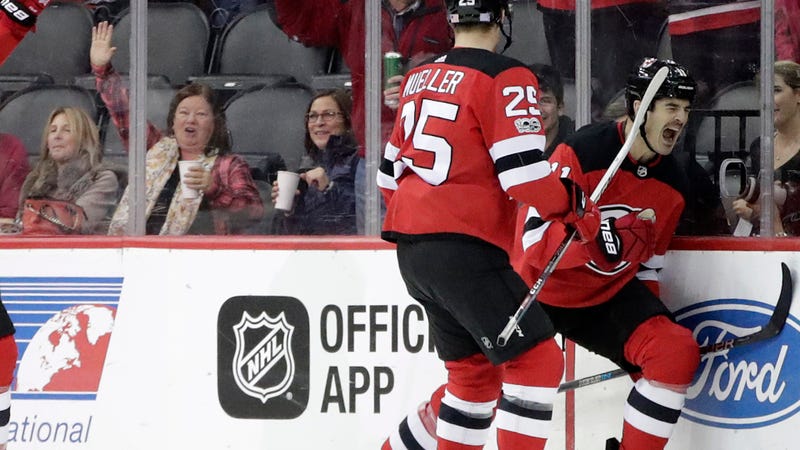

/cdn.vox-cdn.com/uploads/chorus_image/image/57509781/halladay_1_getty_ringer.0.jpg)



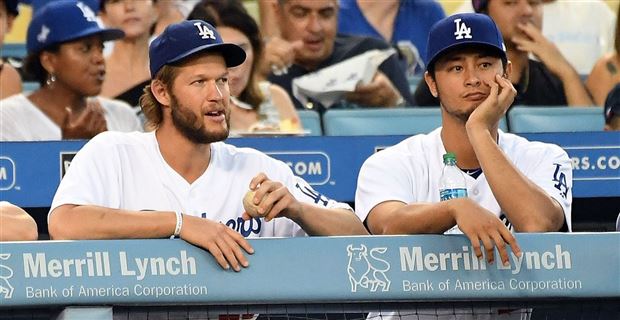




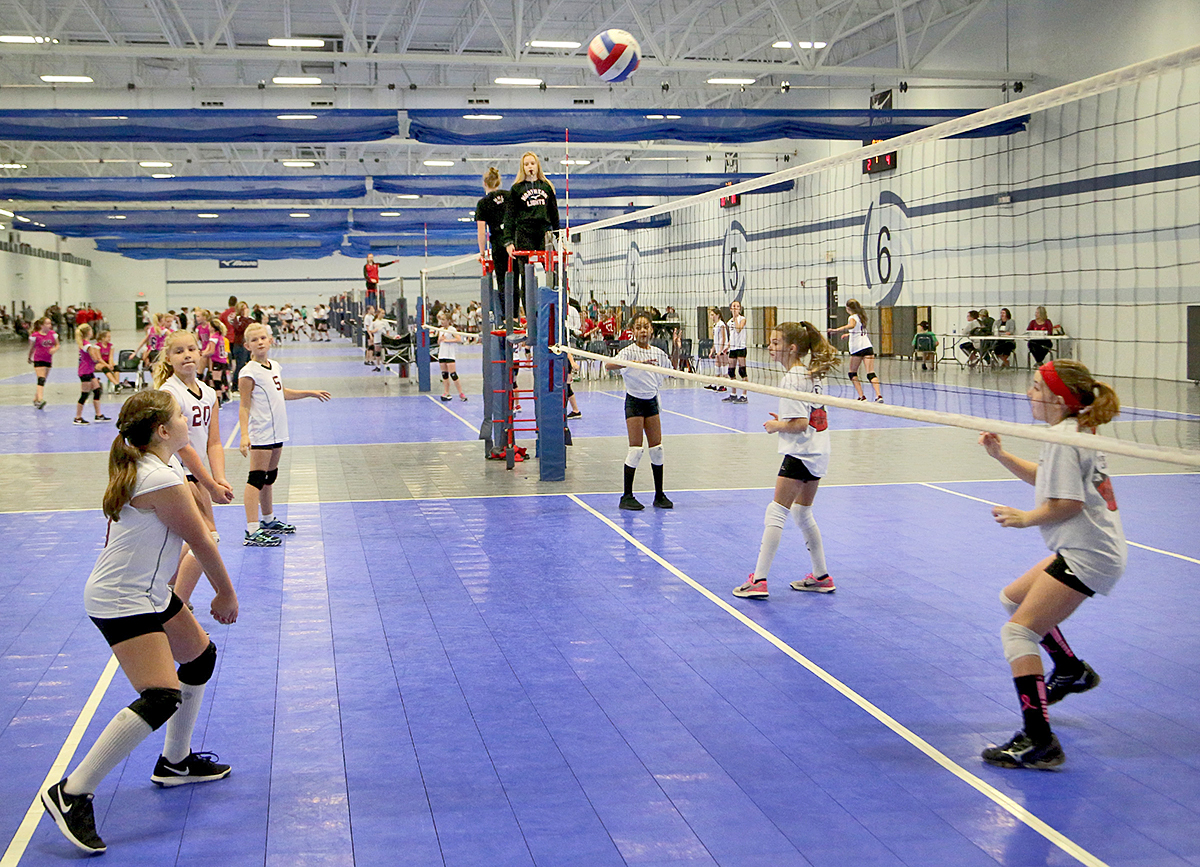
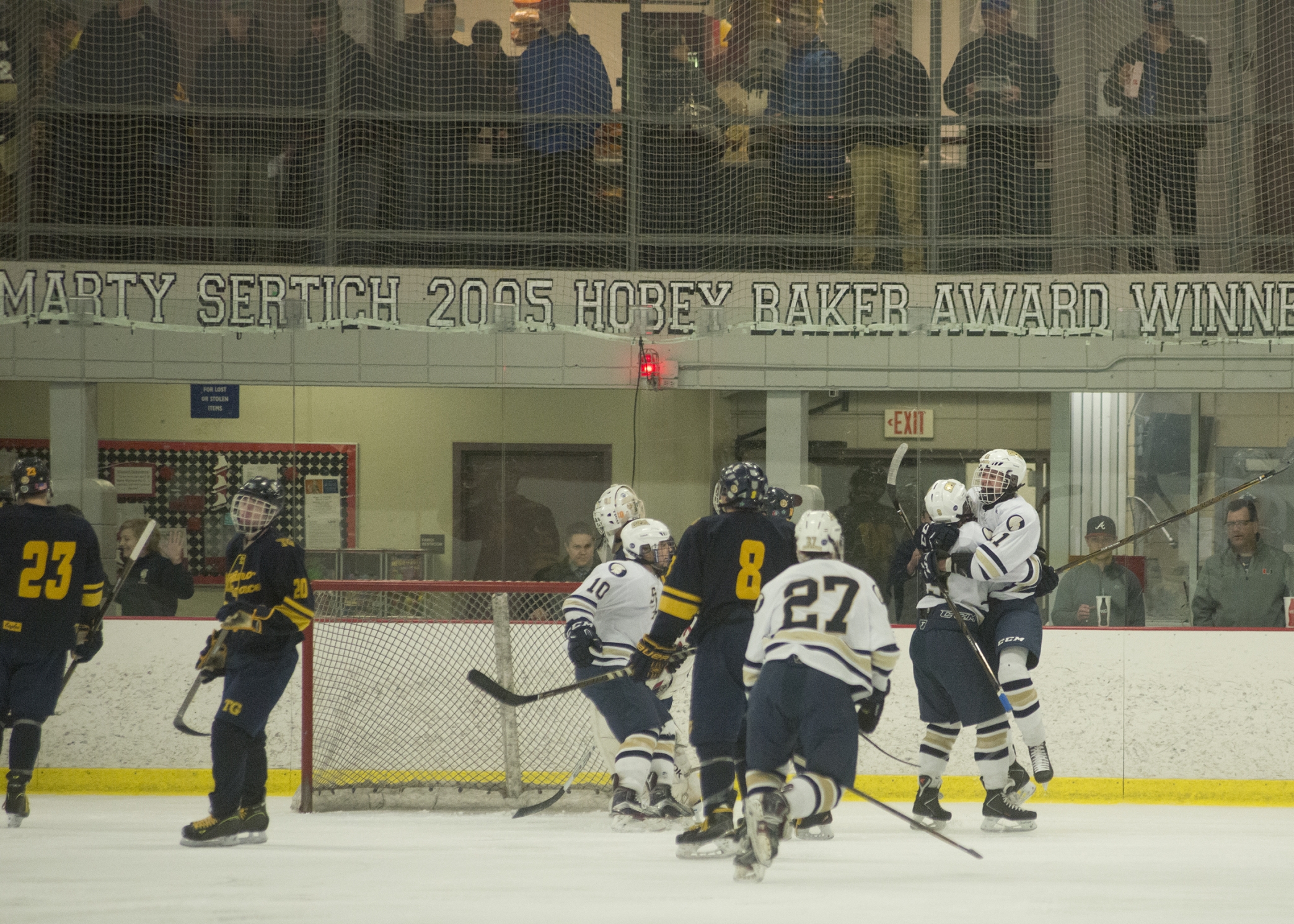

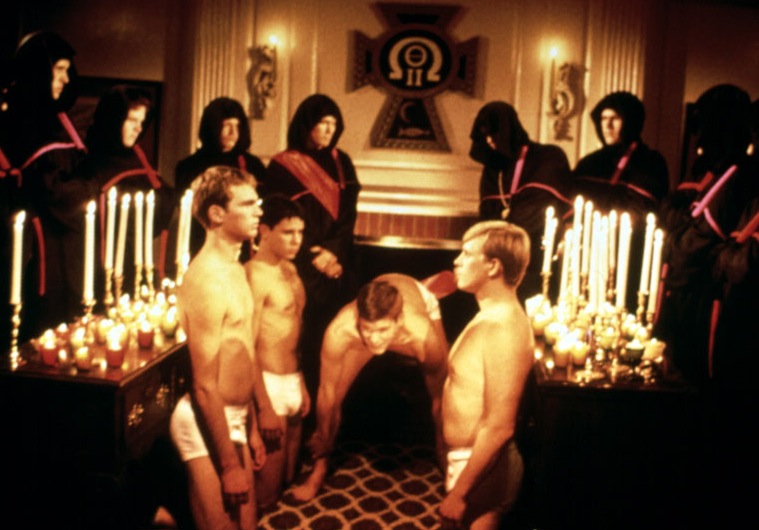

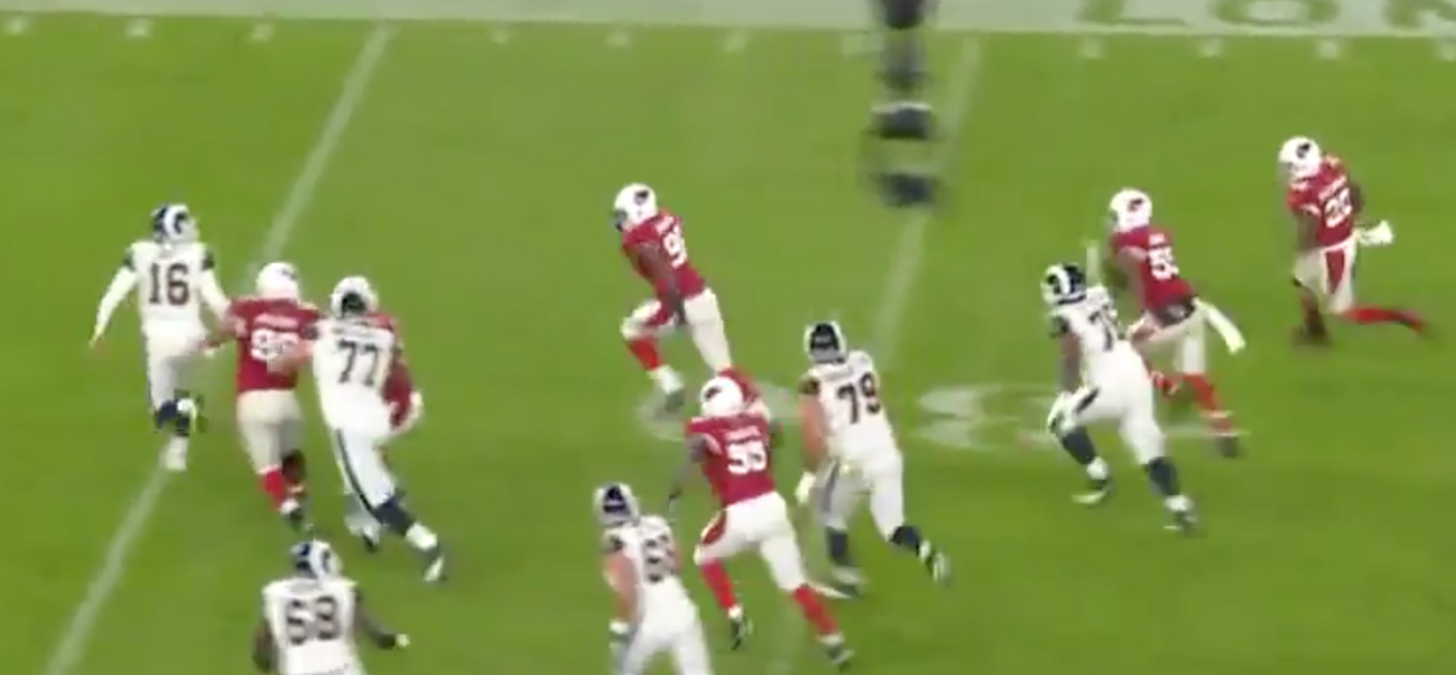
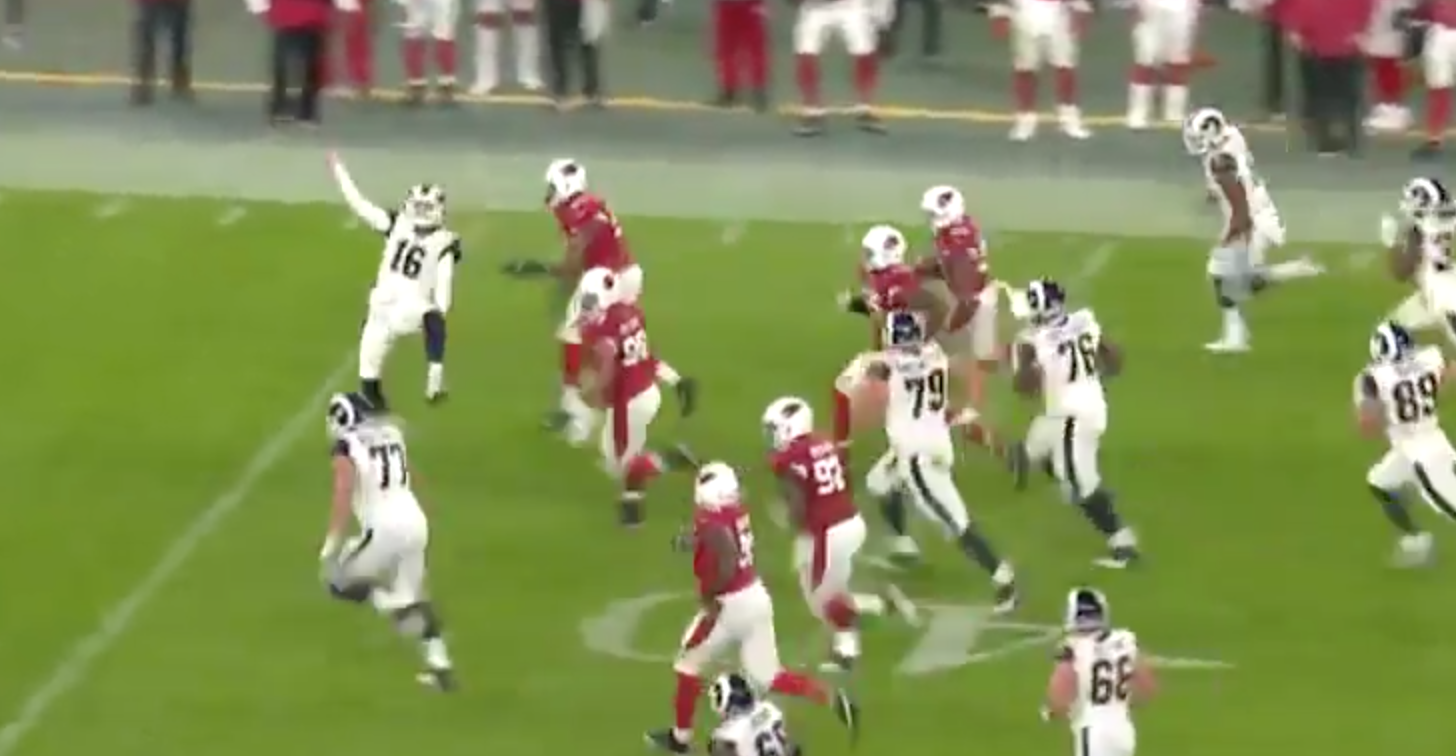
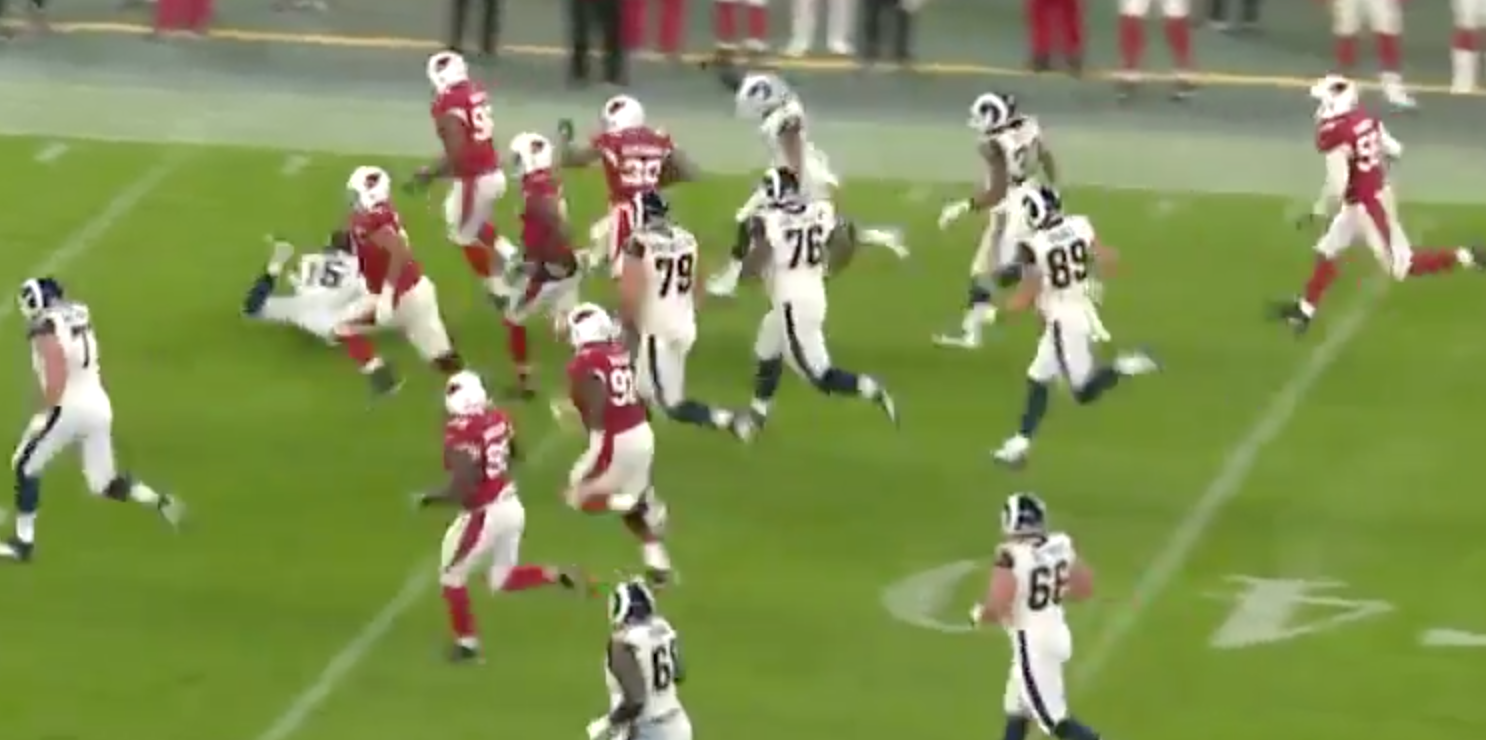
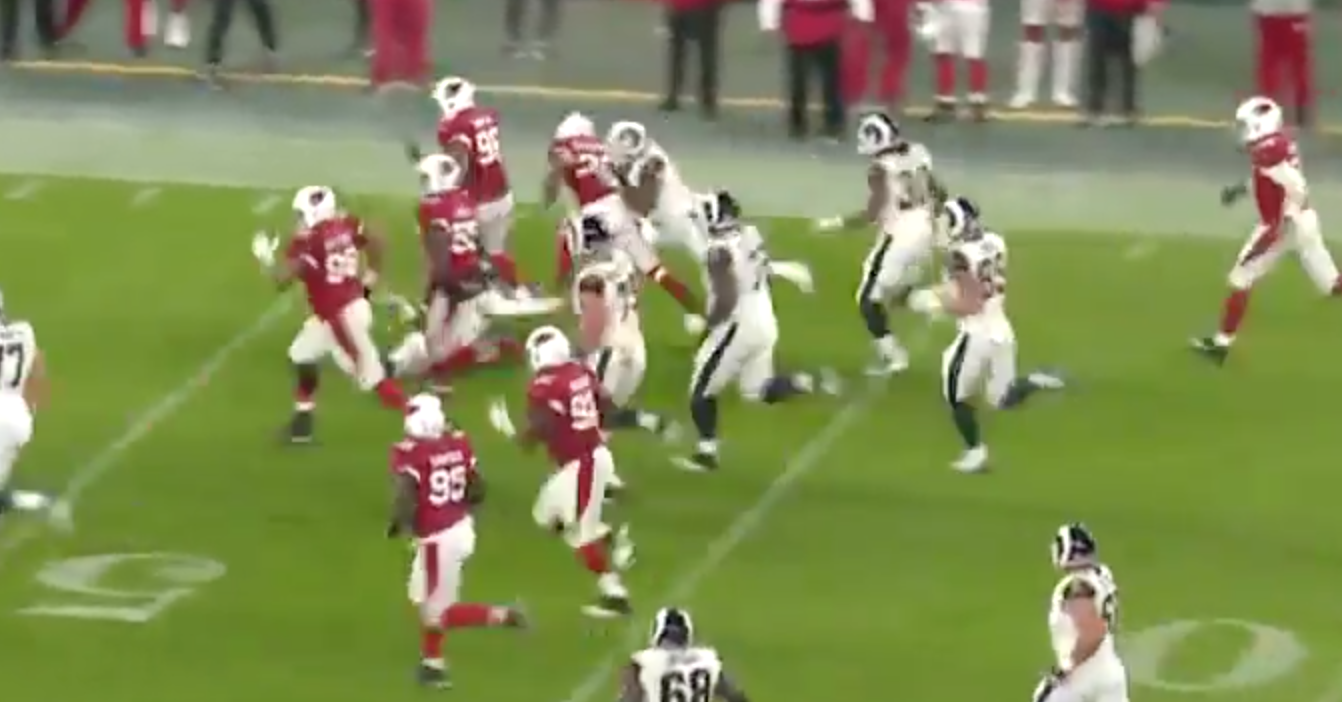
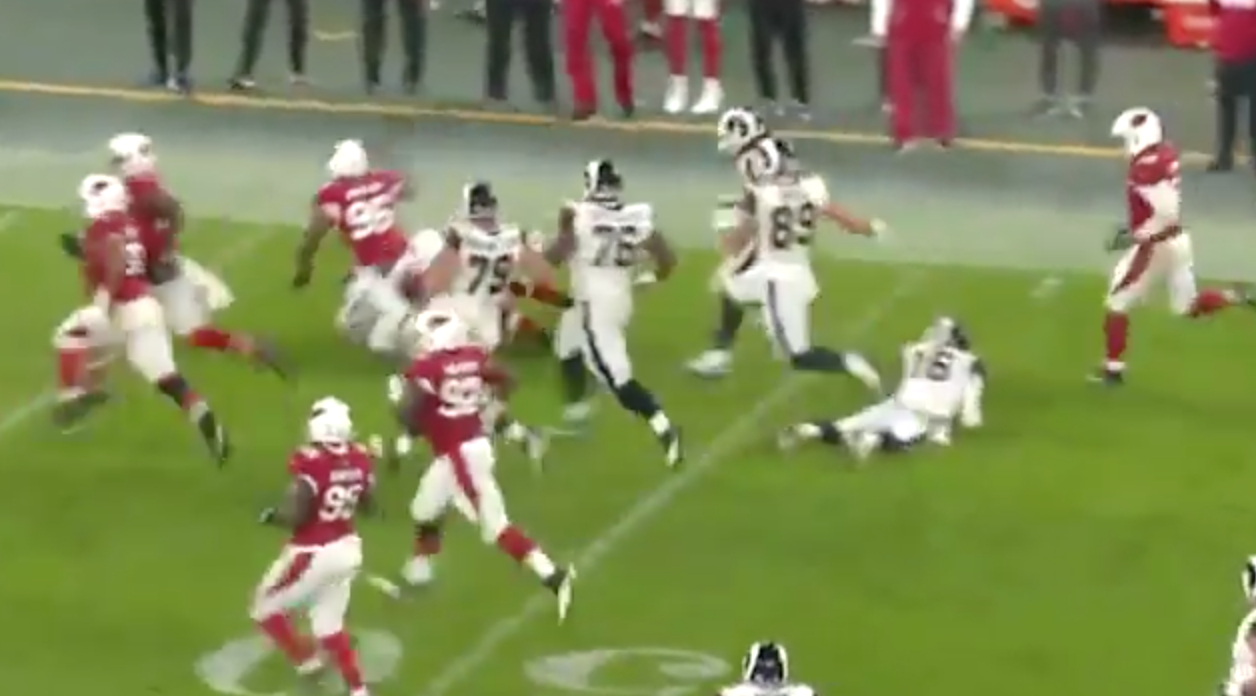
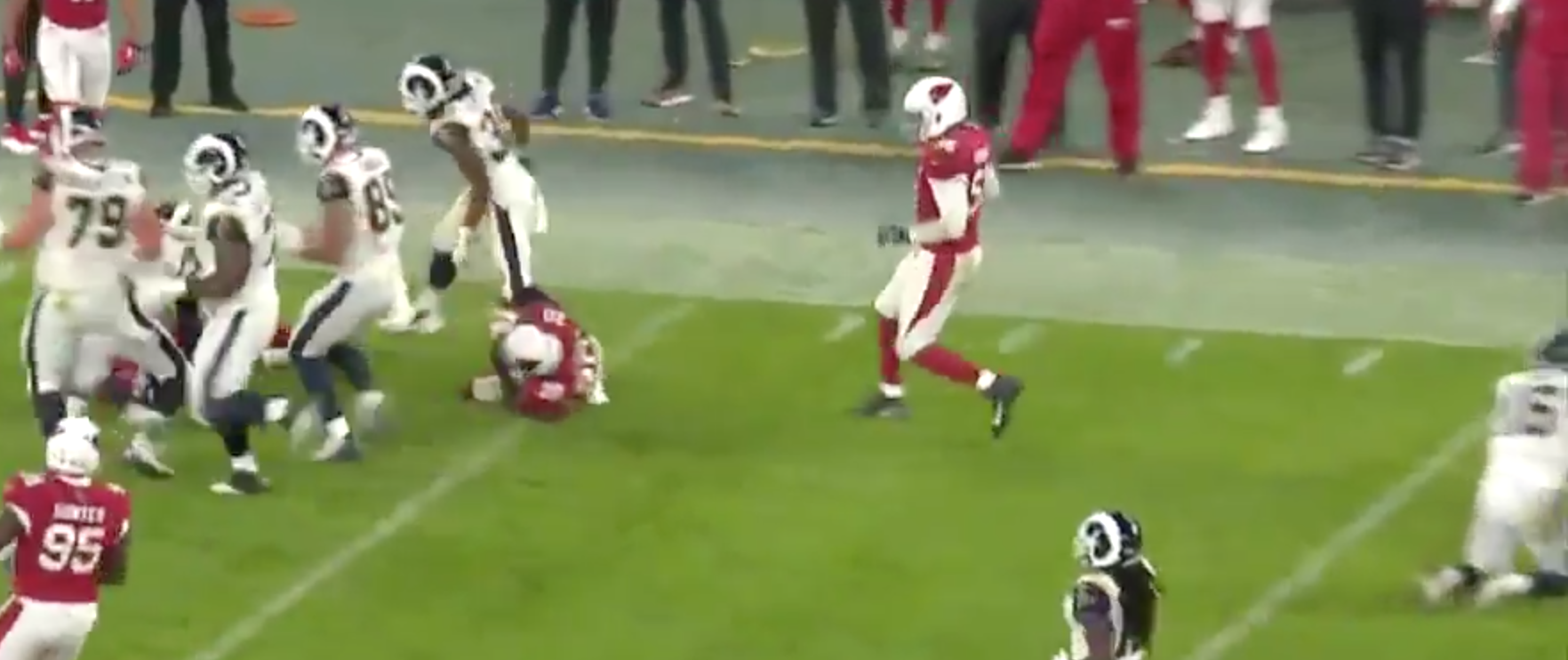



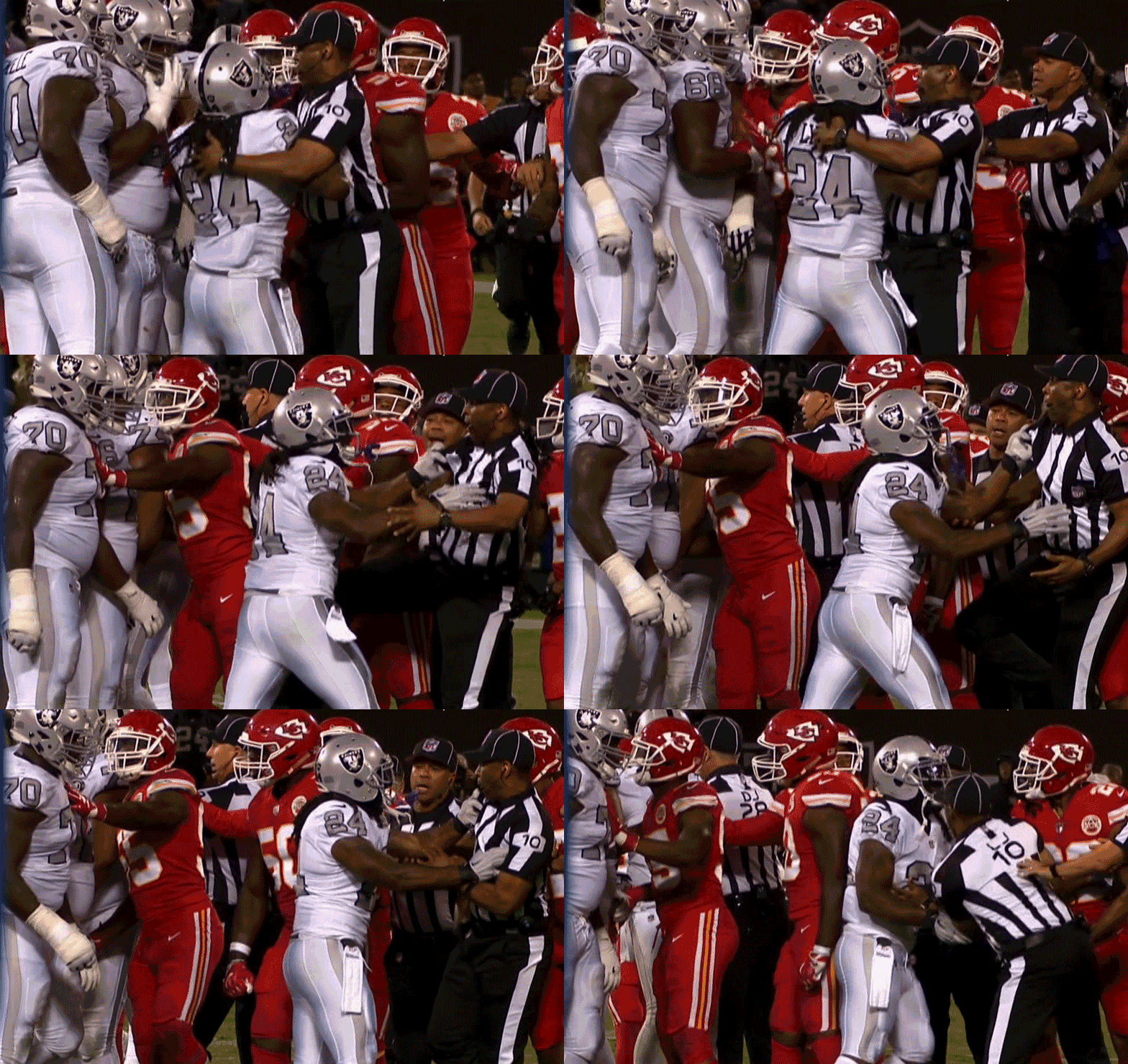
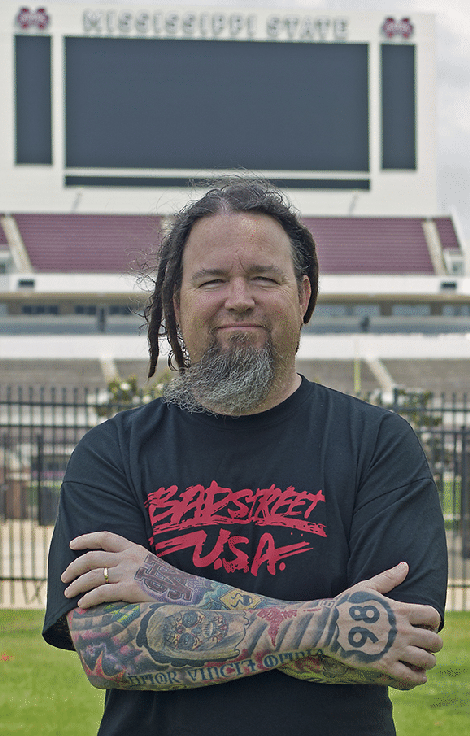



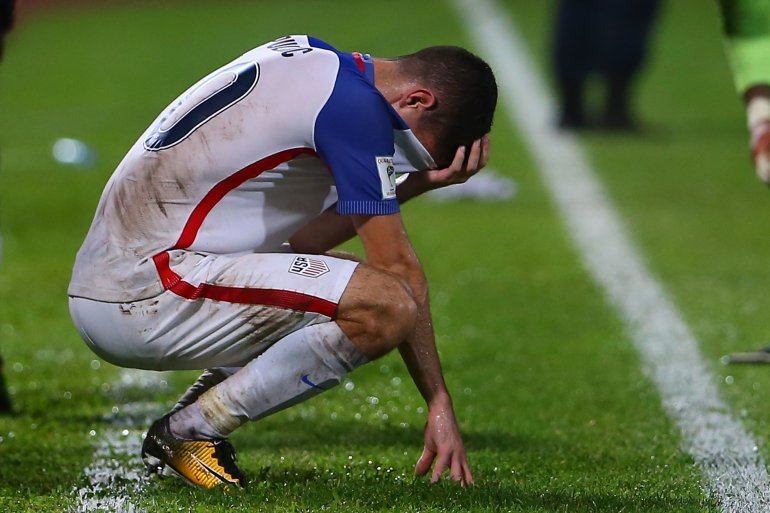
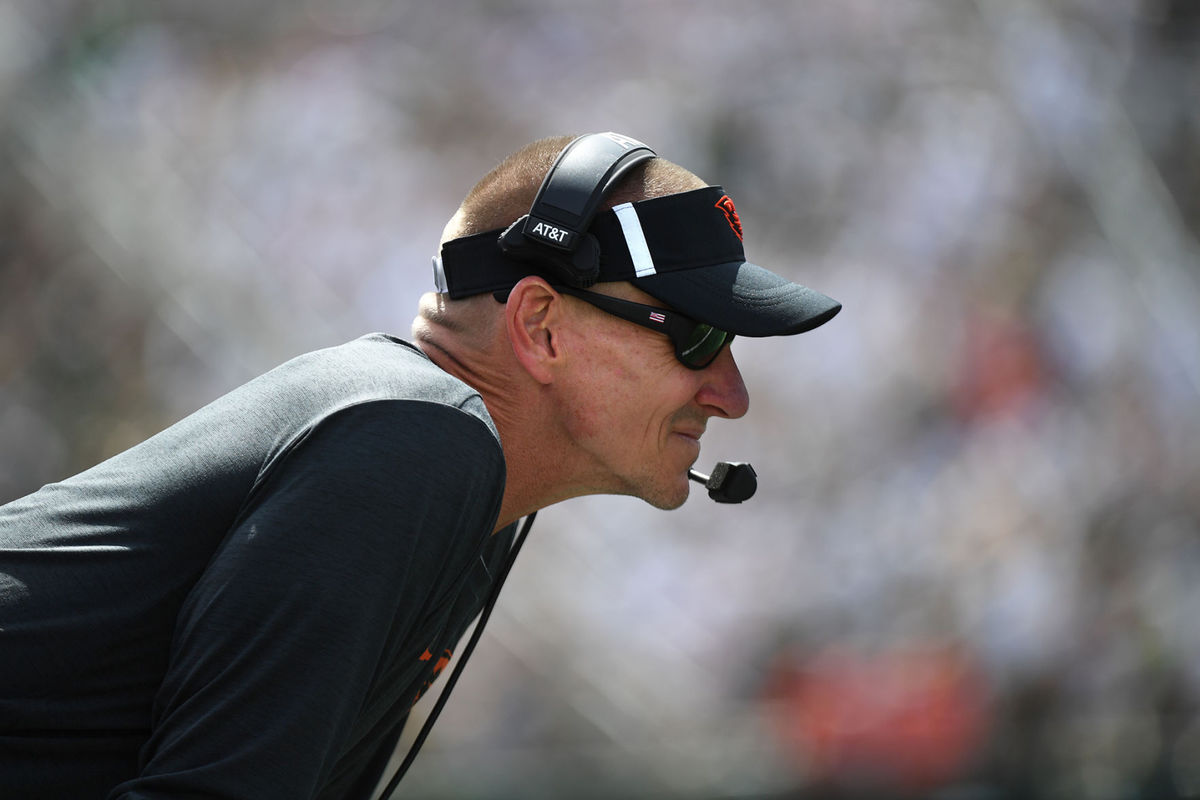
:no_upscale()/cdn.vox-cdn.com/uploads/chorus_asset/file/9422991/PoliteSatisfiedCranefly_size_restricted.gif)







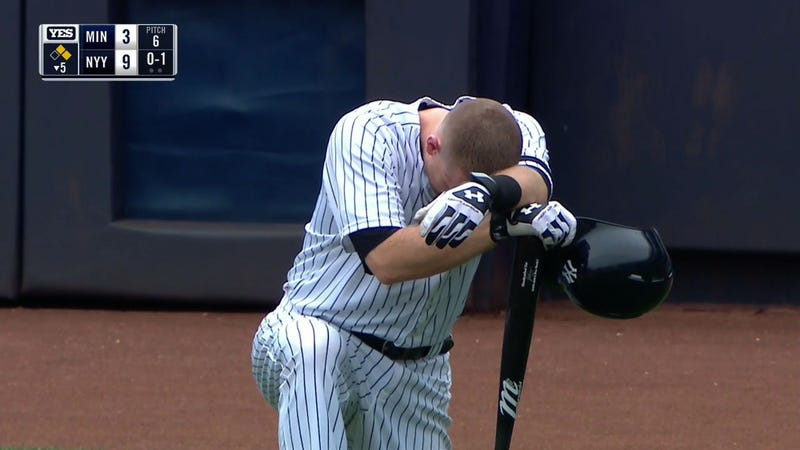
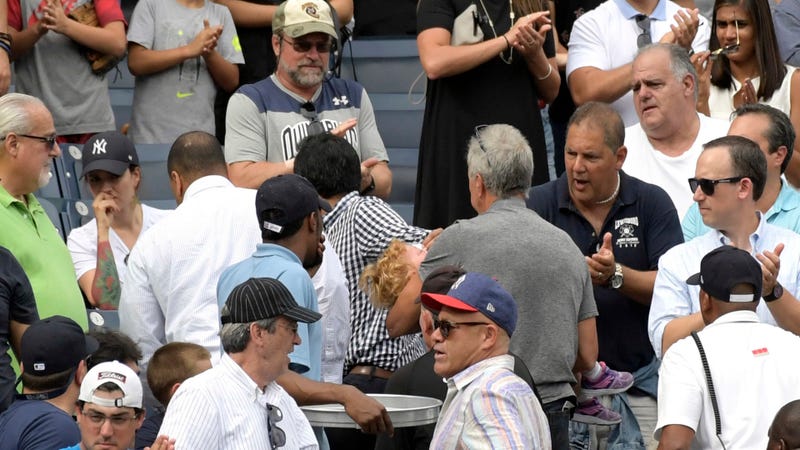

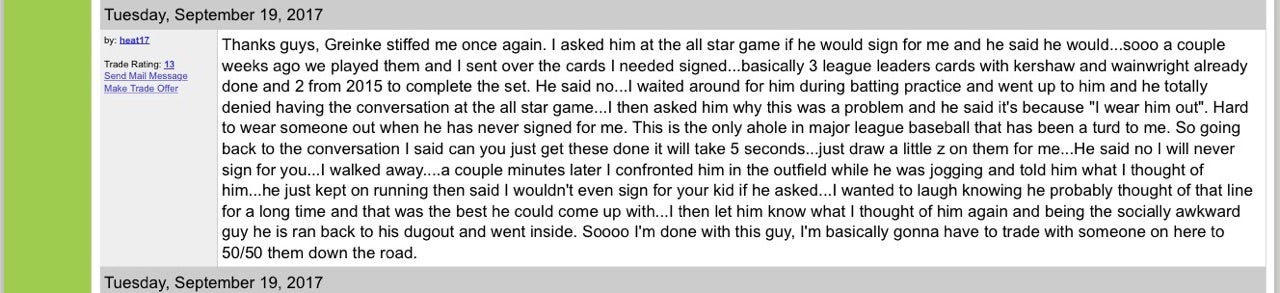

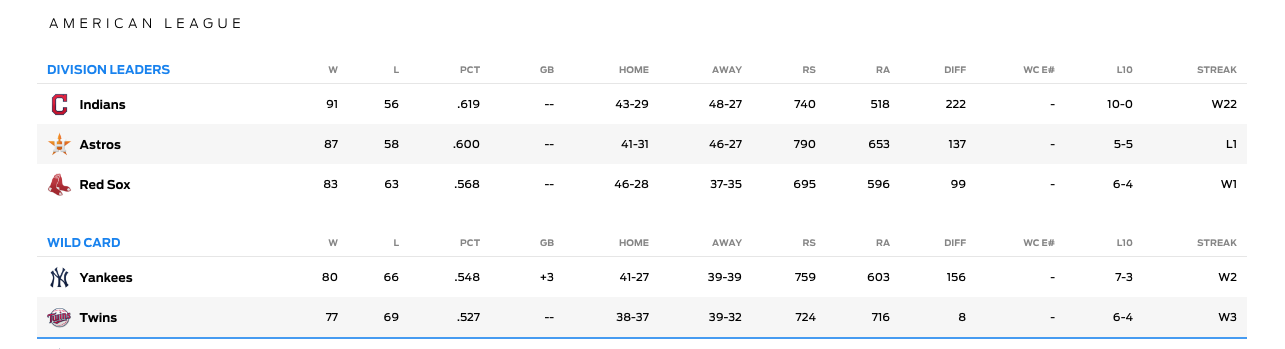
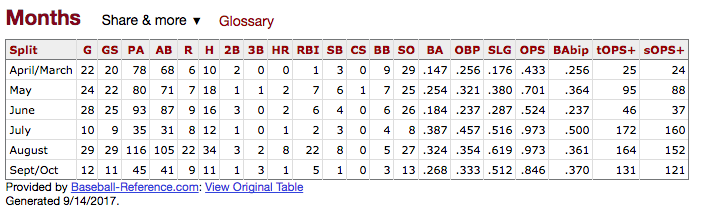
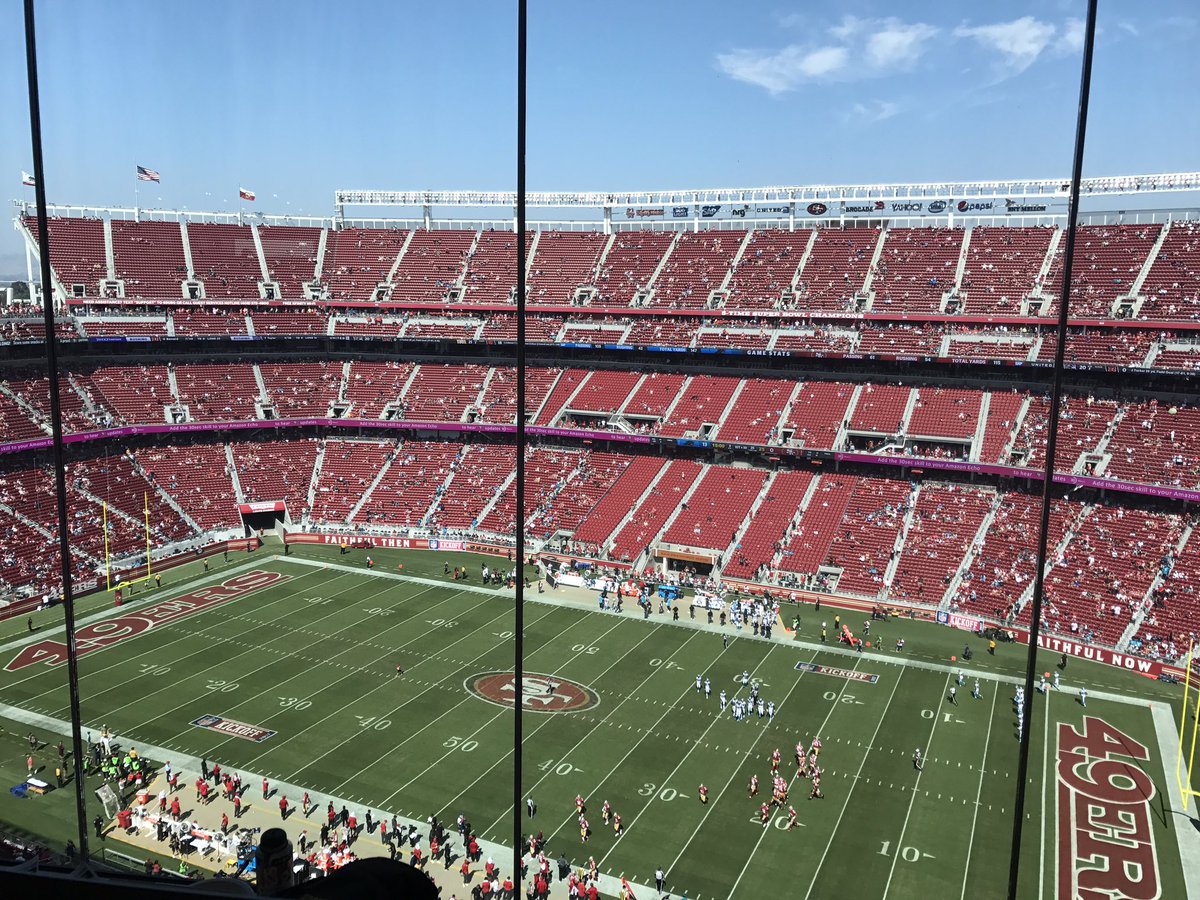
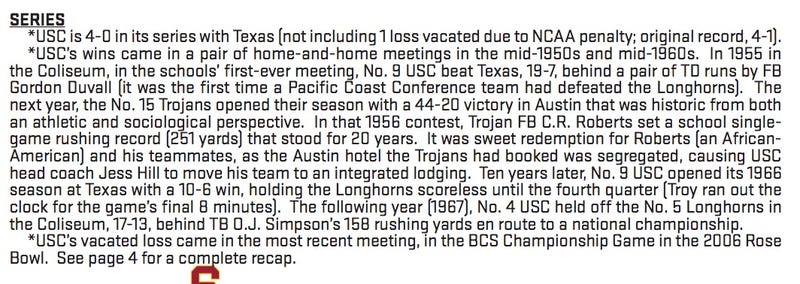
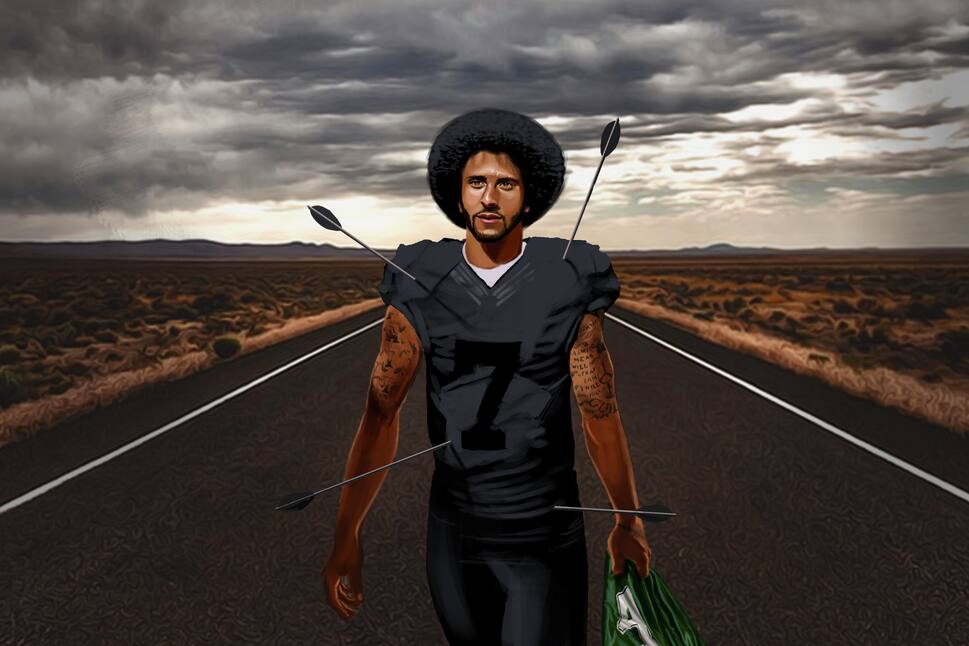

 1-2-3 SPORTS!